1
The Basic Principles of Reverberation
Understanding Reverberation
The acoustic phenomenon known as reverberation accompanies nearly all of the
sounds we hear, in fact we are so conditioned to hearing the accompanying
reverberant field that on hearing sound totally lacking in reverberation (in anechoic
chambers, well damped studios, etc.) we are immediately struck by its unnatural
character.
Natural reverberation not only adds a certain amount of character, or coloration, to
the actual sound it is accompanying, but also 'tells' our ears from which direction
the sound is coming; approximately how far away the sound is; how loud the initial
sound was; what type of acoustic space we are in; how large the space is; what the
boundaries are like (hard walls, curtained walls, etc.) and so on.
'Dead Room' acoustics, approaching anechoic proportions, are found more and
more in modern studio designs and because of the resulting lack of natural
reverberation, a good reverberation system has been found to be mandatory in
modern recording studios. 'Good reverberation' is not enough however, since the
studio must be capable of reproducing all types of reverberant situations from
'sitting rooms' to 'great halls'. Only modern digital systems with carefully designed
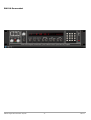
programs and large memory capacity, such as the RMX 16, are capable of
producing such a wide variety.
The Fundamentals of Reverberation
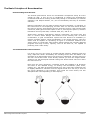
Let us say you are in the centre of a small hall and someone, standing a few feet
away, claps their hands. Immediately the resulting sound wave will radiate in all
directions at an approximate rate of one foot every millisecond. The first sound you
will hear will be that which comes directly towards you from the clapped hands.
Thanks to our well developed binaural hearing this 'Direct Sound' will tell us where
the sound source is.
Next come the 'early reflections'; remember sound was radiated in all directions
and some of this radiated energy, on striking room boundaries (walls, floors,
ceilings, etc.), will again be directed towards your ears. These early reflections may
be slightly different in character from the original sound since not only is some of
the energy absorbed by the boundary upon which the wave strikes, but this
absorption also varies depending on the frequency.
RMX16 Digital Reverberation System
-5-
Issue 1