1
Chapter 2
SR Motor Control Theory
2.1
Two Phase Switch Reluctance (SR) Motor
A Switched Reluctance (SR) motor is a rotating electric machine where both stator and rotor have salient
poles. The stator winding is comprised of a set of coils, each of which is wound on one pole. The rotor is
created from lamination in order to minimize the eddy-current losses.
SR motors differ in the number of phases wound on the stator. Each of them has a certain number of
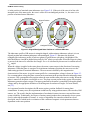
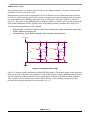
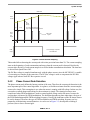
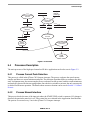
suitable combinations of stator and rotor poles. Figure 2-1 illustrates a typical 2-Phase SR motor with a
4/2 (stator/rotor) pole configuration and a stepped gap. The stepped gap is used due to eliminate dead
zones, where motor torque is zero at a symmetrical SR motor and it ensures motor start up in the proper
direction.
Phase B
Stator (4 poles)
Stator
Winding
Phase A
Rotor (2 poles)
Figure 2-1. 2-Phase 4/2 SR Motor
The motor is excited by a sequence of current pulses applied at each phase. The individual phases are
consequently excited, forcing the motor to rotate. The current pulses need to be applied to the respective
phase at the exact rotor position relative to the excited phase. When any pair of rotor poles is exactly in
line with the stator poles of the selected phase, the phase is said to be in an aligned position, i.e., the rotor
DRM100, Rev. 0
Freescale Semiconductor
13