1
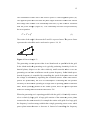
9 2 THEORETICAL BACKROUND 2.1 Synchronous Generator The generating set comprises a diesel or gas engine and a generator. The engine is a prime mover which produces a mechanical energy that rotates the generator connected to the engine. For example in 50 Hz system the Wärtsilä 16V34DF engine is rotating 750 rpm and it produces rated power of 7200 kW to the generator which produces electrical power of 6920 kW. /28/ Electric generators are rotating machines that convert mechanical energy to electrical energy. Mechanical energy comes down from a prime mover. The prime mover is a device, for example a steam turbine or in this case, a diesel or gas engine connected to the generator shaft and thus rotating it to produce electricity. Synchronous machine is a device whose rotor is rotating at the same speed as the rotating magnetic field. For comparison, in asynchronous machines the rotor and the magnetic field are rotating with different speeds. /4, 7/ The frequency of the generator is depending on the rotating speed and the number of the poles of the generator which can be seen from the next equation: ݂= (1) where f is the frequency of the induced voltage, p is a number of the pairs of poles on the rotor and n is speed of the rotor. The constant 60 converts rpm to revolutions per second. If the engine is rotating at 750 rpm in the 50 Hz system the number of the pairs of the poles can be calculated by solving the p as follows: = ∗ (2) By placing the given frequency and speed to the equation the number of the pairs of poles is 4 which is received as a result. /10/