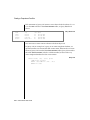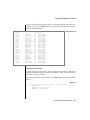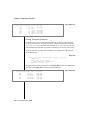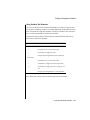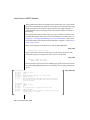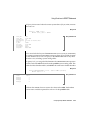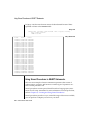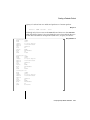
1
Informix Guide to SQL Tutorial Version 7.2 April 1996 Part No. 000-7883A Published by INFORMIX® Press Informix Software, Inc. 4100 Bohannon Drive Menlo Park, CA 94025 The following are worldwide trademarks of Informix Software, Inc., or its subsidiaries, registered in the United States of America as indicated by “®,” and in numerous other countries worldwide: INFORMIX; NewEra; ViewPoint; C-ISAM INFORMIX-OnLine Dynamic Server; INFORMIX-SuperView (SuperView technology Patent Pending) The following are worldwide trademarks of the indicated owners or their subsidiaries, registered in the United States of America as indicated by “®,” and in numerous other countries worldwide: Adobe Systems Incorporated: PostScript International Business Machines Corporation: DRDA; IBM Microsoft Corporation: Microsoft; MS; MS-DOS; CodeView; MS Windows; Windows; Windows NT; ODBC; Visual Basic; Visual C++ Microsoft Memory Management Product: HIMEM.SYS (“DOS” as used herein refers to MS-DOS and/or PC-DOS operating systems.) X/OpenCompany Ltd.: UNIX; X/Open Some of the products or services mentioned in this document are provided by companies other than Informix. These products or services are identified by the trademark or servicemark of the appropriate company. If you have a question about one of those products or services, please call the company in question directly. Documentation Team: Diana Chase, Geeta Karmarkar, Tom Noronha, Kami Shahi Copyright © 1981-1996 by Informix Software, Inc. All rights reserved. No part of this work covered by the copyright hereon may be reproduced or used in any form or by any means—graphic, electronic, or mechanical, including photocopying, recording, taping, or information storage and retrieval systems—without permission of the publisher. To the extent that this software allows the user to store, display, and otherwise manipulate various forms of data, including, without limitation, multimedia content such as photographs, movies, music and other binary large objects (blobs), use of any single blob may potentially infringe upon numerous different third-party intellectual and/or proprietary rights. It is the user's responsibility to avoid infringements of any such thirdparty rights. RESTRICTED RIGHTS LEGEND Software and accompanying materials acquired with United States Federal Government funds or intended for use within or for any United States federal agency are provided with “Restricted Rights” as defined in DFARS 252.227-7013(c)(1)(ii) or FAR 52.227-19. ii Informix Guide to SQL: Tutorial Table of Contents Table of Contents Introduction About This Manual . . . . . . . Organization of This Manual . . Types of Users . . . . . . . Software Dependencies . . . . Demonstration Database . . . New Features of This Product . . . Conventions . . . . . . . . . Typographical Conventions . . Icon Conventions . . . . . . Sample-Code Conventions . . . Terminology Conventions . . . Additional Documentation . . . . Printed Documentation . . . . On-Line Documentation . . . Related Reading . . . . . . Compliance with Industry Standards Informix Welcomes Your Comments . Section I Using Basic SQL Chapter 1 Informix Databases The Data Illustration of a Data Model Concurrent Use and Security . . Centralized Management . . . Important Database Terms . . . . The Relational Model . . . . Structured Query Language . . . . Standard SQL . . . . . . . . . . . . . . . . . . . . . . . . . . . . . . . . . . . . . . . . . . . . . . . . . . . . . . . . . . . . . . . . . . . . . . . . . . . . . . . . . . . . . . . . . . . . . . . . . . . . . . . . . . . . . . . . . . . . . . . . . . . . . . . . . . . . . . . . . . . . . . . . . . . . . . . . . . . . . . . . . . . . . . . . . . . . . . . . . . . . . . . . . . . . . . . . . . 3 3 5 5 6 9 14 15 15 18 19 19 20 21 22 23 24 . . . . . . . . . . . . . . . . . . . . . . . . . . . . . . . . . . . . . . . . . . . . . . . . . . . . . . . . . . . . . . . . . . . . . . . . . . . . . 1-3 1-8 1-8 1-10 1-10 1-14 1-14 Informix SQL and ANSI SQL . . . . . . . . . . . . ANSI-Compliant Databases . . . . . . . . . . . . . GLS Databases . . . . . . . . . . . . . . . . . The Database Software . . . . . . . . . . . . . . . . The Applications . . . . . . . . . . . . . . . . . The Database Server. . . . . . . . . . . . . . . . Interactive SQL . . . . . . . . . . . . . . . . . Reports and Forms . . . . . . . . . . . . . . . . General Programming . . . . . . . . . . . . . . . Applications and Database Servers . . . . . . . . . . Summary . . . . . . . . . . . . . . . . . . . . . Chapter 2 Composing Simple SELECT Statements Introducing the SELECT Statement . . . . . . Some Basic Concepts . . . . . . . . . The Forms of SELECT . . . . . . . . . Special Data Types . . . . . . . . . . Single-Table SELECT Statements . . . . . . . Selecting All Columns and Rows . . . . . Selecting Specific Columns . . . . . . . Using the WHERE Clause. . . . . . . . Creating a Comparison Condition . . . . . Expressions and Derived Values . . . . . Using Functions in SELECT Statements . . . Using Stored Procedures in SELECT Statements Multiple-Table SELECT Statements . . . . . . Creating a Cartesian Product. . . . . . . Creating a Join. . . . . . . . . . . . Some Query Shortcuts . . . . . . . . . Summary . . . . . . . . . . . . . . . Chapter 3 Informix Guide to SQL: Tutorial . . . . . . . . . . . . . . . . . . . . . . . . . . . . . . . . . . . . . . . . . . . . . . . . . . . . . . . . . . . . . . . . . . . . . . . . . . . . . . . . . . . . . . . . . . . . . . . . . . . . . . 2-4 2-5 2-10 2-11 2-12 2-12 2-18 2-28 2-29 2-46 2-52 2-64 2-66 2-66 2-68 2-75 2-80 . . . . . . . . . . . . . . . . . . . . . . . . . . . . . . . . . . . . . . . . . . . . . . . . . . . . . . . . . . . . 3-4 3-4 3-8 3-10 3-11 3-19 3-29 3-30 3-31 3-32 Composing Advanced SELECT Statements Using the GROUP BY and HAVING Clauses Using the GROUP BY Clause . . . . Using the HAVING Clause . . . . . Creating Advanced Joins . . . . . . . Self-Joins . . . . . . . . . . . Outer Joins . . . . . . . . . . . Subqueries in SELECT Statements . . . . Using ALL . . . . . . . . . . . Using ANY . . . . . . . . . . . Single-Valued Subqueries . . . . . . iv 1-15 1-16 1-16 1-16 1-16 1-17 1-17 1-17 1-18 1-19 1-19 . . . . . . . . . . . . . . . . . . . . Correlated Subqueries Using EXISTS . . . Set Operations . . . . Union . . . . . . Intersection . . . . Difference . . . . . Summary . . . . . . Chapter 4 Chapter 5 . . . . . . . . . . . . . . . . . . . . . . . . . . . . . . . . . . . . . . . . . . . . . . . . . . . . . . . . . . . . . . . . . . . . . . . . . . . . . . . . . . . . . . . . . . . . . . . . . . . . . . . . . 3-33 3-34 3-38 3-39 3-47 3-49 3-51 Statements That Modify Data . . . . . . . . . . Deleting Rows . . . . . . . . . . . . . . Deleting a Known Number of Rows. . . . . . . Inserting Rows . . . . . . . . . . . . . . Updating Rows . . . . . . . . . . . . . . Database Privileges . . . . . . . . . . . . . . Displaying Table Privileges. . . . . . . . . . Data Integrity . . . . . . . . . . . . . . . . Entity Integrity . . . . . . . . . . . . . . Semantic Integrity . . . . . . . . . . . . . Referential Integrity . . . . . . . . . . . . Object Modes and Violation Detection . . . . . . Interrupted Modifications . . . . . . . . . . . The Transaction . . . . . . . . . . . . . . Transaction Logging . . . . . . . . . . . . Specifying Transactions . . . . . . . . . . . Backups and Logs . . . . . . . . . . . . . . Backing Up with INFORMIX-SE . . . . . . . . Backing Up with INFORMIX-OnLine Dynamic Server Concurrency and Locks . . . . . . . . . . . . Data Replication . . . . . . . . . . . . . . . INFORMIX-OnLine Dynamic Server Data Replication Summary . . . . . . . . . . . . . . . . . . . . . . . . . . . . . . . . . . . . . . . . . . . . . . . . . . . . . . . . . . . . . . . . . . . . . . . . . . . . . . . . . . . . . . . . . . . . . . . . . . . . . . . . . . . . . 4-3 4-4 4-5 4-7 4-12 4-16 4-18 4-19 4-19 4-20 4-21 4-25 4-27 4-28 4-28 4-29 4-30 4-30 4-31 4-32 4-33 4-34 4-34 . . . . . . . . . . . . . . . . . . . . . . . . . . . . . . . . . . . . . . . . . . . . . . . . . . . . . . . . . . . . 5-4 5-4 5-5 5-6 5-6 5-6 Modifying Data Programming with SQL SQL in Programs . . . . . . . . . SQL in SQL APIs . . . . . . . SQL in Application Languages . . Static Embedding . . . . . . . Dynamic Statements . . . . . . Program Variables and Host Variables Table of Contents v Calling the Database Server . . . . . . The SQL Communications Area . . . The SQLCODE Field . . . . . . . The SQLERRD Array . . . . . . . The SQLWARN Array . . . . . . . The SQLSTATE Value . . . . . . . Retrieving Single Rows . . . . . . . . Data Type Conversion . . . . . . . Working with Null Data . . . . . . Dealing with Errors . . . . . . . . Retrieving Multiple Rows . . . . . . . Declaring a Cursor . . . . . . . . Opening a Cursor . . . . . . . . Fetching Rows. . . . . . . . . . Cursor Input Modes. . . . . . . . The Active Set of a Cursor . . . . . Using a Cursor: A Parts Explosion . . . Dynamic SQL . . . . . . . . . . . Preparing a Statement . . . . . . . Executing Prepared SQL . . . . . . Dynamic Host Variables . . . . . . Freeing Prepared Statements . . . . . Quick Execution . . . . . . . . . Embedding Data Definition Statements . . Embedding Grant and Revoke Privileges Summary . . . . . . . . . . . . . Chapter 6 Informix Guide to SQL: Tutorial . . . . . . . . . . . . . . . . . . . . . . . . . . . . . . . . . . . . . . . . . . . . . . . . . . . . . . . . . . . . . . . . . . . . . . . . . . . . . . . . . . . . . . . . . . . . . . . . . . . . . . . . . . . . . . . . . . . . . . . . . . . . . . . . . . . . . . . . . . . . . . . . . . . . . . . . . . . . . . . . . . . . . . . . . . . . . . . . . . . . . . 5-9 5-9 5-12 5-13 5-13 5-14 5-14 5-16 5-17 5-18 5-20 5-21 5-22 5-22 5-24 5-25 5-27 5-30 5-30 5-32 5-34 5-34 5-35 5-35 5-36 5-38 . . . . . . . . . . . . . . . . . . . . . . . . . . . . . . . . . . . . . . . . . . . . . . . . . . . . . . . . . . . . . . . . . . . . . . . . . . . . . . . . . . . . . . . . 6-3 6-4 6-7 6-9 6-9 6-12 6-12 6-15 6-15 6-17 6-18 Modifying Data Through SQL Programs Using DELETE . . . . . Direct Deletions . . . Deleting with a Cursor . Using INSERT . . . . . Using an Insert Cursor . Rows of Constants . . An Insert Example . . Using UPDATE . . . . . Using an Update Cursor Cleaning Up a Table . . Summary . . . . . . . vi . . . . . . . . . . . . . . . . . . . . . . . . . . . . . . . . . . . . . . . . . . . . . . . . . . . . . . . . . . . . . . . . . . . . . . . . . . . . . . . . . . . . . . . . . . . . Chapter 7 Programming for a Multiuser Environment Concurrency and Performance . . . . . . . . . . . . . . 7-3 Locking and Integrity . . . . . . . . . . . . . . . . . 7-3 Locking and Performance . . . . . . . . . . . . . . . 7-4 Concurrency Issues . . . . . . . . . . . . . . . . . . 7-4 How Locks Work . . . . . . . . . . . . . . . . . . 7-6 Kinds of Locks . . . . . . . . . . . . . . . . . . 7-7 Lock Scope . . . . . . . . . . . . . . . . . . . 7-7 The Duration of a Lock . . . . . . . . . . . . . . . 7-10 Locks While Modifying . . . . . . . . . . . . . . . 7-10 Setting the Isolation Level . . . . . . . . . . . . . . . 7-11 Comparing SET TRANSACTION with SET ISOLATION . . . 7-12 ANSI Read Uncommitted and Informix Dirty Read Isolation . . 7-13 ANSI Read Committed and Informix Committed Read Isolation . 7-14 Informix Cursor Stability Isolation . . . . . . . . . . . 7-14 ANSI Serializable, ANSI Repeatable Read, and Informix Repeatable Read Isolation . . . . . . . . . . . . . . . 7-16 Controlling Data Modification with Access Modes . . . . . . . 7-17 Setting the Lock Mode . . . . . . . . . . . . . . . . . 7-18 Waiting for Locks . . . . . . . . . . . . . . . . . 7-18 Not Waiting for Locks . . . . . . . . . . . . . . . 7-18 Waiting a Limited Time . . . . . . . . . . . . . . . 7-19 Handling a Deadlock . . . . . . . . . . . . . . . . 7-19 Handling External Deadlock . . . . . . . . . . . . . 7-20 Simple Concurrency . . . . . . . . . . . . . . . . . 7-20 Locking with Other Database Servers . . . . . . . . . . . 7-21 Isolation While Reading . . . . . . . . . . . . . . . 7-22 Locking Updated Rows . . . . . . . . . . . . . . . 7-22 Hold Cursors . . . . . . . . . . . . . . . . . . . . 7-23 Summary . . . . . . . . . . . . . . . . . . . . . 7-24 Section II Chapter 8 Designing and Managing Databases Building Your Data Model Why Build a Data Model . . . . . . . . . . Entity-Relationship Data-Model Overview . . Identifying and Defining Your Principal Data Objects Discovering Entities . . . . . . . . . . Defining the Relationships . . . . . . . . Identifying Attributes . . . . . . . . . . . . . . . . . . . . . . . . . . . . . . . . . . . . . . . . 8-3 . 8-4 . 8-5 . 8-5 . 8-9 . 8-17 Table of Contents vii Diagramming Your Data Objects . . . . . . . . Translating E-R Data Objects into Relational Constructs Rules for Defining Tables, Rows, and Columns . Determining Keys for Tables . . . . . . . . Resolving Your Relationships . . . . . . . . . Normalizing Your Data Model . . . . . . . . Summary . . . . . . . . . . . . . . . . Chapter 9 Chapter 10 . . . . . . . . . . . . . . . . . . . . . . . . . . . . . . . . . . . 8-19 8-22 8-23 8-25 8-29 8-31 8-36 Defining the Domains . . . . . . . . . . . . . . . . Data Types . . . . . . . . . . . . . . . . . . . Null Values . . . . . . . . . . . . . . . . . . . Default Values . . . . . . . . . . . . . . . . . . Check Constraints . . . . . . . . . . . . . . . . Creating the Database . . . . . . . . . . . . . . . . Using CREATE DATABASE . . . . . . . . . . . . . Using CREATE TABLE . . . . . . . . . . . . . . . Using Command Scripts . . . . . . . . . . . . . . Populating the Tables . . . . . . . . . . . . . . . Fragmenting Tables and Indexes . . . . . . . . . . . . . Creating a Fragmented Table . . . . . . . . . . . . . . Fragmenting a New Table . . . . . . . . . . . . . . Creating a Fragmented Table from Nonfragmented Tables . . Modifying a Fragmented Table . . . . . . . . . . . . . Modifying Fragmentation Strategies . . . . . . . . . . Dropping a Fragment . . . . . . . . . . . . . . . Accessing Data Stored in Fragmented Tables . . . . . . . . Using Primary Keys Instead of Rowids . . . . . . . . . Summary . . . . . . . . . . . . . . . . . . . . . 9-3 9-4 9-25 9-25 9-26 9-26 9-27 9-30 9-32 9-33 9-36 9-36 9-37 9-38 9-39 9-40 9-42 9-43 9-43 9-46 Implementing Your Data Model Granting and Limiting Access to Your Database Controlling Access to Databases Securing Database Files . Securing Confidential Data Granting Privileges . . . . Database-Level Privileges . Ownership Rights . . . Table-Level Privileges . . Procedure-Level Privileges Automating Privileges . . viii Informix Guide to SQL: Tutorial . . . . . . . . . . . . . . . . . . . . . . . . . . . . . . . . . . . . . . . . . . . . . . . . . . . . . . . . . . . . . . . . . . . . . . . . . . . . . . . . . . . . . . . . . . . . . . . . . . . . . . . . . . . . . 10-4 . 10-4 . 10-5 . 10-6 . 10-6 . 10-8 . 10-9 . 10-13 . 10-14 Controlling Access to Data Using Stored Procedures Restricting Reads of Data . . . . . . . . Restricting Changes to Data . . . . . . . Monitoring Changes to Data . . . . . . . Restricting Object Creation . . . . . . . . Using Views . . . . . . . . . . . . . . Creating Views . . . . . . . . . . . . Modifying Through a View. . . . . . . . Privileges and Views . . . . . . . . . . . Privileges When Creating a View. . . . . . Privileges When Using a View . . . . . . Summary . . . . . . . . . . . . . . . Chapter 11 . . . . . . . . . . . . . . . . . . . . . . . . . . . . . . . . . . . . . . . . . . . . . . . . . . . . . . . . . . . . . . . . . . . . . . . . 10-19 10-20 10-21 10-21 10-23 10-24 10-25 10-28 10-31 10-31 10-32 10-34 Understanding Informix Networking What Is a Network? . . . . . . . . . . . . . . . . . . 11-4 Database Management System Configurations . . . . . . . . 11-4 A Single-User Configuration . . . . . . . . . . . . . 11-5 A Local Multiuser Configuration . . . . . . . . . . . . 11-7 A Remote Configuration. . . . . . . . . . . . . . . 11-9 Single-Computer Configuration That Uses Network Communication 11-10 Distributed Databases . . . . . . . . . . . . . . . 11-12 Distributed Databases That Use Multiple Vendor Servers . . . 11-13 Connecting to Data on a UNIX Network . . . . . . . . . . 11-14 Example of Client/Server Connections. . . . . . . . . . 11-15 Environment Variables . . . . . . . . . . . . . . . 11-16 Connection Information . . . . . . . . . . . . . . . 11-17 SQL Connection Statements . . . . . . . . . . . . . 11-17 Accessing Tables . . . . . . . . . . . . . . . . . . . 11-18 Using Synonyms with Table Names . . . . . . . . . . . 11-19 Synonym Chains . . . . . . . . . . . . . . . . . 11-20 Protecting Your Data in a Networked Environment . . . . . . . 11-21 Data Protection with INFORMIX-SE . . . . . . . . . . 11-21 Data Protection with INFORMIX-OnLine Dynamic Server . . . 11-21 Data Integrity for Distributed Data . . . . . . . . . . . 11-22 Summary . . . . . . . . . . . . . . . . . . . . . 11-23 Table of Contents ix Section III Using Advanced SQL Chapter 12 Creating and Using Stored Procedures Introduction to Stored Procedures and SPL . . . . What You Can Do with Stored Procedures . . . Relationship Between SQL and a Stored Procedure Creating and Using Stored Procedures . . . . . . Creating a Procedure Using DB-Access . . . . Creating a Procedure in a Program. . . . . . Commenting and Documenting a Procedure . . Diagnosing Compile-Time Errors . . . . . . Looking at Compile-Time Warnings . . . . . Generating the Text or Documentation . . . . Executing a Procedure . . . . . . . . . . Executing a Stored Procedure Dynamically . . . Debugging a Procedure . . . . . . . . . Privileges on Stored Procedures . . . . . . . . Privileges Necessary at Creation . . . . . . Privileges Necessary at Execution . . . . . . Revoking Privileges . . . . . . . . . . . Variables and Expressions . . . . . . . . . . Variables. . . . . . . . . . . . . . . SPL Expressions . . . . . . . . . . . . Program Flow Control . . . . . . . . . . . Branching . . . . . . . . . . . . . . Looping . . . . . . . . . . . . . . . Function Handling . . . . . . . . . . . Passing Information into and out of a Procedure . . Returning Results . . . . . . . . . . . Exception Handling . . . . . . . . . . . . Trapping an Error and Recovering . . . . . . Scope of Control of an ON EXCEPTION Statement User-Generated Exceptions . . . . . . . . Summary . . . . . . . . . . . . . . . . Chapter 13 x Informix Guide to SQL: Tutorial . . . . . . . . . . . . . . . . . . . . . . . . . . . . . . . . . . . . . . . . . . . . . . . . . . . . . . . . . . . . . . . . . . . . . . . . . . . . . . . . . . . . . . . . . . . . . . . . . . . . . . . . . . . . . . . . . . . . . . . . . . . . . . . . . . . . . . . . . . . . . . . . . . . . . . . . . . . 12-3 12-4 12-4 12-5 12-5 12-6 12-7 12-7 12-9 12-9 12-10 12-12 12-12 12-15 12-16 12-16 12-18 12-18 12-18 12-23 12-24 12-24 12-25 12-25 12-27 12-27 12-29 12-29 12-30 12-32 12-34 When to Use Triggers . . . . . . . . . . . . . . . . . How to Create a Trigger . . . . . . . . . . . . . . . . Assigning a Trigger Name . . . . . . . . . . . . . Specifying the Trigger Event . . . . . . . . . . . . . Defining the Triggered Actions . . . . . . . . . . . . A Complete CREATE TRIGGER Statement . . . . . . . . 13-3 13-4 13-5 13-5 13-6 13-7 Creating and Using Triggers Using Triggered Actions . . . . . . . . . Using BEFORE and AFTER Triggered Actions Using FOR EACH ROW Triggered Actions . Using Stored Procedures as Triggered Actions Tracing Triggered Actions . . . . . . . . Generating Error Messages . . . . . . . . Applying a Fixed Error Message . . . . . Generating a Variable Error Message . . . Summary . . . . . . . . . . . . . . . . . . . . . . . . . . . . . . . . . . . . . . . . . . . . . . . . . . . . . . . . . . . . . . . . . . . . . . . . . . . . . 13-7 13-7 13-9 13-11 13-13 13-14 13-14 13-16 13-17 Index Table of Contents xi Introduction Introduction About This Manual . . . . . Organization of This Manual Types of Users . . . . . Software Dependencies . . Demonstration Database . . . . . . . . . . . . . . . . . . . . . . . . . . . . . . . . . . . . . . . . . . . . . . . . . . . . . . . . . . . . . . . . . . . . . . . 3 3 5 5 6 New Features of This Product . . . . . . . . . . . . . . . 9 Conventions . . . . . . . . . . Typographical Conventions . . . Icon Conventions . . . . . . . Comment Icons . . . . . . Product and Platform Icons . . Compliance Icons . . . . . Sample-Code Conventions . . . . Terminology Conventions . . . . Definitions of Terms . . . . . Abbreviations of Product Names . . . . . . . . . . . . . . . . . . . . . . . . . . . . . . . . . . . . . . . . . . . . . . . . . . . . . . . . . . . . . . . . . . . . . . . . . . . . . . . . . . . . . . . . . . . . . . . . . . . . . . . . . . . . . . 14 15 15 16 16 17 18 19 19 19 Additional Documentation . . . . . . . . . . . . Printed Documentation . . . . . . . . . . . . On-Line Documentation. . . . . . . . . . . . Error Message Files . . . . . . . . . . . . Release Notes, Documentation Notes, Machine Notes Related Reading . . . . . . . . . . . . . . . . . . . . . . . . . . . . . . . . . . . . . . 19 20 21 21 22 22 Compliance with Industry Standards . . . . . . . . . . . . 23 Informix Welcomes Your Comments . . . . . . . . . . . . . 24 2 Informix Guide to SQL: Tutorial T his chapter introduces the Informix Guide to SQL: Tutorial. Read this chapter for an overview of the information provided in this manual and for an understanding of the conventions used throughout this manual. About This Manual The Informix Guide to SQL: Tutorial manual is intended to be used as companion volume to the Informix Guide to SQL: Reference and the Informix Guide to SQL: Syntax. Once you finish reading the Informix Guide to SQL: Tutorial, you can use the Informix Guide to SQL: Reference and the Informix Guide to SQL: Syntax as references to help you with daily SQL issues. This tutorial includes instructions for using basic and advanced Structured Query Language (SQL) as well as for designing and managing your database. Organization of This Manual This manual includes the following chapters: ■ This Introduction provides an overview of the manual and describes the documentation conventions used. ■ Chapter 1, “Informix Databases,” covers the fundamental concepts of databases and defines some terms that are used throughout the book. Chapter 1 discusses how a database is different from a collection of files; what terms are used to describe the main components of a database; what language is used to create, query, and modify a database; what the main parts of the software that manages a database are; and how these parts work with each other. Introduction 3 Organization of This Manual 4 ■ Chapter 2, “Composing Simple SELECT Statements,” shows how you can use the SELECT statement to query and retrieve data. It discusses how to tailor your statements to select columns or rows of data from one or more tables, how to include expressions and functions in SELECT statements, and how to create various join conditions between relational database tables. ■ Chapter 3, “Composing Advanced SELECT Statements,” increases the scope of what you can do with the SELECT statement and enables you to perform more complex database queries and data manipulation. ■ Chapter 4, “Modifying Data,” discusses solutions to problems such as the security of user access to the database and its tables. It also explains how to minimize the risk of system failure caused by external events. ■ Chapter 5, “Programming with SQL,” is an introduction to the concepts that are common to SQL programming. Before you can write a successful program in a particular programming language, you must become fluent in that language. Then, because the details of the process are slightly different in every language, you must become familiar with the manual for the Informix SQL API specific to that language or your NewEra or INFORMIX-4GL documentation. ■ Chapter 6, “Modifying Data Through SQL Programs,” covers the issues that arise when a program needs to modify the database by deleting, inserting, or updating rows. This chapter aims to prepare you for reading your Informix SQL API, NewEra, or 4GL product manual. ■ Chapter 7, “Programming for a Multiuser Environment,” addresses concurrency, locking, and isolation level issues as they pertain to a database that is accessed simultaneously by multiple users. ■ Chapter 8, “Building Your Data Model,” contains a cursory overview the first step towards constructing a data model—a precise, complete definition of the data to be stored. To understand the material in this chapter, you should have a basic understanding of SQL and relational database theory. ■ Chapter 9, “Implementing Your Data Model,” covers the decisions that you must make to implement the model. Informix Guide to SQL: Tutorial Types of Users ■ Chapter 10, “Granting and Limiting Access to Your Database,” discusses how you can restrict access to your database. By using statements such as GRANT, REVOKE, and CREATE VIEW, you can deny access to some or all of the data to specified users. ■ Chapter 11, “Understanding Informix Networking,” explains how databases are used on a computer network. It introduces some commonly used terminology and illustrates various network configurations. The chapter also presents an overview of how the components of either a local connection or a network connection fit together so that a client application can find data on a database server. ■ Chapter 12, “Creating and Using Stored Procedures,” discusses how you can write procedures using SQL and some additional statements belonging to the Stored Procedure Language (SPL), and store the procedures in the database. These stored procedures are effective tools for controlling SQL activity. ■ Chapter 13, “Creating and Using Triggers,” describes the purpose of each component of the CREATE TRIGGER statement, illustrates some uses for triggers, and describes the advantages of using a stored procedure as a triggered action. Types of Users This manual is written for people who use Informix products and SQL on a regular basis. The primary audience for this manual consists of SQL developers and database administrators. The secondary audience consists of end users and anyone else who needs to know how to use SQL statements. Software Dependencies You must have the following Informix software to enter and execute SQL and SPL statements: ■ An INFORMIX-OnLine Dynamic Server database server or an INFORMIX-SE database server The database server must be installed either on your computer or on another computer to which your computer is connected over a network. Introduction 5 Demonstration Database ■ Either an Informix application development tool, such as INFORMIX-4GL; an SQL application programming interface (API), such as INFORMIX-ESQL/C; or the DB-Access database access utility, which is shipped as part of your database server. The application development tool, the SQL API, or DB-Access enables you to compose queries, send them to the database server, and view the results that the database server returns. You can use DB-Access to try out many of the SQL statements described in this manual. See the DB-Access User Manual for a list of all the SQL statements that you can run from DB-Access. Demonstration Database The DB-Access utility, which is provided with your Informix database server products, includes a demonstration database called stores7 that contains information about a fictitious wholesale sporting-goods distributor. The sample command files that make up a demonstration application are also included. Most examples in this manual are based on the stores7 demonstration database. The stores7 database is described in detail and its contents are listed in Appendix A of the Informix Guide to SQL: Reference. The script that you use to install the demonstration database is called dbaccessdemo7 and is located in the $INFORMIXDIR/bin directory. The database name that you supply is the name given to the demonstration database. If you do not supply a database name, the name defaults to stores7. Use the following rules for naming your database: ■ Names can have a maximum of 18 characters for INFORMIX-OnLine Dynamic Server databases and a maximum of 10 characters for INFORMIX-SE databases. ■ The first character of a name must be a letter or an underscore (_). ■ You can use letters, characters, and underscores (_) for the rest of the name. ■ DB-Access makes no distinction between uppercase and lowercase letters. ■ 6 The database name must be unique. Informix Guide to SQL: Tutorial Demonstration Database When you run dbaccessdemo7, as the creator of the database, you are the owner and Database Administrator (DBA) of that database. If you install your Informix database server according to the installation instructions, the files that constitute the demonstration database are protected so that you cannot make any changes to the original database. You can run the dbaccessdemo7 script again whenever you want to work with a fresh demonstration database. The script prompts you when the creation of the database is complete and asks if you would like to copy the sample command files to the current directory. Enter N if you have made changes to the sample files and do not want them replaced with the original versions. Enter Y if you want to copy over the sample command files. To create and populate the stores7 demonstration database 1. Set the INFORMIXDIR environment variable so that it contains the name of the directory in which your Informix products are installed. 2. Set INFORMIXSERVER to the name of the default database server. The name of the default database server must exist in the $INFORMIXDIR/etc/sqlhosts file. (For a full description of environment variables, see Chapter 4 of the Informix Guide to SQL: Reference.) For information about sqlhosts, see the INFORMIX-OnLine Dynamic Server Administrator’s Guide or the INFORMIX-SE Administrator’s Guide. 3. Create a new directory for the SQL command files. Create the directory by entering the following command: mkdir dirname 4. Make the new directory the current directory by entering the following command: cd dirname Introduction 7 Demonstration Database 5. Create the demonstration database, and copy over the sample command files by entering the dbaccessdemo7 command. To create the database without logging, enter the following command: dbaccessdemo7 dbname To create the demonstration database with logging, enter the following command: dbaccessdemo7 -log dbname If you are using INFORMIX-OnLine Dynamic Server, by default the data for the database is put into the root dbspace. If you wish, you can specify a dbspace for the demonstration database. To create a demonstration database in a particular dbspace, enter the following command: dbaccessdemo7 dbname -dbspace dbspacename You can specify all of the options in one command, as shown in the following command: dbaccessdemo7 -log dbname -dbspace dbspacename If you are using INFORMIX-SE, a subdirectory called dbname.dbs is created in your current directory, and the database files associated with stores7 are placed there. You will see both data (.dat) and index (.idx) files in the dbname.dbs directory. (If you specify a dbspace name, it is ignored.) To use the database and the command files that have been copied to your directory, you must have UNIX read and execute permissions for each directory in the pathname of the directory from which you ran the dbaccessdemo7 script. Check with your system administrator for more information about operating-system file and directory permissions. UNIX permissions are discussed in the INFORMIX-OnLine Dynamic Server Administrator’s Guide and the INFORMIX-SE Administrator’s Guide. 6. To give someone else the permissions to access the command files in your directory, use the UNIX chmod command. 7. To give someone else access to the database that you have created, grant them the appropriate privileges using the GRANT statement. To revoke privileges, use the REVOKE statement. The GRANT and REVOKE statements are described in Chapter 1 of the Informix Guide to SQL: Syntax. 8 Informix Guide to SQL: Tutorial New Features of This Product New Features of This Product The Introduction to each Version 7.2 product manual contains a list of new features for that product. The Introduction to each manual in the Version 7.2 Informix Guide to SQL series contains a list of new SQL features. A comprehensive list of all of the new features for Informix Version 7.2 products is in the release-notes file called SERVERS_7.2. This section highlights the major new features implemented in Version 7.2 of Informix products that use SQL: ■ Addition of Global Language Support (GLS) The GLS feature allows you to work in any supported language and to conform to the customs of a specific territory by setting certain environment variables. In support of GLS, CHAR and VARCHAR, columns of the system catalog tables are created as NCHAR and NVARCHAR columns in this release. In addition, hidden rows have been added to the systables system catalog table. See the discussion of GLS in Chapter 1 of the Informix Guide to SQL: Reference. ■ ANSI flagger The ANSI flagger that Informix products use has been modified to eliminate the flagging of certain SQL items as Informix extensions. These items include the AS keyword in the SELECT clause of the SELECT statement and delimited identifiers in the Identifier segment. ■ Bidirectional indexes The database server can now traverse an index in either ascending or descending order. So you no longer need to create both an ascending index and a descending index for a column when you use this column in both SELECT...ORDER BY column name ASC statements and SELECT...ORDER BY column name DESC statements. You only need to create a single ascending or descending index for these queries. See the CREATE INDEX and SELECT statements. Introduction 9 New Features of This Product ■ Column matches in conditions When you specify a LIKE or MATCHES condition in the SELECT statement or other statements, you can specify a column name on both sides of the LIKE or MATCHES keyword. The database server retrieves a row when the values of the specified columns match. See the Condition segment and the SELECT statement. ■ Column substrings in queries You can specify column subscripts for the column named in a SELECT...ORDER BY statement. The database server sorts the query results by the value of the column substring rather than the value of the entire column. ■ Column updates after a fetch When you use the FOR UPDATE clause of the SELECT statement, you can use the OF column name option of this clause to limit the columns that can be updated after a fetch. ■ Connectivity information You can use the INFORMIXSQLHOSTS environment variable to specify the pathname of the file where the client or the database server looks for connectivity information. ■ COUNT function The ALL column name option of the COUNT function returns the total number of non-null values in the specified column or expression. See the Expression segment. ■ Data distributions You can suppress the construction of index information in the MEDIUM and HIGH modes of the UPDATE STATISTICS statement. When you use the new DISTRIBUTIONS ONLY option of this statement, the database server gathers only distributions information and table infomation. ■ Database renaming You can rename local databases. See the new RENAME DATABASE statement. ■ DBINFO function You can use the 'sessionid' option of the DBINFO function to return the session ID of your current session. See the Expression segment. 10 Informix Guide to SQL: Tutorial New Features of This Product ■ Decimal digits in client applications Informix client applications (including the DB-Access utility or any ESQL program that you write) by default display 16 decimal digits of data types FLOAT, SMALLFLOAT, and DECIMAL. The actual digits that are displayed can vary according to the size of the character buffer. The new DBFLTMASK environment variable allows you to override the default of 16 decimal digits in the display. ■ Default privileges on tables You can use the new NODEFDAC environment variable to prevent default table privileges from being granted to PUBLIC when a new table is created in a database that is not ANSI compliant. ■ Fragment authorization You can grant and revoke privileges on individual fragments of tables. See the new GRANT FRAGMENT and REVOKE FRAGMENT statements and the new sysfragauth system catalog table. ■ High-Performance Loader (HPL) configuration You can use the new DBONPLOAD and PLCONFIG environment variables to specify the names of files and databases to be used by HPL. ■ In-place alter algorithm INFORMIX-OnLine Dynamic Server uses a new in-place alter algorithm for altering tables when you add a column to the end of the table. See the ALTER TABLE statement. ■ Next century in year values You can use the next century to expand two-digit year values. See the new DBCENTURY environment variable, the Literal DATETIME segment, the DATE data type, and the DATETIME data type. ■ Not null constraints You can now create not null constraints with the CREATE TABLE and ALTER TABLE statements. The database server records not null constraints in the sysconstraints and syscoldepend system catalog tables. Introduction 11 New Features of This Product ■ Object modes You can specify the object mode of database objects with the new SET statement. This statement permits you to set the object mode of constraints, indexes, and triggers or the transaction mode of constraints. See the SET statement, the new sysobjstate system catalog table, and the new syntax for object modes in ALTER TABLE, CREATE INDEX, CREATE TABLE, and CREATE TRIGGER. ■ Optical StageBlob area You can use the new INFORMIXOPCACHE environment variable to specify the size of the memory cache for the Optical StageBlob area of the client application. ■ RANGE, STDEV, and VARIANCE functions You can use the new aggregate functions RANGE, STDEV, and VARIANCE. See the new syntax for Aggregate Expressions in the Expression segment. ■ Roles You can create, drop, and enable roles. You can grant roles to individual users and to other roles, and you can grant privileges to roles. You can revoke a role from individual users and from another role, and you can revoke privileges from a role. See the new CREATE ROLE, DROP ROLE, and SET ROLE statements and the new sysroleauth system catalog table. Also see the new syntax for roles in the GRANT and REVOKE statements and the new information in the sysusers system catalog table. ■ Separation of administrative tasks The security feature of role separation allows you to separate administrative tasks performed by different groups that are running and auditing OnLine. The INF_ROLE_SEP environment variable allows you to implement role separation during installation of OnLine. ■ Session authorization You can change the user name under which database operations are performed in the current session and thus assume the privileges of the specified user during the session. See the new SET SESSION AUTHORIZATION statement. 12 Informix Guide to SQL: Tutorial New Features of This Product ■ Table access after loads The FOR READ ONLY clause of the SELECT statement allows you to access data in the tables of an ANSI-mode database after you have loaded the data with the High-Performance Loader but before you have performed a level-0 backup of the data. After you have performed the level-0 backup, you no longer need to use the FOR READ ONLY clause. See the SELECT and DECLARE statements. ■ Thread-safe applications You can use the new THREADLIB environment variable to compile thread-safe ESQL/C applications. In a thread-safe ESQL/C application, you can use the DORMANT option of the SET CONNECTION statement to make an active connection dormant. ■ Tutorials Tutorial information on new features has been added to this manual. The new tutorials cover Global Language Support (GLS), thread-safe applications, object modes, violation detection, fragment authorization, and roles. ■ Utilities The dbexport, dbimport, dbload, and dbschema utilities have been moved from the Informix Guide to SQL: Reference to the Informix Migration Guide. ■ Violation detection You can create special tables called violations and diagnostics tables to detect integrity violations. See the new START VIOLATIONS TABLE and STOP VIOLATIONS TABLE statements and the new sysviolations system catalog table. ■ XPG4 compliance SQL statements and data structures have been modified to provide enhanced compliance with the X/Open Portability Guide 4 (XPG4) specification for SQL. The sqlwarn array within the SQL Communications Area (SQLCA) has been modified. A new SQLSTATE code (01007) has been added. The behavior of the ALL keyword in the GRANT statement and the behavior of the ALL and RESTRICT keywords in the REVOKE statement has changed. Introduction 13 Conventions See the Informix Guide to SQL: Syntax manual for SQL statements and segments. See the Informix Guide to SQL: Reference for data types, system catalog tables, and environment variables. See this manual for tutorial information. Conventions This section describes the conventions that are used in this manual. By becoming familiar with these conventions, you will find it easier to gather information from this and other volumes in the documentation set. The following conventions are covered: 14 ■ Typographical conventions ■ Icon conventions ■ Sample-code conventions ■ Terminology conventions Informix Guide to SQL: Tutorial Typographical Conventions Typographical Conventions This manual uses a standard set of conventions to introduce new terms, illustrate screen displays, describe command syntax, and so forth. The following typographical conventions are used throughout this manual. Convention Meaning italics Within text, new terms and emphasized words are printed in italics. Within syntax diagrams, values that you are to specify are printed in italics. boldface Identifiers (names of classes, objects, constants, events, functions, program variables, forms, labels, and reports), environment variables, database names, table names, column names, menu items, command names, and other similar terms are printed in boldface. monospace Information that the product displays and information that you enter are printed in a monospace typeface. KEYWORD All keywords appear in uppercase letters. ♦ This symbol indicates the end of product- or platform-specific information. Tip: When you are instructed to “enter” characters or to “execute” a command, immediately press RETURN after the entry. When you are instructed to “type” the text or to “press” other keys, no RETURN is required. Icon Conventions Throughout the documentation, you will find text that is identified by several different types of icons. This section describes these icons. Introduction 15 Icon Conventions Comment Icons Comment icons identify three types of information, as described in the following table. This information is always displayed in italics. Icon Description Identifies paragraphs that contain vital instructions, cautions, or critical information. Identifies paragraphs that contain significant information about the feature or operation that is being described. Identifies paragraphs that offer additional details or shortcuts for the functionality that is being described. Product and Platform Icons Product and platform icons identify paragraphs that describe productspecific or platform-specific information. The following table describes the product and platform icons that are used in this manual. Icon Description SE Identifies information that is valid only for INFORMIX-SE. D/B Identifies information that is valid only for DB-Access. ESQL E/C 16 Informix Guide to SQL: Tutorial Identifies information that is valid only for SQL statements in INFORMIX-ESQL/C and INFORMIX-ESQL/COBOL. Identifies information that is valid only for INFORMIX-ESQL/C. Icon Conventions Icon Description E/CO Identifies information that is valid only for INFORMIX-ESQL/COBOL. SPL Identifies information that is valid only if you are using Informix Stored Procedure Language (SPL). OP Identifies information that is valid only for INFORMIX-OnLine/Optical. These icons can apply to a row in a table, one or more paragraphs, or an entire section. A ♦ symbol indicates the end of the product- or platform-specific information. Compliance Icons Compliance icons indicate paragraphs that provide guidelines for complying with a standard. Icon Description ANSI Identifies information that is specific to an ANSI-compliant database. GLS Identifies information that is valid only if your database or application uses a nondefault GLS locale. X/O Indicates that the functionality described in the text conforms to X/Open specifications for dynamic SQL. This functionality is available when you compile your SQL API with the -xopen flag. These icons can apply to a row in a table, one or more paragraphs, or an entire section. A ♦ symbol indicates the end of the compliance information. Introduction 17 Sample-Code Conventions Sample-Code Conventions Examples of SQL code occur throughout this manual. Except where noted, the code is not specific to any single Informix application development tool. If only SQL statements are listed in the example, they are not delimited by semicolons. To use this SQL code for a specific product, you must apply the syntax rules for that product. For example, if you are using the Querylanguage option of DB-Access, you must delimit multiple statements with semicolons. If you are using an SQL API, you must use EXEC SQL and a semicolon (or other appropriate delimiters) at the start and end of each statement, respectively. For instance, you might see the code in the following example: CONNECT TO stores7 . . . DELETE FROM customer WHERE customer_num = 121 . . . COMMIT WORK DISCONNECT CURRENT Dots in the example indicate that more code would be added in a full application, but it is not necessary to show it to describe the concept being discussed. For detailed directions on using SQL statements for a particular application development tool or SQL API, see the manual for your product. 18 Informix Guide to SQL: Tutorial Terminology Conventions Terminology Conventions This manual uses a standard set of conventions for terms and abbreviations. Definitions of Terms For definitions of terms used in this manual and the other manuals of the SQL series, see the Glossary in the Informix Guide to SQL: Reference. Abbreviations of Product Names The following abbreviations for product names appear in this manual. Abbreviation Complete Product Name GLS Global Language Support OnLine INFORMIX-OnLine Dynamic Server SE INFORMIX-SE SQL Structured Query Language Additional Documentation This section describes the following pieces of the documentation set: ■ Printed documentation ■ On-line documentation ■ Related reading Introduction 19 Printed Documentation Printed Documentation In addition to this manual, the following printed manuals are included in the SQL manual series: ■ A companion volume to this manual, the Informix Guide to SQL: Reference, provides reference information on the types of Informix databases you can create, the data types supported in Informix products, system catalog tables associated with the database, and environment variables you can set to use your Informix products properly. This manual also provides a detailed description of the stores7 demonstration database and contains a glossary. ■ An additional companion volume, the Informix Guide to SQL: Syntax, provides a detailed description of all the SQL statements supported by Informix products. This guide also provides a detailed description of Stored Procedure Language (SPL) statements. ■ The SQL Quick Syntax Guide contains syntax diagrams for all statements and segments described in the Informix Guide to SQL: Syntax. The following related Informix documents complement the information in this manual set: 20 ■ Getting Started with Informix Database Server Products provides an orientation to the Informix client/server environment and describes the manuals for Informix products. If you are a new user of Informix products, it is helpful to read this manual before you read any of the manuals in the SQL manual series. ■ The Guide to GLS Functionality explains the impact of GLS on Informix products. This manual includes a chapter on SQL features and a chapter on GLS environment variables. ■ You, or whoever installs your Informix products, should refer to the UNIX Products Installation guide for your particular release to ensure that your Informix product is set up properly before you begin to work with it. A matrix that depicts possible client/server configurations is included in the UNIX Products Installation guide. ■ Depending on the database server you are using, you or your system administrator need either the INFORMIX-SE Administrator’s Guide or the INFORMIX-OnLine Dynamic Server Administrator’s Guide. Informix Guide to SQL: Tutorial On-Line Documentation ■ The DB-Access User Manual describes how to invoke the DB-Access utility to access, modify, and retrieve information from Informix database servers. ■ When errors occur, you can look them up by number and learn their cause and solution in the Informix Error Messages manual. If you prefer, you can look up the error messages in the on-line message file described in the section “Error Message Files” below and in the Introduction to the Informix Error Messages manual. On-Line Documentation The following online files supplement this document: ■ On-line error messages ■ Release notes, documentation notes, and machine notes Error Message Files Informix software products provide ASCII files that contain all of the Informix error messages and their corrective actions. To read the error messages in the ASCII file, Informix provides scripts that let you display error messages on the screen (finderr) or print formatted error messages (rofferr). See the Introduction to the Informix Error Messages manual for a detailed description of these scripts. The optional Informix Messages and Corrections product provides PostScript files that contain the error messages and their corrective actions. If you have installed this product, you can print the PostScript files on a PostScript printer. The PostScript error messages are distributed in a number of files of the format errmsg1.ps, errmsg2.ps, and so on. These files are located in the $INFORMIXDIR/msg directory. Introduction 21 Related Reading Release Notes, Documentation Notes, Machine Notes In addition to the Informix set of manuals, the following on-line files, located in the $INFORMIXDIR/release/en_us/0333 directory, supplement the information in this manual. On-Line File Purpose Documentation Notes Describes features not covered in the manual or that have been modified since publication. The file that contains the documentation notes for this product is called SQLTDOC_7.2. Release Notes Describes feature differences from earlier versions of Informix products and how these differences might affect current products. The file that contains the release notes for Version 7.2 of Informix database server products is called SERVERS_7.2. Machine Notes Describes any special actions required to configure and use Informix products on your computer. Machine notes are named for the product described. For example, the machine notes file for INFORMIX-OnLine Dynamic Server is ONLINE_7.2. Please examine these files because they contain vital information about application and performance issues. Related Reading For additional technical information on database management, consult the following books. The first book is an introductory text for readers who are new to database management, while the second book is a more complex technical work for SQL programmers and database administrators: 22 ■ Database: A Primer by C. J. Date (Addison-Wesley Publishing, 1983) ■ An Introduction to Database Systems by C. J. Date (Addison-Wesley Publishing, 1994). Informix Guide to SQL: Tutorial Compliance with Industry Standards To learn more about the SQL language, consider the following books: ■ A Guide to the SQL Standard by C. J. Date with H. Darwen (AddisonWesley Publishing, 1993) ■ Understanding the New SQL: A Complete Guide by J. Melton and A. Simon (Morgan Kaufmann Publishers, 1993) ■ Using SQL by J. Groff and P. Weinberg (Osborne McGraw-Hill, 1990) This manual assumes that you are familiar with your computer operating system. If you have limited UNIX system experience, consult your operating system manual or a good introductory text before you read this manual. The following texts provide a good introduction to UNIX systems: ■ Introducing the UNIX System by H. McGilton and R. Morgan (McGraw-Hill Book Company, 1983) ■ Learning the UNIX Operating System by G. Todino, J. Strang, and J. Peek (O’Reilly & Associates, 1993) ■ A Practical Guide to the UNIX System by M. Sobell (Benjamin/Cummings Publishing, 1989) ■ UNIX for People by P. Birns, P. Brown, and J. Muster (Prentice-Hall, 1985) ■ UNIX System V: A Practical Guide by M. Sobell (Benjamin/Cummings Publishing, 1995) Compliance with Industry Standards The American National Standards Institute (ANSI) has established a set of industry standards for SQL. Informix SQL-based products are fully compliant with SQL-92 Entry Level (published as ANSI X3.135-1992), which is identical to ISO 9075:1992 on INFORMIX-OnLine Dynamic Server. In addition, many features of OnLine comply with the SQL-92 Intermediate and Full Level and X/Open CAE (common applications environment) standards. Introduction 23 Informix Welcomes Your Comments Informix SQL-based products are compliant with ANSI SQL-92 Entry Level (published as ANSI X3.135-1992) on INFORMIX-SE with the following exceptions: ■ Effective checking of constraints ■ Serializable transactions Informix Welcomes Your Comments Please let us know what you like or dislike about our manuals. To help us with future versions of our manuals, please tell us about any corrections or clarifications that you would find useful. Write to us at the following address: Informix Software, Inc. SCT Technical Publications Department 4100 Bohannon Drive Menlo Park, CA 94025 If you prefer to send electronic mail, our address is: [email protected] Or send a facsimile to the Informix Technical Publications Department at: 415-926-6571 Please include the following information: ■ The name and version of the manual that you are using ■ Any comments that you have about the manual ■ Your name, address, and phone number We appreciate your feedback. 24 Informix Guide to SQL: Tutorial Section I Using Basic SQL Chapter Informix Databases The Data Illustration of a Data Model Storing Data . . . . . . Querying Data. . . . . . Modifying Data . . . . . Concurrent Use and Security . . Centralized Management . . . Group and Private Databases Essential Databases . . . . . . . . . . . . 1-3 1-5 1-6 1-7 1-8 1-8 1-9 1-10 Important Database Terms . . . The Relational Model. . . . Tables . . . . . . . . Columns . . . . . . . Rows . . . . . . . . Tables, Rows, and Columns Operations on Tables . . . . . . . . . . . . . . . . . . . . . . . . . . . . . . . . . . . . . . . . . . . . . . . . . . . . . . . . . . . . . . . . . . . . . . . . . . . . . . . . . . . . . . . . . . . . . 1-10 1-10 1-11 1-12 1-12 1-12 1-12 Structured Query Language . . Standard SQL . . . . . Informix SQL and ANSI SQL ANSI-Compliant Databases GLS Databases . . . . . . . . . . . . . . . . . . . . . . . . . . . . . . . . . . . . . . . . . . . . . . . . . . . . . . . . . . . . . . . . . . . . . . . . . . . . . . . . . . . . . . . . . . . . . . . . . . . . . . . . . . . . . . . . . . . . . . . . . . . . . . . . . . . . . . . . . . . . . . . . . . . . . . 1-14 1-14 1-15 1-16 1-16 The Database Software . . . . . The Applications . . . . . . The Database Server . . . . . Interactive SQL . . . . . . . Reports and Forms . . . . . General Programming . . . . Applications and Database Servers . . . . . . . . . . . . . . . . . . . . . . . . . . . . . . . . . . . . . . . . . . . . . . . . . . . . . . . . . . . . . . . . . . . . . . . . . . . . . . . . . . . . 1-16 1-16 1-17 1-17 1-17 1-18 1-19 Summary . . . . . . . . . . . . . 1-19 . . . . . . . . . . . . . . . . . . . . 1 . . 1-2 Informix Guide to SQL: Tutorial T his book is about databases and about how you can exploit them using Informix software. As you start reading, keep in mind the following fundamental database characteristics: a database comprises not only data but also a plan, or model, of the data; a database can be a common resource, used concurrently by many people. Your real use of a database begins with the SELECT statement, which is described in Chapter 2, “Composing Simple SELECT Statements.” If you are in a hurry, and if you know at least a little about databases, turn to it now. This chapter covers the fundamental concepts of databases and defines some terms that are used throughout the book, emphasizing the following topics: ■ What terms are used to describe the main components of a database? ■ What language is used to create, query, and modify a database? ■ What are the main parts of the software that manages a database, and how do these parts work with each other? The Data Illustration of a Data Model The principal difference between information collected in a database versus information collected in a file is the way the data is organized. A flat file is organized physically; certain items precede or follow other items. But the contents of a database are organized according to a data model. A data model is a plan, or map, that defines the units of data and specifies how each unit is related to the others. For example, a number can appear in either a file or a database. In a file, it is simply a number that occurs at a certain point in the file. A number in a database, however, has a role that the data model assigns to it. It might be a price that is associated with a product that was sold as one item of an order that was placed by a customer. Each of these components, price, product, item, order, and customer, also has a role that the data model specifies. See Figure 1-1. Informix Databases 1-3 The Data Illustration of a Data Model The data model is designed when the database is created. Units of data are then inserted according to the plan that the model lays out. Some books use the term schema instead of data model. Figure 1-1 The Advantage of Using a Data Model 1015 06/27/94 1 case baseball gloves $450.00 1014 06/25/94 1 case football $960.00 1013 06/22/94 1 each tennis racquet $19.80 1012 06/18/94 1 case volleyball $ 840.00 1011 06/18/94 5 each tennis racquet 1010 06/17/94 1 case tennis ball $99.00 $36.00 ORDERS order 1003 05/22/94 order 1001 05/20/94 item tennis racquet $19.80 item 2 volleyball nets 1-4 Informix Guide to SQL: Tutorial customer Anthony Higgins order 1011 06/18/94 order 1013 06/22/94 item 1 case tennis ball The Data Illustration of a Data Model Storing Data Another difference between a database and a file is that the organization of the database is stored with the database. A file can have a complex inner structure, but the definition of that structure is not within the file; it is in the programs that create or use the file. For example, a document file that a word-processing program stores might contain very detailed structures describing the format of the document. However, only the word-processing program can decipher the contents of the file because the structure is defined within the program, not within the file. A data model, however, is contained in the database it describes. It travels with the database and is available to any program that uses the database. The model defines not only the names of the data items but also their data types, so a program can adapt itself to the database. For example, a program can find out that, in the current database, a price item is a decimal number with eight digits, two to the right of the decimal point; then it can allocate storage for a number of that type. How programs work with databases is the subject of Chapter 5, “Programming with SQL,” and Chapter 6, “Modifying Data Through SQL Programs.” Informix Databases 1-5 The Data Illustration of a Data Model Querying Data Another difference between a database and a file is the way you can interrogate them. You can search a file sequentially, looking for particular values at particular physical locations in each line or record. That is, you might ask a file, “What records have numbers under 20 in the fifth field?” Figure 1-2 shows this type of search. 1015 06/27/94 1 case baseball gloves$450.00 1013 06/22/94 1 each tennis racquet $19.80 1014 06/25/94 1 case footballs 960.00 06/22/94 1 case tennis ball $36.00 06/22/94 1 case tennis ball $48.00 1012 06/18/94 1 case volleyball $840.00 06/23/94 1011 06/18/94 5 each tennis racquet 1010 06/17/94 1 case tennis ball Figure 1-2 Searching a File Sequentially $99.00 $36.00 ORDERS In contrast, when you query a database, you use the terms that its model defines. You can query the database with questions such as, “What orders have been placed for products made by the Shimara Corporation, by customers in New Jersey, with ship dates in the third quarter?” Figure 1-3 shows this type of query. In other words, when you interrogate data that is stored in a file, you must state your question in terms of the physical layout of the file. When you query a database, you can ignore the arcane details of computer storage and state your query in terms that reflect the real world, at least to the extent that the data model reflects the real world. 1-6 Informix Guide to SQL: Tutorial The Data Illustration of a Data Model In this manual, Chapter 2 and Chapter 3 discuss the language you use for making queries. Chapter 8 and Chapter 9 discuss designing an accurate, robust data model for other users to query. Figure 1-3 Querying a Database order 1019 07/16/94 order 1016 06/29/94 manufacturer Shimara state New Jersey customer Cathy O’Brian customer Bob Shorter order 1023 07/24/94 Run: Next Restart Exit Display the next page of query results --------stores7-----------Press CTRL-W for Help------ 1019 Bob Shorter SHM swim cap 07/16/94 Modifying Data The model also makes it possible to modify the contents of the database with less chance for error. You can query the database with statements such as “Find every stock item with a manufacturer of Presta or Schraeder, and increase its price by 13 percent.” You state changes in terms that reflect the meaning of the data. You do not have to waste time and effort thinking about details of fields within records in a file, so the chances for error are less. The statements you use to modify stored data are covered in Chapter 5, “Programming with SQL.” Informix Databases 1-7 Concurrent Use and Security Concurrent Use and Security A database can be a common resource for many users. Multiple users can query and modify a database simultaneously. The database server (the program that manages the contents of all databases) ensures that the queries and modifications are done in sequence and without conflict. Having concurrent users on a database provides great advantages but also introduces new problems of security and privacy. Some databases are private; individuals set them up for their own use. Other databases contain confidential material that must be shared but among only a select group of persons; still other databases provide public access. Informix database software provides the means to control database use. When you design a database, you can perform any of the following functions: ■ Keep the database completely private ■ Open its entire contents to all users or to selected users ■ Restrict the selection of data that some users can view (In fact, you can reveal entirely different selections of data to different groups of users.) ■ Allow specified users to view certain items but not modify them ■ Allow specified users to add new data but not modify old data ■ Allow specified users to modify all, or specified items of, existing data ■ Ensure that added or modified data conforms to the data model The facilities that make these and other things possible are discussed in Chapter 10, “Granting and Limiting Access to Your Database.” Centralized Management Databases that are used by many people are highly valuable and must be protected as important business assets. Compiling a store of valuable data and simultaneously allowing many employees to access it creates a significant problem: protecting data while maintaining performance. The INFORMIX-OnLine Dynamic Server database server lets you centralize these tasks. 1-8 Informix Guide to SQL: Tutorial Centralized Management Databases must be guarded against loss or damage. The hazards are many: failures in software and hardware, and the risks of fire, flood, and other natural disasters. Losing an important database creates a huge potential for damage. The damage could include not only the expense and difficulty of re-creating the lost data but also the loss of productive time by the database users as well as the loss of business and good will while users cannot work. A plan for regular backups helps avoid or mitigate these potential disasters. A large database used by many people must be maintained and tuned. Someone must monitor its use of system resources, chart its growth, anticipate bottlenecks, and plan for expansion. Users will report problems in the application programs; someone must diagnose these problems and correct them. If rapid response is important, someone must analyze the performance of the system and find the causes of slow responses. Group and Private Databases Some Informix database servers are designed to manage relatively small databases that individuals use privately or that a small group of users share. These database servers (for example, INFORMIX-SE for the UNIX operating system) store databases in files that the host operating system manages. These databases can be backed up using the same procedures for backing up files that work with other computer files; that is, copying the files to another medium when they are not in use. The only difference is that when a database is backed up its transaction log file must be reset to empty. (The use of transaction logs is discussed in Chapter 7, “Programming for a Multiuser Environment.” The INFORMIX-OnLine Dynamic Server Administrator’s Guide and INFORMIX-OnLine Dynamic Server Archive and Backup Guide provide more information on backups.) Performance problems that arise in group and private databases are usually related to particular queries that take too long. The INFORMIX-OnLine Dynamic Server Performance Guide deals in depth with the reasons a query takes more or less time. After you understand all the features of the SELECT statement and the alternative ways of stating a query, as covered in Chapter 2, “Composing Simple SELECT Statements,” and Chapter 3, “Composing Advanced SELECT Statements” in this manual, you can use the information in the INFORMIX-OnLine Dynamic Server Performance Guide to understand the performance impact of queries. Informix Databases 1-9 Important Database Terms Essential Databases The INFORMIX-OnLine Dynamic Server database server is designed to manage large databases with requirements for high reliability, high availability, and high performance. Although INFORMIX-OnLine Dynamic Server supports private and group databases very well, it is at its best managing the databases that are essential for your organization to carry out its work. INFORMIX-OnLine Dynamic Server lets you make backups while the databases are in use. It also allows incremental backups (backing up only modified data), an important feature when you are making a complete copy that could take many tapes. INFORMIX-OnLine Dynamic Server has an interactive monitor program that lets its operator (or any user) monitor the activities within the database server to see when bottlenecks are developing. It also comes with utility programs to analyze its use of disk storage. In addition, OnLine provides the sysmaster tables that contain information about an entire OnLine database server, which might manage many databases. For more information about the sysmaster tables, see the INFORMIX-OnLine Dynamic Server Administrator’s Guide. The INFORMIX-OnLine Dynamic Server Performance Guide contains tips on optimizing placement of tables on disk. All the details of using and managing OnLine are contained in the INFORMIX-OnLine Dynamic Server Administrator’s Guide. Important Database Terms You should know two sets of terms before you begin the next chapter. One set of terms describes the database and the data model; the other set describes the computer programs that manage the database. The Relational Model Informix databases are relational databases. In technical terms, that means that the data model by which an Informix database is organized is based on the relational calculus devised by E. F. Codd. In practical terms, it means that all data is presented in the form of tables with rows and columns. 1-10 Informix Guide to SQL: Tutorial The Relational Model Tables A database is a collection of information that is grouped into one or more tables. A table is an array of data items organized into rows and columns. A demonstration database is distributed with every Informix product. A partial table from the demonstration database follows. stock_num manu_code description unit_price unit unit_descr ... ... ... ... ... ... 1 HRO baseball gloves 250.00 case 10 gloves/case 1 HSK baseball gloves 800.00 case 10 gloves/case 1 SMT baseball gloves 450.00 case 10 gloves/case 2 HRO baseball 126.00 case 24/case 3 HSK baseball bat 240.00 case 12/case 4 HSK football 960.00 case 24/case 4 HRO football 480.00 case 24/case 5 NRG tennis racquet 28.00 each each ... ... ... ... ... ... 313 ANZ swim cap 60.00 case 12/box A table represents all that is known about one entity, one type of thing that the database describes. The example table, stock, represents all that is known about the merchandise that is stocked by a sporting-goods store. Other tables in the demonstration database represent such entities as customer and orders. Think of a database as a collection of tables. To create a database is to create a set of tables. The right to query or modify tables can be controlled on a table-by-table basis, so that some users can view or modify some tables but not others. Informix Databases 1-11 The Relational Model Columns Each column of a table stands for one attribute, which is one characteristic, feature, or fact that is true of the subject of the table. The stock table has columns for the following facts about items of merchandise: stock numbers, manufacturer codes, descriptions, prices, and units of measure. Rows Each row of a table stands for one instance of the subject of the table, which is one particular example of that entity. Each row of the stock table stands for one item of merchandise that the sporting-goods store sells. Tables, Rows, and Columns Now you understand that the relational model is a way of organizing data to reflect the world. It uses the following simple corresponding relationships: table = entity column = attribute row = instance A table represents all that the database knows about one subject or kind of thing. A column represents one feature, characteristic, or fact that is true of the table subject. A row represents one individual instance of the table subject. Some rules apply about how you choose entities and attributes, but they are important only when you are designing a new database. (Database design is covered in Chapter 8 and Chapter 9.) The data model in an existing database already is set. To use the database, you need to know only the names of the tables and columns and how they correspond to the real world. Operations on Tables Because a database is really a collection of tables, database operations are operations on tables. The relational model supports three fundamental operations, two of which are shown in the following illustration. (All three operations are defined in more detail, with many examples, in Chapter 2, “Composing Simple SELECT Statements,” and Chapter 3, “Composing Advanced SELECT Statements.”) 1-12 Informix Guide to SQL: Tutorial The Relational Model When you select data from a table, you are choosing certain rows and ignoring others. For example, you can query the stock table by asking the database management system to “select all rows in which the manufacturer code is HRO and the unit price is between 100.00 and 200.00.” When you project from a table, you are choosing certain columns and ignoring others. For example, you can query the the stock table by asking the database management system to “project the stock_num, unit_descr, and unit_price columns.” A table contains information about only one entity; when you want information about multiple entities, you must join their tables. You can join tables in many ways. (The join operation is the subject of Chapter 3, “Composing Advanced SELECT Statements.”) See Figure 1-4. Figure 1-4 Illustration of Selection and Projection Stock Table stock_num ... 1 1 1 2 3 4 4 5 ... 313 P R manu_code ... HRO HSK SMT HRO HSK HSK HRO NRG ... ANZ O description ... baseball gloves baseball gloves baseball gloves baseball baseball bat football football tennis racquet ... swim cap J E unit_price ... 250.00 800.00 450.00 126.00 240.00 960.00 480.00 28.00 ... 60.00 C T unit ... case case case case case case case each ... case I unit_descr ... 10 gloves/case 10 gloves/case 10 gloves/case 24/case 12/case 24/case 24/case each ... 12/box O SELECT N Informix Databases 1-13 Structured Query Language Structured Query Language Most computer software has not yet reached a point where you can literally ask a database, “what orders have been placed by customers in New Jersey with ship dates in the second quarter?” You must still phrase questions in a restricted syntax that the software can easily parse. You can pose the same question to the demonstration database in the following terms: SELECT * FROM customer, orders WHERE customer.customer_num = orders.customer_num AND customer.state = 'NJ' AND orders.ship_date BETWEEN DATE('7/1/94') AND DATE('7/30/94') This question is a sample of Structured Query Language (SQL). It is the language that you use to direct all operations on the database. SQL is composed of statements, each of which begins with one or two keywords that specify a function. The Informix implementation of SQL includes about 76 statements, from ALLOCATE DESCRIPTOR to WHENEVER. All the SQL statements are specified in detail in the Informix Guide to SQL: Syntax. Most of the statements are used infrequently, when you set up or tune a database. People generally use three or four statements to query or update databases. One statement, SELECT, is in almost constant use. SELECT is the only statement that you can use to retrieve data from the database. It is also the most complicated statement, and the next two chapters of this book explore its many uses. Standard SQL SQL and the relational model were invented and developed at IBM in the early and middle 1970s. Once IBM proved that it was possible to implement practical relational databases and that SQL was a usable language for manipulating them, other vendors began to provide similar products for non-IBM computers. 1-14 Informix Guide to SQL: Tutorial Informix SQL and ANSI SQL For reasons of performance or competitive advantage, or to take advantage of local hardware or software features, each SQL implementation differed in small ways from the others and from the IBM version of the language. To ensure that the differences remained small, a standards committee was formed in the early 1980s. Committee X3H2, sponsored by the American National Standards Institute (ANSI), issued the SQL1 standard in 1986. This standard defines a core set of SQL features and the syntax of statements such as SELECT. Informix SQL and ANSI SQL The SQL version that Informix products support is highly compatible with standard SQL (it is also compatible with the IBM version of the language). However, it does contain extensions to the standard; that is, extra options or features for certain statements, and looser rules for others. Most of the differences occur in the statements that are not in everyday use. For example, few differences occur in the SELECT statement, which accounts for 90 percent of the SQL use for a typical person. However, the extensions do exist and create a conflict. Thousands of Informix customers have embedded Informix-style SQL in programs and stored queries. They rely on Informix to keep its language the same. Other customers require the ability to use databases in a way that conforms exactly to the ANSI standard. They rely on Informix to change its language to conform. Informix resolved the conflict with the following compromise: ■ The Informix version of SQL, with its extensions to the standard, is available by default. ■ You can ask any Informix SQL language processor to check your use of SQL and post a warning flag whenever you use an Informix extension. This resolution is fair but makes the SQL documentation more complicated. Wherever a difference exists between Informix and ANSI SQL, the Informix Guide to SQL: Syntax describes both versions. Because you probably intend to use only one version, simply ignore the version you do not need. Informix Databases 1-15 ANSI-Compliant Databases ANSI-Compliant Databases Use the MODE ANSI keywords when you create a database to designate it as ANSI compliant. Within such a database, certain characteristics of the ANSI standard apply. For example, all actions that modify data automatically take place within a transaction, which means that the changes are made in their entirety or not at all. Differences in the behavior of ANSI-compliant databases are noted where appropriate in the Informix Guide to SQL: Syntax. GLS Databases GLS The Version 7.2 Informix database server products provide Global Language Support (GLS). In addition to U.S. ASCII English, GLS allows you to work in other locales. You can use GLS to conform to the customs of a specific locale. The locale files contain unique information such as various money and date formats and multibyte characters used in identification or data names. For additional information on GLS databases, see Chapter 1 in the Informix Guide to SQL: Reference. For complete GLS information, see the Guide to GLS Functionality. ♦ The Database Software You access your database through two layers of sophisticated software. The top layer, or application, sends commands or queries to the database server. The application calls on the bottom layer, or database server, and gets back information. You command both layers when you use SQL. The Applications A database application, or simply application, is a program that uses the database. It does so by communicating with the database server. At its simplest, the application sends SQL commands to the database server, and the database server sends rows of data back to the application. Then the application displays the rows to you, its user. 1-16 Informix Guide to SQL: Tutorial The Database Server Alternatively, you command the application to add new data to the database. It incorporates the new data as part of an SQL command to insert a row and passes this command to the database server for execution. Several types of applications exist. Some allow you to access the database interactively with SQL; others present the stored data in different forms related to its use. The Database Server The database server is the program that manages the contents of the database as they are stored on disk. The database server knows how tables, rows, and columns are actually organized in physical computer storage. The database server also interprets and executes all SQL commands. Interactive SQL To carry out the examples in this book, and to experiment with SQL and database design for yourself, you need a program that lets you execute SQL statements interactively. DB-Access and INFORMIX-SQL are two such programs. They assist you in composing SQL statements; then they pass your SQL statements to the database server for execution and display the results to you. Reports and Forms After you perfect a query to return precisely the data that you want, you need to format the data for display as a report or form on the terminal screen. ACE is the report generator for INFORMIX-SQL. You provide to ACE a SELECT statement that returns the rows of data and a report specification that indicates how the pages are laid out. ACE compiles this information into a program that you can run whenever you want to produce that report. With INFORMIX-4GL and INFORMIX-NewEra, you can use the 4GL report language to create formatted display. PERFORM is the module of INFORMIX-SQL that generates interactive screen forms. You prepare a form specification that relates display fields on the screen to columns within tables in the database. PERFORM compiles this specification into a program that you can run at any time. When run, the form Informix Databases 1-17 General Programming program interrogates the database to display a row or rows of data on the screen in the format you specified. You can arrange the form so that the user can type in sample values and have matching rows returned from the database (the query-by-example feature). NewEra provides a Form Painter and a Visual Class Library for display of data in a graphical environment. INFORMIX-4GL also supports form specifi- cation files for screen display of data. For more information on these products, refer to the manuals that come with them. General Programming You can write programs that incorporate SQL statements and exchange data with the database server. That is, you can write a program to retrieve data from the database and format it however you choose. You also can write programs that take data from any source in any format, prepare it, and insert it into the database. The most convenient programming languages for this kind of work are NewEra, with an object-oriented language, and INFORMIX-4GL, with a procedural language. Both are designed expressly for writing database applications. However, you can also communicate with an Informix database server from programs that contain embedded SQL written in C and COBOL. You also can write programs called stored procedures to work with database data and objects. The stored procedures that you write are stored directly in a database within tables. You can then execute a stored procedure from DB-Access or an SQL API. Chapter 5, “Programming with SQL,” and Chapter 6, “Modifying Data Through SQL Programs,” present an overview of how SQL is used in programs. 1-18 Informix Guide to SQL: Tutorial Applications and Database Servers Applications and Database Servers Every program that uses data from a database operates the same way. Regardless of whether it is a packaged program such as ViewPoint Pro, a report program compiled by ACE, or a program that you wrote with INFORMIX-NewEra or an SQL API, you find the same two layers in every case: ■ An application that interacts with the user, prepares and formats data, and sets up SQL statements ■ A database server that manages the database and interprets the SQL All the applications make requests of the database server, and only the database server manipulates the database files on disk. Summary A database contains a collection of related information but differs in a fundamental way from other methods of storing data. The database contains not only the data but also a data model that defines each data item and specifies its meaning with respect to the other items and to the real world. More than one user can access and modify a database at the same time. Each user has a different view of the contents of a database, and their access to those contents can be restricted in several ways. A database can be crucially important to the success of an organization and can require central administration and monitoring. The OnLine database server caters to the needs of essential applications; both OnLine and INFORMIX-SE support smaller databases for private or group use. To manipulate and query a database use SQL. IBM pioneered SQL and ANSI standardized it. Informix added extensions to the ANSI-defined language, that you can use to your advantage. Informix tools also make it possible to maintain strict compliance with ANSI standards. Two layers of software mediate all your work with databases. The bottom layer is always a database server that executes SQL statements and manages the data on disk and in computer memory. The top layer is one of many applications, some from Informix and some written by you or written by other vendors or your colleagues. Informix Databases 1-19 Chapter Composing Simple SELECT Statements Introducing the SELECT Statement Some Basic Concepts . . . . Privileges . . . . . . Relational Operations . . Selection and Projection . Joining . . . . . . . The Forms of SELECT . . . Special Data Types. . . . . . . . . . . . . . . . . . . . . . . . . . . . . . . . . . . . . . . . . . . . . 2 . . . . . . . . . . . . . . . . . . . . . . . . . . . . . . . . . . . . . . . . . . . . . . . . . . . . . . . . . . . . . . . . 2-4 2-5 2-5 2-6 2-6 2-9 2-10 2-11 Single-Table SELECT Statements . . . . . . . Selecting All Columns and Rows. . . . . . Using the Asterisk Symbol (*) . . . . . Reordering the Columns . . . . . . . Sorting the Rows . . . . . . . . . . Selecting Specific Columns . . . . . . . . ORDER BY and Non-English Data . . . . Selecting Substrings . . . . . . . . . Using the WHERE Clause . . . . . . . . Creating a Comparison Condition . . . . . Using Variable-Text Searches . . . . . . Using Exact Text Comparisons . . . . . Using a Single-Character Wildcard. . . . MATCHES and Non-English Data . . . . Comparing for Special Characters . . . . Expressions and Derived Values . . . . . . Arithmetic Expressions. . . . . . . . Sorting on Derived Columns . . . . . . Using Functions in SELECT Statements . . . Aggregate Functions . . . . . . . . Time Functions . . . . . . . . . . Other Functions and Keywords . . . . . Using Stored Procedures in SELECT Statements . . . . . . . . . . . . . . . . . . . . . . . . . . . . . . . . . . . . . . . . . . . . . . . . . . . . . . . . . . . . . . . . . . . . . . . . . . . . . . . . . . . . . . . . . . . . . . . . . . . . . . . . . . . . . . . . . . . . . . . . . . . . . . . . . . . . . . . . . . . . . . . . . . . . . . . . . . . . . . . . . 2-12 2-12 2-12 2-13 2-14 2-18 2-25 2-27 2-28 2-29 2-37 2-38 2-39 2-42 2-44 2-46 2-46 2-51 2-52 2-52 2-55 2-61 2-64 2-2 Multiple-Table SELECT Statements Creating a Cartesian Product . Creating a Join . . . . . . Equi-Join . . . . . . . Natural Join. . . . . . Multiple-Table Join . . . Some Query Shortcuts . . . Using Aliases . . . . . The INTO TEMP Clause . . . . . . . . . . . . . . . . . . . . . . . . . . . . . . . . . . . . . . . . . . . . . . . . . . . . . . . . . . . . . . . . . . . . . . . . . . . . . . . . . . . . . . . . . . . . . . . . . . . . . . . . . . . . . . . . . . . . . . 2-66 2-66 2-68 2-68 2-72 2-74 2-75 2-75 2-79 Summary . . . . . . . . . . . . . . 2-80 . . Informix Guide to SQL: Tutorial . . . . . . S ELECT is the most important and the most complex SQL statement. You can use it, along with the SQL statements INSERT, UPDATE, and DELETE, to manipulate data. You can use the SELECT statement in the following ways: ■ By itself to retrieve data from a database ■ As part of an INSERT statement to produce new rows ■ As part of an UPDATE statement to update information The SELECT statement is the primary way to query information in a database. It is your key to retrieving data in a program, report, screen form, or spreadsheet. This chapter shows how you can use the SELECT statement to query on and retrieve data in a variety of ways from a relational database. It discusses how to tailor your statements to select columns or rows of information from one or more tables, how to include expressions and functions in SELECT statements, and how to create various join conditions between relational database tables. This chapter introduces the basic methods for retrieving data from a relational database. More complex uses of SELECT statements, such as subqueries, outer joins, and unions, are discussed in Chapter 3, “Composing Advanced SELECT Statements.” The syntax and usage for the SELECT statement are described in detail in Chapter 1 of the Informix Guide to SQL: Syntax. Most examples in this chapter come from the tables in the stores7 demonstration database, which is installed with the software for your Informix SQL API or database utility. In the interest of brevity, the examples show only part of the data that is retrieved for each SELECT statement. See Appendix A in the Informix Guide to SQL: Reference for information on the structure and contents of the stores7 database. For emphasis, keywords are shown in uppercase letters in the examples, although SQL is not case sensitive. Composing Simple SELECT Statements 2-3 Introducing the SELECT Statement Introducing the SELECT Statement The SELECT statement is constructed of clauses that let you look at data in a relational database. These clauses let you select columns and rows from one or more database tables or views, specify one or more conditions, order and summarize the data, and put the selected data in a temporary table. This chapter shows how to use five SELECT statement clauses. You must include these clauses in a SELECT statement in the following order: 1. SELECT clause 2. FROM clause 3. WHERE clause 4. ORDER BY clause 5. INTO TEMP clause Only the SELECT and FROM clauses are required. These two clauses form the basis for every database query because they specify the tables and columns to be retrieved. Use one or more of the other clauses from the following list: ■ Add a WHERE clause to select specific rows or create a join condition. ■ Add an ORDER BY clause to change the order in which data is produced. ■ Add an INTO TEMP clause to save the results as a table for further queries. Two additional SELECT statement clauses, GROUP BY and HAVING, let you perform more complex data retrieval. They are introduced in Chapter 3, “Composing Advanced SELECT Statements.” Another clause, INTO, specifies the program or host variable to receive data from a SELECT statement in INFORMIX-NewEra, INFORMIX-4GL, and SQL APIs. Complete syntax and rules for using the SELECT statement are shown in Chapter 1 of the Informix Guide to SQL: Syntax. 2-4 Informix Guide to SQL: Tutorial Some Basic Concepts Some Basic Concepts The SELECT statement, unlike INSERT, UPDATE, and DELETE statements, does not modify the data in a database. It simply queries the data. Whereas only one user at a time can modify data, multiple users can query on or select the data concurrently. The statements that modify data appear in Chapter 4, “Modifying Data.” The INSERT, UPDATE, and DELETE statements appear in Chapter 1 of the Informix Guide to SQL: Syntax. In a relational database, a column is a data element that contains a particular type of information that occurs in every row in the table. A row is a group of related items of information about a single entity across all columns in a database table. You can select columns and rows from a database table; from a system-catalog table, a file that contains information on the database; or from a view, a virtual table created to contain a customized set of data. System catalog tables are shown in Chapter 2 of the Informix Guide to SQL: Reference. Views are discussed in Chapter 10, “Granting and Limiting Access to Your Database,” of this manual. Privileges Before you query data, make sure you have the database Connect privilege and the table Select privileges. These privileges are normally granted to all users. Database access privileges are discussed in Chapter 10, “Granting and Limiting Access to Your Database,” of this manual and in the GRANT and REVOKE statements in Chapter 1 of the Informix Guide to SQL: Syntax. Composing Simple SELECT Statements 2-5 Some Basic Concepts Relational Operations A relational operation involves manipulating one or more tables, or relations, to result in another table. The three kinds of relational operations are selection, projection, and join. This chapter includes examples of selection, projection, and simple joining. Selection and Projection In relational terminology, selection is defined as taking the horizontal subset of rows of a single table that satisfies a particular condition. This kind of SELECT statement returns some of the rows and all of the columns in a table. Selection is implemented through the WHERE clause of a SELECT statement, as Query 2-1 shows. Query 2-1 SELECT * FROM customer WHERE state = 'NJ' Query Result 2-1 contains the same number of columns as the customer table, but only a subset of its rows. Because the data in the selected columns does not fit on one line of the DB-Access or INFORMIX-SQL Interactive Schema Editor (ISED) screen, the data is displayed vertically instead of horizontally. Query Result 2-1 customer_num 119 fname Bob lname Shorter company The Triathletes Club address1 2405 Kings Highway address2 city Cherry Hill state NJ zipcode 08002 phone 609-663-6079 customer_num 122 fname Cathy lname O‘Brian company The Sporting Life address1 543d Nassau address2 city Princeton state NJ zipcode 08540 phone 609-342-0054 2-6 Informix Guide to SQL: Tutorial Some Basic Concepts In relational terminology, projection is defined as taking a vertical subset from the columns of a single table that retains the unique rows. This kind of SELECT statement returns some of the columns and all of the rows in a table. Projection is implemented through the select list in the SELECT clause of a SELECT statement, as Query 2-2 shows. Query 2-2 SELECT UNIQUE city, state, zipcode FROM customer Query Result 2-2 contains the same number of rows as the customer table, but it projects only a subset of the columns in the table. Query Result 2-2 city state zipcode Bartlesville Blue Island Brighton Cherry Hill Denver Jacksonville Los Altos Menlo Park Mountain View Mountain View Oakland Palo Alto Palo Alto Phoenix Phoenix Princeton Redwood City Redwood City Redwood City San Francisco Sunnyvale Sunnyvale Wilmington OK NY MA NJ CO FL CA CA CA CA CA CA CA AZ AZ NJ CA CA CA CA CA CA DE 74006 60406 02135 08002 80219 32256 94022 94025 94040 94063 94609 94303 94304 85008 85016 08540 94026 94062 94063 94117 94085 94086 19898 Composing Simple SELECT Statements 2-7 Some Basic Concepts The most common kind of SELECT statement uses both selection and projection. A query of this kind, shown in Query 2-3, returns some of the rows and some of the columns in a table. Query 2-3 SELECT UNIQUE city, state, zipcode FROM customer WHERE state = 'NJ' Query Result 2-3 contains a subset of the rows and a subset of the columns in the customer table. city state zipcode Cherry Hill Princeton NJ NJ 2-8 08002 08540 Informix Guide to SQL: Tutorial Query Result 2-3 Some Basic Concepts Joining A join occurs when two or more tables are connected by one or more columns in common, creating a new table of results. The query in the example uses a subset of the items and stock tables to illustrate the concept of a join, as shows. A Join Between Two Tables SELECT unique item_num, order_num, stock.stock_num, description FROM items, stock WHERE items.stock_num = stock.stock_num items Table (example) item_num 1 1 2 3 1 order_num 1001 1002 1002 1003 1005 item_num 1 1 3 1 stock Table (example) stock_num 1 4 3 5 5 order_num 1001 1002 1003 1005 stock_num 1 4 5 5 stock_num 1 1 2 4 5 manu_code HRO HSK HRO HSK NRG description baseball gloves baseball gloves baseball football tennis racquet description baseball gloves football tennis racquet tennis racquet Query 2-4 joins the customer and state tables. Query 2-4 SELECT UNIQUE city, state, zipcode, sname FROM customer, state WHERE customer.state = state.code Composing Simple SELECT Statements 2-9 The Forms of SELECT Query Result 2-4 consists of specified rows and columns from both the customer and state tables. city state zipcode sname Bartlesville Blue Island Brighton Cherry Hill Denver Jacksonville Los Altos Menlo Park Mountain View Mountain View Oakland Palo Alto Palo Alto Phoenix Phoenix Princeton Redwood City Redwood City Redwood City San Francisco Sunnyvale Sunnyvale Wilmington OK NY MA NJ CO FL CA CA CA CA CA CA CA AZ AZ NJ CA CA CA CA CA CA DE 74006 60406 02135 08002 80219 32256 94022 94025 94040 94063 94609 94303 94304 85008 85016 08540 94026 94062 94063 94117 94085 94086 19898 Query Result 2-4 Oklahoma New York Massachusetts New Jersey Colorado Florida California California California California California California California Arizona Arizona New Jersey California California California California California California Delaware The Forms of SELECT Although the syntax remains the same across all Informix products, the form of a SELECT statement and the location and formatting of the resulting output depends on the application. The examples in this chapter and in Chapter 3, “Composing Advanced SELECT Statements,” display the SELECT statements and their output as they appear when you use the interactive Querylanguage option in DB-Access or INFORMIX-SQL. You also can use SELECT statements to query on data noninteractively through INFORMIX-SQL ACE reports. You can embed them in a language such as INFORMIX-ESQL/C (where they are treated as executable code), you can incorporate them in INFORMIX-4GL as part of its fourth-generation language, or you can either have them automatically generated or embed them with INFORMIX-NewEra. 2-10 Informix Guide to SQL: Tutorial Special Data Types Special Data Types The examples in this chapter use the INFORMIX-OnLine Dynamic Server database server, which enables database applications to include the data types VARCHAR, TEXT, and BYTE. These data types are not available to applications that run on INFORMIX-SE. With the DB-Access or INFORMIX-SQL Interactive Editor, when you issue a SELECT statement that includes one of these three data types, the results of the query are displayed differently. ■ If you execute a query on a VARCHAR column, the entire VARCHAR value is displayed, just as CHARACTER values are displayed. ■ If you select a TEXT column, the contents of the TEXT column are displayed, and you can scroll through them. ■ If you query on a BYTE column, the words <BYTE value> are displayed instead of the actual value. Differences specific to VARCHAR, TEXT, and BYTE are noted as appropriate throughout this chapter. GLS Whether you are using INFORMIX-OnLine Dynamic Server or INFORMIX-SE, you can issue a SELECT statement that queries on NCHAR columns instead of CHAR columns. If you are using OnLine, you can query on NVARCHAR columns instead of VARCHAR columns. For complete GLS information, see the Guide to GLS Functionality. For additional information on GLS and other data types, see Chapter 9, “Implementing Your Data Model,” in this manual, and Chapter 3 of the Informix Guide to SQL: Reference. ♦ Composing Simple SELECT Statements 2-11 Single-Table SELECT Statements Single-Table SELECT Statements You can query a single table in a database in many ways. You can tailor a SELECT statement to perform the following actions: ■ Retrieve all or specific columns ■ Retrieve all or specific rows ■ Perform computations or other functions on the retrieved data ■ Order the data in various ways Selecting All Columns and Rows The most basic SELECT statement contains only the two required clauses, SELECT and FROM. Using the Asterisk Symbol (*) Query 2-5a specifies all the columns in the manufact table in a select list. A select list is a list of the column names or expressions that you want to project from a table. Query 2-5a SELECT manu_code, manu_name, lead_time FROM manufact Query 2-5b uses the wildcard asterisk symbol (*), which is shorthand for the select list. The * represents the names of all the columns in the table. You can use the asterisk symbol (*) when you want all the columns, in their defined order. Query 2-5b SELECT * FROM manufact 2-12 Informix Guide to SQL: Tutorial Selecting All Columns and Rows Query 2-5a and Query 2-5b are equivalent and display the same results; that is, a list of every column and row in the manufact table. Query Result 2-5 shows the results as they would appear on a DB-Access or INFORMIX-SQL ISED screen. manu_code manu_name SMT ANZ NRG HSK HRO SHM KAR NKL PRC Smith Anza Norge Husky Hero Shimara Karsten Nikolus ProCycle Query Result 2-5 lead_time 3 5 7 5 4 30 21 8 9 Reordering the Columns Query 2-6 shows how you can change the order in which the columns are listed by changing their order in your select list. Query 2-6 SELECT manu_name, manu_code, lead_time FROM manufact Query Result 2-6 includes the same columns as the previous query result, but because the columns are specified in a different order, the display is also different. manu_name Smith Anza Norge Husky Hero Shimara Karsten Nikolus ProCycle manu_code lead_time SMT ANZ NRG HSK HRO SHM KAR NKL PRC Query Result 2-6 3 5 7 5 4 30 21 8 9 Composing Simple SELECT Statements 2-13 Selecting All Columns and Rows Sorting the Rows You can add an ORDER BY clause to your SELECT statement to direct the system to sort the data in a specific order.You must include the columns that you want to use in the ORDER BY clause in the select list either explicitly or implicitly. An explicit select list, shown in Query 2-7a, includes all the column names that you want to retrieve. Query 2-7a SELECT manu_code, manu_name, lead_time FROM manufact ORDER BY lead_time An implicit select list uses the asterisk symbol (*), as Query 2-7b shows. Query 2-7b SELECT * FROM manufact ORDER BY lead_time Query 2-7a and Query 2-7b produce the same display. Query Result 2-7 shows a list of every column and row in the manufact table, in order of lead_time. manu_code manu_name SMT HRO HSK ANZ NRG NKL PRC KAR SHM lead_time Smith Hero Husky Anza Norge Nikolus ProCycle Karsten Shimara Query Result 2-7 3 4 5 5 7 8 9 21 30 Ascending Order The retrieved data is sorted and displayed, by default, in ascending order. Ascending order is uppercase A to lowercase z for CHARACTER data types, and lowest to highest value for numeric data types. DATE and DATETIME data is sorted from earliest to latest, and INTERVAL data is ordered from shortest to longest span of time. 2-14 Informix Guide to SQL: Tutorial Selecting All Columns and Rows Descending Order Descending order is the opposite of ascending order, from lowercase z to uppercase A for character types and highest to lowest for numeric data types. DATE and DATETIME data is sorted from latest to earliest, and INTERVAL data is ordered from longest to shortest span of time. Query 2-8 shows an example of descending order. Query 2-8 SELECT * FROM manufact ORDER BY lead_time DESC The keyword DESC following a column name causes the retrieved data to be sorted in descending order, as Query Result 2-8 shows. manu_code manu_name SHM KAR PRC NKL NRG HSK ANZ HRO SMT Shimara Karsten ProCycle Nikolus Norge Husky Anza Hero Smith lead_time Query Result 2-8 30 21 9 8 7 5 5 4 3 You can specify any column (except TEXT or BYTE) in the ORDER BY clause, and the database server sorts the data based on the values in that column. Sorting on Multiple Columns You can also ORDER BY two or more columns, creating a nested sort. The default is still ascending, and the column that is listed first in the ORDER BY clause takes precedence. Composing Simple SELECT Statements 2-15 Selecting All Columns and Rows Query 2-9 and Query 2-10 and corresponding query results show nested sorts. To modify the order in which selected data is displayed, change the order of the two columns that are named in the ORDER BY clause. Query 2-9 SELECT * FROM stock ORDER BY manu_code, unit_price In Query Result 2-9, the manu_code column data appears in alphabetical order and, within each set of rows with the same manu_code (for example, ANZ, HRO), the unit_price is listed in ascending order. Query Result 2-9 stock_num manu_code description 5 9 6 313 201 310 301 304 110 205 8 302 309 . . . 113 5 6 1 2-16 unit_price unit unit_descr ANZ ANZ ANZ ANZ ANZ ANZ ANZ ANZ ANZ ANZ ANZ HRO HRO tennis racquet volleyball net tennis ball swim cap golf shoes kick board running shoes watch helmet 3 golf balls volleyball ice pack ear drops $19.80 $20.00 $48.00 $60.00 $75.00 $84.00 $95.00 $170.00 $244.00 $312.00 $840.00 $4.50 $40.00 each each case box each case each box case case case each case each each 24 cans/case 12/box each 12/case each 10/box 4/case 24/case 24/case each 20/case SHM SMT SMT SMT 18-spd, assmbld tennis racquet tennis ball baseball gloves $685.90 $25.00 $36.00 $450.00 each each case case each each 24 cans/case 10 gloves/case Informix Guide to SQL: Tutorial Selecting All Columns and Rows Query 2-10 shows the reversed order of the columns in the ORDER BY clause. Query 2-10 SELECT * FROM stock ORDER BY unit_price, manu_code In Query Result 2-10, the data appears in ascending order of unit_price and, where two or more rows have the same unit_price (for example, $20.00, $48.00, $312.00), the manu_code is in alphabetical order. Query Result 2-10 stock_num manu_code description 302 302 5 9 103 106 5 . . . 301 204 108 6 305 303 311 . . . 110 205 205 205 1 4 102 111 112 7 203 113 1 8 4 unit_price unit unit_descr HRO KAR ANZ ANZ PRC PRC SMT ice pack ice pack tennis racquet volleyball net frnt derailleur bicycle stem tennis racquet $4.50 $5.00 $19.80 $20.00 $20.00 $23.00 $25.00 each each each each each each each each each each each each each each HRO KAR SHM ANZ HRO PRC SHM running shoes putter crankset tennis ball first-aid kit socks water gloves $42.50 $45.00 $45.00 $48.00 $48.00 $48.00 $48.00 each each each case case box box each each each 24 cans/case 4/case 24 pairs/box 4 pairs/box HSK ANZ HRO NKL SMT HRO PRC SHM SHM HRO NKL SHM HSK ANZ HSK helmet 3 golf balls 3 golf balls 3 golf balls baseball gloves football bicycle brakes 10-spd, assmbld 12-spd, assmbld basketball irons/wedge 18-spd, assmbld baseball gloves volleyball football $308.00 $312.00 $312.00 $312.00 $450.00 $480.00 $480.00 $499.99 $549.00 $600.00 $670.00 $685.90 $800.00 $840.00 $960.00 case case case case case case case each each case case each case case case 4/case 24/case 24/case 24/case 10 gloves/case 24/case 4 sets/case each each 24/case 2 sets/case each 10 gloves/case 24/case 24/case Composing Simple SELECT Statements 2-17 Selecting Specific Columns The order of the columns in the ORDER BY clause is important, and so is the position of the DESC keyword. Although the statements in Query 2-11 contain the same components in the ORDER BY clause, each produces a different result (not shown). Query 2-11 SELECT * FROM stock ORDER BY manu_code, unit_price DESC SELECT * FROM stock ORDER BY unit_price, manu_code DESC SELECT * FROM stock ORDER BY manu_code DESC, unit_price SELECT * FROM stock ORDER BY unit_price DESC, manu_code Selecting Specific Columns The previous section showed how to select and order all data from a table. However, often all you want to see is the data in one or more specific columns. Again, the formula is to use the SELECT and FROM clauses, specify the columns and table, and perhaps order the data in ascending or descending order with an ORDER BY clause. 2-18 Informix Guide to SQL: Tutorial Selecting Specific Columns If you want to find all the customer numbers in the orders table, use a statement such as the one in Query 2-12. Query 2-12 SELECT customer_num FROM orders Query Result 2-12 shows how the statement simply selects all data in the customer_num column in the orders table and lists the customer numbers on all the orders, including duplicates. customer_num Query Result 2-12 104 101 104 106 106 112 117 110 111 115 104 117 104 106 110 119 120 121 122 123 124 126 127 The output includes several duplicates because some customers have placed more than one order. Sometimes you want to see duplicate rows in a projection. At other times, you want to see only the distinct values, not how often each value appears. Composing Simple SELECT Statements 2-19 Selecting Specific Columns To suppress duplicate rows, include the keyword DISTINCT or its synonym UNIQUE at the start of the select list, as Query 2-13 shows. Query 2-13 SELECT DISTINCT customer_num FROM orders SELECT UNIQUE customer_num FROM orders To produce a more readable list, Query 2-13 limits the display to show each customer number in the orders table only once, as Query Result 2-13 shows. customer_num 101 104 106 110 111 112 115 116 117 119 120 121 122 123 124 126 127 2-20 Informix Guide to SQL: Tutorial Query Result 2-13 Selecting Specific Columns Suppose you are handling a customer call, and you want to locate purchase order number DM354331. To list all the purchase order numbers in the orders table, use a statement such as the one that Query 2-14 shows. Query 2-14 SELECT po_num FROM orders Query Result 2-14 shows how the statement retrieves data in the po_num column in the orders table. po_num Query Result 2-14 B77836 9270 B77890 8006 2865 Q13557 278693 LZ230 4745 429Q B77897 278701 B77930 8052 MA003 PC6782 DM354331 S22942 Z55709 W2286 C3288 W9925 KF2961 Composing Simple SELECT Statements 2-21 Selecting Specific Columns However, the list is not in a very useful order. You can add an ORDER BY clause to sort the column data in ascending order and make it easier to find that particular po_num, as Query Result 2-15 shows. Query 2-15 SELECT po_num FROM orders ORDER BY po_num po_num 278693 278701 2865 429Q 4745 8006 8052 9270 B77836 B77890 B77897 B77930 C3288 DM354331 KF2961 LZ230 MA003 PC6782 Q13557 S22942 W2286 W9925 Z55709 2-22 Informix Guide to SQL: Tutorial Query Result 2-15 Selecting Specific Columns To select multiple columns from a table, list them in the select list in the SELECT clause. Query 2-16 shows that the order in which the columns are selected is the order in which they are produced, from left to right. Query 2-16 SELECT paid_date, ship_date, order_date, customer_num, order_num, po_num FROM orders ORDER BY paid_date, order_date, customer_num As shown in “Sorting on Multiple Columns” on page 2-15, you can use the ORDER BY clause to sort the data in ascending or descending order and perform nested sorts. Query Result 2-16 shows ascending order. paid_date ship_date order_date customer_num 06/03/1994 06/14/1994 06/21/1994 07/10/1994 07/21/1994 07/22/1994 07/31/1994 08/06/1994 08/06/1994 08/21/1994 08/22/1994 08/22/1994 08/22/1994 08/29/1994 08/31/1994 09/02/1994 09/20/1994 05/30/1994 05/22/1994 05/30/1994 06/05/1994 05/31/1994 06/29/1994 06/18/1994 07/12/1994 06/29/1994 07/13/1994 07/09/1994 05/26/1994 05/21/1994 05/23/1994 05/22/1994 06/09/1994 05/24/1994 07/03/1994 06/25/1994 07/06/1994 06/07/1994 06/01/1994 05/20/1994 07/10/1994 06/22/1994 07/13/1994 07/10/1994 07/16/1994 07/11/1994 06/21/1994 06/14/1994 06/29/1994 06/17/1994 07/25/1994 07/23/1994 07/30/1994 07/24/1994 07/03/1994 06/18/1994 07/16/1994 06/27/1994 07/30/1994 07/24/1994 07/16/1994 07/11/1994 106 112 117 117 119 120 101 104 116 106 110 104 104 121 122 111 115 124 127 104 110 126 123 order_num po_num 1004 1006 1007 1012 1016 1017 1002 1003 1005 1014 1008 1001 1013 1018 1019 1009 1010 1021 1023 1011 1015 1022 1020 Query Result 2-16 8006 Q13557 278693 278701 PC6782 DM354331 9270 B77890 2865 8052 LZ230 B77836 B77930 S22942 Z55709 4745 429Q C3288 KF2961 B77897 MA003 W9925 W2286 Composing Simple SELECT Statements 2-23 Selecting Specific Columns When you use SELECT and ORDER BY on several columns in a table, you might find it helpful to use integers to refer to the position of the columns in the ORDER BY clause.The statements in Query 2-17 retrieve and display the same data, as Query Result 2-17 shows. Query 2-17 SELECT customer_num, order_num, po_num, order_date FROM orders ORDER BY 4, 1 SELECT customer_num, order_num, po_num, order_date FROM orders ORDER BY order_date, customer_num customer_num 104 101 104 106 116 112 117 110 111 115 104 117 104 106 110 119 120 121 122 123 124 126 127 2-24 order_num po_num 1001 1002 1003 1004 1005 1006 1007 1008 1009 1010 1011 1012 1013 1014 1015 1016 1017 1018 1019 1020 1021 1022 1023 B77836 9270 B77890 8006 2865 Q13557 278693 LZ230 4745 429Q B77897 278701 B77930 8052 MA003 PC6782 DM354331 S22942 Z55709 W2286 C3288 W9925 KF2961 Informix Guide to SQL: Tutorial order_date 05/20/1994 05/21/1994 05/22/1994 05/22/1994 05/24/1994 05/30/1994 05/31/1994 06/07/1994 06/14/1994 06/17/1994 06/18/1994 06/18/1994 06/22/1994 06/25/1994 06/27/1994 06/29/1994 07/09/1994 07/10/1994 07/11/1994 07/11/1994 07/23/1994 07/24/1994 07/24/1994 Query Result 2-17 Selecting Specific Columns You can include the DESC keyword in the ORDER BY clause when you assign integers to column names, as Query 2-18 shows. Query 2-18 SELECT customer_num, order_num, po_num, order_date FROM orders ORDER BY 4 DESC, 1 In this case, data is first sorted in descending order by order_date and in ascending order by customer_num. GLS ORDER BY and Non-English Data By default, Informix database servers use the U.S. English language environment, called a locale, for database data. The U.S. English locale specifies data sorted in code-set order. This default locale uses the ISO 8859-1 code set. If your database contains non-English data, the ORDER BY clause should return data in the order appropriate to that language. Query 2-19 uses a SELECT statement with an ORDER BY clause to search the table, abonnés, and to order the selected information by the data in the nom column. Query 2-19 SELECT numéro,nom,prénom FROM abonnés ORDER BY nom; The collation order for the results of this query can vary, depending on the following system variations: ■ Whether the nom column is CHAR or NCHAR data type. The database server sorts data in CHAR columns by the order the characters appear in the code set. The database server sorts data in NCHAR columns by the order the characters are listed in the collation portion of the locale. Store non-English data in NCHAR (or NVARCHAR) columns to obtain results sorted by the language. ■ Whether the database server is using the correct non-English locale when accessing the database. To use a non-English locale, you must set the CLIENT_LOCALE and DB_LOCALE environment variables to the appropriate locale name. Composing Simple SELECT Statements 2-25 Selecting Specific Columns For Query 2-19 to return expected results, the nom column should be NCHAR data type in a database that uses a French locale. Other operations, such as less than, greater than, or equal to, are also affected by the user-specified locale. Refer to the Guide to GLS Functionality for more information on nonEnglish data and locales. Query Result 2-19a and Query Result 2-19b show two sample sets of output. numéro nom prénom 13612 13606 13607 13602 13604 13610 13613 13603 13611 13609 13600 13615 13601 13608 13605 13614 Azevedo Dupré Hammer Hämmerle LaForêt LeMaître Llanero Montaña Oatfield Tiramisù da Sousa di Girolamo Ålesund Étaix Ötker Øverst Edouardo Freire Michèle Françoise Gerhard Greta Jean-Noël Héloïse Gloria Dolores José Antonio Emily Paolo Alfredo João Lourenço Antunes Giuseppe Sverre Émile Hans-Jürgen Per-Anders Query Result 2-19a Query Result 2-19a follows the ISO 8859-1 code-set order, which ranks uppercase letters before lowercase letters and moves the names that start with an accented character (Ålesund, Étaix, Ötker, and Øverst) to the end of the list. numéro nom prénom 13601 13612 13600 13615 13606 13608 13607 13602 13604 13610 13613 13603 13611 13605 13614 13609 Ålesund Azevedo da Sousa di Girolamo Dupré Étaix Hammer Hämmerle LaForêt LeMaître Llanero Montaña Oatfield Ötker Øverst Tiramisù Sverre Edouardo Freire João Lourenço Antunes Giuseppe Michèle Françoise Émile Gerhard Greta Jean-Noël Héloïse Gloria Dolores José Antonio Emily Hans-Jürgen Per-Anders Paolo Alfredo 2-26 Informix Guide to SQL: Tutorial Query Result 2-19b Selecting Specific Columns Query Result 2-19b shows that when the appropriate locale file is referenced by the data server, names starting with non-English characters (Ålesund, Étaix, Ötker, and Øverst) are collated differently than they are in the ISO 8859-1 code set. They are sorted correctly for the locale. It does not distinguish between uppercase and lowercase letters. ♦ Selecting Substrings To select part of the value of a CHARACTER column, include a substring in the select list. Suppose your marketing department is planning a mailing to your customers and wants a rough idea of their geographical distribution based on zip codes. You could write a query similar to the one Query 2-20 shows. Query 2-20 SELECT zipcode[1,3], customer_num FROM customer ORDER BY zipcode Composing Simple SELECT Statements 2-27 Using the WHERE Clause Query 2-20 uses a substring to select the first three characters of the zipcode column (which identify the state) and the full customer_num, and lists them in ascending order by zip code, as Query Result 2-20 shows. zipcode customer_num 021 080 085 198 322 604 740 802 850 850 940 940 940 940 940 940 940 940 940 940 940 940 940 940 941 943 943 946 Query Result 2-20 125 119 122 121 123 127 124 126 128 120 105 112 113 115 104 116 110 114 106 108 117 111 101 109 102 103 107 118 Using the WHERE Clause Add a WHERE clause to a SELECT statement if you want to see only those orders that a particular customer placed or the calls that a particular customer service representative entered. You can use the WHERE clause to set up a comparison condition or a join condition. This section demonstrates only the first use. Join conditions are described in a later section and in the next chapter. The set of rows returned by a SELECT statement is its active set. A singleton SELECT statement returns a single row. Use a cursor to retrieve multiple rows in INFORMIX-4GL or an SQL API. In NewEra, you use a SuperTable to handle multiple-row retrieval. See Chapter 5, “Programming with SQL,” and Chapter 6, “Modifying Data Through SQL Programs.” 2-28 Informix Guide to SQL: Tutorial Creating a Comparison Condition Creating a Comparison Condition The WHERE clause of a SELECT statement specifies the rows you want to see. A comparison condition employs specific keywords and operators to define the search criteria. For example, you might use one of the keywords BETWEEN, IN, LIKE, or MATCHES to test for equality, or the keywords IS NULL to test for null values. You can combine the keyword NOT with any of these keywords to specify the opposite condition. The following table lists the relational operators that you can use in a WHERE clause in place of a keyword to test for equality. Operator Operation = equals != or <> does not equal > greater than >= greater than or equal to < less than <= less than or equal to For CHAR expressions, “greater than” means after in ASCII collating order, where lowercase letters are after uppercase letters, and both are after numerals. See the ASCII Character Set chart in Chapter 1 of the Informix Guide to SQL: Syntax. For DATE and DATETIME expressions, “greater than” means later in time, and for INTERVAL expressions, it means of longer duration. You cannot use TEXT or BYTE columns in string expressions, except when you test for null values. Composing Simple SELECT Statements 2-29 Creating a Comparison Condition You can use the preceding keywords and operators in a WHERE clause to create comparison-condition queries that perform the following actions: ■ Include values ■ Exclude values ■ Find a range of values ■ Find a subset of values ■ Identify null values To perform variable text searches using the criteria listed below, use the preceding keywords and operators in a WHERE clause to create comparisoncondition queries: ■ Exact-text comparison ■ Single-character wildcards ■ Restricted single-character wildcards ■ Variable-length wildcards ■ Subscripting The following section contains examples that illustrate these types of queries. Including Rows Use the relational operator = to include rows in a WHERE clause, as Query 2-21 shows. Query 2-21 SELECT customer_num, call_code, call_dtime, res_dtime FROM cust_calls WHERE user_id = 'maryj' Query 2-21 returns the set of rows that Query Result 2-21 shows. customer_num call_code call_dtime 106 121 127 2-30 D O I res_dtime 1994-06-12 08:20 1994-06-12 08:25 1994-07-10 14:05 1994-07-10 14:06 1994-07-31 14:30 Informix Guide to SQL: Tutorial Query Result 2-21 Creating a Comparison Condition Excluding Rows Use the relational operators != or <> to exclude rows in a WHERE clause. Query 2-22 assumes that you are selecting from an ANSI-compliant database; the statements specify the owner or login name of the creator of the customer table. This qualifier is not required when the creator of the table is the current user, or when the database is not ANSI compliant. However, you can include the qualifier in either case. For a complete discussion of owner naming, see Chapter 1 in the Informix Guide to SQL: Syntax. Query 2-22 SELECT customer_num, company, city, state FROM odin.customer WHERE state != 'CA' SELECT customer_num, company, city, state FROM odin.customer WHERE state <> 'CA' Both statements in Query 2-22 exclude values by specifying that, in the customer table that the user odin owns, the value in the state column should not be equal to CA, as Query Result 2-22 shows. customer_num 119 120 121 122 123 124 125 126 127 128 company city state The Triathletes Club Century Pro Shop City Sports The Sporting Life Bay Sports Putnum’s Putters Total Fitness Sports Neelie’s Discount Sp Big Blue Bike Shop Phoenix College Cherry Hill Phoenix Wilmington Princeton Jacksonville Bartlesville Brighton Denver Blue Island Phoenix NJ AZ DE NJ FL OK MA CO NY AZ Query Result 2-22 Composing Simple SELECT Statements 2-31 Creating a Comparison Condition Specifying Rows Query 2-23 shows two ways to specify rows in a WHERE clause. Query 2-23 SELECT catalog_num, stock_num, manu_code, cat_advert FROM catalog WHERE catalog_num BETWEEN 10005 AND 10008 SELECT catalog_num, stock_num, manu_code, cat_advert FROM catalog WHERE catalog_num >= 10005 AND catalog_num <= 10008 Each statement in Query 2-23 specifies a range for catalog_num from 10005 through 10008, inclusive. The first statement uses keywords, and the second uses relational operators to retrieve the rows as Query Result 2-23 shows. catalog_num stock_num manu_code cat_advert 10005 3 HSK High-Technology Design Expands the Sweet Spot catalog_num stock_num manu_code cat_advert tes 10006 3 SHM Durable Aluminum for High School and Collegiate catalog_num stock_num manu_code cat_advert 10007 4 HSK Quality Pigskin with Joe Namath Signature catalog_num stock_num manu_code cat_advert 10008 4 HRO Highest Quality Football for High School and Collegiate Competitions Query Result 2-23 Athle Although the catalog table includes a column with the BYTE data type, that column is not included in this SELECT statement because the output would show only the words <BYTE value> by the column name. You can display TEXT and BYTE values by using the PROGRAM attribute when you use forms in INFORMIX-SQL or INFORMIX-4GL or write a NewEra, 4GL, or a SQL API application to do so. 2-32 Informix Guide to SQL: Tutorial Creating a Comparison Condition Excluding a Range of Rows Query 2-24 uses the keywords NOT BETWEEN to exclude rows that have the character range 94000 through 94999 in the zipcode column, as Query Result 2-24 shows. Query 2-24 SELECT fname, lname, company, city, state FROM customer WHERE zipcode NOT BETWEEN '94000' AND '94999' ORDER BY state fname lname company city state Fred Frank Eileen Jason Marvin James Bob Cathy Kim Chris Jewell Lessor Neelie Wallack Hanlon Henry Shorter O’Brian Satifer Putnum Century* Pro Shop Phoenix University Neelie’s Discount Sp City Sports Bay Sports Total Fitness Sports The Triathletes Club The Sporting Life Big Blue Bike Shop Putnum’s Putters Phoenix Phoenix Denver Wilmington Jacksonville Brighton Cherry Hill Princeton Blue Island Bartlesville AZ AZ CO DE FL MA NJ NJ NY OK Query Result 2-24 Using a WHERE Clause to Find a Subset of Values As shown in “Excluding Rows” on page 2-31, Query 2-25 also assumes the use of an ANSI-compliant database. The owner qualifier is in quotation marks to preserve the case sensitivity of the literal string. Query 2-25 SELECT lname, city, state, phone FROM 'Aleta'.customer WHERE state = 'AZ' OR state = 'NJ' ORDER BY lname SELECT lname, city, state, phone FROM 'Aleta'.customer WHERE state IN ('AZ', 'NJ') ORDER BY lname Composing Simple SELECT Statements 2-33 Creating a Comparison Condition Each statement in Query 2-25 retrieves rows that include the subset of AZ or NJ in the state column of the Aleta.customer table, as Query Result 2-25 shows. Query Result 2-25 lname city state phone Jewell Lessor O’Brian Shorter Phoenix Phoenix Princeton Cherry Hill AZ AZ NJ NJ 602-265-8754 602-533-1817 609-342-0054 609-663-6079 You cannot test a TEXT or BYTE column with the IN keyword. In Query 2-26, an example of a query on an ANSI-compliant database, no quotation marks exist around the table owner name. Whereas the two statements in Query 2-25 searched the Aleta.customer table, Query 2-26 searches the table ALETA.customer, which is a different table, because of the way ANSI-compliant databases look at owner names. Query 2-26 SELECT lname, city, state, phone FROM Aleta.customer WHERE state NOT IN ('AZ', 'NJ') ORDER BY state 2-34 Informix Guide to SQL: Tutorial Creating a Comparison Condition Query 2-26 adds the keyword NOT IN, so the subset changes to exclude the subsets AZ and NJ in the state column. Query Result 2-26 shows the results in order of the state column. lname city state phone Pauli Sadler Currie Higgins Vector Watson Ream Quinn Miller Jaeger Keyes Lawson Beatty Albertson Grant Parmelee Sipes Baxter Neelie Wallack Hanlon Henry Satifer Putnum Sunnyvale San Francisco Palo Alto Redwood City Los Altos Mountain View Palo Alto Redwood City Sunnyvale Redwood City Sunnyvale Los Altos Menlo Park Redwood City Menlo Park Mountain View Redwood City Oakland Denver Wilmington Jacksonville Brighton Blue Island Bartlesville CA CA CA CA CA CA CA CA CA CA CA CA CA CA CA CA CA CA CO DE FL MA NY OK Query Result 2-26 408-789-8075 415-822-1289 415-328-4543 415-368-1100 415-776-3249 415-389-8789 415-356-9876 415-544-8729 408-723-8789 415-743-3611 408-277-7245 415-887-7235 415-356-9982 415-886-6677 415-356-1123 415-534-8822 415-245-4578 415-655-0011 303-936-7731 302-366-7511 904-823-4239 617-232-4159 312-944-5691 918-355-2074 Identifying Null Values Use the IS NULL or IS NOT NULL option to check for null values. A null value represents either the absence of data or an unknown value. A null value is not the same as a zero or a blank. Query 2-27 returns all rows that have a null paid_date, as Query Result 2-27 shows. Query 2-27 SELECT order_num, customer_num, po_num, ship_date FROM orders WHERE paid_date IS NULL ORDER BY customer_num Composing Simple SELECT Statements 2-35 Creating a Comparison Condition order_num customer_num 1004 1006 1007 1012 1016 1017 106 112 117 117 119 120 po_num ship_date 8006 Q13557 278693 278701 PC6782 DM354331 05/30/1994 Query Result 2-27 06/05/1994 06/29/1994 07/12/1994 07/13/1994 Forming Compound Conditions To connect two or more comparison conditions, or Boolean expressions, by use the logical operators AND, OR, and NOT. A Boolean expression evaluates as true or false or, if null values are involved, as unknown. You can use TEXT or BYTE objects in a Boolean expression only when you test for a null value. In Query 2-28, the operator AND combines two comparison expressions in the WHERE clause. Query 2-28 SELECT order_num, customer_num, po_num, ship_date FROM orders WHERE paid_date IS NULL AND ship_date IS NOT NULL ORDER BY customer_num The query returns all rows that have a null paid_date and the ones that do not also have a null ship_date, as Query Result 2-28 shows. order_num customer_num po_num 1004 1007 1012 1016 1017 2-36 106 117 117 119 120 8006 278693 278701 PC6782 DM354331 Informix Guide to SQL: Tutorial ship_date 05/30/1994 06/05/1994 06/29/1994 07/12/1994 07/13/1994 Query Result 2-28 Creating a Comparison Condition Using Variable-Text Searches You can use the keywords LIKE and MATCHES for variable-text queries that are based on substring searches of CHARACTER fields. Include the keyword NOT to indicate the opposite condition. The keyword LIKE is the ANSI standard, whereas MATCHES is an Informix extension. Variable-text search strings can include the wildcards listed with LIKE or MATCHES in the following table. Symbol Meaning LIKE % Evaluates to zero or more characters _ Evaluates to a single character \ Escapes special significance of next character MATCHES * Evaluates to zero or more characters ? Evaluates to a single character (except null) [] Evaluates to a single character or range of values \ Escapes special significance of next character You cannot test a TEXT or BYTE column with LIKE or MATCHES. Composing Simple SELECT Statements 2-37 Creating a Comparison Condition Using Exact Text Comparisons The following examples include a WHERE clause that searches for exact text comparisons by using the keyword LIKE or MATCHES or the equal sign (=) relational operator. Unlike earlier examples, these examples illustrate how to query on an external table in an ANSI-compliant database. An external table is a table that is not in the current database. You can access only external tables that are part of an ANSI-compliant database. Whereas the database used previously in this chapter was the demonstration database called stores7, the FROM clause in the following examples specifies the manatee table, created by the owner bubba, which resides in an ANSIcompliant database named syzygy. For more information on defining external tables, see Chapter 1 in the Informix Guide to SQL: Syntax. Each statement in Query 2-29 retrieves all the rows that have the single word helmet in the description column as Query Result 2-29 shows. Query 2-29 SELECT * FROM syzygy:bubba.manatee WHERE description = 'helmet' ORDER BY mfg_code SELECT * FROM syzygy:bubba.manatee WHERE description LIKE 'helmet' ORDER BY mfg_code SELECT * FROM syzygy:bubba.manatee WHERE description MATCHES 'helmet' ORDER BY mfg_code stock_no mfg_code 991 991 991 991 991 2-38 ANT BKE JSK PRM SHR description helmet helmet helmet helmet helmet Informix Guide to SQL: Tutorial unit_price unit unit_type $222.00 $269.00 $311.00 $234.00 $245.00 case case each case case 4/case 4/case 4/case 4/case 4/case Query Result 2-29 Creating a Comparison Condition Using a Single-Character Wildcard The statements in Query 2-30 illustrate the use of a single-character wildcard in a WHERE clause. Further, they demonstrate a query on an external table. The stock table is in the external database sloth. Beside being outside the current stores7 database, sloth is on a separate database server called meerkat. For details on external tables, external databases, and networks, see Chapter 11, “Understanding Informix Networking,” in this manual and Chapter 1 in the Informix Guide to SQL: Syntax. Query 2-30 SELECT * FROM sloth@meerkat:stock WHERE manu_code LIKE '_R_' AND unit_price >= 100 ORDER BY description, unit_price SELECT * FROM sloth@meerkat:stock WHERE manu_code MATCHES '?R?' AND unit_price >= 100 ORDER BY description, unit_price Each statement in Query 2-30 retrieves only those rows for which the middle letter of the manu_code is R, as Query Result 2-30 shows. stock_num manu_code description 205 2 1 7 102 114 4 110 110 307 306 308 304 HRO HRO HRO HRO PRC PRC HRO PRC HRO PRC PRC PRC HRO 3 golf balls baseball baseball gloves basketball bicycle brakes bicycle gloves football helmet helmet infant jogger tandem adapter twin jogger watch Query Result 2-30 unit_price unit unit_descr $312.00 $126.00 $250.00 $600.00 $480.00 $120.00 $480.00 $236.00 $260.00 $250.00 $160.00 $280.00 $280.00 case case case case case case case case case each each each box 24/case 24/case 10 gloves/case 24/case 4 sets/case 10 pairs/case 24/case 4/case 4/case each each each 10/box The comparison '_R_' (for LIKE) or '?R?' (for MATCHES) specifies, from left to right, the following items: ■ Any single character ■ The letter R ■ Any single character Composing Simple SELECT Statements 2-39 Creating a Comparison Condition WHERE Clause with Restricted Single-Character Wildcard Query 2-31 selects only those rows where the manu_code begins with A through H and returns the rows Query Result 2-31 shows. The class test '[AH]' specifies any single letter from A through H, inclusive. No equivalent wildcard symbol exists for the LIKE keyword. Query 2-31 SELECT * FROM stock WHERE manu_code MATCHES '[A-H]*' ORDER BY description, manu_code, unit_price stock_num manu_code descr pt on 205 205 2 3 1 1 7 . . . 110 110 110 . . . 301 301 313 6 5 8 9 304 304 2-40 un t_pr ce un t un t_descr ANZ HRO HRO HSK HRO HSK HRO 3 golf balls 3 golf balls baseball baseball bat baseball gloves baseball gloves basketball $312.00 $312.00 $126.00 $240.00 $250.00 $800.00 $600.00 ANZ HRO HSK helmet helmet helmet $244.00 case 4/case $260.00 case 4/case $308.00 case 4/case ANZ HRO ANZ ANZ ANZ ANZ ANZ ANZ HRO running shoes running shoes swim cap tennis ball tennis racquet volleyball volleyball net watch watch $95.00 $42.50 $60.00 $48.00 $19.80 $840.00 $20.00 $170.00 $280.00 Informix Guide to SQL: Tutorial case case case case case case case each each box case each case each box box 24/case 24/case 24/case 12/case 10 gloves/case 10 gloves/case 24/case each each 12/box 24 cans/case each 24/case each 10/box 10/box Query Result 2-31 Creating a Comparison Condition WHERE Clause with Variable-Length Wildcard The statements in Query 2-32 use a wildcard at the end of a string to retrieve all the rows where the description begins with the characters bicycle. Query 2-32 SELECT * FROM stock WHERE description LIKE 'bicycle%' ORDER BY description, manu_code SELECT * FROM stock WHERE description MATCHES 'bicycle*' ORDER BY description, manu_code Either statement returns the rows that Query Result 2-32 shows. stock_num manu_code description 102 102 114 107 106 101 101 105 105 PRC SHM PRC PRC PRC PRC SHM PRC SHM bicycle bicycle bicycle bicycle bicycle bicycle bicycle bicycle bicycle brakes brakes gloves saddle stem tires tires wheels wheels Query Result 2-32 unit_price unit unit_descr $480.00 $220.00 $120.00 $70.00 $23.00 $88.00 $68.00 $53.00 $80.00 case case case pair each box box pair pair 4 sets/case 4 sets/case 10 pairs/case pair each 4/box 4/box pair pair The comparison 'bicycle%' or 'bicycle*' specifies the characters bicycle followed by any sequence of zero or more characters. It matches bicycle stem with stem matched by the wildcard. It matches to the characters bicycle alone, if a row exists with that description. Query 2-33 narrows the search by adding another comparison condition that excludes a manu_code of PRC. Query 2-33 SELECT * FROM stock WHERE description LIKE 'bicycle%' AND manu_code NOT LIKE 'PRC' ORDER BY description, manu_code Composing Simple SELECT Statements 2-41 Creating a Comparison Condition The statement retrieves only the rows that Query Result 2-33 shows. Query Result 2-33 stock_num manu_code description 102 SHM 101 SHM 105 SHM bicycle brakes bicycle tires bicycle wheels unit_price unit unit_descr $220.00 case 4 sets/case $68.00 box 4/box $80.00 pair pair When you select from a large table and use an initial wildcard in the comparison string (such as '%cycle'), the query often takes longer to execute. Because indexes cannot be used, every row is searched. GLS MATCHES and Non-English Data By default, Informix database servers use the U.S. English language environment, called a locale, for database data. This default locale uses the ISO 8859-1 code set. The U.S. English locale specifies that MATCHES will use code-set order. If your database contains non-English data, the MATCHES clause should use the correct non-English code set for that language. Query 2-34 uses a SELECT statement with a MATCHES clause in the WHERE clause to search the table, abonnés, and to compare the selected information with the data in the nom column. Query 2-34 SELECT numéro,nom,prénom FROM abonnés WHERE nom MATCHES '[E-P]*' ORDER BY nom; The result of the comparison in this query is the same whether nom is a CHAR or NCHAR column. The database server uses the sort order that the locale specifies to determine what characters are in the range E through P. This behavior is an exception to the rule that the database server collates CHAR and VARCHAR columns in code-set order and NCHAR and NVARCHAR columns in the sort order that the locale specifies. 2-42 Informix Guide to SQL: Tutorial Creating a Comparison Condition In Query Result 2-34a, the rows for Étaix, Ötker, and Øverst are not selected and listed because, with ISO 8859-1 code-set order, the accented first letter of each name is not in the E through P MATCHES range for the nom column. numéro nom prénom 13607 13602 13604 13610 13613 13603 13611 Hammer Hämmerle LaForêt LeMaître Llanero Montaña Oatfield Gerhard Greta Jean-Noël Héloïse Gloria Dolores José Antonio Emily Query Result 2-34a The database server uses code-set order when the nom column is CHAR data type. It also uses localized ordering when the column is NCHAR data type, and you specify a nondefault locale. In Query Result 2-34a, the rows for Étaix, Ötker, and Øverst are included in the list because the database server uses a locale-specific comparison. numéro nom prénom 13608 13607 13602 13604 13610 13613 13603 13611 13605 13614 Étaix Hammer Hämmerle LaForêt LeMaître Llanero Montaña Oatfield Ötker Øverst Émile Gerhard Greta Jean-Noël Héloïse Gloria Dolores José Antonio Emily Hans-Jürgen Per-Anders Query Result 2-34b Refer to the Guide to GLS Functionality for more information on non-English data and locales. ♦ Composing Simple SELECT Statements 2-43 Creating a Comparison Condition Comparing for Special Characters Query 2-35 uses the keyword ESCAPE with LIKE or MATCHES so you can protect a special character from misinterpretation as a wildcard symbol. Query 2-35 SELECT * FROM cust_calls WHERE res_descr LIKE '%!%%' ESCAPE '!' The ESCAPE keyword designates an escape character (it is! in this example) that protects the next character so that it is interpreted as data and not as a wildcard. In the example, the escape character causes the middle percent sign (%) to be treated as data. By using the ESCAPE keyword, you can search for occurrences of a percent sign (%) in the res_descr column by using the LIKE wildcard percent sign (%). The query retrieves the row that Query Result 2-35 shows. customer_num call_dtime user_id call_code call_descr res_dtime res_descr 116 1993-12-21 11:24 mannyn I Second complaint from this customer! Received two cases right-handed outfielder gloves (1 HRO) instead of one case lefties. 1993-12-27 08:19 Memo to shipping (Ava Brown) to send case of left-handed gloves, pick up wrong case; memo to billing requesting 5% discount to placate customer due to second offense and lateness of resolution because of holiday Query Result 2-35 Using Subscripting in a WHERE Clause You can use subscripting in the WHERE clause of a SELECT statement to specify a range of characters or numbers in a column, as Query 2-36 shows. Query 2-36 SELECT catalog_num, stock_num, manu_code, cat_advert, cat_descr FROM catalog WHERE cat_advert[1,4] = 'High' The subscript [1,4] causes Query 2-36 to retrieve all rows in which the first four letters of the cat_advert column are High, as Query Result 2-36 shows. 2-44 Informix Guide to SQL: Tutorial Creating a Comparison Condition catalog_num stock_num manu_code cat_advert Query Result 2-36 10004 2 HRO Highest Quality Ball Available, from Hand-Stitching to the Robinson Signature cat_descr Jackie Robinson signature ball. Highest professional quality, used by National League. catalog_num 10005 stock_num 3 manu_code HSK cat_advert High-Technology Design Expands the Sweet Spot cat_descr Pro-style wood. Available in sizes: 31, 32, 33, 34, 35. catalog_num stock_num manu_code cat_advert 10008 4 HRO Highest Quality Football for High School and Collegiate Competitions cat_descr NFL-style, pigskin. catalog_num 10012 stock_num 6 manu_code SMT cat_advert High-Visibility Tennis, Day or Night cat_descr Soft yellow color for easy visibility in sunlight or artificial light. catalog_num stock_num manu_code cat_advert 10043 202 KAR High-Quality Woods Appropriate for High School Competitions or Serious Amateurs cat_descr Full set of woods designed for precision control and power performance. catalog_num stock_num manu_code cat_advert 10045 204 KAR High-Quality Beginning Set of Irons Appropriate for High School Competitions cat_descr Ideally balanced for optimum control. Nylon covered shaft. catalog_num 10068 stock_num 310 manu_code ANZ cat_advert High-Quality Kickboard cat_descr White. Standard size. Composing Simple SELECT Statements 2-45 Expressions and Derived Values Expressions and Derived Values You are not limited to selecting columns by name. You can use the SELECT clause of a SELECT statement to perform computations on column data and to display information derived from the contents of one or more columns. To do this, list an expression in the select list. An expression consists of a column name, a constant, a quoted string, a keyword, or any combination of these items connected by operators. It can also include host variables (program data) when the SELECT statement is embedded in a program. Arithmetic Expressions An arithmetic expression contains at least one of the arithmetic operators listed in the following table and produces a number. You cannot use TEXT or BYTE columns in arithmetic expressions. Operator 2-46 Operation + addition - subtraction * multiplication / division Informix Guide to SQL: Tutorial Expressions and Derived Values Operations of this nature enable you to see the results of proposed computations without actually altering the data in the database. You can add an INTO TEMP clause to save the altered data in a temporary table for further reference, computations, or impromptu reports. Query 2-37 calculates a 7 percent sales tax on the unit_price column when the unit_price is $400 or more (but does not update it in the database). Query 2-37 SELECT stock_num, description, unit, unit_descr, unit_price, unit_price * 1.07 FROM stock WHERE unit_price >= 400 If you are using DB-Access or INFORMIX-SQL ISED, the result is displayed in a column labeled expression, as Query Result 2-37 shows. Query Result 2-37 stock_num description 1 1 4 4 7 8 102 111 112 113 203 baseball gloves baseball gloves football football basketball volleyball bicycle brakes 10-spd, assmbld 12-spd, assmbld 18-spd, assmbld irons/wedge unit unit_descr case case case case case case case each each each case 10 gloves/case 10 gloves/case 24/case 24/case 24/case 24/case 4 sets/case each each each 2 sets/case unit_price $800.00 $450.00 $960.00 $480.00 $600.00 $840.00 $480.00 $499.99 $549.00 $685.90 $670.00 (expression) $856.0000 $481.5000 $1027.2000 $513.6000 $642.0000 $898.8000 $513.6000 $534.9893 $587.4300 $733.9130 $716.9000 Composing Simple SELECT Statements 2-47 Expressions and Derived Values Query 2-38 calculates a surcharge of $6.50 on orders when the quantity ordered is less than 5. Query 2-38 SELECT item_num, order_num, quantity, total_price, total_price + 6.50 FROM items WHERE quantity < 5 If you are using DB-Access or INFORMIX-SQL, the result appears in a column labeled expression, as Query Result 2-38 shows. Query Result 2-38 item_num 1 1 2 1 2 1 2 3 4 . . . 1 2 3 4 1 2 3 1 2 3 4 5 6 2-48 order_num quantity total_price (expression) 1001 1002 1002 1003 1003 1004 1004 1004 1004 1 1 1 1 1 1 1 1 1 $250.00 $960.00 $240.00 $20.00 $840.00 $250.00 $126.00 $240.00 $800.00 $256.50 $966.50 $246.50 $26.50 $846.50 $256.50 $132.50 $246.50 $806.50 1021 1021 1021 1021 1022 1022 1022 1023 1023 1023 1023 1023 1023 2 3 3 2 1 2 2 2 2 1 1 1 1 $75.00 $225.00 $690.00 $624.00 $40.00 $96.00 $96.00 $40.00 $116.00 $80.00 $228.00 $170.00 $190.00 $81.50 $231.50 $696.50 $630.50 $46.50 $102.50 $102.50 $46.50 $122.50 $86.50 $234.50 $176.50 $196.50 Informix Guide to SQL: Tutorial Expressions and Derived Values Query 2-39 calculates and displays in an expression column (if you are using DB-Access or INFORMIX-SQL) the interval between when the customer call was received (call_dtime) and when the call was resolved (res_dtime), in days, hours, and minutes. Query 2-39 SELECT customer_num, user_id, call_code, call_dtime, res_dtime - call_dtime FROM cust_calls ORDER BY user_id customer_num user_ d 116 116 106 121 127 110 119 mannyn mannyn maryj maryj maryj richc richc call_code call_dt me I I D O I L B 1993-12-21 1993-11-28 1994-06-12 1994-07-10 1994-07-31 1994-07-07 1994-07-01 (express on) 11:24 13:34 08:20 14:05 14:30 10:24 15:00 5 0 0 0 Query Result 2-39 20:55 03:13 00:05 00:01 0 00:06 0 17:21 Using Display Labels You can assign a display label to a computed or derived data column to replace the default column header expression. In Query 2-40, Query 2-41, and Query 2-42, the derived data is shown in a column called (expression). Query 2-40 also presents derived values, but the column that displays the derived values now has the descriptive header taxed. Query 2-40 SELECT stock_num, description, unit, unit_descr, unit_price, unit_price * 1.07 taxed FROM stock WHERE unit_price >= 400 Composing Simple SELECT Statements 2-49 Expressions and Derived Values Query Result 2-40 shows that the label taxed is assigned to the expression in the select list that displays the results of the operation unit_price * 1.07. stock_num description 1 1 4 4 7 8 102 111 112 113 203 unit unit_descr baseball gloves baseball gloves football football basketball volleyball bicycle brakes 10-spd, assmbld 12-spd, assmbld 18-spd, assmbld irons/wedge case case case case case case case each each each case 10 gloves/case 10 gloves/case 24/case 24/case 24/case 24/case 4 sets/case each each each 2 sets/case unit_price taxed $800.00 $450.00 $960.00 $480.00 $600.00 $840.00 $480.00 $499.99 $549.00 $685.90 $670.00 $856.0000 $481.5000 $1027.2000 $513.6000 $642.0000 $898.8000 $513.6000 $534.9893 $587.4300 $733.9130 $716.9000 Query Result 2-40 In Query 2-41, the label surcharge is defined for the column that displays the results of the operation total_price + 6.50. Query 2-41 SELECT item_num, order_num, quantity, total_price, total_price + 6.50 surcharge FROM items WHERE quantity < 5 The surcharge column is labeled in the output, as Query Result 2-41 shows. item_num . . . 2 3 4 1 2 1 1 2 3 4 1 2 . . . 2-50 order_num quantity total_price 1013 1013 1013 1014 1014 1015 1016 1016 1016 1016 1017 1017 1 1 2 1 1 1 2 3 1 1 4 1 Informix Guide to SQL: Tutorial $36.00 $48.00 $40.00 $960.00 $480.00 $450.00 $136.00 $90.00 $308.00 $120.00 $150.00 $230.00 surcharge $42.50 $54.50 $46.50 $966.50 $486.50 $456.50 $142.50 $96.50 $314.50 $126.50 $156.50 $236.50 Query Result 2-41 Expressions and Derived Values Query 2-42 assigns the label span to the column that displays the results of subtracting the DATETIME column call_dtime from the DATETIME column res_dtime. Query 2-42 SELECT customer_num, user_id, call_code, call_dtime, res_dtime - call_dtime span FROM cust_calls ORDER BY user_id The span column is labeled in the output, as Query Result 2-42 shows. customer_num user_id 116 116 106 121 127 110 119 mannyn mannyn maryj maryj maryj richc richc call_code call_dtime I I D O I L B 1993-12-21 1993-11-28 1994-06-12 1994-07-10 1994-07-31 1994-07-07 1994-07-01 span 11:24 13:34 08:20 14:05 14:30 10:24 15:00 5 0 0 0 Query Result 2-42 20:55 03:13 00:05 00:01 0 00:06 0 17:21 Sorting on Derived Columns When you want to use ORDER BY as an expression, you can use either the display label assigned to the expression or an integer, as Query 2-43 shows. Query 2-43 SELECT customer_num, user_id, call_code, call_dtime, res_dtime - call_dtime span FROM cust_calls ORDER BY span Query 2-43 retrieves the same data from the cust_calls table as Query 2-42. In Query 2-43, the ORDER BY clause causes the data to be displayed in ascending order of the derived values in the span column, as Query Result 2-43 shows. customer_num 127 121 106 110 116 119 116 user_id maryj maryj maryj richc mannyn richc mannyn call_code I O D L I B I call_dtime 1994-07-31 1994-07-10 1994-06-12 1994-07-07 1992-11-28 1994-07-01 1992-12-21 span 14:30 14:05 08:20 10:24 13:34 15:00 11:24 0 0 0 0 0 5 Query Result 2-43 00:01 00:05 00:06 03:13 17:21 20:55 Composing Simple SELECT Statements 2-51 Using Functions in SELECT Statements Query 2-44 uses an integer to represent the result of the operation res_dtime - call_dtime and retrieves the same rows that appear in Query Result 2-43. Query 2-44 SELECT customer_num, user_id, call_code, call_dtime, res_dtime - call_dtime span FROM cust_calls ORDER BY 5 Using Functions in SELECT Statements In addition to column names and operators, an expression can also include one or more functions. Expressions supported include aggregate, function (which include arithmetic functions), constant, and column expressions. These expressions are described in Chapter 1 of the Informix Guide to SQL: Syntax. Aggregate Functions The aggregate functions are COUNT, AVG, MAX, MIN, and SUM. They take on values that depend on all the rows selected and return information about rows, not the rows themselves. You cannot use these functions with TEXT or BYTE columns. Aggregates are often used to summarize information about groups of rows in a table. This use is discussed in Chapter 3, “Composing Advanced SELECT Statements.” When you apply an aggregate function to an entire table, the result contains a single row that summarizes all of the selected rows. 2-52 Informix Guide to SQL: Tutorial Using Functions in SELECT Statements Query 2-45 counts and displays the total number of rows in the stock table. Query 2-45 SELECT COUNT(*) FROM stock Query Result 2-45 (count(*)) 73 Query 2-46 includes a WHERE clause to count specific rows in the stock table; in this case, only those rows that have a manu_code of SHM. Query 2-46 SELECT COUNT (*) FROM stock WHERE manu_code = 'SHM' By including the keyword DISTINCT (or its synonym UNIQUE) and a column name in Query 2-47, you can tally the number of different manufacturer codes in the stock table. Query 2-47 SELECT COUNT (DISTINCT manu_code) FROM stock Query Result 2-47 (count) 9 Query 2-48 computes the average unit_price of all rows in the stock table. Query 2-48 SELECT AVG (unit_price) FROM stock Query Result 2-48 (avg) $197.14 Composing Simple SELECT Statements 2-53 Using Functions in SELECT Statements Query 2-49 computes the average unit_price of just those rows in the stock table that have a manu_code of SHM. Query 2-49 SELECT AVG (unit_price) FROM stock WHERE manu_code = 'SHM' Query Result 2-49 (avg) $204.93 You can combine aggregate functions as Query 2-50 shows. Query 2-50 SELECT MAX (ship_charge), MIN (ship_charge) FROM orders Query 2-50 finds and displays both the highest and lowest ship_charge in the orders table, as Query Result 2-50 shows. (max) (min) $25.20 $5.00 Query Result 2-50 You can apply functions to expressions, and you can supply display labels for their results, as Query 2-51 shows. Query 2-51 SELECT MAX (res_dtime - call_dtime) maximum, MIN (res_dtime - call_dtime) minimum, AVG (res_dtime - call_dtime) average FROM cust_calls Query 2-51 finds and displays the maximum, minimum, and average amount of time (in days, hours, and minutes) between the reception and resolution of a customer call and labels the derived values appropriately. These amounts of time are shown in Query Result 2-51. maximum minimum average 5 20:55 0 00:01 1 02:56 2-54 Informix Guide to SQL: Tutorial Query Result 2-51 Using Functions in SELECT Statements Query 2-52 calculates the total ship_weight of orders that were shipped on July 13, 1994. Query 2-52 SELECT SUM (ship_weight) FROM orders WHERE ship_date = '07/13/1994' Query Result 2-52 (sum) 130.5 Time Functions You can use the time functions DAY, MDY, MONTH, WEEKDAY, YEAR, and DATE in either the SELECT clause or the WHERE clause of a query. These functions return a value that corresponds to the expressions or arguments that you use to call the function. You can also use the CURRENT function to return a value with the current date and time, or use the EXTEND function to adjust the precision of a DATE or DATETIME value. Using DAY and CURRENT Query 2-53 returns the day of the month for the call_dtime and res_dtime columns in two expression columns, as Query Result 2-53 shows. Query 2-53 SELECT customer_num, DAY (call_dtime), DAY (res_dtime) FROM cust_calls customer_num 106 110 119 121 127 116 116 (expression) (expression) 12 7 1 10 31 28 21 Query Result 2-53 12 7 2 10 28 27 Composing Simple SELECT Statements 2-55 Using Functions in SELECT Statements Query 2-54 uses the DAY and CURRENT functions to compare column values to the current day of the month. It selects only those rows where the value is earlier than the current day. Query 2-54 SELECT customer_num, DAY (call_dtime), DAY (res_dtime) FROM cust_calls WHERE DAY (call_dtime) < DAY (CURRENT) customer_num 106 110 119 121 (expression) (expression) 12 7 1 10 Query Result 2-54 12 7 2 10 Query 2-55 shows another use of the CURRENT function, selecting rows where the day is earlier than the current one. Query 2-55 SELECT customer_num, call_code, call_descr FROM cust_calls WHERE call_dtime < CURRENT YEAR TO DAY customer_num call_code call_descr 106 D Order was received, but two of the cans of ANZ tennis balls within the case were empty customer_num call_code call_descr 116 I Received plain white swim caps (313 ANZ) instead of navy with team logo (313 SHM) customer_num call_code call_descr 116 I Second complaint from this customer! Received two cases right-handed outfielder gloves (1 HRO) instead of one case lefties. 2-56 Informix Guide to SQL: Tutorial Query Result 2-55 Using Functions in SELECT Statements Using MONTH Query 2-56 uses the MONTH function to extract and show what month the customer call was received and resolved, and it uses display labels for the resulting columns. However, it does not make a distinction between years. Query 2-56 SELECT customer_num, MONTH (call_dtime) call_month, MONTH (res_dtime) res_month FROM cust_calls customer_num call_month res_month 106 110 119 121 127 116 116 6 7 7 7 7 11 12 6 7 7 7 Query Result 2-56 11 12 Query 2-57 uses the MONTH function plus DAY and CURRENT to show what month the customer-call was received and resolved if DAY is earlier than the current day. Query 2-57 SELECT customer_num, MONTH (call_dtime) called, MONTH (res_dtime) resolved FROM cust_calls WHERE DAY (res_dtime) < DAY (CURRENT) Query Result 2-57 customer_num called resolved 106 119 121 6 7 7 6 7 7 Composing Simple SELECT Statements 2-57 Using Functions in SELECT Statements Using WEEKDAY In Query 2-58, the WEEKDAY function is used to indicate which day of the week calls are received and resolved (0 represents Sunday, 1 is Monday, and so on), and the expression columns are labeled. Query 2-58 SELECT customer_num, WEEKDAY (call_dtime) called, WEEKDAY (res_dtime) resolved FROM cust_calls ORDER BY resolved customer_num called resolved 127 110 119 121 116 106 116 3 0 1 3 3 3 5 0 2 3 3 3 4 Query Result 2-58 Query 2-59 uses the COUNT and WEEKDAY functions to count how many calls were received on a weekend. This kind of statement can give you an idea of customer-call patterns or indicate whether overtime pay might be required. Query 2-59 SELECT COUNT(*) FROM cust_calls WHERE WEEKDAY (call_dtime) IN (0,6) Query Result 2-59 (count(*)) 4 2-58 Informix Guide to SQL: Tutorial Using Functions in SELECT Statements Query 2-60 retrieves rows where the call_dtime is earlier than the beginning of the current year. Query 2-60 SELECT customer_num, call_code, YEAR (call_dtime) call_year, YEAR (res_dtime) res_year FROM cust_calls WHERE YEAR (call_dtime) < YEAR (TODAY) customer_num call_code call_year res_year 116 I 116 I 1993 1993 Query Result 2-60 1993 1993 Formatting DATETIME Values In Query 2-61, the EXTEND function restricts the two DATETIME values by displaying only the specified subfields. Query 2-61 SELECT customer_num, EXTEND (call_dtime, month to minute) call_time, EXTEND (res_dtime, month to minute) res_time FROM cust_calls ORDER BY res_time Query Result 2-61 returns the month-to-minute range for the columns labeled call_time and res_time and gives an indication of the workload. customer_num call_time 127 106 119 110 121 116 116 07-31 06-12 07-01 07-07 07-10 11-28 12-21 14:30 08:20 15:00 10:24 14:05 13:34 11:24 res_time 06-12 07-02 07-07 07-10 11-28 12-27 Query Result 2-61 08:25 08:21 10:30 14:06 16:47 08:19 Composing Simple SELECT Statements 2-59 Using Functions in SELECT Statements Using the DATE Function Query 2-62 retrieves DATETIME values only when call_dtime is later than the specified DATE. Query 2-62 SELECT customer_num, call_dtime, res_dtime FROM cust_calls WHERE call_dtime > DATE ('12/31/93') Query Result 2-62 returns the following rows. customer_num call_dtime 106 110 119 121 127 1994-06-12 1994-07-07 1994-07-01 1994-07-10 1994-07-31 Query Result 2-62 res_dtime 08:20 10:24 15:00 14:05 14:30 1994-06-12 1994-07-07 1994-07-02 1994-07-10 08:25 10:30 08:21 14:06 Query 2-63 converts DATETIME values to DATE format and displays the values, with labels, only when call_dtime is greater than or equal to the specified date. Query 2-63 SELECT customer_num, DATE (call_dtime) called, DATE (res_dtime) resolved FROM cust_calls WHERE call_dtime >= DATE ('1/1/94') customer_num called 106 110 119 121 127 2-60 06/12/1994 07/07/1994 07/01/1994 07/10/1994 07/31/1994 resolved 06/12/1994 07/07/1994 07/02/1994 07/10/1994 Informix Guide to SQL: Tutorial Query Result 2-63 Using Functions in SELECT Statements Other Functions and Keywords You also can use the LENGTH, USER, CURRENT, and TODAY functions anywhere in an SQL expression that you would use a constant. In addition, with INFORMIX-OnLine Dynamic Server, you can include the DBSERVERNAME keyword in a SELECT statement to display the name of the database server where the current database resides. You can use these functions and keywords to select an expression that consists entirely of constant values or an expression that includes column data. In the first instance, the result is the same for all rows of output. In addition, you can use the HEX function to return the hexadecimal encoding of an expression, the ROUND function to return the rounded value of an expression, and the TRUNC function to return the truncated value of an expression. In Query 2-64, the LENGTH function calculates the number of bytes in the combined fname and lname columns for each row where the length of company is greater than 15. Query 2-64 SELECT customer_num, LENGTH (fname) + LENGTH (lname) namelength FROM customer WHERE LENGTH (company) > 15 customer_num namelength 101 105 107 112 115 118 119 120 122 124 125 126 127 128 11 13 11 14 11 10 10 10 12 11 10 12 10 11 Query Result 2-64 Composing Simple SELECT Statements 2-61 Using Functions in SELECT Statements Although the LENGTH function might not be useful when you work with the DB-Access or INFORMIX-SQL ISED, it can be important to determine the string length for programs and reports. LENGTH returns the clipped length of a CHARACTER or VARCHAR string and the full number of bytes in a TEXT or BYTE string. The USER function can be handy when you want to define a restricted view of a table that contains only your rows. For information on creating views, see Chapter 10, “Granting and Limiting Access to Your Database,” in this manual and the GRANT and CREATE VIEW statements in Chapter 1 of the Informix Guide to SQL: Syntax. Query 2-65a specifies the USER function and the cust_calls table. Query 2-65a SELECT USER from cust_calls Query 2-65b returns the user name (login account name) of the user who executes the query. It is repeated once for each row in the table. Query 2-65b SELECT * FROM cust_calls WHERE user_id = USER If the user name of the current user is richc, Query 2-65b retrieves only those rows in the cust_calls table that are owned by that user, as Query Result 2-65 shows. customer_num call_dtime user_id call_code call_descr res_dtime res_descr 110 1994-07-07 10:24 richc L Order placed one month ago (6/7) not received. 1994-07-07 10:30 Checked with shipping (Ed Smith). Order sent yesterday- we were waiting for goods from ANZ. Next time will call with delay if necessary customer_num call_dtime user_id call_code call_descr res_dtime res_descr 119 1994-07-01 15:00 richc B Bill does not reflect credit from previous order 1994-07-02 08:21 Spoke with Jane Akant in Finance. She found the error and is sending new bill to customer 2-62 Informix Guide to SQL: Tutorial Query Result 2-65 Using Functions in SELECT Statements If Query 2-66 is issued when the current system date is July 10, 1994, it returns this one row. Query 2-66 SELECT * FROM orders WHERE order_date = TODAY order_num order_date customer_num ship_instruct backlog po_num ship_date ship_weight ship_charge paid_date 1018 07/10/1994 121 SW corner of Biltmore Mall n S22942 07/13/1994 70.50 $20.00 08/06/1994 Query Result 2-66 You can include the keyword DBSERVERNAME (or its synonym, SITENAME) in a SELECT statement in INFORMIX-OnLine Dynamic Server to find the name of the database server. You can query on the DBSERVERNAME for any table that has rows, including system catalog tables. In Query 2-67, you assign the label server to the DBSERVERNAME expression and also select the tabid column from the systables system catalog table. This table describes database tables, and tabid is the serial-interval table identifier. Query 2-67 SELECT DBSERVERNAME server, tabid FROM systables WHERE tabid <= 4 server montague montague montague montague tabid Query Result 2-67 1 2 3 4 Without the WHERE clause to restrict the values in the tabid, the database server name would be repeated for each row of the systables table. Composing Simple SELECT Statements 2-63 Using Stored Procedures in SELECT Statements In Query 2-68, the HEX function returns the hexadecimal format of three specified columns in the customer table. Query 2-68 SELECT HEX (customer_num) hexnum, HEX (zipcode) hexzip, HEX (rowid) hexrow FROM customer hexnum hexzip hexrow 0x00000065 0x00000066 0x00000067 0x00000068 0x00000069 0x0000006A 0x0000006B 0x0000006C 0x0000006D 0x0000006E 0x0000006F 0x00000070 0x00000071 0x00000072 0x00000073 0x00000074 0x00000075 0x00000076 0x00000077 0x00000078 0x00000079 0x0000007A 0x0000007B 0x0000007C 0x0000007D 0x0000007E 0x0000007F 0x00000080 0x00016F86 0x00016FA5 0x0001705F 0x00016F4A 0x00016F46 0x00016F6F 0x00017060 0x00016F6F 0x00016F86 0x00016F6E 0x00016F85 0x00016F46 0x00016F49 0x00016F6E 0x00016F49 0x00016F58 0x00016F6F 0x00017191 0x00001F42 0x00014C18 0x00004DBA 0x0000215C 0x00007E00 0x00012116 0x00000857 0x0001395B 0x0000EBF6 0x00014C10 0x00000001 0x00000002 0x00000003 0x00000004 0x00000005 0x00000006 0x00000007 0x00000008 0x00000009 0x0000000A 0x0000000B 0x0000000C 0x0000000D 0x0000000E 0x0000000F 0x00000010 0x00000011 0x00000012 0x00000013 0x00000014 0x00000015 0x00000016 0x00000017 0x00000018 0x00000019 0x0000001A 0x0000001B 0x0000001C Query Result 2-68 Using Stored Procedures in SELECT Statements We have seen examples of SELECT statement expressions that consist of column names, operators, and functions. Another type of expression contains a stored procedure call. Stored procedures contain special Stored Procedure Language (SPL) statements as well as SQL statements. For more information on stored procedures, refer to Chapter 12, “Creating and Using Stored Procedures.” Stored procedures provide a way to extend the range of functions available; you can perform a subquery on each row you select. 2-64 Informix Guide to SQL: Tutorial Using Stored Procedures in SELECT Statements For example, suppose you want a listing of the customer number, the customer’s last name, and the number of orders the customer has made. Query 2-69 shows one way to retrieve this information. The customer table has customer_num and lname columns but no record of the number of orders each customer has made. You could write a get_orders procedure, which queries the orders table for each customer_num and returns the number of corresponding orders (labeled n_orders). Query 2-69 SELECT customer_num, lname, get_orders(customer_num) n_orders FROM customer Query Result 2-69 shows the output from this stored procedure. customer_num lname n_orders 101 102 103 104 105 106 107 108 109 110 111 112 113 114 115 116 117 118 119 120 121 122 123 124 125 126 127 128 Pauli Sadler Currie Higgins Vector Watson Ream Quinn Miller Jaeger Keyes Lawson Beatty Albertson Grant Parmelee Sipes Baxter Shorter Jewell Wallack O’Brian Hanlon Putnum Henry Neelie Satifer Lessor Query Result 2-69 1 0 0 4 0 2 0 0 0 2 1 1 0 0 1 1 2 0 1 1 1 1 1 1 0 1 1 0 Composing Simple SELECT Statements 2-65 Multiple-Table SELECT Statements Use stored procedures to encapsulate operations that you frequently perform in your queries. For example, the condition in Query 2-70 contains a procedure, conv_price, that converts the unit price of a stock item to a different currency and adds any import tariffs. Query 2-70 SELECT stock_num, manu_code, description FROM stock WHERE conv_price(unit_price, ex_rate = 1.50, tariff = 50.00) < 1000 Multiple-Table SELECT Statements To select data from two or more tables, name these tables in the FROM clause. Add a WHERE clause to create a join condition between at least one related column in each table. This WHERE clause creates a temporary composite table in which each pair of rows that satisfies the join condition is linked to form a single row. A simple join combines information from two or more tables based on the relationship between one column in each table. A composite join is a join between two or more tables based on the relationship between two or more columns in each table. To create a join, you must specify a relationship, called a join condition, between at least one column from each table. Because the columns are being compared, they must have compatible data types. When you join large tables, performance improves when you index the columns in the join condition. Data types are described in Chapter 3 of the Informix Guide to SQL: Reference; indexing is discussed in detail in the administrator’s guide for your database server. Creating a Cartesian Product When you perform a multiple-table query that does not explicitly state a join condition among the tables, you create a Cartesian product. A Cartesian product consists of every possible combination of rows from the tables. This result is usually very large and unwieldy, and the data is inaccurate. 2-66 Informix Guide to SQL: Tutorial Creating a Cartesian Product Query 2-71 selects from two tables and produces a Cartesian product. Query 2-71 SELECT * FROM customer, state Although only 52 rows exist in the state table and 28 rows in the customer table, the effect of Query 2-71 is to multiply the rows of one table by the rows of the other and retrieve an impractical 1,456 rows, as Query 2-71 shows. customer_num fname lname company address1 address2 city state zipcode phone code sname 101 Ludwig Pauli All Sports Supplies 213 Erstwild Court customer_num fname lname company address1 address2 city state zipcode phone code sname 101 Ludwig Pauli All Sports Supplies 213 Erstwild Court customer_num fname lname company address1 address2 city state zipcode phone code sname . . . 101 Ludwig Pauli All Sports Supplies 213 Erstwild Court Query Result 2-71 Sunnyvale CA 94086 408-789-8075 AK Alaska Sunnyvale CA 94086 408-789-8075 HI Hawaii Sunnyvale CA 94086 408-789-8075 CA California Composing Simple SELECT Statements 2-67 Creating a Join Some of the data that is displayed in the concatenated rows is inaccurate. For example, although the city and state from the customer table indicate an address in California, the code and sname from the state table might be for a different state. Creating a Join Conceptually, the first stage of any join is the creation of a Cartesian product. To refine or constrain this Cartesian product and eliminate meaningless rows of data, include a WHERE clause with a valid join condition in your SELECT statement. This section illustrates equi-joins, natural joins, and multiple-table joins. Additional complex forms, such as self-joins and outer joins, are covered in Chapter 3, “Composing Advanced SELECT Statements.” Equi-Join An equi-join is a join based on equality or matching values. This equality is indicated with an equal sign (=) in the comparison operation in the WHERE clause, as Query 2-72 shows. Query 2-72 SELECT * FROM manufact, stock WHERE manufact.manu_code = stock.manu_code 2-68 Informix Guide to SQL: Tutorial Creating a Join Query 2-72 joins the manufact and stock tables on the manu_code column. It retrieves only those rows for which the values for the two columns are equal, as Query Result 2-72 shows. manu_code manu_name lead_time stock_num manu_code description unit_price unit unit_descr SMT Smith 3 1 SMT baseball gloves $450.00 case 10 gloves/case manu_code manu_name lead_time stock_num manu_code description unit_price unit unit_descr SMT Smith 3 5 SMT tennis racquet $25.00 each each manu_code manu_name lead_time stock_num manu_code description unit_price unit unit_descr SMT Smith 3 6 SMT tennis ball $36.00 case 24 cans/case manu_code manu_name lead_time stock_num manu_code description unit_price unit unit_descr . . . ANZ Anza 5 5 ANZ tennis racquet $19.80 each each Query Result 2-72 Composing Simple SELECT Statements 2-69 Creating a Join In this equi-join, Query Result 2-72 includes the manu_code column from both the manufact and stock tables because the select list requested every column. You can also create an equi-join with additional constraints, one where the comparison condition is based on the inequality of values in the joined columns. These joins use a relational operator other than the equal sign (=) in the comparison condition that is specified in the WHERE clause. To join tables that contain columns with the same name, precede each column name with a period and its table name, as Query 2-73 shows. Query 2-73 SELECT order_num, order_date, ship_date, cust_calls.* FROM orders, cust_calls WHERE call_dtime >= ship_date AND cust_calls.customer_num = orders.customer_num ORDER BY customer_num 2-70 Informix Guide to SQL: Tutorial Creating a Join Query 2-73 joins on the customer_num column and then selects only those rows where the call_dtime in the cust_calls table is greater than or equal to the ship_date in the orders table. Query Result 2-73 shows the rows that it returns. order_num order_date ship_date customer_num call_dtime user_id call_code call_descr res_dtime res_descr 1004 05/22/1994 05/30/1994 106 1994-06-12 08:20 maryj D Order received okay, but two of the cans of ANZ tennis balls within the case were empty 1994-06-12 08:25 Authorized credit for two cans to customer, issued apology. Called ANZ buyer to report the qa problem. order_num order_date ship_date customer_num call_dtime user_id call_code call_descr res_dtime res_descr 1008 06/07/1994 07/06/1994 110 1994-07-07 10:24 richc L Order placed one month ago (6/7) not received. 1994-07-07 10:30 Checked with shipping (Ed Smith). Order out yesterday-was waiting for goods from ANZ. Next time will call with delay if necessary. order_num order_date ship_date customer_num call_dtime user_id call_code call_descr 1023 07/24/1994 07/30/1994 127 1994-07-31 14:30 maryj I Received Hero watches (item # 304) instead of ANZ watches res_dtime res_descr Query Result 2-73 Sent memo to shipping to send ANZ item 304 to customer and pickup HRO watches. Should be done tomorrow, 8/1 Composing Simple SELECT Statements 2-71 Creating a Join Natural Join A natural join is structured so that the join column does not display data redundantly, as Query 2-74 shows. Query 2-74 SELECT manu_name, lead_time, stock.* FROM manufact, stock WHERE manufact.manu_code = stock.manu_code Like the example for equi-join, Query 2-74 joins the manufact and stock tables on the manu_code column. Because the select list is more closely defined, the manu_code is listed only once for each row retrieved, as Query Result 2-74 shows. manu_name lead_time stock_num manu_code description unit_price unit unit_descr Smith 3 1 SMT baseball gloves $450.00 case 10 gloves/case manu_name lead_time stock_num manu_code description unit_price unit unit_descr Smith 3 5 SMT tennis racquet $25.00 each each manu_name lead_time stock_num manu_code description unit_price unit unit_descr Smith 3 6 SMT tennis ball $36.00 case 24 cans/case manu_name lead_time stock_num manu_code description unit_price unit unit_descr . . . Anza 5 5 ANZ tennis racquet $19.80 each each 2-72 Informix Guide to SQL: Tutorial Query Result 2-74 Creating a Join All joins are associative; that is, the order of the joining terms in the WHERE clause does not affect the meaning of the join. Both of the statements in Query 2-75 create the same natural join. Query 2-75 SELECT catalog.*, description, unit_price, unit, unit_descr FROM catalog, stock WHERE catalog.stock_num = stock.stock_num AND catalog.manu_code = stock.manu_code AND catalog_num = 10017 SELECT catalog.*, description, unit_price, unit, unit_descr FROM catalog, stock WHERE catalog_num = 10017 AND catalog.manu_code = stock.manu_code AND catalog.stock_num = stock.stock_num Each statement retrieves the row that Query Result 2-75 shows. catalog_num 10017 stock_num 101 manu_code PRC cat_descr Reinforced, hand-finished tubular. Polyurethane belted. Effective against punctures. Mixed tread for super wear and road grip. cat_picture <BYTE value> cat_advert description unit_price unit unit_descr Query Result 2-75 Ultimate in Puncture Protection, Tires Designed for In-City Riding bicycle tires $88.00 box 4/box Query 2-75 includes a TEXT column, cat_descr; a BYTE column, cat_picture; and a VARCHAR column, cat_advert. Composing Simple SELECT Statements 2-73 Creating a Join Multiple-Table Join A multiple-table join connects more than two tables on one or more associated columns; it can be an equi-join or a natural join. Query 2-76 creates an equi-join on the catalog, stock, and manufact tables and retrieves the following row: Query 2-76 SELECT * FROM catalog, stock, manufact WHERE catalog.stock_num = stock.stock_num AND stock.manu_code = manufact.manu_code AND catalog_num = 10025 Query 2-76 retrieves the rows Query Result 2-76 shows. catalog_num 10025 stock_num 106 manu_code PRC cat_descr Hard anodized alloy with pearl finish; 6mm hex bolt hardware. Available in lengths of 90-140mm in 10mm increments. cat_picture <BYTE value> cat_advert stock_num manu_code description unit_price unit unit_descr manu_code manu_name lead_time Query Result 2-76 ProCycle Stem with Pearl Finish 106 PRC bicycle stem $23.00 each each PRC ProCycle 9 The manu_code is repeated three times, once for each table, and stock_num is repeated twice. Because of the considerable duplication of a multiple-table query in Query 2-76, define the SELECT statement more closely by including specific columns in the select list, as Query 2-77 shows. Query 2-77 SELECT catalog.*, description, unit_price, unit, unit_descr, manu_name, lead_time FROM catalog, stock, manufact WHERE catalog.stock_num = stock.stock_num AND stock.manu_code = manufact.manu_code AND catalog_num = 10025 2-74 Informix Guide to SQL: Tutorial Some Query Shortcuts Query 2-77 uses a wildcard to select all columns from the table with the most columns and then specifies columns from the other two tables. Query Result 2-77 shows the natural join produced by Query 2-77. It displays the same information as the previous example, but without duplication. Query Result 2-77 catalog_num 10025 stock_num 106 manu_code PRC cat_descr Hard anodized alloy with pearl finish. 6mm hex bolt hardware. Available in lengths of 90-140mm in 10mm increments. cat_picture <BYTE value> cat_advert description unit_price unit unit_descr manu_name lead_time ProCycle Stem with Pearl Finish bicycle stem $23.00 each each ProCycle 9 Some Query Shortcuts You can use aliases, the INTO TEMP clause, and display labels to speed your way through joins and multiple-table queries and to produce output for other uses. Using Aliases You can make multiple-table queries shorter and more readable by assigning aliases to the tables in a SELECT statement. An alias is a word that immediately follows the name of a table in the FROM clause. You can use it wherever the table name would be used, for instance, as a prefix to the column names in the other clauses. Query 2-78a SELECT s.stock_num, s.manu_code, s.description, s.unit_price, s.unit, c.catalog_num, c.cat_descr, c.cat_advert, m.lead_time FROM stock s, catalog c, manufact m WHERE s.stock_num = c.stock_num AND s.manu_code = c.manu_code AND s.manu_code = m.manu_code AND s.manu_code IN ('HRO', 'HSK') AND s.stock_num BETWEEN 100 AND 301 ORDER BY catalog_num Composing Simple SELECT Statements 2-75 Some Query Shortcuts The associative nature of the SELECT statement allows you to use an alias before you define it. In Query 2-78a, the aliases s for the stock table, c for the catalog table, and m for the manufact table are specified in the FROM clause and used throughout the SELECT and WHERE clauses as column prefixes. Compare the length of Query 2-78a with Query 2-78b, which does not use aliases. Query 2-78b SELECT stock.stock_num, stock.manu_code, stock.description, stock.unit_price, stock.unit, catalog.catalog_num, catalog.cat_descr, catalog.cat_advert, manufact.lead_time FROM stock, catalog, manufact WHERE stock.stock_num = catalog.stock_num AND stock.manu_code = catalog.manu_code AND stock.manu_code = manufact.manu_code AND stock.manu_code IN ('HRO', 'HSK') AND stock.stock_num BETWEEN 100 AND 301 ORDER BY catalog_num 2-76 Informix Guide to SQL: Tutorial Some Query Shortcuts Query 2-78a and Query 2-78b are equivalent and retrieve the data that is shown in Query Result 2-78. stock_num 110 manu_code HRO description helmet unit_price $260.00 unit case catalog_num 10033 cat_descr Newest ultralight helmet uses plastic shell. Largest ventilation channels of any helmet on the market. 8.5 oz. cat_advert Lightweight Plastic Slatted with Vents Assures Cool Comfort Without Sacrificing Protection lead_time 4 Query Result 2-78 stock_num 110 manu_code HSK description helmet unit_price $308.00 unit each catalog_num 10034 cat_descr Aerodynamic (teardrop) helmet covered with anti-drag fabric. Credited with shaving 2 seconds/mile from winner’s time in Tour de France time-trial. 7.5 oz. cat_advert Teardrop Design Endorsed by Yellow Jerseys, You Can Time the Difference lead_time 5 stock_num 205 manu_code HRO description 3 golf balls unit_price $312.00 unit each catalog_num 10048 cat_descr Combination fluorescent yellow and standard white. cat_advert HiFlier Golf Balls: Case Includes Fluorescent Yellow and Standard White lead_time 4 stock_num 301 manu_code HRO description running shoes unit_price $42.50 unit each catalog_num 10050 cat_descr Engineered for serious training with exceptional stability. Fabulous shock absorption. Great durability. Specify mens/womens, size. cat_advert Pronators and Supinators Take Heart: A Serious Training Shoe For Runners Who Need Motion Control lead_time 4 Composing Simple SELECT Statements 2-77 Some Query Shortcuts You cannot use the ORDER BY clause for the TEXT column cat_descr or the BYTE column cat_picture. You can also use aliases to shorten your queries on external tables that reside in external databases. Query 2-79 joins columns from two tables that reside in different databases and systems, neither of which is the current database or system. Query 2-79 SELECT order_num, lname, fname, phone FROM masterdb@central:customer c, sales@western:orders o WHERE c.customer_num = o.customer_num AND order_num <= 1010 By assigning the aliases c and o to the long database@system:table names, masterdb@central:customer and sales@western:orders, respectively, you can use the aliases to shorten the expression in the WHERE clause and retrieve the data as Query Result 2-79 shows. order_num lname 1001 1002 1003 1004 1005 1006 1007 1008 1009 1010 Higgins Pauli Higgins Watson Parmelee Lawson Sipes Jaeger Keyes Grant fname phone Anthony Ludwig Anthony George Jean Margaret Arnold Roy Frances Alfred 415-368-1100 408-789-8075 415-368-1100 415-389-8789 415-534-8822 415-887-7235 415-245-4578 415-743-3611 408-277-7245 415-356-1123 Query Result 2-79 For more information on external tables and external databases, see Chapter 11, “Understanding Informix Networking,” in this manual and Chapter 1 in the Informix Guide to SQL: Syntax. You also can use synonyms as shorthand references to the long names of external and current tables and views. For details on how to create and use synonyms, see Chapter 11, “Understanding Informix Networking,” in this manual and the CREATE SYNONYM statement in Chapter 1 of the Informix Guide to SQL: Syntax. 2-78 Informix Guide to SQL: Tutorial Some Query Shortcuts The INTO TEMP Clause By adding an INTO TEMP clause to your SELECT statement, you can temporarily save the results of a multiple-table query in a separate table that you can query or manipulate without modifying the database. Temporary tables are dropped when you end your SQL session or when your program or report terminates. Query 2-80 creates a temporary table called stockman and stores the results of the query in it. Because all columns in a temporary table must have names, the alias adj_price is required. Query 2-80 SELECT DISTINCT stock_num, manu_name, description, unit_price, unit_price * 1.05 adj_price FROM stock, manufact WHERE manufact.manu_code = stock.manu_code INTO TEMP stockman stock_num manu_name 1 1 1 2 3 4 4 . . . 306 307 308 309 309 310 310 311 312 312 313 313 description Hero Husky Smith Hero Husky Hero Husky baseball baseball baseball baseball baseball football football gloves gloves gloves Shimara ProCycle ProCycle Hero Shimara Anza Shimara Shimara Hero Shimara Anza Shimara tandem adapter infant jogger twin jogger ear drops ear drops kick board kick board water gloves racer goggles racer goggles swim cap swim cap bat unit_price adj_price $250.00 $800.00 $450.00 $126.00 $240.00 $480.00 $960.00 $262.5000 $840.0000 $472.5000 $132.3000 $252.0000 $504.0000 $1008.0000 $190.00 $250.00 $280.00 $40.00 $40.00 $84.00 $80.00 $48.00 $72.00 $96.00 $60.00 $72.00 $199.5000 $262.5000 $294.0000 $42.0000 $42.0000 $88.2000 $84.0000 $50.4000 $75.6000 $100.8000 $63.0000 $75.6000 Query Result 2-80 You can query on this table and join it with other tables, which avoids a multiple sort and lets you move more quickly through the database. Temporary tables are discussed at greater length in the INFORMIX-OnLine Dynamic Server Administrator’s Guide. Composing Simple SELECT Statements 2-79 Summary Summary This chapter introduced sample syntax and results for basic kinds of SELECT statements that are used to query on a relational database. Earlier sections of the chapter showed how to perform the following actions: 2-80 ■ Select all columns and rows from a table with the SELECT and FROM clauses ■ Select specific columns from a table with the SELECT and FROM clauses ■ Select specific rows from a table with the SELECT, FROM, and WHERE clauses ■ Use the DISTINCT or UNIQUE keyword in the SELECT clause to eliminate duplicate rows from query results ■ Sort retrieved data with the ORDER BY clause and the DESC keyword ■ Select and order data that contains non-English characters ■ Use the BETWEEN, IN, MATCHES, and LIKE keywords and various relational operators in the WHERE clause to create a comparison condition ■ Create comparison conditions that include values, exclude values, find a range of values (with keywords, relational operators, and subscripting), and find a subset of values ■ Perform variable text searches by using exact-text comparisons, variable-length wildcards, and restricted and unrestricted wildcards ■ Use the logical operators AND, OR, and NOT to connect search conditions or Boolean expressions in a WHERE clause ■ Use the ESCAPE keyword to protect special characters in a query ■ Search for null values with the IS NULL and IS NOT NULL keywords in the WHERE clause ■ Use arithmetic operators in the SELECT clause to perform computations on number fields and display derived data ■ Use substrings and subscripting to tailor your queries ■ Assign display labels to computed columns as a formatting tool for reports Informix Guide to SQL: Tutorial Summary ■ Use the aggregate functions COUNT, AVG, MAX, MIN, and SUM in the SELECT clause to calculate and retrieve specific data ■ Include the time functions DATE, DAY, MDY, MONTH, WEEKDAY, YEAR, CURRENT, and EXTEND plus the TODAY, LENGTH, and USER functions in your SELECT statements ■ Include stored procedures in your SELECT statements This chapter also introduced simple join conditions that enable you to select and display data from two or more tables. The section “Multiple-Table SELECT Statements” described how to perform the following actions: ■ Create a Cartesian product ■ Constrain a Cartesian product by including a WHERE clause with a valid join condition in your query ■ Define and create a natural join and an equi-join ■ Join two or more tables on one or more columns ■ Use aliases as a shortcut in multiple-table queries ■ Retrieve selected data into a separate, temporary table with the INTO TEMP clause to perform computations outside the database The next chapter explains more complex queries and subqueries; self-joins and outer joins; the GROUP BY and HAVING clauses; and the UNION, INTERSECTION, and DIFFERENCE set operations. Composing Simple SELECT Statements 2-81 Chapter Composing Advanced SELECT Statements Using the GROUP BY and HAVING Clauses . Using the GROUP BY Clause . . . . . Using the HAVING Clause . . . . . . . . . . . . . . . . . . . . . . . . . . . . . . 3-4 3-4 3-8 Creating Advanced Joins . . . . . . . . . . Self-Joins . . . . . . . . . . . . . . Outer Joins . . . . . . . . . . . . . Simple Join . . . . . . . . . . . . Simple Outer Join on Two Tables . . . . Outer Join for a Simple Join to a Third Table Outer Join for an Outer Join to a Third Table Outer Join of Two Tables to a Third Table . . . . . . . . . . . . . . . . . . . . . . . . . . . . . . . . . . . . . . . . . . . . . . . . . . . . . . . . . 3-10 3-11 3-19 3-20 3-22 3-24 3-25 3-27 Subqueries in SELECT Statements Using ALL . . . . . . . Using ANY . . . . . . . Single-Valued Subqueries . . Correlated Subqueries . . . Using EXISTS . . . . . . . . . . . . . . . . . . . . . . . . . . . . . . . . . . . . . . . . . . . . . . . . . . . . . . . . . . . . . . . . . . . . . . . . . . . . . . . . . . . . 3-29 3-30 3-31 3-32 3-33 3-34 Set Operations Union . . Intersection Difference. . . . . . . . . . . . . . . . . . . . . . . . . . . . . . . . . . . . . . . . . . . . . . . . . . . . . . . . . . . . . . . . . . . . . . . . . . . . . . . . . 3-38 3-39 3-47 3-49 Summary . . . . . . . . . . . . . . . . . . . . . 3-51 . . . . 3 3-2 Informix Guide to SQL: Tutorial T he previous chapter, “Composing Simple SELECT Statements,” demonstrates some basic ways to retrieve data from a relational database with the SELECT statement. This chapter increases the scope of what you can do with this powerful SQL statement and enables you to perform more complex database queries and data manipulation. Whereas the previous chapter focused on five of the clauses in SELECT statement syntax, this chapter adds two more. You can use the GROUP BY clause with aggregate functions to organize rows returned by the FROM clause. You can include a HAVING clause to place conditions on the values that the GROUP BY clause returns. This chapter extends the earlier discussion of joins. It illustrates self-joins, which enable you to join a table to itself, and four kinds of outer joins, in which you apply the keyword OUTER to treat two or more joined tables unequally. It also introduces correlated and uncorrelated subqueries and their operational keywords, shows how to combine queries with the UNION operator, and defines the set operations known as union, intersection, and difference. Examples in this chapter show how to use some or all of the SELECT statement clauses in your queries. The clauses must appear in the following order: 1. SELECT 2. FROM 3. WHERE 4. GROUP BY 5. HAVING 6. ORDER BY 7. INTO TEMP Composing Advanced SELECT Statements 3-3 Using the GROUP BY and HAVING Clauses An additional SELECT statement clause, INTO, which you can use to specify program and host variables in INFORMIX-4GL and SQL APIs, is described in Chapter 5, “Programming with SQL,” as well as in the manuals that come with the product. Using the GROUP BY and HAVING Clauses The optional GROUP BY and HAVING clauses add functionality to your SELECT statement. You can include one or both in a basic SELECT statement to increase your ability to manipulate aggregates. The GROUP BY clause combines similar rows, producing a single result row for each group of rows that have the same values for each column listed in the select list. The HAVING clause sets conditions on those groups after you form them. You can use a GROUP BY clause without a HAVING clause, or a HAVING clause without a GROUP BY clause. Using the GROUP BY Clause The GROUP BY clause divides a table into sets. This clause is most often combined with aggregate functions that produce summary values for each of those sets. Some examples in Chapter 2, “Composing Simple SELECT Statements” show the use of aggregate functions applied to a whole table. This chapter illustrates aggregate functions applied to groups of rows. Using the GROUP BY clause without aggregates is much like using the DISTINCT (or UNIQUE) keyword in the SELECT clause. Chapter 2, “Composing Simple SELECT Statements,” included the statement found in Query 3-1a. Query 3-1a SELECT DISTINCT customer_num FROM orders You also could write the statement as Query 3-1b shows. Query 3-1b SELECT customer_num FROM orders GROUP BY customer_num 3-4 Informix Guide to SQL: Tutorial Using the GROUP BY Clause Query 3-1a and Query 3-1b return the rows that Query Result 3-1 shows. Query Result 3-1 customer_num 101 104 106 110 111 112 115 116 117 119 120 121 122 123 124 126 127 The GROUP BY clause collects the rows into sets so that each row in each set has equal customer numbers. With no other columns selected, the result is a list of the unique customer_num values. The power of the GROUP BY clause is more apparent when you use it with aggregate functions. Query 3-2 retrieves the number of items and the total price of all items for each order. Query 3-2 SELECT order_num, COUNT (*) number, SUM (total_price) price FROM items GROUP BY order_num The GROUP BY clause causes the rows of the items table to be collected into groups, each group composed of rows that have identical order_num values (that is, the items of each order are grouped together). After you form the groups, the aggregate functions COUNT and SUM are applied within each group. Composing Advanced SELECT Statements 3-5 Using the GROUP BY Clause Query 3-2 returns one row for each group. It uses labels to give names to the results of the COUNT and SUM expressions, as Query Result 3-2 shows. Query Result 3-2 order_num number price 1001 1002 1003 1004 1005 1006 1007 1008 . . . 1015 1016 1017 1018 1019 1020 1021 1022 1023 1 2 3 4 4 5 5 2 $250.00 $1200.00 $959.00 $1416.00 $562.00 $448.00 $1696.00 $940.00 1 4 3 5 1 2 4 3 6 $450.00 $654.00 $584.00 $1131.00 $1499.97 $438.00 $1614.00 $232.00 $824.00 Query Result 3-2 collects the rows of the items table into groups that have identical order numbers and computes the COUNT of rows in each group and the sum of the prices. Note that you cannot include a column having a TEXT or BYTE data type in a GROUP BY clause. To group, you must be able to sort, and no natural sort order exists for TEXT or BYTE data. Unlike the ORDER BY clause, the GROUP BY clause does not order data. Include an ORDER BY clause after your GROUP BY clause if you want to sort data in a particular order or sort on an aggregate in the select list. Query 3-3 is the same as Query 3-2 but includes an ORDER BY clause to sort the retrieved rows in ascending order of price, as Query Result 3-3 shows. 3-6 Informix Guide to SQL: Tutorial Using the GROUP BY Clause Query 3-3 SELECT order_num, COUNT(*) number, SUM (total_price) price FROM items GROUP BY order_num ORDER BY price order_num number price 1010 1011 1013 1022 1001 1020 1006 1015 1009 . . . 1018 1002 1004 1014 1019 1021 1007 2 1 4 3 1 2 5 1 1 $84.00 $99.00 $143.80 $232.00 $250.00 $438.00 $448.00 $450.00 $450.00 5 2 4 2 1 4 5 $1131.00 $1200.00 $1416.00 $1440.00 $1499.97 $1614.00 $1696.00 Query Result 3-3 As stated in Chapter 2, “Composing Simple SELECT Statements,” you can use an integer in an ORDER BY clause to indicate the position of a column in the select list. You also can use an integer in a GROUP BY clause to indicate the position of column names or display labels in the group list. Query 3-4 returns the same rows as Query 3-3, as Query Result 3-3 shows. Query 3-4 SELECT order_num, COUNT(*) number, SUM (total_price) price FROM items GROUP BY 1 ORDER BY 3 When you build a query, remember that all nonaggregate columns that are in the select list in the SELECT clause must also be included in the group list in the GROUP BY clause. The reason is that a SELECT statement with a GROUP BY clause must return only one row per group. Columns that are listed after GROUP BY are certain to reflect only one distinct value within a group, and that value can be returned. However, a column not listed after GROUP BY might contain different values in the rows that are contained in a group. Composing Advanced SELECT Statements 3-7 Using the HAVING Clause As Query 3-5 shows, you can use the GROUP BY clause in a SELECT statement that joins tables. Query 3-5 SELECT o.order_num, SUM (i.total_price) FROM orders o, items i WHERE o.order_date > '01/01/93' AND o.customer_num = 110 AND o.order_num = i.order_num GROUP BY o.order_num Query 3-5 joins the orders and items tables, assigns table aliases to them, and returns the rows that Query Result 3-5 shows. Query Result 3-5 order_num (sum) 1008 1015 $940.00 $450.00 Using the HAVING Clause The HAVING clause usually complements a GROUP BY clause by applying one or more qualifying conditions to groups after they are formed, which is similar to the way the WHERE clause qualifies individual rows. One advantage to using a HAVING clause is that you can include aggregates in the search condition, whereas you cannot include aggregates in the search condition of a WHERE clause. Each HAVING condition compares one column or aggregate expression of the group with another aggregate expression of the group or with a constant. You can use HAVING to place conditions on both column values and aggregate values in the group list. Query 3-6 returns the average total price per item on all orders that have more than two items. The HAVING clause tests each group as it is formed and selects that are those composed of two or more rows. 3-8 Informix Guide to SQL: Tutorial Using the HAVING Clause Query 3-6 SELECT order_num, COUNT(*) number, AVG (total_price) average FROM items GROUP BY order_num HAVING COUNT(*) > 2 Query Result 3-6 order_num number average 1003 1004 1005 1006 1007 1013 1016 1017 1018 1021 1022 1023 3 4 4 5 5 4 4 3 5 4 3 6 $319.67 $354.00 $140.50 $89.60 $339.20 $35.95 $163.50 $194.67 $226.20 $403.50 $77.33 $137.33 If you use a HAVING clause without a GROUP BY clause, the HAVING condition applies to all rows that satisfy the search condition. In other words, all rows that satisfy the search condition make up a single group. Query 3-7, a modified version of Query 3-6, returns just one row, the average of all total_price values in the table. Query 3-7 SELECT AVG (total_price) average FROM items HAVING count(*) > 2 Query Result 3-7 average $270.97 If Query 3-7, like Query 3-6, had included the nonaggregate column order_ num in the select list, you would have to include a GROUP BY clause with that column in the group list. In addition, if the condition in the HAVING clause was not satisfied, the output would show the column heading and a message would indicate that no rows were found. Composing Advanced SELECT Statements 3-9 Creating Advanced Joins Query 3-8 contains all the SELECT statement clauses that you can use in the Informix version of interactive SQL (the INTO clause that names program or host variables is available only in INFORMIX-4GL or an SQL API). Query 3-8 SELECT o.order_num, SUM (i.total_price) price, paid_date - order_date span FROM orders o, items i WHERE o.order_date > '01/01/93' AND o.customer_num > 110 AND o.order_num = i.order_num GROUP BY 1, 3 HAVING COUNT (*) < 5 ORDER BY 3 INTO TEMP temptab1 Query 3-8 joins the orders and items tables; employs display labels, table aliases, and integers that are used as column indicators; groups and orders the data; and puts the following results in a temporary table, as Query Result 3-8 shows. order_num price span 1017 1016 1012 1019 1005 1021 1022 1010 1009 1020 $584.00 $654.00 $1040.00 $1499.97 $562.00 $1614.00 $232.00 $84.00 $450.00 $438.00 26 28 30 40 66 68 71 Query Result 3-8 Creating Advanced Joins Chapter 2, “Composing Simple SELECT Statements,” shows how to include a WHERE clause in a SELECT statement to join two or more tables on one or more columns. It illustrates natural joins and equi-joins. This chapter discusses the uses of two more complex kinds of joins, self-joins and outer joins. As described for simple joins, you can define aliases for tables and assign display labels to expressions to shorten your multiple-table queries. You can also issue a SELECT statement with an ORDER BY clause that sorts data into a temporary table. 3-10 Informix Guide to SQL: Tutorial Self-Joins Self-Joins A join does not always have to involve two different tables. You can join a table to itself, creating a self-join. Joining a table to itself can be useful when you want to compare values in a column to other values in the same column. To create a self-join, list a table twice in the FROM clause, and assign it a different alias each time. Use the aliases to refer to the table in the SELECT and WHERE clauses as if it were two separate tables. (Aliases in SELECT statements are shown in Chapter 2, “Composing Simple SELECT Statements,” in this manual and discussed in Chapter 1 of the Informix Guide to SQL: Syntax.) Just as in joins between tables, you can use arithmetic expressions in self-joins. You can test for null values, and you can use an ORDER BY clause to sort the values in a specified column in ascending or descending order. Query 3-9 finds pairs of orders where the ship_weight differs by a factor of five or more and the ship_date is not null. The query then orders the data by ship_date. Query 3-9 SELECT x.order_num, x.ship_weight, x.ship_date, y.order_num, y.ship_weight, y.ship_date FROM orders x, orders y WHERE x.ship_weight >= 5 * y.ship_weight AND x.ship_date IS NOT NULL AND y.ship_date IS NOT NULL ORDER BY x.ship_date order_num ship_weight ship_date 1004 1004 1004 1007 1007 1007 1007 1007 1007 1005 1005 1005 1012 1012 1013 1017 1018 95.80 95.80 95.80 125.90 125.90 125.90 125.90 125.90 125.90 80.80 80.80 80.80 70.80 70.80 60.80 60.00 70.50 05/30/1994 05/30/1994 05/30/1994 06/05/1994 06/05/1994 06/05/1994 06/05/1994 06/05/1994 06/05/1994 06/09/1994 06/09/1994 06/09/1994 06/29/1994 06/29/1994 07/10/1994 07/13/1994 07/13/1994 order_num ship_weight ship_date 1011 1020 1022 1015 1020 1022 1011 1001 1009 1011 1020 1022 1011 1020 1011 1011 1011 10.40 14.00 15.00 20.60 14.00 15.00 10.40 20.40 20.40 10.40 14.00 15.00 10.40 14.00 10.40 10.40 10.40 Query Result 3-9 07/03/1994 07/16/1994 07/30/1994 07/16/1994 07/16/1994 07/30/1994 07/03/1994 06/01/1994 06/21/1994 07/03/1994 07/16/1994 07/30/1994 07/03/1994 07/16/1994 07/03/1994 07/03/1994 07/03/1994 Composing Advanced SELECT Statements 3-11 Self-Joins If you want to store the results of a self-join into a temporary table, append an INTO TEMP clause to the SELECT statement and rename at least one set of columns by assigning them display labels. Otherwise, the duplicate column names cause an error and the temporary table is not created. Query 3-10, which is similar to Query 3-9, labels all columns selected from the orders table and puts them in a temporary table called shipping. Query 3-10 SELECT x.order_num orders1, x.po_num purch1, x.ship_date ship1, y.order_num orders2, y.po_num purch2, y.ship_date ship2 FROM orders x, orders y WHERE x.ship_weight >= 5 * y.ship_weight AND x.ship_date IS NOT NULL AND y.ship_date IS NOT NULL ORDER BY orders1, orders2 INTO TEMP shipping If you query with SELECT * from that table, you see the rows that Query Result 3-10 shows. orders1 purch1 1004 1004 1004 1005 1005 1005 1007 1007 1007 1007 1007 1007 1012 1012 1013 1017 1018 1018 1019 1019 1019 1023 ship1 8006 8006 8006 2865 2865 2865 278693 278693 278693 278693 278693 278693 278701 278701 B77930 DM354331 S22942 S22942 Z55709 Z55709 Z55709 KF2961 05/30/1994 05/30/1994 05/30/1994 06/09/1994 06/09/1994 06/09/1994 06/05/1994 06/05/1994 06/05/1994 06/05/1994 06/05/1994 06/05/1994 06/29/1994 06/29/1994 07/10/1994 07/13/1994 07/13/1994 07/13/1994 07/16/1994 07/16/1994 07/16/1994 07/30/1994 orders2 purch2 1011 1020 1022 1011 1020 1022 1001 1009 1011 1015 1020 1022 1011 1020 1011 1011 1011 1020 1011 1020 1022 1011 B77897 W2286 W9925 B77897 W2286 W9925 B77836 4745 B77897 MA003 W2286 W9925 B77897 W2286 B77897 B77897 B77897 W2286 B77897 W2286 W9925 B77897 ship2 Query Result 3-10 07/03/1994 07/16/1994 07/30/1994 07/03/1994 07/16/1994 07/30/1994 06/01/1994 06/21/1994 07/03/1994 07/16/1994 07/16/1994 07/30/1994 07/03/1994 07/16/1994 07/03/1994 07/03/1994 07/03/1994 07/16/1994 07/03/1994 07/16/1994 07/30/1994 07/03/1994 You can join a table to itself more than once. The maximum number of self-joins depends on the resources available to you. 3-12 Informix Guide to SQL: Tutorial Self-Joins The self-join in Query 3-11 creates a list of those items in the stock table that are supplied by three manufacturers. By including the last two conditions in the WHERE clause, it eliminates duplicate manufacturer codes in rows retrieved. Query 3-11 SELECT s1.manu_code, s2.manu_code, s3.manu_code, s1.stock_num, s1.description FROM stock s1, stock s2, stock s3 WHERE s1.stock_num = s2.stock_num AND s2.stock_num = s3.stock_num AND s1.manu_code < s2.manu_code AND s2.manu_code < s3.manu_code ORDER BY stock_num Query Result 3-11 manu_code manu_code manu_code stock_num description HRO ANZ ANZ ANZ ANZ ANZ ANZ ANZ HRO HRO HRO HSK ANZ ANZ ANZ . . . HRO KAR KAR KAR NKL HSK NRG HRO HRO HRO HSK HSK PRC HSK HSK PRC PRC KAR HRO HRO SMT SMT HSK PRC SHM PRC SHM SHM PRC SHM SHM SHM NKL NKL KAR 1 5 110 110 110 110 110 110 110 110 110 110 201 205 301 baseball gloves tennis racquet helmet helmet helmet helmet helmet helmet helmet helmet helmet helmet golf shoes 3 golf balls running shoes PRC NKL NKL PRC PRC SHM PRC SHM SHM SHM 301 301 301 301 301 running running running running running shoes shoes shoes shoes shoes Composing Advanced SELECT Statements 3-13 Self-Joins If you want to select rows from a payroll table to determine which employees earn more than their manager, you can construct the self-join that Query 3-12a shows. Query 3-12a SELECT emp.employee_num, emp.gross_pay, emp.level, emp.dept_num, mgr.employee_num, mgr.gross_pay, mgr.dept_num, mgr.level FROM payroll emp, payroll mgr WHERE emp.gross_pay > mgr.gross_pay AND emp.level < mgr.level AND emp.dept_num = mgr.dept_num ORDER BY 4 Query 3-12b uses a correlated subquery to retrieve and list the 10 highestpriced items ordered. Query 3-12b SELECT order_num, total_price FROM items a WHERE 10 > (SELECT COUNT (*) FROM items b WHERE b.total_price < a.total_price) ORDER BY total_price Query 3-12b returns the 10 rows that Query Result 3-12 shows. Query Result 3-12 order_num total_price 1018 1013 1003 1005 1006 1013 1010 1013 1022 1023 $15.00 $19.80 $20.00 $36.00 $36.00 $36.00 $36.00 $40.00 $40.00 $40.00 You can create a similar query to find and list the 10 employees in the company who have the most seniority. Correlated and uncorrelated subqueries are described later in “Subqueries in SELECT Statements” on page 3-29. 3-14 Informix Guide to SQL: Tutorial Self-Joins Using Rowid Values Important: OnLine assigns a unique rowid to rows in nonfragmented tables. Rows in fragmented tables do not contain the rowid column. Informix recommends that you use primary keys as a method of access in your applications rather than rowids. Because primary keys are defined in the ANSI specification of SQL, using them to access data makes your applications more portable. In addition, OnLine requires less time to access data in a fragmented table using a primary key than it requires to access the same data using rowid. For additional information about rowids and tables, see “Accessing Data Stored in Fragmented Tables” on page 9-43. You can use the hidden rowid column in a self-join to locate duplicate values in a table. In the following example, the condition x.rowid != y.rowid is equivalent to saying “row x is not the same row as row y.” Query 3-13 selects data twice from the cust_calls table, assigning it the table aliases x and y. Query 3-13 SELECT x.rowid, x.customer_num FROM cust_calls x, cust_calls y WHERE x.customer_num = y.customer_num AND x.rowid != y.rowid Query 3-13 searches for duplicate values in the customer_num column, and for their rowids, finding the pair Query Result 3-13 shows. Query Result 3-13 rowid customer_num 515 769 116 116 You can write the last condition as Query 3-13 shows. AND x.rowid != y.rowid AND NOT x.rowid = y.rowid Composing Advanced SELECT Statements 3-15 Self-Joins Another way to locate duplicate values is with a correlated subquery, as Query 3-14 shows. Query 3-14 SELECT x.customer_num, x.call_dtime FROM cust_calls x WHERE 1 < (SELECT COUNT (*) FROM cust_calls y WHERE x.customer_num = y.customer_num) Query 3-14 locates the same two duplicate customer_num values as Query 3-13 and returns the rows Query Result 3-14 shows. Query Result 3-14 customer_num call_dtime 116 1993-11-28 13:34 116 1993-12-21 11:24 You can use the rowid, shown earlier in a self-join, to locate the internal record number that is associated with a row in a database table. The rowid is, in effect, a hidden column in every table. The sequential values of rowid have no special significance and can vary depending on the location of the physical data in the chunk. Your rowid might vary from the example shown. The use of rowid is discussed in detail in the INFORMIX-OnLine Dynamic Server Administrator’s Guide. Query 3-15 uses the rowid and the wildcard asterisk symbol (*) in the SELECT clause to retrieve every row in the manufact table and their corresponding rowids. Query 3-15 SELECT rowid, * FROM manufact rowid manu_code manu_name 257 258 259 260 261 262 263 264 265 3-16 SMT ANZ NRG HSK HRO SHM KAR NKL PRC Smith Anza Norge Husky Hero Shimara Karsten Nikolus ProCycle Informix Guide to SQL: Tutorial lead_time 3 5 7 5 4 30 21 8 9 Query Result 3-15 Self-Joins You also can use the rowid when you select a specific column, as Query 3-16 shows. Query 3-16 SELECT rowid, manu_code FROM manufact Query Result 3-16 rowid manu_code 258 261 260 263 264 259 265 262 257 ANZ HRO HSK KAR NKL NRG PRC SHM SMT You can use the rowid in the WHERE clause to retrieve rows based on their internal record number. This method is handy when no other unique column exists in a table. Query 3-17 uses a rowid from Query 3-16. Query 3-17 SELECT * FROM manufact WHERE rowid = 263 Query 3-17 returns the row that Query Result 3-17 shows. manu_code manu_name KAR Karsten Query Result 3-17 lead_time 21 Using the USER Function To obtain additional information about a table, you can combine the rowid with the USER function. Query 3-18 assigns the label username to the USER expression column and returns this information about the cust_calls table. Query 3-18 SELECT USER username, rowid FROM cust_calls Composing Advanced SELECT Statements 3-17 Self-Joins username zenda zenda zenda zenda zenda zenda zenda rowid Query Result 3-18 257 258 259 513 514 515 769 You also can use the USER function in a WHERE clause when you select the rowid. Query 3-19 returns the rowid for only those rows that are inserted or updated by the user who performs the query. Query 3-19 SELECT rowid FROM cust_calls WHERE user_id = USER For example, if the user richc used Query 3-19, Query Result 3-19 shows the output. Query Result 3-19 rowid 258 259 Using the DBSERVERNAME Function With INFORMIX-OnLine Dynamic Server, you can add the DBSERVERNAME keyword (or its synonym, SITENAME) to a query to find out where the current database resides. Query 3-20 finds the database server name and the user name as well as the rowid and the tabid, which is the serial-interval table identifier for system catalog tables. Query 3-20 SELECT DBSERVERNAME server, tabid, rowid, USER username FROM systables WHERE tabid >= 105 OR rowid <= 260 ORDER BY rowid 3-18 Informix Guide to SQL: Tutorial Outer Joins Query 3-20 assigns display labels to the DBSERVERNAME and USER expressions and returns the 10 rows from the systables system catalog table, as Query Result 3-20 shows. Query Result 3-20 server manatee manatee manatee manatee manatee manatee manatee manatee manatee manatee tabid rowid username 1 2 3 4 105 106 107 108 109 110 257 258 259 260 274 1025 1026 1027 1028 1029 zenda zenda zenda zenda zenda zenda zenda zenda zenda zenda Never store a rowid in a permanent table or attempt to use it as a foreign key because the rowid can change. For example, if a table is dropped and then reloaded from external data, all the rowids are different. USER and DBSERVERNAME are discussed in Chapter 2, “Composing Simple SELECT Statements.” Outer Joins Chapter 2, “Composing Simple SELECT Statements,” shows how to create and use some simple joins. Whereas a simple join treats two or more joined tables equally, an outer join treats two or more joined tables unsymmetrically. A simple join makes one of the tables dominant (also called preserved) over the other subservient tables. Outer joins occur in four basic types: ■ A simple outer join on two tables ■ A simple outer join to a third table ■ An outer join for a simple join to a third table ■ An outer join for an outer join to a third table This section discusses these types of outer joins. See the discussion of outer joins in Chapter 1 of the Informix Guide to SQL: Syntax for full information on their syntax, use, and logic. Composing Advanced SELECT Statements 3-19 Outer Joins In a simple join, the result contains only the combinations of rows from the tables that satisfy the join conditions. Rows that do not satisfy the join conditions are discarded. In an outer join, the result contains the combinations of rows from the tables that satisfy the join conditions. Rows from the dominant table that would otherwise be discarded are preserved, even though no matching row was found in the subservient table. The dominant-table rows that do not have a matching subservient-table row receive a row of nulls before the selected columns are projected. An outer join applies conditions to the subservient table while it sequentially applies the join conditions to the rows of the dominant table. The conditions are expressed in a WHERE clause. An outer join must have a SELECT clause, a FROM clause, and a WHERE clause. To transform a simple join into an outer join, insert the keyword OUTER directly before the name of the subservient tables in the FROM clause. As shown later in this section, you can include the OUTER keyword more than once in your query. Before you use outer joins heavily, determine whether one or more simple joins can work. You often can get by with a simple join when you do not need supplemental information from other tables. The examples in this section use table aliases for brevity. Table aliases are discussed in Chapter 2, “Composing Simple SELECT Statements.” Simple Join Query 3-21 is an example of the type of simple join on the customer and cust_calls tables that is shown in Chapter 2, “Composing Simple SELECT Statements.” Query 3-21 SELECT c.customer_num, c.lname, c.company, c.phone, u.call_dtime, u.call_descr FROM customer c, cust_calls u WHERE c.customer_num = u.customer_num Query 3-21 returns only those rows in which the customer has made a call to customer service, as Query Result 3-21 shows. 3-20 Informix Guide to SQL: Tutorial Outer Joins Query Result 3-21 customer_num lname company phone call_dtime call_descr 106 Watson Watson & Son 415-389-8789 1994-06-12 08:20 Order was received, but two of the cans of ANZ tennis balls within the case were empty customer_num lname company phone call_dtime call_descr 110 Jaeger AA Athletics 415-743-3611 1994-07-07 10:24 Order placed one month ago (6/7) not received. customer_num lname company phone call_dtime call_descr 119 Shorter The Triathletes Club 609-663-6079 1994-07-01 15:00 Bill does not reflect credit from previous order customer_num lname company phone call_dtime call_descr 121 Wallack City Sports 302-366-7511 1994-07-10 14:05 Customer likes our merchandise. Requests that we stock more types of infant joggers. Will call back to place order. customer_num lname company phone call_dtime call_descr 127 Satifer Big Blue Bike Shop 312-944-5691 1994-07-31 14:30 Received Hero watches (item # 304) instead of ANZ watches customer_num lname company phone call_dtime call_descr 116 Parmelee Olympic City 415-534-8822 1993-11-28 13:34 Received plain white swim caps (313 ANZ) instead of navy with team logo (313 SHM) customer_num lname company phone call_dtime call_descr 116 Parmelee Olympic City 415-534-8822 1993-12-21 11:24 Second complaint from this customer! Received two cases right-handed outfielder gloves (1 HRO) instead of one case lefties. Composing Advanced SELECT Statements 3-21 Outer Joins Simple Outer Join on Two Tables Query 3-22 uses the same select list, tables, and comparison condition as the preceding example, but this time it creates a simple outer join. Query 3-22 SELECT c.customer_num, c.lname, c.company, c.phone, u.call_dtime, u.call_descr FROM customer c, OUTER cust_calls u WHERE c.customer_num = u.customer_num The addition of the keyword OUTER in front of the cust_calls table makes it the subservient table. An outer join causes the query to return information on all customers, whether or not they have made calls to customer service. All rows from the dominant customer table are retrieved, and null values are assigned to corresponding rows from the subservient cust_calls table, as Query Result 3-22 shows. 3-22 Informix Guide to SQL: Tutorial Outer Joins customer_num lname company phone call_dtime call_descr 101 Pauli All Sports Supplies 408-789-8075 customer_num lname company phone call_dtime call_descr 102 Sadler Sports Spot 415-822-1289 customer_num lname company phone call_dtime call_descr 103 Currie Phil’s Sports 415-328-4543 customer_num lname company phone call_dtime call_descr 104 Higgins Play Ball! 415-368-1100 customer_num lname company phone call_dtime call_descr 105 Vector Los Altos Sports 415-776-3249 customer_num lname company phone call_dtime call_descr 106 Watson Watson & Son 415-389-8789 1994-06-12 08:20 Order was received, but two of the cans of ANZ tennis balls within the case were empty customer_num lname company phone call_dtime call_descr 107 Ream Athletic Supplies 415-356-9876 customer_num lname company phone call_dtime call_descr . 108 Quinn Quinn’s Sports 415-544-8729 Query Result 3-22 Composing Advanced SELECT Statements 3-23 Outer Joins Outer Join for a Simple Join to a Third Table Query 3-23 shows an outer join that is the result of a simple join to a third table. This second type of outer join is known as a nested simple join. Query 3-23 SELECT c.customer_num, c.lname, o.order_num, i.stock_num, i.manu_code, i.quantity FROM customer c, OUTER (orders o, items i) WHERE c.customer_num = o.customer_num AND o.order_num = i.order_num AND manu_code IN ('KAR', 'SHM') ORDER BY lname Query 3-23 first performs a simple join on the orders and items tables, retrieving information on all orders for items with a manu_code of KAR or SHM. It then performs an outer join to combine this information with data from the dominant customer table. An optional ORDER BY clause reorganizes the data into the form Query Result 3-23 shows. 3-24 Informix Guide to SQL: Tutorial Outer Joins customer_num lname 114 118 113 103 115 123 123 125 104 110 120 120 111 112 128 109 126 122 116 101 124 108 107 102 127 127 127 119 117 105 121 106 order_num stock_num manu_code quantity Albertson Baxter Beatty Currie Grant Hanlon Hanlon Henry Higgins Jaeger Jewell Jewell Keyes Lawson Lessor Miller Neelie O’Brian Parmelee Pauli Putnum Quinn Ream Sadler Satifer Satifer Satifer Shorter Sipes Vector Wallack Watson 1020 1020 301 KAR 204 KAR 4 2 1017 1017 202 KAR 301 SHM 1 2 1019 111 SHM 3 1021 202 KAR 3 1023 1023 1023 1016 306 105 110 101 SHM SHM SHM SHM 1 1 1 2 1018 302 KAR 3 Query Result 3-23 Outer Join for an Outer Join to a Third Table Query 3-24 creates an outer join that is the result of an outer join to a third table. This third type is known as a nested outer join. Query 3-24 SELECT c.customer_num, lname, o.order_num, stock_num, manu_code, quantity FROM customer c, OUTER (orders o, OUTER items i) WHERE c.customer_num = o.customer_num AND o.order_num = i.order_num AND manu_code IN ('KAR', 'SHM') ORDER BY lname Composing Advanced SELECT Statements 3-25 Outer Joins Query 3-24 first performs an outer join on the orders and items tables, retrieving information on all orders for items with a manu_code of KAR or SHM. It then performs an outer join, which combines this information with data from the dominant customer table. Query 3-24 preserves order numbers that the previous example eliminated, returning rows for orders that do not contain items with either manufacturer code. An optional ORDER BY clause reorganizes the data, as Query Result 3-24 shows. customer_num lname 114 118 113 103 115 123 123 125 104 104 104 104 110 110 120 120 111 112 128 109 126 122 116 101 124 108 107 102 127 127 127 119 117 117 105 121 106 106 3-26 Albertson Baxter Beatty Currie Grant Hanlon Hanlon Henry Higgins Higgins Higgins Higgins Jaeger Jaeger Jewell Jewell Keyes Lawson Lessor Miller Neelie O’Brian Parmelee Pauli Putnum Quinn Ream Sadler Satifer Satifer Satifer Shorter Sipes Sipes Vector Wallack Watson Watson Informix Guide to SQL: Tutorial order_num stock_num manu_code quantity 1010 1020 1020 204 KAR 301 KAR 2 4 301 SHM 202 KAR 2 1 111 SHM 3 202 KAR 3 1023 1023 1023 1016 1012 1007 110 105 306 101 SHM SHM SHM SHM 1 1 1 2 1018 1014 1004 302 KAR 3 1011 1001 1013 1003 1008 1015 1017 1017 1009 1006 1022 1019 1005 1002 1021 Query Result 3-24 Outer Joins You can state the join conditions in two ways when you apply an outer join to the result of an outer join to a third table. The two subservient tables are joined, but you can join the dominant table to either subservient table without affecting the results if the dominant table and the subservient table share a common column. Outer Join of Two Tables to a Third Table Query 3-25 shows an outer join that is the result of an outer join of each of two tables to a third table. In this fourth type of outer join, join relationships are possible only between the dominant table and the subservient tables. Query 3-25 SELECT c.customer_num, lname, o.order_num, order_date, call_dtime FROM customer c, OUTER orders o, OUTER cust_calls x WHERE c.customer_num = o.customer_num AND c.customer_num = x.customer_num ORDER BY lname INTO TEMP service Query 3-25 individually joins the subservient tables orders and cust_calls to the dominant customer table; it does not join the two subservient tables. An INTO TEMP clause selects the results into a temporary table for further manipulation or queries, as Query Result 3-25 shows. Composing Advanced SELECT Statements 3-27 Outer Joins customer_num lname 114 118 113 103 115 123 125 104 104 104 104 110 110 120 111 112 109 128 126 122 116 116 101 124 108 107 102 127 119 117 117 105 121 106 106 order_num order_date call_dtime Albertson Baxter Beatty Currie Grant Hanlon Henry Higgins Higgins Higgins Higgins Jaeger Jaeger Jewell Keyes Lawson Miller Moore Neelie O’Brian Parmelee Parmelee Pauli Putnum Quinn Ream Sadler Satifer Shorter Sipes Sipes Vector Wallack Watson Watson Query Result 3-25 1010 06/17/1994 1020 07/11/1994 1003 1001 1013 1011 1015 1008 1017 1009 1006 05/22/1994 05/20/1994 06/22/1994 06/18/1994 06/27/1994 1994-07-07 10:24 06/07/1994 1994-07-07 10:24 07/09/1994 06/14/1994 05/30/1994 1022 1019 1005 1005 1002 1021 07/24/1994 07/11/1994 05/24/1994 1993-12-21 11:24 05/24/1994 1993-11-28 13:34 05/21/1994 07/23/1994 1023 1016 1007 1012 07/24/1994 1994-07-31 14:30 06/29/1994 1994-07-01 15:00 05/31/1994 06/18/1994 1018 07/10/1994 1994-07-10 14:05 1004 05/22/1994 1994-06-12 08:20 1014 06/25/1994 1994-06-12 08:20 If Query 3-25 had tried to create a join condition between the two subservient tables o and x, as Query 3-26 shows, an error message would have indicated the creation of a two-sided outer join. Query 3-26 WHERE o.customer_num = x.customer_num 3-28 Informix Guide to SQL: Tutorial Subqueries in SELECT Statements Subqueries in SELECT Statements A SELECT statement nested in the WHERE clause of another SELECT statement (or in an INSERT, DELETE, or UPDATE statement) is called a subquery. Each subquery must contain a SELECT clause and a FROM clause. A subquery must be enclosed in parentheses so that the database server performs that operation first. Subqueries can be correlated or uncorrelated. A subquery (or inner SELECT statement) is correlated when the value it produces depends on a value produced by the outer SELECT statement that contains it. Any other kind of subquery is considered uncorrelated. The important feature of a correlated subquery is that, because it depends on a value from the outer SELECT, it must be executed repeatedly, once for every value that the outer SELECT produces. An uncorrelated subquery is executed only once. You can construct a SELECT statement with a subquery to replace two separate SELECT statements. Subqueries in SELECT statements allow you to perform the following actions: ■ Compare an expression to the result of another SELECT statement ■ Determine whether the results of another SELECT statement include an expression ■ Determine whether another SELECT statement selects any rows An optional WHERE clause in a subquery is often used to narrow the search condition. A subquery selects and returns values to the first or outer SELECT statement. A subquery can return no value, a single value, or a set of values: ■ If a subquery returns no value, the query does not return any rows. Such a subquery is equivalent to a null value. ■ If a subquery returns one value, the value is in the form of either one aggregate expression or exactly one row and one column. Such a subquery is equivalent to a single number or character value. ■ If a subquery returns a list or set of values, the values represent either one row or one column. Composing Advanced SELECT Statements 3-29 Using ALL The following keywords introduce a subquery in the WHERE clause of a SELECT statement: ■ ALL ■ ANY ■ IN ■ EXISTS You can use any relational operator with ALL and ANY to compare something to every one of (ALL) or to any one of (ANY) the values that the subquery produces. You can use the keyword SOME in place of ANY. The operator IN is equivalent to =ANY. To create the opposite search condition, use the keyword NOT or a different relational operator. The EXISTS operator tests a subquery to see if it found any values; that is, it asks if the result of the subquery is not null. See Chapter 1 in the Informix Guide to SQL: Syntax for the complete syntax used to create a condition with a subquery. Using ALL Use the keyword ALL preceding a subquery to determine whether a comparison is true for every value returned. If the subquery returns no values, the search condition is true. (If it returns no values, the condition is true of all the zero values.) Query 3-27 lists the following information for all orders that contain an item for which the total price is less than the total price on every item in order number 1023. Query 3-27 SELECT order_num, stock_num, manu_code, total_price FROM items WHERE total_price < ALL (SELECT total_price FROM items WHERE order_num = 1023) 3-30 Informix Guide to SQL: Tutorial Using ANY Query Result 3-27 order_num stock_num manu_code total_price 1003 1005 1006 1010 1013 1013 1018 9 6 6 6 5 6 302 ANZ SMT SMT SMT ANZ SMT KAR $20.00 $36.00 $36.00 $36.00 $19.80 $36.00 $15.00 Using ANY Use the keyword ANY (or its synonym SOME) preceding a subquery to determine whether a comparison is true for at least one of the values returned. If the subquery returns no values, the search condition is false. (Because no values exist, the condition cannot be true for one of them.) Query 3-28 finds the order number of all orders that contain an item for which the total price is greater than the total price of any one of the items in order number 1005. Query 3-28 SELECT DISTINCT order_num FROM items WHERE total_price > ANY (SELECT total_price FROM items WHERE order_num = 1005) Composing Advanced SELECT Statements 3-31 Single-Valued Subqueries Query Result 3-28 order_num 1001 1002 1003 1004 1005 1006 1007 1008 1009 1010 1011 1012 1013 1014 1015 1016 1017 1018 1019 1020 1021 1022 1023 Single-Valued Subqueries You do not need to include the keyword ALL or ANY if you know the subquery can return exactly one value to the outer-level query. A subquery that returns exactly one value can be treated like a function. This kind of subquery often uses an aggregate function because aggregate functions always return single values Query 3-29 uses the aggregate function MAX in a subquery to find the order_num for orders that include the maximum number of volleyball nets. Query 3-29 SELECT order_num FROM items WHERE stock_num = 9 AND quantity = (SELECT MAX (quantity) FROM items WHERE stock_num = 9) order_num 1012 3-32 Informix Guide to SQL: Tutorial Query Result 3-29 Correlated Subqueries Query 3-30 uses the aggregate function MIN in the subquery to select items for which the total price is higher than 10 times the minimum price. Query 3-30 SELECT order_num, stock_num, manu_code, total_price FROM items x WHERE total_price > (SELECT 10 * MIN (total_price) FROM items WHERE order_num = x.order_num) order_num stock_num manu_code 1003 1018 1018 1018 8 307 110 304 ANZ PRC PRC HRO total_pr ce Query Result 3-30 $840.00 $500.00 $236.00 $280.00 Correlated Subqueries Query 3-31 is an example of a correlated subquery, which returns a list of the 10 earliest shipping dates in the orders table. It includes an ORDER BY clause after the subquery to order the results because you cannot include ORDER BY within a subquery. Query 3-31 SELECT po_num, ship_date FROM orders main WHERE 10 > (SELECT COUNT (DISTINCT ship_date) FROM orders sub WHERE sub.ship_date > main.ship_date) AND ship_date IS NOT NULL ORDER BY ship_date, po_num The subquery is correlated because the number that it produces depends on main.ship_date, a value that the outer SELECT produces. Thus, the subquery must be executed anew for every row that the outer query considers. Composing Advanced SELECT Statements 3-33 Using EXISTS Query 3-31 uses the COUNT function to return a value to the main query. The ORDER BY clause then orders the data. The query locates and returns the 13 rows that have the 10 latest shipping dates, as Query Result 3-31 shows. po_num ship_date 4745 278701 429Q 8052 B77897 LZ230 B77930 PC6782 DM354331 S22942 MA003 W2286 Z55709 C3288 KF2961 W9925 06/21/1994 06/29/1994 06/29/1994 07/03/1994 07/03/1994 07/06/1994 07/10/1994 07/12/1994 07/13/1994 07/13/1994 07/16/1994 07/16/1994 07/16/1994 07/25/1994 07/30/1994 07/30/1994 Query Result 3-31 If you use a correlated subquery, such as Query 3-31, on a very large table, you should index the ship_date column to improve performance. Otherwise, this SELECT statement is inefficient because it executes the subquery once for every row of the table. Indexing and performance issues are discussed in the administrator’s guide for your database server. Using EXISTS The keyword EXISTS is known as an existential qualifier because the subquery is true only if the outer SELECT, as Query 3-32a shows, finds at least one row. Query 3-32a SELECT UNIQUE manu_name, lead_time FROM manufact WHERE EXISTS (SELECT * FROM stock WHERE description MATCHES '*shoe*' AND manufact.manu_code = stock.manu_code) 3-34 Informix Guide to SQL: Tutorial Using EXISTS You often can construct a query with EXISTS that is equivalent to one that uses IN. You can also substitute =ANY for IN, as Query 3-32b shows. Query 3-32b SELECT UNIQUE manu_name, lead_time FROM stock, manufact WHERE manufact.manu_code IN (SELECT manu_code FROM stock WHERE description MATCHES '*shoe*') AND stock.manu_code = manufact.manu_code Query 3-32a and Query 3-32b return rows for the manufacturers that produce a kind of shoe as well as the lead time for ordering the product. Query Result 3-32 shows the return values. manu_name Anza Hero Karsten Nikolus ProCycle Shimara Query Result 3-32 lead_time 5 4 21 8 9 30 You cannot use the predicate IN for a subquery that contains a column with a TEXT or BYTE data type. Add the keyword NOT to IN or to EXISTS to create a search condition that is the opposite of the one in the preceding queries. You also can substitute !=ALL for NOT IN. Query 3-33 shows two ways to do the same thing. One way might allow the database server to do less work than the other, depending on the design of the database and the size of the tables. To find out which query might be better, use the SET EXPLAIN command to get a listing of the query plan. SET EXPLAIN is discussed in the INFORMIX-OnLine Dynamic Server Performance Guide and in Chapter 1 of the Informix Guide to SQL: Syntax. Query 3-33 SELECT customer_num, company FROM customer WHERE customer_num NOT IN (SELECT customer_num FROM orders WHERE customer.customer_num = orders.customer_num) SELECT customer_num, company FROM customer WHERE NOT EXISTS (SELECT * FROM orders WHERE customer.customer_num = orders.customer_num) Composing Advanced SELECT Statements 3-35 Using EXISTS Each statement in Query 3-33 returns the rows Query Result 3-33 shows, which identify customers who have not placed orders. Query Result 3-33 customer_num company 102 103 105 107 108 109 113 114 118 125 128 Sports Spot Phil’s Sports Los Altos Sports Athletic Supplies Quinn’s Sports Sport Stuff Sportstown Sporting Place Blue Ribbon Sports Total Fitness Sports Phoenix University The keywords EXISTS and IN are used for the set operation known as intersection, and the keywords NOT EXISTS and NOT IN are used for the set operation known as difference. These concepts are discussed in “Set Operations” on page 3-38. Query 3-34 performs a subquery on the items table to identify all the items in the stock table that have not yet been ordered. Query 3-34 SELECT stock.* FROM stock WHERE NOT EXISTS (SELECT * FROM items WHERE stock.stock_num = items.stock_num AND stock.manu_code = items.manu_code) 3-36 Informix Guide to SQL: Tutorial Using EXISTS Query 3-34 returns the rows that Query Result 3-34 shows. Query Result 3-34 stock_num manu_code description unit_price unit unit_descr 101 102 102 105 106 107 108 109 110 110 112 113 201 202 203 205 205 301 301 301 301 302 303 305 306 308 309 310 310 311 312 312 313 313 PRC SHM PRC PRC PRC PRC SHM SHM ANZ HRO SHM SHM KAR NKL NKL NKL HRO NKL HRO PRC ANZ HRO KAR HRO PRC PRC SHM SHM ANZ SHM SHM HRO SHM ANZ bicycle tires bicycle brakes bicycle brakes bicycle wheels bicycle stem bicycle saddle crankset pedal binding helmet helmet 12-spd, assmbld 18-spd, assmbld golf shoes metal woods irons/wedge 3 golf balls 3 golf balls running shoes running shoes running shoes running shoes ice pack socks first-aid kit tandem adapter twin jogger ear drops kick board kick board water gloves racer goggles racer goggles swim cap swim cap $88.00 $220.00 $480.00 $53.00 $23.00 $70.00 $45.00 $200.00 $244.00 $260.00 $549.00 $685.90 $90.00 $174.00 $670.00 $312.00 $312.00 $97.00 $42.50 $75.00 $95.00 $4.50 $36.00 $48.00 $160.00 $280.00 $40.00 $80.00 $84.00 $48.00 $96.00 $72.00 $72.00 $60.00 box case case pair each pair each case case case each each each case case case case each each each each each box case each each case case case box box box box box 4/box 4 sets/case 4 sets/case pair each pair each 4 pairs/case 4/case 4/case each each each 2 sets/case 2 sets/case 24/case 24/case each each each each each 24 pairs/box 4/case each each 20/case 10/case 12/case 4 pairs/box 12/box 12/box 12/box 12/box No logical limit exists to the number of subqueries a SELECT statement can have, but the size of any statement is physically limited when it is considered as a character string. However, this limit is probably larger than any practical statement that you are likely to compose. Composing Advanced SELECT Statements 3-37 Set Operations Perhaps you want to check whether information has been entered correctly in the database. One way to find errors in a database is to write a query that returns output only when errors exist. A subquery of this type serves as a kind of audit query, as Query 3-35 shows. Query 3-35 SELECT * FROM items WHERE total_price != quantity * (SELECT unit_price FROM stock WHERE stock.stock_num = items.stock_num AND stock.manu_code = items.manu_code) Query 3-35 returns only those rows for which the total price of an item on an order is not equal to the stock unit price times the order quantity. If no discount has been applied, such rows were probably entered incorrectly in the database. The query returns rows only when errors occur. If information is correctly inserted into the database, no rows are returned. Query Result 3-35 item_num order_num stock_num manu_code quantity total_price 1 2 1004 1006 1 HRO 5 NRG 1 5 $960.00 $190.00 Set Operations The standard set operations union, intersection, and difference let you manipulate database information. These three operations let you use SELECT statements to check the integrity of your database after you perform an update, insert, or delete. They can be useful when you transfer data to a history table, for example, and want to verify that the correct data is in the history table before you delete the data from the original table. 3-38 Informix Guide to SQL: Tutorial Union Union The union operation uses the UNION keyword, or operator, to combine two queries into a single compound query. You can use the UNION keyword between two or more SELECT statements to unite them and produce a temporary table that contains rows that exist in any or all of the original tables. (You cannot use a UNION operator inside a subquery or in the definition of a view.) Figure 3-1 illustrates the union set operation. Figure 3-1 The Union Set Operation SELECT DISTINCT stock_num, manu_code FROM stock WHERE unit_price < 25.00 UNION quantity SELECT stock_num, manu_code FROM items WHERE quantity > 3 unit_price greater than 3 less than or equal to 3 less than 25.00 qualifies qualifies greater than or equal to 25.00 qualifies unit_price < 25.00 quantity > 3 The UNION keyword selects all rows from the two queries, removes duplicates, and returns what is left. Because the results of the queries are combined into a single result, the select list in each query must have the same number of columns. Also, the corresponding columns that are selected from each table must contain the same data type (CHARACTER data type columns must be the same length), and these corresponding columns must all allow or all disallow nulls. Composing Advanced SELECT Statements 3-39 Union Query 3-36 performs a union on the stock_num and manu_code columns in the stock and items tables. Query 3-36 SELECT DISTINCT stock_num, manu_code FROM stock WHERE unit_price < 25.00 UNION SELECT stock_num, manu_code FROM items WHERE quantity > 3 Query 3-36 selects those items that have a unit price of less than $25.00 or that have been ordered in quantities greater than three and lists their stock_num and manu_code, as Query Result 3-36 shows. Query Result 3-36 stock_num manu_code 5 5 5 9 103 106 201 301 302 302 ANZ NRG SMT ANZ PRC PRC NKL KAR HRO KAR If you include an ORDER BY clause, it must follow Query 3-36 and use an integer, not an identifier, to refer to the ordering column. Ordering takes place after the set operation is complete. Query 3-37 SELECT DISTINCT stock_num, manu_code FROM stock WHERE unit_price < 25.00 UNION SELECT stock_num, manu_code FROM items WHERE quantity > 3 ORDER BY 2 3-40 Informix Guide to SQL: Tutorial Union The compound query in Query 3-37 selects the same rows as Query 3-36 but displays them in order of the manufacturer code, as Query Result 3-37 shows. Query Result 3-37 stock_num manu_code 5 9 302 301 302 201 5 103 106 5 ANZ ANZ HRO KAR KAR NKL NRG PRC PRC SMT By default, the UNION keyword excludes duplicate rows. Add the optional keyword ALL, as Query 3-38 shows, to retain the duplicate values. Query 3-38 SELECT stock_num, manu_code FROM stock WHERE unit_price < 25.00 UNION ALL SELECT stock_num, manu_code FROM items WHERE quantity > 3 ORDER BY 2 INTO TEMP stockitem Composing Advanced SELECT Statements 3-41 Union Query 3-38 uses the UNION ALL keywords to unite two SELECT statements and adds an INTO TEMP clause after the final SELECT to put the results into a temporary table. It returns the same rows as Query 3-37 but also includes duplicate values. Query Result 3-38 stock_num manu_code 9 5 9 5 9 5 5 5 302 302 301 201 5 5 103 106 5 5 ANZ ANZ ANZ ANZ ANZ ANZ ANZ ANZ HRO KAR KAR NKL NRG NRG PRC PRC SMT SMT Corresponding columns in the select lists for the combined queries must have identical data types, but the columns do not need to use the same identifier. Query 3-39 selects the state column from the customer table and the corresponding code column from the state table. Query 3-39 SELECT DISTINCT state FROM customer WHERE customer_num BETWEEN 120 AND 125 UNION SELECT DISTINCT code FROM state WHERE sname MATCHES '*a' 3-42 Informix Guide to SQL: Tutorial Union Query Result 3-39 returns state code abbreviations for customer numbers 120 through 125 and for states whose sname ends in a. state Query Result 3-39 AK AL AZ CA DE FL GA IA IN LA MA MN MT NC ND NE NJ NV OK PA SC SD VA WV In compound queries, the column names or display labels in the first SELECT statement are the ones that appear in the results. Thus, in Query 3-40, the column name state from the first SELECT statement is used instead of the column name code from the second. Composing Advanced SELECT Statements 3-43 Union Query 3-40 performs a union on three tables. The maximum number of unions depends on the practicality of the application and any memory limitations. Query 3-40 SELECT stock_num, manu_code FROM stock WHERE unit_price > 600.00 UNION ALL SELECT stock_num, manu_code FROM catalog WHERE catalog_num = 10025 UNION ALL SELECT stock_num, manu_code FROM items WHERE quantity = 10 ORDER BY 2 Query 3-40 selects items where the unit_price in the stock table is greater than $600, the catalog_num in the catalog table is 10025, or the quantity in the items table is 10; and the query orders the data by manu_code. Query Result 3-40 shows the return values. Query Result 3-40 stock_num manu_code 5 9 8 4 1 203 5 106 113 3-44 ANZ ANZ ANZ HSK HSK NKL NRG PRC SHM Informix Guide to SQL: Tutorial Union See Chapter 1 of the Informix Guide to SQL: Syntax for the complete syntax of the SELECT statement and the UNION operator. See also Chapter 5, “Programming with SQL,”and Chapter 6, “Modifying Data Through SQL Programs,”as well as the product manuals for information specific to the INFORMIX-4GL and INFORMIX-ESQL/C products and any limitations that involve the INTO clause and compound queries. Query 3-41 uses a combined query to select data into a temporary table and then adds a simple query to order and display it. You must separate the combined and simple queries with a semicolon. The combined query uses a literal in the select list to tag the output of part of a union so it can be distinguished later. The tag is given the label sortkey. The simple query uses that tag as a sort key for ordering the retrieved rows. Query 3-41 SELECT '1' sortkey, lname, fname, company, city, state, phone FROM customer x WHERE state = 'CA' UNION SELECT '2' sortkey, lname, fname, company, city, state, phone FROM customer y WHERE state <> 'CA' INTO TEMP calcust; SELECT * FROM calcust ORDER BY 1 Query 3-41 creates a list in which the most frequently called customers, those from California, appear first, as Query Result 3-41 shows. Composing Advanced SELECT Statements 3-45 Union sortkey lname fname company city state phone 1 Baxter Dick Blue Ribbon Sports Oakland CA 415-655-0011 sortkey lname fname company city state phone 1 Beatty Lana Sportstown Menlo Park CA 415-356-9982 sortkey lname fname company city state phone 1 Currie Philip Phil’s Sports Palo Alto CA 415-328-4543 sortkey lname fname company city state phone . . . sortkey lname fname company city state phone 1 Grant Alfred Gold Medal Sports Menlo Park CA 415-356-1123 sortkey lname fname company city state phone 2 Shorter Bob The Triathletes Club Cherry Hill NJ 609-663-6079 sortkey lname fname company city state phone 2 Wallack Jason City Sports Wilmington DE 302-366-7511 3-46 2 Satifer Kim Big Blue Bike Shop Blue Island NY 312-944-5691 Informix Guide to SQL: Tutorial Query Result 3-41 Intersection Intersection The intersection of two sets of rows produces a table containing rows that exist in both the original tables. Use the keyword EXISTS or IN to introduce subqueries that show the intersection of two sets. Figure 3-2 illustrates the intersection set operation. Figure 3-2 The Intersection Set Operation SELECT stock_num, manu_code, unit_price FROM stock WHERE stock_num IN (SELECT stock_num FROM items) ORDER BY stock_num exists in stock table stock_num exists in items table not in items table stock table qualifies stock_num items table not in stock table Query 3-42 is an example of a nested SELECT statement that shows the intersection of the stock and items tables. Query 3-42 SELECT stock_num, manu_code, unit_price FROM stock WHERE stock_num IN (SELECT stock_num FROM items) ORDER BY stock_num Query Result 3-42 contains all the elements from both sets, returning the following 57 rows. Composing Advanced SELECT Statements 3-47 Intersection stock_num manu_code unit_price 1 1 1 2 3 3 4 4 5 5 5 6 6 7 8 9 101 101 103 104 105 105 109 109 110 110 110 110 110 111 114 201 201 201 202 202 204 205 205 205 301 301 301 301 301 301 302 302 303 303 304 304 306 306 307 309 309 3-48 HRO HSK SMT HRO HSK SHM HRO HSK ANZ NRG SMT ANZ SMT HRO ANZ ANZ PRC SHM PRC PRC PRC SHM PRC SHM ANZ HRO HSK PRC SHM SHM PRC ANZ KAR NKL KAR NKL KAR ANZ HRO NKL ANZ HRO KAR NKL PRC SHM HRO KAR KAR PRC ANZ HRO PRC SHM PRC HRO SHM $250.00z $800.00 $450.00 $126.00 $240.00 $280.00 $480.00 $960.00 $19.80 $28.00 $25.00 $48.00 $36.00 $600.00 $840.00 $20.00 $88.00 $68.00 $20.00 $58.00 $53.00 $80.00 $30.00 $200.00 $244.00 $260.00 $308.00 $236.00 $228.00 $499.99 $120.00 $75.00 $90.00 $37.50 $230.00 $174.00 $45.00 $312.00 $312.00 $312.00 $95.00 $42.50 $87.00 $97.00 $75.00 $102.00 $4.50 $5.00 $36.00 $48.00 $170.00 $280.00 $160.00 $190.00 $250.00 $40.00 $40.00 Informix Guide to SQL: Tutorial Query Result 3-42 Difference Difference The difference between two sets of rows produces a table containing rows in the first set that are not also in the second set. Use the keywords NOT EXISTS or NOT IN to introduce subqueries that show the difference between two sets. Figure 3-3 illustrates the difference set operation. Figure 3-3 The Difference Set Operation SELECT stock_num, manu_code, unit_price FROM stock WHERE stock_num NOT IN (SELECT stock_num FROM items) ORDER BY stock_num stock_num exists in stock table stock_num exists in items table not in items table stock table qualifies items table not in stock table Composing Advanced SELECT Statements 3-49 Difference Query 3-43 is an example of a nested SELECT statement that shows the difference between the stock and items tables. Query 3-43 SELECT stock_num, manu_code, unit_price FROM stock WHERE stock_num NOT IN (SELECT stock_num FROM items) ORDER BY stock_num Query Result 3-43 contains all the elements from only the first set, which returns 17 rows. stock_num manu_code unit_price 102 102 106 107 108 112 113 203 305 308 310 310 311 312 312 313 313 3-50 PRC SHM PRC PRC SHM SHM SHM NKL HRO PRC ANZ SHM SHM HRO SHM ANZ SHM $480.00 $220.00 $23.00 $70.00 $45.00 $549.00 $685.90 $670.00 $48.00 $280.00 $84.00 $80.00 $48.00 $72.00 $96.00 $60.00 $72.00 Informix Guide to SQL: Tutorial Query Result 3-43 Summary Summary This chapter builds on concepts introduced in Chapter 2, “Composing Simple SELECT Statements.” It provides sample syntax and results for more advanced kinds of SELECT statements, which are used to perform a query on a relational database. This chapter presents the following material: ■ Introduces the GROUP BY and HAVING clauses, which can be used with aggregates to return groups of rows and apply conditions to those groups ■ Describes how to use the rowid to retrieve internal record numbers from tables and system-catalog tables and discusses the serial iternal table identifier or tabid ■ Shows how to join a table to itself with a self-join to compare values in a column with other values in the same column and to identify duplicates ■ Introduces the keyword OUTER, explains how an outer join treats two or more tables asymmetrically, and provides examples of the four kinds of outer join ■ Describes how to create correlated and uncorrelated subqueries by nesting a SELECT statement in the WHERE clause of another SELECT statement and shows the use of aggregate functions in subqueries ■ Demonstrates the use of the keywords ALL, ANY, EXISTS, IN, and SOME in creating subqueries, and the effect of adding the keyword NOT or a relational operator ■ Discusses the union, intersection, and difference set operations ■ Shows how to use the UNION and UNION ALL keywords to create compound queries that consist of two or more SELECT statements Composing Advanced SELECT Statements 3-51 Chapter Modifying Data 4 Statements That Modify Data . . . . . . . Deleting Rows . . . . . . . . . . . Deleting All Rows of a Table . . . . . Deleting a Known Number of Rows . . . Deleting an Unknown Number of Rows . Complicated Delete Conditions . . . . Inserting Rows . . . . . . . . . . . Single Rows . . . . . . . . . . Multiple Rows and Expressions . . . . Restrictions on the Insert-Selection. . . Updating Rows . . . . . . . . . . . Selecting Rows to Update . . . . . . Updating with Uniform Values . . . . Impossible Updates . . . . . . . . Updating with Selected Values . . . . . . . . . . . . . . . . . . . . . . . . . . . . . . . . . . . . . . . . . . . . . . . . . . . . . . . . . . . . . . . . . . . . . . . . . . . . . . . . . . . . . . . . . . . . . . . . . . . . . . . . . . . . . . . . . . . . . . . . . . . . 4-3 4-4 4-4 4-5 4-5 4-6 4-7 4-7 4-10 4-11 4-12 4-13 4-14 4-15 4-15 Database Privileges. . . . . Displaying Table Privileges . . . . . . . . . . . . . . . . 4-16 4-18 Data Integrity. . . . . . . . . . . . . Entity Integrity . . . . . . . . . . . Semantic Integrity . . . . . . . . . . Referential Integrity . . . . . . . . . Using the ON DELETE CASCADE Option Object Modes and Violation Detection . . . SQL Statements and Examples . . . . . . . . . . . . . . . . . . . . . . . . . . . . . . . . . . . . . . . . . . . . . . . . . . . . . . . . . . . . 4-19 4-19 4-20 4-21 4-23 4-25 4-26 Interrupted Modifications . . . . . The Transaction. . . . . . . . Transaction Logging . . . . . . Logging and Cascading Deletes . Specifying Transactions . . . . . . . . . . 4-27 4-28 4-28 4-29 4-29 . . . . . . . . . . . . . . . . . . . . . . . . . . . . . . . . . . . . . . . . . . . . . . . . . . . . . . . . . . . . . . 4-2 Backups and Logs . . . . . . . . . . . . . . . Backing Up with INFORMIX-SE . . . . . . . . . Backing Up with INFORMIX-OnLine Dynamic Server . . . . . . . . . . . . . 4-30 4-30 4-31 Concurrency and Locks . . . . . 4-32 Data Replication . . . . . . . . . . . . . . . . . . . . INFORMIX-OnLine Dynamic Server Data Replication . . . . . 4-33 4-34 Summary . 4-34 . . Informix Guide to SQL: Tutorial . . . . . . . . . . . . . . . . . . . . . . . . . . . . . . . M odifying data is fundamentally different from querying data. Querying data involves examining the contents of tables. Modifying data involves changing the contents of tables. Think about what happens if the system hardware or software fails during a query. In this case, the effect on the application can be severe, but the database itself is unharmed. However, if the system fails while a modification is under way, the state of the database is in doubt. Obviously, a database in an uncertain state has far-reaching implications. Before you delete, insert, or update rows in a database, ask yourself the following questions: ■ Is user access to the database and its tables secure; that is, are specific users given limited database and table-level privileges? ■ Does the modified data preserve the existing integrity of the database? ■ Are systems in place that make the database relatively immune to external events that might cause system or hardware failures? If you cannot answer yes to each of these questions, do not panic. Solutions to all these problems are built into the Informix database servers. After an introduction to the statements that modify data, this chapter discusses these solutions. Chapters 8 through 10 cover these topics in greater detail. Statements That Modify Data The following statements modify data: ■ DELETE ■ INSERT ■ UPDATE Modifying Data 4-3 Deleting Rows Although these SQL statements are relatively simple when compared with the more advanced SELECT statements, use them carefully because they change the contents of the database. Deleting Rows The DELETE statement removes any row or combination of rows from a table. You cannot recover a deleted row after the transaction is committed. (Transactions are discussed under “Interrupted Modifications” on page 4-27. For now, think of a transaction and a statement as the same thing.) When you delete a row, you must also be careful to delete any rows of other tables whose values depend on the deleted row. If your database enforces referential constraints, you can use the ON DELETE CASCADE option of the CREATE TABLE or ALTER TABLE statements to allow deletes to cascade from one table in a relationship to another. For more information on referential constraints and the ON DELETE CASCADE option, refer to “Referential Integrity” on page 4-21. Deleting All Rows of a Table The DELETE statement specifies a table and usually contains a WHERE clause that designates the row or rows that are to be removed from the table. If the WHERE clause is left out, all rows are deleted. Do not execute the following statement: DELETE FROM customer Because this DELETE statement does not contain a WHERE clause, all rows from the customer table are deleted. If you attempt an unconditional delete using the DB-Access or INFORMIX-SQL menu options, the program warns you and asks for confirmation. However, an unconditional delete from within a program can occur without warning. 4-4 Informix Guide to SQL: Tutorial Deleting a Known Number of Rows Deleting a Known Number of Rows The WHERE clause in a DELETE statement has the same form as the WHERE clause in a SELECT statement. You can use it to designate exactly which row or rows should be deleted. You can delete a customer with a specific customer number, as the following example shows: DELETE FROM customer WHERE customer_num = 175 In this example, because the customer_num column has a unique constraint, you can ensure that no more than one row is deleted. Deleting an Unknown Number of Rows You can also choose rows that are based on nonindexed columns, as the following example shows: DELETE FROM customer WHERE company = 'Druid Cyclery' Because the column that is tested does not have a unique constraint, this statement might delete more than one row. (Druid Cyclery might have two stores, both with the same name but different customer numbers.) To find out how many rows a DELETE statement affects, select the count of qualifying rows from the customer table for Druid Cyclery. SELECT COUNT(*) FROM customer WHERE company = 'Druid Cyclery' You can also select the rows and display them to ensure that they are the ones you want to delete. Using a SELECT statement as a test is only an approximation, however, when the database is available to multiple users concurrently. Between the time you execute the SELECT statement and the subsequent DELETE statement, other users could have modified the table and changed the result. In this example, another user might perform the following actions: ■ Insert a new row for another customer named Druid Cyclery ■ Delete one or more of the Druid Cyclery rows before you do so ■ Update a Druid Cyclery row to have a new company name, or update some other customer to have the name Druid Cyclery Modifying Data 4-5 Deleting a Known Number of Rows Although it is not likely that other users would do these things in that brief interval, the possibility does exist. This same problem affects the UPDATE statement. Ways of addressing this problem are discussed under “Concurrency and Locks” on page 4-32, and in greater detail in Chapter 7, “Programming for a Multiuser Environment.” Another problem you might encounter is a hardware or software failure before the statement finishes. In this case, the database might have deleted no rows, some rows, or all specified rows. The state of the database is unknown, which is undesirable. To prevent this situation, use transaction logging, as discussed in “Interrupted Modifications” on page 4-27. Complicated Delete Conditions The WHERE clause in a DELETE statement can be almost as complicated as the one in a SELECT statement. It can contain multiple conditions that are connected by AND and OR, and it might contain subqueries. Suppose you discover that some rows of the stock table contain incorrect manufacturer codes. Rather than update them, you want to delete them so that they can be reentered. You know that these rows, unlike the correct ones, have no matching rows in the manufact table. The fact that these incorrect rows have no matching rows in the manufact table allows you to write a DELETE statement such as the one in the following example: DELETE FROM stock WHERE 0 = (SELECT COUNT(*) FROM manufact WHERE manufact.manu_code = stock.manu_code) The subquery counts the number of rows of manufact that match; the count is 1 for a correct row of stock and 0 for an incorrect one. The latter rows are chosen for deletion. One way to develop a DELETE statement with a complicated condition is to first develop a SELECT statement that returns precisely the rows to be deleted. Write it as SELECT *; when it returns the desired set of rows, change SELECT * to read DELETE and execute it once more. The WHERE clause of a DELETE statement cannot use a subquery that tests the same table. That is, when you delete from stock, you cannot use a subquery in the WHERE clause that also selects from stock. 4-6 Informix Guide to SQL: Tutorial Inserting Rows The key to this rule is in the FROM clause. If a table is named in the FROM clause of a DELETE statement, it cannot also appear in the FROM clause of a subquery of the DELETE statement. Inserting Rows The INSERT statement adds a new row, or rows, to a table. The statement has two basic functions. It can create a single new row using column values you supply, or it can create a group of new rows using data selected from other tables. Single Rows In its simplest form, the INSERT statement creates one new row from a list of column values and puts that row in the table. The following statement shows an example of adding a row to the stock table: INSERT INTO stock VALUES (115, 'PRC', 'tire pump', 108, 'box', '6/box') The stock table has the following columns: ■ stock_num (a number identifying the type of merchandise) ■ manu_code (a foreign key to the manufact table) ■ description (a description of the merchandise) ■ unit_price (the unit price of the merchandise) ■ unit (of measure) ■ unit_descr (characterizing the unit of measure) The values that are listed in the VALUES clause in the preceding example have a one-to-one correspondence with the columns of this table. To write a VALUES clause, you must know the columns of the tables as well as their sequence from first to last. Modifying Data 4-7 Inserting Rows Possible Column Values The VALUES clause accepts only constant values, not expressions. You can supply the following values: ■ Literal numbers ■ Literal datetime values ■ Literal interval values ■ Quoted strings of characters ■ The word NULL for a null value ■ The word TODAY for the current date ■ The word CURRENT for the current date and time ■ The word USER for your user name ■ The word DBSERVERNAME (or SITENAME) for the name of the computer where the database server is running Some columns of a table might not allow null values. If you attempt to insert NULL in such a column, the statement is rejected. Or a column in the table might not permit duplicate values. If you specify a value that is a duplicate of one that is already in such a column, the statement is rejected. Some columns might even restrict the possible column values allowed. These restrictions are placed on columns using data integrity constraints. For more information on data restrictions, see “Database Privileges” on page 4-16. Only one column in a table can have the SERIAL data type. The database server generates values for a serial column. To make this happen when you insert values, specify the value zero for the serial column. The database server generates the next actual value in sequence. Serial columns do not allow null values. You can specify a nonzero value for a serial column (as long as it does not duplicate any existing value in that column), and the database server uses the value. However, that nonzero value might set a new starting point for values that the database server generates. The next value the database server generates for you is one greater than the maximum value in the column. Do not specify the currency symbols for columns that contain money values. Just specify the numeric value of the amount. 4-8 Informix Guide to SQL: Tutorial Inserting Rows The database server can convert between numeric and character data types. You can give a string of numeric characters (for example, '-0075.6') as the value of a numeric column. The database server converts the numeric string to a number. An error occurs only if the string does not represent a number. You can specify a number or a date as the value for a character column. The database server converts that value to a character string. For example, if you specify TODAY as the value for a character column, a character string that represents the current date is used. (The DBDATE environment variable specifies the format that is used.) Listing Specific Column Names You do not have to specify values for every column. Instead, you can list the column names after the table name and then supply values for only those columns that you named. The following example shows a statement that inserts a new row into the stock table: INSERT INTO stock (stock_num, description, unit_price, manu_code) VALUES (115, 'tyre pump', 114, 'SHM') Only the data for the stock number, description, unit price, and manufacturer code is provided. The database server supplies the following values for the remaining columns: ■ It generates a serial number for an unlisted serial column. ■ It generates a default value for a column with a specific default associated with it. ■ It generates a null value for any column that allows nulls but it does not specify a default value for any column that specifies null as the default value. This means that you must list and supply values for all columns that do not specify a default value or do not permit nulls. You can list the columns in any order, as long as the values for those columns are listed in the same order. For information about setting a default value for a column, see Chapter 9, “Implementing Your Data Model.” Modifying Data 4-9 Inserting Rows After the INSERT statement is executed, the following new row is inserted into the stock table: stock_num manu_code description unit_price 115 SHM 114 tyre pump unit unit_descr Both unit and unit_descr are blank, indicating that null values are in those two columns. Because the unit column permits nulls, the number of tire pumps that were purchased for $114 is not known. Of course, if a default value of box was specified for this column, then box would be the unit of measure. In any case, when you insert values into specific columns of a table, pay attention to what data is needed for that row. Multiple Rows and Expressions The other major form of the INSERT statement replaces the VALUES clause with a SELECT statement. This feature allows you to insert the following data: ■ Multiple rows with only one statement (each time the SELECT statement returns a row, a row is inserted) ■ Calculated values (the VALUES clause permits only constants) because the select list can contain expressions For example, suppose a follow-up call is required for every order that has been paid for but not shipped. The INSERT statement in the following example finds those orders and inserts a row in cust_calls for each order: INSERT INTO cust_calls (customer_num, call_descr) SELECT customer_num, order_num FROM orders WHERE paid_date IS NOT NULL AND ship_date IS NULL This SELECT statement returns two columns. The data from these columns (in each selected row) is inserted into the named columns of the cust_calls table. Then, an order number (from order_num, a serial column) is inserted into the call description, which is a character column. Remember that the database server allows you to insert integer values into a character column. It automatically converts the serial number to a character string of decimal digits. 4-10 Informix Guide to SQL: Tutorial Inserting Rows Restrictions on the Insert-Selection The following list contains the restrictions on the SELECT statement for inserting rows: ■ It cannot contain an INTO clause. ■ It cannot contain an INTO TEMP clause. ■ It cannot contain an ORDER BY clause. ■ It cannot refer to the table into which you are inserting rows. The INTO, INTO TEMP, and ORDER BY clause restrictions are minor. The INTO clause is not useful in this context. (It is discussed in Chapter 5, “Programming with SQL.”) To work around the INTO TEMP clause restriction, first select the data you want to insert into a temporary table and then insert the data from the temporary table with the INSERT statement. Likewise, the lack of an ORDER BY clause is not important. If you need to ensure that the new rows are physically ordered in the table, you can first select them into a temporary table and order it, and then insert from the temporary table. You can also apply a physical order to the table using a clustered index after all insertions are done. The last restriction is more serious because it prevents you from naming the same table in both the INTO clause of the INSERT statement and the FROM clause of the SELECT statement. Naming the same table in both the INTO clause of the INSERT statement and the FROM clause of the SELECT statement causes the database server to enter an endless loop in which each inserted row is reselected and reinserted. In some cases, however, you might want to do this. For example, suppose that you have learned that the Nikolus company supplies the same products as the Anza company, but at half the price. You want to add rows to the stock table to reflect the difference between the two companies. Optimally, you want to select data from all the Anza stock rows and reinsert it with the Nikolus manufacturer code. However, you cannot select from the same table into which you are inserting. Modifying Data 4-11 Updating Rows To get around this restriction, select the data you want to insert into a temporary table. Then select from that temporary table in the INSERT statement as the following example shows: SELECT stock_num, 'HSK' temp_manu, description, unit_price/2 half_price, unit, unit_descr FROM stock WHERE manu_code = 'ANZ' AND stock_num < 110 INTO TEMP anzrows; INSERT INTO stock SELECT * FROM anzrows; DROP TABLE anzrows; This SELECT statement takes existing rows from stock and substitutes a literal value for the manufacturer code and a computed value for the unit price. These rows are then saved in a temporary table, anzrows, which is immediately inserted into the stock table. When you insert multiple rows, a risk exists that one of the rows contains invalid data that might cause the database server to report an error. When such an error occurs, the statement terminates early. Even if no error occurs, a very small risk exists that a hardware or software failure might occur while the statement is executing (for example, the disk might fill up). In either event, you cannot easily tell how many new rows were inserted. If you repeat the statement in its entirety, you might create duplicate rows, or you might not. Because the database is in an unknown state, you cannot know what to do. The answer lies in using transactions, as discussed in “Interrupted Modifications” on page 4-27. Updating Rows You use the UPDATE statement to change the contents of one or more columns in one or more existing rows of a table. This statement takes two fundamentally different forms. One lets you assign specific values to columns by name; the other lets you assign a list of values (that might be returned by a SELECT statement) to a list of columns. In either case, if you are updating rows, and some of the columns have data integrity constraints, the data you change must be within the constraints placed on those columns. For more information, refer to “Database Privileges” on page 4-16. 4-12 Informix Guide to SQL: Tutorial Updating Rows Selecting Rows to Update Either form of the UPDATE statement can end with a WHERE clause that determines which rows are modified. If you omit the WHERE clause, all rows are modified. The WHERE clause can be quite complicated to select the precise set of rows that need changing. The only restriction on the WHERE clause is that the table that you are updating cannot be named in the FROM clause of a subquery. The first form of an UPDATE statement uses a series of assignment clauses to specify new column values, as the following example shows: UPDATE customer SET fname = 'Barnaby', lname = 'Dorfler' WHERE customer_num = 103 The WHERE clause selects the row to be updated. In the stores7 database, the customer.customer_num column is the primary key for that table, so this statement can update no more than one row. You can also use subqueries in the WHERE clause. Suppose that the Anza Corporation issues a safety recall of their tennis balls. As a result, any unshipped orders that include stock number 6 from manufacturer ANZ must be put on back order, as the following example shows: UPDATE orders SET backlog = 'y' WHERE ship_date IS NULL AND order_num IN (SELECT DISTINCT items.order_num FROM items WHERE items.stock_num = 6 AND items.manu_code = 'ANZ') This subquery returns a column of order numbers (zero or more). The UPDATE operation then tests each row of orders against the list and performs the update if that row matches. Modifying Data 4-13 Updating Rows Updating with Uniform Values Each assignment after the keyword SET specifies a new value for a column. That value is applied uniformly to every row that you update. In the examples in the previous section, the new values were constants, but you can assign any expression, including one based on the column value itself. Suppose the manufacturer code HRO has raised all prices by 5 percent, and you must update the stock table to reflect this increase. Use a statement such as the following : UPDATE stock SET unit_price = unit_price * 1.05 WHERE manu_code = 'HRO' You can also use a subquery as part of the assigned value. When a subquery is used as an element of an expression, it must return exactly one value (one column and one row). Perhaps you decide that for any stock number, you must charge a higher price than any manufacturer of that product. You need to update the prices of all unshipped orders. The SELECT statements in the following example specify the criteria: UPDATE items SET total_price = quantity * (SELECT MAX (unit_price) FROM stock WHERE stock.stock_num = items.stock_num) WHERE items.order_num IN (SELECT order_num FROM orders WHERE ship_date IS NULL) The first SELECT statement returns a single value: the highest price in the stock table for a particular product. The first SELECT statement is a correlated subquery because, when a value from items appears in the WHERE clause for the first SELECT statement, you must execute it for every row that you update. The second SELECT statement produces a list of the order numbers of unshipped orders. It is an uncorrelated subquery that is executed once. 4-14 Informix Guide to SQL: Tutorial Updating Rows Impossible Updates Restrictions exist on the use of subqueries when you modify data. In particular, you cannot query the table that is being modified. You can refer to the present value of a column in an expression, as in the example in which the unit_price column was incremented by 5 percent. You can refer to a value of a column in a WHERE clause in a subquery, as in the example that updated the stock table, in which the items table is updated and items.stock_num is used in a join expression. The need to update and query a table at the same time does not occur often in a well-designed database. (Database design is covered in Chapter 8 and Chapter 9.) However, you might want to update and query at the same time when a database is first being developed, before its design has been carefully thought through. A typical problem arises when a table inadvertently and incorrectly contains a few rows with duplicate values in a column that should be unique. You might want to delete the duplicate rows or update only the duplicate rows. Either way, a test for duplicate rows inevitably requires a subquery, which is not allowed in an UPDATE statement or DELETE statement. Chapter 6, “Modifying Data Through SQL Programs,” discusses how to use an update cursor to perform this kind of modification. Updating with Selected Values The second form of UPDATE statement replaces the list of assignments with a single bulk assignment, in which a list of columns is set equal to a list of values. When the values are simple constants, this form is nothing more than the form of the previous example with its parts rearranged, as the following example shows: UPDATE customer SET (fname, lname) = ('Barnaby', 'Dorfler') WHERE customer_num = 103 No advantage exists to writing the statement this way. In fact, it is harder to read because it is not obvious which values are assigned to which columns. Modifying Data 4-15 Database Privileges However, when the values to be assigned come from a single SELECT statement, this form makes sense. Suppose that changes of address are to be applied to several customers. Instead of updating the customer table each time a change is reported, the new addresses are collected in a single temporary table named newaddr. It contains columns for the customer number and the address-related fields of the customer table. Now the time comes to apply all the new addresses at once. UPDATE customer SET (address1, address2, city, state, zipcode) = ((SELECT address1, address2, city, state, zipcode FROM newaddr WHERE newaddr.customer_num=customer.customer_num)) WHERE customer_num IN (SELECT customer_num FROM newaddr) The values for multiple columns are produced by a single SELECT statement. If you rewrite this example in the other form, with an assignment for each updated column, you must write five SELECT statements, one for each column to be updated. Not only is such a statement harder to write but it also takes much longer to execute. Tip: In NewEra, INFORMIX-4GL, and the SQL API programs, you can use record or host variables to update values. For more information, refer to Chapter 5, “Programming with SQL.” Database Privileges Two levels of privileges exist in a database: database-level privileges and table-level privileges. When you create a database, you are the only one who can access it until you, as the owner or database administrator (DBA) of the database, grant database-level privileges to others. When you create a table in a database that is not ANSI compliant, all users have access privileges to the table until you, as the owner of the table, revoke table-level privileges from specific users. 4-16 Informix Guide to SQL: Tutorial Database Privileges The following list contains database-level privileges: Connect privilege Resource privilege DBA privilege allows you to open a database, issue queries, and create and place indexes on temporary tables. allows you to create permanent tables. allows you to perform several additional functions as the DBA. Seven table-level privileges exist. However, only the first four are covered here: Select privilege Delete privilege Insert privilege Update privilege is granted on a table-by-table basis and allows you to select rows from a table (This privilege can be limited by specific columns in a table.) allows you to delete rows. allows you to insert rows. allows you to update existing rows (that is, to change their content). The people who create databases and tables often grant the Connect and Select privileges to public so that all users have them. If you can query a table, you have at least the Connect and Select privileges for that database and table. For more information about public, see “The Users and the Public” on page 10-7. You need the other table-level privileges to modify data. The owners of tables often withhold these privileges or grant them only to specific users. As a result, you might not be able to modify some tables that you can query freely. Because these privileges are granted on a table-by-table basis, you can have only Insert privileges on one table and only Update privileges on another, for example. The Update privileges can be restricted even further to specific columns in a table. Chapter 10, “Granting and Limiting Access to Your Database,” discusses granting privileges from the standpoint of the DBA. A complete list of privileges and a summary of the GRANT and REVOKE statements can be found in Chapter 1 of the Informix Guide to SQL: Syntax. Modifying Data 4-17 Displaying Table Privileges Displaying Table Privileges If you are the owner of a table (that is, if you created it), you have all privileges on that table. Otherwise, you can determine the privileges you have for a certain table by querying the system catalog. The system catalog consists of system tables that describe the database structure. The privileges granted on each table are recorded in the systabauth system table. To display these privileges, you must also know the unique identifier number of the table. This number is specified in the systables system table. To display privileges granted on the orders table, you might enter the following SELECT statement: SELECT * FROM systabauth WHERE tabid = (SELECT tabid FROM systables WHERE tabname = 'orders') The output of the query resembles the following example. grantor grantee tabid tabauth tfecit tfecit tfecit mutator 101 procrustes 101 public 101 su-i-x-s--idx-s--i-x-- The grantor is the user who grants the privilege. The grantor is usually the owner of the table but can be another user empowered by the grantor. The grantee is the user to whom the privilege is granted, and the grantee public means “any user with Connect privilege.” If your user name does not appear, you have only those privileges granted to public. The tabauth column specifies the privileges granted. The letters in each row of this column are the initial letters of the privilege names except that i means Insert and x means Index. In this example, public has Select, Insert, and Index privileges. Only the user mutator has Update privileges, and only the user procrustes has Delete privileges. Before the database server performs any action for you (for example, execute a DELETE statement), it performs a query similar to the preceding one. If you are not the owner of the table, and if it cannot find the necessary privilege on the table for your user name or for public, it refuses to perform the operation. 4-18 Informix Guide to SQL: Tutorial Data Integrity Data Integrity The INSERT, UPDATE, and DELETE statements modify data in an existing database. Whenever you modify existing data, the integrity of the data can be affected. For example, an order for a nonexistent product could be entered into the orders table, a customer with outstanding orders could be deleted from the customer table, or the order number could be updated in the orders table and not in the items table. In each of these cases, the integrity of the stored data is lost. Data integrity is actually made up of the following parts: ■ Entity integrity Each row of a table has a unique identifier. ■ Semantic integrity The data in the columns properly reflects the types of information the column was designed to hold. ■ Referential integrity The relationships between tables are enforced. Well-designed databases incorporate these principles so that when you modify data, the database itself prevents you from doing anything that might harm the data integrity. Entity Integrity An entity is any person, place, or thing to be recorded in a database. Each entity represents a table, and each row of a table represents an instance of that entity. For example, if order is an entity, the orders table represents the idea of order and each row in the table represents a specific order. To identify each row in a table, the table must have a primary key. The primary key is a unique value that identifies each row. This requirement is called the entity integrity constraint. Modifying Data 4-19 Semantic Integrity For example, the orders table primary key is order_num. The order_num column holds a unique system-generated order number for each row in the table. To access a row of data in the orders table, you can use the following SELECT statement: SELECT * FROM orders WHERE order_num = 1001 Using the order number in the WHERE clause of this statement enables you to access a row easily because the order number uniquely identifies that row. If the table allowed duplicate order numbers, it would be almost impossible to access one single row, because all other columns of this table allow duplicate values. Refer to Chapter 8, “Building Your Data Model,” for more information on primary keys and entity integrity. Semantic Integrity Semantic integrity ensures that data entered into a row reflects an allowable value for that row. The value must be within the domain, or allowable set of values, for that column. For example, the quantity column of the items table permits only numbers. If a value outside the domain can be entered into a column, the semantic integrity of the data is violated. Semantic integrity is enforced using the following constraints: ■ Data type The data type defines the types of values that you can store in a column. For example, the data type SMALLINT allows you to enter values from -32,767 to 32,767 into a column. ■ Default value The default value is the value inserted into the column when an explicit value is not specified. For example, the user_id column of the cust_calls table defaults to the login name of the user if no name is entered. 4-20 Informix Guide to SQL: Tutorial Referential Integrity ■ Check constraint The check constraint specifies conditions on data inserted into a column. Each row inserted into a table must meet these conditions. For example, the quantity column of the items table might check for quantities greater than or equal to one. For more information on using semantic integrity constraints in database design, refer to “Defining the Domains” on page 9-3. Referential Integrity Referential integrity refers to the relationship between tables. Because each table in a database must have a primary key, this primary key can appear in other tables because of its relationship to data within those tables. When a primary key from one table appears in another table, it is called a foreign key. Foreign keys join tables and establish dependencies between tables. Tables can form a hierarchy of dependencies in such a way that if you change or delete a row in one table, you destroy the meaning of rows in other tables. For example, Figure 4-1 shows that the customer_num column of the customer table is a primary key for that table and a foreign key in the orders and cust_call tables. Customer number 106, George Watson, is referenced in both the orders and cust_calls tables. If customer 106 is deleted from the customer table, the link between the three tables and this particular customer is destroyed. When you delete a row that contains a primary key or update it with a different primary key, you destroy the meaning of any rows that contain that value as a foreign key. Referential integrity is the logical dependency of a foreign key on a primary key. The integrity of a row that contains a foreign key depends on the integrity of the row that it references—the row that contains the matching primary key. Modifying Data 4-21 Referential Integrity By default, INFORMIX-OnLine Dynamic Server does not allow you to violate referential integrity and gives you an error message if you attempt to delete rows from the parent table before you delete rows from the child table. You can, however, use the ON DELETE CASCADE option to cause deletes from a parent table to trip deletes on child tables. See “Using the ON DELETE CASCADE Option” on page 4-23. Figure 4-1 Referential Integrity in the stores7 Database customer Table (detail) customer_num fname lname 103 Philip Currie 106 George Watson orders Table (detail) order_num order_date customer_num 1002 05/21/1994 101 1003 05/22/1994 104 1004 05/22/1994 106 cust_calls Table (detail) 4-22 Informix Guide to SQL: Tutorial customer_num call_dtime user_id 106 1994-06-12 8:20 maryj 110 1994-07-07 10:24 richc 119 1994-07-01 15:00 richc Referential Integrity To define primary and foreign keys, and the relationship between them, use the CREATE TABLE and ALTER TABLE statements. For more information on these statements, see Chapter 1 of the Informix Guide to SQL: Syntax. For information on building data models using primary and foreign keys, refer to Chapter 8, “Building Your Data Model.” Using the ON DELETE CASCADE Option To maintain referential integrity when you delete rows from a primary key for a table, use the ON DELETE CASCADE option in the REFERENCES clause of the CREATE TABLE and ALTER TABLE statements. This option allows you to delete a row from a parent table and its corresponding rows in matching child tables with a single delete command. Locking During Cascading Deletes During deletes, locks are held on all qualifying rows of the parent and child tables. When you specify a delete, the delete that is requested from the parent table occurs before any referential actions are performed. What Happens to Multiple Children Tables If you have a parent table with two child constraints, one child with cascading deletes specified and one child without cascading deletes, and you attempt to delete a row from the parent table that applies to both child tables, the DELETE statement fails, and no rows are deleted from either the parent or child tables. Logging Must Be Turned On You must turn logging on in your current database for cascading deletes to work. Logging and cascading deletes are discussed in “Transaction Logging” on page 4-28. Modifying Data 4-23 Referential Integrity Example Suppose you have two tables with referential integrity rules applied, a parent table, accounts, and a child table, sub_accounts. The following CREATE TABLE statements define the referential constraints: CREATE TABLE accounts ( acc_num SERIAL primary key, acc_type INT, acc_descr CHAR(20)); CREATE TABLE sub_accounts ( sub_acc INTEGER primary key, ref_num INTEGER REFERENCES references accounts (acc_num) ON DELETE CASCADE, sub_descr CHAR(20)); The primary key of the accounts table, the acc_num column, uses a SERIAL data type, and the foreign key of the sub_accounts table, the ref_num column, uses an INTEGER data type. Combining the SERIAL data type on the primary key and the INTEGER data type on the foreign key is allowed. Only in this condition can you mix and match data types. The SERIAL data type is an INTEGER, and the database automatically generates the values for the column. All other primary and foreign key combinations must match explicitly. For example, a primary key that is defined as CHAR must match a foreign key that is defined as CHAR. To delete a row from the accounts table that will cascade a delete to the sub_accounts table, you must turn on logging. After logging is turned on, you can delete the account number 2 from both tables, as the following example shows: DELETE FROM accounts WHERE acc_num = 2 Restrictions on Cascading Deletes You can use cascading deletes for most deletes, including deletes on selfreferencing and cyclic queries. The only exception is correlated subqueries. In correlated subqueries, the subquery (or inner SELECT) is correlated when the value it produces depends on a value produced by the outer SELECT statement that contains it. If you have implemented cascading deletes, you cannot write deletes that use a child table in the correlated subquery. You receive an error when you attempt to delete from a correlated subquery. 4-24 Informix Guide to SQL: Tutorial Object Modes and Violation Detection Object Modes and Violation Detection The object modes and violation detection features of the database can help you monitor data integrity. These features are particularly powerful when they are combined during schema changes or when insert, delete, and update operations are performed on large volumes of data over short periods. You can use the object modes feature to change the modes of database objects. Database objects, within the context of a discussion of the object modes feature, are constraints, indexes, and triggers. Do not confuse database objects that are relevant to the object modes feature with generic database objects. Generic database objects are things like tables and synonyms. The database objects that relate specifically to object modes are constraints, indexes, and triggers and all of them have different modes. Constraints can be enabled, disabled, or filtering. The database manager does not enforce disabled constraints even though their definitions are still in the system catalogs. Only constraints in the enabled and filtering mode are enforced. However, when a constraint is in filter mode, the database manager ensures the integrity of the base table for that particular constraint. The difference between enabled mode and filtering mode is apparent in the way the database manager handles a query that poses a violation of the constraint. The database manager uses the violation-detection feature when it deals with a constraint violation. Consider an insert statement that violates a constraint. Depending on the mode of the constraint, the database manager handles the insert statement as follows: ■ The constraint is enabled. An insert operation that violates an enabled constraint is not inserted into the target table. A constraint violation error is returned to the user, and effects of the statement are rolled back. ■ The constraint is disabled. An insert operation that violates a disabled constraint is inserted in the target table, and no error is returned to the user. Modifying Data 4-25 Object Modes and Violation Detection ■ The constraint is filtering. An insert operation that violates a filtering constraint is not inserted into the target table; instead it is inserted into the violations table. The information about the integrity violation is created and stored in a third table called the diagnostics table. The effects of the insert operation are not rolled back. When you switch the mode of the constraint to filtering, you can determine whether or not an error is returned after a constraint is violated. You can identify the reason for the failure when you analyze the information in the violations and diagnostic tables. You can then take corrective action or roll back the operation. A unique index also has enabled, disabled, and filter modes. A unique index in filter mode operates the same way as a constraint in filter mode. An index that does not avoid duplicate entries, however, only has enabled and disabled modes. When an index is disabled, its contents are not updated following insert, delete, or update modifications to the base table of the index. The optimizer cannot use a disabled index during a query because the index contents are not current. Unlike constraints and unique indexes, triggers have two modes. Formerly, a trigger either existed and was fired at the appropriate time by the database manager, or nothing happened because the trigger did not exist. Now you can use object modes to disable an existing trigger. The database manager ignores a trigger in disabled mode even though the catalog information of the disabled trigger is kept up to date. The database manager does not ignore a trigger in enabled mode. Triggers do not have a filtering mode since they do not impose any kind of integrity specification on the database. SQL Statements and Examples For more detailed information, see the SET, START VIOLATIONS, and STOP VIOLATIONS statements in the Informix Guide to SQL: Syntax manual. 4-26 Informix Guide to SQL: Tutorial Interrupted Modifications Interrupted Modifications Even if all the software is error-free, and all the hardware is utterly reliable, the world outside the computer can interfere. Lightning might strike the building, interrupting the electrical supply and stopping the computer in the middle of your UPDATE statement. A more likely scenario occurs when a disk fills up, or a user supplies incorrect data, causing your multirow insert to stop early with an error. In any case, as you are modifying data, you must assume that some unforeseen event can interrupt the modification. When a modification is interrupted by an external cause, you cannot be sure how much of the operation was completed. Even in a single-row operation, you cannot know whether the data reached the disk or the indexes were properly updated. If multirow modifications are a problem, multistatement modifications are worse. They are usually embedded in programs so you do not see the individual SQL statements being executed. For example, the job of entering a new order in the stores7 database requires you to perform the following steps: ■ Insert a row in the orders table. (This insert generates an order number.) ■ For each item ordered, insert a row in the items table. Two ways to program an order-entry application exist. One way is to make it completely interactive so that the program inserts the first row immediately, and then inserts each item as the user enters data. But this approach exposes the operation to the possibility of many more unforeseen events: the customer’s telephone disconnecting, the user pressing the wrong key, the user’s terminal or computer losing power, and so on. The right way to build an order-entry application is described in the following list: ■ Accept all the data interactively. ■ Validate the data, and expand it (by looking up codes in stock and manufact, for example). ■ Display the information on the screen for inspection. Modifying Data 4-27 The Transaction ■ Wait for the operator to make a final commitment. ■ Perform the insertions quickly. Even with these steps, an unforeseen circumstance can halt the program after it inserts the order but before it finishes inserting the items. If that happens, the database is in an unpredictable condition: its data integrity is compromised. The Transaction The solution to all these potential problems is called the transaction. A transaction is a sequence of modifications that must be accomplished either completely or not at all. The database server guarantees that operations performed within the bounds of a transaction are either completely and perfectly committed to disk, or the database is restored to the same state as before the transaction started. The transaction is not merely protection against unforeseen failures; it also offers a program a way to escape when the program detects a logical error. Transaction Logging The database server can keep a record of each change that it makes to the database during a transaction. If something happens to cancel the transaction, the database server automatically uses the records to reverse the changes. Many things can make a transaction fail. For example, the program that issues the SQL statements can crash or be terminated. As soon as the database server discovers that the transaction failed, which might be only after the computer and the database server are restarted, it uses the records from the transaction to return the database to the same state as before. The process of keeping records of transactions is called transaction logging or simply logging. The records of the transactions, called log records, are stored in a portion of disk space separate from the database. In INFORMIX-OnLine Dynamic Server, this space is called the logical log (because the log records represent logical units of the transactions). In INFORMIX-SE, the space used to store log records is called the transaction-log file. 4-28 Informix Guide to SQL: Tutorial Specifying Transactions Databases do not generate transaction records automatically. The database administrator decides whether to make a database use transaction logging. Without transaction logging, you cannot roll back transactions. Logging and Cascading Deletes Logging must be turned on in your database for cascading deletes to work because, when you specify a cascading delete, the delete is first performed on the primary key of the parent table. If the system crashes after the rows of the primary key of the parent table are performed but before the rows of the foreign key of the child table are deleted, referential integrity is violated. If logging is turned off, even temporarily, deletes do not cascade. After logging is turned back on, however, deletes can cascade again. Turn logging on with the CREATE DATABASE statement for OnLine database servers. Specifying Transactions You can use two methods to specify the boundaries of transactions with SQL statements. In the most common method, you specify the start of a multistatement transaction by executing the BEGIN WORK statement. In databases that are created with the MODE ANSI option, no need exists to mark the beginning of a transaction. One is always in effect; you indicate only the end of each transaction. In both methods, to specify the end of a successful transaction, execute the COMMIT WORK statement. This statement tells the database server that you reached the end of a series of statements that must succeed together. The database server does whatever is necessary to make sure that all modifications are properly completed and committed to disk. A program can also cancel a transaction deliberately by executing the ROLLBACK WORK statement. This statement asks the database server to cancel the current transaction and undo any changes. An order-entry application can use a transaction in the following ways when it creates a new order: ■ Accept all data interactively ■ Validate and expand it ■ Wait for the operator to make a final commitment Modifying Data 4-29 Backups and Logs ■ Execute BEGIN WORK ■ Insert rows in the orders and items tables, checking the error code that the database server returns ■ If no errors occurred, execute COMMIT WORK; otherwise execute ROLLBACK WORK If any external failure prevents the transaction from being completed, the partial transaction rolls back when the system restarts. In all cases, the database is in a predictable state. Either the new order is completely entered, or it is not entered at all. Backups and Logs By using transactions, you can ensure that the database is always in a consistent state and that your modifications are properly recorded on disk. But the disk itself is not perfectly safe. It is vulnerable to mechanical failures and to flood, fire, and earthquake. The only safeguard is to keep multiple copies of the data. These redundant copies are called backup copies. The transaction log (also called the logical log) complements the backup copy of a database. Its contents are a history of all modifications that occurred since the last time the database was backed up. If you ever need to restore the database from the backup copy, you can use the transaction log to roll the database forward to its most recent state. Backing Up with INFORMIX-SE If a database is stored in operating-system files (INFORMIX-SE), backup copies are made using the normal methods for making backup copies in your operating system. Only two special considerations exist for databases. The first is a practical consideration. A database can grow to great size. It might become the largest file or set of files in the system. It can also be awkward or very time consuming to copy. You might need a special procedure for copying the database, separate from the usual backup procedures, and you might not do the job very frequently. 4-30 Informix Guide to SQL: Tutorial Backing Up with INFORMIX-OnLine Dynamic Server The second consideration is the special relationship between the database and the transaction-log file. A backup copy is an image of the database at one instant. The log file contains the history of modifications that were made during that instant. It is important that those two instants are identical; in other words, it is important to start a new transaction-log file immediately after you make a backup copy of the database. Then, if you must restore the database from the backup tape, the transaction log contains exactly the history needed to bring it forward in time from that instant to the latest update. The statement that applies a log to a restored database is ROLLFORWARD DATABASE. To start a new log file, use whatever operating-system commands are needed to delete the file and re-create it empty or simply to set the length of the file to zero. A transaction-log file can grow to extreme size. If you update a row ten times, just one row exists in the database, but ten update events are recorded in the log file. If the size of the log file is a problem, you can start a fresh log. Choose a time when the database is not being updated (so no transactions are active), and copy the existing log to another medium. That copy represents all modifications for some period of time; preserve it carefully. Then start a new log file. If you ever have to restore the database, you must apply all the log files in their correct sequence. Backing Up with INFORMIX-OnLine Dynamic Server The OnLine database server contains elaborate features to support backups and logging. They are described in the INFORMIX-OnLine Dynamic Server Archive and Backup Guide. Conceptually, the facilities of OnLine are similar to those already described for INFORMIX-SE, but they are more elaborate for the following reasons: ■ OnLine has very stringent requirements for performance and reliability (for example, it supports making backup copies while databases are in use). ■ OnLine manages its own disk space, which is devoted to logging. ■ It performs logging concurrently for all databases using a limited set of log files. The log files can be copied to another medium (backed up) while transactions are active. Modifying Data 4-31 Concurrency and Locks Database users never have to be concerned with these facilities because the OnLine administrator usually manages them from a central location. If you want to make a personal backup copy of a single database or table that is held by OnLine, you can do it with the onunload utility. This program copies a table or a database to tape. Its output consists of binary images of the disk pages as they were stored in OnLine. As a result, the copy can be made very quickly, and the corresponding onload program can restore the file very quickly. However, the data format is not meaningful to any other programs. If your OnLine administrator is using ON-Archive to create backups and back up logical logs, you might also be able to create your own backup copies using ON-Archive. See your INFORMIX-OnLine Dynamic Server Archive and Backup Guide for more information. Concurrency and Locks If your database is contained in a single-user workstation, without a network connecting it to other computers, concurrency is unimportant. In all other cases, you must allow for the possibility that, while your program is modifying data, another program is also reading or modifying the same data. Concurrency involves two or more independent uses of the same data at the same time. A high level of concurrency is crucial to good performance in a multiuser database system. Unless controls exist on the use of data, however, concurrency can lead to a variety of negative effects. Programs could read obsolete data; modifications could be lost even though it seems they were entered successfully. To prevent errors of this kind, the database server imposes a system of locks. A lock is a claim, or reservation, that a program can place on a piece of data. The database server guarantees that, as long as the data is locked, no other program can modify it. When another program requests the data, the database server either makes the program wait or turns it back with an error. 4-32 Informix Guide to SQL: Tutorial Data Replication You use a combination of SQL statements to control the effect that locks have on your data access: SET LOCK MODE and either SET ISOLATION or SET TRANSACTION. You can understand the details of these statements after reading a discussion on the use of cursors from within programs. Cursors are covered in Chapter 5, “Programming with SQL,” and Chapter 6, “Modifying Data Through SQL Programs.” Also see Chapter 7, “Programming for a Multiuser Environment,” for more information about locking and concurrency. Data Replication Data replication, in the broadest sense of the term, is when database objects have more than one representation at more than one distinct site. For example, one way to replicate data, so that reports can be run against the data without disturbing client applications that are using the original database, is to copy the database to a database server on a different computer. The following list describes the advantages of data replication: ■ Clients accessing replicated data locally, as opposed to remote data that is not replicated, experience improved performance because they do not have to use network services. ■ Clients at all sites experience improved availability with replicated data, because if local replicated data is unavailable, a copy of the data is still available, albeit remotely. These advantages do not come without a cost. Data replication obviously requires more storage for replicated data than for unreplicated data, and updating replicated data can take more processing time than updating a single object. Data replication can actually be implemented in the logic of client applications, by explicitly specifying where data should be found or updated. However, this way of achieving data replication is costly, errorprone, and difficult to maintain. Instead, the concept of data replication is often coupled with replication transparency. Replication transparency is functionality built into a database server (instead of client applications) to handle the details of locating and maintaining data replicas automatically. Modifying Data 4-33 INFORMIX-OnLine Dynamic Server Data Replication INFORMIX-OnLine Dynamic Server Data Replication Within the broad framework of data replication, OnLine implements nearly transparent data replication of entire database servers. All the data managed by one OnLine database server is replicated and dynamically updated on another OnLine database server, usually at a remote site. OnLine data replication is sometimes called hot site backup, because it provides a means of maintaining a backup copy of the entire database server that can be used quickly in the event of a catastrophic failure. Because OnLine provides replication transparency, you generally do not need to be concerned with or aware of data replication; the OnLine administrator takes care of it. However, if your organization decides to use data replication, you should be aware that special connectivity considerations exist for client applications in a data replication environment. These considerations are described in the INFORMIX-OnLine Dynamic Server Administrator’s Guide. Summary Database access is regulated by the privileges that the database owner grants to you. The privileges that let you query data are often granted automatically, but the ability to modify data is regulated by specific Insert, Delete, and Update privileges that are granted on a table-by-table basis. If data integrity constraints are imposed on the database, your ability to modify data is restricted by those constraints. Your database- and table-level privileges, along with any data constraints, control how and when you can modify data. You can delete one or more rows from a table with the DELETE statement. Its WHERE clause selects the rows; use a SELECT statement with the same clause to preview the deletes. Rows are added to a table with the INSERT statement. You can insert a single row that contains specified column values, or you can insert a block of rows that a SELECT statement generates. 4-34 Informix Guide to SQL: Tutorial Summary You use the UPDATE statement to modify the contents of existing rows. You specify the new contents with expressions that can include subqueries, so that you can use data that is based on other tables or the updated table itself. The statement has two forms. In the first form, you specify new values column by column. In the second form, a SELECT statement or a record variable generates a set of new values. You use the REFERENCES clause of the CREATE TABLE and ALTER TABLE statements to create relationships between tables. The ON DELETE CASCADE option of the REFERENCES clause allows you to delete rows from parent and associated child tables with one DELETE statement. You use transactions to prevent unforeseen interruptions in a modification from leaving the database in an indeterminate state. When modifications are performed within a transaction, they are rolled back after an error occurs. The transaction log also extends the periodically made backup copy of the database. If the database must be restored, it can be brought back to its most recent state. Data replication, which is transparent to users, offers another type of protection from catastrophic failures. Modifying Data 4-35 Chapter Programming with SQL 5 SQL in Programs . . . . . . . . . SQL in SQL APIs . . . . . . . . SQL in Application Languages . . . Static Embedding . . . . . . . . Dynamic Statements . . . . . . . Program Variables and Host Variables . . . . . . . . . . . . . . . . . . . . . . . . . . . . . . . . . . . . . . . . . . . . . . . . . . . . . . . . . . . . . 5-4 5-4 5-5 5-6 5-6 5-6 Calling the Database Server . . . The SQL Communications Area The SQLCODE Field . . . . End of Data . . . . . . Negative Codes . . . . The SQLERRD Array . . . . The SQLWARN Array . . . The SQLSTATE Value . . . . . . . . . . . . . . . . . . . . . . . . . . . . . . . . . . . . . . . . . . . . . . . . . . . . . . . . . . . . . . . . . . . . . . . . . . . . . . . . . . . 5-9 5-9 5-12 5-12 5-13 5-13 5-13 5-14 . . . . . . . . . . . . . . . . . . 5-14 5-16 5-17 5-18 5-18 5-18 5-18 5-19 5-19 Retrieving Multiple Rows . . . . . . . . . . . . . . . . Declaring a Cursor . . . . . . . . . . . . . . . . . Opening a Cursor . . . . . . . . . . . . . . . . . . Fetching Rows . . . . . . . . . . . . . . . . . . . Detecting End of Data . . . . . . . . . . . . . . . Locating the INTO Clause. . . . . . . . . . . . . . 5-20 5-21 5-22 5-22 5-23 5-23 . . . . . . . . . . . . . . . . . . . . . . . . Retrieving Single Rows . . . . . . . . . . . . . . . Data Type Conversion . . . . . . . . . . . . . . Working with Null Data. . . . . . . . . . . . . . Dealing with Errors . . . . . . . . . . . . . . . End of Data . . . . . . . . . . . . . . . . . End of Data with Databases That Are Not ANSI Compliant Serious Errors . . . . . . . . . . . . . . . . Interpreting End of Data with Aggregate Functions . . . Using Default Values . . . . . . . . . . . . . Cursor Input Modes . . . . . . . . The Active Set of a Cursor . . . . . . Creating the Active Set . . . . . . The Active Set for a Sequential Cursor The Active Set for a Scroll Cursor . . The Active Set and Concurrency . . Using a Cursor: A Parts Explosion . . . . . . . . . . . . . . . . . . . . . . . . . . . . . . . . . . . . . . . . . . . . . . . . . . . . . . . . . . . . . . . . . . 5-24 5-25 5-25 5-26 5-26 5-26 5-27 . . . . . . . . . . . . . . . . . . . . . . . . . . . . . . . . . . . . . . . . . . . . . . . . . . . . . . . . . . . . . . . . . . . . . . 5-30 5-30 5-32 5-33 5-34 5-34 5-35 Embedding Data Definition Statements . . . Embedding Grant and Revoke Privileges . . . . . . . . . . . . . . . . . . . 5-35 5-36 Summary . . . . . . . . . . 5-38 Dynamic SQL . . . . . . . . . . . Preparing a Statement . . . . . . Executing Prepared SQL . . . . . . Using Prepared SELECT Statements Dynamic Host Variables . . . . . . Freeing Prepared Statements . . . . Quick Execution . . . . . . . . 5-2 . . Informix Guide to SQL: Tutorial . . . . . . . . . . I n the examples in the previous chapters, SQL is treated as if it were an interactive computer language; that is, as if you could type a SELECT statement directly into the database server and see rows of data rolling back to you. Of course, that is not the case. Many layers of software stand between you and the database server. The database server retains data in a binary form that must be formatted before it can be displayed. It does not return a mass of data at once; it returns one row at a time, as a program requests it. You can access information in your database in several ways: through interactive access using DB-Access or INFORMIX-SQL or through application programs written using an SQL API, or through an application language such as NewEra or INFORMIX-4GL. Almost any program can contain SQL statements, execute them, and retrieve data from a database server. This chapter explains how these activities are performed and indicates how you can write programs that perform them. This chapter is only an introduction to the concepts that are common to SQL programming in any language. Before you can write a successful program in a particular programming language, you must first become fluent in that language. Then, because the details of the process are slightly different in every language, you must become familiar with the manual for the Informix SQL API specific to that language or with your NewEra or INFORMIX-4GL documentation. Programming with SQL 5-3 SQL in Programs SQL in Programs You can write a program in any of several languages and mix SQL statements in among the other statements of the program, just as if they were ordinary statements of that programming language. These SQL statements are embedded in the program, and the program contains embedded SQL, which Informix often abbreviates as ESQL. SQL in SQL APIs ESQL products are Informix SQL APIs. Informix produces SQL APIs for the following programming languages: ■ C ■ COBOL ■ FORTRAN (pre-Version 6.0) ■ Ada (Version 4.0 only) All SQL API products work in a similar way, as Figure 5-1 shows. You write a source program in which you treat SQL statements as executable code. Your source program is processed by an embedded SQL preprocessor, a program that locates the embedded SQL statements and converts them into a series of procedure calls and special data structures. Figure 5-1 Overview of Processing a Program with Embedded SQL Statements ESQL source program 5-4 ESQL preprocessor Informix Guide to SQL: Tutorial Source program with procedure calls Language compiler Executable program SQL in Application Languages The converted source program then passes through the programming language compiler. The compiler output becomes an executable program after it is linked with a static or dynamic library of SQL API procedures. When the program runs, the SQL API library procedures are called; they set up communication with the database server to carry out the SQL operations. If you link your executable program to a threading library package, such as DCE (Distributed Computing Environment package), you can develop ESQL/C multithreaded applications. A multithreaded application can have many threads of control. It separates a process into multiple execution threads, each of which runs independently. The major advantage of a multithreaded ESQL/C application is that each thread can have many active connections to a database server simultaneously. While a nonthreaded ESQL/C application can establish many connections to one or more databases, it can have only one connection active at a time. A multithreaded ESQL/C application can have one active connection per thread and many threads per application. For more information on connections, see “SQL Connection Statements” on page 11-17. For more information on multithreaded applications, see the INFORMIX-ESQL/C Programmer’s Manual. SQL in Application Languages Whereas SQL API products allow you to embed SQL in the host language, some languages have SQL as a natural part of their statement set. INFORMIX-4GL incorporates the SQL language as a natural part of the fourthgeneration language it supports. The NewEra product provides support for embedded SQL, and it also provides a mechanism called a SuperTable to generate automatically SQL statements that are needed to access a table being displayed. Informix Stored Procedure Language (SPL) also uses SQL as a natural part of its statement set. You use INFORMIX-4GL or an SQL API product to write application programs. You use SPL to write procedures that are stored with a database and called from an application program. Programming with SQL 5-5 Static Embedding Static Embedding You can introduce SQL statements into a program in two ways. The simpler and more common way is by static embedding, which means that the SQL statements are written as part of the code. The statements are static because they are a fixed part of the source text. Dynamic Statements Some applications require the ability to compose SQL statements in response to user input. For example, a program might have to select different columns or apply different criteria to rows, depending on what the user wants. With dynamic SQL, the program composes an SQL statement as a string of characters in memory and passes it to the database server to be executed. Dynamic statements are not part of the code; they are constructed in memory during execution. In NewEra, much of the database interaction is done with dynamically executed SQL statements. Program Variables and Host Variables Application programs can use program variables within SQL statements. In NewEra, INFORMIX-4GL and SPL, you put the program variable in the SQL statement as syntax allows. For example, a DELETE statement can use a program variable in its WHERE clause. The following code sample shows a program variable in INFORMIX-4GL: MAIN . . . DEFINE drop_number INT LET drop_number = 108 DELETE FROM items WHERE order_num = drop_number . . . 5-6 Informix Guide to SQL: Tutorial Program Variables and Host Variables The following code example shows a program variable in SPL: CREATE PROCEDURE delete_item (drop_number INT) . . . DELETE FROM items WHERE order_num = drop_number . . . In applications that use embedded SQL statements, the SQL statements can refer to the contents of program variables. A program variable that is named in an embedded SQL statement is called a host variable because the SQL statement is thought of as being a “guest” in the program. The following example is a DELETE statement as it might appear when embedded in a COBOL source program: EXEC SQL DELETE FROM items WHERE order_num = :o-num END-EXEC. The first and last lines mark off embedded SQL from the normal COBOL statements. Between them, you see an ordinary DELETE statement, as described in Chapter 4, “Modifying Data.” When this part of the COBOL program is executed, a row of the items table is deleted; multiple rows can also be deleted. The statement contains one new feature. It compares the order_num column to an item written as :o-num, which is the name of a host variable. Each SQL API product provides a means of delimiting the names of host variables when they appear in the context of an SQL statement. In COBOL, host-variable names are designated with an initial colon. The example statement asks the database server to delete rows in which the order number equals the current contents of the host variable named :o-num. This numeric variable has been declared and assigned a value earlier in the program. The same DELETE statement embedded in a FORTRAN program looks like the following example: EXEC SQL DELETE FROM items WHERE order_num = :onum Programming with SQL 5-7 Program Variables and Host Variables The same statement embedded in an Ada program looks like the following example: EXEC SQL DELETE FROM items WHERE order_num = $onum; In INFORMIX-ESQL/Ada, a host variable is indicated by a leading dollar sign, and statements end with a semicolon. In INFORMIX-ESQL/C, a host variable can be introduced with either a dollar sign ($) or a colon (:). The colon is the ANSI-compatible format. The corresponding DELETE statement is written in INFORMIX-ESQL/C, as the following example shows: EXEC SQL delete FROM items WHERE order_num = :onum; In INFORMIX-ESQL/C, an SQL statement can be introduced with either a leading dollar sign ($) or the words EXEC SQL. These differences of syntax are trivial; the essential points in all languages (an SQL API, NewEra, INFORMIX-4GL, or SPL) are described in the following list: ■ You can embed SQL statements in a source program as if they were executable statements of the host language. ■ You can use program variables in SQL expressions the way literal values are used. If you have programming experience, you can immediately see the possibilities. In the example, the order number to be deleted is passed in the variable onum. That value comes from any source that a program can use. It can be read from a file, the program can prompt a user to enter it, or it can be read from the database. The DELETE statement itself can be part of a subroutine (in which case onum can be a parameter of the subroutine); the subroutine can be called once or repetitively. In short, when you embed SQL statements in a program, you can apply all the power of the host language to them. You can hide the SQL statements under a multitude of interfaces, and you can embellish the SQL functions in a multitude of ways. 5-8 Informix Guide to SQL: Tutorial Calling the Database Server Calling the Database Server Executing an SQL statement is essentially calling the database server as a subroutine. Information must pass from the program to the database server and information must be returned. Some of this communication is done through host variables. You can think of the host variables named in an SQL statement as the parameters of the procedure call to the database server. In the preceding example, a host variable acts as a parameter of the WHERE clause. Host variables receive data that the database server returns, as described in “Retrieving Multiple Rows” on page 5-20. The SQL Communications Area The database server always returns a result code, and possibly other information about the effect of an operation, in a data structure known as the SQL Communications Area (SQLCA). If the database server executes an SQL statement in a stored procedure, the SQLCA of the calling application contains the values triggered by the SQL statement in the procedure. The principal fields of the SQLCA are listed in Figure 5-2 and Figure 5-3. The syntax that you use to describe a data structure such as the SQLCA, as well as the syntax that you use to refer to a field in it, differs among programming languages. See your NewEra, INFORMIX-4GL, or SQL API manual for details. You can also use the SQLSTATE variable of the GET DIAGNOSTICS statement to detect, handle, and diagnose errors. See “The SQLSTATE Value” on page 5-14. Programming with SQL 5-9 The SQL Communications Area Figure 5-2 The Uses of SQLCODE, SQLERRD, and SQLERRP integer SQLCODE Success. 0 No more data/not found. 100 Error code. negative array of 6 integers SQLERRD Following a successful PREPARE statement for a SELECT, UPDATE, INSERT, or DELETE statement, or after a select cursor is opened, this field contains the estimated number of affected rows. It is not used in INFORMIX-ESQL/Ada. first second When SQLCODE contains an error code, this field contains either zero or an additional error code, called the ISAM error code, that explains the cause of the main error. After a failed CONNECT or DATABASE statement, this field contains the ISAM, operating-system, or networkspecific protocol error code. If an application connects to an INFORMIX-Gateway with DRDA, this field contains the application-server error code. In this case, sqlca.sqlcode is -29000. third Following a successful insert operation of a single row, this field contains the value of a generated serial number for that row. fourth Following a successful multirow insert, update, or delete operation, this field contains the number of processed rows. fifth Following a multirow insert, update, or delete operation that ends with an error, this field contains the number of rows successfully processed before the error was detected. sixth character (8) SQLERRP Internal use only. 5-10 Informix Guide to SQL: Tutorial The SQL Communications Area Figure 5-3 The Uses of SQLWARN and SQLERRM array of 8 characters SQLWARN When Opening or Connecting to a Database: Set to W when any field is set to W. If this field is blank, the others need not be checked. first second Set to W when the database that is now open uses a transaction log. third fourth fifth Set to W when the database that is now open is ANSI compliant. sixth Set to W when the database server is INFORMIX-OnLine Dynamic Server. seventh Set to W when the database server stores the FLOAT data type in DECIMAL form (done when the host system lacks support for FLOAT types). eighth Not used. All Other Operations: Set to W when any other field is set to W. first Set to W when a column value is truncated as it is fetched into a host variable. second third Set to W when an aggregate function encounters a null value. fourth On a SELECT statement or on opening a cursor, set to W when the number of items in the select list is not the same as the number of host variables given in the INTO clause to receive them. fifth sixth Set to W if a prepared statement contains a DELETE statement or an UPDATE statement without a WHERE clause. seventh Set to W following execution of a statement that does not use ANSI-standard SQL syntax (provided that the DBANSIWARN environment variable is set). eighth character (71) SQLERRM Contains the variable, such as table name, that is placed in the error message. For some networked applications, Programming with SQL 5-11 The SQLCODE Field In particular, the subscript by which you name one element of the SQLERRD and SQLWARN arrays differs. Array elements are numbered starting with zero in INFORMIX-ESQL/C, but starting with one in the other languages. In this discussion, the fields are named using specific words such as third, and you must translate into the syntax of your programming language. The SQLCODE Field The SQLCODE field is the primary return code of the database server. After every SQL statement, SQLCODE is set to an integer value as Figure 5-2 on page 5-10 shows. When that value is zero, the statement is performed without error. In particular, when a statement is supposed to return data into a host variable, a code of zero means that the data has been returned and can be used. Any nonzero code means the opposite. No useful data was returned to host variables. In INFORMIX-4GL and NewEra, SQLCODE is also accessible under the name STATUS. NewEra also supports access to SQLCODE through ODBC libraries. End of Data The database server sets SQLCODE to 100 when the statement is performed correctly but no rows are found. This condition can occur in two situations. The first situation involves a query that uses a cursor. (Queries that use cursors are described under “Retrieving Multiple Rows” on page 5-20.) In these queries, the FETCH statement retrieves each value from the active set into memory. After the last row is retrieved, a subsequent FETCH statement cannot return any data. When this condition occurs, the database server sets SQLCODE to 100, which indicates end of data, no rows found. The second situation involves a query that does not use a cursor. In this case, the database server sets SQLCODE to 100 when no rows satisfy the query condition. In ANSI-compliant databases, SELECT, DELETE, UPDATE, and INSERT statements all set SQLCODE to 100 if no rows are returned. In databases that are not ANSI compliant, only a SELECT statement that returns no rows causes SQLCODE to be set to 100. 5-12 Informix Guide to SQL: Tutorial The SQLERRD Array Negative Codes When something unexpected goes wrong during a statement, the database server returns a negative number in SQLCODE to explain the problem. The meanings of these codes are documented in the Informix Error Messages manual and in the on-line error message file. The SQLERRD Array Some error codes that can be reported in SQLCODE reflect general problems. The database server can set a more detailed code in the second field of SQLERRD (referred to as the ISAM error) that reveals the error encountered by the database server I/O routines or by the operating system. The integers in the SQLERRD array are set to different values following different statements. The first and fourth elements of the array are used only in INFORMIX-4GL, INFORMIX-ESQL/C, INFORMIX-ESQL/COBOL, and NewEra (Informix CCL only). The fields are used as Figure 5-2 on page 5-10. shows. These additional details can be very useful. For example, you can use the value in the third field to report how many rows were deleted or updated. When your program prepares an SQL statement that is entered by the user, and an error is found, the value in the fifth field enables you to display the exact point of error to the user. (DB-Access and INFORMIX-SQL use this feature to position the cursor when you ask to modify a statement after an error.) The SQLWARN Array The eight character fields in the SQLWARN array are set to either a blank or to W to indicate a variety of special conditions. Their meanings depend on the statement just executed. A set of warning flags appears when a database opens, that is, following a CONNECT, DATABASE or CREATE DATABASE statement. These flags tell you some characteristics of the database as a whole. A second set of flags appears following any other statement. These flags reflect unusual events that occur during the statement, which are usually not serious enough to be reflected by SQLCODE. Programming with SQL 5-13 The SQLSTATE Value Important: NewEra and INFORMIX-4GL call this array SQLWARN. Both sets of SQLWARN values are summarized in Figure 5-3 on page 5-11. The SQLSTATE Value Certain Informix products, such as INFORMIX-ESQL/COBOL and INFORMIX-ESQL/C, support the SQLSTATE value in compliance with X/Open and ANSI SQL standards. The GET DIAGNOSTICS statement reads the SQLSTATE value in order to diagnose errors after you run an SQL statement. The database server returns a result code in a five-character string that is stored in a variable called SQLSTATE. The SQLSTATE error code, or value, tells you the following information about the most recently executed SQL statement: ■ If the statement was successful ■ If the statement was successful but generated warnings ■ If the statement was successful but generated no data ■ If the statement failed For more information on GET DIAGNOSTICS, the SQLSTATE variable, and the meanings of the SQLSTATE return codes, see “GET DIAGNOSTICS” in Chapter 1 of the Informix Guide to SQL: Syntax. If your Informix product supports GET DIAGNOSTICS and SQLSTATE, Informix recommends that you use them as the primary structure to detect, handle, and diagnose errors. Using SQLSTATE allows you to detect multiple errors, and it is ANSI compliant. Retrieving Single Rows You can use embedded SELECT statements to retrieve single rows from the database into host variables. When a SELECT statement returns more than one row of data, however, a program must use a more complicated method to fetch the rows one at a time. Multiple-row select operations are discussed in “Retrieving Multiple Rows” on page 5-20. 5-14 Informix Guide to SQL: Tutorial Retrieving Single Rows To retrieve a single row of data, simply embed a SELECT statement in your program. The following example shows how the embedded SELECT statement can be written using INFORMIX-ESQL/C: EXEC SQL select avg (total_price) into :avg_price from items where order_num in (select order_num from orders where order_date < date('6/1/94') ); The INTO clause is the only detail that distinguishes this statement from any example in Chapter 2, “Composing Simple SELECT Statements,” or Chapter 3, “Composing Advanced SELECT Statements.” This clause specifies the host variables that are to receive the data that is produced. When the program executes an embedded SELECT statement, the database server performs the query. The example statement selects an aggregate value, so that it produces exactly one row of data. The row has only a single column, and its value is deposited in the host variable named avg_price. Subsequent lines of the program can use that variable. You can use statements of this kind to retrieve single rows of data into host variables. The single row can have as many columns as desired. In the following INFORMIX-4GL example, host variables are used in two ways, as receivers of data and in the WHERE clause: DEFINE cfname, clname, ccompany CHAR(20) DEFINE cnumbr INTEGER LET cnumbr = 104 SELECT fname, lname, company INTO cfname, clname, ccompany FROM customer WHERE customer_num = cnumbr Because the customer_num column has a unique index (implemented through a constraint), this query returns only one row. If a query produces more than one row of data, the database server cannot return any data. It returns an error code instead. You should list as many host variables in the INTO clause as there are items in the select list. If, by accident, these lists are of different lengths, the database server returns as many values as it can and sets the warning flag in the fourth field of SQLWARN. Programming with SQL 5-15 Data Type Conversion Data Type Conversion The following example retrieves the average of a DECIMAL column, which is itself a DECIMAL value. However, the host variable into which the average of the DECIMAL column is placed is not required to have that data type. EXEC SQL select avg (total_price) into :avg_price from items; The declaration of the receiving variable avg_price in the previous example of ESQL/C code is not shown. It could be any one of the following definitions: int avg_price; double avg_price; char avg_price[16]; dec_t avg_price; /* typedef of decimal number structure */ The data type of each host variable used in a statement is noted and passed to the database server along with the statement. The database server does its best to convert column data into the form used by the receiving variables. Almost any conversion is allowed, although some conversions cause a loss of precision. The results of the preceding example differ, depending on the data type of the receiving host variable, as described in the following list: FLOAT INTEGER The database server converts the decimal result to FLOAT, possibly truncating some fractional digits. If the magnitude of a decimal exceeds the maximum magnitude of the FLOAT format, an error is returned. The database server converts the result to INTEGER, truncating fractional digits if necessary. If the integer part of the converted number does not fit the receiving variable, an error occurs. CHARACTER The database server converts the decimal value to a CHARACTER string. If the string is too long for the receiving variable, it is truncated. The second field of SQLWARN is set to W and the value in the SQLSTATE variable is 01004. 5-16 Informix Guide to SQL: Tutorial Working with Null Data Working with Null Data What if the program retrieves a null value? Null values can be stored in the database, but the data types supported by programming languages do not recognize a null state. A program must have some way of recognizing a null item to avoid processing it as data. Indicator variables meet this need in SQL APIs. An indicator variable is an additional variable that is associated with a host variable that might receive a null item. When the database server puts data in the main variable, it also puts a special value in the indicator variable to show whether the data is null. In the following INFORMIX-ESQL/C example, a single row is selected, and a single value is retrieved into the host variable op_date: EXEC SQL select paid_date into :op_date:op_d_ind from orders where order_num = $the_order; if (op_d_ind < 0) /* data was null */ rstrdate ('01/01/1900', :op_date); Because the value might be null, an indicator variable named op_d_ind is associated with the host variable. (It must be declared as a short integer elsewhere in the program.) Following execution of the SELECT statement, the program tests the indicator variable for a negative value. A negative number (usually -1) means that the value retrieved into the main variable is null. If that is the case, this program uses an ESQL/C library function to assign a default value to the host variable. (The function rstrdate is part of the INFORMIX-ESQL/C product.) The syntax that you use to associate an indicator variable differs with the language you are using, but the principle is the same in all languages. However, indicator variables are not used explicitly in INFORMIX-4GL, NewEra, or in SPL. In those languages, null values are supported for variables. In 4GL, the preceding example is written as follows: SELECT paid_date INTO op_date FROM orders WHERE order_num = the_order IF op_date IS NULL THEN LET op_date = date ('01/01/1900') END IF Programming with SQL 5-17 Dealing with Errors Dealing with Errors Although the database server handles conversion between data types automatically, several things still can go wrong with a SELECT statement. In SQL programming, as in any kind of programming, you must anticipate errors and provide for them at every point. End of Data One common event is that no rows satisfy a query. This event is signalled by an SQLSTATE code of 02000 and by a code of 100 in SQLCODE following a SELECT statement. This code indicates an error or a normal event, depending entirely on your application. If you are sure a row or rows should satisfy the query (for example, if you are reading a row using a key value that you just read from a row of another table), then the end-of-data code represents a serious failure in the logic of the program. On the other hand, if you select a row based on a key that is supplied by a user or by some other source that is less reliable than a program, a lack of data can be a normal event. End of Data with Databases That Are Not ANSI Compliant If your database is not ANSI compliant, the end-of-data return code, 100, is set in SQLCODE only following SELECT statements. In addition, the SQLSTATE value is set to 02000. (Other statements, such as INSERT, UPDATE, and DELETE, set the third element of SQLERRD to show how many rows they affected; this topic is covered in Chapter 6, “Modifying Data Through SQL Programs.”) Serious Errors Errors that set SQLCODE to a negative value or SQLSTATE to a value that begins with anything other than 00, 01, or 02 are usually serious. Programs that you have developed and that are in production should rarely report these errors. Nevertheless, it is difficult to anticipate every problematic situation, so your program must be able to deal with these errors. For example, a query can return error -206, which means table name is not in the database. This condition occurs if someone dropped the table after the program was written, or if the program opened the wrong database through some error of logic or mistake in input. 5-18 Informix Guide to SQL: Tutorial Dealing with Errors Interpreting End of Data with Aggregate Functions A SELECT statement that uses an aggregate function such as SUM, MIN, or AVG always succeeds in returning at least one row of data, even when no rows satisfy the WHERE clause. An aggregate value based on an empty set of rows is null, but it exists nonetheless. However, an aggregate value is also null if it is based on one or more rows that all contain null values. If you must be able to detect the difference between an aggregate value that is based on no rows and one that is based on some rows that are all null, you must include a COUNT function in the statement and an indicator variable on the aggregate value. You can then work out the following cases. Count Value Indicator Case 0 -1 zero rows selected >0 -1 some rows selected; all were null >0 0 some non-null rows selected Using Default Values You can handle these inevitable errors in many ways. In some applications, more lines of code are used to handle errors than to execute functionality. In the examples in this section, however, one of the simplest solutions, the default value, should work, as the following example shows: avg_price = 0; /* set default for errors */ EXEC SQL select avg (total_price) into :avg_price:null_flag from items; if (null_flag < 0) /* probably no rows */ avg_price = 0; /* set default for 0 rows */ The previous example deals with the following considerations: ■ If the query selects some non-null rows, the correct value is returned and used. This result is the expected and most frequent one. Programming with SQL 5-19 Retrieving Multiple Rows ■ If the query selects no rows, or in the much less likely event that it selects only rows that have null values in the total_price column (a column that should never be null), the indicator variable is set, and the default value is assigned. ■ If any serious error occurs, the host variable is left unchanged; it contains the default value initially set. At this point in the program, the programmer sees no need to trap such errors and report them. The following example is an expansion of an earlier INFORMIX-4GL example that displays default values if it cannot find the company that the user requests: DEFINE cfname, clname, ccompany CHAR(20) DEFINE cnumbr INTEGER PROMPT 'Enter the customer number: ' FOR cnumbr LET cfname = 'unknown' LET clname = 'person' LET ccompany = 'noplace' SELECT fname, lname, company INTO cfname, clname, ccompany WHERE customer_num = cnumbr DISPLAY cfname,' ', clname,' at ', ccompany This query does not use aggregates, so if no row matches the user-specified customer number, SQLCODE is set to 100 and SQLSTATE is 02000 and the host variables remain unchanged. Retrieving Multiple Rows When any chance exists that a query could return more than one row, the program must execute the query differently. Multirow queries are handled in two stages. First, the program starts the query. (No data is returned immediately.) Then the program requests the rows of data one at a time. These operations are performed using a special data object called a cursor. A cursor is a data structure that represents the current state of a query. The following list shows the general sequence of program operations: 5-20 1. The program declares the cursor and its associated SELECT statement, which merely allocates storage to hold the cursor. 2. The program opens the cursor, which starts the execution of the associated SELECT statement and detects any errors in it. Informix Guide to SQL: Tutorial Declaring a Cursor 3. The program fetches a row of data into host variables and processes it. 4. The program closes the cursor after the last row is fetched. 5. When the cursor is no longer needed, the program frees the cursor to deallocate the resources it uses. These operations are performed with SQL statements named DECLARE, OPEN, FETCH, CLOSE, and FREE. Declaring a Cursor You use the DECLARE statement to declare a cursor. This statement gives the cursor a name, specifies its use, and associates it with a statement. The following example is written in INFORMIX-4GL: DECLARE the_item CURSOR FOR SELECT order_num, item_num, stock_num INTO o_num, i_num, s_num FROM items The declaration gives the cursor a name (the_item in this case) and associates it with a SELECT statement. (Chapter 6, “Modifying Data Through SQL Programs,” discusses how a cursor also can be associated with an INSERT statement.) The SELECT statement in this example contains an INTO clause. The INTO clause specifies which variables receive data. You can also specify which variables receive data by using the FETCH statement as discussed in “Locating the INTO Clause” on page 5-23. The DECLARE statement is not an active statement; it merely establishes the features of the cursor and allocates storage for it. You can use the cursor declared in the preceding example to read once through the items table. Cursors can be declared to read backward and forward (see “Cursor Input Modes” on page 5-24). This cursor, because it lacks a FOR UPDATE clause, is probably used only to read data, not to modify it. (The use of cursors to modify data is covered in Chapter 6, “Modifying Data Through SQL Programs.”) Programming with SQL 5-21 Opening a Cursor Opening a Cursor The program opens the cursor when it is ready to use it. The OPEN statement activates the cursor. It passes the associated SELECT statement to the database server, which begins the search for matching rows. The database server processes the query to the point of locating or constructing the first row of output. It does not actually return that row of data, but it does set a return code in SQLSTATE for SQL APIs and in SQLCODE for INFORMIX-4GL and SQL APIs. The following example shows the OPEN statement in INFORMIX-4GL: OPEN the_item Because the database server is seeing the query for the first time, many errors are detected. After the program opens the cursor, it should test SQLSTATE or SQLCODE. If the SQLSTATE value is greater than 02000, or the SQLCODE contains a negative number, the cursor is not usable. An error might be present in the SELECT statement, or some other problem might prevent the database server from executing the statement. If SQLSTATE is equal to 00000, or SQLCODE contains a zero, the SELECT statement is syntactically valid, and the cursor is ready for use. At this point, however, the program does not know if the cursor can produce any rows. Fetching Rows The program uses the FETCH statement to retrieve each row of output. This statement names a cursor and can also name the host variables to receive the data. The following example shows the completed INFORMIX-4GL code: DECLARE the_item CURSOR FOR SELECT order_num, item_num, stock_num INTO o_num, i_num, s_num FROM items OPEN the_item WHILE SQLCA.SQLCODE = 0 FETCH the_item IF SQLCA.SQLCODE = 0 THEN DISPLAY o_num, i_num, s_num END IF END WHILE 5-22 Informix Guide to SQL: Tutorial Fetching Rows Detecting End of Data In the previous example, the WHILE condition prevents execution of the loop in case the OPEN statement returns an error. The same condition terminates the loop when SQLCODE is set to 100 to signal the end of data. However, the loop contains a test of SQLCODE. This test is necessary because, if the SELECT statement is valid yet finds no matching rows, the OPEN statement returns a zero, but the first fetch returns 100, end of data, and no data. The following example shows another way to write the same loop: DECLARE the_item CURSOR FOR SELECT order_num, item_num, stock_num INTO o_num, i_num, s_num FROM items OPEN the_item IF SQLCA.SQLCODE = 0 THEN FETCH the_item -- fetch first row END IF WHILE SQLCA.SQLCODE = 0 DISPLAY o_num, i_num, s_num FETCH the_item END WHILE In this version, the case of zero returned rows is handled early, so no second test of SQLCA.SQLCODE exists within the loop. These versions have no measurable difference in performance because the time cost of a test of SQLCA.SQLCODE is a tiny fraction of the cost of a fetch. Locating the INTO Clause The INTO clause names the host variables that are to receive the data returned by the database server. The INTO clause must appear in either the SELECT or the FETCH statement. However it cannot appear in both. The following example is reworked to specify host variables in the FETCH statement: DECLARE the_item CURSOR FOR SELECT order_num, item_num, stock_num FROM items OPEN the_item WHILE status = 0 FETCH the_item INTO o_num, i_num, s_num IF status = 0 THEN DISPLAY o_num, i_num, s_num END IF END WHILE Programming with SQL 5-23 Cursor Input Modes The second form lets you fetch different rows into different variables. For example, you can use this form to fetch successive rows into successive elements of an array. Cursor Input Modes For purposes of input, a cursor operates in one of two modes, sequential or scrolling. A sequential cursor can fetch only the next row in sequence so a sequential cursor can read through a table only once each time the sequential cursor is opened. A scroll cursor can fetch the next row or any prior row, so it can read rows multiple times. The following example shows a sequential cursor declared in INFORMIX-ESQL/C: EXEC SQL declare pcurs cursor for select customer_num, lname, city from customer; After the cursor is opened, it can be used only with a sequential fetch that retrieves the next row of data, as the following example shows. EXEC SQL fetch p_curs into:cnum, :clname, :ccity; Each sequential fetch returns a new row. A scroll cursor is declared with the keyword SCROLL, as the following example from INFORMIX-ESQL/FORTRAN shows: EXEC SQL DECLARE s_curs SCROLL CURSOR FOR + SELECT order_num, order_date FROM orders + WHERE customer_num > 104 Use the scroll cursor with a variety of fetch options. The ABSOLUTE option specifies the rank number of the row to fetch. EXEC SQL FETCH ABSOLUTE :numrow s_curs + INTO :nordr, :nodat This statement fetches the row whose position is given in the host variable numrow. You can also fetch the current row again or fetch the first row and then scan through the entire list again. However, these features have a price, as the next section describes. 5-24 Informix Guide to SQL: Tutorial The Active Set of a Cursor The Active Set of a Cursor Once a cursor is opened, it stands for some selection of rows. The set of all rows that the query produces is called the active set of the cursor. It is easy to think of the active set as a well-defined collection of rows and to think of the cursor as pointing to one row of the collection. This situation is true as long as no other programs are modifying the same data concurrently. Creating the Active Set When a cursor is opened, the database server does whatever is necessary to locate the first row of selected data. Depending on how the query is phrased, this action can be very easy, or it can require a great deal of work and time. Consider the following declaration of a cursor: DECLARE easy CURSOR FOR SELECT fname, lname FROM customer WHERE state = 'NJ' Because this cursor queries only a single table in a simple way, the database server quickly determines whether any rows satisfy the query and identifies the first one. The first row is the only row the cursor finds at this time. The rest of the rows in the active set remain unknown. As a contrast, consider the following declaration of a cursor: DECLARE hard CURSOR FOR SELECT C.customer_num, O.order_num, sum (items.total_price) FROM customer C, orders O, items I WHERE C.customer_num = O.customer_num AND O.order_num = I.order_num AND O.paid_date is null GROUP BY C.customer_num, O.order_num The active set of this cursor is generated by joining three tables and grouping the output rows. The optimizer might be able to use indexes to produce the rows in the correct order, but generally the use of ORDER BY or GROUP BY clauses requires the database server to generate all the rows, copy them to a temporary table, and sort the table, before it can know which row to present first. Programming with SQL 5-25 The Active Set of a Cursor In cases where the active set is entirely generated and saved in a temporary table, the database server can take quite some time to open the cursor. Afterward, it can tell the program exactly how many rows the active set contains. This information is not made available, however. One reason is that you can never be sure which method the optimizer uses. If the optimizer can avoid sorts and temporary tables, it does; but very small changes in the query, in the sizes of the tables, or in the available indexes can change its methods. The Active Set for a Sequential Cursor The database server attempts to use as few resources as possible in maintaining the active set of a cursor. If it can do so, the database server never retains more than the single row that is fetched next. It can do this for most sequential cursors. On each fetch, it returns the contents of the current row and locates the next one. The Active Set for a Scroll Cursor All the rows in the active set for a scroll cursor must be retained until the cursor closes because the database server cannot be sure which row the program will ask for next. Most frequently, the database server implements the active set of a scroll cursor as a temporary table. The database server might not fill this table immediately, however (unless it created a temporary table to process the query). Usually it creates the temporary table when the cursor is opened. Then, the first time a row is fetched, the database server copies it into the temporary table and returns it to the program. When a row is fetched for a second time, it can be taken from the temporary table. This scheme uses the fewest resources in the event that the program abandons the query before it fetches all the rows. Rows that are never fetched are not created or saved. The Active Set and Concurrency When only one program is using a database, the members of the active set cannot change. This situation describes most personal computers, and it is the easiest situation to think about. But some programs must be designed for use in a multiprogramming system, where two, three, or dozens of different programs can work on the same tables simultaneously. 5-26 Informix Guide to SQL: Tutorial Using a Cursor: A Parts Explosion When other programs can update the tables while your cursor is open, the idea of the active set becomes less useful. Your program can see only one row of data at a time, but all other rows in the table can be changing. In the case of a simple query, when the database server holds only one row of the active set, any other row can change. The instant after your program fetches a row, another program can delete the same row or update it so that if it is examined again, it is no longer part of the active set. When the active set, or part of it, is saved in a temporary table, stale data can present a problem. That is, the rows in the actual tables, from which the active-set rows are derived, can change. If they do, some of the active-set rows no longer reflect the current table contents. These ideas seems unsettling at first, but as long as your program only reads the data, stale data does not exist, or rather, all data is equally stale. The active set is a snapshot of the data as it is at one moment in time. A row is different the next day; it does not matter if it is also different in the next millisecond. To put it another way, no practical difference exists between changes that occur while the program is running and changes that are saved and applied the instant that the program terminates. The only time that stale data can cause a problem is when the program intends to use the input data to modify the same database; for example, when a banking application must read an account balance, change it, and write it back. Chapter 6, “Modifying Data Through SQL Programs,” discusses programs that modify data. Using a Cursor: A Parts Explosion When you use a cursor, supplemented by program logic, you can solve problems that plain SQL cannot solve. One of these is the parts-explosion problem, sometimes called Bill of Materials processing. At the heart of this problem is a recursive relationship among objects; one object contains other objects, which contain yet others. The problem is usually stated in terms of a manufacturing inventory. A company makes a variety of parts, for example. Some parts are discrete, but some are assemblages of other parts. Programming with SQL 5-27 Using a Cursor: A Parts Explosion These relationships are documented in a single table, which might be called contains. The column contains.parent holds the part numbers of parts that are assemblages. The column contains.child has the part number of a part that is a component of the parent. If part #123400 is an assembly of nine parts, nine rows exist with 123400 in the first column and other part numbers in the second. Figure 5-4 shows one of the rows that describe part #123400. Figure 5-4 Parts-Explosion Problem CONTAINS PARENT CHILD FK NN FK NN 123400 432100 432100 765899 Here is the parts-explosion problem: given a part number, produce a list of all parts that are components of that part. The following is a sketch of one solution, as implemented in INFORMIX-4GL: DEFINE part_list ARRAY[200] OF INTEGER FUNCTION boom (top_part) DEFINE this_part, child_part INTEGER DEFINE next_to_do, next_free SMALLINT DECLARE part_scan CURSOR FOR SELECT child INTO child_part FROM contains WHERE parent = this_part LET next_to_do = 1 LET part_list[next_to_do] = top_part LET next_free = 2 WHILE next_to_do < next_free this_part = part_list[next_to_do] FOREACH part_scan LET part_list[next_free] = child_part LET next_free = next_free + 1 END FOREACH LET next_to_do = next_to_do + 1 END WHILE RETURN next_free - 1 END FUNCTION 5-28 Informix Guide to SQL: Tutorial Using a Cursor: A Parts Explosion Technically speaking, each row of the contains table is the head node of a directed acyclic graph, or tree. The function performs a breadth-first search of the tree whose root is the part number passed as its parameter. The function on page 5-28 uses a cursor named part_scan to return all the rows with a particular value in the parent column. Such a function is easy to implement using the INFORMIX-4GL statement FOREACH, which opens a cursor, iterates once for each row in the selection set, and closes the cursor. The function on page 5-28 addresses the heart of the parts-explosion problem, but the function is not a complete solution. For example, it does not allow for components that appear at more than one level in the tree. Furthermore, a practical contains table would also have a column count, giving the count of child parts used in each parent. A program that returns a total count of each component part is much more complicated. The iterative approach described earlier is not the only way to approach the parts-explosion problem. If the number of generations has a fixed limit, you can solve the problem with a single SELECT statement using nested, outer self-joins. If up to four generations of parts can be contained within one top-level part, the following SELECT statement returns all of them: SELECT a.parent, a.child, b.child, c.child, d.child FROM contains a OUTER (contains b, OUTER (contains c, outer contains d) ) WHERE a.parent = top_part_number AND a.child = b.parent AND b.child = c.parent AND c.child = d.parent This SELECT statement returns one row for each line of descent rooted in the part given as top_part_number. Null values are returned for levels that do not exist. (Use indicator variables to detect them.) To extend this solution to more levels, select additional nested outer joins of the contains table.You can also revise this solution to return counts of the number of parts at each level. Programming with SQL 5-29 Dynamic SQL Dynamic SQL Although static SQL is extremely useful, it requires that you know the exact content of every SQL statement at the time you write the program. For example, you must state exactly which columns are tested in any WHERE clause and exactly which columns are named in any select list. No problem exists when you write a program to perform a well-defined task. But the database tasks of some programs cannot be perfectly defined in advance. In particular, a program that must respond to an interactive user might need the ability to compose SQL statements in response to what the user enters. Dynamic SQL allows a program to form an SQL statement during execution, so that the contents of the statement can be determined by user input. This action is performed in the following steps: 1. The program assembles the text of an SQL statement as a character string, which is stored in a program variable. 2. It executes a PREPARE statement, which asks the database server to examine the statement text and prepare it for execution. 3. It uses the EXECUTE statement to execute the prepared statement. In this way, a program can construct and then use any SQL statement, based on user input of any kind. For example, it can read a file of SQL statements and prepare and execute each one. DB-Access, the utility that you use to explore SQL interactively, is an INFORMIX-ESQL/C program that constructs, prepares, and executes SQL statements dynamically. For example, it lets users specify the columns of a table using simple, interactive menus. When the user is finished, DB-Access builds the necessary CREATE TABLE or ALTER TABLE statement dynamically and prepares and executes it. Preparing a Statement In form, a dynamic SQL statement is like any other SQL statement that is written into a program, except that it cannot contain the names of any host variables. 5-30 Informix Guide to SQL: Tutorial Preparing a Statement This leads to two restrictions. First, if it is a SELECT statement, it cannot include the INTO clause. The INTO clause names host variables into which column data is placed, and host variables are not allowed in a dynamic statement. Second, wherever the name of a host variable normally appears in an expression, a question mark (?) is written as a placeholder. You can prepare a statement in this form for execution with the PREPARE statement. The following example is written in INFORMIX-ESQL/C: EXEC SQL prepare query_2 from 'select * from orders where customer_num = ? and order_date > ?'; The two question marks in this example indicate that when the statement is executed, the values of host variables are used at those two points. You can prepare almost any SQL statement dynamically. The only ones that cannot be prepared are the ones directly concerned with dynamic SQL and cursor management, such as the PREPARE and OPEN statements. After you prepare an UPDATE or DELETE statement, it is a good idea to test the fifth field of SQLWARN to see if you used a WHERE clause (see “The SQLWARN Array” on page 5-13). The result of preparing a statement is a data structure that represents the statement. This data structure is not the same as the string of characters that produced it. In the PREPARE statement, you give a name to the data structure; it is query_2 in the preceding example. This name is used to execute the prepared SQL statement. The PREPARE statement does not limit the character string to one statement. It can contain multiple SQL statements, separated by semicolons. The following example shows a fairly complex example in INFORMIX-ESQL/COBOL: MOVE 'BEGIN WORK; UPDATE account SET balance = balance + ? WHERE acct_number = ?; UPDATE teller SET balance = balance + ? WHERE teller_number = ?; UPDATE branch SET balance = balance + ? WHERE branch_number = ?; INSERT INTO history VALUES(timestamp, values);' Programming with SQL 5-31 Executing Prepared SQL TO BIG-QUERY. EXEC SQL PREPARE BIG-Q FROM :BIG-QUERY END-EXEC. When this list of statements is executed, host variables must provide values for six place-holding question marks. Although it is more complicated to set up a multistatement list, the performance is often better because fewer exchanges take place between the program and the database server. Executing Prepared SQL Once a statement is prepared, it can be executed multiple times. Statements other than SELECT statements, and SELECT statements that return only a single row, are executed with the EXECUTE statement. The following INFORMIX-ESQL/C code prepares and executes a multistatement update of a bank account: EXEC SQL BEGIN DECLARE SECTION; char bigquery[270] = "begin work;"; EXEC SQL END DECLARE SECTION; stcat ("update account set balance = balance + ? where ", bigquery); stcat ("acct_number = ?;', bigquery); stcat ("update teller set balance = balance + ? where ", bigquery); stcat ("teller_number = ?;', bigquery); stcat ("update branch set balance = balance + ? where ", bigquery); stcat ("branch_number = ?;', bigquery); stcat ("insert into history values(timestamp, values);", bigquery); EXEC SQL prepare bigq from :bigquery; EXEC SQL execute bigq using :delta, :acct_number, :delta, :teller_number, :delta, :branch_number; EXEC SQL commit work; The USING clause of the EXECUTE statement supplies a list of host variables whose values are to take the place of the question marks in the prepared statement. If a SELECT (or an EXECUTE PROCEDURE) returns only one row, you can use the INTO clause of EXECUTE to specify the host variables that receive the values. 5-32 Informix Guide to SQL: Tutorial Executing Prepared SQL Using Prepared SELECT Statements A dynamically prepared SELECT statement cannot simply be executed; it might produce more than one row of data, and the database server, not knowing which row to return, produces an error code. Instead, a dynamic SELECT statement is attached to a cursor. Then, the cursor is opened and used in the usual way. The cursor to be used with a prepared statement is declared for that statement name. The following example is written in INFORMIX-4GL: LET select_2 = 'select order_num, order_date from orders ', 'where customer_num = ? and order_date > ?' PREPARE q_orders FROM select_2 DECLARE cu_orders CURSOR FOR q_orders OPEN cu_orders USING q_c_number, q_o_date FETCH cu_orders INTO f_o_num, f_o_date The following list identifies the stages of processing in the 4GL example: 1. A character string expressing a SELECT statement is placed in a program variable. It employs two place-holding question marks. 2. The PREPARE statement converts the string into a data structure that can be executed. The data structure is associated with a name, q_orders. 3. A cursor named cu_orders is declared and associated with the name of the prepared statement. 4. When the cursor is opened, the prepared statement is executed. The USING clause in the OPEN statement provides the names of two host variables whose contents are substituted for the question marks in the original statement. 5. The first row of data is fetched from the open cursor. The INTO clause of the FETCH statement specifies the host variables that are to receive the fetched column values. Later, the cursor can be closed and reopened. While the cursor is closed, a different SELECT statement can be prepared under the name q_orders. In this way, a single cursor can be used to fetch from different SELECT statements. Programming with SQL 5-33 Dynamic Host Variables Dynamic Host Variables SQL APIs, which support dynamically allocated data objects, take dynamic statements one step further. They let you dynamically allocate the host variables that receive column data. Dynamic allocation of variables makes it possible to take an arbitrary SELECT statement from program input, determine how many values it produces and their data types, and allocate the host variables of the appropriate types to hold them. The key to this ability is the DESCRIBE statement. It takes the name of a prepared SQL statement and returns information about the statement and its contents. It sets SQLCODE to specify the type of statement; that is, the verb with which it begins. If the prepared statement is a SELECT statement, the DESCRIBE statement also returns information about the selected output data. If the prepared statement is an INSERT statement, the DESCRIBE statement returns information about the input parameters. The data structure is a predefined data structure that is allocated for this purpose and is known as a system-descriptor area. If you are using INFORMIX-ESQL/C, you can use a system-descriptor area or, as an alternative, an sqlda structure. The data structure that a DESCRIBE statement returns or references for a SELECT statement includes an array of structures. Each structure describes the data that is returned for one item in the select list. The program can examine the array and discover that a row of data includes a decimal value, a character value of a certain length, and an integer. With this information, the program can allocate memory to hold the retrieved values and put the necessary pointers in the data structure for the database server to use. Freeing Prepared Statements A prepared SQL statement occupies space in memory. With some database servers, it can consume space owned by the database server as well as space that belongs to the program. This space is released when the program terminates, but in general, you should free this space when you finish with it. 5-34 Informix Guide to SQL: Tutorial Quick Execution You can use the FREE statement to release this space. The FREE statement takes either the name of a statement or the name of a cursor that was declared for a statement name, and releases the space allocated to the prepared statement. If more than one cursor is defined on the statement, freeing the statement does not free the cursor. Quick Execution For simple statements that do not require a cursor or host variables, you can combine the actions of the PREPARE, EXECUTE, and FREE statements into a single operation. The following example shows how the EXECUTE IMMEDIATE statement takes a character string, prepares it, executes it, and frees the storage in one operation: exec sql execute immediate 'drop index my_temp_index'; This capability makes it easy to write simple SQL operations. However, because no USING clause is allowed, the EXECUTE IMMEDIATE statement cannot be used for SELECT statements. Embedding Data Definition Statements Data definition statements, the SQL statements that create databases and modify the definitions of tables, are not usually put into programs. The reason is that they are rarely performed. A database is created once, but it is queried and updated many times. The creation of a database and its tables is generally done interactively, using DB-Access or INFORMIX-SQL. These tools can also be driven from a file of statements, so that the creation of a database can be done with one operatingsystem command. Programming with SQL 5-35 Embedding Grant and Revoke Privileges Embedding Grant and Revoke Privileges One task related to data definition is performed repeatedly: the granting and revoking of privileges. The reasons for this are discussed in Chapter 10, “Granting and Limiting Access to Your Database.” Because privileges must be granted and revoked frequently, and possibly by users who are not skilled in SQL, it can be useful to package the GRANT and REVOKE statements in programs to give them a simpler, more convenient user interface. The GRANT and REVOKE statements are especially good candidates for dynamic SQL. Each statement takes the following parameters: ■ A list of one or more privileges ■ A table name ■ The name of a user You probably need to supply at least some of these values based on program input (from the user, command-line parameters, or a file) but none can be supplied in the form of a host variable. The syntax of these statements does not allow host variables at any point. The only alternative is to assemble the parts of a statement into a character string and to prepare and execute the assembled statement. Program input can be incorporated into the prepared statement as characters. The following INFORMIX-4GL function assembles a GRANT statement from the function parameters, and then prepares and executes it: FUNCTION table_grant (priv_to_grant, table_name, user_id) DEFINE priv_to_grant char(100), table_name char(20), user_id char(20), grant_stmt char(200) LET grant_stmt =' GRANT ', priv_to_grant, ' ON ', table_name, ' TO ', user_id WHENEVER ERROR CONTINUE PREPARE the_grant FROM grant_stmt IF status = 0 THEN EXECUTE the_grant END IF IF status <> 0 THEN 5-36 Informix Guide to SQL: Tutorial Embedding Grant and Revoke Privileges DISPLAY 'Sorry, got error #', status, 'attempting:' DISPLAY ' ',grant_stmt END IF WHENEVER ERROR STOP FREE the_grant END FUNCTION The following example shows how the opening statement defines the name of the function and the names of its three parameters: FUNCTION table_grant (priv_to_grant, table_name, user_id) The following example shows how the DEFINE statement defines the parameters and one additional variable local to the function. All four are character strings of various lengths. DEFINE priv_to_grant char(100), table_name char(20), user_id char(20), grant_stmt char(200) The following example shows how the variable grant_stmt holds the assembled GRANT statement. The assembled GRANT statement is created by concatenating the parameters and some constants. LET grant_stmt ='GRANT ', priv_to_grant, ' ON ', table_name, ' TO ', user_id This assignment statement uses the comma as a list delimiter to concatenate the following six character strings: ■ 'GRANT' ■ The parameter that specifies the privileges to be granted ■ 'ON' ■ The parameter that specifies the table name ■ 'TO' ■ The parameter that specifies the user. The result is a complete GRANT statement composed partly of program input. The same feat can be accomplished in other host languages using different syntax, as the following example shows: WHENEVER ERROR CONTINUE PREPARE the_grant FROM grant_stmt Programming with SQL 5-37 Summary If the database server returns an error code in SQLCODE, the default action of an INFORMIX-4GL program is to terminate. However, errors are quite likely when you prepare an SQL statement composed of user-supplied parts, and program termination is a poor way to diagnose the error. In the preceding code, the WHENEVER statement prevents termination. Then the PREPARE statement passes the assembled statement text to the database server for parsing. If the database server approves the form of the statement, it sets a zero return code. This action does not guarantee that the statement is executed properly; it means only that the statement has correct syntax. It might refer to a nonexistent table or contain many other kinds of errors that can be detected only during execution. The following portion of the example checks that the_grant was prepared successfully before executing it: IF status = 0 THEN EXECUTE the_grant END IF If the preparation is successful, the next step is to execute the prepared statement. The function in the 4GL example at the beginning of this section displays an error message if anything goes wrong. As written, it makes no distinction between an error from the PREPARE operation and an error from the EXECUTE operation. It does not attempt to interpret the numeric error code but leaves it to the user to interpret. Summary SQL statements can be written into programs as if they were normal statements of the programming language. Program variables can be used in WHERE clauses, and data from the database can be fetched into them. A preprocessor translates the SQL code into procedure calls and data structures. Statements that do not return data, or queries that return only one row of data, are written like ordinary imperative statements of the language. Queries that can return more than one row are associated with a cursor that represents the current row of data. Through the cursor, the program can fetch each row of data as it is needed. 5-38 Informix Guide to SQL: Tutorial Summary Static SQL statements are written into the text of the program. However, the program can form new SQL statements dynamically, as it runs, and execute them also. In the most advanced cases, the program can obtain information about the number and types of columns that a query returns and dynamically allocate the memory space to hold them. Programming with SQL 5-39 Chapter Modifying Data Through SQL Programs Using DELETE . . . . . . . . Direct Deletions . . . . . . Errors During Direct Deletions Using Transaction Logging . Coordinated Deletions . . . Deleting with a Cursor . . . . . . . . . . . . . . . . 6 . . . . . . . . . . . . . . . . . . . . . . . . . . . . . . . . . . . . . . . . . . . . . . . . . . . . . . . . . . . . 6-3 6-4 6-4 6-5 6-6 6-7 . . . . . . . . . . . . . . . . . . . . . . . . . . . . . . . . . . . . . . . . . . . . . . . . . . . . . . . . . . . . . . . . . . . . . . 6-9 6-9 6-9 6-10 6-11 6-12 6-12 Using UPDATE . . . . . . . . . . . . Using an Update Cursor . . . . . . . The Purpose of the Keyword UPDATE . Updating Specific Columns . . . . . UPDATE Keyword Not Always Needed . Cleaning Up a Table . . . . . . . . . . . . . . . . . . . . . . . . . . . . . . . . . . . . . . . . . . . . . . . . . . . . . . . . . 6-15 6-15 6-16 6-16 6-16 6-17 Summary . . . . . . . . . 6-18 Using INSERT . . . . . . . . . . Using an Insert Cursor . . . . . . Declaring an Insert Cursor . . . Inserting with a Cursor. . . . . Status Codes After PUT and FLUSH Rows of Constants. . . . . . . . An Insert Example. . . . . . . . . . . . . . . . . . . . . 6-2 Informix Guide to SQL: Tutorial T he preceding chapter introduced the idea of putting SQL statements, especially the SELECT statement, into programs written in other languages. Embedded SQL enables a program to retrieve rows of data from a database. This chapter covers the issues that arise when a program needs to modify the database by deleting, inserting, or updating rows. As in Chapter 5, “Programming with SQL,” this chapter aims to prepare you for reading the manual for your Informix embedded language, NewEra, or 4GL product. The general use of the INSERT, UPDATE, and DELETE statements is covered in Chapter 4, “Modifying Data.” This chapter examines their use from within a program. You can easily put the statements in a program, but it can be difficult to handle errors and to deal with concurrent modifications from multiple programs. Using DELETE To delete rows from a table, a program executes a DELETE statement. The DELETE statement can specify rows in the usual way with a WHERE clause, or it can refer to a single row, the last one fetched through a specified cursor. Whenever you delete rows, you must consider whether rows in other tables depend on the deleted rows. This problem of coordinated deletions is covered in Chapter 4, “Modifying Data.” The problem is the same when deletions are made from within a program. Modifying Data Through SQL Programs 6-3 Direct Deletions Direct Deletions You can embed a DELETE statement in a program. The following example uses INFORMIX-ESQL/C: EXEC SQL delete from items where order_num = :onum; You can also prepare and execute a statement of the same form dynamically. In either case, the statement works directly on the database to affect one or more rows. The WHERE clause in the example uses the value of a host variable named onum. Following the operation, results are posted in SQLSTATE and in the sqlca structure, as usual. The third element of the SQLERRD array contains the count of rows deleted even if an error occurs. The value in SQLCODE shows the overall success of the operation. If the value is not negative, no errors occurred and the third element of SQLERRD is the count of all rows that satisfied the WHERE clause and were deleted. Errors During Direct Deletions When an error occurs, the statement ends prematurely. The values in SQLSTATE and in SQLCODE and the second element of SQLERRD explain its cause, and the count of rows reveals how many rows were deleted. For many errors, that count is zero because the errors prevented the database server from beginning the operation. For example, if the named table does not exist, or if a column tested in the WHERE clause is renamed, no deletions are attempted. However, certain errors can be discovered after the operation begins and some rows are processed. The most common of these errors is a lock conflict. The database server must obtain an exclusive lock on a row before it can delete that row. Other programs might be using the rows from the table, preventing the database server from locking a row. Because the issue of locking affects all types of modifications, it is discussed in Chapter 7, “Programming for a Multiuser Environment.” Other, rarer types of errors can strike after deletions begin, for example, hardware errors that occur while the database is being updated. 6-4 Informix Guide to SQL: Tutorial Direct Deletions Using Transaction Logging The best way to prepare for any kind of error during a modification is to use transaction logging. In the event of an error, you can tell the database server to put the database back the way it was. The following example is based on the example in “Direct Deletions,” which is extended to use transactions: EXEC SQL begin work;/* start the transaction*/ EXEC SQL delete from items where order_num = :onum; del_result = sqlca.sqlcode;/* save two error */ del_isamno = sqlca.sqlerrd[1];/* ...code numbers */ del_rowcnt = sqlca.sqlerrd[2];/* ...and count of rows */ if (del_result < 0)/* some problem, */ EXEC SQL rollback work;/* ...put everything back */ else /* everything worked OK, */ EXEC SQL commit work;/* ...finish transaction */ An important point in this example is that the program saves the important return values in the sqlca structure before it ends the transaction. Both the ROLLBACK WORK and COMMIT WORK statements, like other SQL statements, set return codes in the sqlca structure. Executing a ROLLBACK WORK statement after an error wipes out the error code; unless it was saved, it cannot be reported to the user. The advantage of using transactions is that the database is left in a known, predictable state no matter what goes wrong. No question remains about how much of the modification is completed; either all of it or none of it is completed. Modifying Data Through SQL Programs 6-5 Direct Deletions Coordinated Deletions The usefulness of transaction logging is particularly clear when you must modify more than one table. For example, consider the problem of deleting an order from the demonstration database. In the simplest form of the problem, you must delete rows from two tables, orders and items, as the following example of INFORMIX-4GL shows: WHENEVER ERROR CONTINUES{do not terminate on error} BEGIN WORK {start transaction} DELETE FROM items WHERE order_num = o_num IF (status >= 0) THEN {no error on first delete} DELETE FROM orders WHERE order_num = o_num END IF IF (status >= 0) THEN {no error on either delete} COMMIT WORK ELSE {problem on some delete} DISPLAY 'Error ', status,' deleting.' ROLLBACK WORK END IF The logic of this program is much the same whether or not transactions are used. If they are not used, the person who sees the error message has a much more difficult set of decisions to make. Depending on when the error occurred, one of the following situations applies: ■ No deletions were performed; all rows with this order number remain in the database. ■ Some, but not all, item rows were deleted; an order record with only some items remains. ■ All item rows were deleted, but the order row remains. ■ All rows were deleted. In the second and third cases, the database is corrupted to some extent; it contains partial information that can cause some queries to produce wrong answers. You must take careful action to restore consistency to the information. When transactions are used, all these uncertainties are prevented. 6-6 Informix Guide to SQL: Tutorial Deleting with a Cursor Deleting with a Cursor You can also write a DELETE statement through a cursor to delete the row that was last fetched. Deleting rows in this manner lets you program deletions based on conditions that cannot be tested in a WHERE clause, as the following example shows: int delDupOrder() { int ord_num; int dup_cnt, ret_code; EXEC SQL declare scan_ord cursor for select order_num, order_date into :ord_num, :ord_date from orders for update; EXEC SQL open scan_ord; if (sqlca.sqlcode != 0) return (sqlca.sqlcode); exec sql begin work; for(;;) { EXEC SQL fetch next scan_ord; if (sqlca.sqlcode != 0) break; dup_cnt = 0; /* default in case of error */ EXEC SQL select count(*) into dup_cnt from orders where order_num = :ord_num; if (dup_cnt > 1) { EXEC SQL delete where current of scan_ord; if (sqlca.sqlcode != 0) break; } } ret_code = sqlca.sqlcode; if (ret_code == 100) /* merely end of data */ EXEC SQL commit work; else /* error on fetch or on delete */ EXEC SQL rollback work; return (ret_code); } Warning: The design of the ESQL/C function in the previous example is unsafe. It depends on the current isolation level for correct operation. Isolation levels are covered later in the chapter. For more information on isolation levels see Chapter 7, “Programming for a Multiuser Environment.” Even when it works as intended, its effects depend on the physical order of rows in the table, which is not generally a good idea. Modifying Data Through SQL Programs 6-7 Deleting with a Cursor The purpose of the function is to delete rows that contain duplicate order numbers. In fact, in the demonstration database, the orders.order_num column has a unique index, so duplicate rows cannot occur in it. However, a similar function can be written for another database; this one uses familiar column names. The function declares scan_ord, a cursor to scan all rows in the orders table. It is declared with the FOR UPDATE clause, which states that the cursor can modify data. If the cursor opens properly, the function begins a transaction and then loops over rows of the table. For each row, it uses an embedded SELECT statement to determine how many rows of the table have the order number of the current row. (This step fails without the correct isolation level, as described in Chapter 7, “Programming for a Multiuser Environment.”) In the demonstration database, with its unique index on this table, the count returned to dup_cnt is always one. However, if it is greater, the function deletes the current row of the table, reducing the count of duplicates by one. Clean-up functions of this sort are sometimes needed, but they generally need more sophisticated design. This one deletes all duplicate rows except the last one delivered by the database server. That ordering has nothing to do with the contents of the rows or their meanings. You can improve the function in the previous example by adding, perhaps, an ORDER BY clause to the cursor declaration. However, you cannot use ORDER BY and FOR UPDATE together. A better approach is presented in “An Insert Example” on page 6-12. 6-8 Informix Guide to SQL: Tutorial Using INSERT Using INSERT You can embed the INSERT statement in programs. Its form and use in a program are the same as described in Chapter 4, “Modifying Data,” with the additional feature that you can use host variables in expressions, both in the VALUES and WHERE clauses. Moreover, a program has the additional ability to insert rows using a cursor. Using an Insert Cursor The DECLARE CURSOR statement has many variations. Most are used to create cursors for different kinds of scans over data, but one variation creates a special kind of cursor called an insert cursor. You use an insert cursor with the PUT and FLUSH statements to insert rows into a table in bulk efficiently. Declaring an Insert Cursor To create an insert cursor, declare a cursor to be for an INSERT statement instead of a SELECT statement. You cannot use such a cursor to fetch rows of data; you can use it only to insert them. The following is an example of the declaration of an insert cursor: DEFINE the_company LIKE customer.company, the_fname LIKE customer.fname, the_lname LIKE customer.lname DECLARE new_custs CURSOR FOR INSERT INTO customer (company, fname, lname) VALUES (the_company, the_fname, the_lname) When you open an insert cursor, a buffer is created in memory to hold a block of rows. The buffer receives rows of data as the program produces them; then they are passed to the database server in a block when the buffer is full. This reduces the amount of communication between the program and the database server, and it lets the database server insert the rows with less difficulty. As a result, the insertions go faster. The minimum size of the insert buffer is set for any implementation of embedded SQL; you have no control over it (it is typically 1 or 2 kilobytes). The buffer is always made large enough to hold at least two rows of inserted values. It is large enough to hold more than two rows when the rows are shorter than the minimum buffer size. Modifying Data Through SQL Programs 6-9 Using an Insert Cursor Inserting with a Cursor The code in the previous example prepares an insert cursor for use. The continuation, as the following example shows, demonstrates how the cursor can be used. For simplicity, this example assumes that a function named next_cust returns either information about a new customer or null data to signal the end of input. WHENEVER ERROR CONTINUE {do not terminate on error} BEGIN WORK OPEN new_custs WHILE status = 0 CALL next_cust() RETURNING the_company, the_fname, the_lname IF the_company IS NULL THEN EXIT WHILE END IF PUT new_custs END WHILE IF status = 0 THEN {no problem in a PUT} FLUSH new_custs {write any last rows} END IF IF status = 0 THEN {no problem writing} COMMIT WORK {..make it permanent} ELSE ROLLBACK WORK {retract any changes} END IF The code in this example calls next_cust repeatedly. When it returns non-null data, the PUT statement sends the returned data to the row buffer. When the buffer fills, the rows it contains are automatically sent to the database server. The loop normally ends when next_cust has no more data to return. Then the FLUSH statement writes any rows that remain in the buffer, after which the transaction terminates. Examine the INSERT statement on page 6-9 once more. The statement by itself, not part of a cursor definition, inserts a single row into the customer table. In fact, the whole apparatus of the insert cursor can be dropped from the example code, and the INSERT statement can be written into the code where the PUT statement now stands. The difference is that an insert cursor causes a program to run somewhat faster. 6-10 Informix Guide to SQL: Tutorial Using an Insert Cursor Status Codes After PUT and FLUSH When a program executes a PUT statement, the program should test whether the row is placed in the buffer successfully. If the new row fits in the buffer, the only action of PUT is to copy the row to the buffer. No errors can occur in this case. However, if the row does not fit, the entire buffer load is passed to the database server for insertion, and an error can occur. The values returned into the SQL Communications Area ( SQLCA) give the program the information it needs to sort out each case. SQLCODE and SQLSTATE are set after every PUT statement, to zero if no error occurs and to a negative error code if an error occurs. The third element of SQLERRD is set to the number of rows actually inserted into the table. It is set to zero if the new row is merely moved to the buffer; to the count of rows that are in the buffer if the buffer load is inserted without error; or to the count of rows inserted before an error occurs, if one does occur. Read the code once again to see how SQLCODE is used (see the previous example). First, if the OPEN statement yields an error, the loop is not executed because the WHILE condition fails, the FLUSH operation is not performed, and the transaction rolls back. Second, if the PUT statement returns an error, the loop ends because of the WHILE condition, the FLUSH operation is not performed, and the transaction rolls back. This condition can occur only if the loop generates enough rows to fill the buffer at least once; otherwise, the PUT statement cannot generate an error. The program might end the loop with rows still in the buffer, possibly without inserting any rows. At this point, the SQL status is zero, and the FLUSH operation occurs. If the FLUSH operation produces an error code, the transaction rolls back. Only when all inserts are successfully performed is the transaction committed. Modifying Data Through SQL Programs 6-11 Rows of Constants Rows of Constants The insert cursor mechanism supports one special case where high performance is easy to obtain. In this case, all the values listed in the INSERT statement are constants: no expressions and no host variables, just literal numbers and strings of characters. No matter how many times such an INSERT operation occurs, the rows it produces are identical. In that case, there is no point in copying, buffering, and transmitting each identical row. Instead, for this kind of INSERT operation, the PUT statement does nothing except to increment a counter. When a FLUSH operation is finally performed, a single copy of the row, and the count of inserts, is passed to the database server. The database server creates and inserts that many rows in one operation. It is not common to insert a quantity of identical rows. You can do it when you first establish a database, to populate a large table with null data. An Insert Example “Deleting with a Cursor” on page 6-7 contains an example of the DELETE statement whose purpose is to look for and delete duplicate rows of a table. A better way to do the same thing is to select the desired rows instead of deleting the undesired ones. The code in the following example shows one way to do this. The example is written in INFORMIX-4GL to take advantage of some features that make SQL programming easy. BEGIN WORK INSERT INTO new_orders SELECT * FROM ORDERS main WHERE 1 = (SELECT COUNT(*) FROM ORDERS minor WHERE main.order_num = minor.order_num) COMMIT WORK DEFINE ord_row RECORD LIKE orders, last_ord LIKE orders.order_num DECLARE dup_row CURSOR FOR SELECT * FROM ORDERS main INTO ord_row.* WHERE 1 < (SELECT COUNT(*) FROM ORDERS minor WHERE main.order_num = minor.order_num) ORDER BY order_date DECLARE ins_row CURSOR FOR INSERT INTO new_orders VALUES (ord_row.*) BEGIN WORK OPEN ins_row 6-12 Informix Guide to SQL: Tutorial An Insert Example LET last_ord = -1 FOREACH dup_row IF ord_row.order_num <> last_ord THEN PUT ins_row LET last_ord = ord_row.order_num END IF END FOREACH CLOSE ins_row COMMIT WORK This example begins with an ordinary INSERT statement, which finds all the nonduplicated rows of the table and inserts them into another table, presumably created before the program started. That action leaves only the duplicate rows. (In the demonstration database, the orders table has a unique index and cannot have duplicate rows. This example deals with some other database.) In NewEra and INFORMIX-4GL, you can define a data structure like a table; the structure is automatically given one element for each column in the table. The ord_row structure is a buffer to hold one row of the table. The code in the previous example then declares two cursors. The first, called dup_row, returns the duplicate rows in the table. Because dup_row is for input only, it can use the ORDER BY clause to impose some order on the duplicates other than the physical record order used in the example on page 6-7. In this example, the duplicate rows are ordered by their dates (the oldest one remains), but you can use any other order based on the data. The second cursor is an insert cursor. This cursor is written to take advantage of the asterisk (*) notation of INFORMIX-4GL; you can supply values for all columns simply by naming a record with an asterisk to indicate all fields. The remainder of the code examines the rows that are returned through dup_row. It inserts the first one from each group of duplicates into the new table and disregards the rest. This example uses the simplest kind of error handling. Unless it is told otherwise, an INFORMIX-4GL program automatically terminates when an error code is set in SQLCODE. In this event, the active transaction rolls back. This program relies on that behavior; the program assumes that if it reaches the end, no errors exist, and the transaction can be committed. This kind of error handling is acceptable when errors are unlikely, and the program is used by people who do not need to know why the program terminates. Modifying Data Through SQL Programs 6-13 An Insert Example How Many Rows Were Affected? When your program uses a cursor to select rows, it can test SQLCODE for 100 (or SQLSTATE for 02000), the end-of-data return code. This code is set to indicate that no rows, or no more rows, satisfy the query conditions. For databases that are not ANSI compliant, the end-of-data return code is set in SQLCODE or SQLSTATE only following SELECT statements; it is not used following DELETE, INSERT, or UPDATE statements. For ANSI-compliant databases, SQLCODE is also set to 100 for updates, deletes, and inserts that affect zero rows. A query that finds no data is not a success. However, an UPDATE or DELETE statement that happens to update or delete no rows is still considered a success. It updated or deleted the set of rows that its WHERE clause said it should; however, the set was empty. In the same way, the INSERT statement does not set the end-of-data return code even when the source of the inserted rows is a SELECT statement, and the SELECT statement selected no rows. The INSERT statement is a success because it inserted as many rows as it was asked to do (that is, zero). To find out how many rows are inserted, updated, or deleted, a program can test the third element of SQLERRD. The count of rows is there, regardless of the value (zero or negative) in SQLCODE. 6-14 Informix Guide to SQL: Tutorial Using UPDATE Using UPDATE You can embed the UPDATE statement in a program in any of the forms described in Chapter 4, “Modifying Data,” with the additional feature that you can name host variables in expressions, both in the SET and WHERE clauses. Moreover, a program can update the row that is addressed by a cursor. Using an Update Cursor An update cursor permits you to delete or update the current row; that is, the most recently fetched row. The following example (in INFORMIX-ESQL/COBOL) shows the declaration of an update cursor: EXEC SQL DECLARE names CURSOR FOR SELECT fname, lname, company FROM customer FOR UPDATE END-EXEC. The program that uses this cursor can fetch rows in the usual way. EXEC SQL FETCH names INTO :FNAME, :LNAME, :COMPANY END-EXEC. If the program then decides that the row needs to be changed, it can do so. IF COMPANY IS EQUAL TO 'SONY' EXEC SQL UPDATE customer SET fname = 'Midori', lname = 'Tokugawa' WHERE CURRENT OF names END-EXEC. The words CURRENT OF names take the place of the usual test expressions in the WHERE clause. In other respects, the UPDATE statement is the same as usual, even including the specification of the table name, which is implicit in the cursor name but still required. Modifying Data Through SQL Programs 6-15 Using an Update Cursor The Purpose of the Keyword UPDATE The purpose of the keyword UPDATE in a cursor is to let the database server know that the program can update (or delete) any row that it fetches. The database server places a more demanding lock on rows that are fetched through an update cursor and a less demanding lock when it fetches a row for a cursor that is not declared with that keyword. This action results in better performance for ordinary cursors and a higher level of concurrent use in a multiprocessing system. (Levels of locks and concurrent use are discussed in Chapter 7, “Programming for a Multiuser Environment.”) Updating Specific Columns The following example has updated specific columns of the preceding example of an update cursor: EXEC SQL DECLARE names CURSOR FOR SELECT fname, lname, company, phone INTO :FNAME,:LNAME,:COMPANY,:PHONE FROM customer FOR UPDATE OF fname, lname END-EXEC. Only the fname and lname columns can be updated through this cursor. A statement such as the following one is rejected as an error: EXEC SQL UPDATE customer SET company = 'Siemens' WHERE CURRENT OF names END-EXEC. If the program attempts such an update, an error code is returned and no update occurs. An attempt to delete using WHERE CURRENT OF is also rejected because deletion affects all columns. UPDATE Keyword Not Always Needed The ANSI standard for SQL does not provide for the FOR UPDATE clause in a cursor definition. When a program uses an ANSI-compliant database, it can update or delete using any cursor. 6-16 Informix Guide to SQL: Tutorial Cleaning Up a Table Cleaning Up a Table A final, hypothetical example of using an update cursor presents a problem that should never arise with an established database but could arise in the initial design phases of an application. In the example, a large table named target is created and populated. A character column, datcol, inadvertently acquires some null values. These rows should be deleted. Furthermore, a new column, serials, is added to the table with the ALTER TABLE statement. This column is to have unique integer values installed. The following example shows the INFORMIX-ESQL/C code needed to accomplish these things: EXEC SQL BEGIN DECLARE SECTION; char dcol[80]; short dcolint; int sequence; EXEC SQL END DECLARE SECTION; EXEC SQL DECLARE target_row CURSOR FOR SELECT datcol INTO :dcol:dcolint FROM target FOR UPDATE OF serials; EXEC SQL BEGIN WORK; EXEC SQL OPEN target_row; if (sqlca.sqlcode == 0) EXEC SQL FETCH NEXT target_row; for(sequence = 1; sqlca.sqlcode == 0; ++sequence) { if (dcolint < 0) /* null datcol */ EXEC SQL DELETE WHERE CURRENT OF target_row; else EXEC SQL UPDATE target SET serials = :sequence WHERE CURRENT OF target_row; } if (sqlca.sqlcode >= 0) EXEC SQL COMMIT WORK; else EXEC SQL ROLLBACK WORK; Modifying Data Through SQL Programs 6-17 Summary Summary A program can execute the INSERT, DELETE, and UPDATE statements as described in Chapter 4, “Modifying Data.” A program also can scan through a table with a cursor, updating or deleting selected rows. It can also use a cursor to insert rows, with the benefit that the rows are buffered and sent to the database server in blocks. In all these activities, you must make sure that the program detects errors and returns the database to a known state when an error occurs. The most important tool for doing this is the transaction. Without transaction logging, it is more difficult to write programs that can recover from errors. 6-18 Informix Guide to SQL: Tutorial Chapter Programming for a Multiuser Environment 7 Concurrency and Performance . . . . . . . . . . . . . . . 7-3 Locking and Integrity . . . . . . . . . . . . . . . . . . 7-3 Locking and Performance . . . . . . . . . . . . . . . . 7-4 Concurrency Issues. . . . . . . . . . . . . . . . . 7-4 How Locks Work . . . . . . Kinds of Locks . . . . . . Lock Scope . . . . . . . Database Locks . . . . Table Locks . . . . . . Page, Row, and Key Locks. The Duration of a Lock . . . Locks While Modifying . . . . . . . . . . . . . . . . . . . . . . . . . . . . . . . . . . . . . . . . . . . . . . . . . . . . . . . . . . . . . . . . . . . . . . . . . . . . . . . . . . . . . . . . . . . . . . . . . . . . . . . . . . . 7-6 7-7 7-7 7-8 7-8 7-9 7-10 7-10 . . Setting the Isolation Level . . . . . . . . . . . . . . . . 7-11 Comparing SET TRANSACTION with SET ISOLATION . . . . 7-12 ANSI Read Uncommitted and Informix Dirty Read Isolation . . . 7-13 ANSI Read Committed and Informix Committed Read Isolation. . 7-14 Informix Cursor Stability Isolation . . . . . . . . . . . . 7-14 ANSI Serializable, ANSI Repeatable Read, and Informix Repeatable Read Isolation . . . . . . . . . . . . . . . . . . . . 7-16 Controlling Data Modification with Access Modes . . . . . . . . 7-17 Setting the Lock Mode. . . . Waiting for Locks . . . . Not Waiting for Locks . . Waiting a Limited Time . . Handling a Deadlock . . . Handling External Deadlock . . . . . . . . . . . . . . . . . . . . . . . . . . . . . . . . . . . . . . . . . . 7-18 7-18 7-18 7-19 7-19 7-20 . . . . . . . . . . . . . . . . . . . . . . . . . . . . . . . . . . . . . . . . . . Simple Concurrency 7-2 . 7-20 Locking with Other Database Servers . . . . . . . . . . . . Isolation While Reading . . . . . . . . . . . . . . . . Locking Updated Rows . . . . . . . . . . . . . . . . 7-21 7-22 7-22 Hold Cursors . . . . . . . . . . . . . . . . . . . . . 7-23 Summary . . . . . . . . . . . . . . . . . . . . . 7-24 . Informix Guide to SQL: Tutorial . . . . . . . . . . . . . . . . . I f your database is contained in a single-user workstation and is not connected on a network to other computers, your programs can modify data freely. But in all other cases, you must allow for the possibility that, while your program is modifying data, another program is reading or modifying the same data. This situation describes concurrency: two or more independent uses of the same data at the same time. This chapter addresses concurrency, locking, and isolation levels. Concurrency and Performance Concurrency is crucial to good performance in a multiprogramming system. When access to the data is serialized so that only one program at a time can use it, processing slows dramatically. Locking and Integrity Unless controls are placed on the use of data, concurrency can lead to a variety of negative effects. Programs can read obsolete data, or modifications can be lost even though they were apparently completed. To prevent errors of this kind, the database server imposes a system of locks. A lock is a claim, or reservation, that a program can place on a piece of data. The database server guarantees that, as long as the data is locked, no other program can modify it. When another program requests the data, the database server either makes the program wait or turns it back with an error. Programming for a Multiuser Environment 7-3 Locking and Performance Locking and Performance Because a lock serializes access to one piece of data, it reduces concurrency; any other programs that want access to that data must wait. The database server can place a lock on a single row, a disk page (which holds multiple rows), a whole table, or an entire database. The more locks it places and the larger the objects it locks, the more concurrency is reduced. The fewer the locks and the smaller the locked objects, the greater concurrency and performance can be. This section discusses how a program can achieve the following goals: ■ To place all the locks needed to ensure data integrity ■ To lock the fewest, smallest pieces of data possible consistent with the preceding goal Concurrency Issues To understand the hazards of concurrency, you must think in terms of multiple programs, each executing at its own speed. Suppose that your program is fetching rows through the following cursor: DECLARE sto_curse CURSOR FOR SELECT * FROM stock WHERE manu_code = 'ANZ' The transfer of each row from the database server to the program takes time. During and between transfers, other programs can perform other database operations. At about the same time that your program fetches the rows produced by that query, another user’s program might execute the following update: UPDATE stock SET unit_price = 1.15 * unit_price WHERE manu_code = 'ANZ' 7-4 Informix Guide to SQL: Tutorial Concurrency Issues In other words, both programs are reading through the same table, one fetching certain rows and the other changing the same rows. The following possibilities are concerned with what happens next: 1. The other program finishes its update before your program fetches its first row. Your program shows you only updated rows. 2. Your program fetches every row before the other program has a chance to update it. Your program shows you only original rows. 3. After your program fetches some original rows, the other program catches up and goes on to update some rows that your program has yet to read; then it executes the COMMIT WORK statement. Your program might return a mixture of original rows and updated rows. 4. Same as number 3, except that after updating the table, the other program issues a ROLLBACK WORK statement. Your program can show you a mixture of original rows and updated rows that no longer exist in the database. The first two possibilities are harmless. In number 1, the update is complete before your query begins. It makes no difference whether the update finished a microsecond ago or a week ago. In number 2, your query is, in effect, complete before the update begins. The other program might have been working just one row behind yours, or it might not start until tomorrow night; it does not matter. The last two possibilities, however, can be very important to the design of some applications. In number 3, the query returns a mix of updated and original data. That result can be a negative thing in some applications. In others, such as one that is taking an average of all prices, it might not matter at all. In number 4, it can be disastrous if a program returns some rows of data that, because their transaction was cancelled, can no longer be found in the table. Programming for a Multiuser Environment 7-5 How Locks Work Another concern arises when your program uses a cursor to update or delete the last-fetched row. Erroneous results occur with the following sequence of events: ■ Your program fetches the row. ■ Another program updates or deletes the row. ■ Your program updates or deletes WHERE CURRENT OF names. To control concurrent events such as these, use the locking and isolation level features of the database server. How Locks Work The INFORMIX-OnLine Dynamic Server database server supports a complex, flexible set of locking features that is described in this section. Some of these locking features work differently on an INFORMIX-SE database server. (See Chapter 1 of the Informix Guide to SQL: Reference for a summary of the differences between locking in SE and OnLine database servers.) 7-6 Informix Guide to SQL: Tutorial Kinds of Locks Kinds of Locks INFORMIX-OnLine Dynamic Server supports the following kinds of locks, which it uses in different situations: shared exclusive promotable A shared lock reserves its object for reading only. It prevents the object from changing while the lock remains. More than one program can place a shared lock on the same object. An exclusive lock reserves its object for the use of a single program. This lock is used when the program intends to change the object. An exclusive lock cannot be placed where any other kind of lock exists. Once one has been placed, no other lock can be placed on the same object. A promotable lock establishes the intent to update. It can only be placed where no other promotable or exclusive lock exists. Promotable locks can be placed on records that already have shared locks. When the program is about to change the locked object, the promotable lock can be promoted to an exclusive lock, but only if no other locks, including shared locks, are on the record at the time the lock would change from promotable to exclusive. If a shared lock was on the record when the promotable lock was set, the shared lock must be dropped before the promotable lock can be promoted to an exclusive lock. Lock Scope You can apply locks to entire databases, entire tables, disk pages, single rows, or index-key values. The size of the object that is being locked is referred to as the scope of the lock (also called the lock granularity). In general, the larger the scope of a lock, the more concurrency is reduced, but the simpler programming becomes. Programming for a Multiuser Environment 7-7 Lock Scope Database Locks You can lock an entire database. The act of opening a database places a shared lock on the name of the database. A database is opened with the CONNECT, DATABASE, or CREATE DATABASE statements. As long as a program has a database open, the shared lock on the name prevents any other program from dropping the database or putting an exclusive lock on it. You can lock an entire database exclusively with the following statement: DATABASE database name EXCLUSIVE This statement succeeds if no other program has opened that database. Once the lock is placed, no other program can open the database, even for reading because its attempt to place a shared lock on the database name fails. A database lock is released only when the database closes. That action can be performed explicitly with the DISCONNECT or CLOSE DATABASE statements or implicitly by executing another DATABASE statement. Because locking a database reduces concurrency in that database to zero, it makes programming very simple; concurrent effects cannot happen. However, you should lock a database only when no other programs need access. Database locking is often used before applying massive changes to data during off-peak hours. Table Locks You can lock entire tables. In some cases, this action is performed automatically. INFORMIX-OnLine Dynamic Server always locks an entire table while it performs any of the following statements: ■ ALTER INDEX ■ ALTER TABLE ■ CREATE INDEX ■ DROP INDEX ■ RENAME COLUMN ■ RENAME TABLE The completion of the statement (or end of the transaction) releases the lock. An entire table can also be locked automatically during certain queries. 7-8 Informix Guide to SQL: Tutorial Lock Scope You can use the LOCK TABLE statement to lock an entire table explicitly. This statement allows you to place either a shared lock or an exclusive lock on an entire table. A shared table lock prevents any concurrent updating of that table while your program is reading from it. INFORMIX-OnLine Dynamic Server achieves the same degree of protection by setting the isolation level, as described in the next section, which allows greater concurrency than using a shared table lock. However, all Informix database servers support the LOCK TABLE statement. An exclusive table lock prevents any concurrent use of the table and, therefore, can have a serious effect on performance if many other programs are contending for the use of the table. Like an exclusive database lock, an exclusive table lock is often used when massive updates are applied during off-peak hours. For example, some applications do not update tables during the hours of peak use. Instead, they write updates to an update journal. During off-peak hours, that journal is read, and all updates are applied in a batch. Page, Row, and Key Locks One row of a table is the smallest object that can be locked. A program can lock one row or a selection of rows while other programs continue to work on other rows of the same table. INFORMIX-OnLine Dynamic Server stores data in units called disk pages. (Its disk-storage methods are described in detail in the INFORMIX-OnLine Dynamic Server Administrator’s Guide. Tips for optimizing tables on disk storage can be found in the INFORMIX-OnLine Dynamic Server Performance Guide.) A disk page contains one or more rows. In some cases, it is better to lock a disk page than to lock individual rows on it. You choose between locking by rows or locking by pages when you create the table. INFORMIX-OnLine Dynamic Server supports a clause, LOCK MODE, to specify either page or row locking. You can specify lock mode in the CREATE TABLE statement and later change it with the ALTER TABLE statement. (Other Informix database servers do not offer the choice; they lock by row or by page, whichever makes the better implementation.) Page and row locking are used identically. Whenever INFORMIX-OnLine Dynamic Server needs to lock a row, it locks either the row itself or the page it is on, depending on the lock mode established for the table. Programming for a Multiuser Environment 7-9 The Duration of a Lock In certain cases, the database server has to lock a row that does not exist. In effect, it locks the place in the table where the row would be if it did exist. The database server does this by placing a lock on an index-key value. Key locks are used identically to row locks. When the table uses row locking, key locks are implemented as locks on imaginary rows. When the table uses page locking, a key lock is placed on the index page that contains the key or that would contain the key if it existed. The Duration of a Lock The program controls the duration of a database lock. A database lock is released when the database closes. Depending on whether the database uses transactions, table lock durations will vary. If the database does not use transactions (that is, if no transaction log exists and you do not use COMMIT WORK statement), a table lock remains until it is removed by the execution of the UNLOCK TABLE statement. The duration of table, row, and index locks depends on what SQL statements are used and on whether transactions are in use. When transactions are used, the end of a transaction releases all table, row, page, and index locks. When a transaction ends, all locks are released. Locks While Modifying When the database server fetches a row through an update cursor, it places a promotable lock on the fetched row. If this action succeeds, the database server knows that no other program can alter that row. Because a promotable lock is not exclusive, other programs can continue to read the row. This helps performance because the program that fetched the row can take some time before it issues the UPDATE or DELETE statement, or it can simply fetch the next row. When it is time to modify a row, the database server obtains an exclusive lock on the row. If it already had a promotable lock, it changes that lock to exclusive status. 7-10 Informix Guide to SQL: Tutorial Setting the Isolation Level The duration of an exclusive row lock depends on whether transactions are in use. If they are not in use, the lock is released as soon as the modified row is written to disk. When transactions are in use, all such locks are held until the end of the transaction. This action prevents other programs from using rows that might be rolled back to their original state. When transactions are in use, a key lock is used whenever a row is deleted. Using a key lock prevents the following error from occurring: ■ Program A deletes a row. ■ Program B inserts a row that has the same key. ■ Program A rolls back its transaction, forcing the database server to restore its deleted row. What is to be done with the row inserted by Program B? By locking the index, the database server prevents a second program from inserting a row until the first program commits its transaction. The locks placed while the database reads various rows are controlled by the current isolation level, which is discussed in the next section. Setting the Isolation Level The isolation level is the degree to which your program is isolated from the concurrent actions of other programs. INFORMIX-OnLine Dynamic Server offers a choice of isolation levels. It implements them by setting different rules for how a program uses locks when it is reading. (This description does not apply to reads performed on update cursors.) To set the isolation level, use either the SET ISOLATION or SET TRANSACTION statement. You can set isolation levels only with the INFORMIX-OnLine Dynamic Server database servers. The SET TRANSACTION statement also lets you set access modes in either INFORMIX-OnLine Dynamic Server or INFORMIX-SE. For more information about access modes, see “Controlling Data Modification with Access Modes” on page 7-16. Programming for a Multiuser Environment 7-11 Comparing SET TRANSACTION with SET ISOLATION Comparing SET TRANSACTION with SET ISOLATION The SET TRANSACTION statement complies with ANSI SQL-92. This statement is similar to the Informix SET ISOLATION statement; however, the SET ISOLATION statement is not ANSI compliant and does not provide access modes. The isolation levels that you can set with the SET TRANSACTION statement are comparable to the isolation levels that you can set with the SET ISOLATION statement, as the following table shows. SET TRANSACTION Correlates to SET ISOLATION Read Uncommitted Dirty Read Read Committed Committed Read Not Supported Cursor Stability (ANSI) Repeatable Read Serializable (Informix) Repeatable Read (Informix) Repeatable Read The major difference between the SET TRANSACTION and SET ISOLATION statements is the behavior of the isolation levels within transactions. The SET TRANSACTION statement can be issued only once for a transaction. Any cursors opened during that transaction are guaranteed to get that isolation level (or access mode if you are defining an access mode). With the SET ISOLATION statement, after a transaction is started, you can change the isolation level more than once within the transaction. The following examples show both the SET ISOLATION and SET TRANSACTION statements: SET ISOLATION EXEC EXEC EXEC EXEC EXEC EXEC 7-12 SQL BEGIN WORK; SQL SET ISOLATION TO DIRTY READ; SQL SELECT ... ; SQL SET ISOLATION TO REPEATABLE READ; SQL INSERT ... ; SQL COMMIT WORK; -- Executes without error Informix Guide to SQL: Tutorial ANSI Read Uncommitted and Informix Dirty Read Isolation SET TRANSACTION EXEC SQL BEGIN WORK; EXEC SQL SET TRANSACTION ISOLATION LEVEL TO SERIALIZABLE; EXEC SQL SELECT ... ; EXEC SQL SET TRANSACTION ISOLATION LEVEL TO READ COMMITTED; Error 876: Cannot issue SET TRANSACTION more than once in an active transaction. ANSI Read Uncommitted and Informix Dirty Read Isolation The simplest isolation level, ANSI Read Uncommitted and Informix Dirty Read, amounts to virtually no isolation. When a program fetches a row, it places no locks, and it respects none; it simply copies rows from the database without regard for what other programs are doing. A program always receives complete rows of data; even under ANSI Read Uncommitted or Informix Dirty Read isolation, a program never sees a row in which some columns have been updated and some have not. However, a program that uses ANSI Read Uncommitted or Informix Dirty Read isolation sometimes reads updated rows before the updating program ends its transaction. If the updating program later rolls back its transaction, the reading program processed data that never really existed (number 4 in the list of concurrency issues on page 7-5). ANSI Read Uncommitted or Informix Dirty Read is the most efficient isolation level. The reading program never waits and never makes another program wait. It is the preferred level in any of the following cases: ■ All tables are static; that is, concurrent programs only read and never modify data. ■ The database is held in an exclusive lock. ■ Only one program is using the database. Programming for a Multiuser Environment 7-13 ANSI Read Committed and Informix Committed Read Isolation ANSI Read Committed and Informix Committed Read Isolation When a program requests the ANSI Read Committed or Informix Committed Read isolation level, INFORMIX-OnLine Dynamic Server guarantees that it never returns a row that is not committed to the database. This action prevents reading data that is not committed and that is subsequently rolled back. ANSI Read Committed or Informix Committed Read is implemented very simply. Before it fetches a row, the database server tests to determine whether an updating process placed a lock on the row; if not, it returns the row. Because rows that are updated but not committed have locks on them, this test ensures that the program does not read uncommitted data. ANSI Read Committed or Informix Committed Read does not actually place a lock on the fetched row, so it is almost as efficient as ANSI Read Uncommitted or Informix Dirty Read. It is appropriate for use when each row of data is processed as an independent unit, without reference to other rows in the same or other tables. Informix Cursor Stability Isolation The next level, Cursor Stability, is available only with the Informix SQL statement SET ISOLATION. When Cursor Stability is in effect, the database server places a lock on the latest row fetched. It places a shared lock for an ordinary cursor or a promotable lock for an update cursor. Only one row is locked at a time; that is, each time a row is fetched, the lock on the previous row is released (unless that row is updated, in which case the lock holds until the end of the transaction). Cursor Stability ensures that a row does not change while the program examines it. Such row stability is important when the program updates some other table based on the data it reads from this row. Because of Cursor Stability, the program is assured that the update is based on current information. It prevents the use of stale data. 7-14 Informix Guide to SQL: Tutorial Informix Cursor Stability Isolation The following example illustrates the point. In terms of the demonstration database, Program A wants to insert a new stock item for manufacturer Hero (HRO). Concurrently, Program B wants to delete manufacturer HRO and all stock associated with it. The following sequence of events can occur: 1. Program A, operating under Cursor Stability, fetches the HRO row from the manufact table to learn the manufacturer code: This action places a shared lock on the row. 2. Program B issues a DELETE statement for that row. Because of the lock, the database server makes the program wait. 3. Program A inserts a new row in the stock table using the manufacturer code it obtained from the manufact table. 4. Program A closes its cursor on the manufact table or reads a different row of it, releasing its lock. 5. Program B, released from its wait, completes the deletion of the row and goes on to delete the rows of stock that use manufacturer code HRO, including the row just inserted by Program A. If Program A used a lesser level of isolation, the following sequence could occur: 1. Program A reads the HRO row of the manufact table to learn the manufacturer code. No lock is placed. 2. Program B issues a DELETE statement for that row. It succeeds. 3. Program B deletes all rows of stock that use manufacturer code HRO. 4. Program B ends. 5. Program A, not aware that its copy of the HRO row is now invalid, inserts a new row of stock using the manufacturer code HRO. 6. Program A ends. At the end, a row occurs in stock that has no matching manufacturer code in manufact. Furthermore, Program B apparently has a bug; it did not delete the rows that it was supposed to delete. The use of the Cursor Stability isolation level prevents these effects. Programming for a Multiuser Environment 7-15 ANSI Serializable, ANSI Repeatable Read, and Informix Repeatable Read Isolation The preceding scenario could be rearranged to fail even with Cursor Stability. All that is required is for Program B to operate on tables in the reverse sequence to Program A. If Program B deletes from stock before it removes the row of manufact, no degree of isolation can prevent an error. Whenever this kind of error is possible, all programs that are involved must use the same sequence of access. Because Cursor Stability locks only one row at a time, it restricts concurrency less than a table lock or database lock does. ANSI Serializable, ANSI Repeatable Read, and Informix Repeatable Read Isolation The definitions for ANSI Serializable, ANSI Repeatable Read, and Informix Repeatable Read isolation levels are all the same. The Repeatable Read isolation level asks the database server to put a lock on every row the program examines and fetches. The locks that are placed are shareable for an ordinary cursor and promotable for an update cursor. The locks are placed individually as each row is examined. They are not released until the cursor closes or a transaction ends. Repeatable Read allows a program that uses a scroll cursor to read selected rows more than once and to be sure that they are not modified or deleted between readings. (Scroll cursors are described in Chapter 5, “Programming with SQL.”) No lower isolation level guarantees that rows still exist and are unchanged the second time they are read. Repeatable Read isolation places the largest number of locks and holds them the longest. Therefore, it is the level that reduces concurrency the most. If your program uses this level of isolation, think carefully about how many locks it places, how long they are held, and what the effect can be on other programs. In addition to the effect on concurrency, the large number of locks can be a problem. The database server records the number of locks by each program in a lock table. If the maximum number of locks is exceeded, the lock table fills up, and the database server cannot place a lock. An error code is returned. The person who administers an INFORMIX-OnLine Dynamic Server system can monitor the lock table and tell you when it is heavily used. 7-16 Informix Guide to SQL: Tutorial Controlling Data Modification with Access Modes Serializable is automatically used as the isolation level in an ANSI-compliant database. Serializable is required to ensure operations behave in accordance with the ANSI standard for SQL. Controlling Data Modification with Access Modes Both INFORMIX-OnLine Dynamic Server and INFORMIX-SE support access modes. Access modes affect read and write concurrency for rows within transactions and are set with the SET TRANSACTION statement. You can use access modes to control data modification among shared files. Transactions are read-write by default. If you specify that a transaction is read-only, that transaction cannot perform the following tasks: ■ Insert, delete, or update table rows ■ Create, alter, or drop any database object such as schemas, tables, temporary tables, indexes, or stored procedures ■ Grant or revoke privileges ■ Update statistics ■ Rename columns or tables Read-only access mode prohibits updates. You can execute stored procedures in a read-only transaction as long as the procedure does not try to perform any restricted statements. Programming for a Multiuser Environment 7-17 Setting the Lock Mode Setting the Lock Mode The lock mode determines what happens when your program encounters locked data. One of the following situations occurs when a program attempts to fetch or modify a locked row: ■ The database server immediately returns an error code in SQLCODE or SQLSTATE to the program. ■ The database server suspends the program until the program that placed the lock removes the lock. ■ The database server suspends the program for a time and then, if the lock is not removed, the database server sends an error-return code to the program. You choose among these results with the SET LOCK MODE statement. Waiting for Locks If you prefer to wait (this choice is best for many applications), execute the following statement: SET LOCK MODE TO WAIT When this lock mode is set, your program usually ignores the existence of other concurrent programs. When your program needs to access a row that another program has locked, it waits until the lock is removed, then proceeds. The delays are usually imperceptible. Not Waiting for Locks The disadvantage of waiting for locks is that the wait might become very long (although properly designed applications should hold their locks very briefly). When the possibility of a long delay is not acceptable, a program can execute the following statement: SET LOCK MODE TO NOT WAIT 7-18 Informix Guide to SQL: Tutorial Waiting a Limited Time When the program requests a locked row, it immediately receives an error code (for example, error -107 Record is locked), and the current SQL statement terminates. The program must roll back its current transaction and try again. The initial setting is not waiting when a program starts up. If you are using SQL interactively and see an error related to locking, set the lock mode to wait. If you are writing a program, consider making that one of the first embedded SQL statements that the program executes. Waiting a Limited Time When you use INFORMIX-OnLine Dynamic Server, you have an additional choice. You can ask the database server to set an upper limit on a wait. You can issue the following statement: SET LOCK MODE TO WAIT 17 This statement places an upper limit of 17 seconds on the length of any wait. If a lock is not removed in that time, the error code is returned. Handling a Deadlock A deadlock is a situation in which a pair of programs block the progress of each other. Each program has a lock on some object that the other program wants to access. A deadlock arises only when all programs concerned set their lock modes to wait for locks. INFORMIX-OnLine Dynamic Server detects deadlocks immediately when they involve only data at a single network server. It prevents the deadlock from occurring by returning an error code (error -143 ISAM error: deadlock detected) to the second program to request a lock. The error code is the one the program receives if it sets its lock mode to not wait for locks. If your program receives an error code related to locks even after it sets lock mode to wait, you know the cause is an impending deadlock. Programming for a Multiuser Environment 7-19 Handling External Deadlock Handling External Deadlock A deadlock can also occur between programs on different database servers. In this case, INFORMIX-OnLine Dynamic Server cannot instantly detect the deadlock. (Perfect deadlock detection requires excessive communications traffic among all database servers in a network.) Instead, each database server sets an upper limit on the amount of time that a program can wait to obtain a lock on data at a different database server. If the time expires, the database server assumes that a deadlock was the cause and returns a lock-related error code. In other words, when external databases are involved, every program runs with a maximum lock-waiting time. The database administrator can set or modify the maximum for the database server. Simple Concurrency If you are not sure which choice to make concerning locking and concurrency, and if your application is straightforward, have your program execute the following statements when it starts up (immediately after the first DATABASE statement): SET LOCK MODE TO WAIT SET ISOLATION TO REPEATABLE READ Ignore the return codes from both statements. Proceed as if no other programs exist. If no performance problems arise, you do not need to read this section again. 7-20 Informix Guide to SQL: Tutorial Locking with Other Database Servers Locking with Other Database Servers INFORMIX-OnLine Dynamic Server manages its own locking so that it can provide the different kinds of locks and levels of isolation described in the preceding topics. Other Informix database servers implement locks using the facilities of the host operating system and cannot provide the same conveniences. Some host operating systems provide locking functions as operating-system services. In these systems, database servers support the SET LOCK MODE statement. Some host operating systems do not provide kernel-locking facilities. In these systems, the database server performs its own locking based on small files that it creates in the database directory. These files have the suffix .lok. To determine the kind of system in which your database server is running, execute the SET LOCK MODE statement and test the error code, as shown in the following fragment of INFORMIX-ESQL/C code: #define LOCK_ONLINE 1 #define LOCK_KERNEL 2 #define LOCK_FILES 3 int which_locks() { int locktype; locktype = LOCK_FILES; EXEC SQL set lock mode to wait 30; if (sqlca.sqlcode == 0) locktype = LOCK_ONLINE; else { EXEC SQL set lock mode to wait; if (sqlca.sqlcode == 0) locktype = LOCK_KERNEL; } /* restore default condition */ EXEC SQL set lock mode to not wait; return(locktype); } If the database server does not support the SET LOCK MODE statement, your program is effectively always in NOT WAIT mode; that is, whenever it tries to lock a row that is locked by another program, it receives an error code immediately. Programming for a Multiuser Environment 7-21 Isolation While Reading Isolation While Reading Informix database servers other than INFORMIX-OnLine Dynamic Server do not normally place locks when they fetch rows. Nothing exists that is comparable to the shared locks that OnLine uses to implement the Cursor Stability isolation level. If your program fetches a row with a singleton SELECT statement or through a cursor that is not declared FOR UPDATE, the row is fetched immediately, regardless of whether it is locked or modified by an unfinished transaction. This design produces the best performance, especially when locks are implemented by writing notes in disk files, but you must be aware that the program can read rows that are modified by uncommitted transactions. You can obtain the effect of Cursor Stability isolation by declaring a cursor FOR UPDATE, and then using it for input. Whenever the database server fetches a row through an update cursor, it places a lock on the fetched row. (If the row is already locked, the program waits or receives an error, depending on the lock mode.) When the program fetches another row without updating the current one, the lock on the current row is released, and the new row is locked. To ensure that the fetched row is locked as long as you use it, you can fetch through an update cursor. (The row cannot become stale.) You are also assured of fetching only committed data because locks on rows that are updated are held until the end of the transaction. Depending on the host operating system and the database server, you might experience a performance penalty for using an update cursor in this way. Locking Updated Rows When a cursor is declared FOR UPDATE, locks are handled as follows. Before a row is fetched, it is locked. If it cannot be locked, the program waits or returns an error. The next time a fetch is requested, the database server notes whether the current row is modified (using either the UPDATE or DELETE statement with WHERE CURRENT OF) and whether a transaction is in progress. If both these things are true, the lock on the row is retained. Otherwise, the lock is released. 7-22 Informix Guide to SQL: Tutorial Hold Cursors So if you perform updates within a transaction, all updated rows remain locked until the transaction ends. Rows that are not updated are locked only while they are current. Rows updated outside a transaction, or in a database that does not use transaction logging, are also unlocked as soon as another row is fetched. Hold Cursors When transaction logging is used, the database server guarantees that anything done within a transaction can be rolled back at the end of it. To do this reliably, the database server normally applies the following rules: ■ All cursors are closed by ending a transaction. ■ All locks are released by ending a transaction. These rules are normal with all database systems that support transactions, and they do not cause any trouble for most applications. However, circumstances exist in which using standard transactions with cursors is not possible. For example, the following code works fine without transactions. However, when transactions are added, closing the cursor conflicts with using two cursors simultaneously. DECLARE master CURSOR FOR ... DECLARE detail CURSOR FOR ... FOR UPDATE OPEN master LOOP: FETCH master INTO ... IF (the fetched data is appropriate) THEN BEGIN WORK OPEN detail USING data read from master FETCH detail ... UPDATE ... WHERE CURRENT OF detail COMMIT WORK END IF END LOOP CLOSE MASTER In this design, one cursor is used to scan a table. Selected records are used as the basis for updating a different table. The problem is that when each update is treated as a separate transaction (as the pseudocode in the previous example shows), the COMMIT WORK statement following the UPDATE closes all cursors, including the master cursor. Programming for a Multiuser Environment 7-23 Summary The simplest alternative is to move the COMMIT WORK and BEGIN WORK statements to be the last and first ones, respectively, so that the entire scan over the master table is one large transaction. Treating the scan of the master table as one large transaction is sometimes possible, but it can become impractical if many rows need to be updated. The number of locks can be too large, and they are held for the duration of the program. A solution that Informix database servers support is to add the keywords WITH HOLD to the declaration of the master cursor. Such a cursor is referred to as a hold cursor and is not closed at the end of a transaction. The database server still closes all other cursors, and it still releases all locks, but the hold cursor remains open until it is explicitly closed. Before you attempt to use a hold cursor, you must be sure that you understand the locking mechanism described here, and you must also understand the programs that are running concurrently. Whenever COMMIT WORK is executed, all locks are released, including any locks placed on rows fetched through the hold cursor. The removal of locks has little importance if the cursor is used as intended, for a single forward scan over a table. However, you can specify WITH HOLD for any cursor, including update cursors and scroll cursors. Before you do this, you must understand the implications of the fact that all locks (including locks on entire tables) are released at the end of a transaction. Summary Whenever multiple programs have access to a database concurrently (and when at least one of them can modify data), all programs must allow for the possibility that another program can change the data even as they read it. The database server provides a mechanism of locks and isolation levels that usually allow programs to run as if they were alone with the data. 7-24 Informix Guide to SQL: Tutorial Designing and Managing Databases Section II II Chapter Building Your Data Model Why Build a Data Model . . . . . . . . . Entity-Relationship Data-Model Overview . . . . . . . . . . . 8-3 8-4 Identifying and Defining Your Principal Data Objects . . . . . . . Discovering Entities . . . . . . . . . . . . . . . . . Choosing Possible Entities . . . . . . . . . . . . . Pruning Your List of Entities . . . . . . . . . . . . . The Telephone-Directory Example . . . . . . . . . . . Diagramming Your Entities . . . . . . . . . . . . . Defining the Relationships . . . . . . . . . . . . . . . Connectivity . . . . . . . . . . . . . . . . . . Existence Dependency . . . . . . . . . . . . . . . Cardinality . . . . . . . . . . . . . . . . . . . Discovering the Relationships . . . . . . . . . . . . Diagramming Your Relationships . . . . . . . . . . . Identifying Attributes . . . . . . . . . . . . . . . . Selecting Attributes for Your Entities . . . . . . . . . . Listing Your Attributes . . . . . . . . . . . . . . . About Entity Occurrences . . . . . . . . . . . . . . 8-5 8-5 8-5 8-6 8-7 8-9 8-9 8-10 8-10 8-11 8-11 8-16 8-17 8-17 8-18 8-18 Diagramming Your Data Objects . . . . . . . . . . . . . . Reading Entity-Relationship Diagrams . . . . . . . . . The Telephone-Directory Example . . . . . . . . . . . 8-19 8-20 8-21 Translating E-R Data Objects into Relational Constructs . Rules for Defining Tables, Rows, and Columns . . . Placing Constraints on Columns . . . . . . Determining Keys for Tables . . . . . . . . . Primary Keys . . . . . . . . . . . . . Foreign Keys (Join Columns) . . . . . . . . Adding Keys to the Telephone-Directory Diagram 8-22 8-23 8-24 8-25 8-25 8-27 8-28 . . . . . . . . . 8 . . . . . . . . . . . . . . . . . . . . . . . . . . . . . . . . 8-2 Resolving Your Relationships . . . . . . . . . . . . . . . Resolving m:n Relationships . . . . . . . . . . . . . Resolving Other Special Relationships . . . . . . . . . 8-29 8-29 8-30 Normalizing Your Data Model . . . . First Normal Form . . . . . Second Normal Form . . . . Third Normal Form . . . . . Summary of Normalization Rules . . . . . . . . . . . . . . . . . . . . . . . . . . . . . . . . . . . . . . . . . . . . . . . . . . . . . . . 8-31 8-32 8-33 8-34 8-35 Summary . . . . . . . . . . . . 8-36 . . Informix Guide to SQL: Tutorial . . . . . . . . T he first step in creating a database is to construct a data model: a precise, complete definition of the data to be stored. This chapter contains a cursory overview of one method of doing this. The following chapters describe how to implement a data model once you design it. To understand the material in this chapter, you should have a basic understanding of SQL and relational database theory. Why Build a Data Model You already have some idea regarding the type of data in your database and how that data needs to be organized. This is the beginning of a data model. By using some type of formal notation to build your data model, you can help your design in two ways: ■ It makes you think through the data model completely. A mental model often contains unexamined assumptions; formalizing the design reveals these points. ■ It is easier to communicate your design to other people. A formal statement makes the model explicit, so that others can return comments and suggestions in the same form. Building Your Data Model 8-3 Entity-Relationship Data-Model Overview Entity-Relationship Data-Model Overview Different books present different formal methods of modeling data. Most methods force you to be thorough and precise. If you have already learned a method, by all means use it. This chapter presents a summary of the entity-relationship (E-R) data model, a modeling method taught in training courses presented by Informix. The E-R modeling method uses the following steps: 1. Identify and define the principal data objects (entities, relationships, and attributes). 2. Diagram the data objects using the entity-relationship approach. 3. Translate your entity-relationship data objects into relational constructs. 4. Resolve the logical data model. 5. Normalize the logical data model. Steps 1 through 5 are discussed in this chapter. Chapter 9, “Implementing Your Data Model,” discusses the final step of converting your logical data model to a physical schema. The end product of data modeling is a fully defined database design encoded in a diagram similar to Figure 8-16 on page 8-27, which shows the final set of tables for a personal telephone directory. The personal telephone directory is an example developed in this chapter. It is used rather than the stores7 database because it is small enough to be developed completely in one chapter but large enough to show the entire method. 8-4 Informix Guide to SQL: Tutorial Identifying and Defining Your Principal Data Objects Identifying and Defining Your Principal Data Objects The first step in building an entity-relationship data model is to identify and define your principal data objects. The principal data objects are entities, relationships, and attributes. Discovering Entities An entity is a principal data object that is of significant interest to the user. It is usually a person, place, thing, or event to be recorded in the database. If the data model were a language, entities would be its nouns. The stores7 database contains the following entities: customer, orders, items, stock, catalog, cust_calls, call_type, manufact, and state. The first step in modeling is to choose the entities to record. Most of the entities that you choose will become tables in the model. Choosing Possible Entities If you have an idea for your database, you can probably list several entities immediately. However, if other people use the database, you should poll them for their understanding of what fundamental things the database should contain. Make a preliminary list of all the entities you can identify. Interview the potential users of the database for their opinions about what must be recorded in the database. Determine basic characteristics for each entity, such as “at least one address must be associated with a name.” All the decisions you make in determining your entities become your business rules. “The Telephone-Directory Example” on page 8-7 provides some of the business rules for the example in this chapter. Later, when you normalize your data model, some of the entities can expand or become other data objects. See “Normalizing Your Data Model” on page 8-31 for additional information. Building Your Data Model 8-5 Discovering Entities Pruning Your List of Entities When the list of entities seems complete, prune it by making sure that each entity has the following qualities: ■ It is significant. List only entities that are important to the users of the database and worth the trouble and expense of computer tabulation. ■ It is generic. List only types of things, not individual instances. For instance, symphony might be an entity, but Beethoven’s Fifth would be an entity instance or entity occurrence. ■ It is fundamental. List only entities that exist independently, without needing something else to explain them. Anything you could call a trait, a feature, or a description is not an entity. For example, a part number is a feature of the fundamental entity called part. Also, do not list things that you can derive from other entities; for example, avoid any sum, average, or other quantity that you can calculate in a SELECT expression. ■ It is unitary. Be sure that each entity you name represents a single class. It cannot be broken down into subcategories, each with its own features. In planning the telephone-directory model (see “The TelephoneDirectory Example” on page 8-7), the telephone number, an apparently simple entity, turns out to consist of three categories, each with different features. These choices are neither simple nor automatic. To discover the best choice of entities, you must think deeply about the nature of the data you want to store. Of course, that is exactly the point of making a formal data model. The following section describes this chapter’s example in further detail. 8-6 Informix Guide to SQL: Tutorial Discovering Entities The Telephone-Directory Example Suppose that you create a database that computerizes a personal telephone directory. The database model must record the names, addresses, and telephone numbers of people and organizations that its user deals with for business and pleasure. The first step is to define the entities, and the first thing you might do is look carefully at a page from a telephone directory to see what entities are there. Figure 8-1 Partial Page from a Telephone Directory NAME PHONE NAME PHONE Thomas Morrison 503-776-3428 Catherine Morgan 206-789-5396 ADDRESS ADDRESS 866 Gage Rd. Klamath Falls OR 97601 429 Bridge Way NAME Seattle, WA 98103 PHONE Thomas Morrison ADDRESS 866 Gage Rd. Klamath Falls OR 97601 NAME Thomas Morrison ADDRESS 866 Gage Rd. Klamath Falls OR 97601 PHONE N O NAME PHONE Norman Dearborn (206)598-8189 P Q ADDRESS Morganthaler Industries R S 12558 E. 10th Ave. Seattle, WA T 98102 FAX: 206 598-6872 NAME PHONE U Thomas Morrison 503-256-6031 V ADDRESS W 866 Gage Rd. X Klamath Falls, OR 97601 Y Z Building Your Data Model 8-7 Discovering Entities The physical form of the existing data can be misleading. Do not let the layout of pages and entries in the telephone directory mislead you into trying to specify an entity that represents one entry in the book—some kind of alphabetized record with fields for name, number, and address. You want to model the data, not the medium. At first glance, the entities that are recorded in a telephone directory include the following items: ■ Names (of persons and organizations) ■ Addresses ■ Telephone numbers Do these entities meet the earlier criteria? They are clearly significant to the model and are generic. Are they fundamental? A good test is to ask if an entity can vary in number independently of any other entity. After you think about it, you realize that a telephone directory sometimes lists people who have no number or current address (people who move or change jobs). A telephone directory also can list both addresses and numbers that are used by more than one person. All three of these entities can vary in number independently; this fact strongly suggests that they are fundamental, not dependent. Are they unitary? Names can be split into personal names and corporate names. After thinking about it, you decide that all names should have the same features in this model; that is, you do not plan to record different information about a company than you would about a person. Likewise, you decide only one kind of address exists; no need exists to treat home addresses differently from business ones. However, you also realize that more than one kind of telephone number exists. Voice numbers are answered by a person, fax numbers connect to a fax machine, and modem numbers connect to a computer. You decide that you want to record different information about each kind of number, so these three are different entities. 8-8 Informix Guide to SQL: Tutorial Defining the Relationships For the personal telephone-directory example, you decide that you want to keep track of the following entities: ■ Name ■ Address (mailing) ■ Telephone number (voice) ■ Telephone number (fax) ■ Telephone number (modem) Diagramming Your Entities A section in this chapter will teach you how to use the entity-relationship diagrams. For now, create a separate, rectangular box for each entity in the telephone-directory example. You will learn how to put the entities together with relationships in “Diagramming Your Data Objects” on page 8-19. name address voice fax modem Figure 8-2 Entities in the Personal TelephoneDirectory Example Defining the Relationships After you choose your entities, you need to consider the relationships between them. Relationships are not always obvious, but all the ones worth recording must be found. The only way to ensure that all the relationships are found is to list all possible relationships exhaustively. Consider every pair of entities A and B and ask, “What is the relationship between an A and a B?” A relationship is an association between two entities. Usually, a verb or preposition that connects two entities implies a relationship. A relationship between entities is described in terms of connectivity, existence dependency, and cardinality. Building Your Data Model 8-9 Defining the Relationships Connectivity Connectivity refers to the number of entity instances. An entity instance is a particular occurrence of an entity. The three types of connectivity are one-toone (written 1:1), one-to-many (written 1:n), and many-to-many (written m:n) as Figure 8-3 shows. Figure 8-3 Connectivity in Relationships one-to-one one-to-many many-to-many For example, in the telephone-directory example, an address can be associated with more than one name. The connectivity for the relationship between the name and address entities is one-to-many (1:n). Existence Dependency Existence dependency describes whether an entity in a relationship is optional or mandatory. Analyze your business rules to identify whether an entity must exist in a relationship. For example, your business rules might dictate that an address must be associated with a name. Such an association makes the existence dependency for the relationship between the name and address entities mandatory. An example of an optional existence dependency could be a business rule that says a person might or might not have children. 8-10 Informix Guide to SQL: Tutorial Defining the Relationships Cardinality Cardinality places a constraint on the number of times an entity can appear in a relationship. The cardinality of a 1:1 relationship is always one. But the cardinality of a 1:n relationship is open; n could be any number. If you need to place an upper limit on n, you do it by specifying a cardinality for the relationship. For example, in a store sale example, you could limit the number of sale items that a customer can purchase at one time. You usually place cardinality constraints through your application program or through stored procedures. For additional information about cardinality, see any entity-relationship data-modeling text. See the “Summary” on page 8-36 for references to two data-modeling books. Discovering the Relationships A compact way to discover the relationships is to prepare a matrix that names all the entities on the rows and again on the columns. The matrix in Figure 8-4 reflects the entities for the personal telephone directory. name name address number (voice) number (fax) number (modem) Figure 8-4 A Matrix That Reflects the Entities for a Personal Telephone Directory address number (voice) number (fax) number (modem) Building Your Data Model 8-11 Defining the Relationships You can ignore the lower triangle of the matrix, which is shaded. You must consider the diagonal cells; that is, you must ask the question “What is the relationship between an A and another A?” In this model, the answer is always none. No relationship exists between a name and a name or an address and another address, at least none that is worth recording in this model. When a relationship exists between an A and another A, you have found a recursive relationship. (See “Resolving Other Special Relationships” on page 8-30.) For all cells for which the answer is clearly none, write none in the matrix. Figure 8-5 shows the current matrix. name name address address number (voice) number (fax) number (modem) Figure 8-5 A Matrix with Initial Relationships Included none none number (voice) none none number (fax) none number (modem) Although no entities relate to themselves in this model, this is not always true in other models. A typical example is an employee who is the manager of another employee. Another example occurs in manufacturing, when a part entity is a component of another part. 8-12 Informix Guide to SQL: Tutorial Defining the Relationships In the remaining cells, you write the connectivity relationship that exists between the entity on the row and the entity on the column. The following kinds of relationships are possible: ■ One-to-one (1:1), in which never more than one entity A exists for one entity B and never more than one B for one A. ■ One-to-many (1:n), in which more than one entity A never exists, but several entities B can be related to A (or vice versa). ■ Many-to-many (m:n), in which several entities A can be related to one B and several entities B can be related to one A. One-to-many relationships are the most common. The telephone-directory model examples shows one-to-many and many-to-many relationships. As Figure 8-5 shows, the first unfilled cell represents the relationship between names and addresses. What connectivity lies between these entities? You might ask yourself, “How many names can be associated with an address?” You decide that a name can have zero or one address but no more than one. You write 0-1 opposite name and below address, as Figure 8-6 shows. name name address Figure 8-6 Relationship Between Name and Address none 0-1 Ask yourself how many addresses can be associated with a name. You decide that an address can be associated with more than one name. For example, you can know several people at one company or more than two people who live at the same address. Building Your Data Model 8-13 Defining the Relationships Can an address be associated with zero names? That is, should it be possible for an address to exist when no names use it? You decide that yes, it can. Below address and opposite name, you write 0-n, as Figure 8-7 shows. address name name Figure 8-7 Relationship Between Address and Name 0-n none 0-1 If you decide that an address cannot exist unless it is associated with at least one name, you write 1-n instead of 0-n. When the cardinality of a relationship is limited on either side to 1, it is a 1:n relationship. In this case, the relationship between names and addresses is a 1:n relationship. Now consider the next cell, the relationship between a name and a voice number. How many voice numbers can a name be associated with, one or more than one? Glancing at your telephone directory, you see that you have often noted more than one telephone number for a person. For a busy salesperson you have a home number, an office number, a paging number, and a car phone number. But you might also have names without associated numbers. You write 0-n opposite name and below number (voice), as Figure 8-8 shows. name name address none 0-n 0-1 8-14 Informix Guide to SQL: Tutorial number (voice) 0-n Figure 8-8 Relationship Between Name and Number Defining the Relationships What is the other side of this relationship? How many names can be associated with a voice number? You decide that only one name can be associated with a voice number. Can a number be associated with zero names? No, you decide there is no point to recording a number unless someone uses it. You write 1 under number (voice) and opposite name, as Figure 8-9 shows. name name address none number (voice) 1 0-n 0-1 Figure 8-9 Relationship Between Number and Name 0-n Fill out the rest of the matrix in the same fashion, using the following decisions: ■ A name can be associated with more than one fax number; for example, a company can have several fax machines. Going the other way, a fax number can be associated with more than one name; for example, several people can use the same fax number. ■ A modem number must be associated with exactly one name. (This is an arbitrary decree to complicate the example; pretend it is a requirement of the design.) However, a name can have more than one associated modem number; for example, a company computer can have several dial-up lines. ■ Although some relationship exists between a voice number and an address, a modem number and an address, and a fax number and an address in the real world, none needs to be recorded in this model. An indirect relationship already exists through name. Building Your Data Model 8-15 Defining the Relationships Figure 8-10 shows a completed matrix. name name address none 0-n 0-1 address number (voice) none number (voice) number (fax) number (fax) 1 0-n number (modem) 1-n 0-n Figure 8-10 A Completed Matrix for a Telephone Directory 1 0-n none none none none none none none none none number (modem) Other decisions reflected in the matrix are that no relationship exists between a fax number and a modem number, between a voice number and a fax number, or between a voice number and a modem number. You might disagree with some of these decisions (for example, that a relationship between voice numbers and modem numbers is not supported). For the sake of this example, these are our business rules. Diagramming Your Relationships For now, save the matrix that you created in this section. You will learn how to create an entity-relationship diagram in “Diagramming Your Data Objects” on page 8-19. 8-16 Informix Guide to SQL: Tutorial Identifying Attributes Identifying Attributes Entities contain attributes, which are characteristics or modifiers, qualities, amounts, or features. An attribute is a fact or nondecomposable piece of information about an entity. Later, when you represent an entity as a table, its attributes are added to the model as new columns. Before you can identify your attributes, you must identify your entities. After you determine your entities, ask yourself, “What characteristics do I need to know about each entity?” For example, in an address entity, you probably need information about street, city, and zipcode. Each of these characteristics of the address entity becomes an attribute. Selecting Attributes for Your Entities In selecting attributes, choose ones that have the following qualities: ■ They are significant. Include only attributes that are useful to the database users. ■ They are direct, not derived. An attribute that can be derived from existing attributes (for instance, through an expression in a SELECT statement) should not be made part of the model. The presence of derived data greatly complicates the maintenance of a database. At a later stage of the design, you can consider adding derived attributes to improve performance, but at this stage you should exclude them. Performance improvements are discussed in the INFORMIX-OnLine Dynamic Server Performance Guide. ■ They are nondecomposable. An attribute can contain only single values, never lists or repeating groups. Composite values must be broken into separate attributes. ■ They contain data of the same type. For example, you would want to enter only date values in a birthday attribute, not names or telephone numbers. The rules for defining attributes are the same as those for defining columns. For more information about defining columns, see “Placing Constraints on Columns” on page 8-24. Building Your Data Model 8-17 Identifying Attributes The following attributes are added to the telephone-directory example to produce the diagram shown in Figure 8-15 on page 8-21: ■ Street, city, state, and zip code are added to the address entity. ■ Birth date is added to the name entity. Also added to the name entity are e-mail address, anniversary date, and children’s first names. ■ Type is added to the voice entity to distinguish car phones, home phones, and office phones. A voice number can be associated with only one voice type. ■ The hours that a fax machine is attended are added to the fax entity. ■ Whether a modem supports 9,600-, 14,400-, or 28,800-baud rates is added to the modem entity. Listing Your Attributes For now, simply list the attributes for the telephone-directory example with the entities with which you think they belong. Your list should look something like Figure 8-11. name fname lname bdate anniv email child1 child2 address street city state voice fax fax_num oper_from oper_till vce_num vce_type z i p c o modem mdm_num b9600 b14400 b28800 Figure 8-11 Attributes for the Telephone-Directory Example About Entity Occurrences An additional data object that you need to know about is the entity occurrence. Each row in a table represents a specific, single occurrence of the entity. For example, if customer is an entity, a customer table represents the idea of customer; in it, each row represents one specific customer, such as Sue Smith. Keep in mind that entities will become tables, attributes will become columns, and rows will become entity occurrences. 8-18 Informix Guide to SQL: Tutorial Diagramming Your Data Objects Diagramming Your Data Objects At this point, you have already discovered and understood the entities and relationships in your database. That is the most important part of the relational database design process. Once you have determined the entities and relationships, you might find it helpful to have a method for displaying your thought process during database design. Most data-modeling methods provide some form of graphically displaying your entities and relationships. Informix uses the E-R diagram approach originally developed by C. R. Bachman. E-R diagrams serve the following purposes: ■ They model the information needs of an organization. ■ They identify entities and their relationships. ■ They provide a starting point for data definition (data-flow diagrams). ■ They provide an excellent source of documentation for application developers as well as database and system administrators. ■ They create a logical design of the database that can be translated into a physical schema. Several different styles of documenting E-R, diagrams exist. If you already have a style that you prefer, use it. Figure 8-12 shows a sample E-R diagram. name address entity Figure 8-12 Symbols of an Entity-Relationship Diagram entity relationship Building Your Data Model 8-19 Diagramming Your Data Objects Entities are represented by a box. Relationships are represented by a line that connects the entities. In addition, you use several graphical items to display the following features of relationships, as Figure 8-13 shows: ■ A circle across a relationship link indicates optionality in the relationship (zero instances can occur). ■ A small bar across a relationship link indicates that exactly one instance of the entity is associated with another entity (consider the bar to be a “1”). ■ The “crow’s feet” represent many in your relationship. optionality Figure 8-13 The Parts of a Relationship in an Entity-Relationship Diagram optionality N a m e many exactly one Reading Entity-Relationship Diagrams You read the diagrams first from left to right and then from right to left. In the case of the name-address relationship in Figure 8-14, you read the relationships as follows. Names can be associated with zero or exactly one address; addresses can be associated with zero, one, or many names. can have zero or exactly 1 name address can have zero or many 8-20 Informix Guide to SQL: Tutorial Figure 8-14 Reading an EntityRelationship Diagram Diagramming Your Data Objects The Telephone-Directory Example Figure 8-15 shows the telephone-directory example and includes the entities, relationships, and attributes. This diagram includes the relationships that were established with the matrix. After you study the diagram symbols, compare the E-R diagram in Figure 8-15 with the matrix in Figure 8-10 on page 8-16. Verify for yourself that the relationships are the same in both figures. A matrix such as Figure 8-10 on page 8-16 is a useful tool when you are first designing your model because, in filling it out, you are forced to think of every possible relationship. However, the same relationships appear in a diagram such as Figure 8-15, and this type of diagram might be easier to read when you are reviewing an existing model. name lname fname bdate anniv email child1 child2 child3 voice vce_num vce_type address street city state zipcode fax fax_num oper_from oper_till Figure 8-15 Preliminary EntityRelationship Diagram of the Telephone-Directory Example modem mdm_num b9600 b14400 b28800 Building Your Data Model 8-21 Translating E-R Data Objects into Relational Constructs After the Diagram Is Complete The rest of the chapter describes the following tasks: ■ How to translate the entities, relationships, and attributes into relational constructs ■ How to resolve the E-R data model ■ How to normalize the E-R data model Chapter 9, “Implementing Your Data Model,” shows you how to create a database from the E-R data model. Translating E-R Data Objects into Relational Constructs All the data objects you have learned about so far, entities, relationships, attributes, and entity occurrences, will be translated into SQL tables, joins between tables, columns, and rows. The tables, columns, and rows of your database must fit the rules found in “Rules for Defining Tables, Rows, and Columns.” Your data objects should fit these rules before you normalize your data objects. To normalize your data objects, analyze the dependencies between your entities, relationships, and attributes. Normalization is discussed in “Normalizing Your Data Model” on page 8-31. After you normalize the data model, you can use SQL statements to create a database that is based on your data model. Chapter 9, “Implementing Your Data Model,” describes how to create your database and provides the database schema for the telephone-directory example. Each entity that you choose is represented as a table in the model. The table stands for the entity as an abstract concept, and each row represents a specific, individual occurrence of the entity. In addition, each attribute of an entity is represented by a column in the table. The following ideas are fundamental to most relational data-model methods, including the E-R data model. By following these rules while you design your data model, you will save time and effort when you normalize your model. 8-22 Informix Guide to SQL: Tutorial Rules for Defining Tables, Rows, and Columns Rules for Defining Tables, Rows, and Columns You are already familiar with the idea of a table that is composed of rows and columns. But you must respect the following rules when you define the tables of a formal data model: ■ Rows must stand alone. Each row of a table is independent and does not depend on any other row of the same table. As a consequence, the order of the rows in a table is not significant in the model. The model should still be correct even if all the rows of a table are shuffled into random order. After the database is implemented, you can tell the database server to store rows in a certain order for the sake of efficiency, but that order does not affect the model. ■ Rows must be unique. In every row, some column must contain a unique value. If no single column has this property, the values of some group of columns taken as a whole must be different in every row. ■ Columns must stand alone. The order of columns within a table has no meaning in the model. The model should still be correct even if the columns are rearranged. After the database is implemented, programs and stored queries that use an asterisk to mean all columns are dependent on the final order of columns, but that order does not affect the model. ■ Column values must be unitary. A column can contain only single values, never lists or repeating groups. Composite values must be broken into separate columns. For example, if you decide to treat a person’s first and last names as separate values, as the examples in this chapter show, the names must be in separate columns, not in a single name column. Building Your Data Model 8-23 Rules for Defining Tables, Rows, and Columns ■ Each column must have a unique name. Two columns within the same table cannot share the same name. However, you can have columns that contain similar information. For example, the name table in the telephone-directory example contains columns for children’s names. You can name each column, child1, child2, and so on. ■ Each column must contain data of a single type. A column must contain information of the same data type. For example, a column that is identified as an integer must contain only numeric information, not characters from a name. If your previous experience is only with data organized as arrays or sequential files, these rules might seem unnatural. However, relational database theory shows that you can represent all types of data using only tables, rows, and columns that follow these rules. With a little practice, these rules become automatic. Placing Constraints on Columns When you define your table and columns with the CREATE TABLE statement, you constrain each column. These constraints specify whether you want the column to contain characters or numbers, the form that you want dates to use, and other constraints. A domain describes the constraints when it identifies the set of valid values that attributes can assume. The domain characteristics of a column can consist of the following items: 8-24 ■ Data type (INTEGER, CHAR, DATE, and so on) ■ Format (for example, yy/mm/dd) ■ Range (for example, 1,000 to 5,400) ■ Meaning (for example, personnel number) ■ Allowable values (for example, only grades S or U) ■ Uniqueness ■ Null support ■ Default value ■ Referential constraints Informix Guide to SQL: Tutorial Determining Keys for Tables You define the domain characteristics when you create your tables. Defining domains and creating your tables and database are discussed in Chapter 9, “Implementing Your Data Model.” Determining Keys for Tables The columns of a table are either key columns or descriptor columns. A key column is one that uniquely identifies a particular row in the table. For example, a social-security number is unique for each employee. A descriptor column specifies the nonunique characteristics of a particular row in the table. For example, two employees can have the same first name, Sue. The first name Sue is a nonunique characteristic of an employee. The main types of keys in a table are primary keys and foreign keys. You designate primary and foreign keys when you create your tables. Primary and foreign keys are used to relate tables physically. Your next task is to specify a primary key for each table. That is, you must identify some quantifiable characteristic of the table that distinguishes each row from every other row. Primary Keys The primary key of a table is the column whose values are different in every row. Because they are different, they make each row unique. If no one such column exists, the primary key is a composite of two or more columns whose values, taken together, are different in every row. Every table in the model must have a primary key. This rule follows automatically from the rule that all rows must be unique. If necessary, the primary key is composed of all the columns taken together. The primary key should be a numeric data type (INT or SMALLINT), SERIAL data type, or a short character string (as used for codes). Informix recommends that you avoid using long character strings as primary keys. Null values are never allowed in a primary-key column. Null values are not comparable; that is, they cannot be said to be alike or different. Hence, they cannot make a row unique from other rows. If a column permits null values, it cannot be part of a primary key. Building Your Data Model 8-25 Determining Keys for Tables Some entities have ready-made primary keys such as catalog codes or identity numbers, which are defined outside the model. These are user-assigned keys. Sometimes more than one column or group of columns can be used as the primary key. All columns or groups that qualify to be primary keys are called candidate keys. All candidate keys are worth noting because their property of uniqueness makes them predictable in a SELECT operation. When you select the column of a candidate key, you know the result does not contain any duplicate rows, therefore, the result of a SELECT operation can be a table in its own right, with the selected candidate key as its primary key. Composite Keys Some entities lack features that are reliably unique. Different people can have identical names; different books can have identical titles. You can usually find a composite of attributes that work as a primary key. For example, people rarely have identical names and identical addresses, and different books rarely have identical titles, authors, and publication dates. System-Assigned Keys A system-assigned primary key is usually preferable to a composite key. A system-assigned key is a number or code that is attached to each instance of an entity when the entity is first entered into the database. The easiest systemassigned keys to implement are serial numbers because the database server can generate them automatically. Informix offers the SERIAL data type for serial numbers. However, the people who use the database might not like a plain numeric code. Other codes can be based on actual data; for example, an employee identification code could be based on a person’s initials combined with the digits of the date that they were hired. In the telephone-directory example, a system-assigned primary key is used for the name table. 8-26 Informix Guide to SQL: Tutorial Determining Keys for Tables Foreign Keys (Join Columns) A foreign key is simply a column or group of columns in one table that contains values that match the primary key in another table. Foreign keys are used to join tables; in fact, most of the join columns referred to earlier in this book are foreign-key columns. Figure 8-16 shows the primary and foreign keys of the customer and order tables from the stores7 database. customer customer_num primary key order_num orders customer_num Figure 8-16 Primary and Foreign Keys in the Customer-Order Relationships foreign key Foreign keys are noted wherever they appear in the model because their presence can restrict your ability to delete rows from tables. Before you can delete a row safely, either you must delete all rows that refer to it through foreign keys, or you must define the relationship using special syntax that allows you to delete rows from primary-key and foreign-key columns with a single delete command. The database server disallows deletes that violate referential integrity. You can always preserve referential integrity by deleting all foreign-key rows before you delete the primary key to which they refer. If you are imposing referential constraints on your database, the database server does not permit you to delete primary keys with matching foreign keys. It also does not permit you to add a foreign-key value that does not reference an existing primary-key value. Referential integrity is discussed in Chapter 4, “Modifying Data.” Building Your Data Model 8-27 Determining Keys for Tables Adding Keys to the Telephone-Directory Diagram The initial choices of primary and foreign keys are as Figure 8-17 below shows. This diagram reflects some important decisions. For the name table, the primary key rec_num is chosen. Note that the data type for rec_num is SERIAL. The values for rec_num are system generated. If you look at the other columns (or attributes) in the name table, you see that the data types that are associated with the columns are mostly characterbased. None of these columns alone is a good candidate for a primary key. If you combine elements of the table into a composite key, you create an exceedingly cumbersome key. The SERIAL data type gives you a key that you can also use to join other tables to the name table. For the voice, fax, and modem tables, the telephone numbers are shown as primary keys. These tables are joined to the name table through the rec_num key. The address table also uses a system-generated primary key, id_num. The address table must have a primary key because the business rules state that an address can exist when no names use it. If the business rules prevent an address from existing unless a name is associated with it, then the address table could be joined to the name table with the foreign key rec_num only. name rec_num PK lname fname bdate anniv email child1 child2 address id_num PK rec_num FK street city state zipcode c fax voice vce_num PK rec_num FK vce_type 8-28 fax_num PK rec_num FK oper_from oper_till Informix Guide to SQL: Tutorial modem mdm_num PK rec_num FK b9600 b14400 PK = Primary Key FK = Foreign Key Figure 8-17 TelephoneDirectory Diagram with Primary and Foreign Keys Added Resolving Your Relationships Resolving Your Relationships The aim of a good data model is to create a structure that provides the database server with quick access. To further refine the telephone-directory data model, you can resolve the relationships and normalize the data model. This section addresses the hows and whys of resolving your relationships. Normalizing your data model is discussed in “Normalizing Your Data Model” on page 8-31. Resolving m:n Relationships Many-to-many (m:n) relationships add complexity and confusion to your model and to the application development process. The key to resolving m:n relationships is to separate the two entities and create two one-to-many (1:n) relationships between them with a third intersect entity. The intersect entity usually contains attributes from both connecting entities. To resolve a m:n relationship, analyze your business rules again. Have you accurately diagrammed the relationship? In the telephone-directory example, we have a m:n relationship between the name and fax entities as Figure 8-17 on page 8-28 shows. To resolve the relationship between name and fax, we carefully reviewed the business rules. The business rules say: “One person can have zero, one, or many fax numbers; a fax number can be for several people.” Based on what we selected earlier as our primary key for the voice entity, a m:n relationship exists. A problem exists in the fax entity because the telephone number, which is designated as the primary key, can appear more than one time in the fax entity; this violates the qualification of a primary key. Remember, the primary key must be unique. To resolve this m:n relationship, you can add an intersect entity between name and fax entities. The new intersect entity, faxname, contains two attributes, fax_num and rec_num. The primary key for the entity is a composite of both attributes. Individually, each attribute is a foreign key that references the table from which it came. The relationship between the name and faxname tables is 1:n because one name can be associated with many fax numbers; in the other direction, each faxname combination can be associated with one rec_num. The relationship between the fax and faxname tables is 1:n because each number can be associated with many faxname combinations. Building Your Data Model 8-29 Resolving Your Relationships name rec_num PK lname fname bdate anniv email child1 child2 rec_num PK lname fname bdate anniv email child1 child2 Intersect Entity faxname fax_num PK FK rec_num PK FK Figure 8-18 Resolving a Many-to-Many (m:n) Relationship c fax fax fax_num PK rec_num FK oper_from oper_till PK = Primary Key FK = Foreign Key fax_num PK oper_from oper_till BEFORE AFTER Resolving Other Special Relationships You might encounter other special relationships that can hamper a smoothrunning database. The following list shows these relationships: ■ Complex relationships ■ Recursive relationships ■ Redundant relationships A complex relationship is an association among three or more entities. All the entities must be present for the relationship to exist. To reduce this complexity, reclassify all complex relationships as an entity, related through binary relationships to each of the original entities. A recursive relationship is an association between occurrences of the same entity type. These types of relationships do not occur often. Examples of recursive relationships are bill-of-materials (parts are composed of subparts) and organizational structures (employee manages other employees). See Chapter 5, “Programming with SQL,” for an extended example of a recursive relationship. You might choose not to resolve recursive relationships. 8-30 Informix Guide to SQL: Tutorial Normalizing Your Data Model A redundant relationship exists when two or more relationships are used to represent the same concept. Redundant relationships add complexity to the data model and lead a developer to place attributes in the model incorrectly. Redundant relationships might appear as duplicated entries in your entityrelationship diagram. For example, you might have two entities that contain the same attributes. To resolve a redundant relationship, review your data model. Do you have more than one entity that contains the same attributes? You might need to add an entity to the model to resolve the redundancy. The INFORMIX-OnLine Dynamic Server Performance Guide discusses additional topics that are related to redundancy in a data model. Normalizing Your Data Model The telephone-directory example in this chapter appears to be a good model. You could implement it at this point into a database, but this example might present problems later on with application development and datamanipulation operations. Normalization is a formal approach to applying a set of rules used in associating attributes with entities. Normalizing your data model can do the following things: ■ Produce greater flexibility in your design ■ Ensure that attributes are placed in the proper tables ■ Reduce data redundancy ■ Increase programmer effectiveness ■ Lower application maintenance costs ■ Maximize stability of the data structure Normalization consists of several steps to reduce the entities to more desirable physical properties. These steps are called normalization rules, also referred to as normal forms. Several normal forms exist; this chapter discusses the first three normal forms. Each normal form constrains the data to be more organized than the last form. Because of this, you must achieve first normal form before you can achieve second normal form, and you must achieve second normal form before you can achieve third normal form. Building Your Data Model 8-31 Normalizing Your Data Model First Normal Form An entity is in first normal form if it contains no repeating groups. In relational terms, a table is in first normal form if it contains no repeating columns. Repeating columns make your data less flexible, waste disk space, and make it more difficult to search for data. In the telephone-directory example, it appears that the name table contains repeating columns, child1, child2, and child3, as Figure 8-19 shows. name rec_num lname fname bdate anniv email child1 child2 child3 Figure 8-19 Name Entity Before Normalization repeating columns You can see some problems in the current table. The table always reserves space on the disk for three child records, whether the person has children or not. The maximum number of children that you can record is three, but some of your acquaintances might have four or more children. To look for a particular child, you would have to search all three columns in every row. To eliminate the repeating columns and bring the table to first normal form, separate the table into two tables as Figure 8-20 shows. Put the repeating columns into one of the tables. The association between the two tables is established with a primary-key and foreign-key combination. Because a child cannot exist without an association in the name table, you can reference the name table with a foreign key, rec_num. name rec_num lname fname bdate anniv Primary Key child rec_num Foreign 8-32 Informix Guide to SQL: Tutorial child_name email Figure 8-20 First Normal Form Reached for Name Entity Normalizing Your Data Model Now check Figure 8-17 on page 8-28 for groups that are not in first normal form. The name-modem relationship is not at the first normal form because the columns b9600, b14400, and b28800 are considered repeating columns. Add a new attribute called b_type to the modem table to contain occurrences of b9600, b14400, and b28800. Figure 8-21 shows the data model normalized through first normal form. name child rec_num FK child_name rec_num PK lname fname bdate anniv address id_num PK rec_num FK street city state zipcode e voice vce_num PK rec_num vce_type faxname fax_num PK FK rec_num PK FK fax fax_num PK oper_from oper_till Figure 8-21 The Data Model of a Personal Telephone Directory modem mdm_num PK rec_num FK b_type PK = Primary Key FK = Foreign Key Second Normal Form An entity is in the second normal form if it is in the first normal form, and all its attributes depend on the whole (primary) key. In relational terms, every column in a table must be functionally dependent on the whole primary key of that table. Functional dependency indicates that a link exists between the values in two different columns. Building Your Data Model 8-33 Normalizing Your Data Model If the value of an attribute depends on a column, the value of the attribute must change if the value in the column changes. The attribute is a function of the column. The following explanations make this more specific: ■ If the table has a one-column primary key, the attribute must depend on that key. ■ If the table has a composite primary key, the attribute must depend on the values in all its columns taken as a whole, not on one or some of them. ■ If the attribute also depends on other columns, they must be columns of a candidate key; that is, columns that are unique in every row. If you do not convert your model to the second normal form, you risk data redundancy and difficulty in changing data. To convert first-normal-form tables to second-normal-form tables, remove columns that are not dependent on the primary key. Third Normal Form An entity is in the third normal form if it is in the second normal form, and all its attributes are not transitively dependent on the primary key. Transitive dependence means that descriptor key attributes depend not only on the whole primary key but also on other descriptor key attributes that, in turn, depend on the primary key. In SQL terms, the third normal form means that no column within a table is dependent on a descriptor column that, in turn, depends on the primary key. To convert to the third normal form, remove attributes that depend on other descriptor key attributes. 8-34 Informix Guide to SQL: Tutorial Normalizing Your Data Model Summary of Normalization Rules The following normal forms are discussed in this section: ■ First normal form: A table is in the first normal form if it contains no repeating columns. ■ Second normal form: A table is in the second normal form if it is in the first normal form and contains only columns that are dependent on the whole (primary) key. ■ Third normal form: A table is in the third normal form if it is in the second normal form and contains only columns that are nontransitively dependent on the primary key. When you follow these rules, the tables of the model are in the third normal form, according to E. F. Codd, the inventor of relational databases. When tables are not in the third normal form, either redundant data exists in the model, or problems exist when you attempt to update the tables. If you cannot find a place for an attribute that observes these rules, you have probably made one of the following errors: ■ The attribute is not well defined. ■ The attribute is derived, not direct. ■ The attribute is really an entity or a relationship. ■ Some entity or relationship is missing from the model. Building Your Data Model 8-35 Summary Summary This chapter summarized and illustrated the following steps of E-R data modeling: 1. Identify and define your principal data objects, including the following options: ■ Entities ■ Relationships ■ Attributes 2. Diagram your data objects using the E-R diagram approach. 3. Translate your E-R data objects into relational constructs. ■ 4. 5. Determine the primary and foreign keys for each entity. Resolve your relationships, particularly the following relationships: ■ 1:1 relationships ■ m:n relationships ■ Other special relationships Normalize your data model in one of the following forms: ■ First normal form ■ Second normal form ■ Third normal form When the process is done right, you must examine every aspect of the data not once, but several times. If you are interested in learning more about database design, you can attend the Informix course, Relational Database Design. This thorough course teaches you how to create an E-R data model. If you are interested in pursuing more about database design on your own, Informix recommends the following excellent books: 8-36 ■ Database Modeling and Design, The Entity-Relationship Approach by Toby J. Teorey (Morgan Kauffman Publishers, Inc., 1990) ■ Handbook of Relational Database Design by Candace C. Fleming and Barbara von Halle (Addison-Wesley Publishing Company, 1989) Informix Guide to SQL: Tutorial Chapter Implementing Your Data Model Defining the Domains . . . . Data Types . . . . . . Choosing a Data Type . Numeric Types . . . Chronological Types. . Character Types . . . Changing the Data Type Null Values . . . . . . Default Values . . . . . Check Constraints . . . . . . . . . . . . . . . . . . . . . . . . . . . . . . . . . . . . . . . . . . . . . . . . . . . . . . . . . . . . . . . . . . . . . . . . . . . . . . . . . . . . . . . . . . . . . . . . . . . . . . . . . . . . . . . . . . . . . . . . . . . . . . . . . . . . . . . . . . . . . . . . Creating the Database . . . . . . . . . . . Using CREATE DATABASE . . . . . . . Using CREATE DATABASE with INFORMIX-OnLine Dynamic Server Using CREATE DATABASE with Other Informix Database Servers . . . . Using CREATE TABLE . . . . . . . . . Using Command Scripts . . . . . . . . Capturing the Schema . . . . . . . . Executing the File . . . . . . . . . An Example . . . . . . . . . . . Populating the Tables. . . . . . . . . . Fragmenting Tables and Indexes . . . . . . . 9-3 9-4 9-5 9-8 9-14 9-19 9-25 9-25 9-25 9-26 . . . . . . . . . . . . . . 9-26 9-27 . . . . . . . 9-27 . . . . . . . . . . . . . . . . . . . . . . . . . . . . . . . . . . . . . . . . . . . . . . . . . 9-29 9-30 9-32 9-32 9-32 9-33 9-33 . . . . . . . 9-36 Creating a Fragmented Table . . . . . . . . . . . . . . . Fragmenting a New Table . . . . . . . . . . . . . . . Creating a Fragmented Table from Nonfragmented Tables . . . . Creating a Table from More Than One Nonfragmented Table . Creating a Fragmented Table from a Single Nonfragmented Table 9-36 9-37 9-38 9-38 9-39 9 9-2 Modifying a Fragmented Table . . . . . . . . . . . . . . . Modifying Fragmentation Strategies . . . . . . . . . . . Using the MODIFY Clause to Change a Fragmentation Strategy Adding a New Fragment . . . . . . . . . . . . . . Using the INIT Clause to Reinitialize a Fragmentation Scheme Completely . . . . . . . . . . . . . . . . Dropping a Fragment . . . . . . . . . . . . . . . . . 9-39 9-40 9-40 9-41 Accessing Data Stored in Fragmented Tables . . . . . Using Primary Keys Instead of Rowids. . . . . . Rowid in a Fragmented Table. . . . . . . . Creating a Rowid Column . . . . . . . . . Granting and Revoking Privileges from Fragments . . . . . . . . . . . . . . . . . . . . . . . . . 9-43 9-43 9-43 9-44 9-45 Summary . . 9-46 . . Informix Guide to SQL: Tutorial . . . . . . . . . . . . . . . . . . 9-41 9-42 O nce a data model is prepared, it must be implemented as a database and tables. This chapter covers the decisions that you must make to implement the model. The first step in implementation is to complete the data model by defining a domain, or set of data values, for every column. The second step is to implement the model using SQL statements. The first section of this chapter covers defining domains in detail. The second section shows how you create the database (using the CREATE DATABASE and CREATE TABLE statements) and populate it with data. Defining the Domains To complete the data model described in Chapter 8, “Building Your Data Model,” you must define a domain for each column. The domain of a column describes the constraints on and identifies the set of valid values that attributes (or columns) can assume. The purpose of a domain is to guard the semantic integrity of the data in the model; that is, to ensure that it reflects reality in a sensible way. The integrity of the data model is at risk if you can substitute a name for a telephone number or if you can enter a fraction where only integers are allowed. Implementing Your Data Model 9-3 Data Types To define a domain, first define the constraints that a data value must satisfy before it can be part of the domain. Use the following constraints to specify a column domain: ■ Data types ■ Default values ■ Check constraints You can identify the primary and foreign keys in each table to place referential constraints on columns. Chapter 8, “Building Your Data Model,” discusses how these keys are identified. Data Types The first constraint on any column is the one that is implicit in the data type for the column. When you choose a data type, you constrain the column so that it contains only values that can be represented by that type. Each data type represents certain kinds of information and not others. The correct data type for a column is the one that represents all the data values that are proper for that column but as few as possible of the values that are not proper for it. 9-4 Informix Guide to SQL: Tutorial Data Types Choosing a Data Type Every column in a table must have a data type that is chosen from the types that the database server supports. The choice of data type is important for the following reasons: ■ It establishes the basic domain of the column; that is, the set of valid data items that the column can store. ■ It determines the kinds of operations that you can perform on the data. For example, you cannot apply aggregate functions, such as SUM, to columns with a character data type. ■ It determines how much space each data item occupies on disk. The space required to accommodate data items is not as important for small tables as it for tables with tens or hundreds of thousands of rows. When a table reaches that many rows, the difference between a 4-byte and an 8-byte type can be crucial. Using Data Types in Referential Constraints Almost all data type combinations must match when you are trying to pick columns for primary and foreign keys. For example, if you define a primary key as a CHAR data type, you must also define the foreign key as a CHAR data type. However, when you specify a SERIAL data type on a primary key in one table, you specify an INTEGER on the foreign key of the relationship. The SERIAL and INTEGER construction is the only data type combination that you can mix in a relationship. Figure 9-1 shows the decision tree that summarizes the choices among data types. The choices are explained in the following sections. Implementing Your Data Model 9-5 Data Types Figure 9-1 Choosing a Data Type Data items purely numeric? yes no Numbers all integral? yes no All numbers between -215 and 215-1? no All numbers between -231 and 231-1? no yes SMALLINT yes INTEGER DECIMAL(p,0) Number of fractional digits is fixed? no At most 8 significant digits? no At most 16 significant digits? no yes DECIMAL(p,s) yes SMALLFLOAT yes FLOAT DECIMAL(p) (1 of 2) 9-6 Informix Guide to SQL: Tutorial Data Types Data is chronological? yes no Span of time or specific point in time? point span Precise only to nearest day? no yes INTERVAL DATE DATETIME Data contains nonEnglish characters? yes no No or little variance in item lengths? no yes NCHAR(n) NVARCHAR(m,r) Data is ASCII characters? yes no No or little variance in item lengths? yes no Lengths under 32,511 bytes? no Lengths exceed 255 bytes? BYTE yes CHAR(n) yes no CHARACTER VARYING(m,r) or VARCHAR(m,r) TEXT (2 of 2) Implementing Your Data Model 9-7 Data Types Numeric Types Informix database servers support eight numeric data types. Some are best suited for counters and codes, some for engineering quantities, and some for money. Counters and Codes: INTEGER and SMALLINT The INTEGER and SMALLINT data types hold small whole numbers. They are suited for columns that contain counts, sequence numbers, numeric identity codes, or any range of whole numbers when you know in advance the maximum and minimum values to be stored. Both types are stored as signed binary integers. INTEGER values have 32 bits and can represent whole numbers from −231 through 231–1; that is, from –2,147,483,647 through 2,147,483,647. (The maximum negative number, –2,147,483,248, is reserved and cannot be used.) SMALLINT values have only 16 bits. They can represent whole numbers from –32,767 through 32,767. (The maximum negative number, -32,768, is reserved and cannot be used.) These data types have the following advantages: ■ They take up little space (2 bytes per value for SMALLINT and 4 bytes per value for INTEGER). ■ Arithmetic expressions such as SUM and MAX as well as sort comparisons can be done very efficiently on them. The disadvantage to using INTEGER and SMALLINT is the limited range of values that they can store. The database server does not store a value that exceeds the capacity of an integer. Of course, such excess is not a problem when you know the maximum and minimum values to be stored. 9-8 Informix Guide to SQL: Tutorial Data Types Automatic Sequences: SERIAL The SERIAL data type is simply INTEGER with a special feature. Whenever a new row is inserted into a table, the database server automatically generates a new value for a SERIAL column. A table can have only one SERIAL column. Because the database server generates them, the serial values in new rows are always different even when multiple users are adding rows at the same time. This service is useful, because it is quite difficult for an ordinary program to coin unique numeric codes under those conditions. The database server uses all the positive serial numbers by the time it inserts 231 rows in a table. You might not be concerned about the exhaustion of the positive serial numbers because a single application would need to insert a row every second for 68 years, or 68 applications would need to insert a row every second for a year, to use all the positive serial numbers. However, if all the positive serial numbers were used, the database server would continue to generate new numbers. It would treat the next serial quantity as a signed integer. Because the database server uses only positive values, it would simply wrap around and start to generate integer values that begin with a 1. The sequence of generated numbers always increases. When rows are deleted from the table, their serial numbers are not reused. Rows that are sorted on a SERIAL column are returned in the order in which they were created. That cannot be said of any other data type. You can specify the initial value in a SERIAL column in the CREATE TABLE statement. This makes it possible to generate different subsequences of system-assigned keys in different tables. The stores7 database uses this technique. In stores7, the customer numbers begin at 101, and the order numbers start at 1001. As long as this small business does not register more than 899 customers, all customer numbers have three digits, and order numbers have four. A SERIAL column is not automatically a unique column. If you want to be perfectly sure that no duplicate serial numbers occur, you must apply a unique constraint (see “Using CREATE TABLE” on page 9-30). If you define the table using the interactive schema editor in DB-Access or INFORMIX-SQL, it automatically applies a unique constraint to any SERIAL column. Implementing Your Data Model 9-9 Data Types The SERIAL data type has the following advantages: ■ It provides a convenient way to generate system-assigned keys. ■ It produces unique numeric codes even when multiple users are updating the table. ■ Different tables can use different ranges of numbers. The SERIAL data type has the following disadvantages: ■ Only one SERIAL column is permitted in a table. ■ It can produce only arbitrary numbers. Altering the next SERIAL number The starting value for a SERIAL column is set when the column is created (see “Using CREATE TABLE” on page 9-30). You can use the ALTER TABLE statement later to reset the next value, the value that is used for the nextinserted row. You cannot set the next value below the current maximum value in the column because doing so causes the database server to generate duplicate numbers in certain situations. However, you can set the next value to any value higher than the current maximum, thus creating gaps in the sequence. Approximate Numbers: FLOAT and SMALLFLOAT In scientific, engineering, and statistical applications, numbers are often known to only a few digits of accuracy, and the magnitude of a number is as important as its exact digits. The floating-point data types are designed for these applications. They can represent any numerical quantity, fractional or whole, over a wide range of magnitudes from the cosmic to the microscopic. For example, they can easily represent both the average distance from the Earth to the Sun (1.5 × 10⁹ meters) or Planck’s constant (6.625 × 10⁻²⁷). Their only restriction is their limited precision. Floating-point numbers retain only the most significant digits of their value. If a value has no more digits than a floating-point number can store, the value is stored exactly. If it has more digits, it is stored in approximate form, with its least-significant digits treated as zeros. 9-10 Informix Guide to SQL: Tutorial Data Types This lack of exactitude is fine for many uses, but you should never use a floating-point data type to record money or any other quantity whose least significant digits should not be changed to zero. Two sizes of floating-point data types exist. The FLOAT type is a doubleprecision, binary floating-point number as implemented in the C language on your computer. A FLOAT data type value usually takes up 8 bytes. The SMALLFLOAT (also known as REAL) data type is a single-precision, binary floating-point number that usually takes up 4 bytes. The main difference between the two data types is their precision. A FLOAT column retains about 16 digits of its values; a SMALLFLOAT column retains only about 8 digits. Floating-point numbers have the following advantages: ■ They store very large and very small numbers, including fractional ones. ■ They represent numbers compactly in 4 or 8 bytes. ■ Arithmetic functions such as AVG, MIN, and sort comparisons are efficient on these data types. The main disadvantage of floating-point numbers is that digits outside their range of precision are treated as zeros. Adjustable-Precision Floating Point: DECIMAL(p) The DECIMAL(p) data type is a floating-point data type similar to FLOAT and SMALLFLOAT. The important difference is that you specify how many significant digits it retains. The precision you write as p can range from 1 to 32, from fewer than SMALLFLOAT up to twice the precision of FLOAT. The magnitude of a DECIMAL(p) number ranges from 10-130 to 10124. It is easy to be confused about decimal data types. The one under discussion is DECIMAL(p); that is, DECIMAL with only a precision specified. The size of DECIMAL(p) numbers depends on their precision; they occupy 1+p/2 bytes (rounded up to a whole number, if necessary). Implementing Your Data Model 9-11 Data Types DECIMAL(p) has the following advantages over FLOAT: ■ Precision can be set to suit the application, from highly approximate to highly precise. ■ Numbers with as many as 32 digits can be represented exactly. ■ Storage is used in proportion to the precision of the number. ■ Every Informix database server supports the same precision and range of magnitudes, regardless of the host operating system. The DECIMAL(p) data type has the following disadvantages: ■ Performing arithmetic and sorts on DECIMAL(p) values is somewhat slower than on FLOAT values. ■ Many programming languages do not support the DECIMAL(p) data format the way that they support FLOAT and INTEGER. When a program extracts a DECIMAL(p) value from the database, it might have to convert the value to another format for processing. (However, INFORMIX-4GL programs can use DECIMAL(p) values directly.) Fixed-Point Numbers: DECIMAL and MONEY Most commercial applications need to store numbers that have fixed numbers of digits on the right and left of the decimal point. Amounts of money are the most common examples. Amounts in U.S. and other currencies are written with two digits to the right of the decimal point. Normally, you also know the number of digits needed on the left, depending on the kind of transactions that are recorded: perhaps 5 digits for a personal budget, 7 digits for a small business, and 12 or 13 digits for a national budget. 9-12 Informix Guide to SQL: Tutorial Data Types These numbers are fixed-point numbers because the decimal point is fixed at a specific place, regardless of the value of the number. The DECIMAL(p,s) data type is designed to hold them. When you specify a column of this type, you write its precision (p) as the total number of digits that it can store, from 1 to 32. You write its scale (s) as the number of those digits that fall to the right of the decimal point. (Figure 9-2 shows the relation between precision and scale.) Scale can be zero, meaning it stores only whole numbers. When only whole numbers are stored, DECIMAL(p,s) provides a way of storing integers of up to 32 digits. precision: 8 digits DECIMAL(8,3) 31964.535 Figure 9-2 The Relation Between Precision and Scale in a FixedPoint Number scale: 3 digits Like the DECIMAL(p) data type, DECIMAL(p,s) takes up space in proportion to its precision. One value occupies 1+p/2 bytes, rounded up to a whole number of bytes. The MONEY type is identical to DECIMAL(p,s), but with one extra feature. Whenever the database server converts a MONEY value to characters for display, it automatically includes a currency symbol. The advantages of DECIMAL(p,s) over INTEGER and FLOAT are that much greater precision is available (up to 32 digits as compared with 10 digits for INTEGER and 16 digits for FLOAT), and both the precision and the amount of storage required can be adjusted to suit the application. The disadvantages are that arithmetic operations are less efficient and that many programming languages do not support numbers in this form. Therefore, when a program extracts a number, it usually must convert the number to another numeric form for processing. (However, INFORMIX-4GL programs can use DECIMAL(p,s) and MONEY values directly.) Implementing Your Data Model 9-13 Data Types GLS Choosing a currency format Each nation has its own way of displaying money values. When an Informix database server displays a MONEY value, it refers to a currency format that the user specifies. The default locale specifies a U.S. English currency format of the following form: $7,822.45 For non-English locales, you can change the current format by means of the MONETARY category of the locale file. For more information on using locales, refer to Chapter 1 of the Guide to GLS Functionality. ♦ To customize this currency format, choose your locale appropriately or set the DBMONEY environment variable. For more information, see Chapter 4 of the Informix Guide to SQL: Reference. Chronological Types Informix database servers support three data types for recording time. The DATE data type stores a calendar date. DATETIME records a point in time to any degree of precision from a year to a fraction of a second. The INTERVAL data type stores a span of time; that is, a duration. Calendar Dates: DATE The DATE data type stores a calendar date. A DATE value is actually a signed integer whose contents are interpreted as a count of full days since midnight on December 31, 1899. Most often it holds a positive count of days into the current century. The DATE format has ample precision to carry dates into the far future (58,000 centuries). Negative DATE values are interpreted as counts of days prior to the epoch date; that is, a DATE value of -1 represents the day December 30, 1899. Because DATE values are integers, Informix database servers permit them to be used in arithmetic expressions. For example, you can take the average of a DATE column, or you can add 7 or 365 to a DATE column. In addition, a rich set of functions exists specifically for manipulating DATE values. (See Chapter 1 of the Informix Guide to SQL: Syntax.) 9-14 Informix Guide to SQL: Tutorial Data Types The DATE data type is compact, at 4 bytes per item. Arithmetic functions and comparisons execute quickly on a DATE column. GLS Choosing a date format You can punctuate and order the components of a date in many ways. When an Informix database server displays a DATE value, it refers to a date format that the user specifies. The default locale specifies a U.S. English date format of the form: 10/25/95 To customize this date format, choose your locale appropriately or set the DBDATE environment variable. For more information, see Chapter 4 of the Informix Guide to SQL: Reference. For languages other than English, you can also change the date format by means of the TIME category of the locale file. For more information on using locales, refer to the Guide to GLS Functionality. ♦ Exact Points in Time: DATETIME The DATETIME data type stores any moment in time in the era that begins 1 A.D. In fact, DATETIME is really a family of 28 data types, each with a different precision. When you define a DATETIME column, you specify its precision. The column can contain any sequence from the list year, month, day, hour, minute, second, and fraction. Thus, you can define a DATETIME column that stores only a year, only a month and day, or a date and time that is exact to the hour or even to the millisecond. The size of a DATETIME value ranges from 2 to 11 bytes depending on its precision, as Figure 9-3 shows. Implementing Your Data Model 9-15 Data Types The advantage of DATETIME is that it can store dates more precisely than to the nearest day, and it can store time values. Its sole disadvantage is an inflexible display format, but you can circumvent this advantage. (See “Forcing the format of a DATETIME or INTERVAL value” on page 9-17.) Precision year to year year to month year to day year to hour year to minute year to second year to fraction (f) month to month month to day month to hour month to minute month to second month to fraction(f) day to day Size* 3 4 5 6 7 8 8+f/2 2 3 4 5 6 6+f/2 2 Precision Size* day to hour 3 day to minute 4 day to second 5 day to fraction(f) 5+f/2 hour to hour 2 hour to minute 3 hour to second 4 hour to fraction(f) 4+f/2 minute to minute 2 minute to second 3 minute to fraction(f) 3+f/2 second to second 2 second to fraction(f) 2+f/2 fraction to fraction(f) 1+f/2 Figure 9-3 Precisions for the DATETIME Data Type * When f is odd, round the size to the next full byte. Durations: INTERVAL The INTERVAL data type stores a duration, that is, a length of time. The difference between two DATETIME values is an INTERVAL, which represents the span of time that separates them. The following examples might help to clarify the differences: 9-16 ■ An employee began working on January 21, 1994 (either a DATE or a DATETIME). ■ She has worked for 254 days (an INTERVAL value, the difference between the TODAY function and the starting DATE or DATETIME value). ■ She begins work each day at 0900 hours (a DATETIME value). ■ She works 8 hours (an INTERVAL value) with 45 minutes for lunch (another INTERVAL value). ■ Her quitting time is 1745 hours (the sum of the DATETIME when she begins work and the two INTERVALs). Informix Guide to SQL: Tutorial Data Types Like DATETIME, INTERVAL is a family of types with different precisions. An INTERVAL value can represent a count of years and months; or it can represent a count of days, hours, minutes, seconds, or fractions of seconds; 18 precisions are possible. The size of an INTERVAL value ranges from 2 to 12 bytes, depending on the formulas that Figure 9-4 shows. Precision year(p) to year year(p) to month month(p) to month day(p) to day day(p) to hour day(p) to minute day(p) to second day(p) to fraction(f) hour(p) to hour Size* 1+p/2 2+p/2 1+p/2 1+p/2 2+p/2 3+p/2 4+p/2 5+(p+f)/2 1+p/2 Precision hour(p) to minute hour(p) to second hour(p) to fraction(f) minute(p) to minute minute(p) to second minute(p) to fraction(f) second(p) to second second(p) to fraction(f) fraction to fraction(f) Size* 2+p/2 3+p/2 4+(p+f)/2 1+p/2 2+p/2 3+(p+f)/2 1+p/2 2+(p+f)/2 1+f/2 Figure 9-4 Precisions for the INTERVAL Data Type * Round a fractional size to the next full byte. INTERVAL values can be negative as well as positive. You can add or subtract them, and you can scale them by multiplying or dividing by a number. This is not true of either DATE or DATETIME. You can reasonably ask, “What is one-half the number of days until April 23?” but not, “What is one-half of April 23?” Forcing the format of a DATETIME or INTERVAL value The database server always displays the components of an INTERVAL or DATETIME value in the order year-month-day hour:minute:second.fraction. It does not refer to the date format that is defined to the operating system, as it does when it formats a DATE value. You can write a SELECT statement that displays the date part of a DATETIME value in the system-defined format. The trick is to isolate the component fields using the EXTEND function and pass them through the MDY() function, which converts them to a DATE. The following code shows a partial example: SELECT ... MDY ( EXTEND (DATE_RECEIVED, MONTH TO MONTH), EXTEND (DATE_RECEIVED, DAY TO DAY), EXTEND (DATE_RECEIVED, YEAR TO YEAR) ) FROM RECEIPTS ... Implementing Your Data Model 9-17 Data Types When you use INFORMIX-4GL or INFORMIX-SQL to design a report, you have the greater flexibility of the PRINT statement. To select each component of a DATETIME or INTERVAL value as an expression, use the EXTEND function. Give each expression an alias for convenience, as the following partial SELECT statement shows: SELECT ... EXTEND (START_TIME, HOUR TO HOUR) H, EXTEND (START_TIME, MINUTE TO MINUTE) M, ... Then, in the report, combine the components in a PRINT expression with the desired punctuation, as the following example shows: PRINT 'Start work at ', H USING '&&', M USING '&&', 'hours.' Start work at 0800 hours. GLS Choosing a DATETIME Format When an Informix database server displays a DATETIME value, it refers to a DATETIME format that the user specifies. The default locale specifies a U.S. English DATETIME format of the following form: 1995-10-25 18:02:13 For languages other than English, you change the DATETIME format by means of the TIME category of the locale file. For more information on using locales, refer to the Guide to GLS Functionality. To customize this DATETIME format, choose your locale appropriately or set the GL_DATETIME or DBTIME environment variable. For more information see the Guide to GLS Functionality.♦ 9-18 Informix Guide to SQL: Tutorial Data Types GLS Character Types Both the INFORMIX-SE and OnLine database servers support the NCHAR data type. INFORMIX-OnLine Dynamic Server also supports NVARCHAR, the special-use character data type. Character Data: CHAR(n) and NCHAR(n) The CHAR(n) data type contains a sequence of n bytes. These characters can be a mixture of English and non-English characters and can be either single byte or multibyte (Asian). The length n ranges from 1 to 32,767. (If you are using the INFORMIX-SE database server, the maximum length is 32,511.) Whenever a CHAR(n) value is retrieved or stored, exactly n bytes are transferred. If an inserted value is shorter than n, the database server extends the value by using single byte ASCII space characters to make up n bytes. Data in CHAR columns is sorted in code-set order. For example, in the ASCII code set, the character a has a code-set value of 97, b has 98, and so forth. The database server sorts CHAR(n) data in this order. The NCHAR(n) data type also contains a sequence of n bytes. These characters can be a mixture of English and non-English characters and can be either single byte or multibyte (Asian). The length of n has the same limits as the CHAR(n) data type. Whenever an NCHAR(n) value is retrieved or stored, exactly n bytes are transferred. The number of characters transferred can be less than the number of bytes if the data contains multibyte characters. If an inserted value is shorter than n, the database server extends the value by using single byte ASCII space characters to make up n bytes. Tip: The database server accepts values from the user that are extended with either single-byte or multibyte spaces as the locale defines. The database server sorts data in NCHAR(n) columns according to the order that the locale specifies. For example, the French locale specifies that the character ê is sorted after the value e but before the value f. In other words, the sort order dictated by the French locale is e, ê, f, and so on. For more information on using locales, refer to the Guide to GLS Functionality. Implementing Your Data Model 9-19 Data Types Tip: The only difference between CHAR(n) and NCHAR(n) data is the data sorting and comparison. You can store non-English characters in a CHAR(n) column. However, because the database server uses code-set order to perform any sorting or comparison on CHAR(n) columns, you might not obtain the results in the order that you expected. A CHAR(n) or NCHAR(n) value can include tabs and spaces but normally contains no other nonprinting characters. When rows are inserted using INSERT or UPDATE, or when rows are loaded with a utility program, no means exists for entering nonprintable characters. However, when rows are created by a program using embedded SQL, the program can insert any character except the null (binary zero) character. It is not a good idea to store nonprintable characters in a character column because standard programs and utilities do not expect them. The advantage of the CHAR(n) or NCHAR(n) data type is its availability on all database servers. The only disadvantage of CHAR(n) or NCHAR(n) is its fixed length. When the length of data values varies widely from row to row, space is wasted. Variable-Length Strings: CHARACTER VARYING(m,r), VARCHAR(m,r), and NVARCHAR(m,r) For each of the following data types, m represents the maximum number of bytes and r represents the minimum number of bytes. Tip: The data type CHARACTER VARYING (m,r) is ANSI compliant. VARCHAR(m,r) is an Informix data type. 9-20 Informix Guide to SQL: Tutorial Data Types Often the items in a character column have different lengths; that is, many have an average length, and only a few have the maximum length. The following data types are designed to save disk space when you store such data: ■ CHARACTER VARYING (m,r). The CHARACTER VARYING (m,r) data type contains a sequence of, at most, m bytes or at the least, r bytes. This data type is the ANSI-compliant format for character data of varying length. CHARACTER VARYING (m,r), supports code-set order for comparisons of its character data. ■ VARCHAR (m,r). VARCHAR (m,r) is an Informix-specific data type for storing character data of varying length. In functionality, it is the same as CHARACTER VARYING(m,r). ■ NVARCHAR (m,r). NVARCHAR (m,r) is also an Informix-specific data type for storing character data of varying length. It compares character data in the order that the locale specifies. Tip: This difference in the way data is compared distinguishes NVARCHAR(m,r) data from CHARACTER VARYING(m,r) or VARCHAR(m,r) data. For more information on code set and sort order determined by the locale, see “Character Data: CHAR(n) and NCHAR(n)” on page 9-19. When you define columns of these data types, you specify m as the maximum number of bytes. If an inserted value consists of fewer than m bytes, the database server does not extend the value with single-byte spaces (as with CHAR(n) and NCHAR(n) values.) Instead, it stores only the actual contents on disk, with a 1-byte length field. The limit on m is 254 bytes for indexed columns and 255 bytes for non-indexed columns. The second parameter, r, is an optional reserve length that sets a lower limit on the number of bytes required by the value that is being stored on disk. Even if a value requires fewer than r bytes, r bytes are nevertheless allocated to hold it. The purpose is to save time when rows are updated. (See “VariableLength Execution Time” on page 9-22.) The advantages of the CHARACTER VARYING(m,r) or VARCHAR(m,r) data type over the CHAR(n) data type are as follows: ■ It conserves disk space when the number of bytes that data items require vary widely or when only a few items require more bytes than average. ■ Queries on the more compact tables can be faster. Implementing Your Data Model 9-21 Data Types These advantages also apply to the NVARCHAR(m,r) data type in comparison to the NCHAR(n) data type. The following list describes the disadvantages of using varying length data types: ■ They do not allow lengths that exceed 255 bytes. ■ Table updates can be slower in some circumstances. ■ They are not available with all Informix database servers. ♦ Variable-Length Execution Time When you use any of the CHARACTER VARYING(m,r), VARCHAR(m,r), or NVARCHAR(m,r) data types, the rows of a table have a varying number of bytes instead of a fixed number of bytes. The speed of database operations is affected when the rows of a table have a varying number of bytes. Because more rows fit in a disk page, the database server can search the table with fewer disk operations than if the rows were of a fixed number of bytes. As a result, queries can execute more quickly. Insert and delete operations can be a little quicker for the same reason. When you update a row, the amount of work the database server must do depends on the number of bytes in the new row as compared with the number of bytes in the old row. If the new row uses the same number of bytes or fewer, the execution time is not significantly different than it is with fixedlength rows. However, if the new row requires a greater number of bytes than the old one, the database server might have to perform several times as many disk operations. Thus, updates of a table that use CHARACTER VARYING(m,r), VARCHAR(m,r), or NVARCHAR(m,r) data can sometimes be slower than updates of a fixed-length field. To mitigate this effect, specify r as a number of bytes that covers a high proportion of the data items. Then most rows use the reserve number of bytes, and padding wastes only a little space. Updates are slow only when a value using the reserve number of bytes is replaced with a value that uses more than the reserve number of bytes. 9-22 Informix Guide to SQL: Tutorial Data Types Large Character Objects: TEXT The TEXT data type stores a block of text. It is designed to store self-contained documents: business forms, program source or data files, or memos. Although you can store any data in a TEXT item, Informix tools expect a TEXT item to be printable, so restrict this data type to printable ASCII text. TEXT values are not stored with the rows of which they are a part. They are allocated in whole disk pages, usually areas away from rows. (See the INFORMIX-OnLine Dynamic Server Administrator’s Guide.) The advantage of the TEXT data type over CHAR(n) and VARCHAR(m,r) is that the size of a TEXT data item has no limit except the capacity of disk storage to hold it. The disadvantages of the TEXT data type are as follows: ■ It is allocated in whole disk pages, so a short item wastes space. ■ Restrictions apply on how you can use a TEXT column in an SQL statement. (See “Using Blobs” below.) ■ It is not available with all Informix database servers. You can display TEXT values in reports that you generate with INFORMIX-4GL programs or the ACE report writer. You can display TEXT values on a screen and edit them using screen forms generated with INFORMIX-4GL programs or with the PERFORM screen-form processor. Using Blobs Collectively, columns of TEXT and BYTE data type are called binary large objects (blobs). The database server simply stores and retrieves them. Normally, blob values are fetched and stored by programs written using INFORMIX-4GL, NewEra, or a language that supports embedded SQL, such as INFORMIX-ESQL/C. In such a program, you can fetch, insert, or update a blob value in a manner similar to the way you read or write a sequential file. In any SQL statement, interactive or programmed, a blob column cannot be used in the following ways: ■ In arithmetic or Boolean expressions ■ In a GROUP BY or ORDER BY clause ■ In a UNIQUE test ■ For indexing, either by itself or as part of a composite index Implementing Your Data Model 9-23 Data Types In a SELECT statement entered interactively, or in a form or report, a blob can: ■ be selected by name, optionally with a subscript to extract part of it. ■ have its length returned by selecting LENGTH(column). ■ be tested with the IS [NOT] NULL predicate. In an interactive INSERT statement, you can use the VALUES clause to insert a blob value, but the only value that you can give that column is null. However, you can use the SELECT form of the INSERT statement to copy a blob value from another table. In an interactive UPDATE statement, you can update a blob column to null or to a subquery that returns a blob column. Binary Objects: BYTE The BYTE data type is designed to hold any data a program can generate: graphic images, program object files, and documents saved by any word processor or spreadsheet. The database server permits any kind of data of any length in a BYTE column. As with TEXT, BYTE data items are stored in whole disk pages in separate disk areas from normal row data. The advantage of the BYTE data type, as opposed to TEXT or CHAR(n), is that it accepts any data. Its disadvantages are the same as those of the TEXT data type. 9-24 Informix Guide to SQL: Tutorial Null Values Changing the Data Type After the table is built, you can use the ALTER TABLE statement to change the data type that is assigned to a column. Although such alterations are sometimes necessary, you should avoid them for the following reasons: ■ To change a data type, the database server must copy and rebuild the table. For large tables, copying and rebuilding can take a lot of time and disk space. ■ Some data type changes can cause a loss of information. For example, when you change a column from a longer to a shorter character type, long values are truncated; when you change to a lessprecise numeric type, low-order digits are truncated. ■ Existing programs, forms, reports, and stored queries might also have to be changed. Null Values Columns in a table can be designated as containing null values. A null value means that the value for the column can be unknown or not applicable. For example, in the telephone-directory example in Chapter 8, the anniv column of the name table can contain null values; if you do not know the person’s anniversary, you do not specify it. Do not confuse null value with zero or blank value. Default Values A default value is the value that is inserted into a column when an explicit value is not specified in an INSERT statement. A default value can be a literal character string that either you define or one of the following SQL null, constant expressions defines: ■ USER ■ CURRENT ■ TODAY ■ DBSERVERNAME Implementing Your Data Model 9-25 Check Constraints Not all columns need default values, but as you work with your data model, you might discover instances where the use of a default value saves dataentry time or prevents data-entry error. For example, the telephone-directory model has a State column. While you are looking at the data for this column, you discover that more than 50 percent of the addresses list California as the state. To save time, you specify the string “CA” as the default value for the State column. Check Constraints Check constraints specify a condition or requirement on a data value before data can be assigned to a column during an INSERT or UPDATE statement. If a row evaluates to false for any of the check constraints that are defined on a table during an insert or update, the database server returns an error. To define a constraint, use the CREATE TABLE or ALTER TABLE statements. For example, the following requirement constrains the values of an integer domain to a certain range: Customer_Number >= 50000 AND Customer_Number <= 99999 To express constraints on character-based domains, use the MATCHES predicate and the regular-expression syntax that it supports. For example, the following constraint restricts a Telephone domain to the form of a U.S. local telephone number: vce_num MATCHES '[2-9][2-9][0-9]-[0-9][0-9][0-9][0-9]' For additional information about check constraints, see the CREATE TABLE and ALTER TABLE statements in the Informix Guide to SQL: Syntax. Creating the Database Now you are ready to create the data model as tables in a database. You do this with the CREATE DATABASE, CREATE TABLE, and CREATE INDEX statements. The Informix Guide to SQL: Syntax shows the syntax of these statements in detail. This section discusses the use of CREATE DATABASE and CREATE TABLE in implementing a data model. The use of CREATE INDEX is covered in Chapter 10, “Granting and Limiting Access to Your Database.” 9-26 Informix Guide to SQL: Tutorial Using CREATE DATABASE Remember that the telephone-directory data model is used for illustrative purposes only. For the sake of the example, it is translated into SQL statements. You might have to create the same database model more than once. However, the statements that create the model can be stored and executed automatically. See “Using Command Scripts” on page 9-32 for more information. When the tables exist, you must populate them with rows of data. You can do this manually, with a utility program, or with custom programming. Using CREATE DATABASE A database is a container that holds all the parts of a data model. These parts include not only the tables but also views, indexes, synonyms, and other objects that are associated with the database. You must create a database before you can create anything else. GLS When the database server creates a database, it stores the locale of the database that is derived from the DB_LOCALE environment variable in its system catalog. This locale determines how the database server interprets character data that is stored within the database. By default, the database locale is the U.S. English locale that uses the ISO8859-1 code set. For information on using alternative locales, see the Guide to GLS Functionality. ♦ Using CREATE DATABASE with INFORMIX-OnLine Dynamic Server The OnLine database server differs from other database servers in the way that it creates databases and tables. When the OnLine database server creates a database, it sets up records that show the existence of the database and its mode of logging. It manages disk space directly, so these records are not visible to operating-system commands. Implementing Your Data Model 9-27 Using CREATE DATABASE Avoiding Name Conflicts Normally, only one copy of OnLine is running on a computer, and it manages the databases that belong to all users of that computer. It keeps only one list of database names. The name of your database must be different from that of any other database managed by that database server. (It is possible to run more than one copy of the database server. This is sometimes done, for example, to create a safe environment for testing apart from the operational data. In that case, be sure that you are using the correct database server when you create the database, and again when you access it later.) Selecting a Dbspace OnLine offers you the option of creating the database in a particular dbspace. A dbspace is a named area of disk storage. Ask your OnLine administrator whether you should use a particular dbspace. The administrator can put a database in a dbspace to isolate it from other databases or to locate it on a particular disk device. (The INFORMIX-OnLine Dynamic Server Administrator’s Guide discusses dbspaces and their relationship to disk devices.) Some dbspaces are mirrored (duplicated on two disk devices for high reliability); your database can be put in a mirrored dbspace if its contents are of exceptional importance. Choosing the Type of Logging OnLine offers the following choices for transaction logging: ■ No logging at all. Informix does not recommend this choice. If you lose the database due to a hardware failure, you lose all data alterations since the last backup. CREATE DATABASE db_with_no_log When you do not choose logging, BEGIN WORK and other SQL statements that are related to transaction processing are not permitted in the database. This situation affects the logic of programs that use the database. ■ Regular (unbuffered) logging. This choice is best for most databases. In the event of a failure, you lose only uncommitted transactions. CREATE DATABASE a_logged_db WITH LOG 9-28 Informix Guide to SQL: Tutorial Using CREATE DATABASE ■ Buffered logging. If you lose the database, you lose a few or possibly none of the most recent alterations. In return for this small risk, performance during alterations improves slightly. CREATE DATABASE buf_log_db WITH BUFFERED LOG Buffered logging is best for databases that are updated frequently (so that speed of updating is important), but you can re-create the updates from other data in the event of a crash. Use the SET LOG statement to alternate between buffered and regular logging. ■ ANSI-compliant logging. This logging is the same as regular logging, but the ANSI rules for transaction processing are also enforced. (See the discussion of ANSI-compliant databases in Chapter 1 of the Informix Guide to SQL: Reference.) CREATE DATABASE std_rules_db WITH LOG MODE ANSI The design of ANSI SQL prohibits the use of buffered logging. The OnLine administrator can turn transaction logging on and off later. For example, the administrator can turn it off before inserting a large number of new rows. Using CREATE DATABASE with Other Informix Database Servers Other Informix database servers create a database as a set of one or more files that the operating system manages. For example, under the UNIX operating system, a database is a small group of files in a directory whose name is the database name. (See the manual for your database server for details on how it uses files.) Consequently, the rules for database names are the same as the operating-system rules for filenames. Choosing the Type of Logging Other database servers offer the following three choices of logging: ■ No logging at all. Informix does not recommend this choice. If you lose the database due to a hardware failure, you lose all data alterations since the last backup. CREATE DATABASE not_logged_db When you do not choose logging, BEGIN WORK and other SQL statements related to transaction processing are not permitted in the database. This affects the logic of programs that use the database. Implementing Your Data Model 9-29 Using CREATE TABLE ■ Regular logging. This choice is best for most databases. If the database is lost, only the alteration in progress at the time of failure is lost. CREATE DATABASE a_logged_db WITH LOG IN '/logs/a_log_file' You must specify a file to contain the transaction log. (The form of the filename depends on the rules of your operating system.) This file grows whenever the database is altered. Whenever the database files are backed up, set the log file back to an empty condition so that it reflects only transactions that have occurred since the latest backup. ■ ANSI-compliant logging. This choice is the same as regular logging, but the ANSI rules for transaction processing are also enforced. (See the discussion of ANSI-compliant databases in Chapter 1 of the Informix Guide to SQL: Reference.) CREATE DATABASE std_rules_db WITH LOG IN '/logs/a_log_file' MODE ANSI To add a transaction log to a nonlogged database later, use the START DATABASE statement. Using CREATE TABLE Use the CREATE TABLE statement to create each table that you designed in the data model. This statement has a complicated form, but it is basically a list of the columns of the table. For each column, you supply the following information: 9-30 ■ The name of the column ■ The data type (from the domain list you made) ■ If the column (or columns) is a primary key, the primary-key constraint ■ If the column (or columns) is a foreign key, the foreign-key constraint ■ If the column is not a primary key and should not allow nulls, the not null constraint ■ If the column is not a primary key and should not allow duplicates, the unique constraint ■ If the column has a default value, the default constraint ■ If the column has a check constraint, the check constraint Informix Guide to SQL: Tutorial Using CREATE TABLE In short, the CREATE TABLE statement is an image in words of the table as you drew it in the data-model diagram. The following example shows the statements for the telephone-directory model: CREATE TABLE name ( rec_num SERIAL PRIMARY KEY, lname CHAR(20), fname CHAR(20), bdate DATE, anniv DATE, email VARCHAR(25) ); CREATE TABLE child ( child CHAR(20), rec_num INT, FOREIGN KEY (rec_num) REFERENCES NAME (rec_num) ); CREATE TABLE address ( id_num SERIAL PRIMARY KEY, rec_num INT, street VARCHAR (50,20), city VARCHAR (40,10), state CHAR(5) DEFAULT ’CA’, zipcode CHAR(10), FOREIGN KEY (rec_num) REFERENCES name (rec_num) ); CREATE TABLE voice ( vce_num CHAR(13) PRIMARY KEY, vce_type CHAR(10), rec_num INT, FOREIGN KEY (rec_num) REFERENCES name (rec_num) ); CREATE TABLE fax ( fax_num CHAR(13), oper_from DATETIME HOUR TO MINUTE, oper_till DATETIME HOUR TO MINUTE, PRIMARY KEY (fax_num) ); CREATE TABLE faxname ( fax_num CHAR(13), rec_num INT, PRIMARY KEY (fax_num, rec_num), Implementing Your Data Model 9-31 Using Command Scripts FOREIGN KEY (fax_num) REFERENCES fax (fax_num), FOREIGN KEY (rec_num) REFERENCES name (rec_num) ); CREATE TABLE modem ( mdm_num CHAR(13) PRIMARY KEY, rec_num INT, b_type CHAR(5), FOREIGN KEY (rec_num) REFERENCES name (rec_num) ); Using Command Scripts You can create the database and tables by entering the statements interactively. But, in some cases you might have to do it again or several more times. You might have to do it again to make a production version after a test version is satisfactory. You might have to implement the same data model on several computers. To save time and reduce the chance of errors, you can put all the commands to create a database in a file and execute them automatically. Capturing the Schema You can write the statements to implement your model into a file. However, you can also have a program do it for you. See the Informix Migration Guide. It documents the dbschema utility, a program that examines the contents of a database and generates all the SQL statements required to re-create it. You can build the first version of your database interactively, making changes until it is exactly as you want it. Then you can use dbschema to generate the SQL statements necessary to duplicate it. Executing the File Programs that you use to enter SQL statements interactively, such as DB-Access or INFORMIX-SQL, can be driven from a file of commands. The use of these products is covered in the DB-Access User Manual or the INFORMIX-SQL User Guide. You can start DB-Access or INFORMIX-SQL to read and execute a file of commands that you or dbschema prepared. 9-32 Informix Guide to SQL: Tutorial Populating the Tables An Example Most Informix database server products come with a demonstration database called stores7 (the database used for most of the examples in this book). The stores7 database is delivered as an operating-system command script that calls Informix products to build the database. You can copy this command script and use it as the basis for automating your own data model. Populating the Tables For your initial tests, the easiest way to populate the tables interactively is by typing INSERT statements in DB-Access or INFORMIX-SQL. To insert a row into the manufact table of the stores7 database in DB-Access, enter the following command: INSERT INTO manufact VALUES ('MKL', 'Martin', 15) If you are preparing an application program in NewEra, INFORMIX-4GL, or another language, you can use the program to enter rows. Often, the initial rows of a large table can be derived from data that is stored in tables in another database or in operating-system files. You can move the data into your new database in a bulk operation. If the data is in another Informix database, you can retrieve it in several ways. If you are using INFORMIX-OnLine Dynamic Server, you can simply select the data you want from the other database on another database server as part of an INSERT statement in your database. As the following example shows, you could select information from the items table in the stores7 database to insert into a new table: INSERT INTO newtable SELECT item_num, order_num, quantity, stock_num, manu_code, total_price FROM stores7@otherserver:items Implementing Your Data Model 9-33 Populating the Tables If you are using INFORMIX-SE, you can select the data you want from one database and insert it into another database as long as the databases are on the same database server. As the following example shows, you could select information from the catalog table in the stores7 database to insert into a new table by using a temporary table: CONNECT TO 'sharky/db1'; SELECT item_num, stock_num, manu_code FROM items INTO TEMP temptable; DISCONNECT; CONNECT TO 'sharky/db2'; SELECT * from temptable INTO TEMP newsetable; If you want to select data from another database server in INFORMIX-SE, you must export the data to a file. You can use the UNLOAD statement in DB-Access, INFORMIX-SQL, NewEra, or INFORMIX-4GL; or you can write a report in ACE or INFORMIX-4GL and direct the output to a file. When the source is another kind of file or database, you must find a way to convert it into a flat ASCII file; that is, a file of printable data in which each line represents the contents of one table row. After you have the data in a file, you can use the dbload utility to load it into a table. For more information on dbload, see the Informix Migration Guide. The LOAD statement in DB-Access, INFORMIX-SQL, INFORMIX-4GL, or NewEra can also load rows from a flat ASCII file. See Chapter 1 of the Informix Guide to SQL: Syntax for information about the LOAD and UNLOAD statements. 9-34 Informix Guide to SQL: Tutorial Populating the Tables Inserting hundreds or thousands of rows goes much faster if you turn off transaction logging. No point exists in logging these insertions because, in the event of a failure, you can easily re-create the lost work. The following list contains the steps of a large bulk-load operation: ■ If any chance exists that other users are using the database, exclude them with the DATABASE EXCLUSIVE statement. ■ If you are using INFORMIX-OnLine Dynamic Server, ask the administrator to turn off logging for the database. The existing logs can be used to recover the database in its present state, and you can run the bulk insertion again to recover those rows if they are lost. ■ Perform the statements or run the utilities that load the tables with data. ■ Back up the newly loaded database. If you are using INFORMIX-OnLine Dynamic Server, either ask the administrator to perform a full or incremental backup, or use the onunload utility to make a binary copy of your database only. If you are using other database servers, use operating-system commands to back up the files that represent the database. ■ Restore transaction logging, and release the exclusive lock on the database. You can enclose the steps of populating a database in a script of operatingsystem commands. You can automate the INFORMIX-OnLine Dynamic Server administrator commands by invoking the command-line equivalents to ONMonitor. Implementing Your Data Model 9-35 Fragmenting Tables and Indexes Fragmenting Tables and Indexes This section on fragmentation explains how to create and manage fragmented tables using SQL statements. It covers the following topics: ■ How to create and maintain fragmented tables and indexes ■ How to access data that is stored in fragmented tables Before you read this section, familiarize yourself with the terms and concepts related to fragmentation and parallel database queries (PDQ) that are contained in the INFORMIX-OnLine Dynamic Server Administrator’s Guide. Creating a Fragmented Table You can fragment a table at the same time that you create it, or you can fragment existing nonfragmented tables. An overview of both alternatives is given in the following sections. For the complete syntax of the SQL statements that you use to create fragmented tables, see Chapter 1 of the Informix Guide to SQL: Syntax. Before you create a fragmented table, you must decide on an appropriate distribution scheme for your tables. See the INFORMIX-OnLine Dynamic Server Administrator’s Guide for advice on choosing a distribution scheme that meets your needs. 9-36 Informix Guide to SQL: Tutorial Fragmenting a New Table Fragmenting a New Table To create a fragmented table, use the FRAGMENT BY clause of the CREATE TABLE statement. Suppose that you wish to create a fragmented table similar to the stores7 table, orders. You decide on a round-robin distribution scheme with three fragments. Consult with the OnLine administrator to set up three dbspaces, one for each of the fragments: dbspace1, dbspace2, and dbspace3. To create the fragmented table, execute the following SQL statement: CREATE TABLE my_orders ( order_num SERIAL(1001), order_date DATE, customer_num INT, ship_instruct CHAR(40), backlog CHAR(1), po_num CHAR(10), ship_date DATE, ship_weight DECIMAL(8,2), ship_charge MONEY(6), paid_date DATE, PRIMARY KEY (order_num), FOREIGN KEY (customer_num) REFERENCES customer(customer_num)) FRAGMENT BY ROUND ROBIN IN dbspace1,dbspace2,dbspace3 If you decide instead to create the table using an expression-based distribution scheme, you can use the FRAGMENT BY EXPRESSION clause of CREATE TABLE. Suppose that your my_orders table has 30,000 rows, and you wish to distribute rows evenly across three fragments stored in dbspace1, dbspace2, and dbspace3. You decide to use the column order_num to define the expression fragments. You can define the expression the following example shows: CREATE TABLE my_orders (order_num serial, ...) FRAGMENT BY EXPRESSION order_num < 10000 IN dbspace1, order_num < 20000 IN dbspace2, order_num >= 20000 IN dbspace3 Implementing Your Data Model 9-37 Creating a Fragmented Table from Nonfragmented Tables Creating a Fragmented Table from Nonfragmented Tables You might need to convert nonfragmented tables into fragmented tables in the following circumstances: ■ You have an application-implemented version of table fragmentation. In this case, you will probably want to convert several small tables into one large fragmented table. The following section tells you how to proceed when this is the case. ■ You have an existing large table that you want to fragment. Follow the instructions in the section “Creating a Fragmented Table from a Single Nonfragmented Table” on page 9-39. Remember that before you perform the conversion, you must set up an appropriate number of dbspaces to contain the newly created fragmented tables. Creating a Table from More Than One Nonfragmented Table You can combine two or more nonfragmented tables into a single fragmented table. The nonfragmented tables must have identical table structures and must be stored in separate dbspaces. To combine the nonfragmented tables, use the ATTACH clause of the ALTER FRAGMENT statement. For example, suppose that you have three nonfragmented tables, account1, account2, and account3, and that you store the tables in the dbspaces dbspace1, dbspace2, and dbspace3, respectively. All three tables have identical structures, and you want to combine the three tables into one table that is fragmented by expression on the common column acc_num. You want rows with acc_num less than or equal to 1120 to be stored in the fragment that is stored in dbspace1. Rows with acc_num greater than 1120 but less than or equal to 2000 are to be stored in dbspace2. Finally, rows with acc_num greater than 2000 are to be stored dbspace3. 9-38 Informix Guide to SQL: Tutorial Modifying a Fragmented Table To fragment the tables with this fragmentation strategy, execute the following SQL statement: ALTER FRAGMENT ON TABLE tab1 ATTACH tab1 AS acc_num <= 1120, tab2 AS acc_num > 1120 and acc_num <= 2000, tab3 AS acc_num > 2000 The result is a single table, tabl. The other tables, tab2 and tab3, were consumed and no longer exist. For more information on the ATTACH clause of the ALTER FRAGMENT statement, see Chapter 1 of the Informix Guide to SQL: Syntax. Creating a Fragmented Table from a Single Nonfragmented Table To create a fragmented table from a nonfragmented table, use the INIT clause of the ALTER FRAGMENT statement. For example, suppose you want to convert the table orders to a table fragmented by round-robin. The following SQL statement performs the conversion: ALTER FRAGMENT ON TABLE orders INIT FRAGMENT BY ROUND ROBIN Any existing indexes on the nonfragmented table will become fragmented with the same fragmentation strategy as the table. Modifying a Fragmented Table You can make two general types of modifications to a fragmented table. The first type consists of the modifications that you can make to a nonfragmented table. Such modifications include adding a column, dropping a column, changing a column data type, and so on. For these modifications, use the same SQL statements that you would normally use on a nonfragmented table. The second type of modification consists of changes to a fragmentation strategy. This section explains how to modify a fragmentation strategy using SQL statements. Implementing Your Data Model 9-39 Modifying Fragmentation Strategies Modifying Fragmentation Strategies The need to alter a fragmentation strategy after you implement fragmentation sometimes occurs. Most frequently, you will need to modify your fragmentation strategy when you use fragmentation with intraquery parallelization or interquery parallelization. Modifying your fragmentation strategy in these circumstances is one of several ways you can tune the performance of your OnLine system. Using the MODIFY Clause to Change a Fragmentation Strategy To modify an existing fragmentation strategy, use the ALTER FRAGMENT statement. Use the MODIFY clause of the ALTER FRAGMENT statement to modify one or more of the expressions in a fragmentation strategy. For example, suppose that you initially created the fragmented table with the following CREATE TABLE statement: CREATE TABLE account (acc_num INTEGER, ............) FRAGMENT BY EXPRESSION acc_num <= 1120 in dbspace1, acc_num > 1120 and acc_num < 2000 in dbspace2, REMAINDER IN dbspace3 Executing the following ALTER FRAGMENT statement ensures that no account numbers with a value less than or equal to zero are stored in the fragment that is contained in dbspace1: ALTER FRAGMENT ON TABLE account MODIFY dbspace1 to acc_num > 0 and acc_num <=1120 You cannot use the MODIFY clause to alter the number of fragments contained in your distribution scheme. Use the INIT or ADD clause of ALTER FRAGMENT described in the next section instead. 9-40 Informix Guide to SQL: Tutorial Modifying Fragmentation Strategies Adding a New Fragment If the modifications that you want to make require adding a new fragment to your table, use the ADD clause of the ALTER FRAGMENT statement. For example, suppose that you want to add a fragment to a table that you created using the following SQL statement: CREATE TABLE frag_table ... FRAGMENT BY ROUND ROBIN IN dbspace1,dbspace2,dbspace3 To add a fourth dbspace, dbspace4, execute the following SQL statement: ALTER FRAGMENT ON TABLE frag_table ADD dbspace4 The ADD clause of ALTER FRAGMENT contains options for adding a dbspace before or after an existing dbspace, provided the fragmentation strategy is expression based. See the ALTER FRAGMENT statement in Chapter 1 of the Informix Guide to SQL: Syntax for more information. Using the INIT Clause to Reinitialize a Fragmentation Scheme Completely Consider using the INIT clause when you want to reinitialize a fragmentation strategy completely. For example, suppose that you initially created the fragmented table with the following CREATE TABLE statement: CREATE TABLE account (acc_num INTEGER, ............) FRAGMENT BY EXPRESSION acc_num <= 1120 in dbspace1, acc_num > 1120 and acc_num < 2000 in dbspace2, REMAINDER IN dbspace3 However, after several months of operation with this distribution scheme, you find that the number of rows in the fragment contained in dbspace2 is twice the number of rows contained in the other two fragments. This imbalance causes the disk containing dbspace2 to become an I/O bottleneck. To remedy this situation, you decide to modify the distribution so that the number of rows in each fragment is approximately even. You want to modify the distribution scheme so that it contains four fragments instead of three fragments. A new dbspace, dbspace2a, is to contain the new fragment that will store the first half of the rows previously that were contained in dbspace2. The fragment in dbspace2 will contain the second half of the rows that it previously stored. Implementing Your Data Model 9-41 Dropping a Fragment To implement the new distribution scheme, first create the dbspace dbspace2a. Then execute the following statement: ALTER FRAGMENT ON TABLE account INIT FRAGMENT BY EXPRESSION acc_num <= 1120 in dbspace1, acc_num > 1120 and acc_num <= 1500 in dbspace2a, acc_num > 1500 and acc_num < 2000 in dbspace2, REMAINDER IN dbspace3 As soon as you execute this statement, OnLine discards the old fragmentation strategy, and the rows contained in the table are redistributed according to the new fragmentation strategy. You can also use the INIT clause of ALTER FRAGMENT to perform the following actions: ■ Convert a single nonfragmented table into a fragmented table ■ Convert a fragmented table into a nonfragmented table ■ Convert a table fragmented by round-robin to an expression-based fragmentation strategy ■ Convert a table fragmented by expression to a round-robin fragmentation strategy See the ALTER FRAGMENT statement in Chapter 1 of the Informix Guide to SQL: Syntax for more information. Dropping a Fragment In the process of defining a fragmentation strategy, you might find it necessary to drop one or more fragments. Suppose you wish to drop a fragment that was defined by this SQL statement: CREATE TABLE frag_table (col_a int, col_b int) FRAGMENT BY ROUND ROBIN IN dbspace1,dbspace2,dbspace3 To drop the second fragment, issue the following SQL statement: ALTER FRAGMENT ON TABLE frag_table DROP dbspace2 When you issue this statement, all the rows in dbspace2 are moved to the remaining dbspaces, dbspace1 and dbspace3. For more information on dropping fragments, see the ALTER FRAGMENT statement in Chapter 1 of the Informix Guide to SQL: Syntax. 9-42 Informix Guide to SQL: Tutorial Accessing Data Stored in Fragmented Tables Accessing Data Stored in Fragmented Tables Rows that are stored in nonfragmented tables can be accessed by several methods. One method is to reference the rowid of the row that you are seeking. The term rowid refers to an integer that defines the physical location of a row. OnLine assigns rows in a nonfragmented table a unique rowid, which allows applications access to a particular row in a table. Rows in fragmented tables, in contrast, are not assigned a rowid. If you wish to access data by rowid, you must explicitly create a rowid column as described in “Creating a Rowid Column” on page 9-44. If user applications attempt to reference a rowid in a fragmented table that does not contain a rowid that you explicitly created, OnLine displays an appropriate error message, and execution of the application is halted. Using Primary Keys Instead of Rowids Informix recommends that you use primary keys rather than rowids as a method of access in your applications. Because primary keys are defined in the ANSI specification of SQL, using them to access data makes your applications more portable. Refer to the Informix Guide to SQL: Reference and the Informix Guide to SQL: Syntax for a complete description of how to define and use primary keys to access data. Rowid in a Fragmented Table From the viewpoint of an application, the functionality of a rowid column in a fragmented table is identical to that of a rowid of a nonfragmented table. However, unlike the rowid of a nonfragmented table, OnLine uses an index to map the rowid to a physical location. Accessing data in a fragmented table by rowid is significantly slower than accessing data in a nonfragmented table by rowid. Accessing data in a fragmented table by rowid is no faster than accessing data using a primary key. In addition, primary-key access can lead to significantly improved performance in many situations, particularly when access is in parallel. Implementing Your Data Model 9-43 Using Primary Keys Instead of Rowids When OnLine accesses a row in a fragmented table using the rowid column, it uses an index to look up the physical address of the row before it attempts to access the row. For a nonfragmented table, OnLine uses direct physical access without having to do an index lookup. Consequently, accessing a row in a fragmented table using rowid takes slightly longer than accessing a row using rowid in a nonfragmented table. You should also expect a small performance impact on the processing of inserts and deletes due to the cost of maintaining the rowid index for fragmented tables. The section that follows explains how to create a rowid in a fragmented table. Creating a Rowid Column If, for some reason, you find that your applications must access data in a fragmented table using a rowid column, you must create a rowid column for the fragmented table. You can create the column at the same time that you create the table by using the WITH ROWIDS clause of the CREATE TABLE statement. When you issue the CREATE TABLE...WITH ROWIDS statement, OnLine creates a rowid column that adds 4 bytes to each row in the fragmented table. In addition, OnLine creates an internal index that it uses to access the data in the table by rowid. After the rowid column is created, OnLine inserts a row in the sysfragments catalog table, which indicates the existence and attributes of the rowid column. If you decide that you need a rowid column after you build the fragmented table, use the ADD ROWIDS clause of the ALTER TABLE statement or the INIT clause of the ALTER FRAGMENT statement. You can drop the rowid column from a fragmented table with the DROP ROWIDS clause of the ALTER TABLE statement. See the ALTER TABLE statement in Chapter 1 of the Informix Guide to SQL: Syntax for more information. 9-44 Informix Guide to SQL: Tutorial Using Primary Keys Instead of Rowids You cannot create or add a rowid column by naming it as one of the columns in a table that you create or alter. For example, you will receive an error if you execute the following statement: CREATE TABLE test_table (rowid INTEGER, ....) You will get the following error: -227 DDL options on rowid are prohibited. error. Granting and Revoking Privileges from Fragments You need to have a strategy for controlling data distribution if you want to grant useful fragment privileges. Fragmenting data records by expression is such a strategy. The round-robin data-record distribution strategy, on the other hand, is not a useful strategy because each new data record is added to the next fragment. This distribution nullifies any clean method of tracking data distribution and therefore eliminates any real use of fragment authority. Because of this difference between expression-based distribution and round-robin distribution, the GRANT FRAGMENT and REVOKE FRAGMENT statements apply only to tables that are fragmented by an expression strategy. Important: If you issue a GRANT FRAGMENT statement or a REVOKE FRAGMENT statement against a table that is fragmented with a round-robin strategy, the command fails, and an error message is returned. When you create a fragmented table, no default fragment authority exists. Use the GRANT FRAGMENT statement to grant insert, update, or delete authority on one or more of the fragments. If you want to grant all three privileges at once, use the ALL keyword of the GRANT FRAGMENT statement. However, you cannot grant fragment privileges by merely naming the table that contains the fragments. You must name the specific fragments. When the time comes to revoke insert, update, or delete privileges, use the REVOKE FRAGMENT statement. This statement revokes privileges on one or more fragments of a fragmented table from one or more users. If you want to revoke all privileges that currently exist for a table, you can use the ALL keyword. If no fragments are specified in the command, the permissions being revoked apply to all fragments in the table that currently have permissions. Implementing Your Data Model 9-45 Summary For more information, see the GRANT FRAGMENT, REVOKE FRAGMENT and SET statements in the Informix Guide to SQL: Syntax reference. Summary This chapter covered the following work, which you must do to implement a data model: ■ Specify the domains, or constraints, that are used in the model, and complete the model diagram by assigning constraints to each column. ■ Use interactive SQL to create the database and the tables in it. ■ If you must create the database again, write the SQL statements to do so into a script of commands for the operating system. ■ Populate the tables of the model, first using interactive SQL and then by bulk operations. ■ Possibly write the bulk-load operation into a command script so you can repeat it easily. ■ Possibly use the fragmentation SQL statements to create, alter, and modify fragmented tables. You can now use and test your data model. If it contains very large tables, or if you must protect parts of it from certain users, more work remains to be done. That work is one of the subjects in the INFORMIX-OnLine Dynamic Server Performance Guide. 9-46 Informix Guide to SQL: Tutorial Chapter Granting and Limiting Access to Your Database Controlling Access to Databases Securing Database Files . . Multiuser Systems . . Single-User Systems . Securing Confidential Data. . . . . . . . . . . . . . . . . . . . . . . . . . . . . . . . . . . . . . . . . . . . . . . . . . . . . . . . . . . . . . . . . . . . . . . Granting Privileges . . . . . . . . . . Database-Level Privileges . . . . . . Connect Privilege. . . . . . . . Resource Privilege . . . . . . . Database Administrator Privilege . . Ownership Rights . . . . . . . . . Table-Level Privileges . . . . . . . Access Privileges . . . . . . . . Index, Alter, and References Privileges Column-Level Privileges . . . . . Procedure-Level Privileges . . . . . . Automating Privileges . . . . . . . Automating with INFORMIX-4GL . . Automating with a Command Script . Using Roles . . . . . . . . . . . . . . . . . . . . . . . . . . . . . . . . . . . . . . . . . . . . . . . . . . . . . . . . . . . . . . . . . . . . . . . . . . . . . . . . . . . . . . . . . . . . . . . . . . . . . . . . . . . . . . . . . . . . . . . . . . . . . . . . . . 10-6 10-6 10-6 10-7 10-8 10-8 10-9 10-9 10-11 10-11 10-13 10-14 10-15 10-16 10-16 Controlling Access to Data Using Stored Procedures Restricting Reads of Data . . . . . . . . Restricting Changes to Data . . . . . . . Monitoring Changes to Data . . . . . . . Restricting Object Creation . . . . . . . . . . . . . . . . . . . . . . . . . . . . . . . . . . . . . . . . . . . 10-19 10-20 10-21 10-21 10-23 Using Views . . . . . . . . Creating Views . . . . . . Duplicate Rows from Views Restrictions on Views . . . . . . . . . . . . . . . . . 10-4 10-4 10-4 10-5 10-5 . . . . . . . . . . . . . 10-24 . . . . . . . . . . . . . 10-25 . . . . . . . . . . . . . 10-26 . . . . . . . . . . . . . 10-26 10 When the Basis Changes . . Modifying Through a View . . . Deleting Through a View . . Updating a View . . . . . Inserting into a View. . . . Using WITH CHECK OPTION 10-2 . . . . . . . . . . . . 10-27 . . . . . . . . . . . . 10-28 . . . . . . . . . . . . 10-28 . . . . . . . . . . . . 10-28 . . . . . . . . . . . . 10-29 . . . . . . . . . . . . 10-30 Privileges and Views . . . . . . Privileges When Creating a View . Privileges When Using a View. . . . . . . . . . . . . . . . . . . . . . . . . . . . . . . . . . . . 10-31 . 10-31 . 10-32 Summary . . . . . . . . . . . . . 10-34 . . Informix Guide to SQL: Tutorial . . . . . . . I n some databases, all data is accessible to every user. In others, this is not the case; some users are denied access to some or all of the data. You can restrict access to data at the following levels, which are the subject of this chapter: ■ When the database is stored in operating-system files, you can sometimes use the file-permission features of the operating system. This level is not available when INFORMIX-OnLine Dynamic Server holds the database. It manages its own disk space, and the operating-system rules do not apply. ■ You can use the GRANT and REVOKE statements to give or deny access to the database or to specific tables, and you can control the kinds of uses that people can make of the database. ■ You can use the CREATE PROCEDURE statement to write and compile a stored procedure, which controls and monitors the users who can read, modify, or create database tables. ■ You can use the CREATE VIEW statement to prepare a restricted or modified view of the data. The restriction can be vertical, which excludes certain columns, or horizontal, which excludes certain rows, or both. ■ You can combine GRANT and CREATE VIEW statements to achieve precise control over the parts of a table that a user can modify and with what data. In addition to these points, INFORMIX-OnLine/Secure offers a type of automatic security that is called mandatory access control (MAC). With MAC, all users and all data are assigned a security label, and OnLine/Secure compares the labels before it allows access. For example, a user with the TOP SECRET label could view an UNCLASSIFIED row, but an UNCLASSIFIED user could not view a TOP SECRET row. This topic and other topics related to security in OnLine/Secure are addressed in the INFORMIX-OnLine/Secure Security Features User’s Guide. Granting and Limiting Access to Your Database 10-3 Controlling Access to Databases Controlling Access to Databases The normal database-privilege mechanisms are based on the GRANT and REVOKE statements. They are covered in “Granting Privileges” on page 10-5. However, you can sometimes use the facilities of the operating system as an additional way to control access to a database. Securing Database Files Database servers other than INFORMIX-OnLine Dynamic Server store databases in operating-system files. Typically, a database is represented as a number of files: one for each table, one for the indexes on each table, and possibly others. The files are collected in a directory. The directory represents the database as a whole. Multiuser Systems To deny access to the database, you can deny access to the database directory. Your operating system and your computer hardware determine the means by which you can do this. Multiuser operating systems provide software facilities such as UNIX file permissions. Important: In UNIX, the database directory is created with group identity informix, and the database server always runs under group identity informix. Thus, you cannot use group permissions to restrict access to a particular group of users. You can, however, remove all group permissions (file mode 700) and deny access to anyone except the owner of the directory. You can also deny access to individual tables in this way; for example, by making the files that represent those tables unavailable to certain users, while leaving the rest of the files accessible. However, the database servers are not designed for tricks of this kind. When an unauthorized user tries to query one of the tables, the database server probably returns an error message about not being able to locate a file. This message can confuse users. 10-4 Informix Guide to SQL: Tutorial Securing Confidential Data Single-User Systems Typical single-user systems have few software controls on file access; you can make a database inaccessible to others only by writing it on a disk that you can detach from the computer and keep locked. None of these techniques apply when you use the OnLine database server. It controls its own disk space at the device level, bypassing the file-access mechanisms of the operating system. Securing Confidential Data No matter what access controls the operating system gives you, when the contents of an entire database are highly sensitive, you might not want to leave it on a public disk that is fixed to the computer. You can circumvent normal software controls when the data must be secure. When you or another authorized person is not using the database, it does not have to be available on-line. You can make it inaccessible in one of the following ways, which have varying degrees of inconvenience: ■ Detach the physical medium from the computer, and take it away. If the disk itself is not removable, the disk drive might be removable. ■ Copy the database directory to tape, and take possession of the tape. ■ Use an encryption utility to copy the database files. Keep only the encrypted version. In the latter two cases, after making the copies, you must remember to erase the original database files using a program that overwrites an erased file with null data. Instead of removing the entire database directory, you can copy and then erase the files that represent individual tables. Do not overlook the fact that index files contain copies of the data from the indexed column or columns. Remove and erase the index files as well as the table files. Granting and Limiting Access to Your Database 10-5 Granting Privileges Granting Privileges The authorization to use a database is called a privilege. For example, the authorization to use a database is called the Connect privilege, and the authorization to insert a row into a table is called the Insert privilege. You control the use of a database by granting these privileges to other users or by revoking them. Two groups of privileges control the actions a user can perform on data. These include database-level privileges, which affect the entire database, and table-level privileges, which relate to individual tables. In addition to these two groups, procedure-level priviliges determine who can execute a procedure. Database-Level Privileges The three levels of database privilege provide an overall means of controlling who accesses a database. Connect Privilege The least of the privilege levels is Connect, which gives a user the basic ability to query and modify tables. Users with the Connect privilege can perform the following functions: ■ Execute the SELECT, INSERT, UPDATE, and DELETE statements, provided that they have the necessary table-level privileges ■ Execute a stored procedure, provided that they have the necessary table-level privileges ■ Create views, provided that they are permitted to query the tables on which the views are based ■ Create temporary tables and create indexes on the temporary tables Before users can access a database, they must have the Connect privilege. Ordinarily, in a database that does not contain highly sensitive or private data, you give the GRANT CONNECT TO PUBLIC privilege shortly after you create the database. 10-6 Informix Guide to SQL: Tutorial Database-Level Privileges If you do not grant the Connect privilege to public, the only users who can access the database through the database server are those to whom you specifically grant the Connect privilege. If limited users should have access, this privilege lets you provide it to them and deny it to all others. The Users and the Public Privileges are granted to single users by name or to all users under the name of public. Any privileges granted to public serve as default privileges. Prior to executing a statement, the database server determines whether a user has the necessary privileges. (The information is in the system catalog; see “Privileges in the System Catalog” on page 10-10.) The database server looks first for privileges that are granted specifically to the requesting user. If it finds such a grant, it uses that information. It then checks to see if less restrictive privileges have been granted to public. If so, the database server uses the less-restrictive privileges. If no grant has been made to that user, the database server looks for privileges granted to public. If it finds a relevant privilege, it uses that one. Thus, to set a minimum level of privilege for all users, grant privileges to public. You can override that, in specific cases, by granting higher individual privileges to users. Resource Privilege The Resource privilege carries the same authorization as the Connect privilege. In addition, users with the Resource privilege can create new, permanent tables, indexes, and stored procedures, thus permanently allocating disk space. Granting and Limiting Access to Your Database 10-7 Ownership Rights Database Administrator Privilege The highest level of database privilege is Database Administrator, or DBA. When you create a database, you are automatically the DBA. Holders of the DBA privilege can perform the following functions: ■ Execute the DROP DATABASE, START DATABASE, and ROLLFORWARD DATABASE statements ■ Drop or alter any object regardless of who owns it ■ Create tables, views, and indexes to be owned by other users ■ Grant database privileges, including the DBA privilege, to another user ■ Alter the NEXT SIZE (but no other attribute) of the system catalog tables, and insert, delete, or update rows of any system catalog table except systables Warning: Although users with the DBA privilege can modify most system catalog tables, Informix strongly recommends that you do not update, delete, or insert any rows in them. Modifying the system catalog tables can destroy the integrity of the database. Informix does support using the ALTER TABLE statement to modify the size of the next extent of system catalog tables. Ownership Rights The database, and every table, view, index, procedure, and synonym in it, has an owner. The owner of an object is usually the person who created it, although a user with the DBA privilege can create objects to be owned by others. The owner of an object has all rights to that object and can alter or drop it without additional privileges. 10-8 Informix Guide to SQL: Tutorial Table-Level Privileges Table-Level Privileges You can apply seven privileges, table by table, to allow nonowners the privileges of owners. Four of them, the Select, Insert, Delete, and Update privileges, control access to the contents of the table. The Index privilege controls index creation. The Alter privilege controls the authorization to change the table definition. The References privilege controls the authorization to specify referential constraints on a table. In an ANSI-compliant database, only the table owner has any privileges. In other databases, the database server, as part of creating a table, automatically grants all table privileges except Alter and References to public. Automatically granting all table privileges to public means that a newly created table is accessible to any user with the Connect privilege. If this is not what you want (if users exist with the Connect privilege who should not be able to access this table), you must revoke all privileges on the table from public after you create the table. Access Privileges Four privileges govern how users can access a table. As the owner of the table, you can grant or withhold the following privileges independently: ■ The Select privilege allows selection, including selecting into temporary tables. ■ The Insert privilege allows a user to add new rows. ■ The Update privilege allows a user to modify existing rows. ■ The Delete privilege allows a user to delete rows. The Select privilege is necessary for a user to retrieve the contents of a table. However, the Select privilege is not a precondition for the other privileges. A user can have Insert or Update privileges without having the Select privilege. For example, your application might have a usage table. Every time a certain program is started, it inserts a row into the usage table to document that it was used. Before the program terminates, it updates that row to show how long it ran and perhaps to record counts of work its user performed. If you want any user of the program to be able to insert and update rows in this usage table, grant Insert and Update privileges on it to public. However, you might grant the Select privilege to only a few users. Granting and Limiting Access to Your Database 10-9 Table-Level Privileges Privileges in the System Catalog Privileges are recorded in the system catalog tables. Any user with the Connect privilege can query the system catalog tables to determine what privileges have been granted and to whom. Database privileges are recorded in the sysusers table, in which the primary key is user ID, and the only other column contains a single character C, R, or D for the privilege level. A grant to the keyword of PUBLIC is reflected as a user name of public (lowercase). Table-level privileges are recorded in systabauth, which uses a composite primary key of the table number, grantor, and grantee. In the tabauth column, the privileges are encoded in the list that the following diagram shows. unconditional Update Insert Index unconditional Select su-idxar * if column privilege granted Figure 10-1 List of Encoded Priviliges References Alter Delete A hyphen means an ungranted privilege, so that a grant of all privileges is shown as su-idxar, and -u------ shows a grant of only Update. The code letters are normally lowercase, but they are uppercase when the keywords WITH GRANT OPTION are used in the GRANT statement. When an asterisk (*) appears in the third position, some column-level privilege exists for that table and grantee. The specific privilege is recorded in syscolauth. Its primary key is a composite of the table number, the grantor, the grantee, and the column number. The only attribute is a three-letter list that shows the type of privilege: s, u, or r. 10-10 Informix Guide to SQL: Tutorial Table-Level Privileges Index, Alter, and References Privileges The Index privilege permits its holder to create and alter indexes on the table. The Index privilege, similar to the Select, Insert, Update, and Delete privileges, is granted automatically to public when a table is created. You can grant the Index privilege to anyone, but to exercise the ability, the user must also hold the Resource database privilege. So, although the Index privilege is granted automatically (except in ANSI-compliant databases), users who have only the Connect privilege to the database cannot exercise their Index privilege. Such a limitation is reasonable because an index can fill a large amount of disk space. The Alter privilege permits its holder to use the ALTER TABLE statement on the table, including the power to add and drop columns, reset the starting point for SERIAL columns, and so on. You should grant the Alter privilege only to users who understand the data model very well and whom you trust to exercise their power very carefully. The References privilege allows you to impose referential constraints on a table. As with the Alter privilege, you should grant the References privilege only to users who understand the data model very well. Column-Level Privileges You can qualify the Select, Update, and References privileges with the names of specific columns. Naming specific columns allows you to grant very specific access to a table. You can permit a user to see only certain columns, to update only certain columns, or to impose referential constraints on certain columns. Granting and Limiting Access to Your Database 10-11 Table-Level Privileges Using INFORMIX-OnLine Dynamic Server (so that table data can be inspected only through a call to the database server), this feature solves the problem that only certain users should know the salary, performance review or other sensitive attributes of an employee. To make the example specific, suppose a table of employee data is defined as the following example shows: CREATE TABLE hr_data ( emp_key INTEGER, emp_name CHAR(40), hire_date DATE, dept_num SMALLINT, user-id CHAR(18), salary DECIMAL(8,2) performance_level CHAR(1), performance_notes TEXT ) Because this table contains sensitive data, you execute the following statement immediately after you create it: REVOKE ALL ON hr_data FROM PUBLIC For selected persons in the Human Resources department and for all managers, you execute the following statement: GRANT SELECT ON hr_data TO harold_r In this way, you permit certain users to view all columns. (The final section of this chapter discusses a way to limit the view of managers to their employees only.) For the first-line managers who carry out performance reviews, you could execute a statement such as the following one: GRANT UPDATE (performance_level, performance_notes) ON hr_data TO wallace_s, margot_t This statement permits the managers to enter their evaluations of their employees. You would execute a statement such as the following one only for the manager of the Human Resources department or whoever is trusted to alter salary levels: GRANT UPDATE (salary) ON hr_data to willard_b For the clerks in the Human Resources department, you could execute a statement such as the following one: GRANT UPDATE (emp_key, emp_name, hire_date, dept_num) ON hr_data TO marvin_t 10-12 Informix Guide to SQL: Tutorial Procedure-Level Privileges This statement gives certain users the ability to maintain the nonsensitive columns but denies them authorization to change performance ratings or salaries. The person in the MIS department who assigns computer user IDs is the beneficiary of a statement such as the following one: GRANT UPDATE (user_id) ON hr_data TO eudora_b On behalf of all users who are allowed to connect to the database, but who are not authorized to see salaries or performance reviews, execute statements such as the following one to permit them to see the nonsensitive data: GRANT SELECT (emp_key, emp_name, hire_date, dept_num, user-id) ON hr_data TO george_b, john_s These users can perform queries such as the following one: SELECT COUNT(*) FROM hr_data WHERE dept_num IN (32,33,34) However, any attempt to execute a query such as the following one produces an error message and no data: SELECT performance_level FROM hr_data WHERE emp_name LIKE '*Smythe' Procedure-Level Privileges You can apply the Execute privilege on a procedure to authorize nonowners to run a procedure. If you create a procedure in a database that is not ANSI compliant, the default procedure-level privilege is PUBLIC; you do not need to grant the Execute privilege to specific users unless you have first revoked it. If you create a procedure in an ANSI-compliant database, no other users have the Execute privilege by default; you must grant specific users the Execute privilege. The following example grants the Execute privilege to the user orion so that orion can use the stored procedure that is named read-address: GRANT EXECUTE ON read_address TO orion; Procedure-level privileges are recorded in the sysprocauth system catalog table. The sysprocauth table uses a primary key of the procedure number, grantor, and grantee. In the procauth column, the execute privilege is indicated by a lowercase letter e. If the execute privilege was granted with the WITH GRANT option, the privilege is represented by an uppercase letter E. Granting and Limiting Access to Your Database 10-13 Automating Privileges For more information on procedure-level privileges, see “Privileges on Stored Procedures” on page 12-15. Automating Privileges This design might seem to force you to execute a tedious number of GRANT statements when you first set up the database. Furthermore, privileges require constant maintenance as people change jobs. For example, if a clerk in Human Resources is terminated, you want to revoke the Update privilege as soon as possible; otherwise the unhappy employee might execute a statement such as the following one: UPDATE hr_data SET (emp_name, hire_date, dept_num) = (NULL, NULL, 0) Less dramatic, but equally necessary, changes of privilege are required daily, or even hourly, in any model that contains sensitive data. If you anticipate this need, you can prepare some automated tools to help maintain privileges. Your first step should be to specify privilege classes that are based on the jobs of the users, not on the structure of the tables. For example, a first-line manager needs the following privileges: ■ The Select and limited Update privilege on the hypothetical hr_data table ■ The Connect privilege to this and other databases ■ Some degree of privilege on several tables in those databases When the manager is promoted to a staff position or sent to a field office, you must revoke all those privileges and grant a new set of privileges. Define the privilege classes you support, and for each class specify the databases, tables, and columns to which you must give access. Then devise two automated procedures for each class, one to grant the class to a user and one to revoke it. 10-14 Informix Guide to SQL: Tutorial Automating Privileges Automating with INFORMIX-4GL The mechanism you use depends on your operating system and other tools. If you are a programmer, one of the tools you can use is INFORMIX-4GL. 4GL makes it easy to program a simple user interaction, as the following example shows: DEFINE mgr_id char(20) PROMPT 'What is the user-id of the new manager? ' FOR mgr_id CALL table_grant ('SELECT', 'hr_data', mgr_id) Unfortunately, although INFORMIX-4GL allows you to mix GRANT and REVOKE statements freely with other program statements, it does not let you create parameters from them from program variables. To customize a GRANT statement with a user ID that is taken from user input, the program must build the statement as a string, prepare it with a PREPARE statement, and execute it with an EXECUTE statement. (These statements are discussed in detail in Chapter 5, “Programming with SQL,” where the following example is analyzed in detail.) The following example shows one possible definition of the 4GL function table_grant(), which is invoked by the CALL statement in the preceding example: FUNCTION table_grant (priv_to_grant, table_name, user_id) DEFINE priv_to_grant char(100),{may include columnlist} table_name CHAR(20), user_id CHAR(20), grant_stmt CHAR(200) LET grant_stmt =' GRANT ', priv_to_grant, ' ON ', table_name, ' TO ', user_id WHENEVER ERROR CONTINUE PREPARE the_grant FROM grant_stmt IF status = 0 THEN EXECUTE the_grant END IF IF status <> 0 THEN DISPLAY 'Sorry, got error #', status, 'attempting:' DISPLAY ' ', grant_stmt END IF WHENEVER ERROR STOP END FUNCTION Granting and Limiting Access to Your Database 10-15 Automating Privileges Automating with a Command Script Your operating system probably supports automatic execution of command scripts. In most operating environments, interactive SQL tools such as DB-Access and INFORMIX-SQL accept commands and SQL statements to execute from the command line. You can combine these two features to automate privilege maintenance. The details depend on your operating system and the version of DB-Access or INFORMIX-SQL that you are using. In essence, you want to create a command script that performs the following functions: ■ Takes a user ID whose privileges are to be changed as its parameter ■ Prepares a file of GRANT or REVOKE statements customized to contain that user ID ■ Invokes DB-Access or INFORMIX-SQL with parameters that tell it to select the database and execute the prepared file of GRANT or REVOKE statements In this way, you can reduce the change of the privilege class of a user to one or two commands. Using Roles Another way to avoid the difficulty of changing user privileges on a case by case basis is to use roles. The concept of a role in the database environment is similar to the group concept in an operating system. A role is a database feature that lets the DBA standardize and change the privileges of many users by treating them as members of a class. For example, you can create a role called news_mes that grants connect, insert, and delete privileges for the databases that handle company news and messages. When a new employee arrives, you need only add that person to the role news_mes. The new employee acquires the privileges of the role news_mes. This process also works in reverse. To change the privileges of all the members of news_mes, change the privileges of the role. 10-16 Informix Guide to SQL: Tutorial Automating Privileges Creating a Role To start the role creation process, determine the name of the role along with the connections and privileges you want to grant. Although the connections and privileges are strictly in your domain, you need to consider some factors when you name a role. Do not use any of the following words as role names. alter connect DBA default delete execute index insert none null public references resource select update A role name must be different from existing role names in the database. A role name must also be different from user names that are known to the operating system, including network users known to the server machine. To make sure your role name is unique, check the names of the users in the shared memory structure who are currently using the database as well as the following system catalog tables: ■ sysusers ■ systabauth ■ syscolauth ■ sysprocauth ■ sysfragauth ■ sysroleauth When the situation is reversed, and you are adding a user to the database, check that the user name is not the same as any of the existing role names. After you have approved the role name, use the CREATE ROLE statement to create a new role. After the role is created, all privileges for role administration are, by default, given to the DBA. Manipulating User Privileges and Granting Roles to Other Roles As DBA, you can use the GRANT statement to grant role privileges to users. You can also give a user the option to grant privileges to other users. Use the WITH GRANT OPTION clause of the GRANT statement to do this. You can use the WITH GRANT OPTION clause only when you are granting privileges to a user. Granting and Limiting Access to Your Database 10-17 Automating Privileges For example, the following query returns an error because you are granting privileges to a role with the grantable option: GRANT SELECT on tab1 to rol1 WITH GRANT OPTION Important: Do not use the WITH GRANT OPTION clause of the GRANT statement when you grant privileges to a role. Only a user can grant privileges to other users. When you grant role privileges, you can substitute a role name for the user name in the GRANT statement. You can grant a role to another role. For example, say that role A is granted to role B. When a user enables role B, the user gets privileges from both role A and role B. However, a cycle of role-grant cannot be transitive. If role A is granted role B, and role B is granted role C, then granting C to A returns an error. If you need to change privileges, use the REVOKE statement to delete the existing privileges, and then use the GRANT statement to add the new privileges. Users Need to Enable Roles After the DBA grants privileges and adds users to a role, you must use the SET ROLE statement in a database session to enable the role. Unless you enable the role, you are limited to the privileges that are associated with PUBLIC or the privileges that are directly granted to you because you are the owner of the object. Confirming Membership In Roles and Dropping Roles You can find yourself in a situation where you are uncertain which user is included in a role. Perhaps you did not create the role or the person who created the role is not available. Issue queries against the sysroleauth and sysusers tables to find who is authorized for which table and how many roles are in existence. 10-18 Informix Guide to SQL: Tutorial Controlling Access to Data Using Stored Procedures After you determine which users are members of which roles, you might discover that some roles are no longer useful. To remove a role, use the DROP ROLE statement. Before you remove a role, the following conditions must be met: ■ Only roles that are listed in the sysusers catalog table as a role can be destroyed. ■ You must have DBA privileges, or you must be given the grantable option in the role to drop a role. Controlling Access to Data Using Stored Procedures You can use a stored procedure to control access to individual tables and columns in the database. You can accomplish various degrees of access control through a procedure. (Stored procedures are fully described in Chapter 12, “Creating and Using Stored Procedures.”) A powerful feature of Stored Procedure Language (SPL) is the ability to designate a stored procedure as a DBA-privileged procedure. When you write a DBA-privileged procedure, you can allow users who have few or no table privileges to have DBA privileges when they execute the procedure. In the procedure, users can carry out very specific tasks with their temporary DBA privilege. The DBAprivileged feature lets you accomplish the following tasks: ■ You can restrict how much information individual users can read from a table. ■ You can restrict all the changes that are made to the database and ensure that entire tables are not emptied or changed accidentally. ■ You can monitor an entire class of changes made to a table, such as deletions or insertions. ■ You can restrict all object creation (data definition) to occur within a stored procedure so that you have complete control over how tables, indexes, and views are built. Granting and Limiting Access to Your Database 10-19 Restricting Reads of Data Restricting Reads of Data The procedure in the following example hides the SQL syntax from users, but it requires that users have the Select privilege on the customer table. If you want to restrict what users can select, write your procedure to work in the following environment: ■ You are the DBA of the database. ■ The users have the Connect privilege to the database. They do not have the Select privilege on the table. ■ Your stored procedure (or set of stored procedures) is created using the DBA keyword. ■ Your stored procedure (or set of stored procedures) reads from the table for users. If you want users to read only the name, address, and telephone number of a customer, you can modify the procedure as the following example shows: CREATE DBA PROCEDURE read_customer(cnum INT) RETURNING CHAR(15), CHAR(15), CHAR(18); DEFINE p_lname,p_fname CHAR(15); DEFINE p_phone CHAR(18); SELECT fname, lname, phone INTO p_fname, p_lname, p_phone FROM customer WHERE customer_num = cnum; RETURN p_fname, p_lname, p_phone; END PROCEDURE; 10-20 Informix Guide to SQL: Tutorial Restricting Changes to Data Restricting Changes to Data Using stored procedures, you can restrict changes made to a table. Simply channel all changes through a stored procedure. The stored procedure makes the changes, rather than users making the changes directly. If you want to limit users to deleting one row at a time to ensure that they do not accidentally remove all the rows in the table, set up the database with the following privileges: ■ You are the DBA of the database. ■ All the users have the Connect privilege to the database. They might have the Resource privilege. They do not have the Delete privilege (for this example) on the table being protected. ■ Your stored procedure is created using the DBA keyword. ■ Your stored procedure performs the deletion. Write a stored procedure similar to the following one, which deletes rows from the customer table using a WHERE clause with the customer_num that the user provides: CREATE DBA PROCEDURE delete_customer(cnum INT) DELETE FROM customer WHERE customer_num = cnum; END PROCEDURE; Monitoring Changes to Data Using stored procedures, you can create a record of changes made to a database. You can record changes made by a particular user, or you can make a record of each time a change is made. Granting and Limiting Access to Your Database 10-21 Monitoring Changes to Data You can monitor all the changes made to the database by a single user. Simply channel all changes through stored procedures that keep track of changes that each user makes. If you want to record each time the user acctclrk modifies the database, set up the database with the following privileges: ■ You are the DBA of the database. ■ All other users have the Connect privilege to the database. They might have the Resource privilege. They do not have the Delete privilege (for this example) on the table being protected. ■ Your stored procedure is created using the DBA keyword. ■ Your stored procedure performs the deletion and records that a certain user has made a change. Write a stored procedure similar to the following one, which uses a customer number the user provides to update a table. If the user happens to be acctclrk, a record of the deletion is put in the file updates. CREATE DBA PROCEDURE delete_customer(cnum INT) DEFINE username CHAR(8); DELETE FROM customer WHERE customer_num = cnum; IF username = 'acctclrk' THEN SYSTEM 'echo Delete from customer by acctclrk >> /mis/records/updates' ; ENF IF END PROCEDURE; To monitor all the deletions made through the procedure, remove the IF statement and make the SYSTEM statement more general. If you change the previous procedure to record all deletions, it looks like the procedure shown next. CREATE DBA PROCEDURE delete_customer(cnum INT) DEFINE username CHAR(8); LET username = USER ; DELETE FROM tbname WHERE customer_num = cnum; SYSTEM 'echo Deletion made from customer table, by '||username ||'>>/hr/records/deletes'; END PROCEDURE; 10-22 Informix Guide to SQL: Tutorial Restricting Object Creation Restricting Object Creation To put restraints on what objects are built and how they are built, use stored procedures within the following setting: ■ You are the DBA of the database. ■ All the other users have the Connect privilege to the database. They do not have the Resource privilege. ■ Your stored procedure (or set of stored procedures) is created using the DBA keyword. ■ Your stored procedure (or set of stored procedures) creates tables, indexes, and views in the way you defined them. You might use such a procedure to set up a training database environment. Your procedure might include the creation of one or more tables and associated indexes, as the following example shows: CREATE DBA PROCEDURE all_objects() CREATE TABLE learn1 (intone SERIAL, inttwo INT NOT NULL, charcol CHAR(10) ); CREATE INDEX learn_ix ON learn1 (inttwo); CREATE TABLE toys (name CHAR(15) NOT NULL UNIQUE, description CHAR(30), on_hand INT); END PROCEDURE; To use the all_objects procedure to control additions of columns to tables, revoke the Resource privilege on the database from all users. When users try to create a table, index, or view using an SQL statement outside your procedure, they cannot do so. When users execute the procedure, they have a temporary DBA privilege so the CREATE TABLE statement, for example, succeeds, and you are guaranteed that every column that is added has a constraint that is placed on it. In addition, objects that users create are owned by that user. For the all_objects procedure, whoever executes the procedure owns the two tables and the index. Granting and Limiting Access to Your Database 10-23 Using Views Using Views A view is a synthetic table. You can query it as if it were a table, and in some cases, you can update it as if it were a table. However, it is not a table. It is a synthesis of the data that exists in real tables and other views. The basis of a view is a SELECT statement. When you create a view, you define a SELECT statement that generates the contents of the view at the time the view is accessed. A user also queries a view using a SELECT statement. The database server merges the SELECT statement of the user with the one defined for the view and then actually performs the combined statements. The result has the appearance of a table; it is similar enough to a table that a view even can be based on other views, or on joins of tables and other views. Because you write a SELECT statement that determines the contents of the view, you can use views for any of the following purposes: ■ To restrict users to particular columns of tables You name only permitted columns in the select list in the view. ■ To restrict users to particular rows of tables You specify a WHERE clause that returns only permitted rows. ■ To constrain inserted and updated values to certain ranges You can use the WITH CHECK OPTION (discussed on page 10-30) to enforce constraints. ■ To provide access to derived data without having to store redundant data in the database You write the expressions that derive the data into the select list in the view. Each time you query the view, the data is derived anew. The derived data is always up to date, yet no redundancies are introduced into the data model. ■ To hide the details of a complicated SELECT statement You hide complexities of a multitable join in the view so that neither users nor application programmers need to repeat them. 10-24 Informix Guide to SQL: Tutorial Creating Views Creating Views The following example creates a view based on a table in the stores7 database: CREATE VIEW name_only AS SELECT customer_num, fname, lname FROM customer The view exposes only three columns of the table. Because it contains no WHERE clause, the view does not restrict the rows that can appear. GLS The following example creates a view based on a table that is available when a locale other than the default U.S. English locale using the ISO8859-1 code set has been enabled. In the example, the view, column, and table names contain non-English characters. CREATE VIEW çà_va AS SELECT numéro, nom FROM abonnés; ♦ The following example is based on the join of two tables: CREATE VIEW full_addr AS SELECT address1, address2, city, state.sname, zipcode FROM customer, state WHERE customer.state = state.code The table of state names reduces the redundancy of the database; it lets you store the full state names only once, which can be useful for long state names such as Minnesota. This full_addr view lets users retrieve the address as if the full state name were stored in every row. The following two queries are equivalent: SELECT * FROM full_addr WHERE customer_num = 105 SELECT address1, address2, city, state.sname, zipcode FROM customer, state WHERE customer.state = state.code AND customer_num = 105 However, be careful when you define views that are based on joins. Such views are not modifiable; that is, you cannot use them with UPDATE, DELETE, or INSERT statements. (Modifying through views is covered beginning on page 10-28.) The following example restricts the rows that can be seen in the view: CREATE VIEW no_cal_cust AS SELECT * FROM customer WHERE NOT state = 'CA' Granting and Limiting Access to Your Database 10-25 Creating Views This view exposes all columns of the customer table, but only certain rows. The following example is a view that restricts users to rows that are relevant to them: CREATE VIEW my_calls AS SELECT * FROM cust_calls WHERE user_id = USER All the columns of the cust_calls table are available but only in those rows that contain the user IDs of the users who can execute the query. Duplicate Rows from Views A view might produce duplicate rows, even when the underlying table has only unique rows. If the view SELECT statement can return duplicate rows, the view itself can appear to contain duplicate rows. You can prevent this problem in two ways. One way is to specify DISTINCT in the select list in the view. However, specifying DISTINCT makes it impossible to modify through the view. The alternative is to always select a column or group of columns that is constrained to be unique. (You can be sure that only unique rows are returned if you select the columns of a primary key or of a candidate key. Primary and candidate keys are discussed in Chapter 8, “Building Your Data Model.”) Restrictions on Views Because a view is not really a table, it cannot be indexed, and it cannot be the object of such statements as ALTER TABLE and RENAME TABLE. The columns of a view cannot be renamed with RENAME COLUMN. To change anything about the definition of a view, you must drop the view and re-create it. Because it must be merged with the user’s query, the SELECT statement on which a view is based cannot contain any of the following clauses: INTO TEMP UNION ORDER BY 10-26 Informix Guide to SQL: Tutorial The user’s query might contain INTO TEMP; if the view also contains it, the data would not know where to go. The user’s query might contain UNION. No meaning has been defined for nested UNION clauses. The user’s query might contain ORDER BY. If the view also contains it, the choice of columns or sort directions could be in conflict. Creating Views When the Basis Changes The tables and views on which a view is based can change in several ways. The view automatically reflects most of the changes. When a table or view is dropped, any views in the same database that depend on it are automatically dropped. The only way to alter the definition of a view is to drop and re-create it. Therefore, if you change the definition of a view on which other views depend, you must also re-create the other views (because they all have been dropped). When a table is renamed, any views in the same database that depend on it are modified to use the new name. When a column is renamed, views in the same database that depend on that table are updated to select the proper column. However, the names of columns in the views themselves are not changed. For an example of this, recall the following view on the customer table: CREATE VIEW name_only AS SELECT customer_num, fname, lname FROM customer Now suppose that the customer table is changed in the following way: RENAME COLUMN customer.lname TO surname To select last names of customers directly, you must now select the new column name. However, the name of the column as seen through the view is unchanged. The following two queries are equivalent: SELECT fname, surname FROM customer SELECT fname, lname FROM name_only When you alter a table by dropping a column, views are not modified. If they are used, error -217 (Column not found in any table in the query) occurs. The reason views are not dropped is that you can change the order of columns in a table by dropping a column and then adding a new column of the same name. If you do this, views based on that table continue to work. They retain their original sequence of columns. INFORMIX-OnLine Dynamic Server permits you to base a view on tables and views in external databases. Changes to tables and views in other databases are not reflected in views. Such changes might not be apparent until someone queries the view and gets an error because an external table changed. Granting and Limiting Access to Your Database 10-27 Modifying Through a View Modifying Through a View You can modify views as if they were tables. Some views can be modified and others not, depending on their SELECT statements. The restrictions are different, depending on whether you use DELETE, UPDATE, or INSERT statements. No modification is possible on a view when its SELECT statement contains any of the following features: ■ A join of two or more tables Many anomalies arise if the database server tries to distribute modified data correctly across the joined tables. ■ An aggregate function or the GROUP BY clause The rows of the view represent many combined rows of data; the database server cannot distribute modified data into them. ■ The DISTINCT keyword or its synonym UNIQUE The rows of the view represent a selection from among possibly many duplicate rows; the database server cannot tell which of the original rows should receive the modification. When a view avoids all these things, each row of the view corresponds to exactly one row of one table. Such a view is modifiable. (Of course, particular users can modify a view only if they have suitable privileges. Privileges on views are discussed beginning on page 10-31.) Deleting Through a View A modifiable view can be used with a DELETE statement as if it were a table. The database server deletes the proper row of the underlying table. Updating a View You can use a modifiable view with an UPDATE statement as if it were a table. However, a modifiable view can still contain derived columns; that is, columns that are produced by expressions in the select list of the CREATE VIEW statement. You cannot update derived columns (sometimes called virtual columns). 10-28 Informix Guide to SQL: Tutorial Modifying Through a View When a column is derived from a simple arithmetic combination of a column with a constant value (for example, order_date+30), the database server can, in principle, figure out how to invert the expression (in this case, by subtracting 30 from the update value) and perform the update. However, much more complicated expressions are possible, most of which cannot easily be inverted. Therefore, the database server does not support updating any derived column. The following example shows a modifiable view that contains a derived column and an UPDATE statement that can be accepted against it: CREATE VIEW call_response(user_id,received,resolved,duration )AS SELECT user_id,call_dtime,res_dtime, res_dtime call_dtime FROM cust_calls WHERE user_id = USER UPDATE call_response SET resolved = TODAY WHERE resolved IS NULL The duration column of the view cannot be updated because it represents an expression (the database server cannot, even in principle, decide how to distribute an update value between the two columns named in the expression). But as long as no derived columns are named in the SET clause, the update can be performed as if the view were a table. A view can return duplicate rows even though the rows of the underlying table are unique. You cannot distinguish one duplicate row from another. If you update one of a set of duplicate rows (for example, by using a cursor to update WHERE CURRENT), you cannot be sure which row in the underlying table receives the update. Inserting into a View You can insert rows into a view provided that the view is modifiable and contains no derived columns. The reason for the second restriction is that an inserted row must provide values for all columns, and the database server cannot tell how to distribute an inserted value through an expression. An attempt to insert into the call_response view, as the previous example shows, would fail. Granting and Limiting Access to Your Database 10-29 Modifying Through a View When a modifiable view contains no derived columns, you can insert into it as if it were a table. However, the database server uses null as the value for any column that is not exposed by the view. If such a column does not allow nulls, an error occurs, and the insert fails. Using WITH CHECK OPTION You can insert into a view a row that does not satisfy the conditions of the view; that is, a row that is not visible through the view. You can also update a row of a view so that it no longer satisfies the conditions of the view. To avoid updating a row of a view so that it no longer satisfies the conditions of the view, you can add the clause WITH CHECK OPTION when you create the view. This clause asks the database server to test every inserted or updated row to ensure that it meets the conditions set by the WHERE clause of the view. The database server rejects the operation with an error if the conditions are not met. In the previous example, the view named call_response is defined as the following example shows: CREATE VIEW call_response(user_id,received,resolved,duration)AS SELECT user_id,call_dtime,res_dtime,res_dtime -call_dtime FROM cust_calls WHERE user_id = USER You can update the user_id column of the view, as the following example shows: UPDATE call_response SET user_id = 'lenora' WHERE received BETWEEN TODAY AND TODAY-7 The view requires rows in which user_id equals USER. If a user named tony performs this update, the updated rows vanish from the view. However, you can create the view as the following example shows: CREATE VIEW call_response (user_id,received,resolved,duration) AS SELECT user_id,call_dtime,res_dtime,res_dtime-call_dtime FROM cust_calls WHERE user_id = USER WITH CHECK OPTION The preceding update by tony is rejected as an error. 10-30 Informix Guide to SQL: Tutorial Privileges and Views You can use the WITH CHECK OPTION feature to enforce any kind of data constraint that can be stated as a Boolean expression. In the following example, you can create a view of a table in which all the logical constraints on data are expressed as conditions of the WHERE clause. Then you can require all modifications to the table to be made through the view. CREATE VIEW order_insert AS SELECT * FROM orders O WHERE order_date = TODAY -- no back-dated entries AND EXISTS -- ensure valid foreign key (SELECT * FROM customer C WHERE O.customer_num = C.customer_num) AND ship_weight < 1000 -- reasonableness checks AND ship_charge < 1000 WITH CHECK OPTION Because of EXISTS and other tests, which are expected to be successful when retrieving existing rows, this view displays data from orders inefficiently. However, if insertions to orders are made only through this view (and you are not already using integrity constraints to constrain data), users cannot insert a back-dated order, an invalid customer number, or an excessive shipping weight and shipping charge. Privileges and Views When you create a view, the database server tests your privileges on the underlying tables and views. When you use a view, only your privileges with regard to the view are tested. Privileges When Creating a View Therefore, the database server tests to make sure that you have all the privileges that you need to execute the SELECT statement in the view definition. If you do not, the view is not created. This test ensures that users cannot gain unauthorized access to a table by creating a view on the table and querying the view. After you create the view, the database server grants you, the creator and owner of the view, at least the Select privilege on it. No automatic grant is made to public, as is the case with a newly created table. Granting and Limiting Access to Your Database 10-31 Privileges When Using a View The database server tests the view definition to see if the view is modifiable. If it is, the database server grants you the Insert, Delete, and Update privileges on the view, provided that you also have those privileges on the underlying table or view. In other words, if the new view is modifiable, the database server copies your Insert, Delete, and Update privileges from the underlying table or view, and grants them on the new view. If you have only the Insert privilege on the underlying table, you receive only the Insert privilege on the view. This test ensures that users cannot use a view to gain access to any privileges that they did not already have. Because you cannot alter or index a view, the Alter and Index privileges are never granted on a view. Privileges When Using a View When you attempt to use a view, the database server tests only the privileges that you are granted on the view. It does not test your right to access the underlying tables. If you created the view, your privileges are the ones noted in the preceding paragraph. If you are not the creator, you have the privileges that were granted to you by the creator or someone who had the WITH GRANT OPTION privilege. Therefore you can create a table and revoke public access to it; then you can grant limited access privileges to the table through views. The process of creating such a table can be demonstrated through the previous examples using the hr_data table. The following table shows its definition: CREATE TABLE hr_data ( emp_key INTEGER, emp_name CHAR(40), hire_date DATE, dept_num SMALLINT, user-id CHAR(18), salary DECIMAL(8,2), performance_level CHAR(1), performance_notes TEXT ) 10-32 Informix Guide to SQL: Tutorial Privileges When Using a View The previous example centers on granting privileges directly on this table. The following examples take a different approach. Assume that when the table was created, the following statement was executed: REVOKE ALL ON hr_data FROM PUBLIC (Such a statement is not necessary in an ANSI-compliant database.) Now you create a series of views for different classes of users. For those who should have read-only access to the nonsensitive columns, you create the following view: CREATE VIEW hr_public AS SELECT emp_key, emp_name, hire_date, dept_num, user_id FROM hr_data Users who are given the Select privilege for this view can see nonsensitive data and update nothing. For Human Resources personnel who must enter new rows, you create a different view, as the following example shows: CREATE VIEW hr_enter AS SELECT emp_key, emp_name, hire_date, dept_num FROM hr_data You grant these users both Select and Insert privileges on this view. Because you, the creator of both the table and the view, have the Insert privilege on the table and the view, you can grant the Insert privilege on the view to others who have no privileges on the table. On behalf of the person in the MIS department who enters or updates new user IDs, you create still another view, as the following example shows: CREATE VIEW hr_MIS AS SELECT emp_key, emp_name, user_id FROM hr_data This view differs from the previous view in that it does not expose the department number and date of hire. Granting and Limiting Access to Your Database 10-33 Summary Finally, the managers need access to all columns and they need the ability to update the performance-review data for their own employees only. These requirements can be met by creating a table, hr_data, that contains a department number and a computer user IDs for each employee. Let it be a rule that the managers are members of the departments that they manage. Then the following view restricts managers to rows that reflect only their employees: CREATE VIEW hr_mgr_data AS SELECT * FROM hr_data WHERE dept_num = (SELECT dept_num FROM hr_data WHERE user_id = USER) AND NOT user_id = USER The final condition is required so that the managers do not have update access to their own row of the table. Therefore, you can safely grant the Update privilege to managers for this view, but only on selected columns, as the following statement shows: GRANT SELECT, UPDATE (performance_level, performance_notes) ON hr_mgr_data TO peter_m Summary When a database contains public material, or when only you and trusted associates use the database, security is not an important consideration, and few of the ideas in this chapter are needed. But as more people are allowed to use and modify the data, and as the data becomes increasingly confidential, you must spend more time and be ever more ingenious at controlling the way users can approach the data. 10-34 Informix Guide to SQL: Tutorial Summary The techniques discussed here can be divided into the following groups: ■ Keeping data confidential When the database resides in operating-system files, you can use features of the operating system to deny access to the database. In any case, you control the granting of the Connect privilege to keep people out of the database. When different classes of users have different degrees of authorization, you must give them all the Connect privilege. You can use table-level privileges to deny access to confidential tables or columns. Or, you can use a stored procedure to provide limited access to confidential tables or columns. In addition, you can deny all access to tables and allow it only through views that do not expose confidential rows or columns. ■ Controlling changes to data and database structure To safeguard the integrity of the data model, restrict grants of the Resource, Alter, References, and DBA privileges. To ensure that only authorized persons modify the data, control the grants of the Delete and Update privileges and grant the Update privilege on as few columns as possible. To ensure that consistent, reasonable data is entered, grant the Insert privilege only on views that express logical constraints on the data. Alternatively, to control the insertion and modification of data, or the modification of the database itself, limit access to constrictive stored procedures. Granting and Limiting Access to Your Database 10-35 Chapter Understanding Informix Networking What Is a Network? . . . . . . . . . . . . . 11 . . . . . 11-4 Database Management System Configurations . . . . . . . . . A Single-User Configuration . . . . . . . . . . . . . . Advantages and Disadvantages of a Single-User System . . . A Local Multiuser Configuration. . . . . . . . . . . . . Advantages and Disadvantages of Local Multiuser Systems . . A Remote Configuration . . . . . . . . . . . . . . . Advantages and Disadvantages of Remote Network Connections Single-Computer Configuration That Uses Network Communication Advantages and Disadvantages of Local Loopback . . . . . Distributed Databases . . . . . . . . . . . . . . . . Advantages and Disadvantages of Distributed Databases . . . Distributed Databases That Use Multiple Vendor Servers . . . . 11-4 11-5 11-6 11-7 11-8 11-9 11-10 11-10 11-11 11-12 11-12 11-13 Connecting to Data on a UNIX Network . Example of Client/Server Connections Environment Variables . . . . . . Connection Information . . . . . . SQL Connection Statements . . . . . . . . . . . . . . . . . . . . . . . . . . . . . . . . . . . . . . . . . . . . . . . . . . . . . . 11-14 11-15 11-16 11-17 11-17 Accessing Tables. . . . . . . . . Using Synonyms with Table Names. Synonym Chains . . . . . . . . . . . . . . . . . . . . . . . . . . . . . . . . . . . . . 11-18 11-19 11-20 Protecting Your Data in a Networked Environment . . . . . . . Data Protection with INFORMIX-SE . . . . . . . . . . . Data Protection with INFORMIX-OnLine Dynamic Server . . . . Data Replication . . . . . . . . . . . . . . . . . Backups . . . . . . . . . . . . . . . . . . . . 11-21 11-21 11-21 11-21 11-22 . . . Data Integrity for Distributed Data . Two-Phase Commit . . . . . Summary . 11-2 . . Informix Guide to SQL: Tutorial . . . . . . . . . . . . . . . . . . . . . . . . . . . . . 11-22 . 11-23 . . . . . . . . . . . 11-23 T his chapter gives an overview of the use of databases on a computer network. It introduces some commonly used terminology and illustrates various network configurations. The chapter also presents an overview of how the components of either a local or network connection fit together so that a client application can find data on a database server. This chapter discusses the following networking configurations that you can use with Informix databases and points out some of their effects on performance and usability: ■ All on one computer ■ A simple network connection ■ Multiple connections on a network ■ Data managed by non-Informix database servers (INFORMIX-TP/XA) You cannot simply build a computer network; you have to re-examine how your applications and database servers share data. This chapter also covers the following topics concerned with managing data that is shared over a network: ■ Distributed data ■ Connecting to data ■ Protecting your data ■ Synonym chains ■ Network transparency The final sections of the chapter discuss protecting your data in a networked environment. Understanding Informix Networking 11-3 What Is a Network? What Is a Network? A computer network is a group of computers, workstations, and other devices connected together over a communications system to share resources and data. A network site is simply the location of one of the computers on the network. Sometimes the network sites are widely separated, but they might also be in the same room or building. Two network sites can even coexist on the same computer. To make a practical computer network work, you must master a multitude of technical details regarding hardware and software. Far too many details exist, and they change too rapidly to cover them in this book. This chapter provides a conceptual discussion of some of the issues that you might encounter when you use a computer network. For more information, refer to the manual that accompanies the Informix client/server product that you use and to the manuals provided by the vendor of your operating system. Database Management System Configurations A relational database management system (RDBMS) includes all the components necessary to create and maintain a relational database. An Informix RDBMS has several pieces: the user interface, the database server, and the data itself. It is easiest to think of these pieces as all being located in the same computer, but many other arrangements are possible. In some arrangements, the application and the database server are on different computers, and the data is distributed across several others. The client applications of an RDBMS do not need to be modified to run on a network. The communications tools that are part of all Informix products handle the tasks of locating and attaching to the database servers. To the application, a database on a networked computer appears no different than a database on the computer where the application resides. 11-4 Informix Guide to SQL: Tutorial A Single-User Configuration A Single-User Configuration Figure 11-1 shows a diagram of a simple database management system on a single computer. The organization in Figure 11-1 is one you would typically find on a personal computer that runs DOS. It is unusual to have a single-user situation on a UNIX system, but you certainly can. One example of a singleuser UNIX system would be a desktop workstation in a development environment. personal computer Figure 11-1 A Database Management System on a Personal Computer connection INFORMIX-SE User Application Databases Understanding Informix Networking 11-5 A Single-User Configuration The components of the system in Figure 11-1 are described in the following list: ■ An application program. Any program that issues a query can be the application. It could, for example, be a program written in INFORMIX-4GL, a C language program with embedded SQL, or compiled screen forms and reports. ■ A connection. On a simple system such as this one, the communication component is frequently so well integrated with the system that it is omitted from diagrams and not discussed. However, it does exist. ■ A database server. The database server receives queries from the application, searches the database, and returns information to the application. The database server manages or administers the databases that it controls. The database server in Figure 11-1 is a local server because it resides on the same host computer as the client application. ■ A database. Databases are usually stored on a magnetic disk. If this system were a UNIX system with INFORMIX-OnLine Dynamic Server, the database might be located on some other medium, such as a WORM (write-once read-many-times) drive controlled by INFORMIX-OnLine/Optical. Advantages and Disadvantages of a Single-User System A configuration that involves only one computer is the easiest configuration to set up and maintain, and it gives the fastest access to data. However, the data is not available to users on other computers, and the size of the databases or the amount of processing that is needed might outgrow the capacity of the computer. 11-6 Informix Guide to SQL: Tutorial A Local Multiuser Configuration A Local Multiuser Configuration Figure 11-2 shows another database management system configuration, a multiuser system with a local database server such as one you might find on a computer with a UNIX operating system. Figure 11-2 A Database Management System on a UNIX Computer UNIX Computers User Application Databases Connection User Application Database Server The components of the systems in Figure 11-2 are similar to the components in Figure 11-1 on page 11-5, as the following list describes: ■ Application programs. Two or more applications use the same database server to access information in the databases. You might have two users at individual terminals, as shown, or you might have multiple windows on a single workstation. Understanding Informix Networking 11-7 A Local Multiuser Configuration ■ A connection. On a local UNIX system, the following types of connection are possible: ❑ Network connection ❑ Interprocess communication (IPC) IPC is a UNIX feature that transfers information very quickly between the application and the database server. It is available only when the application and the database server reside on the same computer. INFORMIX-SE databases use a type of IPC connection that is called unnamed pipes and INFORMIX-OnLine Dynamic Server databases use an IPC connection technique that is called shared memory. ■ A database server. This database server will be either INFORMIX-OnLine Dynamic Server or INFORMIX-SE. ■ Databases. Advantages and Disadvantages of Local Multiuser Systems A configuration that allows multiple users gives better access to the data than does a single-user system. With a local database, a multiuser configuration is still easy to set up and maintain. However, as with the single-user system, the data is not available to users on other computers, and the size of the databases or the amount of processing needed might outgrow the capacity of the computer. IPC shared memory provides very fast communication between the client application and the database server. However, IPC shared memory communication is vulnerable to programming errors if the client application does explicit memory addressing or overindexes data arrays. Such errors do not affect the application if you use IPC unnamed pipes or network communication. (See “Single-Computer Configuration That Uses Network Communication” on page 11-10.) 11-8 Informix Guide to SQL: Tutorial A Remote Configuration A Remote Configuration Figure 11-3 shows a remote or network configuration, where the application resides on one computer and the database server and its associated databases reside on another computer on the network. In contrast, the database servers in Figure 11-1 and Figure 11-2 are local database servers. Figure 11-3 A Simple Network Connection Host 1 Host 2 User Application Databases Network connection Database server User Application In Figure 11-3, the applications might be INFORMIX-ESQL/COBOL or INFORMIX-ESQL/C applications. The database server might be INFORMIX-OnLine Dynamic Server (UNIX) or INFORMIX-SE for Windows NT. Different computers are referred to as sites or host computers. The database server in Figure 11-3 is a remote database server because it is on a different host computer from the application that uses its services. A database server can be local with respect to one application and remote with respect to another application, as illustrated in Figure 11-6 on page 11-15. Understanding Informix Networking 11-9 Single-Computer Configuration That Uses Network Communication Advantages and Disadvantages of Remote Network Connections The configuration shown in Figure 11-3 is an example of distributed processing. In distributed processing, multiple computers contribute to a single computing task. In this example, host1 handles the computing requirements of the application, such as screen display, generation of reports, and printing; host2 handles the computing required to manipulate information in the databases. Using a network also gives the client application the opportunity to access data from several computers. Response from a database server using network communication is not as fast as response from a database server using IPC because of the extra computing required to prepare the data for network communication and because of the transmit time. A network is somewhat more difficult to configure and maintain than a local system that uses IPC communication. Single-Computer Configuration That Uses Network Communication Figure 11-4 shows a configuration that behaves as if multiple sites were residing on one computer. In this configuration, which is known as local loopback, all the components are on the same computer, but the connections are made as if they were connected through a network. Because the connections use network software, the database server appears to the application as a remote site. The dashed line indicates the division between the two sites. The database administrator configures the system to provide local or local loopback connections (or both). 11-10 Informix Guide to SQL: Tutorial Single-Computer Configuration That Uses Network Communication The software for the client application and the software for the database server can be stored in the same directory, or the software can be stored in two separate directories. Figure 11-4 An Example of Local Loopback Computer Client site User Server site Application Databases Database server Network connection Advantages and Disadvantages of Local Loopback Local loopback allows you to test network operations without requiring an actual remote computer, but it is not as fast as a IPC. However, unlike IPC shared-memory communication, local loopback is not vulnerable to corruption due to memory-addressing errors or overindexed data arrays. (See “Advantages and Disadvantages of Local Multiuser Systems” on page 11-8.) Understanding Informix Networking 11-11 Distributed Databases Distributed Databases Although a network lets you separate the application from the data, the application still is limited to the contents of a single database. With most database servers, you can query or modify tables only in the current database. A distributed database has information on multiple databases that are organized to appear as a single database to the user. The data can be maintained by a variety of database servers and located on computers supported by different operating systems and communication networks. The OnLine database server allows you to query data in multiple databases anywhere on the network. When the INFORMIX-TP/XA feature is added to INFORMIX-OnLine Dynamic Server, you can create global transactions that span multiple computer systems and even multiple XA-compliant database systems from different vendors. INFORMIX-SE does not provide distributed database processing capabilities. INFORMIX-Gateway with DRDA allows you to perform distributed queries that include non-Informix databases that conform to the distributed relational database architecture (DRDA) protocols defined by IBM. Advantages and Disadvantages of Distributed Databases Distributed databases are useful because operations that use databases are often naturally distributed into separate pieces, either organizationally, geographically, or both. A distributed database system provides the following advantages: ■ Local data can be kept locally where it is most easily maintained and most frequently used. ■ Data from remote sites is available to all users. ■ Duplicate copies can be maintained for safety of the data. A distributed database system has the following disadvantages: 11-12 ■ Management of the distributed system is more involved than management of a single-host system. ■ Network access is slower than local access. Informix Guide to SQL: Tutorial Distributed Databases That Use Multiple Vendor Servers Distributed Databases That Use Multiple Vendor Servers INFORMIX-TP/XA allows you to use database management systems from multiple vendors to store and access your data. INFORMIX-TP/XA is a library of functions that allows the INFORMIX-OnLine Dynamic Server database server to act as a resource manager in a distributed transaction-processing (DTP) environment that follows an interface standard, which was defined by the X/Open Company. The XA standard uses terminology that is different from the terminology Informix products and documentation use. A transaction manager acts as an intermediary and relays requests from a user interface to a resource manager. Transaction managers are third-party products such as TUXEDO. In this context, a resource manager corresponds to a database server. Figure 11-5 illustrates a configuration that uses transaction processing. Figure 11-5 A Configuration That Uses a Transaction Manager User Transaction manager Interface INFORMIX OnLine/XA Vendor A OnLine/XA User Interface Vendor B OnLine/XA Client portion of each application Server portion of each application Resource manager Databases Understanding Informix Networking 11-13 Connecting to Data on a UNIX Network Connecting to Data on a UNIX Network When the application and data are moved to separate computers, two questions immediately arise. What connections can you implement? How do you instruct your applications to find the data that is now somewhere else? In fact, connecting a client application to a database server that is on a networked computer is no different from connecting to a local database server. To connect a client application with a database, you must consider the following parts of your configuration: ■ Environment variables ■ Connection information ■ Connection statements This section summarizes how connections are made for Version 6.0 and later clients and servers. Detailed instructions for setting up local and network connections, as well as for those between Version 6.0 servers and earlier clients are given in the INFORMIX-OnLine Dynamic Server Administrator’s Guide, the INFORMIX-SE Administrator’s Guide, and the INFORMIX-Gateway with DRDA User Manual. 11-14 Informix Guide to SQL: Tutorial Example of Client/Server Connections Example of Client/Server Connections Figure 11-6 shows local and networked connections of Version 6.0 and later products. Although all these connections are possible, you cannot do them all at once. Client X can make connection 1, 2, or 3, and Client Y can make connection 4 or 5. Host 1 Figure 11-6 Local and Network Connection of Version 6.0 and Later Products Host 2 A B OnLine 7.1 OnLine 7.1 7.1 Client Y 4 2 Daemon 1 5 sqlexecd SE 7.1 7.1 Client X 3 To connect clients directly to OnLine database servers, use either shared memory (IPC) or a network communications. OnLine database servers (OnLine A and OnLine B in Figure 11-6) can communicate with each other. Local clients can connect directly to an INFORMIX-SE database server using unnamed pipes (IPC). Clients that are using network communications connect to INFORMIX-SE by connecting first to a daemon, sqlexecd. A daemon is a background process that listens for requests from other programs. The system administrator starts the sqlexecd daemon. When a client requests a connection to an INFORMIX-SE database server, sqlexecd notices the request and creates a temporary (light gray arrows) connection between the client and SE. This temporary connection (shown as (3) - (1) in Figure 11-6) enables the client and INFORMIX-SE database server to establish a direct connection (3). Then sqlexecd removes itself from the loop and leaves the client attached to the SE database server. Understanding Informix Networking 11-15 Environment Variables Environment Variables The Informix administrator must make sure that each user sets the correct environment variables. The following list shows the most important environment variables used by OnLine and INFORMIX-SE: ■ PATH ■ INFORMIXDIR ■ INFORMIXSERVER ■ TERM ■ DBPATH ■ ONCONFIG The INFORMIXDIR environment variable must be set to the full pathname of the directory where the Informix files reside. The PATH environment variable must include the full pathname of the directory where the executables for INFORMIX-SE and/or INFORMIX-OnLine Dynamic Server reside. These two environment variables are required. After the Informix administrator has specified them, you usually do not change them. The INFORMIXSERVER environment variable is the name of the default database server. It is also a required variable. You can choose to change INFORMIXSERVER when you change applications. The TERM (or TERMCAP and/or INFORMIXTERM) environment variable enables the clients to recognize and communicate with your terminal. These variables are system- and terminal-dependent. To set them, you might need the assistance of your system administrator. The DBPATH environment variable is optional. If the application does not fully specify the location of an SE database server, the database server searches the directories listed in DBPATH to find the specified database. Both INFORMIX-OnLine Dynamic Server and INFORMIX-SE use the DBPATH environment variable to specify directory names for reports, forms, and command files. When OnLine is initialized, it requires the ONCONFIG environment variable. The ONCONFIG environment variable is not used by SE. These environment variables are described in detail in Chapter 4 of the Informix Guide to SQL: Reference. 11-16 Informix Guide to SQL: Tutorial Connection Information Connection Information The $INFORMIXDIR/etc/sqlhosts file specifies the location of the database server and the type of connection (protocol) for the database server. Each database server that might be accessed by an application must have an entry in sqlhosts file on every computer on the network. In addition to the sqlhosts files, TCP/IP connections require entries in the UNIX systems files, /etc/hosts and /etc/services. IPX/SPX connections also require auxiliary files, However, unlike TCP/IP, the names of the auxiliary files depend on the hardware vendor. Informix database servers follow UNIX security requirements for making connections. Thus, the UNIX system administrator might need to make modifications to the /etc/passwd, /etc/hosts, rhosts and other related files. These files are described in the INFORMIX-OnLine Dynamic Server Administrator’s Guide, the INFORMIX-SE Administrator’s Guide, the INFORMIX-Gateway with DRDA User Manual, and operating-system manuals. SQL Connection Statements Before it can do anything else, the client application must execute a CONNECT statement or a DATABASE statement to open a database. The CONNECT statement is preferred because it conforms with both ANSI and X/Open standards, which attempt to specify uniform syntax for networked and nonnetworked environments. The following command is an example of the CONNECT statement: CONNECT TO databasename@servername The application connects to the default database server that the INFORMIXSERVER environment variable specifies if servername is omitted from the previous statement. If databasename is omitted, the application connects to the database server servername but does not open a database. Before you can use a database, you must issue a DATABASE, CREATE DATABASE, or START DATABASE statement. The CONNECT statement does not give any information about the location of the database server. The location information for the database server is in the sqlhosts file. (Refer to “Connection Information” above.) Understanding Informix Networking 11-17 Accessing Tables You can also use the DISCONNECT statement to terminate the connection between your application and the database server. To reestablish an active connection and make it current, use the SET CONNECTION statement. You can also use the DORMANT clause of the SET CONNECTION statement to make the current connection dormant. Using the DORMANT clause of the SET CONNECTION statement is particularly useful when you are working on a multithreaded application. For more information regarding multithreaded applications, see Chapter 11 of the INFORMIX-ESQL/C Programmer’s Manual. The complete syntax for the CONNECT, DATABASE, DISCONNECT, and SET CONNECTION statements is covered in Chapter 1 of the Informix Guide to SQL: Syntax. Accessing Tables The database that a CONNECT, DATABASE or CREATE DATABASE statement opens is the current database. If you are using INFORMIX-OnLine Dynamic Server, you can query tables that are not in the current database. To refer to a table in a database other than the current database, include the database name as part of the table name, as illustrated in the following SELECT statement: SELECT name, number FROM salesdb:contacts The database is salesdb. The table in salesdb is named contacts. You can use the same notation in a join. When you must specify the database name explicitly, the long table names can become cumbersome unless you use aliases to shorten them, as the following example shows: SELECT C.custname, S.phone FROM salesdb:contacts C, stores:customer S WHERE C.custname = S.company You must qualify the database name with a database server name to specify a table in a database that a different OnLine database server manages. For example, the following SELECT statement refers to table customer from database masterdb, which resides on the database server central: SELECT O.order_num, C.fname, C.lname FROM masterdb@central:customer C, sales@boston:orders O WHERE C.customer_num = O.Customer_num INTO TEMP mycopy 11-18 Informix Guide to SQL: Tutorial Using Synonyms with Table Names In the example, two tables are being joined. The joined rows are stored in a temporary table mycopy in the current database. The tables are located in two database servers, central and boston. Informix allows you to overqualify (to give more information than is required) table names. Because both table names are fully qualified, you cannot tell whether the current database is masterdb or sales. Using Synonyms with Table Names A synonym is a name that you can use in place of another name. The main use of the CREATE SYNONYM statement is to make it more convenient to refer to tables that are not in the current database. The preceding example has been revised as follows, to use synonyms for the table names: CREATE SYNONYM mcust FOR masterdb@central:customer; CREATE SYNONYM bords FOR sales@boston:orders; SELECT bords.order_num, mcust.fname, mcust.lname FROM mcust, bords WHERE mcust.customer_num = bords.Customer_num INTO TEMP mycopy; The CREATE SYNONYM statement stores the synonym name in the system catalog table syssyntable in the current database. The synonym is available to any query made within that database. A short synonym makes it easier to write queries, but synonyms can play another role. They allow you to move a table to a different database, or even to a different computer, while leaving your queries the same. Suppose you have several queries that refer to the tables customer and orders. The queries are embedded in programs, forms, and reports. The tables are part of database stores7, which is kept on database server avignon. Now the decision is made that the same programs, forms, and reports are to be made available to users of a different computer on the network (database server nantes). Those users have a database that contains a table named orders containing the orders at their location, but they need access to the table customer at avignon. Understanding Informix Networking 11-19 Synonym Chains To those users, the customer table is external. Does this mean you must prepare special versions of the programs and reports, versions in which the customer table is qualified with a database server name? A better solution is to create a synonym in the users’ database, as the following example shows: DATABASE stores7@nantes; CREATE SYNONYM customer FOR stores7@avignon:customer; When the stored queries are executed in your database, the name customer refers to the actual table. When they are executed in the other database, the name is translated through the synonym into a reference to the external table. Synonym Chains To continue the preceding example, suppose that a new computer is added to your network. Its name is db_crunch. The customer table and other tables are moved to it to reduce the load on avignon. You can reproduce the table on the new database server easily enough, but how can you redirect all accesses to it? One way is to install a synonym to replace the old table, as the following example shows: DATABASE stores7@avignon EXCLUSIVE; RENAME TABLE customer TO old_cust; CREATE SYNONYM customer FOR stores7@db_crunch:customer; CLOSE DATABASE; When you execute a query within stores7@avignon, a reference to table customer finds the synonym and is redirected to the version on the new computer. Such redirection also happens for queries that are executed from database server nantes. The synonym in the database stores7@nantes still redirects references to customer to database stores7@avignon; however, the new synonym there sends the query to database stores7@db_crunch. Chains of synonyms can be useful when, as in this example, you want to redirect all access to a table in one operation. However, you should update all users’ databases as soon as possible so their synonyms point directly to the table. You incur extra overhead in handling the extra synonyms, and the table cannot be found if any computer in the chain is down. 11-20 Informix Guide to SQL: Tutorial Protecting Your Data in a Networked Environment You can run an application against a local database and later run the identical application against a database on another computer. The program runs equally well in either case (although it can run more slowly on the network database). As long as the data model is the same, a program cannot tell the difference between a local database server and a remote one. Protecting Your Data in a Networked Environment This section gives an overview of data-protection features that are used on a network. Chapter 4, “Modifying Data,” presents a general discussion of data protection. Data Protection with INFORMIX-SE INFORMIX-SE databases use the normal UNIX file structures, so SE databases can be backed up with the usual operating-system backup procedures. On a network, you can write the backups to a device in another location. Data Protection with INFORMIX-OnLine Dynamic Server OnLine includes several tools that make multiple copies of data. Each one has its own unique task in the area of data protection. The following discussions give a general description of these tools and highlight the distinctions between them. Data Replication In a general sense, data replication means that a given piece of data has several distinct representations on several distinct servers. OnLine does data replication by using two networked computers. Each computer has an OnLine database server and databases that have identical characteristics. One database server is the primary server, and the other is the secondary server. Data is always written to the primary server and then transferred to the secondary server. Understanding Informix Networking 11-21 Data Integrity for Distributed Data Applications can read data from either database server. Thus the secondary site can provide a dual purpose. It provides data protection and improved performance for users at the secondary site who need to read, but not write, data. If the primary database server (call it serverA) fails for any reason, the secondary server (call it serverB) can become an independent database server. Users who would normally use serverA can be switched to serverB. Service to all the users can continue with a minimum of disruption while serverA is being repaired. Data replication provides good data protection and continuity of service, but it is expensive. Memory must be provided for two complete copies of the data, shipping the data to a remote site affects performance, and management requires the attention of the OnLine administrators on both sites. Backups OnLine provides specialized tools for making backups. Backups can be prepared locally or on a networked computer. Because backups should be stored in a location that is physically removed from the database server, it might be convenient to build the backups on a networked computer located at a different physical site. For descriptions of backup tools for OnLine, see the INFORMIX-OnLine Dynamic Server Archive and Backup Guide. Data Integrity for Distributed Data OnLine lets you update data in several databases on different database servers. For example, a purchase order (a single transaction) might require you to update information in databases on different database servers. To maintain the integrity of the data, you should update either all the different databases or none of the databases. 11-22 Informix Guide to SQL: Tutorial Summary Two-Phase Commit Two-phase commit is a protocol that coordinates work performed at multiple database servers on behalf of a single transaction. Unlike the data-replication and backup tools discussed earlier in this section, two-phase commit does not make two copies of the data. It protects the validity of one transaction that involves several databases. Because two-phase commit involves only one transaction, it is not usually considered as data protection. A transaction that involves multiple database servers is called a global transaction. Two-phase commit is a natural extension of transaction handling, which is discussed in “Interrupted Modifications” on page 4-27. The INFORMIX-OnLine Dynamic Server Administrator’s Guide discusses two-phase commit in detail. The two-phase commit begins when a client application has completed all its work and requests a commit of the global transaction. Phase 1 The current database server asks each participating database server if it can commit its local transactions. Each database server responds Yes or No. Phase 2 If all the database servers respond affirmatively, the current database server tells each one to commit its transactions and then the global transaction is complete. If any database server responds negatively or does not respond, all database servers are instructed to abort the local transactions. Summary A network allows a client application to run on one computer, while the database server operates in another computer to which the data is physically attached. Using a network in such a way provides distributed processing and the possibility of distributed database access. Many possible combinations of network software, operating systems, and database servers exist, and each has subtleties that must be mastered. Understanding Informix Networking 11-23 Section III Using Advanced SQL Chapter Creating and Using Stored Procedures Introduction to Stored Procedures and SPL . . . . . What You Can Do with Stored Procedures . . . . Relationship Between SQL and a Stored Procedure . . . . . . . . . . 12-3 12-4 12-4 Creating and Using Stored Procedures . . . . . . . . . Creating a Procedure Using DB-Access . . . . . . . Creating a Procedure in a Program . . . . . . . . . Commenting and Documenting a Procedure . . . . . Diagnosing Compile-Time Errors . . . . . . . . . Finding Syntax Errors in a Procedure Using DB-Access Finding Syntax Errors in a Procedure Using an SQL API Looking at Compile-Time Warnings . . . . . . . . Generating the Text or Documentation. . . . . . . . Looking at the Procedure Text . . . . . . . . . Looking at the Procedure Documentation . . . . . Executing a Procedure . . . . . . . . . . . . . Executing a Stored Procedure Dynamically . . . . . . Debugging a Procedure . . . . . . . . . . . . . Re-creating a Procedure . . . . . . . . . . . . . . . . . . . . . . . . . . . . . . . . . . . . . . . . . . . . . . . . . . . . . . . . 12-5 12-5 12-6 12-7 12-7 12-7 12-8 12-9 12-9 12-10 12-10 12-10 12-12 12-12 12-14 Privileges on Stored Procedures . . . Privileges Necessary at Creation . . Privileges Necessary at Execution . Owner-Privileged Procedures . DBA-Privileged Procedures . . Privileges and Nested Procedures Revoking Privileges . . . . . . . . . . . . . . . . . . . . . . . . . . . 12-15 12-16 12-16 12-16 12-17 12-17 12-18 . . . . . . . . . . . . . . . . . . . . . . . . . . . . . . . . . . . . . . . . . . . . . . . . . . . . . . . 12 . . . . . . . Variables and Expressions . . . . . . . . . . . . . . . . 12-18 Variables . . . . . . . . . . . . . . . . . . . . . 12-18 Format of Variables . . . . . . . . . . . . . . . . 12-18 Global and Local Variables . . . . . . . . . . . . . 12-19 Defining Variables . . . . . Data Types for Variables . . . Using Subscripts with Variables . Scope of Variables. . . . . . Variable/Keyword Ambiguity . SPL Expressions . . . . . . . Assigning Values to Variables . . . . . . . . . . . . . . . . . . . . . . . . . . . . . . . . . . . . . . . . . . . . . . . . . . . . . . . . . Program Flow Control . . . . . . . . . . . . . . . Branching . . . . . . . . . . . . . . . . . . Looping . . . . . . . . . . . . . . . . . . Function Handling. . . . . . . . . . . . . . . Calling Procedures Within a Procedure . . . . . . Running an Operating-System Command from Within a Procedure . . . . . . . . . . . . . . Calling a Procedure Recursively . . . . . . . . . 12-2 . . . . . . . . . . . . . . . . . . . . . 12-19 12-19 12-20 12-20 12-21 12-23 12-23 . . . . . . . . . . . . . . . 12-24 12-24 12-25 12-25 12-26 . . . 12-26 . . . 12-26 Passing Information into and out of a Procedure . . . . . . . Returning Results . . . . . . . . . . . . . . . . Specifying Return Data Types . . . . . . . . . . Returning the Value . . . . . . . . . . . . . . Returning More Than One Set of Values from a Procedure. . . . . . . . . . . 12-27 12-27 12-27 12-28 12-28 Exception Handling. . . . . . . . . . . . . Trapping an Error and Recovering . . . . . . Scope of Control of an ON EXCEPTION Statement User-Generated Exceptions . . . . . . . . . Simulating SQL Errors . . . . . . . . . Using RAISE EXCEPTION to Exit Nested Code . . . . . . . . . . . . . . . . . . . . . . . . . . . . . . . . . . . . 12-29 12-29 12-30 12-32 12-32 12-33 Summary . . . . . . . 12-34 . . Informix Guide to SQL: Tutorial . . . . . . . . . . . . . Y ou can write procedures using SQL and some additional statements that belong to the Stored Procedure Language (SPL) and store this procedure in the database. These stored procedures are effective tools for controlling SQL activity. This chapter provides instruction on how to write stored procedures. To help you learn how to write them, examples of working stored procedures are provided. The syntax for each SPL statement is described in Chapter 2 of the Informix Guide to SQL: Syntax. Usage notes and pertinent examples accompany the syntax for each statement. Introduction to Stored Procedures and SPL To SQL, a stored procedure is a user-defined function. Anyone who has the Resource privilege on a database can create a stored procedure. Once the stored procedure is created, it is stored in an executable format in the database as an object of the database. You can use stored procedures to perform any function that you can perform in SQL as well as to expand what you can accomplish with SQL alone. You write a stored procedure using SQL and SPL statements. SPL statements can be used only inside the CREATE PROCEDURE and CREATE PROCEDURE FROM statements. The CREATE PROCEDURE statement is available with DB-Access, and the CREATE PROCEDURE and CREATE PROCEDURE FROM statements are available with SQL APIs such as INFORMIX-ESQL/C and INFORMIX-ESQL/COBOL. The CREATE PROCEDURE FROM statement is also available with INFORMIX-4GL and NewEra. Creating and Using Stored Procedures 12-3 What You Can Do with Stored Procedures What You Can Do with Stored Procedures You can accomplish a wide range of objectives with stored procedures, including improving database performance, simplifying writing applications, and limiting or monitoring access to data. Because a stored procedure is stored in an executable format, you can use it to execute frequently repeated tasks to improve performance. Executing a stored procedure rather than straight SQL code lets you bypass repeated parsing, validity checking, and query optimization. Because a stored procedure is an object in the database, it is available to every application that runs on the database. Several applications can use the same stored procedure, so development time for applications is reduced. You can write a stored procedure to be run with the DBA privilege by a user who does not have the DBA privilege. This allows you to limit and control access to data in the database. Alternatively, a stored procedure can monitor the users who access certain tables or data. (See “Controlling Access to Data Using Stored Procedures” on page 10-19 for a discussion of this topic.) Relationship Between SQL and a Stored Procedure You can call a procedure within data manipulation SQL statements and issue SQL statements within a procedure. See Chapter 1 of the Informix Guide to SQL: Syntax for a complete list of data manipulation SQL statements. You use a stored procedure within a data manipulation SQL statement to supply values to that statement. For example, you can use a procedure to perform the following actions: ■ Supply values to be inserted into a table ■ Supply a value that makes up part of a condition clause in a SELECT, DELETE, or UPDATE statement These are two possible uses of a procedure within a data manipulation statement, but others exist. In fact, any expression within a data manipulation SQL statement can consist of a procedure call. 12-4 Informix Guide to SQL: Tutorial Creating and Using Stored Procedures You can also issue SQL statements within a stored procedure to hide those SQL statements from a database user. Rather than having all users learn how to use SQL, one experienced SQL user can write a stored procedure to encapsulate an SQL activity and let others know that the procedure is stored in the database so that they can execute it. Creating and Using Stored Procedures To write a stored procedure, put the SQL statements that you want run as part of the procedure inside the statement block in a CREATE PROCEDURE statement. You can use SPL statements to control the flow of the operation within the procedure. SPL statements include IF, FOR, and others and they are described in the Informix Guide to SQL: Syntax. The CREATE PROCEDURE and CREATE PROCEDURE FROM statements are also described in Chapter 1 of the Informix Guide to SQL: Syntax. Creating a Procedure Using DB-Access To create a stored procedure using DB-Access, issue the CREATE PROCEDURE statement, including all the statements that are part of the procedure in the statement block. For example, to create a procedure that reads a customer address, use a statement such as the following one: CREATE PROCEDURE read_address (lastname CHAR(15)) -- one argument RETURNING CHAR(15), CHAR(15), CHAR(20), CHAR(15),CHAR(2) CHAR(5); -- 6 items DEFINE p_lname,p_fname, p_city CHAR(15); --define each procedure variable DEFINE p_add CHAR(20); DEFINE p_state CHAR(2); DEFINE p_zip CHAR(5); SELECT fname, address1, city, state, zipcode INTO p_fname, p_add, p_city, p_state, p_zip FROM customer WHERE lname = lastname; RETURN p_fname, lastname, p_add, p_city, p_state, p_zip; --6 items END PROCEDURE Creating and Using Stored Procedures 12-5 Creating a Procedure in a Program DOCUMENT 'This procedure takes the last name of a customer as', --brief description 'its only argument. It returns the full name and address of the customer.' WITH LISTING IN '/acctng/test/listfile' -- compile-time warnings go here ; -- end of the procedure read_address Creating a Procedure in a Program To use NewEra, INFORMIX-4GL, or an SQL API to create a stored procedure, put the text of the CREATE PROCEDURE statement in a file. Use the CREATE PROCEDURE FROM statement, and refer to that file to compile the procedure. For example, to create a procedure to read a customer name, you can use a statement such as the one in the previous example and store it in a file. If the file is named read_add_source, the following statement compiles the read_address procedure: CREATE PROCEDURE FROM 'read_add_source'; The following example shows how the previous SQL statement looks in an ESQL/C program: /* This program creates whatever procedure is in * * the file 'read_add_source'. */ #include <stdio.h> EXEC SQL include sqlca; EXEC SQL include sqlda; EXEC SQL include datetime; /* Program to create a procedure from the pwd */ main() { EXEC SQL database play; EXEC SQL create procedure from 'read_add_source'; } 12-6 Informix Guide to SQL: Tutorial Commenting and Documenting a Procedure Commenting and Documenting a Procedure Observe that the read_address procedure in the previous DB-Access example includes comments and a DOCUMENT clause. The programmer incorporates the comments into the text of the procedure. Any characters that follow a double hyphen (--) are considered to be a comment. You can use the double hyphen anywhere within a line. The text in the DOCUMENT clause should give a summary of the procedure. To extract this text, query the sysprocbody system catalog table. See “Looking at the Procedure Documentation” on page 12-10 for more information about reading the DOCUMENT clause. Diagnosing Compile-Time Errors When you issue a CREATE PROCEDURE or CREATE PROCEDURE FROM statement, the statement fails if a syntax error occurs in the body of the procedure. The database server stops processing the text of the procedure and returns the location of the error. Finding Syntax Errors in a Procedure Using DB-Access If a procedure created using DB-Access has a syntax error, when you choose the Modify option of the SQL menu, the cursor sits on the line that contains the offending syntax. Creating and Using Stored Procedures 12-7 Diagnosing Compile-Time Errors Finding Syntax Errors in a Procedure Using an SQL API If a procedure created using an SQL API has a syntax error, the CREATE PROCEDURE statement fails and sets SQLCA and SQLSTATE values. The database server sets the SQLCODE field of the SQLCA to a negative number and sets the fifth element of the SQLERRD array to the character offset into the file. The following table shows the particular fields of the SQLCA for each product. ESQL/C ESQL/FORTRAN ESQL/COBOL sqlca.sqlcode sqlcod SQLCODE OF SQLCA sqlca.sqlerr(5) SQLERRD[5] OF SQLCA SQLCODE sqlca.sqlerrd[4] In case of syntax error, the database server sets SQLSTATE to 42000. The following example shows how to trap for a syntax error when you are creating a procedure. It also shows how to display a message and character position where the error occurred. #include <stdio.h> EXEC SQL include sqlca; EXEC SQL include sqlda; EXEC SQL include datetime; /* Program to create a procedure from procfile in pwd */ main() { long char_num; EXEC SQL database play; EXEC SQL create procedure from ' procfile ' ; if (sqlca.sqlcode != 0 ) { printf( " \nsqlca.sqlcode = %ld\n " , sqlca.sqlcode); char_num = sqlca.sqlerrd[4]; printf( " \nError in creating read_address. Check character position %ld\n " , char_num); } . . . 12-8 Informix Guide to SQL: Tutorial Looking at Compile-Time Warnings In the previous example, if the CREATE PROCEDURE FROM statement fails, the program displays a message in addition to the character position at which the syntax error occurred. Looking at Compile-Time Warnings If the database server detects a potential problem, but the procedure is syntactically correct, the database server generates a warning and places it in a listing file. You can examine this file to check for potential problems before you execute the procedure. To obtain the listing of compile-time warnings for your procedure, use the WITH LISTING IN clause in your CREATE PROCEDURE statement, as the following example shows: CREATE PROCEDURE read_address (lastname CHAR(15)) -- one argument RETURNING CHAR(15), CHAR(15), CHAR(20), CHAR(15), CHAR(2), CHAR(5); -- 6 items . . . WITH LISTING IN '/acctng/test/listfile' -- compile-time warnings go here ; -- end of the procedure read_address If you are working on a network, the listing file is created on the computer where the database resides. If you provide an absolute pathname and filename for the file, the file is created where you specify. If you provide a relative pathname for the listing file, the file is created in your home directory on the computer where the database resides. (If you do not have a home directory, the file is created in the root directory.) After you create the procedure, you can view the file that is specified in the WITH LISTING IN clause to see the warnings that it contains. Generating the Text or Documentation Once you create the procedure, it is stored in the sysprocbody system catalog table. The sysprocbody system catalog table contains the executable procedure as well as the text of the original CREATE PROCEDURE statement and the documentation text. Creating and Using Stored Procedures 12-9 Executing a Procedure Looking at the Procedure Text To generate the text of the procedure, select the data column from the sysprocbody system catalog table. The following SELECT statement reads the read_address procedure text: SELECT data FROM informix.sysprocbody WHERE datakey = 'T' -- find text lines AND procid = (SELECT procid FROM informix.sysprocedures WHERE informix.sysprocedures.procname = 'read_address') Looking at the Procedure Documentation If you want to view only the documenting text of the procedure, use the following SELECT statement to read the documentation string. The documentation lines found in the following example are those in the DOCUMENT clause of the CREATE PROCEDURE statement: SELECT data FROM informix.sysprocbody WHERE datakey = 'D' -- find documentation lines AND procid = (SELECT procid FROM informix.sysprocedures WHERE informix.sysprocedures.procname = 'read_address') Executing a Procedure You can execute a procedure in several ways. You can use the SQL statement EXECUTE PROCEDURE or either the LET or CALL SPL statement. In addition, you can execute procedures dynamically, as described in “Executing a Stored Procedure Dynamically” on page 12-12. The read_address procedure returns the full name and address of a customer. To run read_address on a customer called “Putnum” using EXECUTE PROCEDURE, enter the following statement: EXECUTE PROCEDURE read_address ('Putnum'); 12-10 Informix Guide to SQL: Tutorial Executing a Procedure The read_address procedure returns values; therefore, if you are executing a procedure from an SQL API, INFORMIX-4GL, NewEra, or from another procedure, you must use an INTO clause with host variables to receive the data. For example, executing the read_address procedure in an ESQL/C program is accomplished with the code segment that the following example shows: #include <stdio.h> EXEC SQL include sqlca; EXEC SQL include sqlda; EXEC SQL include datetime; /* Program to execute a procedure in the database named ' play ' */ main() { EXEC SQL BEGIN DECLARE SECTION; char lname[16], fname[16], address[21]; char city[16], state[3], zip[6]; EXEC SQL END DECLARE SECTION; EXEC SQL connect to 'play'; EXEC SQL EXECUTE PROCEDURE read_address ('Putnum') INTO :lname, :fname, :address, :city, :state, :zip; if (sqlca.sqlcode != 0 ) printf("\nFailure on execute"); } If you are executing a procedure within another procedure, you can use the SPL statements CALL or LET to run the procedure. To use the CALL statement with the read_address procedure, you can use the code in the following example: CREATE PROCEDURE address_list () DEFINE p_lname, p_fname, p_city CHAR(15); DEFINE p_add CHAR(20); DEFINE p_state CHAR(2); DEFINE p_zip CHAR(5); . . . CALL read_address ('Putnum') RETURNING p_fname, p_lname, p_add, p_city, p_state, p_zip; . . . -- use the returned data some way END PROCEDURE; Creating and Using Stored Procedures 12-11 Executing a Stored Procedure Dynamically The following example shows how to use the LET statement to assign values to procedural variables through a procedure call: CREATE PROCEDURE address_list () DEFINE p_lname, p_fname, p_city CHAR(15); DEFINE p_add CHAR(20); DEFINE p_state CHAR(2); DEFINE p_zip CHAR(5); . . . LET p_fname, p_lname,p_add, p_city, p_state, p_zip = read_address ('Putnum'); . . . -- use the returned data some way END PROCEDURE; Executing a Stored Procedure Dynamically You can prepare an EXECUTE PROCEDURE statement in conjunction with the ALLOCATE DESCRIPTOR and GET DESCRIPTOR statements in an ESQL/C program. Parameters to the stored procedure can be passed in the same manner as the SELECT statement and can be passed at runtime or compile time. For a detailed example of executing a stored procedure dynamically, see Chapter 10 of the INFORMIX-ESQL/C Programmer’s Manual. For information about dynamic SQL and using a prepared SELECT statement, see Chapter 5, “Programming with SQL.” Debugging a Procedure Once you successfully create and run a procedure, you can encounter logic errors. If the procedure has logic errors, use the TRACE statement to help find them. You can trace the values of the following procedural entities: 12-12 ■ Variables ■ Procedure arguments ■ Return values ■ SQL error codes ■ ISAM error codes Informix Guide to SQL: Tutorial Debugging a Procedure To generate a listing of traced values, first use the SQL statement SET DEBUG FILE to name the file that is to contain the traced output. When you create your procedure, include the TRACE statement in one of its forms. The following methods specify the form of TRACE output: TRACE ON TRACE PROCEDURE TRACE expression traces all statements except SQL statements. The contents of variables are printed before they are used. Procedure calls and returned values are also traced. traces only the procedure calls and returned values. prints a literal or an expression. If necessary, the value of the expression is calculated before it is sent to the file. The following example shows how you can use the TRACE statement with a version of the read_address procedure. This example shows several SPL statements that have not been discussed, but the entire example demonstrates how the TRACE statement can help you monitor execution of the procedure. CREATE PROCEDURE read_many (lastname CHAR(15)) RETURNING CHAR(15), CHAR(15), CHAR(20), CHAR(15),CHAR(2), CHAR(5); DEFINE DEFINE DEFINE DEFINE DEFINE p_lname,p_fname, p_city CHAR(15); p_add CHAR(20); p_state CHAR(2); p_zip CHAR(5); lcount, i INT; LET lcount = 1; TRACE ON; -- Every expression will be traced from here on TRACE 'Foreach starts';-- A trace statement with a literal FOREACH SELECT fname, lname, address1, city, state, zipcode INTO p_fname, p_lname, p_add, p_city, p_state, p_zip FROM customer WHERE lname = lastname RETURN p_fname, p_lname, p_add, p_city, p_state, p_zip WITH RESUME; LET lcount = lcount + 1; -- count of returned addresses END FOREACH; TRACE 'Loop starts'; -- Another literal FOR i IN (1 TO 5) Creating and Using Stored Procedures 12-13 Debugging a Procedure BEGIN RETURN i , i+1, i*i, i/i, i-1,i with resume; END END FOR; END PROCEDURE; Each time you execute the traced procedure, entries are added to the file you specified using the SET DEBUG FILE statement. To see the debug entries, view the output file with any text editor. The following list contains some of the output generated by the procedure in the previous example. Next to each traced statement is an explanation of its contents. TRACE ON echoes TRACE ON statement. TRACE Foreach starts traces expression, in this case, the literal string Foreach starts. start select cursor provides notification that a cursor is opened to handle a FOREACH loop. select cursor iteration provides notification of the start of each iteration of the select cursor. expression: (+lcount, 1) evaluates the encountered expression, (lcount+1), to 2. let lcount = 2 echoes each LET statement with the value. Re-creating a Procedure If a procedure exists in a database, you must drop it explicitly using the DROP PROCEDURE statement before you can create another procedure with the same name. If you debug your procedure and attempt to use the CREATE PROCEDURE statement with the same procedure name again, the attempt fails unless you first drop the existing procedure from the database. 12-14 Informix Guide to SQL: Tutorial Privileges on Stored Procedures Privileges on Stored Procedures A stored procedure resides in the database in which it was created. As with other database objects, you need appropriate privileges to create a stored procedure. In addition, you need appropriate privileges to execute a stored procedure. Two types of stored procedures exist in a database: DBA-privileged and owner-privileged. When you create the procedure, you specify which type it is. You need different privileges to create and execute these two types of procedures. The differences are described in the sections that follow and are summarized in Figure 12-1. Figure 12-1 Differences Between DBA-Privileged and Owner-Privileged Procedures DBA-Privileged Procedure Owner-Privileged Procedure Can be created by: Any user with the DBA privilege Any user with at least the Resource privilege Users who have the Execute privilege by default: Any user with the DBA privilege Not ANSI compliant. Public (any user with Connect database privilege) ANSI compliant. The procedure owner and any user with the DBA privilege Privileges the procedure owner or WITH must grant another user to enable that user to run a procedure: Execute privilege Execute privilege and privileges on underlying objects If owner has privileges on underlying objects with the GRANT WITH option, only the Execute privilege is required. Creating and Using Stored Procedures 12-15 Privileges Necessary at Creation Privileges Necessary at Creation Only users who have the DBA privilege can create a DBA-privileged procedure. To create an owner-privileged procedure, you need to have at least the Resource privilege. See “Granting and Limiting Access to Your Database” on page 10-3. Privileges Necessary at Execution To run a procedure, you always need the Execute privilege for that procedure or DBA database privileges. The database server implicitly grants certain privileges to users, depending on whether the procedure is a DBA-mode procedure and if the database is ANSI compliant. If the procedure is owner privileged, the database server grants the Execute privilege to PUBLIC. If the database is ANSI compliant, the database server grants only the Execute privilege to the owner and users with DBA status. If the procedure is DBA privileged, the database server grants the Execute privilege to all users who have the DBA privilege. Owner-Privileged Procedures When you execute an owner-privileged procedure, the database server checks the existence of any referenced objects. In addition, the database server verifies that you have the necessary privileges on the referenced objects. If you execute a procedure that references only objects that you own, no privilege conflicts occurs. If you do not own the referenced objects, and you execute a procedure that contains SELECT statements, you risk generating a conflict. If the owner has the necessary privileges with the WITH GRANT option, those privileges are automatically conferred to you when the owner issues a GRANT EXECUTE statement. 12-16 Informix Guide to SQL: Tutorial Privileges Necessary at Execution The user who runs the procedure does not own the unqualified objects created in the course of executing the procedure. The owner of the procedure owns the unqualified objects. The following example shows lines in an owner-privileged stored procedure that create two tables. If this procedure is owned by tony, and a user marty runs the procedure, the first table, gargantuan, is owned by tony. The second table, tiny, is owned by libby. The table gargantuan is an unqualified name; therefore, tony owns the table gargantuan. The table tiny is qualified by the owner libby, so libby owns the table tiny. CREATE PROCEDURE tryit() . . . CREATE TABLE gargantuan (col1 INT, col2 INT, col3 INT); CREATE TABLE libby.tiny (col1 INT, col2 INT, col3 INT); END PROCEDURE; DBA-Privileged Procedures When you execute a DBA-privileged procedure, you assume the privileges of a DBA for the duration of the procedure. A DBA-privileged procedure acts as if the user who runs the procedure is first granted DBA privilege, then executes each statement of the procedure manually, and finally has DBA privilege revoked. Objects created in the course of running a DBA procedure are owned by the user who runs the procedure, unless the data definition statement in the procedure explicitly names the owner to be someone else. Privileges and Nested Procedures DBA-privileged status is not inherited by a called procedure. For example, if a DBA-privileged procedure executes an owner-privileged procedure, the owner-privileged procedure does not run as a DBA procedure. If an ownerprivileged procedure calls a DBA-privileged procedure, the statements within the DBA-privileged procedure execute as they would within any DBA-privileged procedure. Creating and Using Stored Procedures 12-17 Revoking Privileges Revoking Privileges The owner of a procedure can revoke the Execute privilege from a user. If a user loses the Execute privilege on a procedure, the Execute privilege is also revoked from all users who were granted the Execute privilege by that user. Variables and Expressions This section discusses how to define and use variables in SPL. The differences between SPL and SQL expressions also are covered here. Variables You can use a variable in a stored procedure in several ways. You can use a variable in a database query or other SQL statement wherever a constant is expected. You can use a variable with SPL statements to assign and calculate values, keep track of the number of rows returned from a query, and execute a loop as well as handle other tasks. The value of a variable is held in memory; the variable is not a database object. Hence, rolling back a transaction does not restore values of procedural variables. Format of Variables A variable follows the rules of an SQL identifier. (See Chapter 1 of the Informix Guide to SQL: Syntax.) Once you define a variable, you can use it anywhere in the procedure as appropriate. If you are using an SQL API, you do not have to set off the variable with a special symbol (unlike host variables in an SQL API). 12-18 Informix Guide to SQL: Tutorial Variables Global and Local Variables You can define a variable to be either local or global. A variable is local by default. The following definitions describe the differences between the two types: Local Global A local variable is available only within the procedure in which it is defined. Local variables do not allow a default value to be assigned at compile time. A global variable is available to other procedures run by the same user session in the same database. The values of global variables are stored in memory. The global environment is the memory used by all the procedures run within a given session on a given database server, such as all procedures run by an SQL API or in a DB-Access session. The values of the variables are lost when the session ends. Global variables require a default value to be assigned at compile time. The first definition of a global variable puts the variable into the global environment. Subsequent definitions of the same variable, in different procedures, simply bind the variable to the global environment. Defining Variables To define variables, use the DEFINE statement. If you list a variable in the argument list of a procedure, the variable is defined implicitly, and you do not need to define it formally with the DEFINE statement. You must assign a value, which can be null, to a variable before you can use it. Data Types for Variables You can define a variable as any of the data types available for columns in a table except SERIAL. The following example shows several cases of defined procedural variables: DEFINE x INT; DEFINE name CHAR(15); DEFINE this_day DATETIME YEAR TO DAY ; Creating and Using Stored Procedures 12-19 Variables If you define a variable for TEXT or BYTE data, the variable does not actually contain the data; instead, it serves as a pointer to the data. However, use this procedural variable as you would use any other procedural variable. When you define a TEXT or BYTE variable, you must use the word REFERENCES, which emphasizes that these variables do not contain the data; they simply reference the data. The following example shows the definition of a TEXT and a BYTE variable: DEFINE ttt REFERENCES TEXT; DEFINE bbb REFERENCES BYTE; Using Subscripts with Variables You can use subscripts with variables that have CHAR, VARCHAR, NCHAR, NVARCHAR, BYTE or TEXT data types, just as you can with SQL column names. The subscripts indicate the starting and ending character positions of the variable. Subscripts must always be constants. You cannot use variables as subscripts. The following example illustrates the usage: DEFINE name CHAR(15); LET name[4,7] = 'Ream'; SELECT fname[1,3] INTO name[1,3] FROM customer WHERE lname = 'Ream'; The portion of the variable contents that is delimited by the two subscripts is referred to as a substring. Scope of Variables A variable is valid within the statement block in which it is defined. It is valid within statement blocks that are nested within that statement block as well, unless it is masked by a redefinition of a variable with the same name. 12-20 Informix Guide to SQL: Tutorial Variables In the beginning of the following procedure, the integer variables x, y, and z are defined and initialized. The BEGIN and END statements mark a nested statement block in which the integer variables x and q are defined as well as the CHAR variable z. Within the nested block, the redefined variable x masks the original variable x. After the END statement, which marks the end of the nested block, the original value of x is accessible again. CREATE PROCEDURE scope() DEFINE x,y,z INT; LET x = 5; LET y = 10; LET z = x + y; --z is 15 BEGIN DEFINE x, q INT; DEFINE z CHAR(5); LET x = 100; LET q = x + y; -- q = 110 LET z = 'silly'; -- z receives a character value END LET y = x; -- y is now 5 LET x = z; -- z is now 15, not 'silly' END PROCEDURE; Variable/Keyword Ambiguity If you define a variable as a keyword, ambiguities can occur. The following rules for identifiers help you avoid ambiguities for variables, procedure names, and system function names: ■ Defined variables take the highest precedence. ■ Procedures defined as such in a DEFINE statement take precedence over SQL functions. ■ SQL functions take precedence over procedures that exist but are not identified as procedures in a DEFINE statement. In some cases, you must change the name of the variable. For example, you cannot define a variable with the name count or max, because they are the names of aggregate functions. Refer to Chapter 1 of the Informix Guide to SQL: Syntax for a list of the keywords that can be used ambiguously. Creating and Using Stored Procedures 12-21 Variables Variables and Column Names If you use the same identifier for a procedural variable as you use for a column name, the database server assumes that each instance of the identifier is a variable. Qualify the column name with the table name to use the identifier as a column name. In the following example, the procedure variable lname is the same as the column name. In the following SELECT statement, customer.lname is a column name, and lname is a variable name: CREATE PROCEDURE table_test() DEFINE lname CHAR(15); LET lname = 'Miller'; . . . SELECT customer.lname FROM customer INTO lname WHERE customer_num = 502; . . . Variables and SQL Functions If you use the same identifier for a procedural variable as for an SQL function, the database server assumes that an instance of the identifier is a variable and disallows the use of the SQL function. You cannot use the SQL function within the block of code in which the variable is defined. The following example shows a block within a procedure in which the variable called user is defined. This definition disallows the use of the USER function in the BEGIN...END block. CREATE PROCEDURE user_test() DEFINE name CHAR(10); DEFINE name2 CHAR(10); LET name = user; -- the SQL function BEGIN DEFINE user CHAR(15); -- disables user function LET user = 'Miller'; LET name = user; -- assigns 'Miller' to variable name END . . . LET name2 = user; -- SQL function again 12-22 Informix Guide to SQL: Tutorial SPL Expressions Procedure Names and SQL Functions For information about ambiguities between procedure names and SQL function names, see the Informix Guide to SQL: Syntax. SPL Expressions You can use any SQL expression in a stored procedure except for an aggregate expression. The complete syntax and notes for SQL expressions are described in Chapter 1 of the Informix Guide to SQL: Syntax. The following examples contain SQL expressions: var1 var1 + var2 + 5 read_address('Miller') read_address(lastname = 'Miller') get_duedate(acct_num) + 10 UNITS DAY fname[1,5] || ''|| lname '(415)' || get_phonenum(cust_name) Assigning Values to Variables You can assign a value to a procedure variable in the following ways: ■ Use a LET statement. ■ Use a SELECT...INTO statement. ■ Use a CALL statement with a procedure that has a RETURNING clause. ■ Use an EXECUTE PROCEDURE...INTO statement. Use the LET statement to assign a value to one or more variables. The following example illustrates several forms of the LET statement: LET a = b + a; LET a, b = c, d; LET a, b = (SELECT fname, lname FROM customer WHERE customer_num = 101); LET a, b = read_name(101); Creating and Using Stored Procedures 12-23 Program Flow Control Use the SELECT statement to assign a value directly from the database to a variable. The statement in the following example accomplishes the same task as the third LET statement in the previous example: SELECT fname, lname into a, b FROM customer WHERE customer_num = 101 Use the CALL or EXECUTE PROCEDURE statements to assign values returned by a procedure to one or more procedural variables. Both statements in the following example return the full address from the procedure read_address into the specified procedural variables: EXECUTE PROCEDURE read_address('Smith') INTO p_fname, p_lname, p_add, p_city, p_state, p_zip; CALL read_address('Smith') RETURNING p_fname, p_lname, p_add, p_city, p_state, p_zip; Program Flow Control SPL contains several statements that enable you to control the flow of your stored procedure and to make decisions based on data obtained at run time. These program-flow-control statements are described briefly in this section. Their syntax and complete descriptions are provided in Chapter 2 of the Informix Guide to SQL: Syntax. Branching Use an IF statement to form a logic branch in a stored procedure. An IF statement first evaluates a condition and, if the condition is true, the statement block contained in the THEN portion of the statement is executed. If the condition is not true, execution falls through to the next statement, unless the IF statement includes an ELSE clause or ELIF (else if) clause. The following example shows an IF statement: CREATE PROCEDURE str_compare (str1 CHAR(20), str2 CHAR(20)) RETURNING INT; DEFINE result INT; IF str1 > str2 THEN result = 1; ELIF str2 > str1 THEN 12-24 Informix Guide to SQL: Tutorial Looping result = -1; ELSE result = 0; END IF RETURN result; END PROCEDURE; -- str_compare Looping Three methods of looping exist in SPL. They are accomplished with one of the following statements: FOR initiates a controlled loop. Termination is guaranteed. FOREACH allows you to select and manipulate more than one row from the database. It declares and opens a cursor implicitly. WHILE initiates a loop. Termination is not guaranteed. Four ways exist to leave a loop. They are accomplished with one of the following statements: CONTINUE skips the remaining statements in the present, identified loop and starts the next iteration of that loop. EXIT exits the present, identified loop. Execution resumes at the first statement after the loop. RETURN exits the procedure. If a return value is specified, that value is returned upon exit. RAISE EXCEPTION exits the loop if the exception is not trapped (caught) in the body of the loop. See Chapter 2 of the Informix Guide to SQL: Syntax for more information concerning the syntax and use of these statements. Function Handling You can call procedures as well as run operating-system commands from within a procedure. Creating and Using Stored Procedures 12-25 Function Handling Calling Procedures Within a Procedure Use a CALL statement or the SQL statement EXECUTE PROCEDURE to execute a procedure from a procedure. The following example shows a call to the read_name procedure using a CALL statement: CREATE PROCEDURE call_test() RETURNING CHAR(15), CHAR(15); DEFINE fname, lname CHAR(15); CALL read_name('Putnum') RETURNING fname, lname; IF fname = 'Eileen' THEN RETURN 'Jessica', lname; ELSE RETURN fname, lname; END IF END PROCEDURE; Running an Operating-System Command from Within a Procedure Use the SYSTEM statement to execute a system call from a procedure. The following example shows a call to the echo command: CREATE DBA PROCEDURE delete_customer(cnum INT) DEFINE username CHAR(8); DELETE FROM customer WHERE customer_num = cnum; IF username = 'acctclrk' THEN SYSTEM 'echo ''Delete from customer by acctclrk'' >> /mis/records/updates' ; END IF END PROCEDURE; -- delete_customer Calling a Procedure Recursively You can call a procedure from itself. No restrictions apply on calling a procedure recursively. 12-26 Informix Guide to SQL: Tutorial Passing Information into and out of a Procedure Passing Information into and out of a Procedure When you create a procedure, you determine whether it expects information to be passed to it by specifying an argument list. For each piece of information that the procedure expects, you specify one argument and the data type of that argument. For example, if a procedure needs to have a single piece of integer information passed to it, you can provide a procedure heading as the following example shows: CREATE PROCEDURE safe_delete(cnum INT) Returning Results A procedure that returns one or more values must contain two lines of code to accomplish the transfer of information: one line to state the data types that are going to be returned, and one line to return the values explicitly. Specifying Return Data Types Immediately after you specify the name and input parameters of your procedure, you must include a RETURNING clause with the data type of each value you expect to be returned. The following example shows the header of a procedure (name, parameters, and RETURNING clause) that expects one integer as input and returns one integer and one 10-byte character value: CREATE PROCEDURE get_call(cnum INT) RETURNING INT, CHAR(10); Creating and Using Stored Procedures 12-27 Returning Results Returning the Value Once you use the RETURNING clause to indicate the type of values that are to be returned, you can use the RETURN statement at any point in your procedure to return the same number and data types as listed in the RETURNING clause. The following example shows how you can return information from the get_call procedure: CREATE PROCEDURE get_call(cnum INT) RETURNING INT, CHAR(10); DEFINE ncalls INT; DEFINE o_name CHAR(10); . . . RETURN ncalls, o_name; . . . END PROCEDURE; If you neglect to include a RETURN statement, you do not get an error message at compile time. Returning More Than One Set of Values from a Procedure If your procedure executes a SELECT statement that can return more than one row from the database, or if you return values from inside a loop, you must use the WITH RESUME keywords in the RETURN statement. Using a RETURN...WITH RESUME statement causes the value or values to be returned to the calling program or procedure. After the calling program receives the values, execution returns to the statement immediately following the RETURN...WITH RESUME statement. The following example shows a cursory procedure. It returns values from a FOREACH loop and a FOR loop. This procedure is called a cursory procedure because it contains a FOREACH loop. CREATE PROCEDURE read_many (lastname CHAR(15)) RETURNING CHAR(15), CHAR(15), CHAR(20), CHAR(15),CHAR(2), CHAR(5); DEFINE DEFINE DEFINE DEFINE DEFINE 12-28 Informix Guide to SQL: Tutorial p_lname,p_fname, p_city CHAR(15); p_add CHAR(20); p_state CHAR(2); p_zip CHAR(5); lcount INT ; Exception Handling DEFINE i INT ; LET lcount = 0; TRACE ON; CREATE VIEW myview AS SELECT * FROM customer; TRACE 'Foreach starts'; FOREACH SELECT fname, lname, address1, city, state, zipcode INTO p_fname, p_lname, p_add, p_city, p_state, p_zip FROM customer WHERE lname = lastname RETURN p_fname, p_lname, p_add, p_city, p_state, p_zip WITH RESUME; LET lcount = lcount +1; END FOREACH; FOR i IN (1 TO 5) BEGIN RETURN 'a', 'b', 'c', 'd', 'e' WITH RESUME; END END FOR; END PROCEDURE; When you execute this procedure, it returns the name and address for each person with the specified last name. It also returns a sequence of letters. The calling procedure or program must be expecting multiple returned values, and it must use a cursor or a FOREACH statement to handle the multiple returned values. Exception Handling You can use the ON EXCEPTION statement to trap any exception (or error) that the database server returns to your procedure, or any exception raised by your procedure. The RAISE EXCEPTION statement lets you generate an exception within your procedure. Trapping an Error and Recovering The ON EXCEPTION statement provides a mechanism to trap any error. To trap an error, enclose a group of statements in a statement block and precede the statement block with an ON EXCEPTION statement. If an error occurs in the block that follows the ON EXCEPTION statement, you can take recovery action. Creating and Using Stored Procedures 12-29 Scope of Control of an ON EXCEPTION Statement The following example shows an ON EXCEPTION statement within a BEGIN...END block: BEGIN DEFINE c INT; ON EXCEPTION IN ( -206, -- table does not exist -217 -- column does not exist ) SET err_num IF err_num = -206 THEN CREATE TABLE t (c INT); INSERT INTO t VALUES (10); -- continue after the insert statement ELSE ALTER TABLE t ADD(d INT); LET c = (SELECT d FROM t); -- continue after the select statement. END IF END EXCEPTION WITH RESUME INSERT INTO t VALUES (10); -- will fail if t does not exist LET c = (SELECT d FROM t); END -- will fail if d does not exist When an error occurs, the SPL interpreter searches for the innermost ON EXCEPTION declaration that traps the error. The first action after trapping the error is to reset the error. When execution of the error action code is complete, and if the ON EXCEPTION declaration that was raised included the WITH RESUME keywords, execution resumes automatically with the statement following the statement that generated the error. If the ON EXCEPTION declaration did not include the WITH RESUME keywords, execution exits the current block completely. Scope of Control of an ON EXCEPTION Statement An ON EXCEPTION statement is valid for the statement block that follows the ON EXCEPTION statement, all the statement blocks nested within that following statement block, and all the statement blocks that follow the ON EXCEPTION statement. It is not valid in the statement block that contains the ON EXCEPTION statement. 12-30 Informix Guide to SQL: Tutorial Scope of Control of an ON EXCEPTION Statement The pseudocode in the following example shows where the exception is valid within the procedure. That is, if error 201 occurs in any of the indicated blocks, the action labeled a201 occurs. CREATE PROCEDURE scope() DEFINE i INT; . . . BEGIN -- begin statement block . . . ON EXCEPTION IN (201) -- do action a201 END EXCEPTION BEGIN -- statement block aa -- do action, a201 valid END BEGIN -- statement block bb -- do action, a201 valid END WHILE i < 10 -- do something, a201 is END WHILE A here here valid here END BEGIN -- begin statement block B -- do something -- a201 is NOT valid here END END PROCEDURE; Creating and Using Stored Procedures 12-31 User-Generated Exceptions User-Generated Exceptions You can generate your own error using the RAISE EXCEPTION statement, as the following pseudocode example shows. In this example, the ON EXCEPTION statement uses two variables, esql and eisam, to hold the error numbers that the database server returns. The IF clause executes if an error occurs and if the SQL error number is -206. If any other SQL error is caught, it is passed out of this BEGIN...END block to the last BEGIN...END block of the previous example. BEGIN ON EXCEPTION SET esql, eisam -- trap all errors IF esql = -206 THEN -- table not found -- recover somehow ELSE RAISE exception esql, eisam ; -- pass the error up END IF END EXCEPTION -- do something END Simulating SQL Errors You can generate errors to simulate SQL errors, as the following example shows. Here, if the user is pault, then the stored procedure acts as if that user has no update privileges, even if the user really does have that privilege. BEGIN IF user = 'pault' THEN RAISE EXCEPTION -273; END IF END 12-32 Informix Guide to SQL: Tutorial -- deny Paul update privilege User-Generated Exceptions Using RAISE EXCEPTION to Exit Nested Code The following example shows how you can use the RAISE EXCEPTION statement to break out of a deeply nested block. If the innermost condition is true (if aa is negative), then the exception is raised, and execution jumps to the code following the END of the block. In this case, execution jumps to the TRACE statement. BEGIN ON EXCEPTION IN (1) END EXCEPTION WITH RESUME -- do nothing significant (cont) BEGIN FOR i IN (1 TO 1000) FOREACH select ..INTO aa FROM t IF aa < 0 THEN RAISE EXCEPTION 1 ; -- emergency exit END IF END FOREACH END FOR RETURN 1; END --do something; -- emergency exit to -- this statement. TRACE 'Negative value returned'; RETURN -10; END Remember that a BEGIN...END block is a single statement. When an error occurs somewhere inside a block and the trap is outside the block, when execution resumes, the rest of the block is skipped and execution resumes at the next statement. Unless you set a trap for this error somewhere in the block, the error condition is passed back to the block that contains the call and back to any blocks that contain the block. If no ON EXCEPTION statement exists that is set to handle the error, execution of the procedure stops, creating an error for the program or procedure that is executing the procedure. Creating and Using Stored Procedures 12-33 Summary Summary Stored procedures provide many opportunities for streamlining your database process, including enhanced database performance, simplified applications, and limited or monitored access to data. See the Informix Guide to SQL: Syntax for syntax diagrams of SPL statements. 12-34 Informix Guide to SQL: Tutorial Chapter Creating and Using Triggers When to Use Triggers . . . . . . . . 13 . . . . . . . . . . 13-3 How to Create a Trigger . . . . . . . . Assigning a Trigger Name . . . . . . Specifying the Trigger Event . . . . . Defining the Triggered Actions . . . . A Complete CREATE TRIGGER Statement . . . . . . . . . . . . . . . . . . . . . . . . . . . . . . . . . . . . . . . . . . . . . 13-4 13-5 13-5 13-6 13-7 Using Triggered Actions . . . . . . . . . . . . . . . . . 13-7 Using BEFORE and AFTER Triggered Actions . . . . . . . . 13-7 Using FOR EACH ROW Triggered Actions . . . . . . . . . 13-9 Using the REFERENCING Clause . . . . . . . . . . . 13-9 Using the WHEN Condition . . . . . . . . . . . . . 13-10 Using Stored Procedures as Triggered Actions . . . . . . . . 13-11 Passing Data to a Stored Procedure . . . . . . . . . . 13-11 Using the Stored Procedure Language . . . . . . . . . 13-12 Updating Nontriggering Columns with Data from a Stored Procedure . . . . . . . . . . . . . . 13-12 Tracing Triggered Actions . . . . . . . . . . . . . . . . 13-13 Generating Error Messages . . . . . . . . . . . . . . . . 13-14 Applying a Fixed Error Message . . . . . . . . . . . . . 13-14 Generating a Variable Error Message . . . . . . . . . . . 13-16 Summary . . . . . . . . . . . . . . . . . . . . . . 13-17 13-2 Informix Guide to SQL: Tutorial A n SQL trigger is a mechanism that resides in the database. It is available to any user who has permission to use it. It specifies that when a particular action, an insert, a delete, or an update, occurs on a particular table, the database server should automatically perform one or more additional actions. The additional actions can be INSERT, DELETE, UPDATE, or EXECUTE PROCEDURE statements. This chapter describes the purpose of each component of the CREATE TRIGGER statement, illustrates some uses for triggers, and describes the advantages of using a stored procedure as a triggered action. When to Use Triggers Because a trigger resides in the database and anyone who has the required privilege can use it, a trigger lets you write a set of SQL statements that multiple applications can use. It lets you avoid redundant code when multiple programs need to perform the same database operation. You can use triggers to perform the following actions as well as others that are not found in this list: ■ Create an audit trail of activity in the database. For example, you can track updates to the orders table by updating corroborating information to an audit table. ■ Implement a business rule. For example, you can determine when an order exceeds a customer’s credit limit and display a message to that effect. Creating and Using Triggers 13-3 How to Create a Trigger ■ Derive additional data that is not available within a table or within the database. For example, when an update occurs to the quantity column of the items table, you can calculate the corresponding adjustment to the total_price column. ■ Enforce referential integrity. When you delete a customer, for example, you can use a trigger to delete corresponding rows (that is, rows that have the same customer number) in the orders table. How to Create a Trigger You use the CREATE TRIGGER statement to create a trigger. The CREATE TRIGGER statement is a data definition statement that associates SQL statements with a precipitating action on a table. When the precipitating action occurs, the associated SQL statements, which are stored in the database, are triggered. Figure 13-1 illustrates the relationship of the precipitating action, or trigger event, to the triggered action. Figure 13-1 Trigger Event and Triggered Action UPDATE item_num 2 3 4 5 quantity 3 1 4 1 total_price 15.00 236.00 100.00 280.00 EXECUTE PROCEDURE upd_items trigger event The CREATE TRIGGER statement consists of clauses that perform the following actions: 13-4 ■ Assign a trigger name. ■ Specify the trigger event, that is, the table and the type of action that initiate the trigger. ■ Define the SQL actions that are triggered. Informix Guide to SQL: Tutorial Assigning a Trigger Name An optional clause, called the REFERENCING clause is discussed in “Using FOR EACH ROW Triggered Actions” on page 13-9. You can create a trigger using the DB-Access utility, NewEra, INFORMIX-4GL, or one of the SQL APIs, INFORMIX-ESQL/C or INFORMIX-ESQL/COBOL. This section describes the CREATE TRIGGER statement as you would enter it using the interactive Query-language option in DB-Access. In an SQL API, you simply precede the statement with the symbol or keywords that identify it as an embedded statement. In NewEra and INFORMIX-4GL, you must end the trigger definition with the END TRIGGER keywords. Assigning a Trigger Name The trigger name identifies the trigger. It follows the words CREATE TRIGGER in the statement. It can be up to 18 characters in length, beginning with a letter and consisting of letters, the digits 0 to 9, and the underscore. In the following example, the portion of the CREATE TRIGGER statement that is shown assigns the name upqty to the trigger: CREATE TRIGGER upqty -- assign trigger name Specifying the Trigger Event The trigger event is the type of statement that activates the trigger. When a statement of this type is performed on the table, the database server executes the SQL statements that make up the triggered action. The trigger event can be an INSERT, DELETE, or UPDATE statement. When you define an UPDATE trigger event, you can name one or more columns in the table to activate the trigger. If you do not name any columns, then an update of any column in the table activates the trigger. You can create only one INSERT and one DELETE trigger per table, but you can create multiple UPDATE triggers as long as the triggering columns are mutually exclusive. In the following excerpt of a CREATE TRIGGER statement, the trigger event is defined as an update of the quantity column in the items table: CREATE TRIGGER upqty UPDATE OF quantity ON items-- an UPDATE trigger event Creating and Using Triggers 13-5 Defining the Triggered Actions This portion of the statement identifies the table on which you create the trigger. If the trigger event is an insert or delete, only the type of statement and the table name are required, as the following example shows: CREATE TRIGGER ins_qty INSERT ON items -- an INSERT trigger event Defining the Triggered Actions The triggered actions are the SQL statements that are performed when the trigger event occurs. The triggered actions can consist of INSERT, DELETE, UPDATE, and EXECUTE PROCEDURE statements. In addition to specifying what actions are to be performed, however, you must also specify when they are to be performed in relation to the triggering statement. You have the following choices: ■ Before the triggering statement executes ■ After the triggering statement executes ■ For each row that is affected by the triggering statement A single trigger can define actions for each of these times. You define a triggered action by specifying when it occurs and then providing the SQL statement or statements to execute. You specify when the action is to occur with the keywords BEFORE, AFTER, or FOR EACH ROW. The triggered actions follow, enclosed in parentheses. The following triggered action definition specifies that the stored procedure upd_items_p1 is to be executed before the triggering statement: BEFORE(EXECUTE PROCEDURE upd_items_p1)-- a BEFORE action 13-6 Informix Guide to SQL: Tutorial A Complete CREATE TRIGGER Statement A Complete CREATE TRIGGER Statement If you combine the trigger-name clause, the trigger-event clause, and the triggered-action clause, you have a complete CREATE TRIGGER statement. The following CREATE TRIGGER statement is the result of combining the components of the statement from the preceding examples. This trigger executes the stored procedure upd_items_p1 whenever the quantity column of the items table is updated. CREATE TRIGGER upqty UPDATE OF quantity ON items BEFORE(EXECUTE PROCEDURE upd_items_p1) If a database object in the trigger definition, such as the stored procedure upd_items_p1 in this example, does not exist when the database server processes the CREATE TRIGGER statement, it returns an error. Using Triggered Actions To use triggers effectively, you need to understand the relationship between the triggering statement and the resulting triggered actions. You define this relationship when you specify the time that the triggered action occurs; that is, BEFORE, AFTER, or FOR EACH ROW. Using BEFORE and AFTER Triggered Actions Triggered actions that occur before or after the trigger event execute only once. A BEFORE triggered action executes before the triggering statement, that is, before the occurrence of the trigger event. An AFTER triggered action executes after the action of the triggering statement is complete. BEFORE and AFTER triggered actions execute even if the triggering statement does not process any rows. Creating and Using Triggers 13-7 Using BEFORE and AFTER Triggered Actions Among other uses, you can use BEFORE and AFTER triggered actions to determine the effect of the triggering statement. For example, before you update the quantity column in the items table, you could call the stored procedure upd_items_p1, the following example shows, to calculate the total quantity on order for all items in the table. The procedure stores the total in a global variable called old_qty. CREATE PROCEDURE upd_items_p1() DEFINE GLOBAL old_qty INT DEFAULT 0; LET old_qty = (SELECT SUM(quantity) FROM items); END PROCEDURE; After the triggering update completes, you can calculate the total again to see how much it has changed. The following stored procedure, upd_items_p2, calculates the total of quantity again and stores the result in the local variable new_qty. Then it compares new_qty to the global variable old_qty to see if the total quantity for all orders has increased by more than 50 percent. If so, the procedure uses the RAISE EXCEPTION statement to simulate an SQL error. CREATE PROCEDURE upd_items_p2() DEFINE GLOBAL old_qty INT DEFAULT 0; DEFINE new_qty INT; LET new_qty = (SELECT SUM(quantity) FROM items); IF new_qty > old_qty * 1.50 THEN RAISE EXCEPTION -746, 0, 'Not allowed - rule violation'; END IF END PROCEDURE; The following trigger calls upd_items_p1 and upd_items_p2 to prevent an extraordinary update on the quantity column of the items table: CREATE TRIGGER up_items UPDATE OF quantity ON items BEFORE(EXECUTE PROCEDURE upd_items_p1()) AFTER(EXECUTE PROCEDURE upd_items_p2()); If an update raises the total quantity on order for all items by more than 50 percent, the RAISE EXCEPTION statement in upd_items_p2 terminates the trigger with an error. When a trigger fails in INFORMIX-OnLine Dynamic Server and the database has logging, the database server rolls back the changes made by both the triggering statement and the triggered actions. See CREATE TRIGGER in Chapter 1 of the Informix Guide to SQL: Syntax for more information on what happens when a trigger fails. 13-8 Informix Guide to SQL: Tutorial Using FOR EACH ROW Triggered Actions Using FOR EACH ROW Triggered Actions A FOR EACH ROW triggered action executes once for each row that the triggering statement affects. For example, if the triggering statement has the following syntax, a FOR EACH ROW triggered action executes once for each row in the items table in which the manu_code column has a value of ‘KAR’: UPDATE items SET quantity = quantity * 2 WHERE manu_code = 'KAR' If the triggering statement does not process any rows, a FOR EACH ROW triggered action does not execute. Using the REFERENCING Clause When you create a FOR EACH ROW triggered action, you must usually indicate in the triggered action statements whether you are referring to the value of a column before or after the effect of the triggering statement. For example, imagine that you want to track updates to the quantity column of the items table. To do this, you create the following table to record the activity: CREATE TABLE log_record (item_num SMALLINT, ord_num INTEGER, username CHARACTER(8), update_time DATETIME YEAR TO MINUTE, old_qty SMALLINT, new_qty SMALLINT); To supply values for the old_qty and new_qty columns in this table, you must be able to refer to the old and new values of quantity in the items table; that is, the values before and after the effect of the triggering statement. The REFERENCING clause enables you to do this. The REFERENCING clause lets you create two prefixes that you can combine with a column name, one to reference the old value of the column and one to reference its new value. These prefixes are called correlation names. You can create one or both correlation names, depending on your requirements. You indicate which one you are creating with the keywords OLD and NEW. The following REFERENCING clause creates the correlation names pre_upd and post_upd to refer to the old and new values in a row: REFERENCING OLD AS pre_upd NEW AS post_upd Creating and Using Triggers 13-9 Using FOR EACH ROW Triggered Actions The following triggered action creates a row in log_record when quantity is updated in a row of the items table. The INSERT statement refers to the old values of the item_num and order_num columns and to both the old and new values of the quantity column. FOR EACH ROW(INSERT INTO log_record VALUES (pre_upd.item_num, pre_upd.order_num, USER, CURRENT, pre_upd.quantity, post_upd.quantity)); The correlation names defined in the REFERENCING clause apply to all rows affected by the triggering statement. Important: If you refer to a column name in the triggering table without using a correlation name, the database server makes no special effort to search for the column in the definition of the triggering table. You must always use a correlation name with a column name in SQL statements within a FOR EACH ROW triggered action, unless the statement is valid independent of the triggered action. See CREATE TRIGGER in Chapter 1 of the “Informix Guide to SQL: Syntax.” Using the WHEN Condition As an option, you can precede a triggered action with a WHEN clause to make the action dependent on the outcome of a test. The WHEN clause consists of the keyword WHEN followed by the condition statement given in parentheses. In the CREATE TRIGGER statement, the WHEN clause follows the keywords BEFORE, AFTER, or FOR EACH ROW and precedes the triggeredaction list. When a WHEN condition is present, if it evaluates to true, the triggered actions execute in the order in which they appear. If the WHEN condition evaluates to false or unknown, the actions in the triggered-action list do not execute. If the trigger specifies FOR EACH ROW, the condition is evaluated for each row also. In the following trigger example, the triggered action executes only if the condition in the WHEN clause is true; that is, if the post-update unit price is greater than two times the pre-update unit price: CREATE TRIGGER up_price UPDATE OF unit_price ON stock REFERENCING OLD AS pre NEW AS post FOR EACH ROW WHEN(post.unit_price > pre.unit_price * 2) (INSERT INTO warn_tab VALUES(pre.stock_num, pre.order_num, pre.unit_price, post.unit_price, CURRENT)) 13-10 Informix Guide to SQL: Tutorial Using Stored Procedures as Triggered Actions See CREATE TRIGGER in Chapter 1 of the Informix Guide to SQL: Syntax for more information on the WHEN condition. Using Stored Procedures as Triggered Actions Probably the most powerful feature of triggers is the ability to call a stored procedure as a triggered action. The EXECUTE PROCEDURE statement, which calls a stored procedure, lets you pass data from the triggering table to the stored procedure and also to update the triggering table with data returned by the stored procedure. SPL also lets you define variables, assign data to them, make comparisons, and use procedural statements to accomplish complex tasks within a triggered action. Passing Data to a Stored Procedure You can pass data to a stored procedure in the argument list of the EXECUTE PROCEDURE statement. The EXECUTE PROCEDURE statement in the following trigger example passes values from the quantity and total_price columns of the items table to the stored procedure calc_totpr: CREATE TRIGGER upd_totpr UPDATE OF quantity ON items REFERENCING OLD AS pre_upd NEW AS post_upd FOR EACH ROW(EXECUTE PROCEDURE calc_totpr(pre_upd.quantity, post_upd.quantity, pre_upd.total_price) INTO total_price) Passing data to a stored procedure lets you use it in the operations that the procedure performs. Creating and Using Triggers 13-11 Using Stored Procedures as Triggered Actions Using the Stored Procedure Language The EXECUTE PROCEDURE statement in the preceding trigger calls the stored procedure that the following example shows. The procedure uses the SPL to calculate the change that needs to be made to the total_price column when quantity is updated in the items table. The procedure receives both the old and new values of quantity and the old value of total_price. It divides the old total price by the old quantity to derive the unit price. It then multiplies the unit price by the new quantity to obtain the new total price. CREATE PROCEDURE calc_totpr(old_qty SMALLINT, new_qty SMALLINT, total MONEY(8)) RETURNING MONEY(8); DEFINE u_price LIKE items.total_price; DEFINE n_total LIKE items.total_price; LET u_price = total / old_qty; LET n_total = new_qty * u_price; RETURN n_total; END PROCEDURE; In this example, SPL lets the trigger derive data that is not directly available from the triggering table. Updating Nontriggering Columns with Data from a Stored Procedure Within a triggered action, the INTO clause of the EXECUTE PROCEDURE statement lets you update nontriggering columns in the triggering table. The EXECUTE PROCEDURE statement in the following example calls the calc_totpr stored procedure that contains an INTO clause, which references the column total_price: FOR EACH ROW(EXECUTE PROCEDURE calc_totpr(pre_upd.quantity, post_upd.quantity, pre_upd.total_price) INTO total_price); The value that is updated into total_price is returned by the RETURN statement at the conclusion of the stored procedure. The total_price column is updated for each row that the triggering statement affects. 13-12 Informix Guide to SQL: Tutorial Tracing Triggered Actions Tracing Triggered Actions If a triggered action does not behave as you expect, place it in a stored procedure, and use the SPL TRACE statement to monitor its operation. Before starting the trace, you must direct the output to a file with the SET DEBUG FILE TO statement. The following example shows TRACE statements that have been added to the stored procedure items_pct. The SET DEBUG FILE TO statement directs the trace output to the file /usr/mydir/trig.trace. The TRACE ON statement begins tracing the statements and variables within the procedure. CREATE PROCEDURE items_pct(mac CHAR(3)) DEFINE tp MONEY; DEFINE mc_tot MONEY; DEFINE pct DECIMAL; SET DEBUG FILE TO '/usr/mydir/trig.trace'; TRACE 'begin trace'; TRACE ON; LET tp = (SELECT SUM(total_price) FROM items); LET mc_tot = (SELECT SUM(total_price) FROM items WHERE manu_code = mac); LET pct = mc_tot / tp; IF pct > .10 THEN RAISE EXCEPTION -745; END IF TRACE OFF; END PROCEDURE; CREATE TRIGGER items_ins INSERT ON items REFERENCING NEW AS post_ins FOR EACH ROW(EXECUTE PROCEDURE items_pct (post_ins.manu_code)); The following example shows sample trace output from the items_pct procedure as it appears in the file /usr/mydir/trig.trace. The output reveals the values of procedure variables, procedure arguments, return values, and error codes. trace expression :begin trace trace on expression: (select (sum total_price) from items) evaluates to $18280.77 ; let tp = $18280.77 expression: (select (sum total_price) from items where (= manu_code, mac)) evaluates to $3008.00 ; let mc_tot = $3008.00 Creating and Using Triggers 13-13 Generating Error Messages expression:(/ mc_tot, tp) evaluates to 0.16 let pct = 0.16 expression:(> pct, 0.1) evaluates to 1 expression:(- 745) evaluates to -745 raise exception :-745, 0, '' exception : looking for handler SQL error = -745 ISAM error = 0 error string = exception : no appropriate handler = '' See Chapter 12, “Creating and Using Stored Procedures,” for more information on using the TRACE statement to diagnose logic errors in stored procedures. Generating Error Messages When a trigger fails because of an SQL statement, the database server returns the SQL error number that applies to the specific cause of the failure. When the triggered action is a stored procedure, you can generate error messages for other error conditions by using one of two reserved error numbers. The first one is error number -745, which has a generalized and fixed error message. The second one is error number -746, which allows you to supply the message text, up to a maximum of 71 characters. Applying a Fixed Error Message You can apply error number -745 to any trigger failure that is not an SQL error. The following fixed message is for this error: -745 Trigger execution has failed. 13-14 Informix Guide to SQL: Tutorial Applying a Fixed Error Message You can apply this message with the RAISE EXCEPTION statement in SPL. The following example generates error -745 if new_qty is greater than old_qty multiplied by 1.50: CREATE PROCEDURE upd_items_p2() DEFINE GLOBAL old_qty INT DEFAULT 0; DEFINE new_qty INT; LET new_qty = (SELECT SUM(quantity) FROM items); IF new_qty > old_qty * 1.50 THEN RAISE EXCEPTION -745; END IF END PROCEDURE If you are using DB-Access, the text of the message for error -745 displays on the bottom of the screen, as seen in Figure 13-2. Figure 13-2 Error Message -745 with Fixed Message Press CTRL-W for Help SQL: New Run Modify Use-editor Output Choose Save Modify the current SQL statements using the SQL editor. Info Drop Exit ----------------------- stores7@myserver --------- Press CTRL-W for Help ---INSERT INTO items VALUES( 2, 1001, 2, 'HRO', 1, 126.00); 745: Trigger execution has failed. If you trigger the erring procedure through an SQL statement in your SQL API, the database server sets the SQL error status variable to -745 and returns it to your program. To display the text of the message, follow the procedure that your Informix application development tool provides for retrieving the text of an SQL error message. Creating and Using Triggers 13-15 Generating a Variable Error Message Generating a Variable Error Message Error number -746 allows you to provide the text of the error message. Like the preceding example, the following one also generates an error if new_qty is greater than old_qty multiplied by 1.50. However, in this case the error number is -746, and the message text Too many items for Mfr. is supplied as the third argument in the RAISE EXCEPTION statement. See the RAISE EXCEPTION statement in Chapter 12, “Creating and Using Stored Procedures,” for more information on the syntax and use of this statement. CREATE PROCEDURE upd_items_p2() DEFINE GLOBAL old_qty INT DEFAULT 0; DEFINE new_qty INT; LET new_qty = (SELECT SUM(quantity) FROM items); IF new_qty > old_qty * 1.50 THEN RAISE EXCEPTION -746, 0, 'Too many items for Mfr.'; END IF END PROCEDURE; If you use DB-Access to submit the triggering statement, and if new_qty is greater than old_qty, you will get the result that Figure 13-3 shows. Figure 13-3 Error Number -746 with User-Specified Message Text Press CTRL-W for Help SQL: New Run Modify Use-editor Output Choose Save Modify the current SQL statements using the SQL editor. Info Drop Exit ---------------------- store7@myserver --------- Press CTRL-W for Help ----INSERT INTO items VALUES( 2, 1001, 2, 746: Too many items for Mfr. 13-16 Informix Guide to SQL: Tutorial 'HRO', 1, 126.00); Summary If you invoke the trigger through an SQL statement in an SQL API, the database server sets sqlcode to -746 and returns the message text in the sqlerrm field of the SQL Communications Area (SQLCA). See the manual for your SQL API for in-depth information about using the SQLCA. Summary To introduce triggers, this chapter covers the following topics: ■ The purpose of each component of the CREATE TRIGGER statement ■ How to create BEFORE and AFTER triggered actions and how to use them to determine the impact of the triggering statement ■ How to create a FOR EACH ROW triggered action and how to use the REFERENCING clause to refer to the values of columns both before and after the action of the triggering statement ■ The advantages of using stored procedures as triggered actions ■ How to trace triggered actions if they are behaving unexpectedly ■ How to generate two types of error messages within a triggered action Creating and Using Triggers 13-17 Index Index A Access modes discussed 7-17 Accessing data in a fragmented table 9-43 Accessing tables 11-18 Active set definition of 2-28 of a cursor 5-25 ADD ROWID clause, of ALTER TABLE 9-44 Aggregate function and GROUP BY clause 3-5 description of 2-52 in ESQL 5-15 in SPL expressions 12-23 in subquery 3-32 null value signalled 5-13 restrictions in modifiable view 10-28 Alias for table name 2-75 to assign column names in temporary table 3-12 with self-join 3-11 ALL keyword beginning a subquery 3-30 ALTER FRAGMENT statement example 9-40 INIT clause 9-44 MODIFY clause 9-40 ALTER INDEX statement locks table 7-8 Alter privilege 10-11 ALTER TABLE statement ADD ROWIDS clause 9-44 changing column data type 9-25 DROP ROWIDS clause 9-44 privilege for 10-11 AND logical operator 2-36 ANSI 1-15 ANSI-compliant database buffered logging restricted in 9-29 description of 1-15 FOR UPDATE not required in 6-16 signalled in SQLWARN 5-13 table privileges 10-9 ANY keyword beginning a subquery 3-31 Application common features 1-19 description of 1-16 design of order-entry 4-27 handling errors 5-18 report generator 1-17 screen forms 1-17 Archiving description of 1-10, 4-30 INFORMIX-OnLine Dynamic Server methods 4-31 transaction log 4-31 Arithmetic operator, in expression 2-46 Ascending order in SELECT 2-14 Asterisk wildcard character in SELECT 2-12 Attribute identifying 8-17 important qualities of 8-17 nondecomposable 8-17 AVG function as aggregate function 2-52 B Bachman, C. R. 8-19 BEGIN WORK statement specifies start of a transaction 4-29 BETWEEN keyword to test for equality in WHERE clause 2-29 BETWEEN operator 2-32 Boolean expression and logical operator 2-36 Buffered logging 9-29 Building your data model Intro-4, 8-3 to 8-36 BYTE data type description of 9-24 restrictions with GROUP BY 3-6 with LIKE or MATCHES 2-37 with relational expression 2-29 BYTE value, displaying 2-11 C CALL statement assigning values with 12-23 executing a procedure 12-10 Candidate key 8-26 Cardinality 8-11 Cardinality in relationship 8-15 Cartesian product basis of any join 2-68 description of 2-66 Cascading deletes defined 4-23 locking associated with 4-23 logging 4-23 restriction 4-24 Chaining synonyms 11-20 Changing the number of fragments 9-41 CHAR data type 9-19 description of 9-19 in relational expressions 2-29 2 Informix Guide to SQL: Tutorial subscripting 2-44 substrings of 2-27 truncation signalled 5-13 CHARACTER VARYING data type description of 9-19, 9-20, 9-21 CHARACTER VARYING(m,r) data type 9-21 Check constraint definition of 4-21 CLOSE DATABASE statement effect on database locks 7-8 COBOL 5-7 Codd, E. F. 1-10, 8-35 Collation order and GLS 2-25 Column defined 2-5 defining 8-23 description of 1-12 in relational model 1-12, 8-23 label on 3-43 Column number use of 2-24 Column-level privilege 10-11 Columns of a fragmented table, modifying 9-39 Command script, creating database 9-32 Commit, two-phase 11-23 COMMIT WORK statement closing cursors 7-23 releasing locks 7-10, 7-23 setting SQLCODE 6-5 Committed Read isolation level (Informix) 7-14 Comparison condition description of 2-29 Complex relationship 8-30 Composite key 8-26 Compound query 3-39 Computer network 11-4 Concurrency access modes 7-17 ANSI Read Committed isolation 7-14 ANSI Read Uncommitted isolation 7-13 ANSI Repeatable Read isolation 7-16 ANSI Serializable isolation 7-16 database lock 7-8 deadlock 7-19 description of 4-32, 7-3 effect on performance 7-3 Informix Cursor Stability isolation 7-14 Informix Dirty Read isolation 7-13 Informix Read Committed isolation 7-14 Informix Repeatable Read isolation 7-16 isolation level 7-11 kinds of locks 7-7 lock duration 7-10 lock scope 7-7 SERIAL values 9-9 table lock 7-8 Configuring a database server 11-17 Connect privilege 10-6 CONNECT statement opening a database 11-17 Connecting to data 11-14 Connectivity in relationship 8-10, 8-13, 8-20 Constraint cardinality 8-11 defining domains 9-4 disabled 4-25 enabled 4-25 CONTINUE statement exiting a loop 12-25 Coordinated deletes 6-6 Correlated subquery definition of 3-29 restriction with cascading deletes 4-24 COUNT function and GROUP BY 3-6 as aggregate function 2-52 count rows to delete 4-5 use in a subquery 4-6 with DISTINCT 2-53 CREATE DATABASE statement in command script 9-32 sets shared lock 7-8 SQLWARN after 5-13 using with INFORMIX-SE 9-29 OnLine 9-27 CREATE INDEX statement locks table 7-8 CREATE PROCEDURE FROM statement in embedded languages 12-6 CREATE PROCEDURE statement inside a CREATE PROCEDURE FROM 12-6 using 12-5 CREATE TABLE statement description of 9-30 in command script 9-32 sets initial SERIAL value 9-9 WITH ROWIDS clause 9-44 CREATE VIEW statement restrictions on 10-26 using 10-25 WITH CHECK OPTION keywords 10-30 CURRENT function comparing column values 2-55 Cursor active set of 5-25 closing 7-23 declaring 5-21 for insert 6-9 for update 6-15, 7-10 hold 7-23 opening 5-22, 5-25 retrieving values with FETCH 5-22 scroll 5-24 sequential 5-24, 5-26 with prepared statements 5-33 WITH HOLD 7-23 Cursor Stability isolation level (Informix) 7-14 Cyclic query 4-24 D Daemon 11-15 Data connecting to 11-14 how to access in fragmented tables 9-43 Data definition statements 5-35 Data integrity 4-27 to 4-30, 11-22 Data model attribute 8-17 building Intro-4, 8-3 to 8-36 defining relationships 8-9 description of 1-3, 8-3 entity relationship 8-5 many-to-many relationship 8-13 one-to-many relationship 8-13 one-to-one relationship 8-13 telephone-directory example 8-7 Data protection with OnLine 11-21 Data replication 11-21 Data type automatic conversions 5-16 BYTE 9-24 CHAR 9-19 character data 9-19 CHARACTER VARYING 9-19, 9-20, 9-21 choosing 9-25 chronological 9-14 conversion 4-9 DATE 9-14 DATETIME 9-15 DECIMAL 9-11, 9-12 fixed-point 9-12 floating-point 9-10 in SPL variables 12-19 INTEGER 9-8 INTERVAL 9-16 MONEY 9-12 NCHAR 9-19 numeric 9-8 NVARCHAR 9-19, 9-20, 9-21 REAL 9-10 SERIAL 9-9 SMALLFLOAT 9-10 TEXT 9-23 VARCHAR 9-19, 9-20, 9-21 Database ANSI-compliant 1-16 application 1-16 archiving 1-10 concurrent use 1-8 defined 1-11 GLS 1-16 management of 1-8 mission-critical 1-10 naming unique to database server 9-28 populating new tables 9-33 relational, defined 1-10 server 1-8, 1-16 server, definition of 1-17 table names 11-18 Database Administrator (DBA) 10-8 Database lock 7-8 Database management system 11-4 Database object constraints as a 4-25 index as a 4-25 object modes 4-25 trigger as a 4-25 violation detection 4-25 Database server configuration 11-17 definition of 1-17 local 11-6 remote 11-9 DATABASE statement exclusive mode 7-8 locking 7-8 SQLWARN after 5-13 Database-level privilege description of 4-16 DATE data type description of 9-14 functions in 2-55 in ORDER BY sequence 2-14 international date formats 1-16 DATE function as time function 2-55 use in expression 2-59 DATETIME data type description of 9-15 displaying format 2-59, 9-17 functions on 2-55 in ORDER BY sequence 2-14 relational expressions 2-29 international date and time formats 9-18 Index 3 DAY function as time function 2-56 use as time function 2-55 DB-Access creating database with 5-35, 9-32 UNLOAD statement 9-34 DBANSIWARN environment variable 5-11 DBA-privileged procedure 12-15 DBDATE environment variable 4-9, 9-15 dbload utility loading data into a table 9-34 DBMONEY environment variable 9-14 DBPATH environment variable 11-16 dbschema utility 9-32 DBSERVERNAME function use in SELECT 2-61, 2-63, 3-18 dbspace selecting with CREATE DATABASE 9-28 skipping if unavailable 5-11 DBTIME environment variable 9-18 Deadlock detection 7-19 DECIMAL data type fixed-point 9-12 floating-point 9-11 signalled in SQLWARN 5-13 DECLARE statement description of 5-21 FOR INSERT clause 6-9 FOR UPDATE 6-15 SCROLL keyword 5-24 WITH HOLD clause 7-24 Default value description of 4-20 DEFINE statement in stored procedures 12-19 Delete privilege 10-9, 10-32 DELETE statement all rows of table 4-4 and end of data 6-14 applied to view 10-28 coordinated deletes 6-6 4 Informix Guide to SQL: Tutorial count of rows 6-4 description of 4-4 embedded 5-7, 6-3 to 6-8 number of rows 5-13 preparing 5-31 privilege for 10-6, 10-9 transactions with 6-5 using subquery 4-6 WHERE clause restricted 4-6 with cursor 6-7 Derived data produced by view 10-24 Descending order in SELECT 2-14 DESCRIBE statement describing statement type 5-34 Device optical 11-6 storage 11-6 Dirty Read isolation level (Informix) 7-13 Disabled object mode defined 4-25 Display label in ORDER BY clause 2-51 with SELECT 2-49 DISTINCT keyword relation to GROUP BY 3-4 restrictions in modifiable view 10-28 use in SELECT 2-20 with COUNT function 2-53 Distributed deadlock 7-20 Distributed processing 11-10 Distribution scheme changing the number of fragments 9-41 DOCUMENT keyword, use in stored procedures 12-7 Documentation notes Intro-22 Dominant table 3-19 DOS operating system 11-5 DROP INDEX statement locks table 7-8 DROP ROWIDS clause, of ALTER TABLE 9-44 Dropping a fragment 9-42 Duplicate values finding 3-15 Dynamic SQL cursor use with 5-33 description of 5-6, 5-30 freeing prepared statements 5-34 E Embedded SQL defined 5-4 languages available 5-4 Enabled object mode defined 4-25 End of data signal in SQLCODE 5-12, 5-18 signal only for SELECT 6-14 when opening cursor 5-22 Entity attributes associated with 8-17 business rules 8-5 criteria for choosing 8-8 defined 8-5 important qualities of 8-6 in telephone-directory example 8-9 integrity 4-19 naming 8-5 represented by a table 8-25 Entity occurrence, defined 8-18 Entity-relationship diagram connectivity 8-20 discussed 8-19 meaning of symbols 8-19 reading 8-20 Environment variable DBPATH 11-16 INFORMIXDIR 11-16 INFORMIXSERVER 11-16 PATH 11-16 TERMCAP 11-16 Equals (=) relational operator 2-30, 2-68 Equi-join 2-68 Error checking exception handling 12-29 in stored procedures 12-29 simulating errors 12-32 Error messages for trigger failure 13-14 generating in a trigger 13-14 retrieving trigger text in a program 13-15, 13-17 Errors after DELETE 6-4 at compile time 12-7 codes for 5-13 dealing with 5-18 detected on opening cursor 5-22 during updates 4-27 in stored procedure syntax 12-8 inserting with a cursor 6-11 ISAM error code 5-13 ESCAPE keyword use with WHERE keyword 2-44 ESQL cursor use 5-20 to 5-29 DELETE statement in 6-3 delimiting host variables 5-7 dynamic embedding 5-6, 5-30 error handling 5-18 fetching rows from cursor 5-22 host variable 5-7, 5-9 indicator variable 5-17 INSERT in 6-9 overview 5-3 to 5-39, 6-3 to 6-18 preprocessor 5-4 scroll cursor 5-24 selecting single rows 5-14 SQL Communications Area 5-9 SQLCODE 5-12 SQLERRD fields 5-13 static embedding 5-6 UPDATE in 6-15 Exclusive lock 7-7 EXECUTE IMMEDIATE statement description of 5-35 EXECUTE PROCEDURE statement assigning values with 12-23 using 12-10 EXECUTE statement description of 5-32 Existence dependency 8-10 EXISTS keyword in a WHERE clause 3-30 use in condition subquery 10-31 EXIT statement exiting a loop 12-25 Expression date-oriented 2-55 description of 2-46 display label for 2-49 EXTEND function with DATE, DATETIME and INTERVAL 2-55, 2-59 F FETCH statement ABSOLUTE keyword 5-24 description of 5-22 sequential 5-24 with sequential cursor 5-26 File compared to database 1-3 permissions in UNIX 10-4 Filtering object mode defined 4-25 First normal form 8-32 Fixed point 9-12 FLOAT data type description of 9-10 Floating point 9-10 FLUSH statement count of rows inserted 6-11 writing rows to buffer 6-10 FOR statement looping in a stored procedure 12-25 FOR UPDATE keywords conflicts with ORDER BY 6-8 not needed in ANSI-compliant database 6-16 specific columns 6-16 FOREACH statement looping in a stored procedure 12-25 Foreign key 4-21 Fragment altering 9-40 dropping 9-42 Fragmentation strategy, modifying 9-40 Fragmented table accessing data 9-43 created from multiple nonfragmented table 9-38 creating 9-38 creating from one nonfragmented table 9-39 how to create 9-36 modifying 9-39 use of rowid 9-43 using primary keys 3-15, 9-43 FREE statement freeing prepared statements 5-34 FROM keyword alias names 2-75 Function aggregate 2-52 date-oriented 2-55 in SELECT statements 2-52 within a stored procedure 12-25 Functional dependency 8-33 G Global Language Support (GLS) and MATCHES keyword 2-42 and ORDER BY keywords 2-25, 2-42 database, description of 1-16 default locale 2-25 sort order 2-25 Global transaction 11-23 GL_DATETIME environment variable 9-18 GRANT statement database-level privileges 10-6 in 4GL 10-15 in embedded SQL 5-36 to 5-38 table-level privileges 10-8 GROUP BY keywords column number with 3-7 description of 3-4 restrictions in modifiable view 10-28 H HAVING keyword description of 3-8 Header, of a procedure 12-27 Index 5 Hold cursor definition of 7-23 Host machine 11-9 Host variable delimiter for 5-7 description of 5-7 dynamic allocation of 5-34 fetching data into 5-22 in DELETE statement 6-4 in INSERT 6-9 in UPDATE 6-15 in WHERE clause 5-15 INTO keyword sets 5-15 null indicator 5-17 restrictions in prepared statement 5-30 truncation signalled 5-13 with EXECUTE 5-32 I IF statement branching 12-24 IN keyword used to test for equality in WHERE clause 2-29 IN relational operator 3-30 Index disabled mode 4-26 enabled mode 4-26 filtering mode 4-26 table locks 7-8 Index privilege 10-11 Indicator variable definition of 5-17 INFORMIX-4GL description 11-6 detecting null value 5-17 example of dynamic SQL 10-15 indicator variable not used 5-17 program variable 5-6 STATUS variable 5-12 terminates on errors 5-38, 6-13 using SQLCODE with 5-12 WHENEVER ERROR statement 5-37 INFORMIXDIR environment variable 11-16 6 Informix Guide to SQL: Tutorial INFORMIX-OnLine Dynamic Server allows views on external tables 10-27 archiving 4-31 characteristics of 1-10 signalled in SQLWARN 5-13 when tables are locked 7-8 INFORMIX-OnLine/Optical 11-6 INFORMIX-SE characteristics of 1-9 creating database 9-29 INFORMIXSERVER environment variable 11-16 INFORMIX-SQL creating database with 5-35, 9-32 UNLOAD statement 9-33 Insert cursor definition of 6-9 use 6-12 Insert privilege 10-9, 10-32 INSERT statement and end of data 6-14 constant data with 6-12 count of rows inserted 6-11 duplicate values in 4-8 embedded 6-9 to 6-13 inserting multiple rows 4-10 rows 4-7 single rows 4-7 null values in 4-8 number of rows 5-13 privilege for 10-6, 10-9 SELECT statement in 4-10 VALUES clause 4-7 with a view 10-29 Inserting rows of constant data 6-12 INTEGER data type description of 9-8 Interrupted modifications 4-27 INTERVAL data type description of 9-16 display format 9-17 in relational expressions 2-29 INTO keyword choice of location 5-23 in FETCH statement 5-23 mismatch signalled in SQLWARN 5-13 restrictions in INSERT 4-11 restrictions in prepared statement 5-30 retrieving multiple rows 5-21 retrieving single rows 5-15 INTO TEMP keywords description of 2-79 restrictions in view 10-26 ISAM error code 5-13 ISO 8859-1 code set 2-25 Isolation level ANSI Read Committed 7-14 ANSI Read Uncommitted 7-13 ANSI Repeatable Read 7-16 ANSI Serializable 7-16 description of 7-11 Informix Committed Read 7-14 Informix Cursor Stability 7-14 Informix Dirty Read 7-13 Informix Repeatable Read 7-16 setting 7-11 J Join associative 2-73 creating 2-68 definition of 2-9 dominant table 3-19 equi-join 2-68 multiple-table join 2-74 natural 2-72 nested outer 3-25 nested simple 3-23 outer 3-19 restrictions in modifiable view 10-28 self-join 3-11 subservient table 3-19 Join column. See Foreign key. K Key lock 7-9 Key, composite 8-26 Key, primary 8-25 L Label 2-49, 3-43 LENGTH function on TEXT 2-62 on VARCHAR 2-62 use in expression 2-61 LET statement assigning values 12-23 executing a procedure 12-10 LIKE keyword used to test for equality in WHERE clause 2-29 LIKE relational operator 2-37 Local loopback 11-10 Local server 11-6 Locale 1-16 LOCK TABLE statement locking a table explicitly 7-9 Locking and concurrency 4-32 and integrity 7-3 deadlock 7-19 description of 7-6 granularity 7-7 lock duration 7-10 lock mode 7-18 not wait 7-18 wait 7-18 locks released at end of transaction 7-23 scope 7-7 scope of lock 7-7 setting lock mode 7-18 types of locks database lock 7-8 exclusive lock 7-7 key lock 7-9 page lock 7-9 promotable lock 7-7, 7-10 row lock 7-9 shared lock 7-7 table lock 7-8 with DELETE 6-4 update cursor 7-10 Logging buffered 9-29 choosing for OnLine database server 9-28 choosing for SE database server 9-29 unbuffered 9-28 Logical log 4-30 Logical operator AND 2-36 NOT 2-36 OR 2-36 Loop creating and exiting in SPL 12-25 exiting with RAISE exception 12-33 Loopback, local 11-10 M Machine notes Intro-22 Mandatory entity in relationship 8-10 Many-to-many relationship 8-10, 8-13, 8-29 MATCHES keyword use with GLS 2-42 used to test for equality in WHERE clause 2-29 MATCHES relational operator as effected by locale 2-42 in WHERE clause 2-37 MAX function as aggregate function 2-52 MDY function as time function 2-55 Memory shared 11-8 MIN function as aggregate function 2-52 MODE ANSI keywords ANSI-compliant database 1-15 ANSI-compliant logging 9-29 specifying transactions 4-29 MODIFY clause of ALTER FRAGMENT 9-40 Modifying a fragmentation strategy 9-40 Modifying fragmented tables 9-39 MONEY data type description of 9-12 display format 9-14 in INSERT statement 4-8 international money formats 1-16, 9-14 MONTH function as time function 2-55 Multiple-table join 2-74 Multithreaded application using SET CONNECTION 11-18 N Naming convention tables 11-18 Natural join 2-72 NCHAR data type description of 9-19 querying on 2-11 Nested ordering, in SELECT 2-15 Network computer 11-4 connection information 11-17 site 11-4 Nondecomposable attributes 8-17 Normal form 8-31 Normalization benefits 8-31 first normal form 8-32 of data model 8-31 rules 8-31 rules, summary 8-35 second normal form 8-33 third normal form 8-34 NOT logical operator 2-36 NOT NULL keywords use in CREATE TABLE 9-30 NOT relational operator 2-32 NULL relational operator 2-35 Null value defined 9-25 detecting in ESQL 5-17 in INSERT statement 4-8 Index 7 restrictions in primary key 8-25 testing for 2-35 with logical operator 2-36 Number of fragments, changing 9-41 NVARCHAR data type description of 9-20 querying on 2-11 O ON EXCEPTION statement scope of control 12-30 trapping errors 12-29 user-generated errors 12-32 One-to-many relationship 8-10, 8-13 One-to-one relationship 8-10, 8-13 On-line files Intro-22 onload utility 4-32 onunload utility 4-32 OPEN statement activating a cursor 5-22 opening select or update cursors 5-22 Opening a cursor 5-22, 5-25 Operating system DOS 11-5 UNIX 11-5 Optical device 11-6 Optional entity in relationship 8-10 OR logical operator 2-36 OR relational operator 2-33 ORDER BY keywords and GLS 2-25 ascending order 2-14 DESC keyword 2-15, 2-25 display label with 2-51 multiple columns 2-15 relation to GROUP BY 3-6 restrictions in INSERT 4-11 restrictions in view 10-26 restrictions with FOR UPDATE 6-8 select columns by number 2-24 sorting rows 2-14 Output from TRACE command 13-13 8 Informix Guide to SQL: Tutorial Owner-privileged procedure 12-15 Ownership 10-8 P Page lock 7-9 Parameter to a stored procedure 12-27 Parts explosion 5-27 PATH environment variable 11-16 Performance buffered log 9-29 depends on concurrency 7-3 increasing with stored procedures 12-4 Pipes, unnamed 11-8 Populating tables 9-33 PREPARE statement description of 5-31 error return in SQLERRD 5-13 missing WHERE signalled 5-11 multiple SQL statements 5-31 preparing GRANT 10-15 Primary key definition of 8-25 restrictions with 8-25 use in fragmented table 3-15, 9-43 Primary key constraint composite 8-26 definition of 4-21 Primary site 11-21 Privilege Alter 10-11 column-level 10-11 Connect 10-6 DBA 10-8 DBA-privileged procedures and 12-15 default for stored procedures 12-16 Delete 10-9, 10-32 displaying 4-18 encoded in system catalog 10-10 Execute 10-13, 12-16 granting 10-6 to 10-16 Index 10-11 Insert 10-9, 10-32 needed to create a view 10-31 to modify data 4-16 on a view 10-32 on stored procedures 12-15 overview 1-8 owner-privileged procedures and 12-15 Resource 10-7 Select 10-9, 10-11, 10-31 Update 10-9, 10-11, 10-32 views and 10-31 to 10-34 Processing, distributed 11-10 Projection, described 2-7 Project, description of 1-13 Promotable lock 7-7, 7-10 PUBLIC keyword privilege granted to all users 10-7 PUT statement constant data with 6-12 count of rows inserted 6-11 sends returned data to buffer 6-10 Q Query cyclic 4-24 self-referencing 4-24 stated in terms of data model 1-6 R RAISE EXCEPTION statement exiting a loop 12-25 Read Committed isolation level (ANSI) 7-14 Read Uncommitted isolation level (ANSI) 7-13 Recursion, in a stored procedure 12-26 Recursive relationship 8-12, 8-30 Redundant relationship 8-31 REFERENCING clause using referencing 13-9 Referential constraint definition of 4-21 Referential integrity defining primary and foreign keys 8-27 definition 4-21 Relational database, defined 1-10 Relational model attribute 8-17 description of 1-10, 8-3 to 8-36 entity 8-5 join 2-9 many-to-many relationship 8-13 normalizing data 8-31 one-to-many relationship 8-13 one-to-one relationship 8-13 projection 2-7 resolving relationships 8-29 rules for defining tables, rows, and columns 8-23 selection 2-6 Relational operation 2-6 Relational operator BETWEEN 2-32 equals 2-30 EXISTS 3-30 IN 3-30 in a WHERE clause 2-29 to 2-31 LIKE 2-37 NOT 2-32 NULL 2-35 OR 2-33 Relationship attribute 8-17 cardinality 8-11, 8-15 complex 8-30 connectivity 8-10, 8-13 defining in data model 8-9 entity 8-6 existence dependency 8-10 mandatory 8-10 many-to-many 8-10, 8-13 many-to-many, resolving 8-29 one-to-many 8-10, 8-13 one-to-one 8-10, 8-13 optional 8-10 recursive 8-30 redundant 8-31 using matrix to discover 8-11 Release notes Intro-22 Remote database server 11-9 Repeatable Read isolation level (Informix and ANSI) 7-16 Replication of data 11-21 Report generator 1-17 Resource manager 11-13 Resource privilege 10-7 Restricting access, using file system 10-4 RETURN statement exiting a loop 12-25 REVOKE statement granting privileges 10-6 to 10-16 in embedded SQL 5-36 to 5-38 Role creating with CREATE ROLE statement 10-17 definition 10-16 enabling with SET ROLE 10-18 granting privileges with GRANT statement 10-17 rules for naming 10-17 sysroleauth table 10-18 sysusers table 10-18 ROLLBACK WORK statement closes cursors 7-23 releases locks 7-10, 7-23 sets SQLCODE 6-5 ROLLFORWARD DATABASE statement applies log to restored database 4-31 Row defined 1-12, 2-5 defining 8-23 deleting 4-4 in relational model 1-12, 8-23 inserting described 4-7 Row lock 7-9 Rowid creating in a fragmented table 9-44 description of 9-43 dropping in a fragmented table 9-44 in fragmented tables 9-43 locating internal row numbers 3-16 use in a join 3-15 S Scroll cursor active set 5-26 definition of 5-24 SCROLL keyword use in DECLARE 5-24 Second normal form 8-33 Secondary site 11-21 Security constraining inserted values 10-24, 10-30 database-level privileges 10-5 making database inaccessible 10-5 restricting access to columns 10-24, 10-25 restricting access to rows 10-24, 10-25 restricting access to view 10-31 table-level privileges 10-11 using host file system 10-4 using operating system facilities 10-4 with stored procedures 10-3 Select cursor opening 5-22 use of 5-21 Select list display label 2-49 expressions in 2-46 functions in 2-52 to 2-64 labels in 3-43 selecting all columns 2-12 selecting specific columns 2-18 specifying a substring in 2-27 Select privilege column level 10-11 definition of 10-9 with a view 10-31 SELECT statement active set 2-28 aggregate functions in 2-52 alias names 2-75 assigning values with 12-23 compound query 3-39 cursor for 5-20, 5-21 date-oriented functions in 2-55 Index 9 description of advanced 3-4 to 3-51 description of simple Intro-4, 2-3 to 2-79 display label 2-49 DISTINCT keyword 2-20 embedded 5-15 to 5-17 for joined tables 2-79 for single tables 2-12 to 2-64 functions 2-52 to 2-64 GROUP BY clause 3-4 HAVING clause 3-8 in modifiable view 10-28 INTO TEMP clause 2-79 join 2-68 to 2-75 multiple-table 2-66 natural join 2-72 ORDER BY clause 2-14 outer join 3-19 to 3-28 privilege for 10-6, 10-9 rowid 3-15, 3-19 SELECT clause 2-12 to 2-28 selecting a substring 2-27 selecting expressions 2-46 selection list 2-12 self-join 3-11 single-table 2-12 singleton 2-28 subquery 3-29 to 3-38 UNION operator 3-39 using for join 2-9 for projection 2-7 for selection 2-6 Selection, described 2-6 Select, description of 1-13 Self-join assigning column names with INTO TEMP 3-12 description of 3-11 Self-referencing query 3-11, 4-24 Semantic integrity 4-20, 9-3 Sequential cursor definition of 5-24 SERIAL data type description of 9-9 generated number in SQLERRD 5-13 inserting a starting value 4-8 10 Informix Guide to SQL: Tutorial Serializable isolation level (ANSI) description of 7-16 SET clause 4-15 Set difference 3-49 Set intersection 3-47 SET ISOLATION statement controlling the effect of locks 4-33 discussed 7-11 similarities to SET TRANSACTION statement 7-12 SET keyword use in UPDATE 4-13 SET LOCK MODE statement controlling the effect of locks 4-33 description of 7-18 SET LOG statement buffered vs. unbuffered 9-29 SET TRANSACTION statement similarities to SET ISOLATION statement 7-12 Shared memory network connection 11-8 Singleton SELECT statement 2-28 Site network 11-4 primary 11-21 secondary 11-21 SITENAME function use in SELECT 2-61, 2-63, 3-18 SMALLFLOAT data type description of 9-10 SMALLINT data type description of 9-8 SOME keyword beginning a subquery 3-30 Sorting as affected by a locale 2-25 effects of GLS 2-25 nested 2-15 with ORDER BY 2-14 SPL flow control statements 12-24 program variable 5-6 relation to SQL 12-3 SQL compliance of statements with ANSI standard 1-15 cursor 5-20 description of 1-14 error handling 5-18 history 1-14 Informix SQL and ANSI SQL 1-15 interactive use 1-17 standardization 1-14 SQL Communications Area (SQLCA) altered by end of transaction 6-5 description of 5-9 inserting rows 6-11 SQLCODE field after opening cursor 5-22 description of 5-12 end of data on SELECT only 6-14 end of data signalled 5-18 set by DELETE 6-4 set by DESCRIBE 5-34 set by PUT, FLUSH 6-11 SQLERRD array count of deleted rows 6-4 count of inserted rows 6-11 count of rows 6-14 description of 5-13 syntax of naming 5-12 sqlexecd 11-15 sqlhosts file 11-17 SQLSTATE variable in databases that are not ANSI compliant 5-18 use with a cursor 5-22 SQLWARN array description of 5-13 syntax of naming 5-12 with PREPARE 5-31 START DATABASE statement adding a transaction log 9-30 Static SQL 5-6 STATUS variable (4GL) 5-12 Storage device 11-6 Stored procedure altering 12-14 as triggered action 13-11 branching 12-24 comments in 12-7 creating from an embedded language 12-6 creating from DB-Access 12-5 DBA-privileged, use with triggers 12-15 debugging 12-12 default privileges 12-16 DEFINE statement 12-19 definition of 12-4 displaying contents 12-10 displaying documentation 12-10 executing 12-10 general programming 1-18 granting privileges on 10-13, 12-16, 12-17 header 12-27 in SELECT statements 2-64 introduction to 12-3 looping 12-25 name confusion with SQL functions 12-23 owner-privileged 12-15 privileges necessary at execution 12-16 program flow control 12-24 recursion 12-26 REFERENCES clause 12-20 returning values 12-27 revoking privileges on 12-18 security purposes 10-3 tracing triggered actions 13-13 use 12-4 variable 12-18 Subquery correlated 3-29, 4-24 in DELETE statement 4-6 in SELECT 3-29 to 3-38 in UPDATE-SET 4-14 in UPDATE-WHERE 4-13 Subscripting in a WHERE clause 2-44 SPL variables 12-20 Subservient table 3-19 Substring 2-27, 12-20 SUM function as aggregate function 2-52 Synonym chains 11-20 Synonyms for table names 11-19 syssyntable system catalog table 11-19 System catalog privileges in 4-18, 10-10 querying 4-18 syscolauth 10-10 sysprocbody 12-9 systabauth 4-18, 10-10 sysusers 10-10 T Table candidate keys, defined 8-26 composite key, defined 8-26 creating a table 9-30 description of 1-11 in relational model 1-11, 8-23 lock 7-8 names 11-18 names, synonyms 11-19 ownership 10-8 primary key in 8-25 primary key, defined 8-25 represents an entity 8-25 Table-level privilege column-specific privileges 10-11 definition and use 10-9 Temporary table and active set of cursor 5-25 assigning column names 3-12 example 4-12 TERMCAP environment variable 11-16 TEXT data type description of 9-23 restrictions with GROUP BY 3-6 with LIKE or MATCHES 2-37 with relational expression 2-29 with LENGTH function 2-62 TEXT value, displaying 2-11 Third normal form 8-34 TODAY function use in constant expression 2-61, 4-9 TRACE command output from 13-13 TRACE statement debugging a stored procedure 12-12 Transaction cursors closed at end 7-23 description of 4-27 example with DELETE 6-5 global 11-23 locks held to end of 7-11 locks released at end of 7-10, 7-23 transaction log 4-28, 4-31 transaction log required 9-28 use signalled in SQLWARN 5-13 Transaction logging buffered 9-29 contents of log 4-30 establishing with CREATE DATABASE 9-27 OnLine methods of 9-28 turning off for faster loading 9-35 turning off not possible 9-30 Transaction manager 11-13 Transitive dependency 8-34 Trigger creating 13-4 definition of 13-3 disabled mode 4-26 enabled mode 4-26 when to use 13-3 Trigger event definition of 13-5 example of 13-5 Trigger name assigning 13-5 Triggered action BEFORE and AFTER 13-7 FOR EACH ROW 13-9 generating an error message 13-14 in relation to triggering statement 13-6 statements 13-3 tracing 13-13 using 13-7 using stored procedures 13-11 WHEN condition 13-10 Truncation, signalled in SQLWARN 5-13 Two-phase commit 11-23 Index 11 U V Unbuffered logging 9-28 UNION operator description of 3-39 display labels with 3-43 restrictions in view 10-26 UNIQUE keyword constraint in CREATE TABLE 9-30 restrictions in modifiable view 10-28 use in SELECT 2-20 UNIX operating system 11-5, 11-7 UNLOAD statement exporting data to a file 9-33 Unnamed pipes 11-8 Update cursor definition of 6-15 Update privilege column level 10-11 definition of 10-9 with a view 10-32 UPDATE statement and end of data 6-14 applied to view 10-28 description of 4-12 embedded 6-15 to 6-17 missing WHERE signalled 5-11 multiple assignment 4-15 number of rows 5-13 preparing 5-31 privilege for 10-6, 10-9 restrictions on subqueries 4-15 USER function use in expression 2-61, 2-62, 3-17 USING keyword use in EXECUTE 5-32 Utility program dbload 9-34 dbschema 9-32 onload 4-32 onunload 4-32 VALUES clause use in INSERT 4-7 VARCHAR data type description of 9-19, 9-20, 9-21 value, displaying 2-11 with LENGTH function 2-62 Variable global, in SPL 12-19 in SPL 12-18 local, in SPL 12-19 with same name as a keyword 12-21 View creating 10-25 deleting rows in 10-28 description of 10-24 dropped when basis is dropped 10-27 effect of changing basis 10-27 inserting rows in 10-29 modifying ?? to 10-31 null inserted in unexposed columns 10-30 privilege when accessing 10-32 privileges 10-31 to 10-34 updating duplicate rows 10-29 using CHECK OPTION 10-30 virtual column 10-28 12 Informix Guide to SQL: Tutorial W Warning if dbspace is skipped 5-11 Warnings, with stored procedures at compile time 12-9 WEEKDAY function as time function 2-55, 2-58 WHERE clause, subscripting 2-44 WHERE CURRENT OF keywords use in DELETE 6-7 in UPDATE 6-15 WHERE keyword Boolean expression in 2-36 comparison condition 2-29 date-oriented functions in 2-58 enforcing data constraints 10-31 host variables in 5-15 in DELETE 4-4 to 4-7 null data tests 2-35 range of values 2-32 relational operators 2-29 selecting rows 2-28 subqueries in 3-30 testing a subscript 2-44 use with NOT keyword 2-32 with OR keyword 2-33 wildcard comparisons 2-37 WHILE statement looping in a stored procedure 12-25 Wildcard character asterisk 2-12 Wildcard comparison in WHERE clause 2-37 to 2-44 WITH CHECK OPTION keywords, of CREATE VIEW statement 10-30 WITH HOLD keywords declaring a hold cursor 7-24 WITH LISTING IN keywords, warnings in a stored procedure 12-9 WITH ROWIDS clause, of CREATE TABLE 9-44 WORM drive 11-6 X X/Open specifications, icon for Intro-17 Y YEAR function as time function 2-55 Symbols /etc/hosts 11-17 /etc/services 11-17 =, equals, relational operator 2-30, 2-68 ?, question mark as placeholder in PREPARE 5-31 Index 13 14 Informix Guide to SQL: Tutorial