1
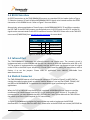
 3.4 RS232 Interface An RS232 transceiver on the TWR‐S08MM128 connects to a standard 2x5 pin header (refer to Figure 2). Selection jumpers J15 and J16 allow MC9S08MM128 SCI2 signals to be routed to either the RS232 transceiver or the OSBDM circuit. Refer to Figure 5 for more details. Alternatively, when assembled as a Tower System, the MC9S08MM128 SCI1 TX and RX are routed to the SER‐TWR. If the SER‐TWR jumpers are configured to run in RS‐232 mode, the SCI1 TX and the RX signal can be communicated via the RS232 connector from the TWR‐SER. Please refer to the TWR‐SER user manual (TWRSERUM) from www.freescale.com/tower for more detail. MC9S08MM128 Signal Not Connected
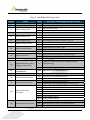
TX2
RX2
Not Connected
GND
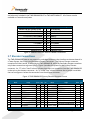
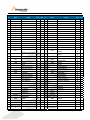
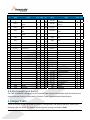
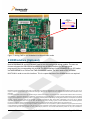
MC9S08MM128 Pin Signal 1 2 Not Connected 3 4 Not Connected 5 6 Not Connected 7 8 Not Connected 9 10 3.3V Figure 2. RS232 2x5 Pin Header Connections 3.5 Infrared Port The TWR‐S08MM128 implements an infrared transmit and receive port. The transmit circuit is implemented with an infrared diode and the user can choose to drive the diode either with IRO or SCI TX. The receiver is implemented by an infrared transistor and the user can choose to input this signal to the SCI RX or the ACMP input. Jumpers J9, J25 and J26 are used for routing the connections, refer to Section 4 to set the jumpers. Please refer to application note AN4116, searchable from www.freescale.com 3.6 Medical Connector The TWR‐S08MM128 features a 2x10 expansion connector J27 (refer to Figure 3) to MED‐EKG for routing the medical engine signals to external medical board so it can use the OPAMP, TRIAMP, ADC and DAC on MC9S08MM128 to implement the requirement signal conditioning for medical applications. When the DSC MC56F8006 from the MED‐EKG is enabled, MC9S08MM128 can choose to read the conditioned EKG results output from the DSC via I2C transmission (pin 3 and pin 4). To enable I2C communication, you must assemble the MEG‐EKG with the Tower System because the TWR‐SER has the pulled up resistors circuit required for I2C transmission. In Figure 3, the bold text highlights the functions that are used to implement the MED‐EKG demonstration. For detail about the MED‐EKG, please refer to the MED‐EKG user manual, MED‐EKG lab TWR‐MC9S08MM128 User Manual Page 5 of 13