1
21
§5 THE .NET EVENT-DELEGATE MODEL
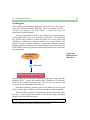
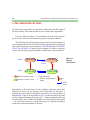
The uncoupling will often go further, in line with the earlier discussion:
the defining unit inserts your_delegate into an event-action table; the
executing unit retrieves it from there, usually not knowing who deposited it,
and executes call — DynamicInvoke in .NET — on it.
At this stage things are very simple. A delegate is like a restricted
form of agent with all arguments open. There is no way to specify some
arguments as “closed” by setting them at agent definition time, and leave
some others open for filling in at agent call time, as in our earlier example
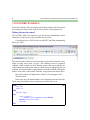
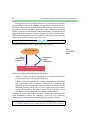
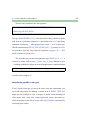
mouse_move subscribe (agent show_rainfall (?, ?, Initial, Final) /9/. To
achieve that effect you would have to write a special wrapper routine that
includes the open arguments only and fills in the closed arguments to call
the original, in the style of show_rainfall_at_initial_and_final /10/.
.
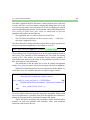
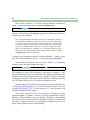
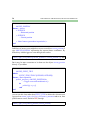
The only difference between the delegate form without an explicit target,
/11/, and the form with x as a target, /12/, is that the first is only valid in the
class C that defines r and will use the current object as target of future calls,
whereas the second, valid anywhere, uses x as target. The direct call equivalent
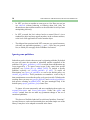
is /14/ in the first case and /15/ in the second. There is no way with delegates
to keep the target open, as in the Eiffel notation agent {TARGET_TYPE} r; to
achieve such an effect you have again to write a special wrapper routine, this
time with an extra argument representing the target.
.
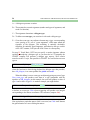
In the examples so far the underlying routine r was a procedure, but the
same mechanisms apply to a delegate built from a function. Then calling the
delegate will return a result, as would a direct call to r.
So the basic idea is easy to explain: a delegate is an object representing a
routine ready to be called on a target set at the time of the delegate’s definition
and arguments set at the time of the call.
The practical setup is more complicated. A delegate in .NET is an
instance of a class that must be a descendant of a library class, Delegate, or its
heir MulticastDelegate, which introduces the feature DynamicInvoke. We
won’t go into the details — see [15] — because these classes and features are
not for direct use. They have a special status in the .NET runtime;
programmers may not write classes that inherit from Delegate. It’s a kind of
magic class reserved for use by compiler writers so that they can provide the
corresponding mechanisms as language constructs. In Eiffel, the agent
mechanism (not .NET-specific) readily plays that role. C# with the keyword
delegate and Visual Basic .NET with Delegate provide constructs closely
mapped to the semantics of the underlying .NET classes.