1
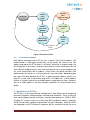
capacitive load is 400pF. This 400pF load includes all I2C devices as well as trace
lengths.
2.2
I2C Bus Speed
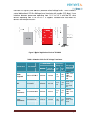
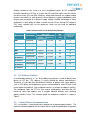
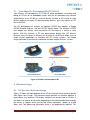
I2C bus is able to be operated at four speeds or modes: standard-mode (up to 100
Kbps), fast-mode (400 Kbps), fast-mode plus (up to 1 Mbps), and high speed mode
(up to 3.4 Mbps). Most of the I2C devices available today support 400Kbps
operation. Higher-speed operation may allow I2C to keep up with the rising demand
for bandwidth in multimedia and other applications.
The I2C devices are fully downward compatible, so any device may be operated at a
lower bus speed. It makes it possible that a combination of different speed I2C
devices exits in a system with the bus speed controlled by I2C master.
2.3
I2C Bus Communication
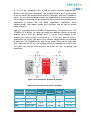
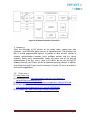
I2C is a master-slave protocol. Therefore, the communication is initiated by a master
only. When a master on the I2C bus wants to communicate with a slave, it first has
to take control of the bus. This is only possible when the bus is free. Then the master
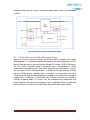
device issues a START condition. A START condition is determined by a HIGH to
LOW transition on the SDA line while SCL is HIGH. This condition informs all the
slave devices to listen on the serial data line for their respective address. The bus is
considered to be busy after the START condition. After a START condition has been
signalled, the bus master will then send the unique ADDRESS of the target slave
device along with a Read or Write flag. The slave with the corresponding address
then responds with an acknowledgement (ACK) signal. Now the communication
proceeds between the master and the Slave on the data line. The transmitter sends
8-bits of data to the receiver which replies with a 1-bit acknowledgement. When the
communication is complete, the master issues a STOP condition indicating that
everything is done. A STOP condition is indicated by a LOW to HIGH transition on
the SDA line while SCL is HIGH. After the STOP condition is generated, the I2C bus
is considered free again.
Solution Guide to I2C BUS Communication
Page 4