1
21
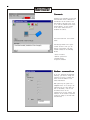
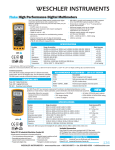
The necessary instruments for servicing the irrigation system is a digital
voltmeter and a clampmeter. If the voltmeter is used only to check
voltages on the system, a resolution of 1 V is sufficient.
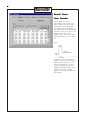
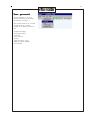
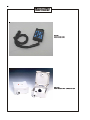
Digital Voltmeter
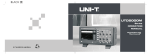
Clampmeter
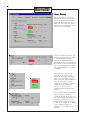
Short Finding
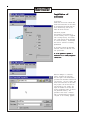
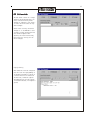
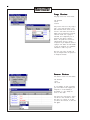
Select “Electrical Measurement”
From the manual Test Menu. When
you press “Run Test” the AC Line
voltage will change form 1 cycle/sec
to 50 cycles/sec which can be
meeasured with a clampmeter.
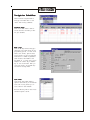
Start with measuring the currents on
the Lines at the LTB-500. If more
thatn one Line has shorts, check one
at a time by disconnecting the
others. In cas eof a loop, disconnect
one end. Follow current through the
Line until it disappears indicating that
you have passed the shortening
point. A precise “as built” diagram
saves time.
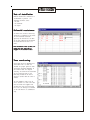
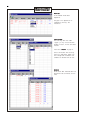
The clampmeter can be either a probe connected to a voltmeter or a
separate instrument. In the first case the voltmeter must have a
resolution of 1 mV (AC). Observe that although the resolution is 1 mV
the accuracy is typically +/- 3 mV. The probe must have a resolution of 1
mA. For the probe a conversion of 1 mA to 1 mV would be normal. As a
separate instrument, it is difficult to find one with a measuring range
down to 1 mA. Most of these are designed for power applications and
minumum ranges of 1 A are the usual. Normally clampmeters register
only AC current but it is possible to get meters that register DC currents
as well, but those are more expensive.
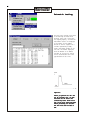
A problem common to both the voltmeter and the clampmeter is the
frequency of the AC in the system. AC meters are normally designed for
frequencies from 50 Hz to 1000 Hz (mains frequency is 60 Hz). The
frequency of the Flowmaster system is 1 Hz, but more about this in
connection with the individual measurements.