1
Chapter 6
System Performance
6.1
Broad band imaging photometry
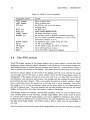
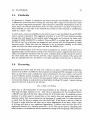
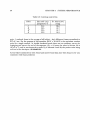
Photometric zero-points (ZPs) for broadband photometry, defined as 2.5 10g(CFZAf) , and
where CFZM are the counts for a zero-magnitude star, are listed in Table 6.1. These
values were derived for lens LB, and the precise values on any given night will depend on
the lens used, on the quality of the night, and the cleanliness of the mirror. The actual
values should not differ by more than ±O.2 mag from the ones in the table. Table 6.1 also
lists the total system efficiency, i.e. including atmosphere, telescope, and instrument.
Table 6.1: Typical photometric ZP and net efficiency
I
Filter
ZP
eff.
J
21.8
21.7
21.3
21.1
24%
23%
24%
H
[('
J(
15%
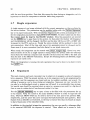
Overall system performance is determined by the noise in portions of the reduced images
that contain pure sky. Typical values of what is reached with 1 hI' of integration, half of
which is on the object and half on the sky, are listed in Table 6.2. From these values
one can derive the limiting sensitivity to point sources. The values in Table 6.2 were
determined assuming an aperture of area 50 pix and a 50" measurement.
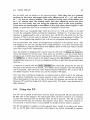
.Given two frames obtained with the same integration parameters, NOIT x OIT, on which a
sky signal of S ADD is measured, the expeced noise in the reduced frame is
O"R
= O~TJg~
(S
+ 2~s RON 2 )
ADU
where N s is the number of samples per readout, and N = NOIT x the number of sky-object
25