1
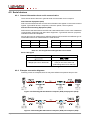
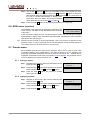
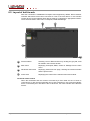
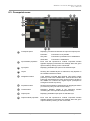
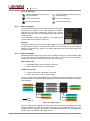
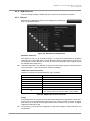
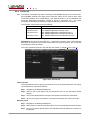
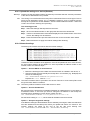
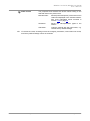
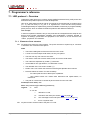
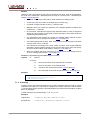
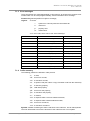
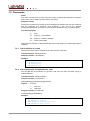
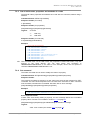
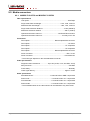
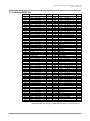
MODEX-F15-OPTS, MODEX-F15-OPTM User’s Manual 6.6. EDID menu 6.6.1. About EDID memory (transmitter)1 EDID memory is non-volatile and consists of four blocks, each for different purposes: Factory preset EDIDs User-saved EDIDs Dynamic EDID (EDID of last connected sink on the output port) Emulated EDIDs (EDID currently emulated on a specific input port) EDIDs are numbered from 1 in each block. They can be referred as the first letter of the block name and the number of the desired EDID. This way F02 refers to the second factory preset EDID. Dynamic and emulated EDID blocks’ size depends on the A/V modules. EDID memory structure is the following: F01..F119 .................................................................. Factory Preset EDIDs U01..U31 ..................................................... User programmable memories Dxx .................................................. Last attached monitor’s EDID (output) Exx ...........................................................................Emulated EDID (input) Dynamic, factory and user EDIDs can be switched and emulated at the input(s). Info: Factory EDIDs (Fxx) are factory preprogrammed and cannot be modified. These are the most commonly used resolutions. The EDID list can be found in section 11.3 on page 117. Info: MODEX can handle both 128 Byte EDID and 256 Byte extended EDID structures. Info: Attached monitor’s EDID is stored automatically, until a new monitor is attached to that particular output. In case of powering the unit off, last attached monitor’s EDID remains in non-volatile memory even if the monitor is disconnected. 6.6.2. EDID types Most of the factory preset EDIDs include only one resolution. This is to force the connected source to give a signal with the needed resolution. However there are Universal EDIDs as well which allow many resolutions. Factory EDIDs are divided into groups regarding their type. Some EDIDs support DVI only, some support HDMI and some are for analog VGA signals. Also there are EDIDs for Dual Link DVI resolutions. DVI EDIDs does not support audio. Universal DVI EDID indicates support for many PC (VESA) resolutions. HDMI EDIDs support embedded audio. These EDIDs have PCM stereo audio format enabled. To allow other audio formats like Dolby and DTS, special EDIDs have to be used. There are three Universal HDMI EDIDs which include the same resolutions but support different capabilities: EDID Universal_HDMI_PCM Universal_HDMI_ALL Universal_HDMI_DC PCM audio yes yes yes other audio no yes yes deep color no no yes Table 6-10. Universal HDMI EDIDs Info: Analog EDIDs are for future developments. Dual Link DVI EDIDs does not support audio. Use only for Dual Link ports. 1 The exact EDID memory size depends on the firmware and the installed A/V modules. Section 6. Web control – Using the built-in website Page 51 / 120