1
Freescale Semiconductor, Inc.
EXTERNAL INTERRUPT PROCESSING
Steps in External Interrupt Recognition
Freescale Semiconductor, Inc...
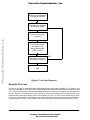
When the 603 receives an asynchronous exception, it
a)
requires the next instruction in program order to complete or except,
b)
blocks completion of any following instructions, and
c)
allows the completed store queue to drain.
When an interrupt comes in, five instructions may be running simultaneously in various stages of execution.
The 603 minimizes interrupt latency by halting execution of all instructions except one, the one marked in entry
0 of the Completion Queue. This instruction must complete before the 603 takes the interrupt. The remaining
instructions in the completion queue do not complete before the interrupt. If this one instruction causes an exception, the 603 handles that exception before the external interrupt. The PowerPC architecture specifies this
priority: instruction caused (synchronous) exceptions have a higher priority than maskable, asynchronous exceptions such as the external interrupt.
In addition to requiring the completion of one instruction, the 603 also requires the one-entry completed store
queue to drain. “Draining” the completed store queue means that the completed store must at least begin access to cache or the external bus. It does not mean that cache or bus access must be completed. For example,
a non-cacheable store in the completed store queue is drained from the queue as soon as the 603 begins the
Address Tenure for the store.
Since the 603 must wait for one instruction to complete or except before it takes an interrupt, interrupt latency
can be minimized by using instructions with short execution times and by eliminating instruction-caused exceptions. The following paragraphs list all instructions with long execution times and all types of instructioncaused exceptions.
Instruction-Caused Exceptions
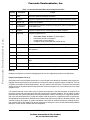
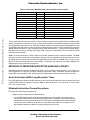
There are thirteen types (0–12) of synchronous exceptions, i.e. exceptions that can occur during instruction
dispatch or execution, see Table 1.
By eliminating the possibility of these thirteen types of exceptions, interrupt latency can be greatly reduced. A
closer look at each exception shows that they can be eliminated easily in embedded applications.
AN1267 Application Note
For More Information On This Product,
Go to: www.freescale.com
3