1
Are you ready to...
Go Deeper?
For a deep dive into SSL Power & Control, you can trust
Future Lighting Solutions and NXP to deliver an innovative solution.
www.FutureLightingSolutions.com
1
Making LED Lighting Solutions Simple™
Solid-State Lighting... Be an Innovator
The lighting industry is undergoing a major transformation, driven largely by concerns over climate
change and the desire to use energy resources more efficiently.
Governments and consumers alike are setting incandescent lights aside, switching to newer, more
energy-efficient solid-state lighting (SSL) solutions.
INTRODUCTION vIDeO
SSL technology is much more energy-efficient, but also much more challenging to design, since it
requires complex driver and control electronics.
ThaT’s where NXP aNd FuTure LighTiNg soLuTioNs caN heLP.
Paul wilson, BL Power and BL AMS Regional Marketing Director - NXP Americas
Future Lighting Solutions and NXP are focused on delivering world class products, engineering support
and design services to make it easier to develop and manufacture quality solid-state lighting.
This unique partnership supports customers by offering innovative technology and proven expertise
to enable complete, effective and energy efficient solutions.
www.FutureLightingSolutions.com
2
Table of Contents
SSL2101 <1% Flicker Free
3
Top 5 Considerations...
4
Installation Spotlight
5
SSL2102 Deep Dimmable Control
6
FLS Wall Pack Info
7
SSL1750 & UBA3070
8
LED Street and Road Lighting Driver
9
SSL152x & SSL1623
10
LED Driver Selection Guide
11
Knowledge Center
12
15% Discount on SSL Development Tools
13
Making LED Lighting Solutions Simple™
SSL2101 <1% Flicker Free
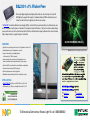
This small, highly integrated and highly efficient driver is the next step in SSL retrofit
LED lighting. It supports the majority of available dimmers (TRIAC and transistor) and
is ideal for small form-factor applications with closed casings.
The SSL2101 is a Switched Mode Power Supply (SMPS) controller IC that operates directly from rectified mains and
also in combination with a phase cut dimmer. It is designed to drive LED devices. The device includes a high-voltage
power switch and a circuit to allow start-up directly from the rectified mains voltage. Furthermore the device includes
high-voltage circuitry to supply the phase cut dimmer.
SSL2101 video MiCHAeL PeNA (4:3)
Features
• High-efficiency and high power-factor for SSL applications below 15 W
• Natural dimming curve via logarithmic correction
Michael pena, Director, SSL Applications Engineering - NXP
• Supports the majority of available dimmers
in the market (e.g. TRIAC, transistor)
• Fewer external components due to high integration level,
ideal for small form-factor applications with closed casings
• Switched SMPS controller with buck and flyback configurations
• Thermal-enhanced & small SO16 package
• Meets safety and power-factor regulations
• Optimized valley switching with built-in, dedicated circuitry
applications
• SSL2101T/N1,518 retrofits (e.g. GU10, E27) from 3 W to 8 W
SSL2101 Flyback-120V
• LED modules (e.g. LED spots, downlights) from 8 W to 15 W
SSL2101 Flyback-230V
SSL2101T/N1,518
SSL2101 FLY-BACK-120v
SSL2101 FLY-BACK-230v
Data Sheet
User Manual
Literature
Application Notes
Advanced Task Lighting Solutions using LUXEON Rebel LEDs.
®
To Schedule a Demo of our Recess Light Kit call 1.888.5893662
Top 5 Considerations when Specifying Power for LEDs
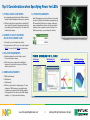
1. PhysicaL sPace coNsTraiNTs
a. A very demanding specification for today’s LED driver solutions especially for bulb retrofit applications where space is very limited.
b. NXP has the highest level of integration in its dedicated SSL
driver solutions. We integrate the dimming functionality, high
power switching function and protections. This allows for the
smallest footprint designs.
5. LiFeTiMe requireMeNTs
Most LED manufacturers specify long lifetimes of their products
(as long as the LED junction temperature is managed properly).
NXP has qualified its LED drivers to extended conditions well
above normal qualification criteria for ICs. Our accelerated life
testing has shown our products to match the lifetimes of the
LEDs they are driving, so you can design with confidence.
2. NuMber oF Leds To be driveN
aNd aT whaT curreNT LeveL?
SSL2101
sina shahanaghi, Technical Marketing Engineer - Future Lighting Solutions
SSL2102
a. This enables you to pick the right power solution.
vIDeO
b. For applications below 15W, you can choose fully integrated
SSL2101. For under 25W, the SSL2102 is the ideal solution.
3. isoLaTioN requireMeNTs
a. Regulations stipulate the need for isolation to protect
the user from dangerous voltages.
Further reading and use
seF
Ful tools
SSL Designer
LED Reliability Tool
Usable Light Tool 2.0
b. NXP solutions can be configured for isolated flyback
designs, which only allow low voltage on the LED board
and hence protect the user.
4. diMMiNg requireMeNTs
a. TRIAC based dimming?
b. PWM dimming?
c. 0-10V dimming?
d. NXP has the right solution for all dimming types. The most
challenging is TRIAC dimming, as it was really designed
for higher power incandescent loads. NXP has integrated
technology within its ICs to allow excellent TRIAC dimming
capability to <1% of light output without flickering.
www.FutureLightingSolutions.com
4
Making LED Lighting Solutions Simple™
QLED Thermal Design
and Simulation Software
Future Lighting Solutions Orchestrates
LED MakEovEr at ParEnt’s EuroPEan HQ, YiELDing 90% EnErgY savings
Perched on the busy M25 corridor encircling the London metropolitan area, the 64,000-square-foot home of
Future Electronics EMEA is as architecturally striking as the lighting inside. The building in Egham, Surrey, was
completed in 2000 and became the European nerve center of Montreal-based electronic components distributor
Future Electronics in July 2008.
In remodeling the building to suit the company’s needs, Future
Electronics executives decided to use solid-state lighting products
to create a new lighting ambiance and to replace many of the
existing halogen and CFL fixtures. The goal was to promote the
mission of Future Lighting Solutions - the exclusive supplier of
Philips Lumileds’ LUXEON® power LEDs as well as a source of
LED knowledge, resources, programs, partners, components and
logistics support for luminaire manufacturers – by turning the
building into a billboard for LUXEON-based lighting applications.
aLL-LED MEEting rooMs
We decided to retrofit the four executive meeting rooms on the first
and second floors, eliminating conventional lighting completely.
In each 14-square-meter meeting room, the four existing twin
26W CFL downlights were replaced with an equal number of
LUXEON Rebel-based downlights from Integrated Systems
Technologies (IST). The solid-state fixtures provide light output
comparable to the CFL versions, fit in the same space, and deliver
a performance of 45 lumens per watt that complies with the UK’s
Part L regulations for fuel and power conservation.
In addition, all eight 50W halogen MR16 lamps installed around
the edges of each room were retrofitted with the same three-LED
Dialight Lumidrives HL16 light engines as the perimeter fixtures in
the atrium. The LED lamps provide the same wall-washing effect
and can be used for soft illumination when the downlights are
turned off.
The same HL16 light engines were also in the building’s two
informal ground-floor meeting rooms. The original GU10 halogen
fixtures were replaced with an equal number of HL16s, providing
the same level of illumination on the meeting tables.
In total, Future replaced 116 halogen bulbs with warm or
neutral-white MR11- or MR16-compatible LED lamps from
Dialight Lumidrives, including 42-30W halogen GU10 fixtures in
two other meeting rooms near the elevators. The upgrades for
those 116 fixtures alone cut energy consumption 92% from
6.974kW to 0.494kW.
To read the case study or installation spotlight, please click here.
“This building gave us an opportunity
to show off the capabilities of the
LUXEON LEDs we work with every
day as well as enjoy LUXEON-based
lighting in our own workplace.”
Lawrence Madanda, General Manager, Future Lighting Solutions EMEA
www.FutureLightingSolutions.com
5
Making LED Lighting Solutions Simple™
SSL2102 Deep Dimmable Control
This small, highly integrated and highly efficient driver is the next step in SSL retrofit
LED lighting. It supports the majority of available dimmers (TRIAC and transistor) and
is ideal for small form-factor applications with closed casings.
The NXP mains LED driver IC SSL2102 is a fully integrated LED driver that includes the controller and the switches.
The IC delivers high efficiency and high power-factor in SSL retrofit lamps and modules. Supporting the majority of
available dimmers (including TRIAC and transistor), it uses very few external components and is ideal for small
form-factor applications that use a closed casing.
Features
• High efficiency and high power-factor for SSL applications below 25 W
• Natural dimming curve via logarithmic correction
• Supports the majority of available dimmers
in the market (e.g. TRIAC, transistor)
• Limited external components required due to high integration level,
ideal for small form-factor applications with closed casings
• Switched SMPS controller with buck and flyback configurations
• Thermally enhanced SO20 wide-body package
applications
• SSL retrofits (e.g. GU10, E27) from 8 to 15 W
• LED modules (e.g. LED spots, downlights) from 15 to 25 W
Note: for power ratings below 15 W (for LED modules) and
8 W (for SSL retrofit), NXP offers the SSL2101.
SSL2102T/DB/FLYB120V,598
SSL2102T/DB/FLYB230V,598
SSL2101 is directly compatible with SSL2102 which simplifies engineering.
SSL2102T/N1,518
SSL2102T/DB/FLYB120V,598
SSL2102T/DB/FLYB230V,598
Data Sheet
User Manual
Literature
Application Notes
www.FutureLightingSolutions.com
6
Making LED Lighting Solutions Simple™
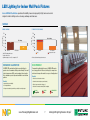
LED Lighting for Indoor Wall Pack Fixtures
Indoor LED Wall Pack fixtures provide better visibility, cleaner & crisp quality of light, and one-of-a-kind
designs for interior settings such as doorways, walkways and staircases.
saviNgs
eNergy saviNgs
5 year LiFe cycLe saviNgs
80
400
60
54% Savings
50w*
40
20
0
Dollars ($)
500
Wattage (W)
100
23w**
40W CFL
>$200 Savings
300
200
100
0
LED Solution
40W CFL
LED Solution
Energy
* 40W CFL including driver losses
** Includes driver losses
• Significant savings of over 50% compared to CFL
Lamp Replacement & Labor
• Reduced, labor and lamp replacement costs
eNhaNced iLLuMiNaTioN
eco-FrieNdLy
LUXEON LEDs are directional light sources that allow for
greater control to maximize efficiency and uniformity. The small
footprint means more LEDs can be packaged closer together.
Also, standard or special optics are available to create uniform
patterns.
Compared to traditional light sources, LUXEON LEDs are far
more energy efficient. Moreover, their long life, compact size
and chemical composition make for a very eco-friendly product.
Benefits
• No harmful chemicals (mercury and lead free)
®
• Improved safety and visibility
Benefits
• Reduced coal and carbon emissions
• Easier, cheaper and safer to dispose of
• Even light distribution
• Reduction of hazardous material (RoHS compliant)
• Unique and creative designs with the possibility of more light output
RoHS
compliant
www.FutureLightingSolutions.com
LEAD
Pb free
7
Hg MERCURY
free
Making LED Lighting Solutions Simple™
250 Watt SMPS LED Driver
LED Backlight Driver IC
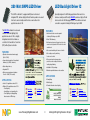
This SMPS controller IC, equipped with flyback control and
integrated PFC, delivers highly efficient, flexible operation in a small
form factor, and is ideally suited for indoor and outdoor SSL
applications above 25 W.
Specially designed for LED string applications that need to be
driven accurately and efficiently. UBA3070 provides a highly efficient
driver solution for LED string applications. This switch-mode buck
converter is capable of driving LED strings at up to 600V.
FeaTures
The SSL1750, suitable for indoor and
outdoor solid-state lighting (SSL)
applications above 25 W, is a highly
integrated device that combines a
controller for Power Factor Correction
(PFC) with a flyback controller.
• Switch-mode buck converter capable
of driving LED strings up to 600V
• Direct PWM dimming
• Fast transient response through cycle-by-cycle
current control; prevents LED current over- and
undershoots
• Zero-current switching for turn-on of switch
FeaTures
• Zero-voltage or valley switching
for turn-on of switch
• Operates from universal mains supply
(80 to 276 VAC)
• Over-current and over-temperature
protection, under-voltage lockout and
leading edge blanking
• Supporting the majority of the available
dimmers (e.g. TRIAC, transistor)
• High-voltage start-up
• Available in SO8 packages
• Integrated PFC
• Minimal required inductance value and size
• Meets power requirements between
25 and ~ 250 W (PFC needed)
aPPLicaTioNs
• Indoor SSL applications above 25 W
• Outdoor SSL applications above 25 W
- Street lighting
- Area lighting, such as parking lots
- Tunnel lighting, including lighting
tubes based on LED strings
HigH
Hig
H Power Le
LeD Driver
Demonstration BoarD
BoarD
aPPLicaTioNs
• Downlighting
SSL1750T/DB/120V,598
SSL1750T/DB/230V,598
Data Sheet
Component
Data Sheet
• Retail display
• Channel letter and contour lighting
User Manual
SSL1750
SSL1750T/DB/120v,598
SSL1750T/DB/230v,598
UBA3070
OM8604/3070 GLIGHT
Literature
www.FutureLightingSolutions.com
8
Making LED Lighting Solutions Simple™
DataSheet
Literature
Product
Information
Application Note:
Buck Converter for SSL
LED Street and Road Lighting Driver
based oN NXP ics SSL1750 aNd UBA3070
Features
beneF
bene
Fits
Triple
Current
Source
Mains Voltage Converter
Mains
Input
PFC
Isolation
90V
350mA
www.futurelightingsolutions.com
350mA
350mA
Based on SSL1750
Based on 3x0UBA3070
www.FutureLightingSolutions.com
9
Making LED Lighting Solutions Simple™
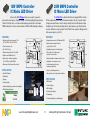
15W SMPS Controller
IC Mains LED Driver
25W SMPS Controller
IC Mains LED Driver
Based on the NXP STARplug family, it uses robust components
and proven technologies to simplify the design of solid-state lighting (SSL) applications.
These ICs offer the lowst cost solution when designing systems that do not require
TRIAC dimming. The solutions can be dimmed via PWM or 0-10V dimming techniques.
The SSL1623PH is a Switched Mode Power Supply (SMPS) controller
IC that operates directly from the rectified universal mains. The device includes a high
voltage power switch and a circuit for start-up directly from the rectified mains voltage.
A dedicated circuit for valley switching is built in, which makes a very efficient slim-line
electronic LED driver concept possible. The SSL1623PH can operate in LED applications
with a power range of up to 25 W.
FeaTures
FeaTures
Vcc
1(1)
SUPPLY
stop
• Output voltage follows VF of the LEDs
RC
3(6)
OSCILLATOR
• Output current 1000 mA (± 5%)
F
POWER-UP
RESET
1.8 U
REG
• Wide range of built-in protection circuits
4(7)
2.5V
+
+
-
n.c.
+
100 mv
THERMAL
SHUTDOWN
low freq
• Meets safety / isolation regulations
(UL 1598 Class 2 and IEC60950)
7(12, 13)
LOGIC
• 80 - 270 V AC input
• Operates from universal AC mains
supplies, 80 V to 276 V
• Adjustable frequency for flexible design
+
-
GND
2 (2, 3, 4,
5, 9, 10)
• Integrated power switch: 6.5 Ohm and 650 V
DRAIN
VALLEY
SSL152X
• Power factor above 0.9
8(14)
6(11)
PROTECTION
LOGIC
overcurrent
short circuit winding
SOURCE
blank
+
-
10x
-
• RC oscillator for load insensitive
regulation loop constant
+
-
3
GND
RC
5
0.5V
5(8)
• Adjustable over-current protection
AUX
stop
• Under-voltage protection and
temperature protection
+
0.75V
F
1.8 U
6
+
SGND
8
• Safe restart mode for system fault conditions
• LED ballasts
• Signage
aPPLicaTioNs
• Contour lighting
• LED ballasts
• Commercial lighting (e.g. cabinet or freezer lights)
• Contour lighting
• Other lighting applications
• LED spotlights
• Channel letter lighting
• Downlighting
STARplug
• Commercial lighting (e.g. retail displays)
SSL1623PH
www.FutureLightingSolutions.com
10
PROTECTION
LOGIC
Making LED Lighting Solutions Simple™
n.c.
+
-
over-current
-
12
SOURCE
11
AUX
blank
10x
short winding
• Short circuit winding protection
• Retrofit LED lamps
POWER-UP
RESET
2.5V
DRAIN
+
100 mv
THERMAL
SHUTDOWN
low freq
REG
+
-
LOGIC
OSCILLATOR
1, 2, 7, 9,
10, 13,
15, 16
VALLEY
SSL152X
4
14
SUPPLY
• Valley switching for minimum switch-on loss
+
Pin numbers without parentheses refer to DIP8 packages and within parentheses refer to SO14 packages.
aPPLicaTioNs
Vcc
+
-
• High energy efficiency at approx. 15 W:
85% at 120 V AC, 82% at 230 V AC
+
-
+
0.5V
+
0.75V
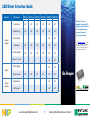
LED Driver Selection Guide
Segment
General
Lighting
Subsegment
SSL152x
SSL162x
SSL2101
SSL2102
SSL1750
UBA3070
Architectural
4
4
4
4
4
4
Retail Display
4
4
4
4
4
4
4
4
Street Lighting
Residential
4
4
4
4
4
4
Spot-Downlights
4
4
4
4
4
4
Channel / Contour
4
4
Traffic Lighting
4
4
4
4
Entertainment
4
4
LED Screens
4
4
Signal
Safety, Security
Special
Lighting
4
4
4
www.FutureLightingSolutions.com
4
11
Offering the deepest
dimmable control for LED
lighting solutions, NXP and
Future Lighting Solutions
give you the power to
never stop innovating.
NXP’s SSL Driver Solutions are designed
to provide deep dimming completely flicker
free with a natural dim curve. Isolated
voltage circuitry accelerates UL approval,
thus speeding your time to market.
Go Deeper
Making LED Lighting Solutions Simple™
Knowledge Center
aPPLicaTioN NoTes
Application Note 10754: This application note describes how to design a mains
dimmable LED driver using the NXP SSL2101/2102 LED Driver IC in flyback mode.
Application Note 10831: This application note gives an overview of the design
considerations when designing a 30 W flyback application with the SSL2102.
PAUL vIDeO ON TOOLS
Application Note 10876: This document describes how to design a buck converter that
can, for example, be used to drive an LED string and also illustrates the method of calculating
components in the Boundary Conduction Mode (BCM).
Paul wilson, BL Power and BL AMS Regional Marketing Director - NXP Americas
Application Note 10829: This application note describes a simple and highly
efficient flyback converter application design for low output power.
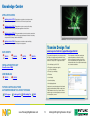
Transim Design Tool
www.nxp.com/technical_support/designportal/ssl/
daTa sheeTs
SSL2101
SSL2102
SSL1750
To keep today’s development cycles as short as possible,
NXP helps you simplify your design with intuitive online
tools. Our latest SSL design tool focuses on creating LED
drivers from 2 W up to 25 W. The applications include:
UBA3070
iNsTaLLaTioN sPoTLighT
• SSL retrofit lamps (e.g. GU10, E27)
• LED modules, separate power supplies,
e.g. LED spots, downlights
Future Electronics EMEA
• LED strings, e.g. retail display
user MaNuaLs
SSL2101
The tool generates schematic, bill of material and
transformer parameters, calculates the design’s
efficiency, and presents an overview of losses. Also,
for a better understanding of the application it can be
simulated either online or even locally after downloading
the schematics and simulator.
• LED ballasts
SSL2102
• Contour lighting
• Channel letter lighting
• Other lighting applications
FuTure LighTiNg soLuTioNs
auToMaTed desigN TooL video TuToriaLs
SSL Designer
Usable Light Tool
LED Reliability Tool
Output power is user-defined and can be fixed, dimmed
using pulse width modulation (PWM), or requires mains
TRIAC dimmable solutions. Choose from two different
application types - an isolated (flyback) converter and a
non-isolated (buck) converter.
QLED
www.FutureLightingSolutions.com
12
Making LED Lighting Solutions Simple™
For a limited time
use discount code SSLDEVTOOL to get
15% discount on
NXP SSL Development Tools
www.FutureLightingSolutions.com
13
Making LED Lighting Solutions Simple™