1
IPython Documentation
Release 1.2.1: An Afternoon Hack
The IPython Development Team
September 25, 2015
Contents
1
2
3
4
Introduction
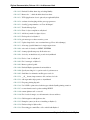
1.1 Overview . . . . . . . . . . . . .
1.2 Enhanced interactive Python shell
1.3 Decoupled two-process model . .
1.4 Interactive parallel computing . .
.
.
.
.
.
.
.
.
.
.
.
.
.
.
.
.
.
.
.
.
.
.
.
.
.
.
.
.
.
.
.
.
.
.
.
.
.
.
.
.
.
.
.
.
.
.
.
.
.
.
.
.
.
.
.
.
.
.
.
.
.
.
.
.
.
.
.
.
.
.
.
.
.
.
.
.
.
.
.
.
.
.
.
.
.
.
.
.
.
.
.
.
.
.
.
.
.
.
.
.
.
.
.
.
.
.
.
.
1
1
1
4
4
What’s new in IPython
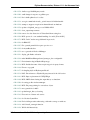
2.1 Development version . . . . . . . . . . . .
2.2 1.0 Series . . . . . . . . . . . . . . . . . .
2.3 Issues closed in the 1.0 development cycle
2.4 0.13 Series . . . . . . . . . . . . . . . . .
2.5 Issues closed in the 0.13 development cycle
2.6 0.12 Series . . . . . . . . . . . . . . . . .
2.7 Issues closed in the 0.12 development cycle
2.8 0.11 Series . . . . . . . . . . . . . . . . .
2.9 Issues closed in the 0.11 development cycle
2.10 0.10 series . . . . . . . . . . . . . . . . .
2.11 0.9 series . . . . . . . . . . . . . . . . . .
2.12 0.8 series . . . . . . . . . . . . . . . . . .
.
.
.
.
.
.
.
.
.
.
.
.
.
.
.
.
.
.
.
.
.
.
.
.
.
.
.
.
.
.
.
.
.
.
.
.
.
.
.
.
.
.
.
.
.
.
.
.
.
.
.
.
.
.
.
.
.
.
.
.
.
.
.
.
.
.
.
.
.
.
.
.
.
.
.
.
.
.
.
.
.
.
.
.
.
.
.
.
.
.
.
.
.
.
.
.
.
.
.
.
.
.
.
.
.
.
.
.
.
.
.
.
.
.
.
.
.
.
.
.
.
.
.
.
.
.
.
.
.
.
.
.
.
.
.
.
.
.
.
.
.
.
.
.
.
.
.
.
.
.
.
.
.
.
.
.
.
.
.
.
.
.
.
.
.
.
.
.
.
.
.
.
.
.
.
.
.
.
.
.
.
.
.
.
.
.
.
.
.
.
.
.
.
.
.
.
.
.
.
.
.
.
.
.
.
.
.
.
.
.
.
.
.
.
.
.
.
.
.
.
.
.
.
.
.
.
.
.
.
.
.
.
.
.
.
.
.
.
.
.
.
.
.
.
.
.
.
.
.
.
.
.
.
.
.
.
.
.
.
.
.
.
.
.
.
.
.
.
.
.
.
.
.
.
.
.
.
.
.
.
.
.
.
.
.
.
.
.
.
.
.
.
.
.
.
.
.
.
.
.
.
.
.
.
.
.
.
.
.
.
.
.
7
7
7
13
71
89
126
134
153
166
182
188
193
Installation
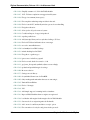
3.1 Quickstart . . . . . . . . . . . . . . . . . . . . . . . . . . . . . . . .
3.2 Overview . . . . . . . . . . . . . . . . . . . . . . . . . . . . . . . . .
3.3 Installing IPython itself . . . . . . . . . . . . . . . . . . . . . . . . .
3.4 Basic optional dependencies . . . . . . . . . . . . . . . . . . . . . . .
3.5 Dependencies for IPython.parallel (parallel computing) . . . . . . . . .
3.6 Dependencies for IPython.kernel.zmq . . . . . . . . . . . . . . . . . .
3.7 Dependencies for the IPython QT console . . . . . . . . . . . . . . . .
3.8 Dependencies for the IPython HTML notebook . . . . . . . . . . . . .
3.9 Dependencies for nbconvert (converting notebooks to various formats)
.
.
.
.
.
.
.
.
.
.
.
.
.
.
.
.
.
.
.
.
.
.
.
.
.
.
.
.
.
.
.
.
.
.
.
.
.
.
.
.
.
.
.
.
.
.
.
.
.
.
.
.
.
.
.
.
.
.
.
.
.
.
.
.
.
.
.
.
.
.
.
.
.
.
.
.
.
.
.
.
.
.
.
.
.
.
.
.
.
.
.
.
.
.
.
.
.
.
.
195
195
196
196
198
199
199
199
200
202
.
.
.
.
.
.
.
.
.
.
.
.
.
.
.
.
Using IPython for interactive work
203
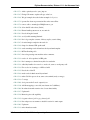
4.1 Introducing IPython . . . . . . . . . . . . . . . . . . . . . . . . . . . . . . . . . . . . . . 203
i
4.2
4.3
4.4
4.5
4.6
4.7
4.8
5
6
7
IPython Tips & Tricks . . . . . . . . .
IPython reference . . . . . . . . . . . .
IPython as a system shell . . . . . . . .
A Qt Console for IPython . . . . . . .
The IPython Notebook . . . . . . . . .
Converting notebooks to other formats
Running a notebook server . . . . . . .
.
.
.
.
.
.
.
.
.
.
.
.
.
.
.
.
.
.
.
.
.
.
.
.
.
.
.
.
.
.
.
.
.
.
.
.
.
.
.
.
.
.
.
.
.
.
.
.
.
.
.
.
.
.
.
.
.
.
.
.
.
.
.
.
.
.
.
.
.
.
.
.
.
.
.
.
.
.
.
.
.
.
.
.
.
.
.
.
.
.
.
.
.
.
.
.
.
.
.
.
.
.
.
.
.
.
.
.
.
.
.
.
.
.
.
.
.
.
.
.
.
.
.
.
.
.
.
.
.
.
.
.
.
.
.
.
.
.
.
.
.
.
.
.
.
.
.
.
.
.
.
.
.
.
.
.
.
.
.
.
.
.
.
.
.
.
.
.
.
.
.
.
.
.
.
.
.
.
.
.
.
.
.
.
.
.
.
.
.
.
.
.
.
.
.
.
206
208
230
234
244
252
255
Using IPython for parallel computing
5.1 Overview and getting started . . . . . . . . . . . . . .
5.2 Starting the IPython controller and engines . . . . . .
5.3 IPython’s Direct interface . . . . . . . . . . . . . . .
5.4 Parallel Magic Commands . . . . . . . . . . . . . . .
5.5 The IPython task interface . . . . . . . . . . . . . . .
5.6 The AsyncResult object . . . . . . . . . . . . . . . .
5.7 Using MPI with IPython . . . . . . . . . . . . . . . .
5.8 IPython’s Task Database . . . . . . . . . . . . . . . .
5.9 Security details of IPython . . . . . . . . . . . . . . .
5.10 Getting started with Windows HPC Server 2008 . . .
5.11 Parallel examples . . . . . . . . . . . . . . . . . . . .
5.12 DAG Dependencies . . . . . . . . . . . . . . . . . .
5.13 Details of Parallel Computing with IPython . . . . . .
5.14 Transitioning from IPython.kernel to IPython.parallel .
.
.
.
.
.
.
.
.
.
.
.
.
.
.
.
.
.
.
.
.
.
.
.
.
.
.
.
.
.
.
.
.
.
.
.
.
.
.
.
.
.
.
.
.
.
.
.
.
.
.
.
.
.
.
.
.
.
.
.
.
.
.
.
.
.
.
.
.
.
.
.
.
.
.
.
.
.
.
.
.
.
.
.
.
.
.
.
.
.
.
.
.
.
.
.
.
.
.
.
.
.
.
.
.
.
.
.
.
.
.
.
.
.
.
.
.
.
.
.
.
.
.
.
.
.
.
.
.
.
.
.
.
.
.
.
.
.
.
.
.
.
.
.
.
.
.
.
.
.
.
.
.
.
.
.
.
.
.
.
.
.
.
.
.
.
.
.
.
.
.
.
.
.
.
.
.
.
.
.
.
.
.
.
.
.
.
.
.
.
.
.
.
.
.
.
.
.
.
.
.
.
.
.
.
.
.
.
.
.
.
.
.
.
.
.
.
.
.
.
.
.
.
.
.
.
.
.
.
.
.
.
.
.
.
.
.
.
.
.
.
.
.
.
.
.
.
.
.
.
.
.
.
.
.
.
.
.
.
.
.
.
.
.
.
.
.
.
.
.
.
.
.
.
.
.
.
.
.
.
.
259
259
264
278
289
295
302
306
308
310
315
321
327
331
342
Configuration and customization
6.1 Overview of the IPython configuration system . . . . . . .
6.2 IPython extensions . . . . . . . . . . . . . . . . . . . . . .
6.3 Configuring the ipython command line application . . . .
6.4 Integrating your objects with IPython . . . . . . . . . . . .
6.5 Editor configuration . . . . . . . . . . . . . . . . . . . . .
6.6 Custom input transformation . . . . . . . . . . . . . . . . .
6.7 Outdated configuration information that might still be useful
.
.
.
.
.
.
.
.
.
.
.
.
.
.
.
.
.
.
.
.
.
.
.
.
.
.
.
.
.
.
.
.
.
.
.
.
.
.
.
.
.
.
.
.
.
.
.
.
.
.
.
.
.
.
.
.
.
.
.
.
.
.
.
.
.
.
.
.
.
.
.
.
.
.
.
.
.
.
.
.
.
.
.
.
.
.
.
.
.
.
.
.
.
.
.
.
.
.
.
.
.
.
.
.
.
.
.
.
.
.
.
.
.
.
.
.
.
.
.
347
347
355
358
360
361
363
365
IPython developer’s guide
7.1 Working with IPython source code . . . . . . . . .
7.2 Messaging in IPython . . . . . . . . . . . . . . . .
7.3 Messaging for Parallel Computing . . . . . . . . . .
7.4 Connection Diagrams of The IPython ZMQ Cluster
.
.
.
.
.
.
.
.
.
.
.
.
.
.
.
.
.
.
.
.
.
.
.
.
.
.
.
.
.
.
.
.
.
.
.
.
.
.
.
.
.
.
.
.
.
.
.
.
.
.
.
.
.
.
.
.
.
.
.
.
.
.
.
.
.
.
.
.
371
371
383
402
408
.
.
.
.
.
.
.
.
.
.
.
.
.
.
.
.
8
The IPython API
417
9
About IPython
419
9.1 Credits . . . . . . . . . . . . . . . . . . . . . . . . . . . . . . . . . . . . . . . . . . . . . 419
9.2 History . . . . . . . . . . . . . . . . . . . . . . . . . . . . . . . . . . . . . . . . . . . . . 423
9.3 License and Copyright . . . . . . . . . . . . . . . . . . . . . . . . . . . . . . . . . . . . . 424
Bibliography
427
Python Module Index
429
ii
CHAPTER 1
Introduction
1.1 Overview
One of Python’s most useful features is its interactive interpreter. It allows for very fast testing of ideas
without the overhead of creating test files as is typical in most programming languages. However, the
interpreter supplied with the standard Python distribution is somewhat limited for extended interactive use.
The goal of IPython is to create a comprehensive environment for interactive and exploratory computing.
To support this goal, IPython has three main components:
• An enhanced interactive Python shell.
• A decoupled two-process communication model, which allows for multiple clients to connect to a
computation kernel, most notably the web-based notebook
• An architecture for interactive parallel computing.
All of IPython is open source (released under the revised BSD license).
1.2 Enhanced interactive Python shell
IPython’s interactive shell (ipython), has the following goals, amongst others:
1. Provide an interactive shell superior to Python’s default. IPython has many features for tabcompletion, object introspection, system shell access, command history retrieval across sessions, and
its own special command system for adding functionality when working interactively. It tries to be a
very efficient environment both for Python code development and for exploration of problems using
Python objects (in situations like data analysis).
2. Serve as an embeddable, ready to use interpreter for your own programs. An interactive IPython
shell can be started with a single call from inside another program, providing access to the current
namespace. This can be very useful both for debugging purposes and for situations where a blend of
batch-processing and interactive exploration are needed.
3. Offer a flexible framework which can be used as the base environment for working with other systems,
with Python as the underlying bridge language. Specifically scientific environments like Mathematica,
IDL and Matlab inspired its design, but similar ideas can be useful in many fields.
1
IPython Documentation, Release 1.2.1: An Afternoon Hack
4. Allow interactive testing of threaded graphical toolkits. IPython has support for interactive, nonblocking control of GTK, Qt, WX, GLUT, and OS X applications via special threading flags. The
normal Python shell can only do this for Tkinter applications.
1.2.1 Main features of the interactive shell
• Dynamic object introspection. One can access docstrings, function definition prototypes, source code,
source files and other details of any object accessible to the interpreter with a single keystroke (?, and
using ?? provides additional detail).
• Searching through modules and namespaces with * wildcards, both when using the ? system and via
the %psearch command.
• Completion in the local namespace, by typing TAB at the prompt. This works for keywords, modules,
methods, variables and files in the current directory. This is supported via the readline library, and full
access to configuring readline’s behavior is provided. Custom completers can be implemented easily
for different purposes (system commands, magic arguments etc.)
• Numbered input/output prompts with command history (persistent across sessions and tied to each
profile), full searching in this history and caching of all input and output.
• User-extensible ‘magic’ commands. A set of commands prefixed with % is available for controlling
IPython itself and provides directory control, namespace information and many aliases to common
system shell commands.
• Alias facility for defining your own system aliases.
• Complete system shell access. Lines starting with ! are passed directly to the system shell, and using
!! or var = !cmd captures shell output into python variables for further use.
• The ability to expand python variables when calling the system shell. In a shell command, any python
variable prefixed with $ is expanded. A double $$ allows passing a literal $ to the shell (for access
to shell and environment variables like PATH).
• Filesystem navigation, via a magic %cd command, along with a persistent bookmark system (using
%bookmark) for fast access to frequently visited directories.
• A lightweight persistence framework via the %store command, which allows you to save arbitrary
Python variables. These get restored when you run the %store -r command.
• Automatic indentation (optional) of code as you type (through the readline library).
• Macro system for quickly re-executing multiple lines of previous input with a single name via the
%macro command. Macros can be stored persistently via %store and edited via %edit.
• Session logging (you can then later use these logs as code in your programs). Logs can optionally
timestamp all input, and also store session output (marked as comments, so the log remains valid
Python source code).
• Session restoring: logs can be replayed to restore a previous session to the state where you left it.
• Verbose and colored exception traceback printouts. Easier to parse visually, and in verbose mode they
produce a lot of useful debugging information (basically a terminal version of the cgitb module).
2
Chapter 1. Introduction
IPython Documentation, Release 1.2.1: An Afternoon Hack
• Auto-parentheses via the %autocall command: callable objects can be executed without parentheses: sin 3 is automatically converted to sin(3)
• Auto-quoting: using ,, or ; as the first character forces auto-quoting of the rest of
the line: ,my_function a b becomes automatically my_function("a","b"), while
;my_function a b becomes my_function("a b").
• Extensible input syntax. You can define filters that pre-process user input to simplify input in special
situations. This allows for example pasting multi-line code fragments which start with >>> or ...
such as those from other python sessions or the standard Python documentation.
• Flexible configuration system. It uses a configuration file which allows permanent setting of all
command-line options, module loading, code and file execution. The system allows recursive file
inclusion, so you can have a base file with defaults and layers which load other customizations for
particular projects.
• Embeddable. You can call IPython as a python shell inside your own python programs. This can be
used both for debugging code or for providing interactive abilities to your programs with knowledge
about the local namespaces (very useful in debugging and data analysis situations).
• Easy debugger access. You can set IPython to call up an enhanced version of the Python debugger
(pdb) every time there is an uncaught exception. This drops you inside the code which triggered the
exception with all the data live and it is possible to navigate the stack to rapidly isolate the source
of a bug. The %run magic command (with the -d option) can run any script under pdb’s control,
automatically setting initial breakpoints for you. This version of pdb has IPython-specific improvements, including tab-completion and traceback coloring support. For even easier debugger access, try
%debug after seeing an exception.
• Profiler support. You can run single statements (similar to profile.run()) or complete programs
under the profiler’s control. While this is possible with standard cProfile or profile modules, IPython
wraps this functionality with magic commands (see %prun and %run -p) convenient for rapid
interactive work.
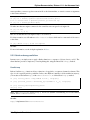
• Simple timing information. You can use the %timeit command to get the execution time of a Python
statement or expression. This machinery is intelligent enough to do more repetitions for commands
that finish very quickly in order to get a better estimate of their running time.
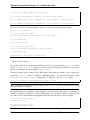
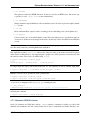
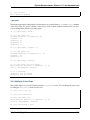
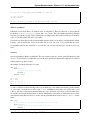
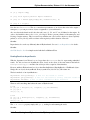
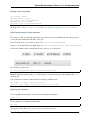
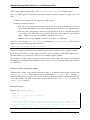
In [1]: %timeit 1+1
10000000 loops, best of 3: 25.5 ns per loop
In [2]: %timeit [math.sin(x) for x in range(5000)]
1000 loops, best of 3: 719 µs per loop
To get the timing information for more than one expression, use the %%timeit cell magic
command.
• Doctest support. The special %doctest_mode command toggles a mode to use doctest-compatible
prompts, so you can use IPython sessions as doctest code. By default, IPython also allows you to
paste existing doctests, and strips out the leading >>> and ... prompts in them.
1.2. Enhanced interactive Python shell
3
IPython Documentation, Release 1.2.1: An Afternoon Hack
1.3 Decoupled two-process model
IPython has abstracted and extended the notion of a traditional Read-Evaluate-Print Loop (REPL) environment by decoupling the evaluation into its own process. We call this process a kernel: it receives execution
instructions from clients and communicates the results back to them.
This decoupling allows us to have several clients connected to the same kernel, and even allows clients and
kernels to live on different machines. With the exclusion of the traditional single process terminal-based
IPython (what you start if you run ipython without any subcommands), all other IPython machinery uses
this two-process model. This includes ipython console, ipython qtconsole, and ipython
notebook.
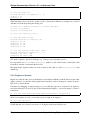
As an example, this means that when you start ipython qtconsole, you’re really starting two processes, a kernel and a Qt-based client can send commands to and receive results from that kernel. If there
is already a kernel running that you want to connect to, you can pass the --existing flag which will
skip initiating a new kernel and connect to the most recent kernel, instead. To connect to a specific kernel
once you have several kernels running, use the %connect_info magic to get the unique connection file,
which will be something like --existing kernel-19732.json but with different numbers which
correspond to the Process ID of the kernel.
You can read more about using ipython qtconsole, and ipython notebook. There is also a message spec which
documents the protocol for communication between kernels and clients.
See also:
Frontend/Kernel Model example notebook
1.4 Interactive parallel computing
Increasingly, parallel computer hardware, such as multicore CPUs, clusters and supercomputers, is becoming ubiquitous. Over the last several years, we have developed an architecture within IPython that allows
such hardware to be used quickly and easily from Python. Moreover, this architecture is designed to support
interactive and collaborative parallel computing.
The main features of this system are:
• Quickly parallelize Python code from an interactive Python/IPython session.
• A flexible and dynamic process model that be deployed on anything from multicore workstations to
supercomputers.
• An architecture that supports many different styles of parallelism, from message passing to task farming. And all of these styles can be handled interactively.
• Both blocking and fully asynchronous interfaces.
• High level APIs that enable many things to be parallelized in a few lines of code.
• Write parallel code that will run unchanged on everything from multicore workstations to supercomputers.
• Full integration with Message Passing libraries (MPI).
4
Chapter 1. Introduction
IPython Documentation, Release 1.2.1: An Afternoon Hack
• Capabilities based security model with full encryption of network connections.
• Share live parallel jobs with other users securely. We call this collaborative parallel computing.
• Dynamically load balanced task farming system.
• Robust error handling. Python exceptions raised in parallel execution are gathered and presented to
the top-level code.
For more information, see our overview of using IPython for parallel computing.
1.4.1 Portability and Python requirements
As of the 1.0 release, IPython works with Python 2.6, 2.7, 3.2 and 3.3. Version 0.12 introduced full support
for Python 3. Version 0.11 worked with Python 2.6 and 2.7 only. Versions 0.9 and 0.10 worked with Python
2.4 and above (not including Python 3).
IPython is known to work on the following operating systems:
• Linux
• Most other Unix-like OSs (AIX, Solaris, BSD, etc.)
• Mac OS X
• Windows (CygWin, XP, Vista, etc.)
See here for instructions on how to install IPython.
1.4. Interactive parallel computing
5
IPython Documentation, Release 1.2.1: An Afternoon Hack
6
Chapter 1. Introduction
CHAPTER 2
What’s new in IPython
This section documents the changes that have been made in various versions of IPython. Users should
consult these pages to learn about new features, bug fixes and backwards incompatibilities. Developers
should summarize the development work they do here in a user friendly format.
2.1 Development version
This document describes in-flight development work.
2.1.1 Backwards incompatible changes
2.2 1.0 Series
2.2.1 Release 1.0.0: An Afternoon Hack
IPython 1.0 requires Python 2.6.5 or 3.2.1. It does not support Python 3.0, 3.1, or 2.5.
This is a big release. The principal milestone is the addition of IPython.nbconvert, but there has been
a great deal of work improving all parts of IPython as well.
The previous version (0.13) was released on June 30, 2012, and in this development cycle we had:
• ~12 months of work.
• ~700 pull requests merged.
• ~600 issues closed (non-pull requests).
• contributions from ~150 authors.
• ~4000 commits.
The amount of work included in this release is so large that we can only cover here the main highlights;
please see our detailed release statistics for links to every issue and pull request closed on GitHub as well
as a full list of individual contributors. It includes
7
IPython Documentation, Release 1.2.1: An Afternoon Hack
Reorganization
There have been two major reorganizations in IPython 1.0:
• Added IPython.kernel for all kernel-related code. This means that IPython.zmq has been
removed, and much of it is now in IPython.kernel.zmq, some of it being in the top-level
IPython.kernel.
• We have removed the frontend subpackage, as it caused unnecessary depth. So what was
IPython.frontend.qt is now IPython.qt, and so on. The one difference is that the notebook has been further flattened, so that IPython.frontend.html.notebook is now just
IPython.html. There is a shim module, so IPython.frontend is still importable in 1.0, but there
will be a warning.
• The IPython sphinx directives are now installed in IPython.sphinx, so they can be imported by
other projects.
Public APIs
For the first time since 0.10 (sorry, everyone), there is an official public API for starting IPython:
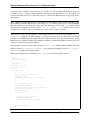
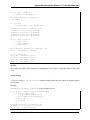
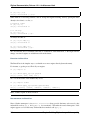
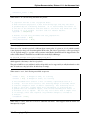
from IPython import start_ipython
start_ipython()
This is what packages should use that start their own IPython session, but don’t actually want embedded
IPython (most cases). IPython.embed() is used for embedding IPython into the calling namespace,
similar to calling Pdb.set_trace(), whereas start_ipython() will start a plain IPython session,
loading config and startup files as normal.
We also have added:
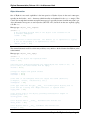
from IPython import get_ipython
Which is a library function for getting the current IPython instance, and will return None if no IPython
instance is running. This is the official way to check whether your code is called from inside an IPython
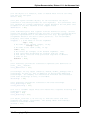
session. If you want to check for IPython without unnecessarily importing IPython, use this function:
def get_ipython():
"""return IPython instance if there is one, None otherwise"""
import sys
if "IPython" in sys.modules:
import IPython
return IPython.get_ipython()
Core
• The input transformation framework has been reworked. This fixes some corner cases, and adds more
flexibility for projects which use IPython, like SymPy & SAGE. For more details, see Custom input
transformation.
8
Chapter 2. What’s new in IPython
IPython Documentation, Release 1.2.1: An Afternoon Hack
• Exception types can now be displayed with a custom traceback, by defining a
_render_traceback_() method which returns a list of strings, each containing one line
of the traceback.
• A new command, ipython history trim can be used to delete everything but the last 1000
entries in the history database.
• __file__ is defined in both config files at load time, and .ipy files executed with %run.
• %logstart and %logappend are no longer broken.
• Add glob expansion for %run, e.g. %run -g script.py *.txt.
• Expand variables ($foo) in Cell Magic argument line.
• By default, iptest will exclude various slow tests. All tests can be run with iptest --all.
• SQLite history can be disabled in the various cases that it does not behave well.
• %edit works on interactively defined variables.
• editor hooks have been restored from quarantine, enabling TextMate as editor, etc.
• The env variable PYTHONSTARTUP is respected by IPython.
• The %matplotlib magic was added, which is like the old %pylab magic, but it does not import
anything to the interactive namespace. It is recommended that users switch to %matplotlib and
explicit imports.
• The --matplotlib command line flag was also added. It invokes the new %matplotlib
magic and can be used in the same way as the old --pylab flag. You can either use it by itself
as a flag (--matplotlib), or you can also pass a backend explicitly (--matplotlib qt or
--matplotlib=wx, etc).
Backwards incompatible changes
• Calling InteractiveShell.prefilter() will no longer perform static transformations - the
processing of escaped commands such as %magic and !system, and stripping input prompts from
code blocks. This functionality was duplicated in IPython.core.inputsplitter, and the
latter version was already what IPython relied on. A new API to transform input will be ready before
release.
• Functions from IPython.lib.inputhook to control integration with GUI event loops are no
longer exposed in the top level of IPython.lib. Code calling these should make sure to import
them from IPython.lib.inputhook.
• For all kernel managers, the sub_channel attribute has been renamed to iopub_channel.
• Users on Python versions before 2.6.6, 2.7.1 or 3.2 will now need to call
IPython.utils.doctestreload.doctest_reload() to make doctests run correctly
inside IPython. Python releases since those versions are unaffected. For details, see PR #3068 and
Python issue 8048.
2.2. 1.0 Series
9
IPython Documentation, Release 1.2.1: An Afternoon Hack
• The InteractiveShell.cache_main_mod() method has been removed, and
new_main_mod() has a different signature, expecting a filename where earlier versions expected a namespace. See PR #3555 for details.
• The short-lived plugin system has been removed. Extensions are the way to go.
NbConvert
The major milestone for IPython 1.0 is the addition of IPython.nbconvert - tools for converting
IPython notebooks to various other formats.
Warning: nbconvert is 𝛼-level preview code in 1.0
To use nbconvert to convert various file formats:
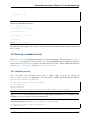
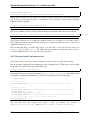
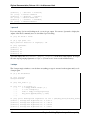
ipython nbconvert --to html *.ipynb
See ipython nbconvert --help for more information. nbconvert depends on pandoc for many of
the translations to and from various formats.
See also:
Converting notebooks to other formats
Notebook
Major changes to the IPython Notebook in 1.0:
• The notebook is now autosaved, by default at an interval of two minutes. When you press ‘save’ or
Ctrl-S, a checkpoint is made, in a hidden folder. This checkpoint can be restored, so that the autosave
model is strictly safer than traditional save. If you change nothing about your save habits, you will
always have a checkpoint that you have written, and an autosaved file that is kept up to date.
• The notebook supports raw_input() / input(), and thus also %debug, and many other Python
calls that expect user input.
• You can load custom javascript and CSS in the notebook by editing the files $(ipython locate
profile)/static/custom/custom.js,css.
• Add %%html, %%svg, %%javascript, and %%latex cell magics for writing raw output in notebook cells.
• add a redirect handler and anchors on heading cells, so you can link across notebooks, directly to
heading cells in other notebooks.
• Images support width and height metadata, and thereby 2x scaling (retina support).
• _repr_foo_ methods can return a tuple of (data, metadata), where metadata is a dict containing
metadata about the displayed object. This is used to set size, etc. for retina graphics. To enable retina
matplotlib figures, simply set InlineBackend.figure_format = ’retina’ for 2x PNG
figures, in your IPython config file or via the %config magic.
10
Chapter 2. What’s new in IPython
IPython Documentation, Release 1.2.1: An Afternoon Hack
• Add display.FileLink and FileLinks for quickly displaying HTML links to local files.
• Cells have metadata, which can be edited via cell toolbars. This metadata can be used by external
code (e.g. reveal.js or exporters), when examining the notebook.
• Fix an issue parsing LaTeX in markdown cells, which required users to type \\\, instead of \\.
• Notebook templates are rendered with Jinja instead of Tornado.
• %%file has been renamed %%writefile (%%file is deprecated).
• ANSI (and VT100) color parsing has been improved in both performance and supported values.
• The static files path can be found as IPython.html.DEFAULT_STATIC_FILES_PATH, which
may be changed by package managers.
• IPython’s CSS is installed in static/css/style.min.css (all style, including bootstrap), and
static/css/ipython.min.css, which only has IPython’s own CSS. The latter file should be
useful for embedding IPython notebooks in other pages, blogs, etc.
• The Print View has been removed. Users are encouraged to test ipython nbconvert to generate a static
view.
Javascript Components
The javascript components used in the notebook have been updated significantly.
• updates to jQuery (2.0) and jQueryUI (1.10)
• Update CodeMirror to 3.14
• Twitter Bootstrap (2.3) for layout
• Font-Awesome (3.1) for icons
• highlight.js (7.3) for syntax highlighting
• marked (0.2.8) for markdown rendering
• require.js (2.1) for loading javascript
Some relevant changes that are results of this:
• Markdown cells now support GitHub-flavored Markdown (GFM), which includes ‘‘‘python code
blocks and tables.
• Notebook UI behaves better on more screen sizes.
• Various code cell input issues have been fixed.
Kernel
The kernel code has been substantially reorganized.
New features in the kernel:
• Kernels support ZeroMQ IPC transport, not just TCP
2.2. 1.0 Series
11
IPython Documentation, Release 1.2.1: An Afternoon Hack
• The message protocol has added a top-level metadata field, used for information about messages.
• Add a data_pub message that functions much like display_pub, but publishes raw (usually pickled)
data, rather than representations.
• Ensure that sys.stdout.encoding is defined in Kernels.
• Stdout from forked subprocesses should be forwarded to frontends (instead of crashing).
IPEP 13
The KernelManager has been split into a KernelManager and a KernelClient. The Manager owns
a kernel and starts / signals / restarts it. There is always zero or one KernelManager per Kernel. Clients
communicate with Kernels via zmq channels, and there can be zero-to-many Clients connected to a Kernel
at any given time.
The KernelManager now automatically restarts the kernel when it dies, rather than requiring user input at
the notebook or QtConsole UI (which may or may not exist at restart time).
In-process kernels
The Python-language frontends, particularly the Qt console, may now communicate with in-process kernels,
in addition to the traditional out-of-process kernels. An in-process kernel permits direct access to the kernel
namespace, which is necessary in some applications. It should be understood, however, that the in-process
kernel is not robust to bad user input and will block the main (GUI) thread while executing. Developers
must decide on a case-by-case basis whether this tradeoff is appropriate for their application.
Parallel
IPython.parallel has had some refactoring as well. There are many improvements and fixes, but these are
the major changes:
• Connections have been simplified. All ports and the serialization in use are written to the connection
file, rather than the initial two-stage system.
• Serialization has been rewritten, fixing many bugs and dramatically improving performance serializing large containers.
• Load-balancing scheduler performance with large numbers of tasks has been dramatically improved.
• There should be fewer (hopefully zero) false-positives for engine failures.
• Increased compatibility with various use cases that produced serialization / argument errors with map,
etc.
• The controller can attempt to resume operation if it has crashed, by passing ipcontroller
--restore.
• Engines can monitor the Hub heartbeat, and shutdown if the Hub disappears for too long.
• add HTCondor support in launchers
12
Chapter 2. What’s new in IPython
IPython Documentation, Release 1.2.1: An Afternoon Hack
QtConsole
Various fixes, including improved performance with lots of text output, and better drag and drop support. The initial window size of the qtconsole is now configurable via IPythonWidget.width and
IPythonWidget.height.
2.3 Issues closed in the 1.0 development cycle
2.3.1 Issues closed in 1.2
GitHub stats for 2013/09/09 - 2014/02/21
These lists are automatically generated, and may be incomplete or contain duplicates.
The following 13 authors contributed 84 commits.
• Benjamin Ragan-Kelley
• Daryl Herzmann
• Doug Blank
• Fernando Perez
• James Porter
• Juergen Hasch
• Julian Taylor
• Kyle Kelley
• Lawrence Fu
• Matthias Bussonnier
• Paul Ivanov
• Pascal Schetelat
• Puneeth Chaganti
• Takeshi Kanmae
• Thomas Kluyver
We closed a total of 55 issues, 38 pull requests and 17 regular issues; this is the full list (generated with the
script tools/github_stats.py):
Pull Requests (38):
1.2.1:
• PR #4372: Don’t assume that SyntaxTB is always called with a SyntaxError
• PR #5166: remove mktemp usage
2.3. Issues closed in the 1.0 development cycle
13
IPython Documentation, Release 1.2.1: An Afternoon Hack
• PR #5163: Simplify implementation of TemporaryWorkingDirectory.
• PR #5105: add index to format to support py2.6
1.2.0:
• PR #4972: Work around problem in doctest discovery in Python 3.4 with PyQt
• PR #4934: ipython profile create respects –ipython-dir
• PR #4845: Add Origin Checking.
• PR #4928: use importlib.machinery when available
• PR #4849: Various unicode fixes (mostly on Windows)
• PR #4880: set profile name from profile_dir
• PR #4908: detect builtin docstrings in oinspect
• PR #4909: sort dictionary keys before comparison, ordering is not guaranteed
• PR #4903: use https for all embeds
• PR #4868: Static path fixes
• PR #4820: fix regex for cleaning old logs with ipcluster
• PR #4840: Error in Session.send_raw()
• PR #4762: whitelist alphanumeric characters for cookie_name
• PR #4748: fix race condition in profiledir creation.
• PR #4720: never use ssh multiplexer in tunnels
• PR #4738: don’t inject help into user_ns
• PR #4722: allow purging local results as long as they are not outstanding
• PR #4668: Make non-ASCII docstring unicode
• PR #4639: Minor import fix to get qtconsole with –pylab=qt working
• PR #4453: Play nice with App Nap
• PR #4609: Fix bytes regex for Python 3.
• PR #4488: fix typo in message spec doc
• PR #4346: getpass() on Windows & Python 2 needs bytes prompt
• PR #4230: Switch correctly to the user’s default matplotlib backend after inline.
• PR #4214: engine ID metadata should be unicode, not bytes
• PR #4232: no highlight if no language specified
• PR #4218: Fix display of SyntaxError when .py file is modified
• PR #4217: avoid importing numpy at the module level
• PR #4213: fixed dead link in examples/notebooks readme to Part 3
14
Chapter 2. What’s new in IPython
IPython Documentation, Release 1.2.1: An Afternoon Hack
• PR #4183: ESC should be handled by CM if tooltip is not on
• PR #4193: Update for #3549: Append Firefox overflow-x fix
• PR #4205: use TextIOWrapper when communicating with pandoc subprocess
• PR #4204: remove some extraneous print statements from IPython.parallel
• PR #4201: HeadingCells cannot be split or merged
Issues (17):
1.2.1:
• #5101: IPython 1.2.0: notebook fail with “500 Internal Server Error”
1.2.0:
• #4892: IPython.qt test failure with python3.4
• #4810: ipcluster bug in clean_logs flag
• #4765: missing build script for highlight.js
• #4761: ipv6 address triggers cookie exception
• #4721: purge_results with jobid crashing - looking for insight
• #4602: “ipcluster stop” fails after “ipcluster start –daemonize” using python3.3
• #3386: Magic %paste not working in Python 3.3.2. TypeError: Type str doesn’t support the buffer
API
• #4485: Incorrect info in “Messaging in IPython” documentation.
• #4351: /parallel/apps/launcher.py error
• #4334: NotebookApp.webapp_settings static_url_prefix causes crash
• #4039: Celltoolbar example issue
• #4256: IPython no longer handles unicode file names
• #4122: Nbconvert [windows]: Inconsistent line endings in markdown cells exported to latex
• #3819: nbconvert add extra blank line to code block on Windows.
• #4203: remove spurious print statement from parallel annoted functions
• #4200: Notebook: merging a heading cell and markdown cell cannot be undone
2.3.2 Issues closed in 1.1
GitHub stats for 2013/08/08 - 2013/09/09 (since 1.0)
These lists are automatically generated, and may be incomplete or contain duplicates.
The following 25 authors contributed 337 commits.
• Benjamin Ragan-Kelley
2.3. Issues closed in the 1.0 development cycle
15
IPython Documentation, Release 1.2.1: An Afternoon Hack
• Bing Xia
• Bradley M. Froehle
• Brian E. Granger
• Damián Avila
• dhirschfeld
• Dražen Lučanin
• gmbecker
• Jake Vanderplas
• Jason Grout
• Jonathan Frederic
• Kevin Burke
• Kyle Kelley
• Matt Henderson
• Matthew Brett
• Matthias Bussonnier
• Pankaj Pandey
• Paul Ivanov
• rossant
• Samuel Ainsworth
• Stephan Rave
• stonebig
• Thomas Kluyver
• Yaroslav Halchenko
• Zachary Sailer
We closed a total of 76 issues, 58 pull requests and 18 regular issues; this is the full list (generated with the
script tools/github_stats.py):
Pull Requests (58):
• PR #4188: Allow user_ns trait to be None
• PR #4189: always fire LOCAL_IPS.extend(PUBLIC_IPS)
• PR #4174: various issues in markdown and rst templates
• PR #4178: add missing data_javascript
• PR #4181: nbconvert: Fix, sphinx template not removing new lines from headers
16
Chapter 2. What’s new in IPython
IPython Documentation, Release 1.2.1: An Afternoon Hack
• PR #4043: don’t ‘restore_bytes’ in from_JSON
• PR #4163: Fix for incorrect default encoding on Windows.
• PR #4136: catch javascript errors in any output
• PR #4171: add nbconvert config file when creating profiles
• PR #4125: Basic exercise of ipython [subcommand] -h and help-all
• PR #4085: nbconvert: Fix sphinx preprocessor date format string for Windows
• PR #4159: don’t split .cell and div.cell CSS
• PR #4158: generate choices for –gui configurable from real mapping
• PR #4065: do not include specific css in embedable one
• PR #4092: nbconvert: Fix for unicode html headers, Windows + Python 2.x
• PR #4074: close Client sockets if connection fails
• PR #4064: Store default codemirror mode in only 1 place
• PR #4104: Add way to install MathJax to a particular profile
• PR #4144: help_end transformer shouldn’t pick up ? in multiline string
• PR #4143: update example custom.js
• PR #4142: DOC: unwrap openssl line in public_server doc
• PR #4141: add files with a separate add call in backport_pr
• PR #4137: Restore autorestore option for storemagic
• PR #4098: pass profile-dir instead of profile name to Kernel
• PR #4120: support input in Python 2 kernels
• PR #4088: nbconvert: Fix coalescestreams line with incorrect nesting causing strange behavior
• PR #4060: only strip continuation prompts if regular prompts seen first
• PR #4132: Fixed name error bug in function safe_unicode in module py3compat.
• PR #4121: move test_kernel from IPython.zmq to IPython.kernel
• PR #4118: ZMQ heartbeat channel: catch EINTR exceptions and continue.
• PR #4054: use unicode for HTML export
• PR #4106: fix a couple of default block values
• PR #4115: Update docs on declaring a magic function
• PR #4101: restore accidentally removed EngineError
• PR #4096: minor docs changes
• PR #4056: respect pylab_import_all when –pylab specified at the command-line
• PR #4091: Make Qt console banner configurable
2.3. Issues closed in the 1.0 development cycle
17
IPython Documentation, Release 1.2.1: An Afternoon Hack
• PR #4086: fix missing errno import
• PR #4030: exclude .git in MANIFEST.in
• PR #4047: Use istype() when checking if canned object is a dict
• PR #4031: don’t close_fds on Windows
• PR #4029: bson.Binary moved
• PR #4035: Fixed custom jinja2 templates being ignored when setting template_path
• PR #4026: small doc fix in nbconvert
• PR #4016: Fix IPython.start_* functions
• PR #4021: Fix parallel.client.View map() on numpy arrays
• PR #4022: DOC: fix links to matplotlib, notebook docs
• PR #4018: Fix warning when running IPython.kernel tests
• PR #4019: Test skipping without unicode paths
• PR #4008: Transform code before %prun/%%prun runs
• PR #4014: Fix typo in ipapp
• PR #3987: get files list in backport_pr
• PR #3974: nbconvert: Fix app tests on Window7 w/ Python 3.3
• PR #3978: fix –existing with non-localhost IP
• PR #3939: minor checkpoint cleanup
• PR #3981: BF: fix nbconvert rst input prompt spacing
• PR #3960: Don’t make sphinx a dependency for importing nbconvert
• PR #3973: logging.Formatter is not new-style in 2.6
Issues (18):
• #4024: nbconvert markdown issues
• #4095: Catch js error in append html in stream/pyerr
• #4156: Specifying –gui=tk at the command line
• #3818: nbconvert can’t handle Heading with Chinese characters on Japanese Windows OS.
• #4134: multi-line parser fails on ‘” in comment, qtconsole and notebook.
• #3998: sample custom.js needs to be updated
• #4078: StoreMagic.autorestore not working in 1.0.0
• #3990: Buitlin input doesn’t work over zmq
• #4015: nbconvert fails to convert all the content of a notebook
• #4059: Issues with Ellipsis literal in Python 3
18
Chapter 2. What’s new in IPython
IPython Documentation, Release 1.2.1: An Afternoon Hack
• #4103: Wrong default argument of DirectView.clear
• #4100: parallel.client.client references undefined error.EngineError
• #4005: IPython.start_kernel doesn’t work.
• #4020: IPython parallel map fails on numpy arrays
• #3945: nbconvert: commandline tests fail Win7x64 Py3.3
• #3977: unable to complete remote connections for two-process
• #3980: nbconvert rst output lacks needed blank lines
• #3968: TypeError: super() argument 1 must be type, not classobj (Python 2.6.6)
2.3.3 Issues closed in 1.0
GitHub stats for 2012/06/30 - 2013/08/08 (since 0.13)
These lists are automatically generated, and may be incomplete or contain duplicates.
The following 155 authors contributed 4258 commits.
• Aaron Meurer
• Adam Davis
• Ahmet Bakan
• Alberto Valverde
• Allen Riddell
• Anders Hovmöller
• Andrea Bedini
• Andrew Spiers
• Andrew Vandever
• Anthony Scopatz
• Anton Akhmerov
• Anton I. Sipos
• Antony Lee
• Aron Ahmadia
• Benedikt Sauer
• Benjamin Jones
• Benjamin Ragan-Kelley
• Benjie Chen
• Boris de Laage
2.3. Issues closed in the 1.0 development cycle
19
IPython Documentation, Release 1.2.1: An Afternoon Hack
• Brad Reisfeld
• Bradley M. Froehle
• Brian E. Granger
• Cameron Bates
• Cavendish McKay
• chapmanb
• Chris Beaumont
• Chris Laumann
• Christoph Gohlke
• codebraker
• codespaced
• Corran Webster
• DamianHeard
• Damián Avila
• Dan Kilman
• Dan McDougall
• Danny Staple
• David Hirschfeld
• David P. Sanders
• David Warde-Farley
• David Wolever
• David Wyde
• debjan
• Diane Trout
• dkua
• Dominik Dabrowski
• Donald Curtis
• Dražen Lučanin
• drevicko
• Eric O. LEBIGOT
• Erik M. Bray
• Erik Tollerud
20
Chapter 2. What’s new in IPython
IPython Documentation, Release 1.2.1: An Afternoon Hack
• Eugene Van den Bulke
• Evan Patterson
• Fernando Perez
• Francesco Montesano
• Frank Murphy
• Greg Caporaso
• Guy Haskin Fernald
• guziy
• Hans Meine
• Harry Moreno
• henryiii
• Ivan Djokic
• Jack Feser
• Jake Vanderplas
• jakobgager
• James Booth
• Jan Schulz
• Jason Grout
• Jeff Knisley
• Jens Hedegaard Nielsen
• jeremiahbuddha
• Jerry Fowler
• Jessica B. Hamrick
• Jez Ng
• John Zwinck
• Jonathan Frederic
• Jonathan Taylor
• Joon Ro
• Joseph Lansdowne
• Juergen Hasch
• Julian Taylor
• Jussi Sainio
2.3. Issues closed in the 1.0 development cycle
21
IPython Documentation, Release 1.2.1: An Afternoon Hack
• Jörgen Stenarson
• kevin
• klonuo
• Konrad Hinsen
• Kyle Kelley
• Lars Solberg
• Lessandro Mariano
• Mark Sienkiewicz at STScI
• Martijn Vermaat
• Martin Spacek
• Matthias Bussonnier
• Maxim Grechkin
• Maximilian Albert
• MercuryRising
• Michael Droettboom
• Michael Shuffett
• Michał Górny
• Mikhail Korobov
• mr.Shu
• Nathan Goldbaum
• ocefpaf
• Ohad Ravid
• Olivier Grisel
• Olivier Verdier
• Owen Healy
• Pankaj Pandey
• Paul Ivanov
• Pawel Jasinski
• Pietro Berkes
• Piti Ongmongkolkul
• Puneeth Chaganti
• Rich Wareham
22
Chapter 2. What’s new in IPython
IPython Documentation, Release 1.2.1: An Afternoon Hack
• Richard Everson
• Rick Lupton
• Rob Young
• Robert Kern
• Robert Marchman
• Robert McGibbon
• Rui Pereira
• Rustam Safin
• Ryan May
• s8weber
• Samuel Ainsworth
• Sean Vig
• Siyu Zhang
• Skylar Saveland
• slojo404
• smithj1
• Stefan Karpinski
• Stefan van der Walt
• Steven Silvester
• Takafumi Arakaki
• Takeshi Kanmae
• tcmulcahy
• teegaar
• Thomas Kluyver
• Thomas Robitaille
• Thomas Spura
• Thomas Weißschuh
• Timothy O’Donnell
• Tom Dimiduk
• ugurthemaster
• urielshaolin
• v923z
2.3. Issues closed in the 1.0 development cycle
23
IPython Documentation, Release 1.2.1: An Afternoon Hack
• Valentin Haenel
• Victor Zverovich
• 23. Trevor King
• y-p
• Yoav Ram
• Zbigniew J˛edrzejewski-Szmek
• Zoltán Vörös
We closed a total of 1484 issues, 793 pull requests and 691 regular issues; this is the full list (generated with
the script tools/github_stats.py):
Pull Requests (793):
• PR #3958: doc update
• PR #3965: Fix ansi color code for background yellow
• PR #3964: Fix casing of message.
• PR #3942: Pass on install docs
• PR #3962: exclude IPython.lib.kernel in iptest
• PR #3961: Longpath test fix
• PR #3905: Remove references to 0.11 and 0.12 from config/overview.rst
• PR #3951: nbconvert: fixed latex characters not escaped properly in nbconvert
• PR #3949: log fatal error when PDF conversion fails
• PR #3947: nbconvert: Make writer & post-processor aliases case insensitive.
• PR #3938: Recompile css.
• PR #3948: sphinx and PDF tweaks
• PR #3943: nbconvert: Serve post-processor Windows fix
• PR #3934: nbconvert: fix logic of verbose flag in PDF post processor
• PR #3929: swallow enter event in rename dialog
• PR #3924: nbconvert: Backport fixes
• PR #3925: Replace –pylab flag with –matplotlib in usage
• PR #3910: Added explicit error message for missing configuration arguments.
• PR #3913: grffile to support spaces in notebook names
• PR #3918: added check_for_tornado, closes #3916
• PR #3917: change docs/examples refs to be just examples
• PR #3908: what’s new tweaks
24
Chapter 2. What’s new in IPython
IPython Documentation, Release 1.2.1: An Afternoon Hack
• PR #3896: two column quickhelp dialog, closes #3895
• PR #3911: explicitly load python mode before IPython mode
• PR #3901: don’t force . relative path, fix #3897
• PR #3891: fix #3889
• PR #3892: Fix documentation of Kernel.stop_channels
• PR #3888: posixify paths for Windows latex
• PR #3882: quick fix for #3881
• PR #3877: don’t use shell=True in PDF export
• PR #3878: minor template loading cleanup
• PR #3855: nbconvert: Filter tests
• PR #3879: finish 3870
• PR #3870: Fix for converting notebooks that contain unicode characters.
• PR #3876: Update parallel_winhpc.rst
• PR #3872: removing vim-ipython, since it has it’s own repo
• PR #3871: updating docs
• PR #3873: remove old examples
• PR #3868: update CodeMirror component to 3.15
• PR #3865: Escape filename for pdflatex in nbconvert
• PR #3861: remove old external.js
• PR #3864: add keyboard shortcut to docs
• PR #3834: This PR fixes a few issues with nbconvert tests
• PR #3840: prevent profile_dir from being undefined
• PR #3859: Add “An Afternoon Hack” to docs
• PR #3854: Catch errors filling readline history on startup
• PR #3857: Delete extra auto
• PR #3845: nbconvert: Serve from original build directory
• PR #3846: Add basic logging to nbconvert
• PR #3850: add missing store_history key to Notebook execute_requests
• PR #3844: update payload source
• PR #3830: mention metadata / display_data similarity in pyout spec
• PR #3848: fix incorrect empty-docstring
• PR #3836: Parse markdown correctly when mathjax is disabled
2.3. Issues closed in the 1.0 development cycle
25
IPython Documentation, Release 1.2.1: An Afternoon Hack
• PR #3849: skip a failing test on windows
• PR #3828: signature_scheme lives in Session
• PR #3831: update nbconvert doc with new CLI
• PR #3822: add output flag to nbconvert
• PR #3780: Added serving the output directory if html-based format are selected.
• PR #3764: Cleanup nbconvert templates
• PR #3829: remove now-duplicate ‘this is dev’ note
• PR #3814: add ConsoleWidget.execute_on_complete_input flag
• PR #3826: try rtfd
• PR #3821: add sphinx prolog
• PR #3817: relax timeouts in terminal console and tests
• PR #3825: fix more tests that fail when pandoc is missing
• PR #3824: don’t set target on internal markdown links
• PR #3816: s/pylab/matplotlib in docs
• PR #3812: Describe differences between start_ipython and embed
• PR #3805: Print View has been removed
• PR #3820: Make it clear that 1.0 is not released yet
• PR #3784: nbconvert: Export flavors & PDF writer (ipy dev meeting)
• PR #3800: semantic-versionify version number for non-releases
• PR #3802: Documentation .txt to .rst
• PR #3765: cleanup terminal console iopub handling
• PR #3720: Fix for #3719
• PR #3787: re-raise KeyboardInterrupt in raw_input
• PR #3770: Organizing reveal’s templates.
• PR #3751: Use link(2) when possible in nbconvert
• PR #3792: skip tests that require pandoc
• PR #3782: add Importing Notebooks example
• PR #3752: nbconvert: Add cwd to sys.path
• PR #3789: fix raw_input in qtconsole
• PR #3756: document the wire protocol
• PR #3749: convert IPython syntax to Python syntax in nbconvert python template
• PR #3793: Closes #3788
26
Chapter 2. What’s new in IPython
IPython Documentation, Release 1.2.1: An Afternoon Hack
• PR #3794: Change logo link to ipython.org
• PR #3746: Raise a named exception when pandoc is missing
• PR #3781: comply with the message spec in the notebook
• PR #3779: remove bad if logged_in preventing new-notebook without login
• PR #3743: remove notebook read-only view
• PR #3732: add delay to autosave in beforeunload
• PR #3761: Added rm_math_space to markdown cells in the basichtml.tpl to be rendered ok by mathjax after the nbconvertion.
• PR #3758: nbconvert: Filter names cleanup
• PR #3769: Add configurability to tabcompletion timeout
• PR #3771: Update px pylab test to match new output of pylab
• PR #3741: better message when notebook format is not supported
• PR #3753: document Ctrl-C not working in ipython kernel
• PR #3766: handle empty metadata in pyout messages more gracefully.
• PR #3736: my attempt to fix #3735
• PR #3759: nbconvert: Provide a more useful error for invalid use case.
• PR #3760: nbconvert: Allow notebook filenames without their extensions
• PR #3750: nbconvert: Add cwd to default templates search path.
• PR #3748: Update nbconvert docs
• PR #3734: Nbconvert: Export extracted files into nbname_files subdirectory
• PR #3733: Nicer message when pandoc is missing, closes #3730
• PR #3722: fix two failing test in IPython.lib
• PR #3704: Start what’s new for 1.0
• PR
#3705:
Complete
rewrite
docs/source/interactive/htmlnotebook.txt
of
IPython
Notebook
documentation:
• PR #3709: Docs cleanup
• PR #3716: raw_input fixes for kernel restarts
• PR #3683: use %matplotlib in example notebooks
• PR #3686: remove quarantine
• PR #3699: svg2pdf unicode fix
• PR #3695: fix SVG2PDF
• PR #3685: fix Pager.detach
• PR #3675: document new dependencies
2.3. Issues closed in the 1.0 development cycle
27
IPython Documentation, Release 1.2.1: An Afternoon Hack
• PR #3690: Fixing some css minors in full_html and reveal.
• PR #3671: nbconvert tests
• PR #3692: Fix rename notebook - show error with invalid name
• PR #3409: Prevent qtconsole frontend freeze on lots of output.
• PR #3660: refocus active cell on dialog close
• PR #3598: Statelessify mathjaxutils
• PR #3673: enable comment/uncomment selection
• PR #3677: remove special-case in get_home_dir for frozen dists
• PR #3674: add CONTRIBUTING.md
• PR #3670: use Popen command list for ipexec
• PR #3568: pylab import adjustments
• PR #3559: add create.Cell and delete.Cell js events
• PR #3606: push cell magic to the head of the transformer line
• PR #3607: NbConvert: Writers, No YAML, and stuff...
• PR #3665: Pywin32 skips
• PR #3669: set default client_class for QtKernelManager
• PR #3662: add strip_encoding_cookie transformer
• PR #3641: increase patience for slow kernel startup in tests
• PR #3651: remove a bunch of unused default_config_file assignments
• PR #3630: CSS adjustments
• PR #3645: Don’t require HistoryManager to have a shell
• PR #3643: don’t assume tested ipython is on the PATH
• PR #3654: fix single-result AsyncResults
• PR #3601: Markdown in heading cells (take 2)
• PR #3652: Remove old docs/examples
• PR #3621: catch any exception appending output
• PR #3585: don’t blacklist builtin names
• PR #3647: Fix frontend deprecation warnings in several examples
• PR #3649: fix AsyncResult.get_dict for single result
• PR #3648: Fix store magic test
• PR #3650: Fix, config_file_name was ignored
• PR #3640: Gcf.get_active() can return None
28
Chapter 2. What’s new in IPython
IPython Documentation, Release 1.2.1: An Afternoon Hack
• PR #3571: Added shorcuts to split cell, merge cell above and merge cell below.
• PR #3635: Added missing slash to print-pdf call.
• PR #3487: Drop patch for compatibility with pyreadline 1.5
• PR #3338: Allow filename with extension in find_cmd in Windows.
• PR #3628: Fix test for Python 3 on Windows.
• PR #3642: Fix typo in docs
• PR #3627: use DEFAULT_STATIC_FILES_PATH in a test instead of package dir
• PR #3624: fix some unicode in zmqhandlers
• PR #3460: Set calling program to UNKNOWN, when argv not in sys
• PR #3632: Set calling program to UNKNOWN, when argv not in sys (take #2)
• PR #3629: Use new entry point for python -m IPython
• PR #3626: passing cell to showInPager, closes #3625
• PR #3618: expand terminal color support
• PR #3623: raise UsageError for unsupported GUI backends
• PR #3071: Add magic function %drun to run code in debugger
• PR #3608: a nicer error message when using %pylab magic
• PR #3592: add extra_config_file
• PR #3612: updated .mailmap
• PR #3616: Add examples for interactive use of MPI.
• PR #3615: fix regular expression for ANSI escapes
• PR #3586: Corrected a typo in the format string for strftime the sphinx.py transformer of nbconvert
• PR #3611: check for markdown no longer needed, closes #3610
• PR #3555: Simplify caching of modules with %run
• PR #3583: notebook small things
• PR #3594: Fix duplicate completion in notebook
• PR #3600: parallel: Improved logging for errors during BatchSystemLauncher.stop
• PR #3595: Revert “allow markdown in heading cells”
• PR #3538: add IPython.start_ipython
• PR #3562: Allow custom nbconvert template loaders
• PR #3582: pandoc adjustments
• PR #3560: Remove max_msg_size
• PR #3591: Refer to Setuptools instead of Distribute
2.3. Issues closed in the 1.0 development cycle
29
IPython Documentation, Release 1.2.1: An Afternoon Hack
• PR #3590: IPython.sphinxext needs an __init__.py
• PR #3581: Added the possibility to read a custom.css file for tweaking the final html in full_html and
reveal templates.
• PR #3576: Added support for markdown in heading cells when they are nbconverted.
• PR #3575: tweak run -d message to ‘continue execution’
• PR #3569: add PYTHONSTARTUP to startup files
• PR #3567: Trigger a single event on js app initilized
• PR #3565: style.min.css shoudl always exist...
• PR #3531: allow markdown in heading cells
• PR #3577: Simplify codemirror ipython-mode
• PR #3495: Simplified regexp, and suggestions for clearer regexps.
• PR #3578: Use adjustbox to specify figure size in nbconvert -> latex
• PR #3572: Skip import irunner test on Windows.
• PR #3574: correct static path for CM modes autoload
• PR #3558: Add IPython.sphinxext
• PR #3561: mention double-control-C to stop notebook server
• PR #3566: fix event names
• PR #3564: Remove trivial nbconvert example
• PR #3540: allow cython cache dir to be deleted
• PR #3527: cleanup stale, unused exceptions in parallel.error
• PR #3529: ensure raw_input returns str in zmq shell
• PR #3541: respect image size metadata in qtconsole
• PR #3550: Fixing issue preventing the correct read of images by full_html and reveal exporters.
• PR #3557: open markdown links in new tabs
• PR #3556: remove mention of nonexistent _margv in macro
• PR #3552: set overflow-x: hidden on Firefox only
• PR #3554: Fix missing import os in latex exporter.
• PR #3546: Don’t hardcode latex posix paths in nbconvert
• PR #3551: fix path prefix in nbconvert
• PR #3533: Use a CDN to get reveal.js library.
• PR #3498: When a notebook is written to file, name the metadata name u’‘.
• PR #3548: Change to standard save icon in Notebook toolbar
30
Chapter 2. What’s new in IPython
IPython Documentation, Release 1.2.1: An Afternoon Hack
• PR #3539: Don’t hardcode posix paths in nbconvert
• PR #3508: notebook supports raw_input and %debug now
• PR #3526: ensure ‘default’ is first in cluster profile list
• PR #3525: basic timezone info
• PR #3532: include nbconvert templates in installation
• PR #3515: update CodeMirror component to 3.14
• PR #3513: add ‘No Checkpoints’ to Revert menu
• PR #3536: format positions are required in Python 2.6.x
• PR #3521: Nbconvert fix, silent fail if template doesn’t exist
• PR #3530: update %store magic docstring
• PR #3528: fix local mathjax with custom base_project_url
• PR #3518: Clear up unused imports
• PR #3506: %store -r restores saved aliases and directory history, as well as variables
• PR #3516: make css highlight style configurable
• PR #3523: Exclude frontend shim from docs build
• PR #3514: use bootstrap disabled instead of ui-state-disabled
• PR #3520: Added relative import of RevealExporter to __init__.py inside exporters module
• PR #3507: fix HTML capitalization in nbconvert exporter classes
• PR #3512: fix nbconvert filter validation
• PR #3511: Get Tracer working after ipapi.get replaced with get_ipython
• PR #3510: use window.onbeforeunload= for nav-away warning
• PR #3504: don’t use parent=self in handlers
• PR #3500: Merge nbconvert into IPython
• PR #3478: restore “unsaved changes” warning on unload
• PR #3493: add a dialog when the kernel is auto-restarted
• PR #3488: Add test suite for autoreload extension
• PR #3484: Catch some pathological cases inside oinspect
• PR #3481: Display R errors without Python traceback
• PR #3468: fix %magic output
• PR #3430: add parent to Configurable
• PR #3491: Remove unexpected keyword parameter to remove_kernel
• PR #3485: SymPy has changed its recommended way to initialize printing
2.3. Issues closed in the 1.0 development cycle
31
IPython Documentation, Release 1.2.1: An Afternoon Hack
• PR #3486: Add test for non-ascii characters in docstrings
• PR #3483: Inputtransformer: Allow classic prompts without space
• PR #3482: Use an absolute path to iptest, because the tests are not always run from $IPYTHONDIR.
• PR #3381: enable 2x (retina) display
• PR #3450: Flatten IPython.frontend
• PR #3477: pass config to subapps
• PR #3466: Kernel fails to start when username has non-ascii characters
• PR #3465: Add HTCondor bindings to IPython.parallel
• PR #3463: fix typo, closes #3462
• PR #3456: Notice for users who disable javascript
• PR #3453: fix cell execution in firefox, closes #3447
• PR #3393: [WIP] bootstrapify
• PR #3440: Fix installing mathjax from downloaded file via command line
• PR #3431: Provide means for starting the Qt console maximized and with the menu bar hidden
• PR #3425: base IPClusterApp inherits from BaseIPythonApp
• PR #3433: Update IPythonexternalpath__init__.py
• PR #3298: Some fixes in IPython Sphinx directive
• PR #3428: process escapes in mathjax
• PR #3420: thansk -> thanks
• PR #3416: Fix doc: “principle” not “principal”
• PR #3413: more unique filename for test
• PR #3364: Inject requirejs in notebook and start using it.
• PR #3390: Fix %paste with blank lines
• PR #3403: fix creating config objects from dicts
• PR #3401: rollback #3358
• PR #3373: make cookie_secret configurable
• PR #3307: switch default ws_url logic to js side
• PR #3392: Restore anchor link on h2-h6
• PR #3369: Use different treshold for (auto)scroll in output
• PR #3370: normalize unicode notebook filenames
• PR #3372: base default cookie name on request host+port
• PR #3378: disable CodeMirror drag/drop on Safari
32
Chapter 2. What’s new in IPython
IPython Documentation, Release 1.2.1: An Afternoon Hack
• PR #3358: workaround spurious CodeMirror scrollbars
• PR #3371: make setting the notebook dirty flag an event
• PR #3366: remove long-dead zmq frontend.py and completer.py
• PR #3382: cull Session digest history
• PR #3330: Fix get_ipython_dir when $HOME is /
• PR #3319: IPEP 13: user-expressions and user-variables
• PR #3384: comments in tools/gitwash_dumper.py changed (‘” to “””)
• PR #3387: Make submodule checks work under Python 3.
• PR #3357: move anchor-link off of heading text
• PR #3351: start basic tests of ipcluster Launchers
• PR #3377: allow class.__module__ to be None
• PR #3340: skip submodule check in package managers
• PR #3328: decode subprocess output in launchers
• PR #3368: Reenable bracket matching
• PR #3356: Mpr fixes
• PR #3336: Use new input transformation API in %time magic
• PR #3325: Organize the JS and less files by component.
• PR #3342: fix test_find_cmd_python
• PR #3354: catch socket.error in utils.localinterfaces
• PR #3341: fix default cluster count
• PR #3286: don’t use get_ipython from builtins in library code
• PR #3333: notebookapp: add missing whitespace to warnings
• PR #3323: Strip prompts even if the prompt isn’t present on the first line.
• PR #3321: Reorganize the python/server side of the notebook
• PR #3320: define __file__ in config files
• PR #3317: rename %%file to %%writefile
• PR #3304: set unlimited HWM for all relay devices
• PR #3315: Update Sympy_printing extension load
• PR #3310: further clarify Image docstring
• PR #3285: load extensions in builtin trap
• PR #3308: Speed up AsyncResult._wait_for_outputs(0)
• PR #3294: fix callbacks as optional in js kernel.execute
2.3. Issues closed in the 1.0 development cycle
33
IPython Documentation, Release 1.2.1: An Afternoon Hack
• PR #3276: Fix: “python ABS/PATH/TO/ipython.py” fails
• PR #3301: allow python3 tests without python installed
• PR #3282: allow view.map to work with a few more things
• PR #3284: remove ipython.py entry point
• PR #3281: fix ignored IOPub messages with no parent
• PR #3275: improve submodule messages / git hooks
• PR #3239: Allow “x” icon and esc key to close pager in notebook
• PR #3290: Improved heartbeat controller to engine monitoring for long running tasks
• PR #3142: Better error message when CWD doesn’t exist on startup
• PR #3066: Add support for relative import to %run -m (fixes #2727)
• PR #3269: protect highlight.js against unknown languages
• PR #3267: add missing return
• PR #3101: use marked / highlight.js instead of pagedown and prettify
• PR #3264: use https url for submodule
• PR #3263: fix set_last_checkpoint when no checkpoint
• PR #3258: Fix submodule location in setup.py
• PR #3254: fix a few URLs from previous PR
• PR #3240: remove js components from the repo
• PR #3158: IPEP 15: autosave the notebook
• PR #3252: move images out of _static folder into _images
• PR #3251: Fix for cell magics in Qt console
• PR #3250: Added a simple __html__() method to the HTML class
• PR #3249: remove copy of sphinx inheritance_diagram.py
• PR #3235: Remove the unused print notebook view
• PR #3238: Improve the design of the tab completion UI
• PR #3242: Make changes of Application.log_format effective
• PR #3219: Workaround so only one CTRL-C is required for a new prompt in –gui=qt
• PR #3190: allow formatters to specify metadata
• PR #3231: improve discovery of public IPs
• PR #3233: check prefixes for swallowing kernel args
• PR #3234: Removing old autogrow JS code.
• PR #3232: Update to CodeMirror 3 and start to ship our components
34
Chapter 2. What’s new in IPython
IPython Documentation, Release 1.2.1: An Afternoon Hack
• PR #3229: The HTML output type accidentally got removed from the OutputArea.
• PR #3228: Typo in IPython.Parallel documentation
• PR #3226: Text in rename dialog was way too big - making it <p>.
• PR #3225: Removing old restuctured text handler and web service.
• PR #3222: make BlockingKernelClient the default Client
• PR #3223: add missing mathjax_url to new settings dict
• PR #3089: add stdin to the notebook
• PR #3221: Remove references to HTMLCell (dead code)
• PR #3205: add ignored *args to HasTraits constructor
• PR #3088: cleanup IPython handler settings
• PR #3201: use much faster regexp for ansi coloring
• PR #3220: avoid race condition in profile creation
• PR #3011: IPEP 12: add KernelClient
• PR #3217: informative error when trying to load directories
• PR #3174: Simple class
• PR #2979: CM configurable Take 2
• PR #3215: Updates storemagic extension to allow for specifying variable name to load
• PR #3181: backport If-Modified-Since fix from tornado
• PR #3200: IFrame (VimeoVideo, ScribdDocument, ...)
• PR #3186: Fix small inconsistency in nbconvert: etype -> ename
• PR #3212: Fix issue #2563, “core.profiledir.check_startup_dir() doesn’t work inside py2exe’d installation”
• PR #3211: Fix inheritance_diagram Sphinx extension for Sphinx 1.2
• PR #3208: Update link to extensions index
• PR #3203: Separate InputSplitter for transforming whole cells
• PR #3189: Improve completer
• PR #3194: finish up PR #3116
• PR #3188: Add new keycodes
• PR #2695: Key the root modules cache by sys.path entries.
• PR #3182: clarify %%file docstring
• PR #3163: BUG: Fix the set and frozenset pretty printer to handle the empty case correctly
• PR #3180: better UsageError for cell magic with no body
2.3. Issues closed in the 1.0 development cycle
35
IPython Documentation, Release 1.2.1: An Afternoon Hack
• PR #3184: Cython cache
• PR #3175: Added missing s
• PR #3173: Little bits of documentation cleanup
• PR #2635: Improve Windows start menu shortcuts (#2)
• PR #3172: Add missing import in IPython parallel magics example
• PR #3170: default application logger shouldn’t propagate
• PR #3159: Autocompletion for zsh
• PR #3105: move DEFAULT_STATIC_FILES_PATH to IPython.html
• PR #3144: minor bower tweaks
• PR #3141: Default color output for ls on OSX
• PR #3137: fix dot syntax error in inheritance diagram
• PR #3072: raise UnsupportedOperation on iostream.fileno()
• PR #3147: Notebook support for a reverse proxy which handles SSL
• PR #3152: make qtconsole size at startup configurable
• PR #3162: adding stream kwarg to current.new_output
• PR #2981: IPEP 10: kernel side filtering of display formats
• PR #3058: add redirect handler for notebooks by name
• PR #3041: support non-modules in @require
• PR #2447: Stateful line transformers
• PR #3108: fix some O(N) and O(N^2) operations in parallel.map
• PR #2791: forward stdout from forked processes
• PR #3157: use Python 3-style for pretty-printed sets
• PR #3148: closes #3045, #3123 for tornado < version 3.0
• PR #3143: minor heading-link tweaks
• PR #3136: Strip useless ANSI escape codes in notebook
• PR #3126: Prevent errors when pressing arrow keys in an empty notebook
• PR #3135: quick dev installation instructions
• PR #2889: Push pandas dataframes to R magic
• PR #3068: Don’t monkeypatch doctest during IPython startup.
• PR #3133: fix argparse version check
• PR #3102: set spellcheck=false in CodeCell inputarea
• PR #3064: add anchors to heading cells
36
Chapter 2. What’s new in IPython
IPython Documentation, Release 1.2.1: An Afternoon Hack
• PR #3097: PyQt 4.10: use self._document = self.document()
• PR #3117: propagate automagic change to shell
• PR #3118: don’t give up on weird os names
• PR #3115: Fix example
• PR #2640: fix quarantine/ipy_editors.py
• PR #3070: Add info make target that was missing in old Sphinx
• PR #3082: A few small patches to image handling
• PR #3078: fix regular expression for detecting links in stdout
• PR #3054: restore default behavior for automatic cluster size
• PR #3073: fix ipython usage text
• PR #3083: fix DisplayMagics.html docstring
• PR #3080: noted sub_channel being renamed to iopub_channel
• PR #3079: actually use IPKernelApp.kernel_class
• PR #3076: Improve notebook.js documentation
• PR #3063: add missing %%html magic
• PR #3075: check for SIGUSR1 before using it, closes #3074
• PR #3051: add width:100% to vbox for webkit / FF consistency
• PR #2999: increase registration timeout
• PR #2997: fix DictDB default size limit
• PR #3033: on resume, print server info again
• PR #3062: test double pyximport
• PR #3046: cast kernel cwd to bytes on Python 2 on Windows
• PR #3038: remove xml from notebook magic docstrings
• PR #3032: fix time format to international time format
• PR #3022: Fix test for Windows
• PR #3024: changed instances of ‘outout’ to ‘output’ in alt texts
• PR #3013: py3 workaround for reload in cythonmagic
• PR #2961: time magic: shorten unnecessary output on windows
• PR #2987: fix local files examples in markdown
• PR #2998: fix css in .output_area pre
• PR #3003: add $include /etc/inputrc to suggested ~/.inputrc
• PR #2957: Refactor qt import logic. Fixes #2955
2.3. Issues closed in the 1.0 development cycle
37
IPython Documentation, Release 1.2.1: An Afternoon Hack
• PR #2994: expanduser on %%file targets
• PR #2983: fix run-all (that-> this)
• PR #2964: fix count when testing composite error output
• PR #2967: shows entire session history when only startsess is given
• PR #2942: Move CM IPython theme out of codemirror folder
• PR #2929: Cleanup cell insertion
• PR #2933: Minordocupdate
• PR #2968: fix notebook deletion.
• PR #2966: Added assert msg to extract_hist_ranges()
• PR #2959: Add command to trim the history database.
• PR #2681: Don’t enable pylab mode, when matplotlib is not importable
• PR #2901: Fix inputhook_wx on osx
• PR #2871: truncate potentially long CompositeErrors
• PR #2951: use istype on lists/tuples
• PR #2946: fix qtconsole history logic for end-of-line
• PR #2954: fix logic for append_javascript
• PR #2941: fix baseUrl
• PR #2903: Specify toggle value on cell line number
• PR #2911: display order in output area configurable
• PR #2897: Dont rely on BaseProjectUrl data in body tag
• PR #2894: Cm configurable
• PR #2927: next release will be 1.0
• PR #2932: Simplify using notebook static files from external code
• PR #2915: added small config section to notebook docs page
• PR #2924: safe_run_module: Silence SystemExit codes 0 and None.
• PR #2906: Unpatch/Monkey patch CM
• PR #2921: add menu item for undo delete cell
• PR #2917: Don’t add logging handler if one already exists.
• PR #2910: Respect DB_IP and DB_PORT in mongodb tests
• PR #2926: Don’t die if stderr/stdout do not support set_parent() #2925
• PR #2885: get monospace pager back
• PR #2876: fix celltoolbar layout on FF
38
Chapter 2. What’s new in IPython
IPython Documentation, Release 1.2.1: An Afternoon Hack
• PR #2904: Skip remaining IPC test on Windows
• PR #2908: fix last remaining KernelApp reference
• PR #2905: fix a few remaining KernelApp/IPKernelApp changes
• PR #2900: Don’t assume test case for %time will finish in 0 time
• PR #2893: exclude fabfile from tests
• PR #2884: Correct import for kernelmanager on Windows
• PR #2882: Utils cleanup
• PR #2883: Don’t call ast.fix_missing_locations unless the AST could have been modified
• PR #2855: time(it) magic: Implement minutes/hour formatting and “%%time” cell magic
• PR #2874: Empty cell warnings
• PR #2819: tweak history prefix search (up/^p) in qtconsole
• PR #2868: Import performance
• PR #2877: minor css fixes
• PR #2880: update examples docs with kernel move
• PR #2878: Pass host environment on to kernel
• PR #2599: func_kw_complete for builtin and cython with embededsignature=True using docstring
• PR #2792: Add key “unique” to history_request protocol
• PR #2872: fix payload keys
• PR #2869: Fixing styling of toolbar selects on FF.
• PR #2708: Less css
• PR #2854: Move kernel code into IPython.kernel
• PR #2864: Fix %run -t -N<N> TypeError
• PR #2852: future pyzmq compatibility
• PR #2863: whatsnew/version0.9.txt: Fix ‘~./ipython’ -> ‘~/.ipython’ typo
• PR #2861: add missing KernelManager to ConsoleApp class list
• PR #2850: Consolidate host IP detection in utils.localinterfaces
• PR #2859: Correct docstring of ipython.py
• PR #2831: avoid string version comparisons in external.qt
• PR #2844: this should address the failure in #2732
• PR #2849: utils/data: Use list comprehension for uniq_stable()
• PR #2839: add jinja to install docs / setup.py
• PR #2841: Miscellaneous docs fixes
2.3. Issues closed in the 1.0 development cycle
39
IPython Documentation, Release 1.2.1: An Afternoon Hack
• PR #2811: Still more KernelManager cleanup
• PR #2820: add ‘=’ to greedy completer delims
• PR #2818: log user tracebacks in the kernel (INFO-level)
• PR #2828: Clean up notebook Javascript
• PR #2829: avoid comparison error in dictdb hub history
• PR #2830: BUG: Opening parenthesis after non-callable raises ValueError
• PR #2718: try to fallback to pysqlite2.dbapi2 as sqlite3 in core.history
• PR #2816: in %edit, don’t save “last_call” unless last call succeeded
• PR #2817: change ol format order
• PR #2537: Organize example notebooks
• PR #2815: update release/authors
• PR #2808: improve patience for slow Hub in client tests
• PR #2812: remove nonfunctional -la short arg in cython magic
• PR #2810: remove dead utils.upgradedir
• PR #1671: __future__ environments
• PR #2804: skip ipc tests on Windows
• PR #2789: Fixing styling issues with CellToolbar.
• PR #2805: fix KeyError creating ZMQStreams in notebook
• PR #2775: General cleanup of kernel manager code.
• PR #2340: Initial Code to reduce parallel.Client caching
• PR #2799: Exit code
• PR #2800: use type(obj) is cls as switch when canning
• PR #2801: Fix a breakpoint bug
• PR #2795: Remove outdated code from extensions.autoreload
• PR #2796: P3K: fix cookie parsing under Python 3.x (+ duplicate import is removed)
• PR #2724: In-process kernel support (take 3)
• PR #2687: [WIP] Metaui slideshow
• PR #2788: Chrome frame awareness
• PR #2649: Add version_request/reply messaging protocol
• PR #2753: add %%px –local for local execution
• PR #2783: Prefilter shouldn’t touch execution_count
• PR #2333: UI For Metadata
40
Chapter 2. What’s new in IPython
IPython Documentation, Release 1.2.1: An Afternoon Hack
• PR #2396: create a ipynbv3 json schema and a validator
• PR #2757: check for complete pyside presence before trying to import
• PR #2782: Allow the %run magic with ‘-b’ to specify a file.
• PR #2778: P3K: fix DeprecationWarning under Python 3.x
• PR #2776: remove non-functional View.kill method
• PR #2755: can interactively defined classes
• PR #2774: Removing unused code in the notebook MappingKernelManager.
• PR #2773: Fixed minor typo causing AttributeError to be thrown.
• PR #2609: Add ‘unique’ option to history_request messaging protocol
• PR #2769: Allow shutdown when no engines are registered
• PR #2766: Define __file__ when we %edit a real file.
• PR #2476: allow %edit <variable> to work when interactively defined
• PR #2763: Reset readline delimiters after loading rmagic.
• PR #2460: Better handling of __file__ when running scripts.
• PR #2617: Fix for units argument. Adds a res argument.
• PR #2738: Unicode content crashes the pager (console)
• PR #2749: Tell Travis CI to test on Python 3.3 as well
• PR #2744: Don’t show ‘try %paste’ message while using magics
• PR #2728: shift tab for tooltip
• PR #2741: Add note to %cython Black-Scholes example warning of missing erf.
• PR #2743: BUG: Octavemagic inline plots not working on Windows: Fixed
• PR #2740: Following #2737 this error is now a name error
• PR #2737: Rmagic: error message when moving an non-existant variable from python to R
• PR #2723: diverse fixes for project url
• PR #2731: %Rpush: Look for variables in the local scope first.
• PR #2544: Infinite loop when multiple debuggers have been attached.
• PR #2726: Add qthelp docs creation
• PR #2730: added blockquote CSS
• PR #2729: Fix Read the doc build, Again
• PR #2446: [alternate 2267] Offline mathjax
• PR #2716: remove unexisting headings level
• PR #2717: One liner to fix debugger printing stack traces when lines of context are larger than source.
2.3. Issues closed in the 1.0 development cycle
41
IPython Documentation, Release 1.2.1: An Afternoon Hack
• PR #2713: Doc bugfix: user_ns is not an attribute of Magic objects.
• PR #2690: Fix ‘import ‘... completion for py3 & egg files.
• PR #2691: Document OpenMP in %%cython magic
• PR #2699: fix jinja2 rendering for password protected notebooks
• PR #2700: Skip notebook testing if jinja2 is not available.
• PR #2692: Add %%cython magics to generated documentation.
• PR #2685: Fix pretty print of types when __module__ is not available.
• PR #2686: Fix tox.ini
• PR #2604: Backslashes are misinterpreted as escape-sequences by the R-interpreter.
• PR #2689: fix error in doc (arg->kwarg) and pep-8
• PR #2683: for downloads, replaced window.open with window.location.assign
• PR #2659: small bugs in js are fixed
• PR #2363: Refactor notebook templates to use Jinja2
• PR #2662: qtconsole: wrap argument list in tooltip to match width of text body
• PR #2328: addition of classes to generate a link or list of links from files local to the IPython HTML
notebook
• PR #2668: pylab_not_importable: Catch all exceptions, not just RuntimeErrors.
• PR #2663: Fix issue #2660: parsing of help and version arguments
• PR #2656: Fix irunner tests when $PYTHONSTARTUP is set
• PR #2312: Add bracket matching to code cells in notebook
• PR #2571: Start to document Javascript
• PR #2641: undefinied that -> this
• PR #2638: Fix %paste in Python 3 on Mac
• PR #2301: Ast transfomers
• PR #2616: Revamp API docs
• PR #2572: Make ‘Paste Above’ the default paste behavior.
• PR #2574: Fix #2244
• PR #2582: Fix displaying history when output cache is disabled.
• PR #2591: Fix for Issue #2584
• PR #2526: Don’t kill paramiko tunnels when receiving ^C
• PR #2559: Add psource, pfile, pinfo2 commands to ipdb.
• PR #2546: use 4 Pythons to build 4 Windows installers
42
Chapter 2. What’s new in IPython
IPython Documentation, Release 1.2.1: An Afternoon Hack
• PR #2561: Fix display of plain text containing multiple carriage returns before line feed
• PR #2549: Add a simple ‘undo’ for cell deletion.
• PR #2525: Add event to kernel execution/shell reply.
• PR #2554: Avoid stopping in ipdb until we reach the main script.
• PR #2404: Option to limit search result in history magic command
• PR #2294: inputhook_qt4: Use QEventLoop instead of starting up the QCoreApplication
• PR #2233: Refactored Drag and Drop Support in Qt Console
• PR #1747: switch between hsplit and vsplit paging (request for feedback)
• PR #2530: Adding time offsets to the video
• PR #2542: Allow starting IPython as python -m IPython.
• PR #2534: Do not unescape backslashes in Windows (shellglob)
• PR #2517: Improved MathJax, bug fixes
• PR #2511: trigger default remote_profile_dir when profile_dir is set
• PR #2491: color is supported in ironpython
• PR #2462: Track which extensions are loaded
• PR #2464: Locate URLs in text output and convert them to hyperlinks.
• PR #2490: add ZMQInteractiveShell to IPEngineApp class list
• PR #2498: Don’t catch tab press when something selected
• PR #2527: Run All Above and Run All Below
• PR #2513: add GitHub uploads to release script
• PR #2529: Windows aware tests for shellglob
• PR #2478: Fix doctest_run_option_parser for Windows
• PR #2519: clear In[ ] prompt numbers again
• PR #2467: Clickable links
• PR #2500: Add encoding attribute to OutStream class.
• PR #2349: ENH: added StackExchange-style MathJax filtering
• PR #2503: Fix traceback handling of SyntaxErrors without line numbers.
• PR #2492: add missing ‘qtconsole’ extras_require
• PR #2480: Add deprecation warnings for sympyprinting
• PR #2334: Make the ipengine monitor the ipcontroller heartbeat and die if the ipcontroller goes down
• PR #2479: use new _winapi instead of removed _subprocess
• PR #2474: fix bootstrap name conflicts
2.3. Issues closed in the 1.0 development cycle
43
IPython Documentation, Release 1.2.1: An Afternoon Hack
• PR #2469: Treat __init__.pyc same as __init__.py in module_list
• PR #2165: Add -g option to %run to glob expand arguments
• PR #2468: Tell git to ignore __pycache__ directories.
• PR #2421: Some notebook tweaks.
• PR #2291: Remove old plugin system
• PR #2127: Ability to build toolbar in JS
• PR #2445: changes for ironpython
• PR #2420: Pass ipython_dir to __init__() method of TerminalInteractiveShell’s superclass.
• PR #2432: Revert #1831, the __file__ injection in safe_execfile / safe_execfile_ipy.
• PR #2216: Autochange highlight with cell magics
• PR #1946: Add image message handler in ZMQTerminalInteractiveShell
• PR #2424: skip find_cmd when setting up script magics
• PR #2389: Catch sqlite DatabaseErrors in more places when reading the history database
• PR #2395: Don’t catch ImportError when trying to unpack module functions
• PR #1868: enable IPC transport for kernels
• PR #2437: don’t let log cleanup prevent engine start
• PR #2441: sys.maxsize is the maximum length of a container.
• PR #2442: allow iptest to be interrupted
• PR #2240: fix message built for engine dying during task
• PR #2369: Block until kernel termination after sending a kill signal
• PR #2439: Py3k: Octal (0777 -> 0o777)
• PR #2326: Detachable pager in notebook.
• PR #2377: Fix installation of man pages in Python 3
• PR #2407: add IPython version to message headers
• PR #2408: Fix Issue #2366
• PR #2405: clarify TaskScheduler.hwm doc
• PR #2399: IndentationError display
• PR #2400: Add scroll_to_cell(cell_number) to the notebook
• PR #2401: unmock read-the-docs modules
• PR #2311: always perform requested trait assignments
• PR #2393: New option n to limit history search hits
• PR #2386: Adapt inline backend to changes in matplotlib
44
Chapter 2. What’s new in IPython
IPython Documentation, Release 1.2.1: An Afternoon Hack
• PR #2392: Remove suspicious double quote
• PR #2387: Added -L library search path to cythonmagic cell magic
• PR #2370: qtconsole: Create a prompt newline by inserting a new block (w/o formatting)
• PR #1715: Fix for #1688, traceback-unicode issue
• PR #2378: use Singleton.instance() for embed() instead of manual global
• PR #2373: fix missing imports in core.interactiveshell
• PR #2368: remove notification widget leftover
• PR #2327: Parallel: Support get/set of nested objects in view (e.g. dv[’a.b’])
• PR #2362: Clean up ProgressBar class in example notebook
• PR #2346: Extra xterm identification in set_term_title
• PR #2352: Notebook: Store the username in a cookie whose name is unique.
• PR #2358: add backport_pr to tools
• PR #2365: fix names of notebooks for download/save
• PR #2364: make clients use ‘location’ properly (fixes #2361)
• PR #2354: Refactor notebook templates to use Jinja2
• PR #2339: add bash completion example
• PR #2345: Remove references to ‘version’ no longer in argparse. Github issue #2343.
• PR #2347: adjust division error message checking to account for Python 3
• PR #2305: RemoteError._render_traceback_ calls self.render_traceback
• PR #2338: Normalize line endings for ipexec_validate, fix for #2315.
• PR #2192: Introduce Notification Area
• PR #2329: Better error messages for common magic commands.
• PR #2337: ENH: added StackExchange-style MathJax filtering
• PR #2331: update css for qtconsole in doc
• PR #2317: adding cluster_id to parallel.Client.__init__
• PR #2130: Add -l option to %R magic to allow passing in of local namespace
• PR #2196: Fix for bad command line argument to latex
• PR #2300: bug fix: was crashing when sqlite3 is not installed
• PR #2184: Expose store_history to execute_request messages.
• PR #2308: Add welcome_message option to enable_pylab
• PR #2302: Fix variable expansion on ‘self’
• PR #2299: Remove code from prefilter that duplicates functionality in inputsplitter
2.3. Issues closed in the 1.0 development cycle
45
IPython Documentation, Release 1.2.1: An Afternoon Hack
• PR #2295: allow pip install from github repository directly
• PR #2280: fix SSH passwordless check for OpenSSH
• PR #2290: nbmanager
• PR #2288: s/assertEquals/assertEqual (again)
• PR #2287: Removed outdated dev docs.
• PR #2218: Use redirect for new notebooks
• PR #2277: nb: up/down arrow keys move to begin/end of line at top/bottom of cell
• PR #2045: Refactoring notebook managers and adding Azure backed storage.
• PR #2271: use display instead of send_figure in inline backend hooks
• PR #2278: allow disabling SQLite history
• PR #2225: Add “–annotate” option to %%cython magic.
• PR #2246: serialize individual args/kwargs rather than the containers
• PR #2274: CLN: Use name to id mapping of notebooks instead of searching.
• PR #2270: SSHLauncher tweaks
• PR #2269: add missing location when disambiguating controller IP
• PR #2263: Allow docs to build on http://readthedocs.org/
• PR #2256: Adding data publication example notebook.
• PR #2255: better flush iopub with AsyncResults
• PR #2261: Fix: longest_substr([]) -> ‘’
• PR #2260: fix mpr again
• PR #2242: Document globbing in %history -g <pattern>.
• PR #2250: fix html in notebook example
• PR #2245: Fix regression in embed() from pull-request #2096.
• PR #2248: track sha of master in test_pr messages
• PR #2238: Fast tests
• PR #2211: add data publication message
• PR #2236: minor test_pr tweaks
• PR #2231: Improve Image format validation and add html width,height
• PR #2232: Reapply monkeypatch to inspect.findsource()
• PR #2235: remove spurious print statement from setupbase.py
• PR #2222: adjust how canning deals with import strings
• PR #2224: fix css typo
46
Chapter 2. What’s new in IPython
IPython Documentation, Release 1.2.1: An Afternoon Hack
• PR #2223: Custom tracebacks
• PR #2214: use KernelApp.exec_lines/files in IPEngineApp
• PR #2199: Wrap JS published by %%javascript in try/catch
• PR #2212: catch errors in markdown javascript
• PR #2190: Update code mirror 2.22 to 2.32
• PR #2200: documentation build broken in bb429da5b
• PR #2194: clean nan/inf in json_clean
• PR #2198: fix mpr for earlier git version
• PR #2175: add FileFindHandler for Notebook static files
• PR #1990: can func_defaults
• PR #2069: start improving serialization in parallel code
• PR #2202: Create a unique & temporary IPYTHONDIR for each testing group.
• PR #2204: Work around lack of os.kill in win32.
• PR #2148: win32 iptest: Use subprocess.Popen() instead of os.system().
• PR #2179: Pylab switch
• PR #2124: Add an API for registering magic aliases.
• PR #2169: ipdb: pdef, pdoc, pinfo magics all broken
• PR #2174: Ensure consistent indentation in %magic.
• PR #1930: add size-limiting to the DictDB backend
• PR #2189: Fix IPython.lib.latextools for Python 3
• PR #2186: removed references to h5py dependence in octave magic documentation
• PR #2183: Include the kernel object in the event object passed to kernel events
• PR #2185: added test for %store, fixed storemagic
• PR #2138: Use breqn.sty in dvipng backend if possible
• PR #2182: handle undefined param in notebooklist
• PR #1831: fix #1814 set __file__ when running .ipy files
• PR #2051: Add a metadata attribute to messages
• PR #1471: simplify IPython.parallel connections and enable Controller Resume
• PR #2181: add %%javascript, %%svg, and %%latex display magics
• PR #2116: different images in 00_notebook-tour
• PR #2092: %prun: Restore stats.stream after running print_stream.
• PR #2159: show message on notebook list if server is unreachable
2.3. Issues closed in the 1.0 development cycle
47
IPython Documentation, Release 1.2.1: An Afternoon Hack
• PR #2176: fix git mpr
• PR #2152: [qtconsole] Namespace not empty at startup
• PR #2177: remove numpy install from travis/tox scripts
• PR #2090: New keybinding for code cell execution + cell insertion
• PR #2160: Updating the parallel options pricing example
• PR #2168: expand line in cell magics
• PR #2170: Fix tab completion with IPython.embed_kernel().
• PR #2096: embed(): Default to the future compiler flags of the calling frame.
• PR #2163: fix ‘remote_profie_dir’ typo in SSH launchers
• PR #2158: [2to3 compat ] Tuple params in func defs
• PR #2089: Fix unittest DeprecationWarnings
• PR #2142: Refactor test_pr.py
• PR #2140: 2to3: Apply has_key fixer.
• PR #2131: Add option append (-a) to %save
• PR #2117: use explicit url in notebook example
• PR #2133: Tell git that *.py files contain Python code, for use in word-diffs.
• PR #2134: Apply 2to3 next fix.
• PR #2126: ipcluster broken with any batch launcher (PBS/LSF/SGE)
• PR #2104: Windows make file for Sphinx documentation
• PR #2074: Make BG color of inline plot configurable
• PR #2123: BUG: Look up the _repr_pretty_ method on the class within the MRO rath...
• PR #2100: [in progress] python 2 and 3 compatibility without 2to3, second try
• PR #2128: open notebook copy in different tabs
• PR #2073: allows password and prefix for notebook
• PR #1993: Print View
• PR #2086: re-aliad %ed to %edit in qtconsole
• PR #2110: Fixes and improvements to the input splitter
• PR #2101: fix completer deletting newline
• PR #2102: Fix logging on interactive shell.
• PR #2088: Fix (some) Python 3.2 ResourceWarnings
• PR #2064: conform to pep 3110
• PR #2076: Skip notebook ‘static’ dir in test suite.
48
Chapter 2. What’s new in IPython
IPython Documentation, Release 1.2.1: An Afternoon Hack
• PR #2063: Remove umlauts so py3 installations on LANG=C systems succeed.
• PR #2068: record sysinfo in sdist
• PR #2067: update tools/release_windows.py
• PR #2065: Fix parentheses typo
• PR #2062: Remove duplicates and auto-generated files from repo.
• PR #2061: use explicit tuple in exception
• PR #2060: change minus to - or (hy in manpages
Issues (691):
• #3940: Install process documentation overhaul
• #3946: The PDF option for –post should work with lowercase
• #3957: Notebook help page broken in Firefox
• #3894: nbconvert test failure
• #3887: 1.0.0a1 shows blank screen in both firefox and chrome (windows 7)
• #3703: nbconvert: Output options – names and documentataion
• #3931: Tab completion not working during debugging in the notebook
• #3936: Ipcluster plugin is not working with Ipython 1.0dev
• #3941: IPython Notebook kernel crash on Win7x64
• #3926: Ending Notebook renaming dialog with return creates new-line
• #3932: Incorrect empty docstring
• #3928: Passing variables to script from the workspace
• #3774: Notebooks with spaces in their names breaks nbconvert latex graphics
• #3916: tornado needs its own check
• #3915: Link to Parallel examples “found on GitHub” broken in docs
• #3895: Keyboard shortcuts box in notebook doesn’t fit the screen
• #3912: IPython.utils fails automated test for RC1 1.0.0
• #3636: Code cell missing highlight on load
• #3897: under Windows, “ipython3 nbconvert “C:/blabla/first_try.ipynb” –to latex –post PDF” POST
processing action fails because of a bad parameter
• #3900: python3 install syntax errors (OS X 10.8.4)
• #3899: nbconvert to latex fails on notebooks with spaces in file name
• #3881: Temporary Working Directory Test Fails
• #2750: A way to freeze code cells in the notebook
2.3. Issues closed in the 1.0 development cycle
49
IPython Documentation, Release 1.2.1: An Afternoon Hack
• #3893: Resize Local Image Files in Notebook doesn’t work
• #3823: nbconvert on windows: tex and paths
• #3885: under Windows, “ipython3 nbconvert “C:/blabla/first_try.ipynb” –to latex” write “” instead of
“/” to reference file path in the .tex file
• #3889: test_qt fails due to assertion error ‘qt4’ != ‘qt’
• #3890: double post, disregard this issue
• #3689: nbconvert, remaining tests
• #3874: Up/Down keys don’t work to “Search previous command history” (besides Ctrl-p/Ctrl-n)
• #3853: CodeMirror locks up in the notebook
• #3862: can only connect to an ipcluster started with v1.0.0-dev (master branch) using an older ipython
(v0.13.2), but cannot connect using ipython (v1.0.0-dev)
• #3869: custom css not working.
• #2960: Keyboard shortcuts
• #3795: ipcontroller process goes to 100% CPU, ignores connection requests
• #3553: Ipython and pylab crashes in windows and canopy
• #3837: Cannot set custom mathjax url, crash notebook server.
• #3808: “Naming” releases ?
• #2431: TypeError: must be string without null bytes, not str
• #3856: ? at end of comment causes line to execute
• #3731: nbconvert: add logging for the different steps of nbconvert
• #3835: Markdown cells do not render correctly when mathjax is disabled
• #3843: nbconvert to rst: leftover “In[ ]”
• #3799: nbconvert: Ability to specify name of output file
• #3726: Document when IPython.start_ipython() should be used versus IPython.embed()
• #3778: Add no more readonly view in what’s new
• #3754: No Print View in Notebook in 1.0dev
• #3798: IPython 0.12.1 Crashes on autocompleting sqlalchemy.func.row_number properties
• #3811: Opening notebook directly from the command line with multi-directory support installed
• #3775: Annoying behavior when clicking on cell after execution (Ctrl+Enter)
• #3809: Possible to add some bpython features?
• #3810: Printing the contents of an image file messes up shell text
• #3702: nbconvert: Default help message should be that of –help
• #3735: Nbconvert 1.0.0a1 does not take into account the pdf extensions in graphs
50
Chapter 2. What’s new in IPython
IPython Documentation, Release 1.2.1: An Afternoon Hack
• #3719: Bad strftime format, for windows, in nbconvert exporter
• #3786: Zmq errors appearing with Ctrl-C in console/qtconsole
• #3019: disappearing scrollbar on tooltip in Chrome 24 on Ubuntu 12.04
• #3785: ipdb completely broken in Qt console
• #3796: Document the meaning of milestone/issues-tags for users.
• #3788: Do not auto show tooltip if docstring empty.
• #1366: [Web page] No link to front page from documentation
• #3739: nbconvert (to slideshow) misses some of the math in markdown cells
• #3768: increase and make timeout configurable in console completion.
• #3724: ipcluster only running on one cpu
• #1592: better message for unsupported nbformat
• #2049: Can not stop “ipython kernel” on windows
• #3757: Need direct entry point to given notebook
• #3745: ImportError: cannot import name check_linecache_ipython
• #3701: nbconvert: Final output file should be in same directory as input file
• #3738: history -o works but history with -n produces identical results
• #3740: error when attempting to run ‘make’ in docs directory
• #3737: ipython nbconvert crashes with ValueError: Invalid format string.
• #3730: nbconvert: unhelpful error when pandoc isn’t installed
• #3718: markdown cell cursor misaligned in notebook
• #3710: mutiple input fields for %debug in the notebook after resetting the kernel
• #3713: PyCharm has problems with IPython working inside PyPy created by virtualenv
• #3712: Code completion: Complete on dictionary keys
• #3680: –pylab and –matplotlib flag
• #3698: nbconvert: Unicode error with minus sign
• #3693: nbconvert does not process SVGs into PDFs
• #3688: nbconvert, figures not extracting with Python 3.x
• #3542: note new dependencies in docs / setup.py
• #2556: [pagedown] do not target_blank anchor link
• #3684: bad message when %pylab fails due import other than matplotlib
• #3682: ipython notebook pylab inline import_all=False
• #3596: MathjaxUtils race condition?
2.3. Issues closed in the 1.0 development cycle
51
IPython Documentation, Release 1.2.1: An Afternoon Hack
• #1540: Comment/uncomment selection in notebook
• #2702: frozen setup: permission denied for default ipython_dir
• #3672: allow_none on Number-like traits.
• #2411: add CONTRIBUTING.md
• #481: IPython terminal issue with Qt4Agg on XP SP3
• #2664: How to preserve user variables from import clashing?
• #3436: enable_pylab(import_all=False) still imports np
• #2630: lib.pylabtools.figsize : NameError when using Qt4Agg backend and %pylab magic.
• #3154: Notebook: no event triggered when a Cell is created
• #3579: Nbconvert: SVG are not transformed to PDF anymore
• #3604: MathJax rendering problem in %%latex cell
• #3668: AttributeError: ‘BlockingKernelClient’ object has no attribute ‘started_channels’
• #3245: SyntaxError: encoding declaration in Unicode string
• #3639: %pylab inline in IPYTHON notebook throws “RuntimeError: Cannot activate multiple GUI
eventloops”
• #3663: frontend deprecation warnings
• #3661: run -m not behaving like python -m
• #3597: re-do PR #3531 - allow markdown in Header cell
• #3053: Markdown in header cells is not rendered
• #3655: IPython finding its way into pasted strings.
• #3620: uncaught errors in HTML output
• #3646: get_dict() error
• #3004: %load_ext rmagic fails when legacy ipy_user_conf.py is installed (in ipython 0.13.1 / OSX
10.8)
• #3638: setp() issue in ipython notebook with figure references
• #3634: nbconvert reveal to pdf conversion ignores styling, prints only a single page.
• #1307: Remove pyreadline workarounds, we now require pyreadline >= 1.7.1
• #3316: find_cmd test failure on Windows
• #3494: input() in notebook doesn’t work in Python 3
• #3427: Deprecate $ as mathjax delimiter
• #3625: Pager does not open from button
• #3149: Miscellaneous small nbconvert feedback
• #3617: 256 color escapes support
52
Chapter 2. What’s new in IPython
IPython Documentation, Release 1.2.1: An Afternoon Hack
• #3609: %pylab inline blows up for single process ipython
• #2934: Publish the Interactive MPI Demo Notebook
• #3614: ansi escapes broken in master (ls –color)
• #3610: If you don’t have markdown, python setup.py install says no pygments
• #3547: %run modules clobber each other
• #3602: import_item fails when one tries to use DottedObjectName instead of a string
• #3563: Duplicate tab completions in the notebook
• #3599: Problems trying to run IPython on python3 without installing...
• #2937: too long completion in notebook
• #3479: Write empty name for the notebooks
• #3505: nbconvert: Failure in specifying user filter
• #1537: think a bit about namespaces
• #3124: Long multiline strings in Notebook
• #3464: run -d message unclear
• #2706: IPython 0.13.1 ignoring $PYTHONSTARTUP
• #3587: LaTeX escaping bug in nbconvert when exporting to HTML
• #3213: Long running notebook died with a coredump
• #3580: Running ipython with pypy on windows
• #3573: custom.js not working
• #3544: IPython.lib test failure on Windows
• #3352: Install Sphinx extensions
• #2971: [notebook]user needs to press ctrl-c twice to stop notebook server should be put into terminal
window
• #2413: ipython3 qtconsole fails to install: ipython 0.13 has no such extra feature ‘qtconsole’
• #2618: documentation is incorrect for install process
• #2595: mac 10.8 qtconsole export history
• #2586: cannot store aliases
• #2714: ipython qtconsole print unittest messages in console instead his own window.
• #2669: cython magic failing to work with openmp.
• #3256: Vagrant pandas instance of iPython Notebook does not respect additional plotting arguments
• #3010: cython magic fail if cache dir is deleted while in session
• #2044: prune unused names from parallel.error
2.3. Issues closed in the 1.0 development cycle
53
IPython Documentation, Release 1.2.1: An Afternoon Hack
• #1145: Online help utility broken in QtConsole
• #3439: Markdown links no longer open in new window (with change from pagedown to marked)
• #3476: _margv for macros seems to be missing
• #3499: Add reveal.js library (version 2.4.0) inside IPython
• #2771: Wiki Migration to GitHub
• #2887: ipcontroller purging some engines during connect
• #626: Enable Resuming Controller
• #2824: Kernel restarting after message “Kernel XXXX failed to respond to heartbeat”
• #2823: %%cython magic gives ImportError: dlopen(long_file_name.so, 2): image not found
• #2891: In IPython for Python 3, system site-packages comes before user site-packages
• #2928: Add magic “watch” function (example)
• #2931: Problem rendering pandas dataframe in Firefox for Windows
• #2939: [notebook] Figure legend not shown in inline backend if ouside the box of the axes
• #2972: [notebook] in Markdown mode, press Enter key at the end of <some http link>, the next line
is indented unexpectly
• #3069: Instructions for installing IPython notebook on Windows
• #3444: Encoding problem: cannot use if user’s name is not ascii?
• #3335: Reenable bracket matching
• #3386: Magic %paste not working in Python 3.3.2. TypeError: Type str doesn’t support the buffer
API
• #3543: Exception shutting down kernel from notebook dashboard (0.13.1)
• #3549: Codecell size changes with selection
• #3445: Adding newlines in %%latex cell
• #3237: [notebook] Can’t close a notebook without errors
• #2916: colon invokes auto(un)indent in markdown cells
• #2167: Indent and dedent in htmlnotebook
• #3545: Notebook save button icon not clear
• #3534: nbconvert incompatible with Windows?
• #3489: Update example notebook that raw_input is allowed
• #3396: Notebook checkpoint time is displayed an hour out
• #3261: Empty revert to checkpoint menu if no checkpoint...
• #2984: “print” magic does not work in Python 3
• #3524: Issues with pyzmq and ipython on EPD update
54
Chapter 2. What’s new in IPython
IPython Documentation, Release 1.2.1: An Afternoon Hack
• #2434: %store magic not auto-restoring
• #2720: base_url and static path
• #2234: Update various low resolution graphics for retina displays
• #2842: Remember passwords for pw-protected notebooks
• #3244: qtconsole: ValueError(‘close_fds is not supported on Windows platforms if you redirect
stdin/stdout/stderr’,)
• #2215: AsyncResult.wait(0) can hang waiting for the client to get results?
• #2268: provide mean to retrieve static data path
• #1905: Expose UI for worksheets within each notebook
• #2380: Qt inputhook prevents modal dialog boxes from displaying
• #3185: prettify on double //
• #2821: Test failure: IPython.parallel.tests.test_client.test_resubmit_header
• #2475: [Notebook] Line is deindented when typing eg a colon in markdown mode
• #2470: Do not destroy valid notebooks
• #860: Allow the standalone export of a notebook to HTML
• #2652: notebook with qt backend crashes at save image location popup
• #1587: Improve kernel restarting in the notebook
• #2710: Saving a plot in Mac OS X backend crashes IPython
• #2596: notebook “Last saved:” is misleading on file opening.
• #2671: TypeError :NoneType when executed “ipython qtconsole” in windows console
• #2703: Notebook scrolling breaks after pager is shown
• #2803: KernelManager and KernelClient should be two separate objects
• #2693: TerminalIPythonApp configuration fails without ipython_config.py
• #2531: IPython 0.13.1 python 2 32-bit installer includes 64-bit ipython*.exe launchers in the scripts
folder
• #2520: Control-C kills port forwarding
• #2279: Setting __file__ to None breaks Mayavi import
• #2161: When logged into notebook, long titles are incorrectly positioned
• #1292: Notebook, Print view should not be editable...
• #1731: test parallel launchers
• #3227: Improve documentation of ipcontroller and possible BUG
• #2896: IPController very unstable
• #3517: documentation build broken in head
2.3. Issues closed in the 1.0 development cycle
55
IPython Documentation, Release 1.2.1: An Afternoon Hack
• #3522: UnicodeDecodeError: ‘ascii’ codec can’t decode byte on Pycharm on Windows
• #3448: Please include MathJax fonts with IPython Notebook
• #3519: IPython Parallel map mysteriously turns pandas Series into numpy ndarray
• #3345: IPython embedded shells ask if I want to exit, but I set confirm_exit = False
• #3509: IPython won’t close without asking “Are you sure?” in Firefox
• #3471: Notebook jinja2/markupsafe depedencies in manual
• #3502: Notebook broken in master
• #3302: autoreload does not work in ipython 0.13.x, python 3.3
• #3475: no warning when leaving/closing notebook on master without saved changes
• #3490: No obvious feedback when kernel crashes
• #1912: Move all autoreload tests to their own group
• #2577: sh.py and ipython for python 3.3
• #3467: %magic doesn’t work
• #3501: Editing markdown cells that wrap has off-by-one errors in cursor positioning
• #3492: IPython for Python3
• #3474: unexpected keyword argument to remove_kernel
• #2283: TypeError when using ‘?’ after a string in a %logstart session
• #2787: rmagic and pandas DataFrame
• #2605: Ellipsis literal triggers AttributeError
• #1179: Test unicode source in pinfo
• #2055: drop Python 3.1 support
• #2293: IPEP 2: Input transformations
• #2790: %paste and %cpaste not removing ”...” lines
• #3480: Testing fails because iptest.py cannot be found
• #2580: will not run within PIL build directory
• #2797: RMagic, Dataframe Conversion Problem
• #2838: Empty lines disappear from triple-quoted literals.
• #3050: Broken link on IPython.core.display page
• #3473: Config not passed down to subcommands
• #3462: Setting log_format in config file results in error (and no format changes)
• #3311: Notebook (occasionally) not working on windows (Sophos AV)
• #3461: Cursor positioning off by a character in auto-wrapped lines
56
Chapter 2. What’s new in IPython
IPython Documentation, Release 1.2.1: An Afternoon Hack
• #3454: _repr_html_ error
• #3457: Space in long Paragraph Markdown cell with Chinese or Japanese
• #3447: Run Cell Does not Work
• #1373: Last lines in long cells are hidden
• #1504: Revisit serialization in IPython.parallel
• #1459: Can’t connect to 2 HTTPS notebook servers on the same host
• #678: Input prompt stripping broken with multiline data structures
• #3001: IPython.notebook.dirty flag is not set when a cell has unsaved changes
• #3077: Multiprocessing semantics in parallel.view.map
• #3056: links across notebooks
• #3120: Tornado 3.0
• #3156: update pretty to use Python 3 style for sets
• #3197: Can’t escape multiple dollar signs in a markdown cell
• #3309: Image() signature/doc improvements
• #3415: Bug in IPython/external/path/__init__.py
• #3446: Feature suggestion: Download matplotlib figure to client browser
• #3295: autoexported notebooks: only export explicitly marked cells
• #3442: Notebook: Summary table extracted from markdown headers
• #3438: Zooming notebook in chrome is broken in master
• #1378: Implement autosave in notebook
• #3437: Highlighting matching parentheses
• #3435: module search segfault
• #3424: ipcluster –version
• #3434: 0.13.2 Ipython/genutils.py doesn’t exist
• #3426: Feature request: Save by cell and not by line #: IPython %save magic
• #3412: Non Responsive Kernel: Running a Django development server from an IPython Notebook
• #3408: Save cell toolbar and slide type metadata in notebooks
• #3246: %paste regression with blank lines
• #3404: Weird error with $variable and grep in command line magic (!command)
• #3405: Key auto-completion in dictionaries?
• #3259: Codemirror linenumber css broken
• #3397: Vertical text misalignment in Markdown cells
2.3. Issues closed in the 1.0 development cycle
57
IPython Documentation, Release 1.2.1: An Afternoon Hack
• #3391: Revert #3358 once fix integrated into CM
• #3360: Error 500 while saving IPython notebook
• #3375: Frequent Safari/Webkit crashes
• #3365: zmq frontend
• #2654: User_expression issues
• #3389: Store history as plain text
• #3388: Ipython parallel: open TCP connection created for each result returned from engine
• #3385: setup.py failure on Python 3
• #3376: Setting __module__ to None breaks pretty printing
• #3374: ipython qtconsole does not display the prompt on OSX
• #3380: simple call to kernel
• #3379: TaskRecord key ‘started’ not set
• #3241: notebook conection time out
• #3334: magic interpreter interpretes non magic commands?
• #3326: python3.3: Type error when launching SGE cluster in IPython notebook
• #3349: pip3 doesn’t run 2to3?
• #3347: Longlist support in ipdb
• #3343: Make pip install / easy_install faster
• #3337: git submodules broke nightly PPA builds
• #3206: Copy/Paste Regression in QtConsole
• #3329: Buggy linewrap in Mac OSX Terminal (Mountain Lion)
• #3327: Qt version check broken
• #3303: parallel tasks never finish under heavy load
• #1381: ‘\’ for equation continuations require an extra ‘’ in markdown cells
• #3314: Error launching iPython
• #3306: Test failure when running on a Vagrant VM
• #3280: IPython.utils.process.getoutput returns stderr
• #3299: variables named _ or __ exhibit incorrect behavior
• #3196: add an “x” or similar to htmlnotebook pager
• #3293: Several 404 errors for js files Firefox
• #3292: syntax highlighting in chrome on OSX 10.8.3
• #3288: Latest dev version hangs on page load
58
Chapter 2. What’s new in IPython
IPython Documentation, Release 1.2.1: An Afternoon Hack
• #3283: ipython dev retains directory information after directory change
• #3279: custom.css is not overridden in the dev IPython (1.0)
• #2727: %run -m doesn’t support relative imports
• #3268: GFM triple backquote and unknown language
• #3273: Suppressing all plot related outputs
• #3272: Backspace while completing load previous page
• #3260: Js error in savewidget
• #3247: scrollbar in notebook when not needed?
• #3243: notebook: option to view json source from browser
• #3265: 404 errors when running IPython 1.0dev
• #3257: setup.py not finding submodules
• #3253: Incorrect Qt and PySide version comparison
• #3248: Cell magics broken in Qt console
• #3012: Problems with the less based style.min.css
• #2390: Image width/height don’t work in embedded images
• #3236: cannot set TerminalIPythonApp.log_format
• #3214: notebook kernel dies if started with invalid parameter
• #2980: Remove HTMLCell ?
• #3128: qtconsole hangs on importing pylab (using X forwarding)
• #3198: Hitting recursive depth causing all notebook pages to hang
• #3218: race conditions in profile directory creation
• #3177: OverflowError execption in handlers.py
• #2563: core.profiledir.check_startup_dir() doesn’t work inside py2exe’d installation
• #3207: [Feature] folders for ipython notebook dashboard
• #3178: cell magics do not work with empty lines after #2447
• #3204: Default plot() colors unsuitable for red-green colorblind users
• #1789: :n/*foo turns into :n*(foo) in triple-quoted strings.
• #3202: File cell magic fails with blank lines
• #3199: %%cython -a stopped working?
• #2688: obsolete imports in import autocompletion
• #3192: Python2, Unhandled exception, __builtin__.True = False
• #3179: script magic error message loop
2.3. Issues closed in the 1.0 development cycle
59
IPython Documentation, Release 1.2.1: An Afternoon Hack
• #3009: use XDG_CACHE_HOME for cython objects
• #3059: Bugs in 00_notebook_tour example.
• #3104: Integrate a javascript file manager into the notebook front end
• #3176: Particular equation not rendering (notebook)
• #1133: [notebook] readonly and upload files/UI
• #2975: [notebook] python file and cell toolbar
• #3017: SciPy.weave broken in IPython notebook/ qtconsole
• #3161: paste macro not reading spaces correctly
• #2835: %paste not working on WinXpSP3/ipython-0.13.1.py2-win32-PROPER.exe/python27
• #2628: Make transformers work for lines following decorators
• #2612: Multiline String containing ”:n?foon” confuses interpreter to replace ?foo with
get_ipython().magic(u’pinfo foo’)
• #2539: Request: Enable cell magics inside of .ipy scripts
• #2507: Multiline string does not work (includes ...) with doctest type input in IPython notebook
• #2164: Request: Line breaks in line magic command
• #3106: poor parallel performance with many jobs
• #2438: print inside multiprocessing crashes Ipython kernel
• #3155: Bad md5 hash for package 0.13.2
• #3045: [Notebook] Ipython Kernel does not start if disconnected from internet(/network?)
• #3146: Using celery in python 3.3
• #3145: The notebook viewer is down
• #2385: grep –color not working well with notebook
• #3131: Quickly install from source in a clean virtualenv?
• #3139: Rolling log for ipython
• #3127: notebook with pylab=inline appears to call figure.draw twice
• #3129: Walking up and down the call stack
• #3123: Notebook crashed if unplugged ethernet cable
• #3121: NB should use normalize.css? was #3049
• #3087: Disable spellchecking in notebook
• #3084: ipython pyqt 4.10 incompatibilty, QTextBlockUserData
• #3113: Fails to install under Jython 2.7 beta
• #3110: Render of h4 headers is not correct in notebook (error in renderedhtml.css)
60
Chapter 2. What’s new in IPython
IPython Documentation, Release 1.2.1: An Afternoon Hack
• #3109: BUG: read_csv: dtype={‘id’ : np.str}: Datatype not understood
• #3107: Autocompletion of object attributes in arrays
• #3103: Reset locale setting in qtconsole
• #3090: python3.3 Entry Point not found
• #3081: UnicodeDecodeError when using Image(data=”some.jpeg”)
• #2834: url regexp only finds one link
• #3091: qtconsole breaks doctest.testmod() in Python 3.3
• #3074: SIGUSR1 not available on Windows
• #2996: registration::purging stalled registration high occurrence in small clusters
• #3065: diff-ability of notebooks
• #3067: Crash with pygit2
• #3061: Bug handling Ellipsis
• #3049: NB css inconsistent behavior between ff and webkit
• #3039: unicode errors when opening a new notebook
• #3048: Installning ipython qtConsole should be easyer att Windows
• #3042: Profile creation fails on 0.13.2 branch
• #3035: docstring typo/inconsistency: mention of an xml notebook format?
• #3031: HDF5 library segfault (possibly due to mismatching headers?)
• #2991: In notebook importing sympy closes ipython kernel
• #3027: f.__globals__ causes an error in Python 3.3
• #3020: Failing test test_interactiveshell.TestAstTransform on Windows
• #3023: alt text for “click to expand output” has typo in alt text
• #2963: %history to print all input history of a previous session when line range is omitted
• #3018: IPython installed within virtualenv. WARNING “Please install IPython inside the virtualtenv”
• #2484: Completion in Emacs Python buffer causes prompt to be increased.
• #3014: Ctrl-C finishes notebook immediately
• #3007: cython_pyximport reload broken in python3
• #2955: Incompatible Qt imports when running inprocess_qtconsole
• #3006: [IPython 0.13.1] The check of PyQt version is wrong
• #3005: Renaming a notebook to an existing notebook name overwrites the other file
• #2940: Abort trap in IPython Notebook after installing matplotlib
• #3000: issue #3000
2.3. Issues closed in the 1.0 development cycle
61
IPython Documentation, Release 1.2.1: An Afternoon Hack
• #2995: ipython_directive.py fails on multiline when prompt number < 100
• #2993: File magic (%%file) does not work with paths beginning with tilde (e.g., ~/anaconda/stuff.txt)
• #2992: Cell-based input for console and qt frontends?
• #2425: Liaise with Spyder devs to integrate newer IPython
• #2986: requesting help in a loop can damage a notebook
• #2978: v1.0-dev build errors on Arch with Python 3.
• #2557: [refactor] Insert_cell_at_index()
• #2969: ipython command does not work in terminal
• #2762: OSX wxPython (osx_cocoa, 64bit) command “%gui wx” blocks the interpreter
• #2956: Silent importing of submodules differs from standard Python3.2 interpreter’s behavior
• #2943: Up arrow key history search gets stuck in QTConsole
• #2953: using ‘nonlocal’ declaration in global scope causes ipython3 crash
• #2952: qtconsole ignores exec_lines
• #2949: ipython crashes due to atexit()
• #2947: From rmagic to an R console
• #2938: docstring pane not showing in notebook
• #2936: Tornado assumes invalid signature for parse_qs on Python 3.1
• #2935: unable to find python after easy_install / pip install
• #2920: Add undo-cell deletion menu
• #2914: BUG:saving a modified .py file after loading a module kills the kernel
• #2925: BUG: kernel dies if user sets sys.stderr or sys.stdout to a file object
• #2909: LaTeX sometimes fails to render in markdown cells with some curly bracket + underscore
combinations
• #2898: Skip ipc tests on Windows
• #2902: ActiveState attempt to build ipython 0.12.1 for python 3.2.2 for Mac OS failed
• #2899: Test failure in IPython.core.tests.test_magic.test_time
• #2890: Test failure when fabric not installed
• #2892: IPython tab completion bug for paths
• #1340: Allow input cells to be collapsed
• #2881: ? command in notebook does not show help in Safari
• #2751: %%timeit should use minutes to format running time in long running cells
• #2879: When importing a module with a wrong name, ipython crashes
62
Chapter 2. What’s new in IPython
IPython Documentation, Release 1.2.1: An Afternoon Hack
• #2862: %%timeit should warn of empty contents
• #2485: History navigation breaks in qtconsole
• #2785: gevent input hook
• #2843: Sliently running code in clipboard (with paste, cpaste and variants)
• #2784: %run -t -N<N> error
• #2732: Test failure with FileLinks class on Windows
• #2860: ipython help notebook -> KeyError: ‘KernelManager’
• #2858: Where is the installed ipython script?
• #2856: Edit code entered from ipython in external editor
• #2722: IPC transport option not taking effect ?
• #2473: Better error messages in ipengine/ipcontroller
• #2836: Cannot send builtin module definitions to IP engines
• #2833: Any reason not to use super() ?
• #2781: Cannot interrupt infinite loops in the notebook
• #2150: clippath_demo.py in matplotlib example does not work with inline backend
• #2634: Numbered list in notebook markdown cell renders with Roman numerals instead of numbers
• #2230: IPython crashing during startup with “AttributeError: ‘NoneType’ object has no attribute
‘rstrip”’
• #2483: nbviewer bug? with multi-file gists
• #2466: mistyping ed -p breaks ed -p
• #2477: Glob expansion tests fail on Windows
• #2622: doc issue: notebooks that ship with Ipython .13 are written for python 2.x
• #2626: Add “Cell -> Run All Keep Going” for notebooks
• #1223: Show last modification date of each notebook
• #2621: user request: put link to example notebooks in Dashboard
• #2564: grid blanks plots in ipython pylab inline mode (interactive)
• #2532: Django shell (IPython) gives NameError on dict comprehensions
• #2188: ipython crashes on ctrl-c
• #2391: Request: nbformat API to load/save without changing version
• #2355: Restart kernel message even though kernel is perfectly alive
• #2306: Garbled input text after reverse search on Mac OS X
• #2297: ipdb with separate kernel/client pushing stdout to kernel process only
2.3. Issues closed in the 1.0 development cycle
63
IPython Documentation, Release 1.2.1: An Afternoon Hack
• #2180: Have [kernel busy] overridden only by [kernel idle]
• #1188: Pylab with OSX backend keyboard focus issue and hang
• #2107: test_octavemagic.py[everything] fails
• #1212: Better understand/document browser compatibility
• #1585: Refactor notebook templates to use Jinja2 and make each page a separate directory
• #1443: xticks scaling factor partially obscured with qtconsole and inline plotting
• #1209: can’t make %result work as in doc.
• #1200: IPython 0.12 Windows install fails on Vista
• #1127: Interactive test scripts for Qt/nb issues
• #959: Matplotlib figures hide
• #2071: win32 installer issue on Windows XP
• #2610: ZMQInteractiveShell.colors being ignored
• #2505: Markdown Cell incorrectly highlighting after “<”
• #165: Installer fails to create Start Menu entries on Windows
• #2356: failing traceback in terminal ipython for first exception
• #2145: Have dashboad show when server disconect
• #2098: Do not crash on kernel shutdow if json file is missing
• #2813: Offline MathJax is broken on 0.14dev
• #2807: Test failure: IPython.parallel.tests.test_client.TestClient.test_purge_everything
• #2486: Readline’s history search in ipython console does not clear properly after cancellation with
Ctrl+C
• #2709: Cython -la doesn’t work
• #2767: What is IPython.utils.upgradedir ?
• #2210: Placing matplotlib legend outside axis bounds causes inline display to clip it
• #2553: IPython Notebooks not robust against client failures
• #2536: ImageDraw in Ipython notebook not drawing lines
• #2264: Feature request: Versioning messaging protocol
• #2589: Creation of ~300+ MPI-spawned engines causes instability in ipcluster
• #2672: notebook: inline option without pylab
• #2673: Indefinite Articles & Traitlets
• #2705: Notebook crashes Safari with select and drag
• #2721: dreload kills ipython when it hits zmq
64
Chapter 2. What’s new in IPython
IPython Documentation, Release 1.2.1: An Afternoon Hack
• #2806: ipython.parallel doesn’t discover globals under Python 3.3
• #2794: _exit_code behaves differently in terminal vs ZMQ frontends
• #2793: IPython.parallel issue with pushing pandas TimeSeries
• #1085: In process kernel for Qt frontend
• #2760: IndexError: list index out of range with Python 3.2
• #2780: Save and load notebooks from github
• #2772: AttributeError: ‘Client’ object has no attribute ‘kill’
• #2754: Fail to send class definitions from interactive session to engines namespaces
• #2764: TypeError while using ‘cd’
• #2765: name ‘__file__’ is not defined
• #2540: Wrap tooltip if line exceeds threshold?
• #2394: Startup error on ipython qtconsole (version 0.13 and 0.14-dev
• #2440: IPEP 4: Python 3 Compatibility
• #1814: __file__ is not defined when file end with .ipy
• #2759: R magic extension interferes with tab completion
• #2615: Small change needed to rmagic extension.
• #2748: collapse parts of a html notebook
• #1661: %paste still bugs about IndentationError and says to use %paste
• #2742: Octavemagic fails to deliver inline images in IPython (on Windows)
• #2739: wiki.ipython.org contaminated with prescription drug spam
• #2588: Link error while executing code from cython example notebook
• #2550: Rpush magic doesn’t find local variables and doesn’t support comma separated lists of variables
• #2675: Markdown/html blockquote need css.
• #2419: TerminalInteractiveShell.__init__() ignores value of ipython_dir argument
• #1523: Better LaTeX printing in the qtconsole with the sympy profile
• #2719: ipython fails with pkg_resources.DistributionNotFound: ipython==0.13
• #2715: url crashes nbviewer.ipython.org
• #2555: “import” module completion on MacOSX
• #2707: Problem installing the new version of IPython in Windows
• #2696: SymPy magic bug in IPython Notebook
• #2684: pretty print broken for types created with PyType_FromSpec
2.3. Issues closed in the 1.0 development cycle
65
IPython Documentation, Release 1.2.1: An Afternoon Hack
• #2533: rmagic breaks on Windows
• #2661: Qtconsole tooltip is too wide when the function has many arguments
• #2679: ipython3 qtconsole via Homebrew on Mac OS X 10.8 - pyqt/pyside import error
• #2646: pylab_not_importable
• #2587: cython magic pops 2 CLI windows upon execution on Windows
• #2660: Certain arguments (-h, –help, –version) never passed to scripts run with ipython
• #2665: Missing docs for rmagic and some other extensions
• #2611: Travis wants to drop 3.1 support
• #2658: Incorrect parsing of raw multiline strings
• #2655: Test fails if from __future__ import print_function in .pythonrc.py
• #2651: nonlocal with no existing variable produces too many errors
• #2645: python3 is a pain (minor unicode bug)
• #2637: %paste in Python 3 on Mac doesn’t work
• #2624: Error on launching IPython on Win 7 and Python 2.7.3
• #2608: disk IO activity on cursor press
• #1275: Markdown parses LaTeX math symbols as its formatting syntax in notebook
• #2613: display(Math(...)) doesn’t render tau correctly
• #925: Tab-completion in Qt console needn’t use pager
• #2607: %load_ext sympy.interactive.ipythonprinting dammaging output
• #2593: Toolbar button to open qtconsole from notebook
• #2602: IPython html documentation for downloading
• #2598: ipython notebook –pylab=inline replaces built-in any()
• #2244: small issue: wrong printout
• #2590: add easier way to execute scripts in the current directory
• #2581: %hist does not work when InteractiveShell.cache_size = 0
• #2584: No file COPYING
• #2578: AttributeError: ‘module’ object has no attribute ‘TestCase’
• #2576: One of my notebooks won’t load any more – is there a maximum notebook size?
• #2560: Notebook output is invisible when printing strings with rrn line endings
• #2566: if pyside partially present ipython qtconsole fails to load even if pyqt4 present
• #1308: ipython qtconsole –ssh=server –existing ... hangs
• #1679: List command doesn’t work in ipdb debugger the first time
66
Chapter 2. What’s new in IPython
IPython Documentation, Release 1.2.1: An Afternoon Hack
• #2545: pypi win32 installer creates 64bit executibles
• #2080: Event loop issues with IPython 0.12 and PyQt4 (QDialog.exec_ and more)
• #2541: Allow python -m IPython
• #2508: subplots_adjust() does not work correctly in ipython notebook
• #2289: Incorrect mathjax rendering of certain arrays of equations
• #2487: Selecting and indenting
• #2521: more fine-grained ‘run’ controls, such as ‘run from here’ and ‘run until here’
• #2535: Funny bounding box when plot with text
• #2523: History not working
• #2514: Issue with zooming in qtconsole
• #2220: No sys.stdout.encoding in kernel based IPython
• #2512: ERROR: Internal Python error in the inspect module.
• #2496: Function passwd does not work in QtConsole
• #1453: make engines reconnect/die when controller was restarted
• #2481: ipython notebook – clicking in a code cell’s output moves the screen to the top of the code cell
• #2488: Undesired plot outputs in Notebook inline mode
• #2482: ipython notebook – download may not get the latest notebook
• #2471: _subprocess module removed in Python 3.3
• #2374: Issues with man pages
• #2316: parallel.Client.__init__ should take cluster_id kwarg
• #2457: Can a R library wrapper be created with Rmagic?
• #1575: Fallback frontend for console when connecting pylab=inlnie -enabled kernel?
• #2097: Do not crash if history db is corrupted
• #2435: ipengines fail if clean_logs enabled
• #2429: Using warnings.warn() results in TypeError
• #2422: Multiprocessing in ipython notebook kernel crash
• #2426: ipython crashes with the following message. I do not what went wrong. Can you help me
identify the problem?
• #2423: Docs typo?
• #2257: pip install -e fails
• #2418: rmagic can’t run R’s read.csv on data files with NA data
• #2417: HTML notebook: Backspace sometimes deletes multiple characters
2.3. Issues closed in the 1.0 development cycle
67
IPython Documentation, Release 1.2.1: An Afternoon Hack
• #2275: notebook: “Down_Arrow” on last line of cell should move to end of line
• #2414: 0.13.1 does not work with current EPD 7.3-2
• #2409: there is a redundant None
• #2410: Use /usr/bin/python3 instead of /usr/bin/python
• #2366: Notebook Dashboard –notebook-dir and fullpath
• #2406: Inability to get docstring in debugger
• #2398: Show line number for IndentationErrors
• #2314: HTML lists seem to interfere with the QtConsole display
• #1688: unicode exception when using %run with failing script
• #1884: IPython.embed changes color on error
• #2381: %time doesn’t work for multiline statements
• #1435: Add size keywords in Image class
• #2372: interactiveshell.py misses urllib and io_open imports
• #2371: iPython not working
• #2367: Tab expansion moves to next cell in notebook
• #2359: nbviever alters the order of print and display() output
• #2227: print name for IPython Notebooks has become uninformative
• #2361: client doesn’t use connection file’s ‘location’ in disambiguating ‘interface’
• #2357: failing traceback in terminal ipython for first exception
• #2343: Installing in a python 3.3b2 or python 3.3rc1 virtual environment.
• #2315: Failure in test: “Test we’re not loading modules on startup that we shouldn’t.”
• #2351: Multiple Notebook Apps: cookies not port specific, clash with each other
• #2350: running unittest from qtconsole prints output to terminal
• #2303: remote tracebacks broken since 952d0d6 (PR #2223)
• #2330: qtconsole does not hightlight tab-completion suggestion with custom stylesheet
• #2325: Parsing Tex formula fails in Notebook
• #2324: Parsing Tex formula fails
• #1474: Add argument to run -n for custom namespace
• #2318: C-m n/p don’t work in Markdown cells in the notebook
• #2309: time.time() in ipython notebook producing impossible results
• #2307: schedule tasks on newly arrived engines
• #2313: Allow Notebook HTML/JS to send messages to Python code
68
Chapter 2. What’s new in IPython
IPython Documentation, Release 1.2.1: An Afternoon Hack
• #2304: ipengine throws KeyError: url
• #1878: shell access using ! will not fill class or function scope vars
• #2253: %paste does not retrieve clipboard contents under screen/tmux on OS X
• #1510: Add-on (or Monkey-patch) infrastructure for HTML notebook
• #2273: triple quote and %s at beginning of line with %paste
• #2243: Regression in .embed()
• #2266: SSH passwordless check with OpenSSH checks for the wrong thing
• #2217: Change NewNotebook handler to use 30x redirect
• #2276: config option for disabling history store
• #2239: can’t use parallel.Reference in view.map
• #2272: Sympy piecewise messed up rendering
• #2252: %paste throws an exception with empty clipboard
• #2259: git-mpr is currently broken
• #2247: Variable expansion in shell commands should work in substrings
• #2026: Run ‘fast’ tests only
• #2241: read a list of notebooks on server and bring into browser only notebook
• #2237: please put python and text editor in the web only ipython
• #2053: Improvements to the IPython.display.Image object
• #1456: ERROR: Internal Python error in the inspect module.
• #2221: Avoid importing from IPython.parallel in core
• #2213: Can’t trigger startup code in Engines
• #1464: Strange behavior for backspace with lines ending with more than 4 spaces in notebook
• #2187: NaN in object_info_reply JSON causes parse error
• #214: system command requiring administrative privileges
• #2195: Unknown option no-edit in git-mpr
• #2201: Add documentation build to tools/test_pr.py
• #2205: Command-line option for default Notebook output collapsing behavior
• #1927: toggle between inline and floating figures
• #2171: Can’t start StarCluster after upgrading to IPython 0.13
• #2173: oct2py v >= 0.3.1 doesn’t need h5py anymore
• #2099: storemagic needs to use self.shell
• #2166: DirectView map_sync() with Lambdas Using Generators
2.3. Issues closed in the 1.0 development cycle
69
IPython Documentation, Release 1.2.1: An Afternoon Hack
• #2091: Unable to use print_stats after %prun -r in notebook
• #2132: Add fail-over for pastebin
• #2156: Make it possible to install ipython without nasty gui dependencies
• #2154: Scrolled long output should be off in print view by default
• #2162: Tab completion does not work with IPython.embed_kernel()
• #2157: iPython 0.13 / github-master cannot create logfile from scratch
• #2151: missing newline when a magic is called from the qtconsole menu
• #2139: 00_notebook_tour Image example broken on master
• #2143: Add a %%cython_annotate magic
• #2135: Running IPython from terminal
• #2093: Makefile for building Sphinx documentation on Windows
• #2122: Bug in pretty printing
• #2120: Notebook “Make a Copy...” keeps opening duplicates in the same tab
• #1997: password cannot be used with url prefix
• #2129: help/doc displayed multiple times if requested in loop
• #2121: ipdb does not support input history in qtconsole
• #2114: %logstart doesn’t log
• #2085: %ed magic fails in qtconsole
• #2119: iPython fails to run on MacOS Lion
• #2052: %pylab inline magic does not work on windows
• #2111: Ipython won’t start on W7
• #2112: Strange internal traceback
• #2108: Backslash () at the end of the line behavior different from default Python
• #1425: Ampersands can’t be typed sometimes in notebook cells
• #1513: Add expand/collapse support for long output elements like stdout and tracebacks
• #2087: error when starting ipython
• #2103: Ability to run notebook file from commandline
• #2082: Qt Console output spacing
• #2083: Test failures with Python 3.2 and PYTHONWARNINGS=”d”
• #2094: about inline
• #2077: Starting IPython3 on the terminal
• #1760: easy_install ipython fails on py3.2-win32
70
Chapter 2. What’s new in IPython
IPython Documentation, Release 1.2.1: An Afternoon Hack
• #2075: Local Mathjax install causes iptest3 error under python3
• #2057: setup fails for python3 with LANG=C
• #2070: shebang on Windows
• #2054: sys_info missing git hash in sdists
• #2059: duplicate and modified files in documentation
• #2056: except-shadows-builtin osm.py:687
• #2058: hyphen-used-as-minus-sign in manpages
2.4 0.13 Series
2.4.1 Release 0.13
IPython 0.13 contains several major new features, as well as a large amount of bug and regression fixes. The
previous version (0.12) was released on December 19 2011, and in this development cycle we had:
• ~6 months of work.
• 373 pull requests merged.
• 742 issues closed (non-pull requests).
• contributions from 62 authors.
• 1760 commits.
• a diff of 114226 lines.
The amount of work included in this release is so large, that we can only cover here the main highlights;
please see our detailed release statistics for links to every issue and pull request closed on GitHub as well
as a full list of individual contributors.
Major Notebook improvements: new user interface and more
The IPython Notebook, which has proven since its release to be wildly popular, has seen a massive amount of
work in this release cycle, leading to a significantly improved user experience as well as many new features.
The first user-visible change is a reorganization of the user interface; the left panel has been
removed and was replaced by a real menu system and a toolbar with icons. Both the toolbar and the header above the menu can be collapsed to leave an unobstructed working area:
2.4. 0.13 Series
71
IPython Documentation, Release 1.2.1: An Afternoon Hack
The notebook handles very long outputs much better than before (this was a serious usability issue
when running processes that generated massive amounts of output). Now, in the presence of outputs
longer than ~100 lines, the notebook will automatically collapse to a scrollable area and the entire left
part of this area controls the display: one click in this area will expand the output region completely,
and a double-click will hide it completely. This figure shows both the scrolled and hidden modes:
72
Chapter 2. What’s new in IPython
IPython Documentation, Release 1.2.1: An Afternoon Hack
Note: The auto-folding of long outputs is disabled in Firefox due to bugs in its scrolling behavior. See PR
#2047 for details.
Uploading notebooks to the dashboard is now easier: in addition to drag and drop (which
can be finicky sometimes), you can now click on the upload text and use a regular file dialog box to select notebooks to upload.
Furthermore, the notebook dashboard now autorefreshes its contents and offers buttons to shut down any running kernels (PR #1739):
2.4. 0.13 Series
73
IPython Documentation, Release 1.2.1: An Afternoon Hack
Cluster management
The notebook dashboard can now also start and stop clusters, thanks to a new tab in the dashboard user inter-
face:
This interface allows, for each profile you have configured, to start and stop a cluster (and optionally override the default number of engines corresponding to that configuration). While this hides all error reporting,
once you have a configuration that you know works smoothly, it is a very convenient interface for controlling
your parallel resources.
New notebook format
The notebooks saved now use version 3 of our format, which supports heading levels as well as the concept
of ‘raw’ text cells that are not rendered as Markdown. These will be useful with converters we are developing, to pass raw markup (say LaTeX). That conversion code is still under heavy development and not quite
ready for prime time, but we welcome help on this front so that we can merge it for full production use as
soon as possible.
Note: v3 notebooks can not be read by older versions of IPython, but we provide a simple script that you
can use in case you need to export a v3 notebook to share with a v2 user.
JavaScript refactoring
All the client-side JavaScript has been decoupled to ease reuse of parts of the machinery without having to
build a full-blown notebook. This will make it much easier to communicate with an IPython kernel from
existing web pages and to integrate single cells into other sites, without loading the full notebook documentlike UI. PR #1711.
This refactoring also enables the possibility of writing dynamic javascript widgets that are returned from
Python code and that present an interactive view to the user, with callbacks in Javascript executing calls to
the Kernel. This will enable many interactive elements to be added by users in notebooks.
74
Chapter 2. What’s new in IPython
IPython Documentation, Release 1.2.1: An Afternoon Hack
An example of this capability has been provided as a proof of concept in examples/widgets that lets
you directly communicate with one or more parallel engines, acting as a mini-console for parallel debugging
and introspection.
Improved tooltips
The object tooltips have gained some new functionality. By pressing tab several times, you can expand
them to see more of a docstring, keep them visible as you fill in a function’s parameters, or transfer
the information to the pager at the bottom of the screen. For the details, look at the example notebook
01_notebook_introduction.ipynb.
Other improvements to the Notebook
These are some other notable small improvements to the notebook, in addition to many bug fixes and minor
changes to add polish and robustness throughout:
• The notebook pager (the area at the bottom) is now resizeable by dragging its divider handle, a feature
that had been requested many times by just about anyone who had used the notebook system. PR
#1705.
• It is now possible to open notebooks directly from the command line; for example: ipython
notebook path/ will automatically set path/ as the notebook directory, and ipython
notebook path/foo.ipynb will further start with the foo.ipynb notebook opened. PR
#1686.
• If a notebook directory is specified with --notebook-dir (or with the corresponding configuration
flag NotebookManager.notebook_dir), all kernels start in this directory.
• Fix codemirror clearing of cells with Ctrl-Z; PR #1965.
• Text (markdown) cells now line wrap correctly in the notebook, making them much easier to edit PR
#1330.
• PNG and JPEG figures returned from plots can be interactively resized in the notebook, by dragging
them from their lower left corner. PR #1832.
• Clear In [] prompt numbers on “Clear All Output”. For more version-control-friendly .ipynb
files, we now strip all prompt numbers when doing a “Clear all output”. This reduces the amount
of noise in commit-to-commit diffs that would otherwise show the (highly variable) prompt number
changes. PR #1621.
• The notebook server now requires two consecutive Ctrl-C within 5 seconds (or an interactive confirmation) to terminate operation. This makes it less likely that you will accidentally kill a long-running
server by typing Ctrl-C in the wrong terminal. PR #1609.
• Using Ctrl-S (or Cmd-S on a Mac) actually saves the notebook rather than providing the fairly
useless browser html save dialog. PR #1334.
• Allow accessing local files from the notebook (in urls), by serving any local file as the url
files/<relativepath>. This makes it possible to, for example, embed local images in a notebook. PR #1211.
2.4. 0.13 Series
75
IPython Documentation, Release 1.2.1: An Afternoon Hack
Fig. 2.1: The new notebook tooltips.
76
Chapter 2. What’s new in IPython
IPython Documentation, Release 1.2.1: An Afternoon Hack
Cell magics
We have completely refactored the magic system, finally moving the magic objects to standalone, independent objects instead of being the mixin class we’d had since the beginning of IPython (PR #1732). Now,
a separate base class is provided in IPython.core.magic.Magics that users can subclass to create
their own magics. Decorators are also provided to create magics from simple functions without the need for
object orientation. Please see the Magic command system docs for further details.
All builtin magics now exist in a few subclasses that group together related functionality, and the new
IPython.core.magics package has been created to organize this into smaller files.
This cleanup was the last major piece of deep refactoring needed from the original 2001 codebase.
We have also introduced a new type of magic function, prefixed with %% instead of %, which operates at
the whole-cell level. A cell magic receives two arguments: the line it is called on (like a line magic) and the
body of the cell below it.
Cell magics are most natural in the notebook, but they also work in the terminal and qt console, with the
usual approach of using a blank line to signal cell termination.
For example, to time the execution of several statements:
%%timeit x = 0
# setup
for i in range(100000):
x += i**2
This is particularly useful to integrate code in another language, and cell magics already exist for shell
scripts, Cython, R and Octave. Using %%script /usr/bin/foo, you can run a cell in any interpreter
that accepts code via stdin.
Another handy cell magic makes it easy to write short text files: %%file ~/save/to/here.txt.
The following cell magics are now included by default; all those that use special interpreters (Perl, Ruby,
bash, etc.) assume you have the requisite interpreter installed:
• %%!: run cell body with the underlying OS shell; this is similar to prefixing every line in the cell with
!.
• %%bash: run cell body under bash.
• %%capture: capture the output of the code in the cell (and stderr as well). Useful to run codes that
produce too much output that you don’t even want scrolled.
• %%file: save cell body as a file.
• %%perl: run cell body using Perl.
• %%prun: run cell body with profiler (cell extension of %prun).
• %%python3: run cell body using Python 3.
• %%ruby: run cell body using Ruby.
• %%script: run cell body with the script specified in the first line.
• %%sh: run cell body using sh.
• %%sx: run cell with system shell and capture process output (cell extension of %sx).
2.4. 0.13 Series
77
IPython Documentation, Release 1.2.1: An Afternoon Hack
• %%system: run cell with system shell (%%! is an alias to this).
• %%timeit: time the execution of the cell (extension of %timeit).
This
is
what
some
of
the
script-related
magics
look
like
in
action:
In addition, we have also a number of extensions that provide specialized magics. These typically require
additional software to run and must be manually loaded via %load_ext <extension name>, but are
extremely useful. The following extensions are provided:
Cython magics (extension cythonmagic) This extension provides magics to automatically build and compile Python extension modules using the Cython language. You must install Cython separately, as
well as a C compiler, for this to work. The examples directory in the source distribution ships with a
full notebook demonstrating these capabilities:
78
Chapter 2. What’s new in IPython
IPython Documentation, Release 1.2.1: An Afternoon Hack
Octave magics (extension octavemagic) This extension provides several magics that support calling code
written in the Octave language for numerical computing. You can execute single-lines or whole blocks
of Octave code, capture both output and figures inline (just like matplotlib plots), and have variables
automatically converted between the two languages. To use this extension, you must have Octave
installed as well as the oct2py package. The examples directory in the source distribution ships with
a full notebook demonstrating these capabilities:
2.4. 0.13 Series
79
IPython Documentation, Release 1.2.1: An Afternoon Hack
80
Chapter 2. What’s new in IPython
IPython Documentation, Release 1.2.1: An Afternoon Hack
R magics (extension rmagic) This extension provides several magics that support calling code written in
the R language for statistical data analysis. You can execute single-lines or whole blocks of R code,
capture both output and figures inline (just like matplotlib plots), and have variables automatically
converted between the two languages. To use this extension, you must have R installed as well as the
rpy2 package that bridges Python and R. The examples directory in the source distribution ships with
a full notebook demonstrating these capabilities:
2.4. 0.13 Series
81
IPython Documentation, Release 1.2.1: An Afternoon Hack
82
Chapter 2. What’s new in IPython
IPython Documentation, Release 1.2.1: An Afternoon Hack
Tab completer improvements
Useful tab-completion based on live inspection of objects is one of the most popular features of IPython.
To make this process even more user-friendly, the completers of both the Qt console and the Notebook have
been reworked.
The Qt console comes with a new ncurses-like tab completer, activated by default, which lets you cycle
through the available completions by pressing tab, or select a completion with the arrow keys (PR #1851).
Fig. 2.2: The new improved Qt console’s ncurses-like completer allows to easily navigate thought long list
of completions.
In the notebook, completions are now sourced both from object introspection and analysis of surrounding
code, so limited completions can be offered for variables defined in the current cell, or while the kernel is
busy (PR #1711).
We have implemented a new configurable flag to control tab completion on modules that provide the
__all__ attribute:
IPCompleter.limit_to__all__= Boolean
This instructs the completer to honor __all__ for the completion. Specifically, when completing on
object.<tab>, if True: only those names in obj.__all__ will be included. When False [default]:
the __all__ attribute is ignored. PR #1529.
Improvements to the Qt console
The Qt console continues to receive improvements and refinements, despite the fact that it is by now a fairly
mature and robust component. Lots of small polish has gone into it, here are a few highlights:
• A number of changes were made to the underlying code for easier integration into other projects such
as Spyder (PR #2007, PR #2024).
2.4. 0.13 Series
83
IPython Documentation, Release 1.2.1: An Afternoon Hack
• Improved menus with a new Magic menu that is organized by magic groups (this was made possible
by the reorganization of the magic system internals). PR #1782.
• Allow for restarting kernels without clearing the qtconsole, while leaving a visible indication that the
kernel has restarted. PR #1681.
• Allow the native display of jpeg images in the qtconsole. PR #1643.
Parallel
The parallel tools have been improved and fine-tuned on multiple fronts. Now, the creation of an
IPython.parallel.Client object automatically activates a line and cell magic function px that
sends its code to all the engines. Further magics can be easily created with the Client.activate()
method, to conveniently execute code on any subset of engines. PR #1893.
The %%px cell magic can also be given an optional targets argument, as well as a --out argument for
storing its output.
A new magic has also been added, %pxconfig, that lets you configure various defaults of the parallel
magics. As usual, type %pxconfig? for details.
The exception reporting in parallel contexts has been improved to be easier to read.
Now,
IPython directly reports the remote exceptions without showing any of the internal execution parts:
The parallel tools now default to using NoDB as the storage backend for intermediate results. This means
that the default usage case will have a significantly reduced memory footprint, though certain advanced
features are not available with this backend. For more details, see IPython’s Task Database.
The parallel magics now display all output, so you can do parallel plotting or other actions with complex
display. The px magic has now both line and cell modes, and in cell mode finer control has been added
about how to collate output from multiple engines. PR #1768.
There have also been incremental improvements to the SSH launchers:
• add to_send/fetch steps for moving connection files around.
84
Chapter 2. What’s new in IPython
IPython Documentation, Release 1.2.1: An Afternoon Hack
• add SSHProxyEngineSetLauncher, for invoking to ipcluster engines on a remote host. This can be
used to start a set of engines via PBS/SGE/MPI remotely.
This makes the SSHLauncher usable on machines without shared filesystems.
A number of ‘sugar’ methods/properties were added to AsyncResult that are quite useful (PR #1548) for
everday work:
• ar.wall_time = received - submitted
• ar.serial_time = sum of serial computation time
• ar.elapsed = time since submission (wall_time if done)
• ar.progress = (int) number of sub-tasks that have completed
• len(ar) = # of tasks
• ar.wait_interactive(): prints progress
Added Client.spin_thread() / stop_spin_thread() for running spin in a background thread,
to keep zmq queue clear. This can be used to ensure that timing information is as accurate as possible (at
the cost of having a background thread active).
Set TaskScheduler.hwm default to 1 instead of 0. 1 has more predictable/intuitive behavior, if often slower,
and thus a more logical default. Users whose workloads require maximum throughput and are largely
homogeneous in time per task can make the optimization themselves, but now the behavior will be less
surprising to new users. PR #1294.
Kernel/Engine unification
This is mostly work ‘under the hood’, but it is actually a major achievement for the project that has deep
implications in the long term: at last, we have unified the main object that executes as the user’s interactive
shell (which we refer to as the IPython kernel) with the objects that run in all the worker nodes of the parallel
computing facilities (the IPython engines). Ever since the first implementation of IPython’s parallel code
back in 2006, we had wanted to have these two roles be played by the same machinery, but a number of
technical reasons had prevented that from being true.
In this release we have now merged them, and this has a number of important consequences:
• It is now possible to connect any of our clients (qtconsole or terminal console) to any individual
parallel engine, with the exact behavior of working at a ‘regular’ IPython console/qtconsole. This
makes debugging, plotting, etc. in parallel scenarios vastly easier.
• Parallel engines can always execute arbitrary ‘IPython code’, that is, code that has magics, shell
extensions, etc. In combination with the %%px magics, it is thus extremely natural for example to
send to all engines a block of Cython or R code to be executed via the new Cython and R magics. For
example, this snippet would send the R block to all active engines in a cluster:
%%px
%%R
... R code goes here
2.4. 0.13 Series
85
IPython Documentation, Release 1.2.1: An Afternoon Hack
• It is possible to embed not only an interactive shell with the IPython.embed() call as always, but
now you can also embed a kernel with IPython.embed_kernel(). Embedding an IPython kernel in an application is useful when you want to use IPython.embed() but don’t have a terminal
attached on stdin and stdout.
• The new IPython.parallel.bind_kernel() allows you to promote Engines to listening
Kernels, and connect QtConsoles to an Engine and debug it directly.
In addition, having a single core object through our entire architecture also makes the project conceptually
cleaner, easier to maintain and more robust. This took a lot of work to get in place, but we are thrilled to
have this major piece of architecture finally where we’d always wanted it to be.
Official Public API
We have begun organizing our API for easier public use, with an eye towards an official IPython
1.0 release which will firmly maintain this API compatible for its entire lifecycle. There is now an
IPython.display module that aggregates all display routines, and the IPython.config namespace has all public configuration tools. We will continue improving our public API layout so that users only
need to import names one level deeper than the main IPython package to access all public namespaces.
IPython notebook file icons
The directory docs/resources in the source distribution contains SVG and PNG versions of our file
icons, as well as an Info.plist.example file with instructions to install them on Mac OSX. This is a
first draft of our icons, and we encourage contributions from users with graphic talent to improve them in
the future:
New top-level locate command
Add locate entry points; these would be useful for quickly locating IPython directories and profiles from
other (non-Python) applications. PR #1762.
Examples:
$> ipython locate
/Users/me/.ipython
$> ipython locate profile foo
86
Chapter 2. What’s new in IPython
IPython Documentation, Release 1.2.1: An Afternoon Hack
/Users/me/.ipython/profile_foo
$> ipython locate profile
/Users/me/.ipython/profile_default
$> ipython locate profile dne
[ProfileLocate] Profile u'dne' not found.
Other new features and improvements
• %install_ext: A new magic function to install an IPython extension from a URL. E.g.
%install_ext https://bitbucket.org/birkenfeld/ipython-physics/raw/default/physi
• The %loadpy magic is no longer restricted to Python files, and has been renamed %load. The old
name remains as an alias.
• New command line arguments will help external programs find IPython folders: ipython locate
finds the user’s IPython directory, and ipython locate profile foo finds the folder for the
‘foo’ profile (if it exists).
• The IPYTHON_DIR environment variable, introduced in the Great Reorganization of 0.11 and existing only in versions 0.11-0.13, has been deprecated. As described in PR #1167, the complexity
and confusion of migrating to this variable is not worth the aesthetic improvement. Please use the
historical IPYTHONDIR environment variable instead.
• The default value of interactivity passed from run_cell() to run_ast_nodes() is now configurable.
• New %alias_magic function to conveniently create aliases of existing magics, if you prefer to
have shorter names for personal use.
• We ship unminified versions of the JavaScript libraries we use, to better comply with Debian’s packaging policies.
• Simplify the information presented by obj?/obj?? to eliminate a few redundant fields when possible. PR #2038.
• Improved continuous integration for IPython. We now have automated test runs on Shining Panda and
Travis-CI, as well as Tox support.
• The vim-ipython functionality (externally developed) has been updated to the latest version.
• The %save magic now has a -f flag to force overwriting, which makes it much more usable in the
notebook where it is not possible to reply to interactive questions from the kernel. PR #1937.
• Use dvipng to format sympy.Matrix, enabling display of matrices in the Qt console with the sympy
printing extension. PR #1861.
• Our messaging protocol now has a reasonable test suite, helping ensure that we don’t accidentally
deviate from the spec and possibly break third-party applications that may have been using it. We
encourage users to contribute more stringent tests to this part of the test suite. PR #1627.
• Use LaTeX to display, on output, various built-in types with the SymPy printing extension. PR #1399.
2.4. 0.13 Series
87
IPython Documentation, Release 1.2.1: An Afternoon Hack
• Add Gtk3 event loop integration and example. PR #1588.
• clear_output improvements, which allow things like progress bars and other simple animations
to work well in the notebook (PR #1563):
– clear_output() clears the line, even in terminal IPython, the QtConsole and plain Python as well,
by printing r to streams.
– clear_output() avoids the flicker in the notebook by adding a delay, and firing immediately upon
the next actual display message.
– display_javascript hides its output_area element, so using display to run a bunch of javascript
doesn’t result in ever-growing vertical space.
• Add simple support for running inside a virtualenv. While this doesn’t supplant proper installation (as
users should do), it helps ad-hoc calling of IPython from inside a virtualenv. PR #1388.
Major Bugs fixed
In this cycle, we have closed over 740 issues, but a few major ones merit special mention:
• The %pastebin magic has been updated to point to gist.github.com, since unfortunately
http://paste.pocoo.org has closed down. We also added a -d flag for the user to provide a gist description string. PR #1670.
• Fix %paste that would reject certain valid inputs. PR #1258.
• Fix sending and receiving of Numpy structured arrays (those with composite dtypes, often used as
recarrays). PR #2034.
• Reconnect when the websocket connection closes unexpectedly. PR #1577.
• Fix truncated representation of objects in the debugger by showing at least 80 characters’ worth of
information. PR #1793.
• Fix logger to be Unicode-aware: logging could crash ipython if there was unicode in the input. PR
#1792.
• Fix images missing from XML/SVG export in the Qt console. PR #1449.
• Fix deepreload on Python 3. PR #1625, as well as having a much cleaner and more robust implementation of deepreload in general. PR #1457.
Backwards incompatible changes
• The exception IPython.core.error.TryNext previously accepted arguments and keyword
arguments to be passed to the next implementation of the hook. This feature was removed as it made
error message propagation difficult and violated the principle of loose coupling.
88
Chapter 2. What’s new in IPython
IPython Documentation, Release 1.2.1: An Afternoon Hack
2.5 Issues closed in the 0.13 development cycle
2.5.1 Issues closed in 0.13
GitHub stats since IPython 0.12 (2011/12/19 - 2012/06/30)
These lists are automatically generated, and may be incomplete or contain duplicates.
The following 62 authors contributed 1760 commits.
• Aaron Culich
• Aaron Meurer
• Alex Kramer
• Andrew Giessel
• Andrew Straw
• André Matos
• Aron Ahmadia
• Ben Edwards
• Benjamin Ragan-Kelley
• Bradley M. Froehle
• Brandon Parsons
• Brian E. Granger
• Carlos Cordoba
• David Hirschfeld
• David Zderic
• Ernie French
• Fernando Perez
• Ian Murray
• Jason Grout
• Jens H Nielsen
• Jez Ng
• Jonathan March
• Jonathan Taylor
• Julian Taylor
• Jörgen Stenarson
• Kent Inverarity
2.5. Issues closed in the 0.13 development cycle
89
IPython Documentation, Release 1.2.1: An Afternoon Hack
• Marc Abramowitz
• Mark Wiebe
• Matthew Brett
• Matthias BUSSONNIER
• Michael Droettboom
• Mike Hansen
• Nathan Rice
• Pankaj Pandey
• Paul
• Paul Ivanov
• Piotr Zolnierczuk
• Piti Ongmongkolkul
• Puneeth Chaganti
• Robert Kern
• Ross Jones
• Roy Hyunjin Han
• Scott Tsai
• Skipper Seabold
• Stefan van der Walt
• Steven Johnson
• Takafumi Arakaki
• Ted Wright
• Thomas Hisch
• Thomas Kluyver
• Thomas Spura
• Thomi Richards
• Tim Couper
• Timo Paulssen
• Toby Gilham
• Tony S Yu
• 23. Trevor King
• Walter Doerwald
90
Chapter 2. What’s new in IPython
IPython Documentation, Release 1.2.1: An Afternoon Hack
• anatoly techtonik
• fawce
• mcelrath
• wilsaj
We closed a total of 1115 issues, 373 pull requests and 742 regular issues; this is the full list (generated with
the script tools/github_stats.py):
Pull Requests (373):
• PR #1943: add screenshot and link into releasenotes
• PR #1954: update some example notebooks
• PR #2048: move _encode_binary to jsonutil.encode_images
• PR #2050: only add quotes around xunit-file on Windows
• PR #2047: disable auto-scroll on mozilla
• PR #2015: Fixes for %paste with special transformations
• PR #2046: Iptest unicode
• PR #1939: Namespaces
• PR #2042: increase auto-scroll threshold to 100 lines
• PR #2043: move RemoteError import to top-level
• PR #2036: %alias_magic
• PR #1968: Proposal of icons for .ipynb files
• PR #2037: remove ipython-qtconsole gui-script
• PR #2038: add extra clear warning to shell doc
• PR #2029: Ship unminified js
• PR #2007: Add custom_control and custom_page_control variables to override the Qt widgets used
by qtconsole
• PR #2034: fix&test push/pull recarrays
• PR #2028: Reduce unhelpful information shown by pinfo
• PR #2030: check wxPython version in inputhook
• PR #2024: Make interactive_usage a bit more rst friendly
• PR #2031: disable ^C^C confirmation on Windows
• PR #2027: match stdin encoding in frontend readline test
• PR #2025: Fix parallel test on WinXP - wait for resource cleanup.
• PR #2016: BUG: test runner fails in Windows if filenames contain spaces.
• PR #2020: Fix home path expansion test in Windows.
2.5. Issues closed in the 0.13 development cycle
91
IPython Documentation, Release 1.2.1: An Afternoon Hack
• PR #2021: Fix Windows pathname issue in ‘odd encoding’ test.
• PR #2022: don’t check writability in test for get_home_dir when HOME is undefined
• PR #1996: frontend test tweaks
• PR #2014: relax profile regex in notebook
• PR #2012: Mono cursor offset
• PR #2004: Clarify generic message spec vs. Python message API in docs
• PR #2010: notebook: Print a warning (but do not abort) if no webbrowser can be found.
• PR #2002: Refactor %magic into a lsmagic_docs API function.
• PR #1999: %magic help: display line and cell magics in alphabetical order.
• PR #1981: Clean BG processes created by %%script on kernel exit
• PR #1994: Fix RST misformatting.
• PR #1951: minor notebook startup/notebook-dir adjustments
• PR #1974: Allow path completion on notebook.
• PR #1964: allow multiple instances of a Magic
• PR #1991: fix _ofind attr in %page
• PR #1988: check for active frontend in update_restart_checkbox
• PR #1979: Add support for tox (http://tox.testrun.org/) and Travis CI (http://travis-ci.org/)
• PR #1970: dblclick to restore size of images
• PR #1978: Notebook names truncating at the first period
• PR #1825: second attempt at scrolled long output
• PR #1934: Cell/Worksheet metadata
• PR #1746: Confirm restart (configuration option, and checkbox UI)
• PR #1944: [qtconsole] take %,%% prefix into account for completion
• PR #1973: fix another FreeBSD $HOME symlink issue
• PR #1967: Fix psums example description in docs
• PR #1965: fix for #1678, undo no longer clears cells
• PR #1952: avoid duplicate “Websockets closed” dialog on ws close
• PR #1962: Support unicode prompts
• PR #1955: update to latest version of vim-ipython
• PR #1945: Add –proc option to %%script
• PR #1956: move import RemoteError after get_exc_info
• PR #1950: Fix for copy action (Ctrl+C) when there is no pager defined in qtconsole
92
Chapter 2. What’s new in IPython
IPython Documentation, Release 1.2.1: An Afternoon Hack
• PR #1948: Fix help string for InteractiveShell.ast_node_interactivity
• PR #1942: swallow stderr of which in utils.process.find_cmd
• PR #1940: fix completer css on some Chrome versions
• PR #1938: remove remaining references to deprecated XREP/XREQ names
• PR #1925: Fix styling of superscripts and subscripts. Closes #1924.
• PR #1936: increase duration of save messages
• PR #1937: add %save -f
• PR #1935: add version checking to pyreadline import test
• PR #1849: Octave magics
• PR #1759: github, merge PR(s) just by number(s)
• PR #1931: Win py3fixes
• PR #1933: oinspect.find_file: Additional safety if file cannot be found.
• PR #1932: Fix adding functions to CommandChainDispatcher with equal priority on Py 3
• PR #1928: Select NoDB by default
• PR #1923: Add IPython syntax support to the %timeit magic, in line and cell mode
• PR #1926: Make completer recognize escaped quotes in strings.
• PR #1893: Update Parallel Magics and Exception Display
• PR #1921: magic_arguments: dedent but otherwise preserve indentation.
• PR #1919: Use oinspect in CodeMagics._find_edit_target
• PR #1918: don’t warn in iptest if deathrow/quarantine are missing
• PR #1917: Fix for %pdef on Python 3
• PR #1913: Fix for #1428
• PR #1911: temporarily skip autoreload tests
• PR #1909: Fix for #1908, use os.path.normcase for safe filename comparisons
• PR #1907: py3compat fixes for %%script and tests
• PR #1906: ofind finds non-unique cell magics
• PR #1845: Fixes to inspection machinery for magics
• PR #1902: Workaround fix for gh-1632; minimal revert of gh-1424
• PR #1900: Cython libs
• PR #1899: add ScriptMagics to class list for generated config
• PR #1898: minimize manpages
• PR #1897: use glob for bad exclusion warning
2.5. Issues closed in the 0.13 development cycle
93
IPython Documentation, Release 1.2.1: An Afternoon Hack
• PR #1855: %%script and %%file magics
• PR #1870: add %%capture for capturing stdout/err
• PR #1861: Use dvipng to format sympy.Matrix
• PR #1867: Fix 1px margin bouncing of selected menu item.
• PR #1889: Reconnect when the websocket connection closes unexpectedly
• PR #1886: Fix a bug in renaming notebook
• PR #1895: Fix error in test suite with ip.system()
• PR #1762: add locate entry points
• PR #1883: Fix vertical offset due to bold/italics, and bad browser fonts.
• PR #1875: re-write columnize, with intermediate step.
• PR #1851: new completer for qtconsole.
• PR #1892: Remove suspicious quotes in interactiveshell.py
• PR #1864: Rmagic exceptions
• PR #1829: [notebook] don’t care about leading prct in completion
• PR #1832: Make svg, jpeg and png images resizable in notebook.
• PR #1674: HTML Notebook carriage-return handling, take 2
• PR #1882: Remove importlib dependency which not available in Python 2.6.
• PR #1879: Correct stack depth for variable expansion in !system commands
• PR #1841: [notebook] deduplicate completion results
• PR #1850: Remove args/kwargs handling in TryNext, fix %paste error messages.
• PR #1663: Keep line-endings in ipynb
• PR #1815: Make : invalid in filenames in the Notebook JS code.
• PR #1819: doc: cleanup the parallel psums example a little
• PR #1839: External cleanup
• PR #1782: fix Magic menu in qtconsole, split in groups
• PR #1862: Minor bind_kernel improvements
• PR #1857: Prevent jumping of window to input when output is clicked.
• PR #1856: Fix 1px jumping of cells and menus in Notebook.
• PR #1852: fix chained resubmissions
• PR #1780: Rmagic extension
• PR #1847: add InlineBackend to ConsoleApp class list
• PR #1836: preserve header for resubmitted tasks
94
Chapter 2. What’s new in IPython
IPython Documentation, Release 1.2.1: An Afternoon Hack
• PR #1828: change default extension to .ipy for %save -r
• PR #1800: Reintroduce recall
• PR #1830: lsmagic lists magics in alphabetical order
• PR #1773: Update SymPy profile: SymPy’s latex() can now print set and frozenset
• PR #1761: Edited documentation to use IPYTHONDIR in place of ~/.ipython
• PR #1822: aesthetics pass on AsyncResult.display_outputs
• PR #1821: ENTER submits the rename notebook dialog.
• PR #1820: NotebookApp: Make the number of ports to retry user configurable.
• PR #1816: Always use filename as the notebook name.
• PR #1813: Add assert_in method to nose for Python 2.6
• PR #1711: New Tooltip, New Completer and JS Refactor
• PR #1798: a few simple fixes for docs/parallel
• PR #1812: Ensure AsyncResult.display_outputs doesn’t display empty streams
• PR #1811: warn on nonexistent exclusions in iptest
• PR #1810: fix for #1809, failing tests in IPython.zmq
• PR #1808: Reposition alternate upload for firefox [need cross browser/OS/language test]
• PR #1742: Check for custom_exceptions only once
• PR #1807: add missing cython exclusion in iptest
• PR #1805: Fixed a vcvarsall.bat error on win32/Py2.7 when trying to compile with m...
• PR #1739: Dashboard improvement (necessary merge of #1658 and #1676 + fix #1492)
• PR #1770: Cython related magic functions
• PR #1707: Accept –gui=<...> switch in IPython qtconsole.
• PR #1797: Fix comment which breaks Emacs syntax highlighting.
• PR #1795: fix %gui magic
• PR #1793: Raise repr limit for strings to 80 characters (from 30).
• PR #1794: don’t use XDG path on OS X
• PR #1792: Unicode-aware logger
• PR #1791: update zmqshell magics
• PR #1787: DOC: Remove regression from qt-console docs.
• PR #1758: test_pr, fallback on http if git protocol fail, and SSL errors...
• PR #1748: Fix some tests for Python 3.3
• PR #1755: test for pygments before running qt tests
2.5. Issues closed in the 0.13 development cycle
95
IPython Documentation, Release 1.2.1: An Afternoon Hack
• PR #1771: Make default value of interactivity passed to run_ast_nodes configurable
• PR #1784: restore loadpy to load
• PR #1768: Update parallel magics
• PR #1779: Tidy up error raising in magic decorators.
• PR #1769: Allow cell mode timeit without setup code.
• PR #1716: Fix for fake filenames in verbose traceback
• PR #1763: [qtconsole] fix append_plain_html -> append_html
• PR #1732: Refactoring of the magics system and implementation of cell magics
• PR #1630: Merge divergent Kernel implementations
• PR #1705: [notebook] Make pager resizable, and remember size...
• PR #1606: Share code for %pycat and %loadpy, make %pycat aware of URLs
• PR #1757: Open IPython notebook hyperlinks in a new window using target=_blank
• PR #1754: Fix typo enconters->encounters
• PR #1753: Clear window title when kernel is restarted
• PR #1449: Fix for bug #735 : Images missing from XML/SVG export
• PR #1743: Tooltip completer js refactor
• PR #1681: add qt config option to clear_on_kernel_restart
• PR #1733: Tooltip completer js refactor
• PR #1727: terminate kernel after embed_kernel tests
• PR #1737: add HistoryManager to ipapp class list
• PR #1686: ENH: Open a notebook from the command line
• PR #1709: fixes #1708, failing test in arg_split on windows
• PR #1718: Use CRegExp trait for regular expressions.
• PR #1729: Catch failure in repr() for %whos
• PR #1726: use eval for command-line args instead of exec
• PR #1724: fix scatter/gather with targets=’all’
• PR #1725: add –no-ff to git pull in test_pr
• PR #1721: Tooltip completer js refactor
• PR #1657: Add wait optional argument to hooks.editor
• PR #1717: Define generic sys.ps{1,2,3}, for use by scripts.
• PR #1691: Finish PR #1446
• PR #1710: update MathJax CDN url for https
96
Chapter 2. What’s new in IPython
IPython Documentation, Release 1.2.1: An Afternoon Hack
• PR #1713: Make autocall regexp’s configurable.
• PR #1703: Allow TryNext to have an error message without it affecting the command chain
• PR #1714: minor adjustments to test_pr
• PR #1704: ensure all needed qt parts can be imported before settling for one
• PR #1706: Mark test_push_numpy_nocopy as a known failure for Python 3
• PR #1698: fix tooltip on token with number
• PR #1245: pythonw py3k fixes for issue #1226
• PR #1685: Add script to test pull request
• PR #1693: deprecate IPYTHON_DIR in favor of IPYTHONDIR
• PR #1695: Avoid deprecated warnings from ipython-qtconsole.desktop.
• PR #1694: Add quote to notebook to allow it to load
• PR #1689: Fix sys.path missing ‘’ as first entry in ipython kernel.
• PR #1687: import Binary from bson instead of pymongo
• PR #1616: Make IPython.core.display.Image less notebook-centric
• PR #1684: CLN: Remove redundant function definition.
• PR #1670: Point %pastebin to gist
• PR #1669: handle pyout messages in test_message_spec
• PR #1295: add binary-tree engine interconnect example
• PR #1642: Cherry-picked commits from 0.12.1 release
• PR #1659: Handle carriage return characters (“r”) in HTML notebook output.
• PR #1656: ensure kernels are cleaned up in embed_kernel tests
• PR #1664: InteractiveShell.run_code: Update docstring.
• PR #1662: Delay flushing softspace until after cell finishes
• PR #1643: handle jpg/jpeg in the qtconsole
• PR #1652: add patch_pyzmq() for backporting a few changes from newer pyzmq
• PR #1650: DOC: moving files with SSH launchers
• PR #1357: add IPython.embed_kernel()
• PR #1640: Finish up embed_kernel
• PR #1651: Remove bundled Itpl module
• PR #1634: incremental improvements to SSH launchers
• PR #1649: move examples/test_embed into examples/tests/embed
• PR #1633: Fix installing extension from local file on Windows
2.5. Issues closed in the 0.13 development cycle
97
IPython Documentation, Release 1.2.1: An Afternoon Hack
• PR #1645: Exclude UserDict when deep reloading NumPy.
• PR #1637: Removed a ‘:’ which shouldn’t have been there
• PR #1631: TST: QApplication doesn’t quit early enough with PySide.
• PR #1629: evaluate a few dangling validate_message generators
• PR #1621: clear In[] prompt numbers on “Clear All Output”
• PR #1627: Test the Message Spec
• PR #1624: Fixes for byte-compilation on Python 3
• PR #1615: Add show() method to figure objects.
• PR #1625: Fix deepreload on Python 3
• PR #1620: pyin message now have execution_count
• PR #1457: Update deepreload to use a rewritten knee.py. Fixes dreload(numpy).
• PR #1613: allow map / parallel function for single-engine views
• PR #1609: exit notebook cleanly on SIGINT, SIGTERM
• PR #1607: cleanup sqlitedb temporary db file after tests
• PR #1608: don’t rely on timedelta.total_seconds in AsyncResult
• PR #1599: Fix for %run -d on Python 3
• PR #1602: Fix %env magic on Python 3.
• PR #1603: Remove python3 profile
• PR #1604: Exclude IPython.quarantine from installation
• PR #1600: Specify encoding for io.open in notebook_reformat tests
• PR #1605: Small fixes for Animation and Progress notebook
• PR #1529: __all__ feature, improvement to dir2, and tests for both
• PR #1548: add sugar methods/properties to AsyncResult
• PR #1535: Fix pretty printing dispatch
• PR #1399: Use LaTeX to print various built-in types with the SymPy printing extension
• PR #1597: re-enter kernel.eventloop after catching SIGINT
• PR #1490: rename plaintext cell -> raw cell
• PR #1480: Fix %notebook magic, etc. nbformat unicode tests and fixes
• PR #1588: Gtk3 integration with ipython works.
• PR #1595: Examples syntax (avoid errors installing on Python 3)
• PR #1526: Find encoding for Python files
• PR #1594: Fix writing git commit ID to a file on build with Python 3
98
Chapter 2. What’s new in IPython
IPython Documentation, Release 1.2.1: An Afternoon Hack
• PR #1556: shallow-copy DictDB query results
• PR #1502: small changes in response to pyflakes pass
• PR #1445: Don’t build sphinx docs for sdists
• PR #1538: store git commit hash in utils._sysinfo instead of hidden data file
• PR #1546: attempt to suppress exceptions in channel threads at shutdown
• PR #1559: update tools/github_stats.py to use GitHub API v3
• PR #1563: clear_output improvements
• PR #1560: remove obsolete discussion of Twisted/trial from testing docs
• PR #1569: BUG: qtconsole – non-standard handling of a and b. [Fixes #1561]
• PR #1573: BUG: Ctrl+C crashes wx pylab kernel in qtconsole.
• PR #1568: fix PR #1567
• PR #1567: Fix: openssh_tunnel did not parse port in server
• PR #1565: fix AsyncResult.abort
• PR #1552: use os.getcwdu in NotebookManager
• PR #1541: display_pub flushes stdout/err
• PR #1544: make MultiKernelManager.kernel_manager_class configurable
• PR #1517: Fix indentation bug in IPython/lib/pretty.py
• PR #1519: BUG: Include the name of the exception type in its pretty format.
• PR #1489: Fix zero-copy push
• PR #1477: fix dangling buffer in IPython.parallel.util
• PR #1514: DOC: Fix references to IPython.lib.pretty instead of the old location
• PR #1481: BUG: Improve placement of CallTipWidget
• PR #1496: BUG: LBYL when clearing the output history on shutdown.
• PR #1508: fix sorting profiles in clustermanager
• PR #1495: BUG: Fix pretty-printing for overzealous objects
• PR #1472: more general fix for #662
• PR #1483: updated magic_history docstring
• PR #1383: First version of cluster web service.
• PR #1398: fix %tb after SyntaxError
• PR #1440: Fix for failing testsuite when using –with-xml-coverage on windows.
• PR #1419: Add %install_ext magic function.
• PR #1424: Win32 shell interactivity
2.5. Issues closed in the 0.13 development cycle
99
IPython Documentation, Release 1.2.1: An Afternoon Hack
• PR #1468: Simplify structure of a Job in the TaskScheduler
• PR #1447: 1107 - Tab autocompletion can suggest invalid syntax
• PR #1469: Fix typo in comment (insert space)
• PR #1463: Fix completion when importing modules in the cwd.
• PR #1466: Fix for issue #1437, unfriendly windows qtconsole error handling
• PR #1432: Fix ipython directive
• PR #1465: allow ipython help subcommand syntax
• PR #1416: Conditional import of ctypes in inputhook
• PR #1462: expedite parallel tests
• PR #1410: Add javascript library and css stylesheet loading to JS class.
• PR #1448: Fix for #875 Never build unicode error messages
• PR #1458: use eval to uncan References
• PR #1450: load mathjax from CDN via https
• PR #1451: include heading level in JSON
• PR #1444: Fix pyhton -> python typos
• PR #1414: ignore errors in shell.var_expand
• PR #1430: Fix for tornado check for tornado < 1.1.0
• PR #1413: get_home_dir expands symlinks, adjust test accordingly
• PR #1385: updated and prettified magic doc strings
• PR #1406: Browser selection
• PR #1377: Saving non-ascii history
• PR #1402: fix symlinked /home issue for FreeBSD
• PR #1405: Only monkeypatch xunit when the tests are run using it.
• PR #1395: Xunit & KnownFailure
• PR #1396: Fix for %tb magic.
• PR #1386: Jsd3
• PR #1388: Add simple support for running inside a virtualenv
• PR #1391: Improve Hub/Scheduler when no engines are registered
• PR #1369: load header with engine id when engine dies in TaskScheduler
• PR #1353: Save notebook as script using unicode file handle.
• PR #1352: Add ‘-m mod : run library module as a script’ option.
• PR #1363: Fix some minor color/style config issues in the qtconsole
100
Chapter 2. What’s new in IPython
IPython Documentation, Release 1.2.1: An Afternoon Hack
• PR #1371: Adds a quiet keyword to sync_imports
• PR #1387: Fixing Cell menu to update cell type select box.
• PR #1296: Wx gui example: fixes the broken example for %gui wx.
• PR #1372: ipcontroller cleans up connection files unless reuse=True
• PR #1374: remove calls to meaningless ZMQStream.on_err
• PR #1370: allow draft76 websockets (Safari)
• PR #1368: Ensure handler patterns are str, not unicode
• PR #1361: Notebook bug fix branch
• PR #1364: avoid jsonlib returning Decimal
• PR #1362: Don’t log complete contents of history replies, even in debug
• PR #1347: fix weird magic completion in notebook
• PR #1346: fixups for alternate URL prefix stuff
• PR #1336: crack at making notebook.html use the layout.html template
• PR #1331: RST and heading cells
• PR #1247: fixes a bug causing extra newlines after comments.
• PR #1332: notebook - allow prefixes in URL path.
• PR #1341: Don’t attempt to tokenize binary files for tracebacks
• PR #1334: added key handler for control-s to notebook, seems to work pretty well
• PR #1338: Fix see also in docstrings so API docs build
• PR #1335: Notebook toolbar UI
• PR #1299: made notebook.html extend layout.html
• PR #1318: make Ctrl-D in qtconsole act same as in terminal (ready to merge)
• PR #1328: Coverage
• PR #1206: don’t preserve fixConsole output in json
• PR #1330: Add linewrapping to text cells (new feature in CodeMirror).
• PR #1309: Inoculate clearcmd extension into %reset functionality
• PR #1327: Updatecm2
• PR #1326: Removing Ace edit capability.
• PR #1325: forgotten selected_cell -> get_selected_cell
• PR #1316: Pass subprocess test runners a suitable location for xunit output
• PR #1303: Updatecm
• PR #1312: minor heartbeat tweaks
2.5. Issues closed in the 0.13 development cycle
101
IPython Documentation, Release 1.2.1: An Afternoon Hack
• PR #1306: Fix %prun input parsing for escaped characters (closes #1302)
• PR #1301: New “Fix for issue #1202” based on current master.
• PR #1289: Make autoreload extension work on Python 3.
• PR #1288: Don’t ask for confirmation when stdin isn’t available
• PR #1294: TaskScheduler.hwm default to 1 instead of 0
• PR #1283: HeartMonitor.period should be an Integer
• PR #1264: Aceify
• PR #1284: a fix for GH 1269
• PR #1213: BUG: Minor typo in history_console_widget.py
• PR #1267: add NoDB for non-recording Hub
• PR #1222: allow Reference as callable in map/apply
• PR #1257: use self.kernel_manager_class in qtconsoleapp
• PR #1253: set auto_create flag for notebook apps
• PR #1262: Heartbeat no longer shares the app’s Context
• PR #1229: Fix display of SyntaxError in Python 3
• PR #1256: Dewijmoize
• PR #1246: Skip tests that require X, when importing pylab results in RuntimeError.
• PR #1211: serve local files in notebook-dir
• PR #1224: edit text cells on double-click instead of single-click
• PR #1187: misc notebook: connection file cleanup, first heartbeat, startup flush
• PR #1207: fix loadpy duplicating newlines
• PR #1129: Unified setup.py
• PR #1199: Reduce IPython.external.*
• PR #1218: Added -q option to %prun for suppression of the output, along with editing the dochelp
string.
• PR #1217: Added -q option to %prun for suppression of the output, along with editing the dochelp
string
• PR #1175: core.completer: Clean up excessive and unused code.
• PR #1196: docs: looks like a file path might have been accidentally pasted in the middle of a word
• PR #1190: Fix link to Chris Fonnesbeck blog post about 0.11 highlights.
Issues (742):
• #1943: add screenshot and link into releasenotes
• #1570: [notebook] remove ‘left panel’ references from example.
102
Chapter 2. What’s new in IPython
IPython Documentation, Release 1.2.1: An Afternoon Hack
• #1954: update some example notebooks
• #2048: move _encode_binary to jsonutil.encode_images
• #2050: only add quotes around xunit-file on Windows
• #2047: disable auto-scroll on mozilla
• #1258: Magic %paste error
• #2015: Fixes for %paste with special transformations
• #760: Windows: test runner fails if repo path contains spaces
• #2046: Iptest unicode
• #1939: Namespaces
• #2042: increase auto-scroll threshold to 100 lines
• #2043: move RemoteError import to top-level
• #641: In %magic help, remove duplicate aliases
• #2036: %alias_magic
• #1968: Proposal of icons for .ipynb files
• #825: keyboardinterrupt crashes gtk gui when gtk.set_interactive is not available
• #1971: Remove duplicate magics docs
• #2040: Namespaces for cleaner public APIs
• #2039: ipython parallel import exception
• #2035: Getdefaultencoding test error with sympy 0.7.1_git
• #2037: remove ipython-qtconsole gui-script
• #1516: ipython-qtconsole script isn’t installed for Python 2.x
• #1297: “ipython -p sh” is in documentation but doesn’t work
• #2038: add extra clear warning to shell doc
• #1265: please ship unminified js and css sources
• #2029: Ship unminified js
• #1920: Provide an easy way to override the Qt widget used by qtconsole
• #2007: Add custom_control and custom_page_control variables to override the Qt widgets used by
qtconsole
• #2009: In %magic help, remove duplicate aliases
• #2033: ipython parallel pushing and pulling recarrays
• #2034: fix&test push/pull recarrays
• #2028: Reduce unhelpful information shown by pinfo
2.5. Issues closed in the 0.13 development cycle
103
IPython Documentation, Release 1.2.1: An Afternoon Hack
• #1992: Tab completion fails with many spaces in filename
• #1885: handle too old wx
• #2030: check wxPython version in inputhook
• #2024: Make interactive_usage a bit more rst friendly
• #2031: disable ^C^C confirmation on Windows
• #2023: Unicode test failure on OS X
• #2027: match stdin encoding in frontend readline test
• #1901: Windows: parallel test fails assert, leaves 14 python processes alive
• #2025: Fix parallel test on WinXP - wait for resource cleanup.
• #1986: Line magic function %R not found. (Rmagic)
• #1712: test failure in ubuntu package daily build
• #1183: 0.12 testsuite failures
• #2016: BUG: test runner fails in Windows if filenames contain spaces.
• #1806: Alternate upload methods in firefox
• #2019: Windows: home directory expansion test fails
• #2020: Fix home path expansion test in Windows.
• #2017: Windows core test error - filename quoting
• #2021: Fix Windows pathname issue in ‘odd encoding’ test.
• #1998: call to nt.assert_true(path._writable_dir(home)) returns false in test_path.py
• #2022: don’t check writability in test for get_home_dir when HOME is undefined
• #1589: Test failures and docs don’t build on Mac OS X Lion
• #1996: frontend test tweaks
• #2011: Notebook server can’t start cluster with hyphen-containing profile name
• #2014: relax profile regex in notebook
• #2013: brew install pyqt
• #2005: Strange output artifacts in footer of notebook
• #2012: Mono cursor offset
• #2004: Clarify generic message spec vs. Python message API in docs
• #2006: Don’t crash when starting notebook server if runnable browser not found
• #2010: notebook: Print a warning (but do not abort) if no webbrowser can be found.
• #2008: pip install virtualenv
• #2003: Wrong case of rmagic in docs
104
Chapter 2. What’s new in IPython
IPython Documentation, Release 1.2.1: An Afternoon Hack
• #2002: Refactor %magic into a lsmagic_docs API function.
• #2000: kernel.js consistency with generic IPython message format.
• #1999: %magic help: display line and cell magics in alphabetical order.
• #1635: test_prun_quotes fails on Windows
• #1984: Cannot restart Notebook when using %%script –bg
• #1981: Clean BG processes created by %%script on kernel exit
• #1994: Fix RST misformatting.
• #1949: Introduce Notebook Magics
• #1985: Kernels should start in notebook dir when manually specified
• #1980: Notebook should check that –notebook-dir exists
• #1951: minor notebook startup/notebook-dir adjustments
• #1969: tab completion in notebook for paths not triggered
• #1974: Allow path completion on notebook.
• #1964: allow multiple instances of a Magic
• #1960: %page not working
• #1991: fix _ofind attr in %page
• #1982: Shutdown qtconsole problem?
• #1988: check for active frontend in update_restart_checkbox
• #1979: Add support for tox (http://tox.testrun.org/) and Travis CI (http://travis-ci.org/)
• #1989: Parallel: output of %px and %px${suffix} is inconsistent
• #1966: ValueError: packer could not serialize a simple message
• #1987: Notebook: MathJax offline install not recognized
• #1970: dblclick to restore size of images
• #1983: Notebook does not save heading level
• #1978: Notebook names truncating at the first period
• #1553: Limited size of output cells and provide scroll bars for such output cells
• #1825: second attempt at scrolled long output
• #1915: add cell-level metadata
• #1934: Cell/Worksheet metadata
• #1746: Confirm restart (configuration option, and checkbox UI)
• #1790: Commenting function.
• #1767: Tab completion problems with cell magics
2.5. Issues closed in the 0.13 development cycle
105
IPython Documentation, Release 1.2.1: An Afternoon Hack
• #1944: [qtconsole] take %,%% prefix into account for completion
• #1973: fix another FreeBSD $HOME symlink issue
• #1972: Fix completion of ‘%tim’ in the Qt console
• #1887: Make it easy to resize jpeg/png images back to original size.
• #1967: Fix psums example description in docs
• #1678: ctrl-z clears cell output in notebook when pressed enough times
• #1965: fix for #1678, undo no longer clears cells
• #1952: avoid duplicate “Websockets closed” dialog on ws close
• #1961: UnicodeDecodeError on directory with unicode chars in prompt
• #1963: styling prompt, {color.Normal} excepts
• #1962: Support unicode prompts
• #1959: %page not working on qtconsole for Windows XP 32-bit
• #1955: update to latest version of vim-ipython
• #1945: Add –proc option to %%script
• #1957: fix indentation in kernel.js
• #1956: move import RemoteError after get_exc_info
• #1950: Fix for copy action (Ctrl+C) when there is no pager defined in qtconsole
• #1948: Fix help string for InteractiveShell.ast_node_interactivity
• #1941: script magics cause terminal spam
• #1942: swallow stderr of which in utils.process.find_cmd
• #1833: completer draws slightly too small on Chrome
• #1940: fix completer css on some Chrome versions
• #1938: remove remaining references to deprecated XREP/XREQ names
• #1924: HTML superscripts not shown raised in the notebook
• #1925: Fix styling of superscripts and subscripts. Closes #1924.
• #1461: User notification if notebook saving fails
• #1936: increase duration of save messages
• #1542: %save magic fails in clients without stdin if file already exists
• #1937: add %save -f
• #1572: pyreadline version dependency not correctly checked
• #1935: add version checking to pyreadline import test
• #1849: Octave magics
106
Chapter 2. What’s new in IPython
IPython Documentation, Release 1.2.1: An Afternoon Hack
• #1759: github, merge PR(s) just by number(s)
• #1931: Win py3fixes
• #1646: Meaning of restart parameter in client.shutdown() unclear
• #1933: oinspect.find_file: Additional safety if file cannot be found.
• #1916: %paste doesn’t work on py3
• #1932: Fix adding functions to CommandChainDispatcher with equal priority on Py 3
• #1928: Select NoDB by default
• #1923: Add IPython syntax support to the %timeit magic, in line and cell mode
• #1926: Make completer recognize escaped quotes in strings.
• #1929: Ipython-qtconsole (0.12.1) hangs with Python 2.7.3, Windows 7 64 bit
• #1409: [qtconsole] forward delete bring completion into current line
• #1922: py3k compatibility for setupegg.py
• #1598: document that sync_imports() can’t handle “import foo as bar”
• #1893: Update Parallel Magics and Exception Display
• #1890: Docstrings for magics that use @magic_arguments are rendered wrong
• #1921: magic_arguments: dedent but otherwise preserve indentation.
• #1919: Use oinspect in CodeMagics._find_edit_target
• #1918: don’t warn in iptest if deathrow/quarantine are missing
• #1914: %pdef failing on python3
• #1917: Fix for %pdef on Python 3
• #1428: Failing test that prun does not clobber string escapes
• #1913: Fix for #1428
• #1911: temporarily skip autoreload tests
• #1549: autoreload extension crashes ipython
• #1908: find_file errors on windows
• #1909: Fix for #1908, use os.path.normcase for safe filename comparisons
• #1907: py3compat fixes for %%script and tests
• #1904: %%px? doesn’t work, shows info for %px, general cell magic problem
• #1906: ofind finds non-unique cell magics
• #1894: Win64 binary install fails
• #1799: Source file not found for magics
• #1845: Fixes to inspection machinery for magics
2.5. Issues closed in the 0.13 development cycle
107
IPython Documentation, Release 1.2.1: An Afternoon Hack
• #1774: Some magics seems broken
• #1586: Clean up tight coupling between Notebook, CodeCell and Kernel Javascript objects
• #1632: Win32 shell interactivity apparently broke qtconsole “cd” magic
• #1902: Workaround fix for gh-1632; minimal revert of gh-1424
• #1900: Cython libs
• #1503: Cursor is offset in notebook in Chrome 17 on Linux
• #1426: Qt console doesn’t handle the –gui flag correctly.
• #1180: Can’t start IPython kernel in Spyder
• #581: test IPython.zmq
• #1593: Name embedded in notebook overrides filename
• #1899: add ScriptMagics to class list for generated config
• #1618: generate or minimize manpages
• #1898: minimize manpages
• #1896: Windows: apparently spurious warning ‘Excluding nonexistent file’ ... test_exampleip
• #1897: use glob for bad exclusion warning
• #1215: updated %quickref to show short-hand for %sc and %sx
• #1855: %%script and %%file magics
• #1863: Ability to silence a cell in the notebook
• #1870: add %%capture for capturing stdout/err
• #1861: Use dvipng to format sympy.Matrix
• #1867: Fix 1px margin bouncing of selected menu item.
• #1889: Reconnect when the websocket connection closes unexpectedly
• #1577: If a notebook loses its network connection WebSockets won’t reconnect
• #1886: Fix a bug in renaming notebook
• #1895: Fix error in test suite with ip.system()
• #1762: add locate entry points
• #1883: Fix vertical offset due to bold/italics, and bad browser fonts.
• #1875: re-write columnize, with intermediate step.
• #1860: IPython.utils.columnize sometime wrong...
• #1851: new completer for qtconsole.
• #1892: Remove suspicious quotes in interactiveshell.py
• #1854: Class %hierarchy and graphiz %%dot magics
108
Chapter 2. What’s new in IPython
IPython Documentation, Release 1.2.1: An Afternoon Hack
• #1827: Sending tracebacks over ZMQ should protect against unicode failure
• #1864: Rmagic exceptions
• #1829: [notebook] don’t care about leading prct in completion
• #1832: Make svg, jpeg and png images resizable in notebook.
• #1674: HTML Notebook carriage-return handling, take 2
• #1874: cython_magic uses importlib, which doesn’t ship with py2.6
• #1882: Remove importlib dependency which not available in Python 2.6.
• #1878: shell access using ! will not fill class or function scope vars
• #1879: Correct stack depth for variable expansion in !system commands
• #1840: New JS completer should merge completions before display
• #1841: [notebook] deduplicate completion results
• #1736: no good error message on missing tkinter and %paste
• #1741: Display message from TryNext error in magic_paste
• #1850: Remove args/kwargs handling in TryNext, fix %paste error messages.
• #1663: Keep line-endings in ipynb
• #1872: Matplotlib window freezes using intreractive plot in qtconsole
• #1869: Improve CodeMagics._find_edit_target
• #1781: Colons in notebook name causes notebook deletion without warning
• #1815: Make : invalid in filenames in the Notebook JS code.
• #1819: doc: cleanup the parallel psums example a little
• #1838: externals cleanup
• #1839: External cleanup
• #1782: fix Magic menu in qtconsole, split in groups
• #1862: Minor bind_kernel improvements
• #1859: kernmagic during console startup
• #1857: Prevent jumping of window to input when output is clicked.
• #1856: Fix 1px jumping of cells and menus in Notebook.
• #1848: task fails with “AssertionError: not enough buffers!” after second resubmit
• #1852: fix chained resubmissions
• #1780: Rmagic extension
• #1853: Fix jumpy notebook behavior
• #1842: task with UnmetDependency error still owned by engine
2.5. Issues closed in the 0.13 development cycle
109
IPython Documentation, Release 1.2.1: An Afternoon Hack
• #1847: add InlineBackend to ConsoleApp class list
• #1846: Exceptions within multiprocessing crash Ipython notebook kernel
• #1843: Notebook does not exist and permalinks
• #1837: edit magic broken in head
• #1834: resubmitted tasks doesn’t have same session name
• #1836: preserve header for resubmitted tasks
• #1776: fix magic menu in qtconsole
• #1828: change default extension to .ipy for %save -r
• #1800: Reintroduce recall
• #1671: __future__ environments
• #1830: lsmagic lists magics in alphabetical order
• #1835: Use Python import in ipython profile config
• #1773: Update SymPy profile: SymPy’s latex() can now print set and frozenset
• #1761: Edited documentation to use IPYTHONDIR in place of ~/.ipython
• #1772: notebook autocomplete fail when typing number
• #1822: aesthetics pass on AsyncResult.display_outputs
• #1460: Redirect http to https for notebook
• #1287: Refactor the notebook tab completion/tooltip
• #1596: In rename dialog, <return> should submit
• #1821: ENTER submits the rename notebook dialog.
• #1750: Let the user disable random port selection
• #1820: NotebookApp: Make the number of ports to retry user configurable.
• #1816: Always use filename as the notebook name.
• #1775: assert_in not present on Python 2.6
• #1813: Add assert_in method to nose for Python 2.6
• #1498: Add tooltip keyboard shortcuts
• #1711: New Tooltip, New Completer and JS Refactor
• #1798: a few simple fixes for docs/parallel
• #1818: possible bug with latex / markdown
• #1647: Aborted parallel tasks can’t be resubmitted
• #1817: Change behavior of ipython notebook –port=...
• #1738: IPython.embed_kernel issues
110
Chapter 2. What’s new in IPython
IPython Documentation, Release 1.2.1: An Afternoon Hack
• #1610: Basic bold and italic in HTML output cells
• #1576: Start and stop kernels from the notebook dashboard
• #1515: impossible to shutdown notebook kernels
• #1812: Ensure AsyncResult.display_outputs doesn’t display empty streams
• #1811: warn on nonexistent exclusions in iptest
• #1809: test suite error in IPython.zmq on windows
• #1810: fix for #1809, failing tests in IPython.zmq
• #1808: Reposition alternate upload for firefox [need cross browser/OS/language test]
• #1742: Check for custom_exceptions only once
• #1802: cythonmagic tests should be skipped if Cython not available
• #1062: warning message in IPython.extensions test
• #1807: add missing cython exclusion in iptest
• #1805: Fixed a vcvarsall.bat error on win32/Py2.7 when trying to compile with m...
• #1803: MPI parallel %px bug
• #1804: Fixed a vcvarsall.bat error on win32/Py2.7 when trying to compile with mingw.
• #1492: Drag target very small if IPython Dashboard has no notebooks
• #1562: Offer a method other than drag-n-drop to upload notebooks
• #1739: Dashboard improvement (necessary merge of #1658 and #1676 + fix #1492)
• #1770: Cython related magic functions
• #1532: qtconsole does not accept –gui switch
• #1707: Accept –gui=<...> switch in IPython qtconsole.
• #1797: Fix comment which breaks Emacs syntax highlighting.
• #1796: %gui magic broken
• #1795: fix %gui magic
• #1788: extreme truncating of return values
• #1793: Raise repr limit for strings to 80 characters (from 30).
• #1794: don’t use XDG path on OS X
• #1777: ipython crash on wrong encoding
• #1792: Unicode-aware logger
• #1791: update zmqshell magics
• #1787: DOC: Remove regression from qt-console docs.
• #1785: IPython.utils.tests.test_process.SubProcessTestCase
2.5. Issues closed in the 0.13 development cycle
111
IPython Documentation, Release 1.2.1: An Afternoon Hack
• #1758: test_pr, fallback on http if git protocol fail, and SSL errors...
• #1786: Make notebook save failures more salient
• #1748: Fix some tests for Python 3.3
• #1755: test for pygments before running qt tests
• #1771: Make default value of interactivity passed to run_ast_nodes configurable
• #1783: part of PR #1606 (loadpy -> load) erased by magic refactoring.
• #1784: restore loadpy to load
• #1768: Update parallel magics
• #1778: string exception in IPython/core/magic.py:232
• #1779: Tidy up error raising in magic decorators.
• #1769: Allow cell mode timeit without setup code.
• #1716: Fix for fake filenames in verbose traceback
• #1763: [qtconsole] fix append_plain_html -> append_html
• #1766: Test failure in IPython.parallel
• #1611: IPEP1: Cell magics and general cleanup of the Magic system
• #1732: Refactoring of the magics system and implementation of cell magics
• #1765: test_pr should clearn PYTHONPATH for the subprocesses
• #1630: Merge divergent Kernel implementations
• #1705: [notebook] Make pager resizable, and remember size...
• #1606: Share code for %pycat and %loadpy, make %pycat aware of URLs
• #1720: Adding interactive inline plotting to notebooks with flot
• #1701: [notebook] Open HTML links in a new window by default
• #1757: Open IPython notebook hyperlinks in a new window using target=_blank
• #1735: Open IPython notebook hyperlinks in a new window using target=_blank
• #1754: Fix typo enconters->encounters
• #1753: Clear window title when kernel is restarted
• #735: Images missing from XML/SVG export (for me)
• #1449: Fix for bug #735 : Images missing from XML/SVG export
• #1752: Reconnect Websocket when it closes unexpectedly
• #1751: Reconnect Websocket when it closes unexpectedly
• #1749: Load MathJax.js using HTTPS when IPython notebook server is HTTPS
• #1743: Tooltip completer js refactor
112
Chapter 2. What’s new in IPython
IPython Documentation, Release 1.2.1: An Afternoon Hack
• #1700: A module for sending custom user messages from the kernel.
• #1745: htmlnotebook: Cursor is off
• #1728: ipython crash with matplotlib during picking
• #1681: add qt config option to clear_on_kernel_restart
• #1733: Tooltip completer js refactor
• #1676: Kernel status/shutdown from dashboard
• #1658: Alternate notebook upload methods
• #1727: terminate kernel after embed_kernel tests
• #1737: add HistoryManager to ipapp class list
• #945: Open a notebook from the command line
• #1686: ENH: Open a notebook from the command line
• #1709: fixes #1708, failing test in arg_split on windows
• #1718: Use CRegExp trait for regular expressions.
• #1729: Catch failure in repr() for %whos
• #1726: use eval for command-line args instead of exec
• #1723: scatter/gather fail with targets=’all’
• #1724: fix scatter/gather with targets=’all’
• #1725: add –no-ff to git pull in test_pr
• #1722: unicode exception when evaluating expression with non-ascii characters
• #1721: Tooltip completer js refactor
• #1657: Add wait optional argument to hooks.editor
• #123: Define sys.ps{1,2}
• #1717: Define generic sys.ps{1,2,3}, for use by scripts.
• #1442: cache-size issue in qtconsole
• #1691: Finish PR #1446
• #1446: Fixing Issue #1442
• #1710: update MathJax CDN url for https
• #81: Autocall fails if first function argument begins with “-” or “+
• #1713: Make autocall regexp’s configurable.
• #211: paste command not working
• #1703: Allow TryNext to have an error message without it affecting the command chain
• #1714: minor adjustments to test_pr
2.5. Issues closed in the 0.13 development cycle
113
IPython Documentation, Release 1.2.1: An Afternoon Hack
• #1509: New tooltip for notebook
• #1697: Major refactoring of the Notebook, Kernel and CodeCell JavaScript.
• #788: Progress indicator in the notebook (and perhaps the Qt console)
• #1034: Single process Qt console
• #1557: magic function conflict while using –pylab
• #1476: Pylab figure objects not properly updating
• #1704: ensure all needed qt parts can be imported before settling for one
• #1708: test failure in arg_split on windows
• #1706: Mark test_push_numpy_nocopy as a known failure for Python 3
• #1696: notebook tooltip fail on function with number
• #1698: fix tooltip on token with number
• #1226: Windows GUI only (pythonw) bug for IPython on Python 3.x
• #1245: pythonw py3k fixes for issue #1226
• #1417: Notebook Completer Class
• #1690: [Bogus] Deliberately make a test fail
• #1685: Add script to test pull request
• #1167: Settle on a choice for $IPYTHONDIR
• #1693: deprecate IPYTHON_DIR in favor of IPYTHONDIR
• #1672: ipython-qtconsole.desktop is using a deprecated format
• #1695: Avoid deprecated warnings from ipython-qtconsole.desktop.
• #1694: Add quote to notebook to allow it to load
• #1240: sys.path missing ‘’ as first entry when kernel launched without interface
• #1689: Fix sys.path missing ‘’ as first entry in ipython kernel.
• #1683: Parallel controller failing with Pymongo 2.2
• #1687: import Binary from bson instead of pymongo
• #1614: Display Image in Qtconsole
• #1616: Make IPython.core.display.Image less notebook-centric
• #1684: CLN: Remove redundant function definition.
• #1655: Add %open magic command to open editor in non-blocking manner
• #1677: middle-click paste broken in notebook
• #1670: Point %pastebin to gist
• #1667: Test failure in test_message_spec
114
Chapter 2. What’s new in IPython
IPython Documentation, Release 1.2.1: An Afternoon Hack
• #1668: Test failure in IPython.zmq.tests.test_message_spec.test_complete “‘pyout’ != ‘status”’
• #1669: handle pyout messages in test_message_spec
• #1295: add binary-tree engine interconnect example
• #1642: Cherry-picked commits from 0.12.1 release
• #1659: Handle carriage return characters (“r”) in HTML notebook output.
• #1313: Figure out MathJax 2 support
• #1653: Test failure in IPython.zmq
• #1656: ensure kernels are cleaned up in embed_kernel tests
• #1666: pip install ipython==dev installs version 0.8 from an old svn repo
• #1664: InteractiveShell.run_code: Update docstring.
• #1512: print stuff, should avoid newline
• #1662: Delay flushing softspace until after cell finishes
• #1643: handle jpg/jpeg in the qtconsole
• #966: dreload fails on Windows XP with iPython 0.11 “Unexpected Error”
• #1500: dreload doesn’t seem to exclude numpy
• #1520: kernel crash when showing tooltip (?)
• #1652: add patch_pyzmq() for backporting a few changes from newer pyzmq
• #1650: DOC: moving files with SSH launchers
• #1357: add IPython.embed_kernel()
• #1640: Finish up embed_kernel
• #1651: Remove bundled Itpl module
• #1634: incremental improvements to SSH launchers
• #1649: move examples/test_embed into examples/tests/embed
• #1171: Recognise virtualenvs
• #1479: test_extension failing in Windows
• #1633: Fix installing extension from local file on Windows
• #1644: Update copyright date to 2012
• #1636: Test_deepreload breaks pylab irunner tests
• #1645: Exclude UserDict when deep reloading NumPy.
• #1454: make it possible to start engine in ‘disabled’ mode and ‘enable’ later
• #1641: Escape code for the current time in PromptManager
• #1638: ipython console clobbers custom sys.path
2.5. Issues closed in the 0.13 development cycle
115
IPython Documentation, Release 1.2.1: An Afternoon Hack
• #1637: Removed a ‘:’ which shouldn’t have been there
• #1536: ipython 0.12 embed shell won’t run startup scripts
• #1628: error: QApplication already exists in TestKillRing
• #1631: TST: QApplication doesn’t quit early enough with PySide.
• #1629: evaluate a few dangling validate_message generators
• #1621: clear In[] prompt numbers on “Clear All Output”
• #1627: Test the Message Spec
• #1470: SyntaxError on setup.py install with Python 3
• #1624: Fixes for byte-compilation on Python 3
• #1612: pylab=inline fig.show() non-existent in notebook
• #1615: Add show() method to figure objects.
• #1622: deepreload fails on Python 3
• #1625: Fix deepreload on Python 3
• #1626: Failure in new dreload tests under Python 3.2
• #1623: iPython / matplotlib Memory error with imshow
• #1619: pyin messages should have execution_count
• #1620: pyin message now have execution_count
• #32: dreload produces spurious traceback when numpy is involved
• #1457: Update deepreload to use a rewritten knee.py. Fixes dreload(numpy).
• #1613: allow map / parallel function for single-engine views
• #1609: exit notebook cleanly on SIGINT, SIGTERM
• #1531: Function keyword completion fails if cursor is in the middle of the complete parentheses
• #1607: cleanup sqlitedb temporary db file after tests
• #1608: don’t rely on timedelta.total_seconds in AsyncResult
• #1421: ipython32 %run -d breaks with NameError name ‘execfile’ is not defined
• #1599: Fix for %run -d on Python 3
• #1201: %env magic fails with Python 3.2
• #1602: Fix %env magic on Python 3.
• #1603: Remove python3 profile
• #1604: Exclude IPython.quarantine from installation
• #1601: Security file is not removed after shutdown by Ctrl+C or kill -INT
• #1600: Specify encoding for io.open in notebook_reformat tests
116
Chapter 2. What’s new in IPython
IPython Documentation, Release 1.2.1: An Afternoon Hack
• #1605: Small fixes for Animation and Progress notebook
• #1452: Bug fix for approval
• #13: Improve robustness and debuggability of test suite
• #70: IPython should prioritize __all__ during tab completion
• #1529: __all__ feature, improvement to dir2, and tests for both
• #1475: Custom namespace for %run
• #1564: calling .abort on AsyncMapResult results in traceback
• #1548: add sugar methods/properties to AsyncResult
• #1535: Fix pretty printing dispatch
• #1522: Discussion: some potential Qt console refactoring
• #1399: Use LaTeX to print various built-in types with the SymPy printing extension
• #1597: re-enter kernel.eventloop after catching SIGINT
• #1490: rename plaintext cell -> raw cell
• #1487: %notebook fails in qtconsole
• #1545: trailing newline not preserved in splitline ipynb
• #1480: Fix %notebook magic, etc. nbformat unicode tests and fixes
• #1588: Gtk3 integration with ipython works.
• #1595: Examples syntax (avoid errors installing on Python 3)
• #1526: Find encoding for Python files
• #1594: Fix writing git commit ID to a file on build with Python 3
• #1556: shallow-copy DictDB query results
• #1499: various pyflakes issues
• #1502: small changes in response to pyflakes pass
• #1445: Don’t build sphinx docs for sdists
• #1484: unhide .git_commit_info.ini
• #1538: store git commit hash in utils._sysinfo instead of hidden data file
• #1546: attempt to suppress exceptions in channel threads at shutdown
• #1524: unhide git_commit_info.ini
• #1559: update tools/github_stats.py to use GitHub API v3
• #1563: clear_output improvements
• #1558: Ipython testing documentation still mentions twisted and trial
• #1560: remove obsolete discussion of Twisted/trial from testing docs
2.5. Issues closed in the 0.13 development cycle
117
IPython Documentation, Release 1.2.1: An Afternoon Hack
• #1561: Qtconsole - nonstandard a and b
• #1569: BUG: qtconsole – non-standard handling of a and b. [Fixes #1561]
• #1574: BUG: Ctrl+C crashes wx pylab kernel in qtconsole
• #1573: BUG: Ctrl+C crashes wx pylab kernel in qtconsole.
• #1590: ‘iPython3 qtconsole’ doesn’t work in Windows 7
• #602: User test the html notebook
• #613: Implement Namespace panel section
• #879: How to handle Javascript output in the notebook
• #1255: figure.show() raises an error with the inline backend
• #1467: Document or bundle a git-integrated facility for stripping VCS-unfriendly binary data
• #1237: Kernel status and logout button overlap
• #1319: Running a cell with ctrl+Enter selects text in cell
• #1571: module member autocomplete should respect __all__
• #1566: ipython3 doesn’t run in Win7 with Python 3.2
• #1568: fix PR #1567
• #1567: Fix: openssh_tunnel did not parse port in server
• #1565: fix AsyncResult.abort
• #1550: Crash when starting notebook in a non-ascii path
• #1552: use os.getcwdu in NotebookManager
• #1554: wrong behavior of the all function on iterators
• #1541: display_pub flushes stdout/err
• #1539: Asynchrous issue when using clear_display and print x,y,z
• #1544: make MultiKernelManager.kernel_manager_class configurable
• #1494: Untrusted Secure Websocket broken on latest chrome dev
• #1521: only install ipython-qtconsole gui script on Windows
• #1528: Tab completion optionally respects __all__ (+ dir2() cleanup)
• #1527: Making a progress bar work in IPython Notebook
• #1497: __all__ functionality added to dir2(obj)
• #1518: Pretty printing exceptions is broken
• #811: Fixes for ipython unhandeled OSError exception on failure of os.getcwdu()
• #1517: Fix indentation bug in IPython/lib/pretty.py
• #1519: BUG: Include the name of the exception type in its pretty format.
118
Chapter 2. What’s new in IPython
IPython Documentation, Release 1.2.1: An Afternoon Hack
• #1525: A hack for auto-complete numpy recarray
• #1489: Fix zero-copy push
• #1401: numpy arrays cannot be used with View.apply() in Python 3
• #1477: fix dangling buffer in IPython.parallel.util
• #1514: DOC: Fix references to IPython.lib.pretty instead of the old location
• #1511: Version comparison error ( ‘2.1.11’ < ‘2.1.4’ ==> True)
• #1506: “Fixing” the Notebook scroll to help in visually comparing outputs
• #1481: BUG: Improve placement of CallTipWidget
• #1241: When our debugger class is used standalone _oh key errors are thrown
• #676: IPython.embed() from ipython crashes twice on exit
• #1496: BUG: LBYL when clearing the output history on shutdown.
• #1507: python3 notebook: TypeError: unorderable types
• #1508: fix sorting profiles in clustermanager
• #1495: BUG: Fix pretty-printing for overzealous objects
• #1505: SQLite objects created in a thread can only be used in that same thread
• #1482: %history documentation out of date?
• #1501: dreload doesn’t seem to exclude numpy
• #1472: more general fix for #662
• #1486: save state of qtconsole
• #1485: add history search to qtconsole
• #1483: updated magic_history docstring
• #1383: First version of cluster web service.
• #482: test_run.test_tclass fails on Windows
• #1398: fix %tb after SyntaxError
• #1478: key function or lambda in sorted function doesn’t find global variables
• #1415: handle exit/quit/exit()/quit() variants in zmqconsole
• #1440: Fix for failing testsuite when using –with-xml-coverage on windows.
• #1419: Add %install_ext magic function.
• #1424: Win32 shell interactivity
• #1434: Controller should schedule tasks of multiple clients at the same time
• #1268: notebook %reset magic fails with StdinNotImplementedError
• #1438: from cherrypy import expose fails when running script form parent directory
2.5. Issues closed in the 0.13 development cycle
119
IPython Documentation, Release 1.2.1: An Afternoon Hack
• #1468: Simplify structure of a Job in the TaskScheduler
• #875: never build unicode error messages
• #1107: Tab autocompletion can suggest invalid syntax
• #1447: 1107 - Tab autocompletion can suggest invalid syntax
• #1469: Fix typo in comment (insert space)
• #1463: Fix completion when importing modules in the cwd.
• #1437: unfriendly error handling with pythonw and ipython-qtconsole
• #1466: Fix for issue #1437, unfriendly windows qtconsole error handling
• #1432: Fix ipython directive
• #1465: allow ipython help subcommand syntax
• #1394: Wishlist: Remove hard dependency on ctypes
• #1416: Conditional import of ctypes in inputhook
• #1462: expedite parallel tests
• #1418: Strict mode in javascript
• #1410: Add javascript library and css stylesheet loading to JS class.
• #1427: #922 again
• #1448: Fix for #875 Never build unicode error messages
• #1458: use eval to uncan References
• #1455: Python3 install fails
• #1450: load mathjax from CDN via https
• #1182: Qtconsole, multiwindow
• #1439: Notebook not storing heading celltype information
• #1451: include heading level in JSON
• #1444: Fix pyhton -> python typos
• #1412: Input parsing issue with %prun
• #1414: ignore errors in shell.var_expand
• #1441: (1) Enable IPython.notebook.kernel.execute to publish display_* even it is not called with a
code cell and (2) remove empty html element when execute “display_*”
• #1431: Beginner Error: ipython qtconsole
• #1436: “ipython-qtconsole –gui qt” hangs on 64-bit win7
• #1433: websocket connection fails on Chrome
• #1430: Fix for tornado check for tornado < 1.1.0
120
Chapter 2. What’s new in IPython
IPython Documentation, Release 1.2.1: An Afternoon Hack
• #1408: test_get_home_dir_3 failed on Mac OS X
• #1413: get_home_dir expands symlinks, adjust test accordingly
• #1420: fixes #922
• #823: KnownFailure tests appearing as errors
• #1385: updated and prettified magic doc strings
• #1406: Browser selection
• #1411: ipcluster starts 8 engines “successfully” but Client only finds two
• #1375: %history -g -f file encoding issue
• #1377: Saving non-ascii history
• #797: Source introspection needs to be smarter in python 3.2
• #846: Autoreload extension doesn’t work with Python 3.2
• #1360: IPython notebook not starting on winXP
• #1407: Qtconsole segfaults on OSX when displaying some pop-up function tooltips
• #1402: fix symlinked /home issue for FreeBSD
• #1403: pyreadline cyclic dependency with pdb++/pdbpp module
• #1405: Only monkeypatch xunit when the tests are run using it.
• #1404: Feature Request: List/Dictionary tab completion
• #1395: Xunit & KnownFailure
• #1396: Fix for %tb magic.
• #1397: Stay or leave message not working, Safari session lost.
• #1389: pylab=inline inoperant through ssh tunnelling?
• #1386: Jsd3
• #1388: Add simple support for running inside a virtualenv
• #826: Add support for creation of parallel task when no engine is running
• #1391: Improve Hub/Scheduler when no engines are registered
• #1369: load header with engine id when engine dies in TaskScheduler
• #1345: notebook can’t save unicode as script
• #1353: Save notebook as script using unicode file handle.
• #1352: Add ‘-m mod : run library module as a script’ option.
• #1363: Fix some minor color/style config issues in the qtconsole
• #1371: Adds a quiet keyword to sync_imports
• #1390: Blank screen for notebooks on Safari
2.5. Issues closed in the 0.13 development cycle
121
IPython Documentation, Release 1.2.1: An Afternoon Hack
• #1387: Fixing Cell menu to update cell type select box.
• #645: Standalone WX GUI support is broken
• #1296: Wx gui example: fixes the broken example for %gui wx.
• #1254: typo in notebooklist.js breaks links
• #781: Users should be able to clone a notebook
• #1372: ipcontroller cleans up connection files unless reuse=True
• #1374: remove calls to meaningless ZMQStream.on_err
• #1382: Update RO for Notebook
• #1370: allow draft76 websockets (Safari)
• #1368: Ensure handler patterns are str, not unicode
• #1379: Sage link on website homepage broken
• #1376: FWIW does not work with Chrome 16.0.912.77 Ubuntu 10.10
• #1358: Cannot install ipython on Windows 7 64-bit
• #1367: Ctrl - m t does not toggle output in chrome
• #1359: [sympyprinting] MathJax can’t render root{m}{n}
• #1337: Tab in the notebook after ( should not indent, only give a tooltip
• #1339: Notebook printing broken
• #1344: Ctrl + M + L does not toggle line numbering in htmlnotebook
• #1348: Ctrl + M + M does not switch to markdown cell
• #1361: Notebook bug fix branch
• #1364: avoid jsonlib returning Decimal
• #1362: Don’t log complete contents of history replies, even in debug
• #888: ReST support in notebooks
• #1205: notebook stores HTML escaped text in the file
• #1351: add IPython.embed_kernel()
• #1243: magic commands without % are not completed properly in htmlnotebook
• #1347: fix weird magic completion in notebook
• #1355: notebook.html extends layout.html now
• #1354: min and max in the notebook
• #1346: fixups for alternate URL prefix stuff
• #1336: crack at making notebook.html use the layout.html template
• #1331: RST and heading cells
122
Chapter 2. What’s new in IPython
IPython Documentation, Release 1.2.1: An Afternoon Hack
• #1350: Add ‘-m mod : run library module as a script’ option
• #1247: fixes a bug causing extra newlines after comments.
• #1329: add base_url to notebook configuration options
• #1332: notebook - allow prefixes in URL path.
• #1317: Very slow traceback construction from Cython extension
• #1341: Don’t attempt to tokenize binary files for tracebacks
• #1300: Cell Input collapse
• #1334: added key handler for control-s to notebook, seems to work pretty well
• #1338: Fix see also in docstrings so API docs build
• #1335: Notebook toolbar UI
• #1299: made notebook.html extend layout.html
• #1318: make Ctrl-D in qtconsole act same as in terminal (ready to merge)
• #873: ReST support in notebook frontend
• #1139: Notebook webkit notification
• #1314: Insertcell
• #1328: Coverage
• #1206: don’t preserve fixConsole output in json
• #1330: Add linewrapping to text cells (new feature in CodeMirror).
• #1309: Inoculate clearcmd extension into %reset functionality
• #1327: Updatecm2
• #1326: Removing Ace edit capability.
• #1325: forgotten selected_cell -> get_selected_cell
• #1316: Pass subprocess test runners a suitable location for xunit output
• #1315: Collect results from subprocess runners and spit out Xunit XML output.
• #1233: Update CodeMirror to the latest version
• #1234: Refactor how the notebook focuses cells
• #1235: After upgrading CodeMirror check the status of some bugs
• #1236: Review how select is called when notebook cells are inserted
• #1303: Updatecm
• #1311: Fixing CM related indentation problems.
• #1304: controller/server load can disrupt heartbeat
• #1312: minor heartbeat tweaks
2.5. Issues closed in the 0.13 development cycle
123
IPython Documentation, Release 1.2.1: An Afternoon Hack
• #1302: Input parsing with %prun clobbers escapes
• #1306: Fix %prun input parsing for escaped characters (closes #1302)
• #1251: IPython-0.12 can’t import map module on Python 3.1
• #1202: Pyreadline install exclusion for 64 bit windows no longer required, version dependency not
correctly specified.
• #1301: New “Fix for issue #1202” based on current master.
• #1242: changed key map name to match changes to python mode
• #1203: Fix for issue #1202
• #1289: Make autoreload extension work on Python 3.
• #1263: Different ‘C-x’ for shortcut, ‘C-m c’ not toCodeCell anymore
• #1259: Replace “from (.|..) import” with absolute imports.
• #1278: took a crack at making notebook.html extend layout.html
• #1210: Add ‘quiet’ option to suppress screen output during %prun calls, edited dochelp
• #1288: Don’t ask for confirmation when stdin isn’t available
• #1290: Cell-level cut & paste overwrites multiple cells
• #1291: Minor, but important fixes to cut/copy/paste.
• #1293: TaskScheduler.hwm default value
• #1294: TaskScheduler.hwm default to 1 instead of 0
• #1281: in Hub: registration_timeout must be an integer, but heartmonitor.period is CFloat
• #1283: HeartMonitor.period should be an Integer
• #1162: Allow merge/split adjacent cells in notebook
• #1264: Aceify
• #1261: Mergesplit
• #1269: Another strange input handling error
• #1284: a fix for GH 1269
• #1232: Dead kernel loop
• #1279: ImportError: cannot import name S1 (from logging)
• #1276: notebook menu item to send a KeyboardInterrupt to the kernel
• #1213: BUG: Minor typo in history_console_widget.py
• #1248: IPython notebook doesn’t work with lastest version of tornado
• #1267: add NoDB for non-recording Hub
• #1222: allow Reference as callable in map/apply
124
Chapter 2. What’s new in IPython
IPython Documentation, Release 1.2.1: An Afternoon Hack
• #1257: use self.kernel_manager_class in qtconsoleapp
• #1220: Open a new notebook while connecting to an existing kernel (opened by qtconsole or terminal
or standalone)
• #1253: set auto_create flag for notebook apps
• #1260: heartbeat failure on long gil-holding operation
• #1262: Heartbeat no longer shares the app’s Context
• #1225: SyntaxError display broken in Python 3
• #1229: Fix display of SyntaxError in Python 3
• #1256: Dewijmoize
• #1246: Skip tests that require X, when importing pylab results in RuntimeError.
• #1250: Wijmoize
• #1244: can not imput chinese word “” , exit right now
• #1194: Adding Opera 11 as a compatible browser for ipython notebook
• #1198: Kernel Has Died error in Notebook
• #1211: serve local files in notebook-dir
• #1224: edit text cells on double-click instead of single-click
• #1187: misc notebook: connection file cleanup, first heartbeat, startup flush
• #1207: fix loadpy duplicating newlines
• #1060: Always save the .py file to disk next to the .ipynb
• #1066: execute cell in place should preserve the current insertion-point in the notebook
• #1141: “In” numbers are not invalidated when restarting kernel
• #1231: pip on OSX tries to install files in /System directory.
• #1129: Unified setup.py
• #1199: Reduce IPython.external.*
• #1219: Make all the static files path absolute.
• #1218: Added -q option to %prun for suppression of the output, along with editing the dochelp string.
• #1217: Added -q option to %prun for suppression of the output, along with editing the dochelp string
• #1216: Pdb tab completion does not work in QtConsole
• #1197: Interactive shell trying to: from ... import history
• #1175: core.completer: Clean up excessive and unused code.
• #1208: should dv.sync_import print failed imports ?
• #1186: payloadpage.py not used by qtconsole
2.5. Issues closed in the 0.13 development cycle
125
IPython Documentation, Release 1.2.1: An Afternoon Hack
• #1204: double newline from %loadpy in python notebook (at least on mac)
• #1192: Invalid JSON data
• #1196: docs: looks like a file path might have been accidentally pasted in the middle of a word
• #1189: Right justify of ‘in’ prompt in variable prompt size configurations
• #1185: ipython console not work proper with stdout...
• #1191: profile/startup files not executed with “notebook”
• #1190: Fix link to Chris Fonnesbeck blog post about 0.11 highlights.
• #1174: Remove %install_default_config and %install_profiles
2.6 0.12 Series
2.6.1 Release 0.12.1
IPython 0.12.1 is a bugfix release of 0.12, pulling only bugfixes and minor cleanup from 0.13, timed for the
Ubuntu 12.04 LTS release.
See the list of fixed issues for specific backported issues.
2.6.2 Release 0.12
IPython 0.12 contains several major new features, as well as a large amount of bug and regression fixes.
The 0.11 release brought with it a lot of new functionality and major refactorings of the codebase; by and
large this has proven to be a success as the number of contributions to the project has increased dramatically,
proving that the code is now much more approachable. But in the refactoring inevitably some bugs were
introduced, and we have also squashed many of those as well as recovered some functionality that had been
temporarily disabled due to the API changes.
The following major new features appear in this version.
An interactive browser-based Notebook with rich media support
A powerful new interface puts IPython in your browser. You can start it with the command ipython
notebook:
This new interface maintains all the features of IPython you are used to, as it is a new client that communicates with the same IPython kernels used by the terminal and Qt console. But the web notebook provides
for a different workflow where you can integrate, along with code execution, also text, mathematical expressions, graphics, video, and virtually any content that a modern browser is capable of displaying.
You can save your work sessions as documents that retain all these elements and which can be version
controlled, emailed to colleagues or saved as HTML or PDF files for printing or publishing statically on the
web. The internal storage format is a JSON file that can be easily manipulated for manual exporting to other
formats.
126
Chapter 2. What’s new in IPython
IPython Documentation, Release 1.2.1: An Afternoon Hack
Fig. 2.3: The new IPython notebook showing text, mathematical expressions in LaTeX, code, results and
embedded figures created with Matplotlib.
This Notebook is a major milestone for IPython, as for years we have tried to build this kind of system. We
were inspired originally by the excellent implementation in Mathematica, we made a number of attempts
using older technologies in earlier Summer of Code projects in 2005 (both students and Robert Kern developed early prototypes), and in recent years we have seen the excellent implementation offered by the Sage
<http://sagemath.org> system. But we continued to work on something that would be consistent with the
rest of IPython’s design, and it is clear now that the effort was worth it: based on the ZeroMQ communications architecture introduced in version 0.11, the notebook can now retain 100% of the features of the real
IPython. But it can also provide the rich media support and high quality Javascript libraries that were not
available in browsers even one or two years ago (such as high-quality mathematical rendering or built-in
video).
The notebook has too many useful and important features to describe in these release notes; our documentation now contains a directory called examples/notebooks with several notebooks that illustrate
various aspects of the system. You should start by reading those named 00_notebook_tour.ipynb
and 01_notebook_introduction.ipynb first, and then can proceed to read the others in any order
you want.
To start the notebook server, go to a directory containing the notebooks you want to open (or where you
want to create new ones) and type:
ipython notebook
You can see all the relevant options with:
ipython notebook --help
ipython notebook --help-all
2.6. 0.12 Series
# even more
127
IPython Documentation, Release 1.2.1: An Afternoon Hack
and just like the Qt console, you can start the notebook server with pylab support by using:
ipython notebook --pylab
for floating matplotlib windows or:
ipython notebook --pylab inline
for plotting support with automatically inlined figures. Note that it is now possible also to activate pylab
support at runtime via %pylab, so you do not need to make this decision when starting the server.
See the Notebook docs for technical details.
Two-process terminal console
Based on the same architecture as the notebook and the Qt console, we also have now a terminal-based
console that can connect to an external IPython kernel (the same kernels used by the Qt console or the
notebook, in fact). While this client behaves almost identically to the usual IPython terminal application,
this capability can be very useful to attach an interactive console to an existing kernel that was started
externally. It lets you use the interactive %debug facilities in a notebook, for example (the web browser
can’t interact directly with the debugger) or debug a third-party code where you may have embedded an
IPython kernel.
This is also something that we have wanted for a long time, and which is a culmination (as a team effort) of
the work started last year during the 2010 Google Summer of Code project.
Tabbed QtConsole
The QtConsole now supports starting multiple kernels in tabs, and has a menubar, so it looks and behaves
more like a real application. Keyboard enthusiasts can disable the menubar with ctrl-shift-M (PR #887).
Full Python 3 compatibility
IPython can now be installed from a single codebase on Python 2 and Python 3. The installation process for
Python 3 automatically runs 2to3. The same ‘default’ profile is now used for Python 2 and 3 (the previous
version had a separate ‘python3’ profile).
Standalone Kernel
The ipython kernel subcommand has been added, to allow starting a standalone kernel, that can be
used with various frontends. You can then later connect a Qt console or a terminal console to this kernel by
typing e.g.:
ipython qtconsole --existing
if it’s the only one running, or by passing explicitly the connection parameters (printed by the kernel at
startup).
128
Chapter 2. What’s new in IPython
IPython Documentation, Release 1.2.1: An Afternoon Hack
Fig. 2.4: The improved Qt console for IPython, now with tabs to control multiple kernels and full menu
support.
2.6. 0.12 Series
129
IPython Documentation, Release 1.2.1: An Afternoon Hack
PyPy support
The terminal interface to IPython now runs under PyPy. We will continue to monitor PyPy’s progress, and
hopefully before long at least we’ll be able to also run the notebook. The Qt console may take longer, as Qt
is a very complex set of bindings to a huge C++ library, and that is currently the area where PyPy still lags
most behind. But for everyday interactive use at the terminal, with this release and PyPy 1.7, things seem to
work quite well from our admittedly limited testing.
Other important new features
• SSH Tunnels: In 0.11, the IPython.parallel Client could tunnel its connections to the Controller via ssh. Now, the QtConsole supports ssh tunneling, as do parallel engines.
• relaxed command-line parsing: 0.11 was released with overly-strict command-line parsing, preventing the ability to specify arguments with spaces, e.g. ipython --pylab qt or ipython
-c "print ’hi’". This has been fixed, by using argparse. The new parsing is a strict superset of
0.11, so any commands in 0.11 should still work in 0.12.
• HistoryAccessor: The HistoryManager class for interacting with your IPython SQLite history
database has been split, adding a parent HistoryAccessor class, so that users can write code to
access and search their IPython history without being in an IPython session (PR #824).
• kernel %gui and %pylab: The %gui and %pylab magics have been restored to the IPython kernel
(e.g. in the qtconsole or notebook). This allows activation of pylab-mode, or eventloop integration
after starting the kernel, which was unavailable in 0.11. Unlike in the terminal, this can be set only
once, and cannot be changed.
• %config: A new %config magic has been added, giving easy access to the IPython configuration
system at runtime (PR #923).
• Multiline History: Multiline readline history has been restored to the Terminal frontend by default
(PR #838).
• %store: The %store magic from earlier versions has been updated and re-enabled (storemagic;
PR #1029). To autorestore stored variables on startup, specify c.StoreMagic.autorestore =
True in ipython_config.py.
Major Bugs fixed
In this cycle, we have closed over 500 issues, but a few major ones merit special mention:
• Simple configuration errors should no longer crash IPython. In 0.11, errors in config files, as well as
invalid trait values, could crash IPython. Now, such errors are reported, and help is displayed.
• Certain SyntaxErrors no longer crash IPython (e.g. just typing keywords, such as return, break,
etc.). See #704.
• IPython path utils, such as get_ipython_dir() now check for write permissions, so IPython
should function on systems where the default path resolution might point to a read-only location, such
as HOMESHARE on Windows (#669).
130
Chapter 2. What’s new in IPython
IPython Documentation, Release 1.2.1: An Afternoon Hack
• raw_input() now works in the kernel when multiple frontends are in use. The request will be sent
to the frontend that made the request, and an exception is raised if that frontend does not support stdin
requests (e.g. the notebook) (#673).
• zmq version detection no longer uses simple lexicographical comparison to check minimum version,
which prevents 0.11 from working with pyzmq-2.1.10 (PR #758).
• A bug in PySide < 1.0.7 caused crashes on OSX when tooltips were shown (#711). these tooltips are
now disabled on old PySide (PR #963).
• IPython no longer crashes when started on recent versions of Python 3 in Windows (#737).
• Instances of classes defined interactively can now be pickled (#29; PR #648). Note that pickling saves
a reference to the class definition, so unpickling the instances will only work where the class has been
defined.
Backwards incompatible changes
• IPython connection information is no longer specified via ip/port directly, rather via json connection
files. These files are stored in the security directory, and enable us to turn on HMAC message authentication by default, significantly improving the security of kernels. Various utility functions have been
added to IPython.lib.kernel, for easier connecting to existing kernels.
• KernelManager now has one ip, and several port traits, rather than several ip/port pair _addr
traits. This better matches the rest of the code, where the ip cannot not be set separately for each
channel.
• Custom prompts are now configured using a new class, PromptManager, which has traits
for in_template, in2_template (the ...: continuation prompt), out_template and
rewrite_template. This uses Python’s string formatting system, so you can use {time} and
{cwd}, although we have preserved the abbreviations from previous versions, e.g. \# (prompt
number) and \w (working directory). For the list of available fields, refer to the source of
IPython/core/prompts.py.
• The class inheritance of the Launchers in IPython.parallel.apps.launcher used by ipcluster has changed, so that trait names are more consistent across batch systems. This may require a
few renames in your config files, if you customized the command-line args for launching controllers
and engines. The configurable names have also been changed to be clearer that they point to class
names, and can now be specified by name only, rather than requiring the full import path of each
class, e.g.:
IPClusterEngines.engine_launcher = 'IPython.parallel.apps.launcher.MPIExecEngineSetLau
IPClusterStart.controller_launcher = 'IPython.parallel.apps.launcher.SSHControllerLaun
would now be specified as:
IPClusterEngines.engine_launcher_class = 'MPI'
IPClusterStart.controller_launcher_class = 'SSH'
The full path will still work, and is necessary for using custom launchers not in IPython’s launcher
module.
2.6. 0.12 Series
131
IPython Documentation, Release 1.2.1: An Afternoon Hack
Further, MPIExec launcher names are now prefixed with just MPI, to better match other batch launchers, and be generally more intuitive. The MPIExec names are deprecated, but continue to work.
• For embedding a shell, note that the parameters user_global_ns and global_ns have been
deprectated in favour of user_module and module respsectively. The new parameters expect a
module-like object, rather than a namespace dict. The old parameters remain for backwards compatibility, although user_global_ns is now ignored. The user_ns parameter works the same way
as before, and calling embed() with no arguments still works as before.
Development summary and credits
The previous version (IPython 0.11) was released on July 31 2011, so this release cycle was roughly 4 1/2
months long, we closed a total of 515 issues, 257 pull requests and 258 regular issues (a detailed list is
available).
Many users and developers contributed code, features, bug reports and ideas to this release. Please do not
hesitate in contacting us if we’ve failed to acknowledge your contribution here. In particular, for this release
we have had commits from the following 45 contributors, a mix of new and regular names (in alphabetical
order by first name):
• Alcides <alcides-at-do-not-span-me.com>
• Ben Edwards <bedwards-at-cs.unm.edu>
• Benjamin Ragan-Kelley <benjaminrk-at-gmail.com>
• Benjamin Thyreau <benjamin.thyreau-at-gmail.com>
• Bernardo B. Marques <bernardo.fire-at-gmail.com>
• Bernard Paulus <bprecyclebin-at-gmail.com>
• Bradley M. Froehle <brad.froehle-at-gmail.com>
• Brian E. Granger <ellisonbg-at-gmail.com>
• Christian Boos <cboos-at-bct-technology.com>
• Daniel Velkov <danielv-at-mylife.com>
• Erik Tollerud <erik.tollerud-at-gmail.com>
• Evan Patterson <epatters-at-enthought.com>
• Felix Werner <Felix.Werner-at-kit.edu>
• Fernando Perez <Fernando.Perez-at-berkeley.edu>
• Gabriel <g2p.code-at-gmail.com>
• Grahame Bowland <grahame-at-angrygoats.net>
• Hannes Schulz <schulz-at-ais.uni-bonn.de>
• Jens Hedegaard Nielsen <jenshnielsen-at-gmail.com>
• Jonathan March <jmarch-at-enthought.com>
132
Chapter 2. What’s new in IPython
IPython Documentation, Release 1.2.1: An Afternoon Hack
• Jörgen Stenarson <jorgen.stenarson-at-bostream.nu>
• Julian Taylor <jtaylor.debian-at-googlemail.com>
• Kefu Chai <tchaikov-at-gmail.com>
• macgyver <neil.rabinowitz-at-merton.ox.ac.uk>
• Matt Cottingham <matt.cottingham-at-gmail.com>
• Matthew Brett <matthew.brett-at-gmail.com>
• Matthias BUSSONNIER <bussonniermatthias-at-gmail.com>
• Michael Droettboom <mdboom-at-gmail.com>
• Nicolas Rougier <Nicolas.Rougier-at-inria.fr>
• Olivier Verdier <olivier.verdier-at-gmail.com>
• Omar Andres Zapata Mesa <andresete.chaos-at-gmail.com>
• Pablo Winant <pablo.winant-at-gmail.com>
• Paul Ivanov <pivanov314-at-gmail.com>
• Pauli Virtanen <pav-at-iki.fi>
• Pete Aykroyd <aykroyd-at-gmail.com>
• Prabhu Ramachandran <prabhu-at-enthought.com>
• Puneeth Chaganti <punchagan-at-gmail.com>
• Robert Kern <robert.kern-at-gmail.com>
• Satrajit Ghosh <satra-at-mit.edu>
• Stefan van der Walt <stefan-at-sun.ac.za>
• Szabolcs Horvát <szhorvat-at-gmail.com>
• Thomas Kluyver <takowl-at-gmail.com>
• Thomas Spura <thomas.spura-at-gmail.com>
• Timo Paulssen <timonator-at-perpetuum-immobile.de>
• Valentin Haenel <valentin.haenel-at-gmx.de>
• Yaroslav Halchenko <debian-at-onerussian.com>
Note: This list was generated with the output of git log rel-0.11..HEAD --format=’* %aN
<%aE>’ | sed ’s/@/\-at\-/’ | sed ’s/<>//’ | sort -u after some cleanup. If you
should be on this list, please add yourself.
2.6. 0.12 Series
133
IPython Documentation, Release 1.2.1: An Afternoon Hack
2.7 Issues closed in the 0.12 development cycle
2.7.1 Issues closed in 0.12.1
GitHub stats for bugfix release 0.12.1 (12/28/2011-04/16/2012), backporting pull requests from 0.13.
We closed a total of 71 issues: 44 pull requests and 27 issues; this is the full list (generated with the script
tools/github_stats.py).
This list is automatically generated, and may be incomplete:
Pull Requests (44):
• PR #1175: core.completer: Clean up excessive and unused code.
• PR #1187: misc notebook: connection file cleanup, first heartbeat, startup flush
• PR #1190: Fix link to Chris Fonnesbeck blog post about 0.11 highlights.
• PR #1196: docs: looks like a file path might have been accidentally pasted in the middle of a word
• PR #1206: don’t preserve fixConsole output in json
• PR #1207: fix loadpy duplicating newlines
• PR #1213: BUG: Minor typo in history_console_widget.py
• PR #1218: Added -q option to %prun for suppression of the output, along with editing the dochelp
string.
• PR #1222: allow Reference as callable in map/apply
• PR #1229: Fix display of SyntaxError in Python 3
• PR #1246: Skip tests that require X, when importing pylab results in RuntimeError.
• PR #1253: set auto_create flag for notebook apps
• PR #1257: use self.kernel_manager_class in qtconsoleapp
• PR #1262: Heartbeat no longer shares the app’s Context
• PR #1283: HeartMonitor.period should be an Integer
• PR #1284: a fix for GH 1269
• PR #1289: Make autoreload extension work on Python 3.
• PR #1306: Fix %prun input parsing for escaped characters (closes #1302)
• PR #1312: minor heartbeat tweaks
• PR #1318: make Ctrl-D in qtconsole act same as in terminal (ready to merge)
• PR #1341: Don’t attempt to tokenize binary files for tracebacks
• PR #1353: Save notebook as script using unicode file handle.
• PR #1363: Fix some minor color/style config issues in the qtconsole
134
Chapter 2. What’s new in IPython
IPython Documentation, Release 1.2.1: An Afternoon Hack
• PR #1364: avoid jsonlib returning Decimal
• PR #1369: load header with engine id when engine dies in TaskScheduler
• PR #1370: allow draft76 websockets (Safari)
• PR #1374: remove calls to meaningless ZMQStream.on_err
• PR #1377: Saving non-ascii history
• PR #1396: Fix for %tb magic.
• PR #1402: fix symlinked /home issue for FreeBSD
• PR #1413: get_home_dir expands symlinks, adjust test accordingly
• PR #1414: ignore errors in shell.var_expand
• PR #1430: Fix for tornado check for tornado < 1.1.0
• PR #1445: Don’t build sphinx docs for sdists
• PR #1463: Fix completion when importing modules in the cwd.
• PR #1477: fix dangling buffer in IPython.parallel.util
• PR #1495: BUG: Fix pretty-printing for overzealous objects
• PR #1496: BUG: LBYL when clearing the output history on shutdown.
• PR #1514: DOC: Fix references to IPython.lib.pretty instead of the old location
• PR #1517: Fix indentation bug in IPython/lib/pretty.py
• PR #1538: store git commit hash in utils._sysinfo instead of hidden data file
• PR #1599: Fix for %run -d in Python 3
• PR #1602: Fix %env for Python 3
• PR #1607: cleanup sqlitedb temporary db file after tests
Issues (27):
• #676: IPython.embed() from ipython crashes twice on exit
• #846: Autoreload extension doesn’t work with Python 3.2
• #1187: misc notebook: connection file cleanup, first heartbeat, startup flush
• #1191: profile/startup files not executed with “notebook”
• #1197: Interactive shell trying to: from ... import history
• #1198: Kernel Has Died error in Notebook
• #1201: %env magic fails with Python 3.2
• #1204: double newline from %loadpy in python notebook (at least on mac)
• #1208: should dv.sync_import print failed imports ?
• #1225: SyntaxError display broken in Python 3
2.7. Issues closed in the 0.12 development cycle
135
IPython Documentation, Release 1.2.1: An Afternoon Hack
• #1232: Dead kernel loop
• #1241: When our debugger class is used standalone _oh key errors are thrown
• #1254: typo in notebooklist.js breaks links
• #1260: heartbeat failure on long gil-holding operation
• #1268: notebook %reset magic fails with StdinNotImplementedError
• #1269: Another strange input handling error
• #1281: in Hub: registration_timeout must be an integer, but heartmonitor.period is CFloat
• #1302: Input parsing with %prun clobbers escapes
• #1304: controller/server load can disrupt heartbeat
• #1317: Very slow traceback construction from Cython extension
• #1345: notebook can’t save unicode as script
• #1375: %history -g -f file encoding issue
• #1401: numpy arrays cannot be used with View.apply() in Python 3
• #1408: test_get_home_dir_3 failed on Mac OS X
• #1412: Input parsing issue with %prun
• #1421: ipython32 %run -d breaks with NameError name ‘execfile’ is not defined
• #1484: unhide .git_commit_info.ini
2.7.2 Issues closed in 0.12
In this cycle, from August 1 to December 28 2011, we closed a total of 515 issues, 257 pull requests and
258 regular issues; this is the full list (generated with the script tools/github_stats.py).
Pull requests (257):
• 1174: Remove %install_default_config and %install_profiles
• 1178: Correct string type casting in pinfo.
• 1096: Show class init and call tooltips in notebook
• 1176: Modifications to profile list
• 1173: don’t load gui/pylab in console frontend
• 1168: Add –script flag as shorthand for notebook save_script option.
• 1165: encode image_tag as utf8 in [x]html export
• 1161: Allow %loadpy to load remote URLs that don’t end in .py
• 1158: Add coding header when notebook exported to .py file.
• 1160: don’t ignore ctrl-C during %gui qt
136
Chapter 2. What’s new in IPython
IPython Documentation, Release 1.2.1: An Afternoon Hack
• 1159: Add encoding header to Python files downloaded from notebooks.
• 1155: minor post-execute fixes (#1154)
• 1153: Pager tearing bug
• 1152: Add support for displaying maptlotlib axes directly.
• 1079: Login/out button cleanups
• 1151: allow access to user_ns in prompt_manager
• 1120: updated vim-ipython (pending)
• 1150: BUG: Scrolling pager in vsplit on Mac OSX tears.
• 1149: #1148 (win32 arg_split)
• 1147: Put qtconsole forground when launching
• 1146: allow saving notebook.py next to notebook.ipynb
• 1128: fix pylab StartMenu item
• 1140: Namespaces for embedding
• 1132: [notebook] read-only: disable name field
• 1125: notebook : update logo
• 1135: allow customized template and static file paths for the notebook web app
• 1122: BUG: Issue #755 qt IPythonWidget.execute_file fails if filename contains...
• 1137: rename MPIExecLaunchers to MPILaunchers
• 1130: optionally ignore shlex’s ValueError in arg_split
• 1116: Shlex unicode
• 1073: Storemagic plugin
• 1143: Add post_install script to create start menu entries in Python 3
• 1138: Fix tests to work when ~/.config/ipython contains a symlink.
• 1121: Don’t transform function calls on IPyAutocall objects
• 1118: protect CRLF from carriage-return action
• 1105: Fix for prompts containing newlines.
• 1126: Totally remove pager when read only (notebook)
• 1091: qtconsole : allow copy with shortcut in pager
• 1114: fix magics history in two-process ipython console
• 1113: Fixing #1112 removing failing asserts for test_carriage_return and test_...
• 1089: Support carriage return (‘r’) and beep (‘b’) characters in the qtconsole
• 1108: Completer usability 2 (rebased of pr #1082)
2.7. Issues closed in the 0.12 development cycle
137
IPython Documentation, Release 1.2.1: An Afternoon Hack
• 864: Two-process terminal frontend (ipython core branch)
• 1082: usability and cross browser compat for completer
• 1053: minor improvements to text placement in qtconsole
• 1106: Fix display of errors in compiled code on Python 3
• 1077: allow the notebook to run without MathJax
• 1072: If object has a getdoc() method, override its normal docstring.
• 1059: Switch to simple __IPYTHON__ global
• 1070: Execution count after SyntaxError
• 1098: notebook: config section UI
• 1101: workaround spawnb missing from pexpect.__all__
• 1097: typo, should fix #1095
• 1099: qtconsole export xhtml/utf8
• 1083: Prompts
• 1081: Fix wildcard search for updated namespaces
• 1084: write busy in notebook window title...
• 1078: PromptManager fixes
• 1064: Win32 shlex
• 1069: As you type completer, fix on Firefox
• 1039: Base of an as you type completer.
• 1065: Qtconsole fix racecondition
• 507: Prompt manager
• 1056: Warning in code. qtconsole ssh -X
• 1036: Clean up javascript based on js2-mode feedback.
• 1052: Pylab fix
• 648: Usermod
• 969: Pexpect-u
• 1007: Fix paste/cpaste bug and refactor/cleanup that code a lot.
• 506: make ENTER on a previous input field replace current input buffer
• 1040: json/jsonapi cleanup
• 1042: fix firefox (windows) break line on empty prompt number
• 1015: emacs freezes when tab is hit in ipython with latest python-mode
• 1023: flush stdout/stderr at the end of kernel init
138
Chapter 2. What’s new in IPython
IPython Documentation, Release 1.2.1: An Afternoon Hack
• 956: Generate “All magics...” menu live
• 1038: Notebook: don’t change cell when selecting code using shift+up/down.
• 987: Add Tooltip to notebook.
• 1028: Cleaner minimum version comparison
• 998: defer to stdlib for path.get_home_dir()
• 1033: update copyright to 2011/20xx-2011
• 1032: Intercept <esc> avoid closing websocket on Firefox
• 1030: use pyzmq tools where appropriate
• 1029: Restore pspersistence, including %store magic, as an extension.
• 1025: Dollar escape
• 999: Fix issue #880 - more useful message to user when %paste fails
• 938: changes to get ipython.el to work with the latest python-mode.el
• 1012: Add logout button.
• 1020: Dollar formatter for ! shell calls
• 1019: Use repr() to make quoted strings
• 1008: don’t use crash_handler by default
• 1003: Drop consecutive duplicates when refilling readline history
• 997: don’t unregister interrupted post-exec functions
• 996: add Integer traitlet
• 1016: Fix password hashing for Python 3
• 1014: escape minus signs in manpages
• 1013: [NumPyExampleDocstring] link was pointing to raw file
• 1011: Add hashed password support.
• 1005: Quick fix for os.system requiring str parameter
• 994: Allow latex formulas in HTML output
• 955: Websocket Adjustments
• 979: use system_raw in terminal, even on Windows
• 989: fix arguments for commands in _process_posix
• 991: Show traceback, continuing to start kernel if pylab init fails
• 981: Split likely multiline text when writing JSON notebooks
• 957: allow change of png DPI in inline backend
• 968: add wantDirectory to ipdoctest, so that directories will be checked for e
2.7. Issues closed in the 0.12 development cycle
139
IPython Documentation, Release 1.2.1: An Afternoon Hack
• 984: Do not expose variables defined at startup to %who etc.
• 985: Fixes for parallel code on Python 3
• 963: disable calltips in PySide < 1.0.7 to prevent segfault
• 976: Getting started on what’s new
• 929: Multiline history
• 964: Default profile
• 961: Disable the pager for the test suite
• 953: Physics extension
• 950: Add directory for startup files
• 940: allow setting HistoryManager.hist_file with config
• 948: Monkeypatch Tornado 2.1.1 so it works with Google Chrome 16.
• 916: Run p ( https://github.com/ipython/ipython/pull/901 )
• 923: %config magic
• 920: unordered iteration of AsyncMapResults (+ a couple fixes)
• 941: Follow-up to 387dcd6a, _rl.__doc__ is None with pyreadline
• 931: read-only notebook mode
• 921: Show invalid config message on TraitErrors during init
• 815: Fix #481 using custom qt4 input hook
• 936: Start webbrowser in a thread. Prevents lockup with Chrome.
• 937: add dirty trick for readline import on OSX
• 913: Py3 tests2
• 933: Cancel in qt console closeevent should trigger event.ignore()
• 930: read-only notebook mode
• 910: Make import checks more explicit in %whos
• 926: reincarnate -V cmdline option
• 928: BUG: Set context for font size change shortcuts in ConsoleWidget
• 901: - There is a bug when running the profiler in the magic command (prun) with python3
• 912: Add magic for cls on windows. Fix for #181.
• 905: enable %gui/%pylab magics in the Kernel
• 909: Allow IPython to run without sqlite3
• 887: Qtconsole menu
• 895: notebook download implies save
140
Chapter 2. What’s new in IPython
IPython Documentation, Release 1.2.1: An Afternoon Hack
• 896: Execfile
• 899: Brian’s Notebook work
• 892: don’t close figures every cycle with inline matplotlib backend
• 893: Adding clear_output to kernel and HTML notebook
• 789: Adding clear_output to kernel and HTML notebook.
• 898: Don’t pass unicode sys.argv with %run or ipython script.py
• 897: Add tooltips to the notebook via ‘title’ attr.
• 877: partial fix for issue #678
• 838: reenable multiline history for terminals
• 872: The constructor of Client() checks for AssertionError in validate_url to open a file instead of
connection to a URL if it fails.
• 884: Notebook usability fixes
• 883: User notification if notebook saving fails
• 889: Add drop_by_id method to shell, to remove variables added by extensions.
• 891: Ability to open the notebook in a browser when it starts
• 813: Create menu bar for qtconsole
• 876: protect IPython from bad custom exception handlers
• 856: Backgroundjobs
• 868: Warn user if MathJax can’t be fetched from notebook closes #744
• 878: store_history=False default for run_cell
• 824: History access
• 850: Update codemirror to 2.15 and make the code internally more version-agnostic
• 861: Fix for issue #56
• 819: Adding -m option to %run, similar to -m for python interpreter.
• 855: promote aliases and flags, to ensure they have priority over config files
• 862: BUG: Completion widget position and pager focus.
• 847: Allow connection to kernels by files
• 708: Two-process terminal frontend
• 857: make sdist flags work again (e.g. –manifest-only)
• 835: Add Tab key to list of keys that scroll down the paging widget.
• 859: Fix for issue #800
• 848: Python3 setup.py install failiure
2.7. Issues closed in the 0.12 development cycle
141
IPython Documentation, Release 1.2.1: An Afternoon Hack
• 845: Tests on Python 3
• 802: DOC: extensions: add documentation for the bundled extensions
• 830: contiguous stdout/stderr in notebook
• 761: Windows: test runner fails if repo path (e.g. home dir) contains spaces
• 801: Py3 notebook
• 809: use CFRunLoop directly in ipython kernel –pylab osx
• 841: updated old scipy.org links, other minor doc fixes
• 837: remove all trailling spaces
• 834: Issue https://github.com/ipython/ipython/issues/832 resolution
• 746: ENH: extensions: port autoreload to current API
• 828: fixed permissions (sub-modules should not be executable) + added shebang for
run_ipy_in_profiler.py
• 798: pexpect & Python 3
• 804: Magic ‘range’ crash if greater than len(input_hist)
• 821: update tornado dependency to 2.1
• 807: Faciliate ssh tunnel sharing by announcing ports
• 795: Add cluster-id for multiple cluster instances per profile
• 742: Glut
• 668: Greedy completer
• 776: Reworking qtconsole shortcut, add fullscreen
• 790: TST: add future unicode_literals test (#786)
• 775: redirect_in/redirect_out should be constrained to windows only
• 793: Don’t use readline in the ZMQShell
• 743: Pyglet
• 774: basic/initial .mailmap for nice shortlog summaries
• 770: #769 (reopened)
• 784: Parse user code to AST using compiler flags.
• 783: always use StringIO, never cStringIO
• 782: flush stdout/stderr on displayhook call
• 622: Make pylab import all configurable
• 745: Don’t assume history requests succeed in qtconsole
• 725: don’t assume cursor.selectedText() is a string
142
Chapter 2. What’s new in IPython
IPython Documentation, Release 1.2.1: An Afternoon Hack
• 778: don’t override execfile on Python 2
• 663: Python 3 compatilibility work
• 762: qtconsole ipython widget’s execute_file fails if filename contains spaces or quotes
• 763: Set context for shortcuts in ConsoleWidget
• 722: PyPy compatibility
• 757: ipython.el is broken in 0.11
• 764: fix “–colors=<color>” option in py-python-command-args.
• 758: use ROUTER/DEALER socket names instead of XREP/XREQ
• 736: enh: added authentication ability for webapp
• 748: Check for tornado before running frontend.html tests.
• 754: restore msg_id/msg_type aliases in top level of msg dict
• 769: Don’t treat bytes objects as json-safe
• 753: DOC: msg[’msg_type’] removed
• 766: fix “–colors=<color>” option in py-python-command-args.
• 765: fix “–colors=<color>” option in py-python-command-args.
• 741: Run PyOs_InputHook in pager to keep plot windows interactive.
• 664: Remove ipythonrc references from documentation
• 750: Tiny doc fixes
• 433: ZMQ terminal frontend
• 734: Allow %magic argument filenames with spaces to be specified with quotes under win32
• 731: respect encoding of display data from urls
• 730: doc improvements for running notebook via secure protocol
• 729: use null char to start markdown cell placeholder
• 727: Minor fixes to the htmlnotebook
• 726: use bundled argparse if system argparse is < 1.1
• 705: Htmlnotebook
• 723: Add ‘import time’ to IPython/parallel/apps/launcher.py as time.sleep is called without time being
imported
• 714: Install mathjax for offline use
• 718: Underline keyboard shortcut characters on appropriate buttons
• 717: Add source highlighting to markdown snippets
• 716: update EvalFormatter to allow arbitrary expressions
2.7. Issues closed in the 0.12 development cycle
143
IPython Documentation, Release 1.2.1: An Afternoon Hack
• 712: Reset execution counter after cache is cleared
• 713: Align colons in html notebook help dialog
• 709: Allow usage of ‘.’ in notebook names
• 706: Implement static publishing of HTML notebook
• 674: use argparse to parse aliases & flags
• 679: HistoryManager.get_session_info()
• 696: Fix columnize bug, where tab completion with very long filenames would crash Qt console
• 686: add ssh tunnel support to qtconsole
• 685: Add SSH tunneling to engines
• 384: Allow pickling objects defined interactively.
• 647: My fix rpmlint
• 587: don’t special case for py3k+numpy
• 703: make config-loading debug messages more explicit
• 699: make calltips configurable in qtconsole
• 666: parallel tests & extra readline escapes
• 683: BF - allow nose with-doctest setting in environment
• 689: Protect ipkernel from bad messages
• 702: Prevent ipython.py launcher from being imported.
• 701: Prevent ipython.py from being imported by accident
• 670: check for writable dirs, not just existence, in utils.path
• 579: Sessionwork
• 687: add ipython kernel for starting just a kernel
• 627: Qt Console history search
• 646: Generate package list automatically in find_packages
• 660: i658
• 659: don’t crash on bad config files
Regular issues (258):
• 1177: UnicodeDecodeError in py3compat from “xlrd??”
• 1094: Tooltip doesn’t show constructor docstrings
• 1170: double pylab greeting with c.InteractiveShellApp.pylab = “tk” in zmqconsole
• 1166: E-mail cpaste broken
• 1164: IPython qtconsole (0.12) can’t export to html with external png
144
Chapter 2. What’s new in IPython
IPython Documentation, Release 1.2.1: An Afternoon Hack
• 1103: %loadpy should cut out encoding declaration
• 1156: Notebooks downloaded as Python files require a header stating the encoding
• 1157: Ctrl-C not working when GUI/pylab integration is active
• 1154: We should be less aggressive in de-registering post-execution functions
• 1134: “select-all, kill” leaves qtconsole in unusable state
• 1148: A lot of testerrors
• 803: Make doctests work with Python 3
• 1119: Start menu shortcuts not created in Python 3
• 1136: The embedding machinery ignores user_ns
• 607: Use the new IPython logo/font in the notebook header
• 755: qtconsole ipython widget’s execute_file fails if filename contains spaces or quotes
• 1115: shlex_split should return unicode
• 1109: timeit with string ending in space gives “ValueError: No closing quotation”
• 1142: Install problems
• 700: Some SVG images render incorrectly in htmlnotebook
• 1117: quit() doesn’t work in terminal
• 1111: ls broken after merge of #1089
• 1104: Prompt spacing weird
• 1124: Seg Fault 11 when calling PySide using “run” command
• 1088: QtConsole : can’t copy from pager
• 568: Test error and failure in IPython.core on windows
• 1112: testfailure in IPython.frontend on windows
• 1102: magic in IPythonDemo fails when not located at top of demo file
• 629: r and b in qtconsole don’t behave as expected
• 1080: Notebook: tab completion should close on “(“
• 973: Qt Console close dialog and on-top Qt Console
• 1087: QtConsole xhtml/Svg export broken ?
• 1067: Parallel test suite hangs on Python 3
• 1018: Local mathjax breaks install
• 993: raw_input redirection to foreign kernels is extremely brittle
• 1100: ipython3 traceback unicode issue from extensions
• 1071: Large html-notebooks hang on load on a slow machine
2.7. Issues closed in the 0.12 development cycle
145
IPython Documentation, Release 1.2.1: An Afternoon Hack
• 89: %pdoc np.ma.compress shows docstring twice
• 22: Include improvements from anythingipython.el
• 633: Execution count & SyntaxError
• 1095: Uncaught TypeError: Object has no method ‘remove_and_cancell_tooltip’
• 1075: We’re ignoring prompt customizations
• 1086: Can’t open qtconsole from outside source tree
• 1076: namespace changes broke foo.*bar*? syntax
• 1074: pprinting old-style class objects fails (TypeError: ‘tuple’ object is not callable)
• 1063: IPython.utils test error due to missing unicodedata module
• 592: Bug in argument parsing for %run
• 378: Windows path escape issues
• 1068: Notebook tab completion broken in Firefox
• 75: No tab completion after “/
• 103: customizable cpaste
• 324: Remove code in IPython.testing that is not being used
• 131: Global variables not seen by cprofile.run()
• 851: IPython shell swallows exceptions in certain circumstances
• 882: ipython freezes at start if IPYTHONDIR is on an NFS mount
• 1057: Blocker: Qt console broken after “all magics” menu became dynamic
• 1027: ipython does not like white space at end of file
• 1058: New bug: Notebook asks for confirmation to leave even saved pages.
• 1061: rep (magic recall) under pypy
• 1047: Document the notebook format
• 102: Properties accessed twice for classes defined interactively
• 16: %store raises exception when storing compiled regex
• 67: tab expansion should only take one directory level at the time
• 62: Global variables undefined in interactive use of embedded ipython shell
• 57: debugging with ipython does not work well outside ipython
• 38: Line entry edge case error
• 980: Update parallel docs for new parallel architecture
• 1017: Add small example about ipcluster/ssh startup
• 1041: Proxy Issues
146
Chapter 2. What’s new in IPython
IPython Documentation, Release 1.2.1: An Afternoon Hack
• 967: KernelManagers don’t use zmq eventloop properly
• 1055: “All Magics” display on Ubuntu
• 1054: ipython explodes on syntax error
• 1051: ipython3 set_next_input() failure
• 693: “run -i” no longer works after %reset in terminal
• 29: cPickle works in standard interpreter, but not in IPython
• 1050: ipython3 broken by commit 8bb887c8c2c447bf7
• 1048: Update docs on notebook password
• 1046: Searies of questions/issues?
• 1045: crash when exiting - previously launched embedded sub-shell
• 1043: pylab doesn’t work in qtconsole
• 1044: run -p doesn’t work in python 3
• 1010: emacs freezes when ipython-complete is called
• 82: Update devel docs with discussion about good changelogs
• 116: Update release management scipts and release.revision for git
• 1022: Pylab banner shows up with first cell to execute
• 787: Keyboard selection of multiple lines in the notebook behaves inconsistently
• 1037: notepad + jsonlib: TypeError: Only whitespace may be used for indentation.
• 970: Default home not writable, %HOME% does not help (windows)
• 747: HOMESHARE not a good choice for “writable homedir” on Windows
• 810: cleanup utils.path.get_home_dir
• 2: Fix the copyright statement in source code files to be accurate
• 1031: <esc> on Firefox crash websocket
• 684: %Store eliminated in configuration and magic commands in 0.11
• 1026: BUG: wrong default parameter in ask_yes_no
• 880: Better error message if %paste fails
• 1024: autopx magic broken
• 822: Unicode bug in Itpl when expanding shell variables in syscalls with !
• 1009: Windows: regression in cd magic handling of paths
• 833: Crash python with matplotlib and unequal length arrays
• 695: Crash handler initialization is too aggressive
• 1000: Remove duplicates when refilling readline history
2.7. Issues closed in the 0.12 development cycle
147
IPython Documentation, Release 1.2.1: An Afternoon Hack
• 992: Interrupting certain matplotlib operations leaves the inline backend ‘wedged’
• 942: number traits should cast if value doesn’t change
• 1006: ls crashes when run on a UNC path or with non-ascii args
• 944: Decide the default image format for inline figures: SVG or PNG?
• 842: Python 3 on Windows (pyreadline) - expected an object with the buffer interface
• 1002: ImportError due to incorrect version checking
• 1001: Ipython “source” command?
• 954: IPython embed doesn’t respect namespaces
• 681: pdb freezes inside qtconsole
• 698: crash report “TypeError: can only concatenate list (not “unicode”) to list”
• 978: ipython 0.11 buffers external command output till the cmd is done
• 952: Need user-facing warning in the browser if websocket connection fails
• 988: Error using idlsave
• 990: ipython notebook - kernel dies if matplotlib is not installed
• 752: Matplotlib figures showed only once in notebook
• 54: Exception hook should be optional for embedding IPython in GUIs
• 918: IPython.frontend tests fail without tornado
• 986: Views created with c.direct_view() fail
• 697: Filter out from %who names loaded at initialization time
• 932: IPython 0.11 quickref card has superfluous “%recall and”
• 982: png files with executable permissions
• 914: Simpler system for running code after InteractiveShell is initialised
• 911: ipython crashes on startup if readline is missing
• 971: bookmarks created in 0.11 are corrupt in 0.12
• 974: object feature tab-completion crash
• 939: ZMQShell always uses default profile
• 946: Multi-tab Close action should offer option to leave all kernels alone
• 949: Test suite must not require any manual interaction
• 643: enable gui eventloop integration in ipkernel
• 965: ipython is crashed without launch.(python3.2)
• 958: Can’t use os X clipboard on with qtconsole
• 962: Don’t require tornado in the tests
148
Chapter 2. What’s new in IPython
IPython Documentation, Release 1.2.1: An Afternoon Hack
• 960: crash on syntax error on Windows XP
• 934: The latest ipython branch doesn’t work in Chrome
• 870: zmq version detection
• 943: HISTIGNORE for IPython
• 947: qtconsole segfaults at startup
• 903: Expose a magic to control config of the inline pylab backend
• 908: bad user config shouldn’t crash IPython
• 935: Typing break causes IPython to crash.
• 869: Tab completion of ~/ shows no output post 0.10.x
• 904: whos under pypy1.6
• 773: check_security_dir() and check_pid_dir() fail on network filesystem
• 915: OS X Lion Terminal.app line wrap problem
• 886: Notebook kernel crash when specifying –notebook-dir on commandline
• 636: debugger.py: pydb broken
• 808: Ctrl+C during %reset confirm message crash Qtconsole
• 927: Using return outside a function crashes ipython
• 919: Pop-up segfault when moving cursor out of qtconsole window
• 181: cls command does not work on windows
• 917: documentation typos
• 818: %run does not work with non-ascii characeters in path
• 907: Errors in custom completer functions can crash IPython
• 867: doc: notebook password authentication howto
• 211: paste command not working
• 900: Tab key should insert 4 spaces in qt console
• 513: [Qt console] cannot insert new lines into console functions using tab
• 906: qtconsoleapp ‘parse_command_line’ doen’t like –existing anymore
• 638: Qt console –pylab=inline and getfigs(), etc.
• 710: unwanted unicode passed to args
• 436: Users should see tooltips for all buttons in the notebook UI
• 207: ipython crashes if atexit handler raises exception
• 692: use of Tracer() when debugging works but gives error messages
• 690: debugger does not print error message by default in 0.11
2.7. Issues closed in the 0.12 development cycle
149
IPython Documentation, Release 1.2.1: An Afternoon Hack
• 571: history of multiline entries
• 749: IPython.parallel test failure under Windows 7 and XP
• 890: ipclusterapp.py - helep
• 885: ws-hostname alias not recognized by notebook
• 881: Missing manual.pdf?
• 744: cannot create notebook in offline mode if mathjax not installed
• 865: Make tracebacks from %paste show the code
• 535: exception unicode handling in %run is faulty in qtconsole
• 817: iPython crashed
• 799: %edit magic not working on windows xp in qtconsole
• 732: QTConsole wrongly promotes the index of the input line on which user presses Enter
• 662: ipython test failures on Mac OS X Lion
• 650: Handle bad config files better
• 829: We should not insert new lines after all print statements in the notebook
• 874: ipython-qtconsole: pyzmq Version Comparison
• 640: matplotlib macosx windows don’t respond in qtconsole
• 624: ipython intermittently segfaults when figure is closed (Mac OS X)
• 871: Notebook crashes if a profile is used
• 56: Have %cpaste accept also Ctrl-D as a termination marker
• 849: Command line options to not override profile options
• 806: Provide single-port connection to kernels
• 691: [wishlist] Automatically find existing kernel
• 688: local security vulnerability: all ports visible to any local user.
• 866: DistributionNotFound on running ipython 0.11 on Windows XP x86
• 673: raw_input appears to be round-robin for qtconsole
• 863: Graceful degradation when home directory not writable
• 800: Timing scripts with run -t -N <N> fails on report output
• 858: Typing ‘continue’ makes ipython0.11 crash
• 840: all processes run on one CPU core
• 843: “import braces” crashes ipython
• 836: Strange Output after IPython Install
• 839: Qtconsole segfaults when mouse exits window with active tooltip
150
Chapter 2. What’s new in IPython
IPython Documentation, Release 1.2.1: An Afternoon Hack
• 827: Add support for checking several limits before running task on engine
• 826: Add support for creation of parallel task when no engine is running
• 832: Improve error message for %logstop
• 831: %logstart in read-only directory forbid any further command
• 814: ipython does not start – DistributionNotFound
• 794: Allow >1 controller per profile
• 820: Tab Completion feature
• 812: Qt console crashes on Ubuntu 11.10
• 816: Import error using Python 2.7 and dateutil2.0 No module named _thread
• 756: qtconsole Windows fails to print error message for ‘%run nonexistent_file’
• 651: Completion doesn’t work on element of a list
• 617: [qtconsole] %hist doesn’t show anything in qtconsole
• 786: from __future__ import unicode_literals does not work
• 779: Using irunner from virtual evn uses systemwide ipython
• 768: codepage handling of output from scripts and shellcommands are not handled properly by qtconsole
• 785: Don’t strip leading whitespace in repr() in notebook
• 737: in pickleshare.py line52 should be “if not os.path.isdir(self.root):”?
• 738: in ipthon_win_post_install.py line 38
• 777: print(. . . , sep=. . . ) raises SyntaxError
• 728: ipcontroller crash with MPI
• 780: qtconsole Out value prints before the print statements that precede it
• 632: IPython Crash Report (0.10.2)
• 253: Unable to install ipython on windows
• 80: Split IPClusterApp into multiple Application subclasses for each subcommand
• 34: non-blocking pendingResult partial results
• 739: Tests fail if tornado not installed
• 719: Better support Pypy
• 667: qtconsole problem with default pylab profile
• 661: ipythonrc referenced in magic command in 0.11
• 665: Source introspection with ?? is broken
• 724: crash - ipython qtconsole, %quickref
2.7. Issues closed in the 0.12 development cycle
151
IPython Documentation, Release 1.2.1: An Afternoon Hack
• 655: ipython with qtconsole crashes
• 593: HTML Notebook Prompt can be deleted . . .
• 563: use argparse instead of kvloader for flags&aliases
• 751: Tornado version greater than 2.0 needed for firefox 6
• 720: Crash report when importing easter egg
• 740: Ctrl-Enter clears line in notebook
• 772: ipengine fails on Windows with “XXX lineno: 355, opcode: 0”
• 771: Add python 3 tag to setup.py
• 767: non-ascii in __doc__ string crashes qtconsole kernel when showing tooltip
• 733: In Windows, %run fails to strip quotes from filename
• 721: no completion in emacs by ipython(ipython.el)
• 669: Do not accept an ipython_dir that’s not writeable
• 711: segfault on mac os x
• 500: “RuntimeError: Cannot change input buffer during execution” in console_widget.py
• 707: Copy and paste keyboard shortcuts do not work in Qt Console on OS X
• 478: PyZMQ’s use of memoryviews breaks reconstruction of numpy arrays
• 694: Turning off callout tips in qtconsole
• 704: return kills IPython
• 442: Users should have intelligent autoindenting in the notebook
• 615: Wireframe and implement a project dashboard page
• 614: Wireframe and implement a notebook dashboard page
• 606: Users should be able to use the notebook to import/export a notebook to .py or .rst
• 604: A user should be able to leave a kernel running in the notebook and reconnect
• 298: Users should be able to save a notebook and then later reload it
• 649: ipython qtconsole (v0.11): setting “c.IPythonWidget.in_prompt = ‘>>> ‘ crashes
• 672: What happened to Exit?
• 658: Put the InteractiveShellApp section first in the auto-generated config files
• 656: [suggestion] dependency checking for pyqt for Windows installer
• 654: broken documentation link on download page
• 653: Test failures in IPython.parallel
152
Chapter 2. What’s new in IPython
IPython Documentation, Release 1.2.1: An Afternoon Hack
2.8 0.11 Series
2.8.1 Release 0.11
IPython 0.11 is a major overhaul of IPython, two years in the making. Most of the code base has been
rewritten or at least reorganized, breaking backward compatibility with several APIs in previous versions. It
is the first major release in two years, and probably the most significant change to IPython since its inception.
We plan to have a relatively quick succession of releases, as people discover new bugs and regressions. Once
we iron out any significant bugs in this process and settle down the new APIs, this series will become IPython
1.0. We encourage feedback now on the core APIs, which we hope to maintain stable during the 1.0 series.
Since the internal APIs have changed so much, projects using IPython as a library (as opposed to end-users
of the application) are the most likely to encounter regressions or changes that break their existing use
patterns. We will make every effort to provide updated versions of the APIs to facilitate the transition, and
we encourage you to contact us on the development mailing list with questions and feedback.
Chris Fonnesbeck recently wrote an excellent post that highlights some of our major new features, with
examples and screenshots. We encourage you to read it as it provides an illustrated, high-level overview
complementing the detailed feature breakdown in this document.
A quick summary of the major changes (see below for details):
• Standalone Qt console: a new rich console has been added to IPython, started with ipython qtconsole.
In this application we have tried to retain the feel of a terminal for fast and efficient workflows, while
adding many features that a line-oriented terminal simply can not support, such as inline figures, full
multiline editing with syntax highlighting, graphical tooltips for function calls and much more. This
development was sponsored by Enthought Inc.. See below for details.
• High-level parallel computing with ZeroMQ. Using the same architecture that our Qt console is
based on, we have completely rewritten our high-level parallel computing machinery that in prior
versions used the Twisted networking framework. While this change will require users to update
their codes, the improvements in performance, memory control and internal consistency across our
codebase convinced us it was a price worth paying. We have tried to explain how to best proceed with
this update, and will be happy to answer questions that may arise. A full tutorial describing these
features was presented at SciPy‘11, more details below.
• New model for GUI/plotting support in the terminal. Now instead of the various -Xthread flags we
had before, GUI support is provided without the use of any threads, by directly integrating GUI event
loops with Python’s PyOS_InputHook API. A new command-line flag –gui controls GUI support, and
it can also be enabled after IPython startup via the new %gui magic. This requires some changes if
you want to execute GUI-using scripts inside IPython, see the GUI support section for more details.
• A two-process architecture. The Qt console is the first use of a new model that splits IPython
between a kernel process where code is executed and a client that handles user interaction. We plan
on also providing terminal and web-browser based clients using this infrastructure in future releases.
This model allows multiple clients to interact with an IPython process through a well-documented
messaging protocol using the ZeroMQ networking library.
• Refactoring. the entire codebase has been refactored, in order to make it more modular and easier
to contribute to. IPython has traditionally been a hard project to participate because the old codebase
2.8. 0.11 Series
153
IPython Documentation, Release 1.2.1: An Afternoon Hack
was very monolithic. We hope this (ongoing) restructuring will make it easier for new developers to
join us.
• Vim integration. Vim can be configured to seamlessly control an IPython kernel, see the files in
docs/examples/vim for the full details. This work was done by Paul Ivanov, who prepared a
nice video demonstration of the features it provides.
• Integration into Microsoft Visual Studio. Thanks to the work of the Microsoft Python Tools for
Visual Studio team, this version of IPython has been integrated into Microsoft Visual Studio’s Python
tools open source plug-in. Details below
• Improved unicode support. We closed many bugs related to unicode input.
• Python 3. IPython now runs on Python 3.x. See Python 3 support for details.
• New profile model. Profiles are now directories that contain all relevant information for that session,
and thus better isolate IPython use-cases.
• SQLite storage for history. All history is now stored in a SQLite database, providing support for
multiple simultaneous sessions that won’t clobber each other as well as the ability to perform queries
on all stored data.
• New configuration system. All parts of IPython are now configured via a mechanism inspired by the
Enthought Traits library. Any configurable element can have its attributes set either via files that now
use real Python syntax or from the command-line.
• Pasting of code with prompts. IPython now intelligently strips out input prompts , be they plain
Python ones (>>> and ...) or IPython ones (In [N]: and ...:). More details here.
Authors and support
Over 60 separate authors have contributed to this release, see below for a full list. In particular, we want to
highlight the extremely active participation of two new core team members: Evan Patterson implemented the
Qt console, and Thomas Kluyver started with our Python 3 port and by now has made major contributions
to just about every area of IPython.
We are also grateful for the support we have received during this development cycle from several institutions:
• Enthought Inc funded the development of our new Qt console, an effort that required developing
major pieces of underlying infrastructure, which now power not only the Qt console but also our new
parallel machinery. We’d like to thank Eric Jones and Travis Oliphant for their support, as well as Ilan
Schnell for his tireless work integrating and testing IPython in the Enthought Python Distribution.
• Nipy/NIH: funding via the NiPy project (NIH grant 5R01MH081909-02) helped us jumpstart the
development of this series by restructuring the entire codebase two years ago in a way that would
make modular development and testing more approachable. Without this initial groundwork, all the
new features we have added would have been impossible to develop.
• Sage/NSF: funding via the grant Sage: Unifying Mathematical Software for Scientists, Engineers,
and Mathematicians (NSF grant DMS-1015114) supported a meeting in spring 2011 of several of the
core IPython developers where major progress was made integrating the last key pieces leading to this
release.
154
Chapter 2. What’s new in IPython
IPython Documentation, Release 1.2.1: An Afternoon Hack
• Microsoft’s team working on Python Tools for Visual Studio developed the integraton of IPython into
the Python plugin for Visual Studio 2010.
• Google Summer of Code: in 2010, we had two students developing prototypes of the new machinery
that is now maturing in this release: Omar Zapata and Gerardo Gutiérrez.
Development summary: moving to Git and Github
In April 2010, after one breakage too many with bzr, we decided to move our entire development process
to Git and Github.com. This has proven to be one of the best decisions in the project’s history, as the
combination of git and github have made us far, far more productive than we could be with our previous
tools. We first converted our bzr repo to a git one without losing history, and a few weeks later ported all
open Launchpad bugs to github issues with their comments mostly intact (modulo some formatting changes).
This ensured a smooth transition where no development history or submitted bugs were lost. Feel free to
use our little Launchpad to Github issues porting script if you need to make a similar transition.
These simple statistics show how much work has been done on the new release, by comparing the current
code to the last point it had in common with the 0.10 series. A huge diff and ~2200 commits make up this
cycle:
git diff $(git merge-base 0.10.2 HEAD)
288019
| wc -l
git log $(git merge-base 0.10.2 HEAD)..HEAD --oneline | wc -l
2200
Since our move to github, 511 issues were closed, 226 of which were pull requests and 285 regular issues (a
full list with links is available for those interested in the details). Github’s pull requests are a fantastic mechanism for reviewing code and building a shared ownership of the project, and we are making enthusiastic
use of it.
Note: This undercounts the number of issues closed in this development cycle, since we only moved to
github for issue tracking in May 2010, but we have no way of collecting statistics on the number of issues
closed in the old Launchpad bug tracker prior to that.
Qt Console
IPython now ships with a Qt application that feels very much like a terminal, but is in fact a rich GUI that
runs an IPython client but supports inline figures, saving sessions to PDF and HTML, multiline editing with
syntax highlighting, graphical calltips and much more:
We hope that many projects will embed this widget, which we’ve kept deliberately very lightweight, into
their own environments. In the future we may also offer a slightly more featureful application (with menus
and other GUI elements), but we remain committed to always shipping this easy to embed widget.
See the Qt console section of the docs for a detailed description of the console’s features and use.
2.8. 0.11 Series
155
IPython Documentation, Release 1.2.1: An Afternoon Hack
156
Chapter 2. What’s new in IPython
IPython Documentation, Release 1.2.1: An Afternoon Hack
High-level parallel computing with ZeroMQ
We have completely rewritten the Twisted-based code for high-level parallel computing to work atop our
new ZeroMQ architecture. While we realize this will break compatibility for a number of users, we hope
to make the transition as easy as possible with our docs, and we are convinced the change is worth it.
ZeroMQ provides us with much tighter control over memory, higher performance, and its communications
are impervious to the Python Global Interpreter Lock because they take place in a system-level C++ thread.
The impact of the GIL in our previous code was something we could simply not work around, given that
Twisted is itself a Python library. So while Twisted is a very capable framework, we think ZeroMQ fits our
needs much better and we hope you will find the change to be a significant improvement in the long run.
Our manual contains a full description of how to use IPython for parallel computing, and the tutorial presented by Min Ragan-Kelley at the SciPy 2011 conference provides a hands-on complement to the reference
docs.
Refactoring
As of this release, a signifiant portion of IPython has been refactored. This refactoring is founded on a
number of new abstractions. The main new classes that implement these abstractions are:
• IPython.utils.traitlets.HasTraits.
• IPython.config.configurable.Configurable.
• IPython.config.application.Application.
• IPython.config.loader.ConfigLoader.
• IPython.config.loader.Config
We are still in the process of writing developer focused documentation about these classes, but for now our
configuration documentation contains a high level overview of the concepts that these classes express.
The biggest user-visible change is likely the move to using the config system to determine the command-line
arguments for IPython applications. The benefit of this is that all configurable values in IPython are exposed
on the command-line, but the syntax for specifying values has changed. The gist is that assigning values is
pure Python assignment. Simple flags exist for commonly used options, these are always prefixed with ‘–‘.
The IPython command-line help has the details of all the options (via ipythyon --help), but a simple
example should clarify things; the pylab flag can be used to start in pylab mode with the qt4 backend:
ipython --pylab=qt
which is equivalent to using the fully qualified form:
ipython --TerminalIPythonApp.pylab=qt
The long-form options can be listed via ipython --help-all.
2.8. 0.11 Series
157
IPython Documentation, Release 1.2.1: An Afternoon Hack
ZeroMQ architecture
There is a new GUI framework for IPython, based on a client-server model in which multiple clients can
communicate with one IPython kernel, using the ZeroMQ messaging framework. There is already a Qt
console client, which can be started by calling ipython qtconsole. The protocol is documented.
The parallel computing framework has also been rewritten using ZMQ. The protocol is described here, and
the code is in the new IPython.parallel module.
Python 3 support
A Python 3 version of IPython has been prepared. For the time being, this is maintained separately and
updated from the main codebase. Its code can be found here. The parallel computing components are not
perfect on Python3, but most functionality appears to be working. As this work is evolving quickly, the best
place to find updated information about it is our Python 3 wiki page.
Unicode
Entering non-ascii characters in unicode literals (u"Cø") now works properly on all platforms. However,
entering these in byte/string literals ("Cø") will not work as expected on Windows (or any platform where
the terminal encoding is not UTF-8, as it typically is for Linux & Mac OS X). You can use escape sequences
("\xe9\x82") to get bytes above 128, or use unicode literals and encode them. This is a limitation of
Python 2 which we cannot easily work around.
Integration with Microsoft Visual Studio
IPython can be used as the interactive shell in the Python plugin for Microsoft Visual Studio, as seen here:
The Microsoft team developing this currently has a release candidate out using IPython 0.11. We will
continue to collaborate with them to ensure that as they approach their final release date, the integration
with IPython remains smooth. We’d like to thank Dino Viehland and Shahrokh Mortazavi for the work they
have done towards this feature, as well as Wenming Ye for his support of our WinHPC capabilities.
Additional new features
• Added Bytes traitlet, removing Str. All ‘string’ traitlets should either be Unicode if a real string,
or Bytes if a C-string. This removes ambiguity and helps the Python 3 transition.
• New magic %loadpy loads a python file from disk or web URL into the current input buffer.
• New magic %pastebin for sharing code via the ‘Lodge it’ pastebin.
• New magic %precision for controlling float and numpy pretty printing.
• IPython applications initiate logging, so any object can gain access to a the logger of the currently
running Application with:
158
Chapter 2. What’s new in IPython
IPython Documentation, Release 1.2.1: An Afternoon Hack
Fig. 2.6: IPython console embedded in Microsoft Visual Studio.
from IPython.config.application import Application
logger = Application.instance().log
• You can now get help on an object halfway through typing a command. For instance, typing a =
zip? shows the details of zip(). It also leaves the command at the next prompt so you can carry
on with it.
• The input history is now written to an SQLite database. The API for retrieving items from the history
has also been redesigned.
• The IPython.extensions.pretty extension has been moved out of quarantine and fully updated to the new extension API.
• New magics for loading/unloading/reloading extensions have been added:
%unload_ext and %reload_ext.
%load_ext,
• The configuration system and configuration files are brand new. See the configuration system documentation for more details.
• The InteractiveShell class is now a Configurable subclass and has traitlets that determine
the defaults and runtime environment. The __init__ method has also been refactored so this class
can be instantiated and run without the old ipmaker module.
• The methods of InteractiveShell have been organized into sections to make it easier to turn
more sections of functionality into components.
• The embedded shell has been refactored into a truly standalone subclass of InteractiveShell
2.8. 0.11 Series
159
IPython Documentation, Release 1.2.1: An Afternoon Hack
called InteractiveShellEmbed. All embedding logic has been taken out of the base class and
put into the embedded subclass.
• Added methods of InteractiveShell to help it cleanup after itself. The cleanup() method
controls this. We couldn’t do this in __del__() because we have cycles in our object graph that
prevent it from being called.
• Created a new module IPython.utils.importstring for resolving strings like
foo.bar.Bar to the actual class.
• Completely refactored the IPython.core.prefilter module into Configurable subclasses. Added a new layer into the prefilter system, called “transformations” that all new prefilter
logic should use (rather than the older “checker/handler” approach).
• Aliases are now components (IPython.core.alias).
• New top level embed() function that can be called to embed IPython at any place in user’s code. On
the first call it will create an InteractiveShellEmbed instance and call it. In later calls, it just
calls the previously created InteractiveShellEmbed.
• Created a configuration system (IPython.config.configurable) that is based on
IPython.utils.traitlets. Configurables are arranged into a runtime containment tree (not
inheritance) that i) automatically propagates configuration information and ii) allows singletons to
discover each other in a loosely coupled manner. In the future all parts of IPython will be subclasses
of Configurable. All IPython developers should become familiar with the config system.
• Created a new Config for holding configuration information. This is a dict like class with a few extras: i) it supports attribute style access, ii) it has a merge function that merges two Config instances
recursively and iii) it will automatically create sub-Config instances for attributes that start with an
uppercase character.
• Created new configuration loaders in IPython.config.loader. These loaders provide a unified
loading interface for all configuration information including command line arguments and configuration files. We have two default implementations based on argparse and plain python files. These
are used to implement the new configuration system.
• Created a top-level Application class in IPython.core.application that is designed to
encapsulate the starting of any basic Python program. An application loads and merges all the configuration objects, constructs the main application, configures and initiates logging, and creates and
configures any Configurable instances and then starts the application running. An extended
BaseIPythonApplication class adds logic for handling the IPython directory as well as profiles, and all IPython entry points extend it.
• The Type and Instance traitlets now handle classes given as strings, like foo.bar.Bar. This
is needed for forward declarations. But, this was implemented in a careful way so that string to class
resolution is done at a single point, when the parent HasTraitlets is instantiated.
• IPython.utils.ipstruct has been refactored to be a subclass of dict. It also now has full
docstrings and doctests.
• Created a Traits like implementation in IPython.utils.traitlets. This is a pure Python,
lightweight version of a library that is similar to Enthought’s Traits project, but has no dependencies
on Enthought’s code. We are using this for validation, defaults and notification in our new component
system. Although it is not 100% API compatible with Enthought’s Traits, we plan on moving in
160
Chapter 2. What’s new in IPython
IPython Documentation, Release 1.2.1: An Afternoon Hack
this direction so that eventually our implementation could be replaced by a (yet to exist) pure Python
version of Enthought Traits.
• Added a new module IPython.lib.inputhook to manage the integration with GUI event loops
using PyOS_InputHook. See the docstrings in this module or the main IPython docs for details.
• For users, GUI event loop integration is now handled through the new %gui magic command. Type
%gui? at an IPython prompt for documentation.
• For developers IPython.lib.inputhook provides a simple interface for managing the event
loops in their interactive GUI applications. Examples can be found in our examples/lib directory.
Backwards incompatible changes
• The Twisted-based IPython.kernel has been removed, and completely rewritten as
IPython.parallel, using ZeroMQ.
• Profiles are now directories. Instead of a profile being a single config file, profiles are now selfcontained directories. By default, profiles get their own IPython history, log files, and everything. To
create a new profile, do ipython profile create <name>.
• All IPython applications have been rewritten to use KeyValueConfigLoader. This means that
command-line options have changed. Now, all configurable values are accessible from the commandline with the same syntax as in a configuration file.
• The command line options -wthread, -qthread and -gthread have been removed. Use
--gui=wx, --gui=qt, --gui=gtk instead.
• The extension loading functions have been renamed to load_ipython_extension() and
unload_ipython_extension().
• InteractiveShell no longer takes an embedded argument.
InteractiveShellEmbed class.
Instead just use the
• __IPYTHON__ is no longer injected into __builtin__.
• Struct.__init__() no longer takes None as its first argument. It must be a dict or Struct.
• ipmagic() has been renamed ()
• The functions ipmagic() and ipalias() have been removed from __builtins__.
• The references to the global InteractiveShell instance (_ip, and __IP) have been removed
from the user’s namespace. They are replaced by a new function called get_ipython() that returns the current InteractiveShell instance. This function is injected into the user’s namespace
and is now the main way of accessing the running IPython.
• Old style configuration files ipythonrc and ipy_user_conf.py are no longer supported. Users
should migrate there configuration files to the new format described here and here.
• The old IPython extension API that relied on ipapi() has been completely removed. The new
extension API is described here.
• Support for qt3 has been dropped. Users who need this should use previous versions of IPython.
2.8. 0.11 Series
161
IPython Documentation, Release 1.2.1: An Afternoon Hack
• Removed shellglobals as it was obsolete.
• Removed all the threaded shells in IPython.core.shell. These are no longer needed because
of the new capabilities in IPython.lib.inputhook.
• New top-level sub-packages have been created:
IPython.core, IPython.lib,
IPython.utils, IPython.deathrow, IPython.quarantine. All existing top-level
modules have been moved to appropriate sub-packages. All internal import statements have been
updated and tests have been added. The build system (setup.py and friends) have been updated. See
this section of the documentation for descriptions of these new sub-packages.
• IPython.ipapi has been moved to IPython.core.ipapi.
IPython.iplib have been split and removed as part of the refactor.
IPython.Shell and
• Extensions has been moved to extensions and all existing extensions have been moved to
either IPython.quarantine or IPython.deathrow. IPython.quarantine contains
modules that we plan on keeping but that need to be updated. IPython.deathrow contains modules that are either dead or that should be maintained as third party libraries. More details about this
can be found here.
• Previous IPython GUIs in IPython.frontend and IPython.gui are likely broken, and have
been removed to IPython.deathrow because of the refactoring in the core. With proper updates,
these should still work.
Known Regressions
We do our best to improve IPython, but there are some known regressions in 0.11 relative to 0.10.2. First
of all, there are features that have yet to be ported to the new APIs, and in order to ensure that all of the
installed code runs for our users, we have moved them to two separate directories in the source distribution,
quarantine and deathrow. Finally, we have some other miscellaneous regressions that we hope to fix as soon
as possible. We now describe all of these in more detail.
Quarantine
These are tools and extensions that we consider relatively easy to update to the new classes and APIs, but
that we simply haven’t had time for. Any user who is interested in one of these is encouraged to help us by
porting it and submitting a pull request on our development site.
Currently, the quarantine directory contains:
clearcmd.py
envpersist.py
ext_rescapture.py
InterpreterExec.py
ipy_app_completers.py
ipy_autoreload.py
ipy_completers.py
ipy_editors.py
ipy_exportdb.py
ipy_extutil.py
162
ipy_fsops.py
ipy_gnuglobal.py
ipy_greedycompleter.py
ipy_jot.py
ipy_lookfor.py
ipy_profile_doctest.py
ipy_pydb.py
ipy_rehashdir.py
ipy_render.py
ipy_server.py
ipy_signals.py
ipy_synchronize_with.py
ipy_system_conf.py
ipy_which.py
ipy_winpdb.py
ipy_workdir.py
jobctrl.py
ledit.py
pspersistence.py
win32clip.py
Chapter 2. What’s new in IPython
IPython Documentation, Release 1.2.1: An Afternoon Hack
Deathrow
These packages may be harder to update or make most sense as third-party libraries. Some of them are
completely obsolete and have been already replaced by better functionality (we simply haven’t had the time
to carefully weed them out so they are kept here for now). Others simply require fixes to code that the
current core team may not be familiar with. If a tool you were used to is included here, we encourage you to
contact the dev list and we can discuss whether it makes sense to keep it in IPython (if it can be maintained).
Currently, the deathrow directory contains:
astyle.py
dtutils.py
Gnuplot2.py
GnuplotInteractive.py
GnuplotRuntime.py
ibrowse.py
igrid.py
ipipe.py
iplib.py
ipy_constants.py
ipy_defaults.py
ipy_kitcfg.py
ipy_legacy.py
ipy_p4.py
ipy_profile_none.py
ipy_profile_numpy.py
ipy_profile_scipy.py
ipy_profile_sh.py
ipy_profile_zope.py
ipy_traits_completer.py
ipy_vimserver.py
numeric_formats.py
numutils.py
outputtrap.py
PhysicalQInput.py
PhysicalQInteractive.py
quitter.py*
scitedirector.py
Shell.py
twshell.py
Other regressions
• The machinery that adds functionality to the ‘sh’ profile for using IPython as your system shell has
not been updated to use the new APIs. As a result, only the aesthetic (prompt) changes are still
implemented. We intend to fix this by 0.12. Tracked as issue 547.
• The installation of scripts on Windows was broken without setuptools, so we now depend on setuptools on Windows. We hope to fix setuptools-less installation, and then remove the setuptools
dependency. Issue 539.
• The directory history _dh is not saved between sessions. Issue 634.
Removed Features
As part of the updating of IPython, we have removed a few features for the purposes of cleaning up the codebase and interfaces. These removals are permanent, but for any item listed below, equivalent functionality
is available.
• The magics Exit and Quit have been dropped as ways to exit IPython. Instead, the lowercase forms of
both work either as a bare name (exit) or a function call (exit()). You can assign these to other
names using exec_lines in the config file.
Credits
Many users and developers contributed code, features, bug reports and ideas to this release. Please do not
hesitate in contacting us if we’ve failed to acknowledge your contribution here. In particular, for this release
we have contribution from the following people, a mix of new and regular names (in alphabetical order by
first name):
2.8. 0.11 Series
163
IPython Documentation, Release 1.2.1: An Afternoon Hack
• Aenugu Sai Kiran Reddy <saikrn08-at-gmail.com>
• andy wilson <wilson.andrew.j+github-at-gmail.com>
• Antonio Cuni <antocuni>
• Barry Wark <barrywark-at-gmail.com>
• Beetoju Anuradha <anu.beethoju-at-gmail.com>
• Benjamin Ragan-Kelley <minrk-at-Mercury.local>
• Brad Reisfeld
• Brian E. Granger <ellisonbg-at-gmail.com>
• Christoph Gohlke <cgohlke-at-uci.edu>
• Cody Precord
• dan.milstein
• Darren Dale <dsdale24-at-gmail.com>
• Dav Clark <davclark-at-berkeley.edu>
• David Warde-Farley <wardefar-at-iro.umontreal.ca>
• epatters <ejpatters-at-gmail.com>
• epatters <epatters-at-caltech.edu>
• epatters <epatters-at-enthought.com>
• Eric Firing <efiring-at-hawaii.edu>
• Erik Tollerud <erik.tollerud-at-gmail.com>
• Evan Patterson <epatters-at-enthought.com>
• Fernando Perez <Fernando.Perez-at-berkeley.edu>
• Gael Varoquaux <gael.varoquaux-at-normalesup.org>
• Gerardo <muzgash-at-Muzpelheim>
• Jason Grout <jason.grout-at-drake.edu>
• John Hunter <jdh2358-at-gmail.com>
• Jens Hedegaard Nielsen <jenshnielsen-at-gmail.com>
• Johann Cohen-Tanugi <johann.cohentanugi-at-gmail.com>
• Jörgen Stenarson <jorgen.stenarson-at-bostream.nu>
• Justin Riley <justin.t.riley-at-gmail.com>
• Kiorky
• Laurent Dufrechou <laurent.dufrechou-at-gmail.com>
• Luis Pedro Coelho <lpc-at-cmu.edu>
164
Chapter 2. What’s new in IPython
IPython Documentation, Release 1.2.1: An Afternoon Hack
• Mani chandra <mchandra-at-iitk.ac.in>
• Mark E. Smith
• Mark Voorhies <mark.voorhies-at-ucsf.edu>
• Martin Spacek <git-at-mspacek.mm.st>
• Michael Droettboom <mdroe-at-stsci.edu>
• MinRK <benjaminrk-at-gmail.com>
• muzuiget <muzuiget-at-gmail.com>
• Nick Tarleton <nick-at-quixey.com>
• Nicolas Rougier <Nicolas.rougier-at-inria.fr>
• Omar Andres Zapata Mesa <andresete.chaos-at-gmail.com>
• Paul Ivanov <pivanov314-at-gmail.com>
• Pauli Virtanen <pauli.virtanen-at-iki.fi>
• Prabhu Ramachandran
• Ramana <sramana9-at-gmail.com>
• Robert Kern <robert.kern-at-gmail.com>
• Sathesh Chandra <satheshchandra88-at-gmail.com>
• Satrajit Ghosh <satra-at-mit.edu>
• Sebastian Busch
• Skipper Seabold <jsseabold-at-gmail.com>
• Stefan van der Walt <bzr-at-mentat.za.net>
• Stephan Peijnik <debian-at-sp.or.at>
• Steven Bethard
• Thomas Kluyver <takowl-at-gmail.com>
• Thomas Spura <tomspur-at-fedoraproject.org>
• Tom Fetherston <tfetherston-at-aol.com>
• Tom MacWright
• tzanko
• vankayala sowjanya <hai.sowjanya-at-gmail.com>
• Vivian De Smedt <vds2212-at-VIVIAN>
• Ville M. Vainio <vivainio-at-gmail.com>
• Vishal Vatsa <vishal.vatsa-at-gmail.com>
• Vishnu S G <sgvishnu777-at-gmail.com>
2.8. 0.11 Series
165
IPython Documentation, Release 1.2.1: An Afternoon Hack
• Walter Doerwald <walter-at-livinglogic.de>
Note: This list was generated with the output of git log dev-0.11 HEAD --format=’* %aN
<%aE>’ | sed ’s/@/\-at\-/’ | sed ’s/<>//’ | sort -u after some cleanup. If you
should be on this list, please add yourself.
2.9 Issues closed in the 0.11 development cycle
In this cycle, we closed a total of 511 issues, 226 pull requests and 285 regular issues; this is the full list
(generated with the script tools/github_stats.py). We should note that a few of these were made on the 0.10.x
series, but we have no automatic way of filtering the issues by branch, so this reflects all of our development
over the last two years, including work already released in 0.10.2:
Pull requests (226):
• 620: Release notes and updates to GUI support docs for 0.11
• 642: fix typo in docs/examples/vim/README.rst
• 631: two-way vim-ipython integration
• 637: print is a function, this allows to properly exit ipython
• 635: support html representations in the notebook frontend
• 639: Updating the credits file
• 628: import pexpect from IPython.external in irunner
• 596: Irunner
• 598: Fix templates for CrashHandler
• 590: Desktop
• 600: Fix bug with non-ascii reprs inside pretty-printed lists.
• 618: I617
• 599: Gui Qt example and docs
• 619: manpage update
• 582: Updating sympy profile to match the exec_lines of isympy.
• 578: Check to see if correct source for decorated functions can be displayed
• 589: issue 588
• 591: simulate shell expansion on %run arguments, at least tilde expansion
• 576: Show message about %paste magic on an IndentationError
• 574: Getcwdu
• 565: don’t move old config files, keep nagging the user
166
Chapter 2. What’s new in IPython
IPython Documentation, Release 1.2.1: An Afternoon Hack
• 575: Added more docstrings to IPython.zmq.session.
• 567: fix trailing whitespace from reseting indentation
• 564: Command line args in docs
• 560: reorder qt support in kernel
• 561: command-line suggestions
• 556: qt_for_kernel: use matplotlib rcParams to decide between PyQt4 and PySide
• 557: Update usage.py to newapp
• 555: Rm default old config
• 552: update parallel code for py3k
• 504: Updating string formatting
• 551: Make pylab import all configurable
• 496: Qt editing keybindings
• 550: Support v2 PyQt4 APIs and PySide in kernel’s GUI support
• 546: doc update
• 548: Fix sympy profile to work with sympy 0.7.
• 542: issue 440
• 533: Remove unused configobj and validate libraries from externals.
• 538: fix various tests on Windows
• 540: support -pylab flag with deprecation warning
• 537: Docs update
• 536: setup.py install depends on setuptools on Windows
• 480: Get help mid-command
• 462: Str and Bytes traitlets
• 534: Handle unicode properly in IPython.zmq.iostream
• 527: ZMQ displayhook
• 526: Handle asynchronous output in Qt console
• 528: Do not import deprecated functions from external decorators library.
• 454: New BaseIPythonApplication
• 532: Zmq unicode
• 531: Fix Parallel test
• 525: fallback on lsof if otool not found in libedit detection
• 517: Merge IPython.parallel.streamsession into IPython.zmq.session
2.9. Issues closed in the 0.11 development cycle
167
IPython Documentation, Release 1.2.1: An Afternoon Hack
• 521: use dict.get(key) instead of dict[key] for safety from KeyErrors
• 492: add QtConsoleApp using newapplication
• 485: terminal IPython with newapp
• 486: Use newapp in parallel code
• 511: Add a new line before displaying multiline strings in the Qt console.
• 509: i508
• 501: ignore EINTR in channel loops
• 495: Better selection of Qt bindings when QT_API is not specified
• 498: Check for .pyd as extension for binary files.
• 494: QtConsole zoom adjustments
• 490: fix UnicodeEncodeError writing SVG string to .svg file, fixes #489
• 491: add QtConsoleApp using newapplication
• 479: embed() doesn’t load default config
• 483: Links launchpad -> github
• 419: %xdel magic
• 477: Add n to lines in the log
• 459: use os.system for shell.system in Terminal frontend
• 475: i473
• 471: Add test decorator onlyif_unicode_paths.
• 474: Fix support for raw GTK and WX matplotlib backends.
• 472: Kernel event loop is robust against random SIGINT.
• 460: Share code for magic_edit
• 469: Add exit code when running all tests with iptest.
• 464: Add home directory expansion to IPYTHON_DIR environment variables.
• 455: Bugfix with logger
• 448: Separate out skip_doctest decorator
• 453: Draft of new main BaseIPythonApplication.
• 452: Use list/tuple/dict/set subclass’s overridden __repr__ instead of the pretty
• 398: allow toggle of svg/png inline figure format
• 381: Support inline PNGs of matplotlib plots
• 413: Retries and Resubmit (#411 and #412)
• 370: Fixes to the display system
168
Chapter 2. What’s new in IPython
IPython Documentation, Release 1.2.1: An Afternoon Hack
• 449: Fix issue 447 - inspecting old-style classes.
• 423: Allow type checking on elements of List,Tuple,Set traits
• 400: Config5
• 421: Generalise mechanism to put text at the next prompt in the Qt console.
• 443: pinfo code duplication
• 429: add check_pid, and handle stale PID info in ipcluster.
• 431: Fix error message in test_irunner
• 427: handle different SyntaxError messages in test_irunner
• 424: Irunner test failure
• 430: Small parallel doc typo
• 422: Make ipython-qtconsole a GUI script
• 420: Permit kernel std* to be redirected
• 408: History request
• 388: Add Emacs-style kill ring to Qt console
• 414: Warn on old config files
• 415: Prevent prefilter from crashing IPython
• 418: Minor configuration doc fixes
• 407: Update What’s new documentation
• 410: Install notebook frontend
• 406: install IPython.zmq.gui
• 393: ipdir unicode
• 397: utils.io.Term.cin/out/err -> utils.io.stdin/out/err
• 389: DB fixes and Scheduler HWM
• 374: Various Windows-related fixes to IPython.parallel
• 362: fallback on defaultencoding if filesystemencoding is None
• 382: Shell’s reset method clears namespace from last %run command.
• 385: Update iptest exclusions (fix #375)
• 383: Catch errors in querying readline which occur with pyreadline.
• 373: Remove runlines etc.
• 364: Single output
• 372: Multiline input push
• 363: Issue 125
2.9. Issues closed in the 0.11 development cycle
169
IPython Documentation, Release 1.2.1: An Afternoon Hack
• 361: don’t rely on setuptools for readline dependency check
• 349: Fix %autopx magic
• 355: History save thread
• 356: Usability improvements to history in Qt console
• 357: Exit autocall
• 353: Rewrite quit()/exit()/Quit()/Exit() calls as magic
• 354: Cell tweaks
• 345: Attempt to address (partly) issue ipython/#342 by rewriting quit(), exit(), etc.
• 352: #342: Try to recover as intelligently as possible if user calls magic().
• 346: Dedent prefix bugfix + tests: #142
• 348: %reset doesn’t reset prompt number.
• 347: Make ip.reset() work the same in interactive or non-interactive code.
• 343: make readline a dependency on OSX
• 344: restore auto debug behavior
• 339: fix for issue 337: incorrect/phantom tooltips for magics
• 254: newparallel branch (add zmq.parallel submodule)
• 334: Hard reset
• 316: Unicode win process
• 332: AST splitter
• 325: Removetwisted
• 330: Magic pastebin
• 309: Bug tests for GH Issues 238, 284, 306, 307. Skip module machinery if not installed. Known
failures reported as ‘K’
• 331: Tweak config loader for PyPy compatibility.
• 319: Rewrite code to restore readline history after an action
• 329: Do not store file contents in history when running a .ipy file.
• 179: Html notebook
• 323: Add missing external.pexpect to packages
• 295: Magic local scope
• 315: Unicode magic args
• 310: allow Unicode Command-Line options
• 313: Readline shortcuts
170
Chapter 2. What’s new in IPython
IPython Documentation, Release 1.2.1: An Afternoon Hack
• 311: Qtconsole exit
• 312: History memory
• 294: Issue 290
• 292: Issue 31
• 252: Unicode issues
• 235: Fix history magic command’s bugs wrt to full history and add -O option to display full history
• 236: History minus p flag
• 261: Adapt magic commands to new history system.
• 282: SQLite history
• 191: Unbundle external libraries
• 199: Magic arguments
• 204: Emacs completion bugfix
• 293: Issue 133
• 249: Writing unicode characters to a log file. (IPython 0.10.2.git)
• 283: Support for 256-color escape sequences in Qt console
• 281: Refactored and improved Qt console’s HTML export facility
• 237: Fix185 (take two)
• 251: Issue 129
• 278: add basic XDG_CONFIG_HOME support
• 275: inline pylab cuts off labels on log plots
• 280: Add %precision magic
• 259: Pyside support
• 193: Make ipython cProfile-able
• 272: Magic examples
• 219: Doc magic pycat
• 221: Doc magic alias
• 230: Doc magic edit
• 224: Doc magic cpaste
• 229: Doc magic pdef
• 273: Docs build
• 228: Doc magic who
• 233: Doc magic cd
2.9. Issues closed in the 0.11 development cycle
171
IPython Documentation, Release 1.2.1: An Afternoon Hack
• 226: Doc magic pwd
• 218: Doc magic history
• 231: Doc magic reset
• 225: Doc magic save
• 222: Doc magic timeit
• 223: Doc magic colors
• 203: Small typos in zmq/blockingkernelmanager.py
• 227: Doc magic logon
• 232: Doc magic profile
• 264: Kernel logging
• 220: Doc magic edit
• 268: PyZMQ >= 2.0.10
• 267: GitHub Pages (again)
• 266: OSX-specific fixes to the Qt console
• 255: Gitwash typo
• 265: Fix string input2
• 260: Kernel crash with empty history
• 243: New display system
• 242: Fix terminal exit
• 250: always use Session.send
• 239: Makefile command & script for GitHub Pages
• 244: My exit
• 234: Timed history save
• 217: Doc magic lsmagic
• 215: History fix
• 195: Formatters
• 192: Ready colorize bug
• 198: Windows workdir
• 174: Whitespace cleanup
• 188: Version info: update our version management system to use git.
• 158: Ready for merge
• 187: Resolved Print shortcut collision with ctrl-P emacs binding
172
Chapter 2. What’s new in IPython
IPython Documentation, Release 1.2.1: An Afternoon Hack
• 183: cleanup of exit/quit commands for qt console
• 184: Logo added to sphinx docs
• 180: Cleanup old code
• 171: Expose Pygments styles as options
• 170: HTML Fixes
• 172: Fix del method exit test
• 164: Qt frontend shutdown behavior fixes and enhancements
• 167: Added HTML export
• 163: Execution refactor
• 159: Ipy3 preparation
• 155: Ready startup fix
• 152: 0.10.1 sge
• 151: mk_object_info -> object_info
• 149: Simple bug-fix
Regular issues (285):
• 630: new.py in pwd prevents ipython from starting
• 623: Execute DirectView commands while running LoadBalancedView tasks
• 437: Users should have autocompletion in the notebook
• 583: update manpages
• 594: irunner command line options defer to file extensions
• 603: Users should see colored text in tracebacks and the pager
• 597: UnicodeDecodeError: ‘ascii’ codec can’t decode byte 0xc2
• 608: Organize and layout buttons in the notebook panel sections
• 609: Implement controls in the Kernel panel section
• 611: Add kernel status widget back to notebook
• 610: Implement controls in the Cell section panel
• 612: Implement Help panel section
• 621: [qtconsole] on windows xp, cannot PageUp more than once
• 616: Store exit status of last command
• 605: Users should be able to open different notebooks in the cwd
• 302: Users should see a consistent behavior in the Out prompt in the html notebook
• 435: Notebook should not import anything by default
2.9. Issues closed in the 0.11 development cycle
173
IPython Documentation, Release 1.2.1: An Afternoon Hack
• 595: qtconsole command issue
• 588: ipython-qtconsole uses 100% CPU
• 586: ? + plot() Command B0rks QTConsole Strangely
• 585: %pdoc throws Errors for classes without __init__ or docstring
• 584: %pdoc throws TypeError
• 580: Client instantiation AssertionError
• 569: UnicodeDecodeError during startup
• 572: Indented command hits error
• 573: -wthread breaks indented top-level statements
• 570: “–pylab inline” vs. “–pylab=inline”
• 566: Can’t use exec_file in config file
• 562: update docs to reflect ‘–args=values’
• 558: triple quote and %s at beginning of line
• 554: Update 0.11 docs to explain Qt console and how to do a clean install
• 553: embed() fails if config files not installed
• 8: Ensure %gui qt works with new Mayavi and pylab
• 269: Provide compatibility api for IPython.Shell().start().mainloop()
• 66: Update the main What’s New document to reflect work on 0.11
• 549: Don’t check for ‘linux2’ value in sys.platform
• 505: Qt windows created within imported functions won’t show()
• 545: qtconsole ignores exec_lines
• 371: segfault in qtconsole when kernel quits
• 377: Failure: error (nothing to repeat)
• 544: Ipython qtconsole pylab config issue.
• 543: RuntimeError in completer
• 440: %run filename autocompletion “The kernel heartbeat has been inactive ... ” error
• 541: log_level is broken in the ipython Application
• 369: windows source install doesn’t create scripts correctly
• 351: Make sure that the Windows installer handles the top-level IPython scripts.
• 512: Two displayhooks in zmq
• 340: Make sure that the Windows HPC scheduler support is working for 0.11
• 98: Should be able to get help on an object mid-command
174
Chapter 2. What’s new in IPython
IPython Documentation, Release 1.2.1: An Afternoon Hack
• 529: unicode problem in qtconsole for windows
• 476: Separate input area in Qt Console
• 175: Qt console needs configuration support
• 156: Key history lost when debugging program crash
• 470: decorator: uses deprecated features
• 30: readline in OS X does not have correct key bindings
• 503: merge IPython.parallel.streamsession and IPython.zmq.session
• 456: pathname in document punctuated by dots not slashes
• 451: Allow switching the default image format for inline mpl backend
• 79: Implement more robust handling of config stages in Application
• 522: Encoding problems
• 524: otool should not be unconditionally called on osx
• 523: Get profile and config file inheritance working
• 519: qtconsole –pure: “TypeError: string indices must be integers, not str”
• 516: qtconsole –pure: “KeyError: ‘ismagic”’
• 520: qtconsole –pure: “TypeError: string indices must be integers, not str”
• 450: resubmitted tasks sometimes stuck as pending
• 518: JSON serialization problems with ObjectId type (MongoDB)
• 178: Channels should be named for their function, not their socket type
• 515: [ipcluster] termination on os x
• 510: qtconsole: indentation problem printing numpy arrays
• 508: “AssertionError: Missing message part.” in ipython-qtconsole –pure
• 499: “ZMQError: Interrupted system call” when saving inline figure
• 426: %edit magic fails in qtconsole
• 497: Don’t show info from .pyd files
• 493: QFont::setPointSize: Point size <= 0 (0), must be greater than 0
• 489: UnicodeEncodeError in qt.svg.save_svg
• 458: embed() doesn’t load default config
• 488:
Using
IPython
with
IPython.parallel.client.client.Client.__init()
RubyPython
leads
to
problems
with
• 401: Race condition when running lbview.apply() fast multiple times in loop
• 168: Scrub Launchpad links from code, docs
2.9. Issues closed in the 0.11 development cycle
175
IPython Documentation, Release 1.2.1: An Afternoon Hack
• 141: garbage collection problem (revisited)
• 59: test_magic.test_obj_del fails on win32
• 457: Backgrounded Tasks not Allowed? (but easy to slip by . . .)
• 297: Shouldn’t use pexpect for subprocesses in in-process terminal frontend
• 110: magic to return exit status
• 473: OSX readline detection fails in the debugger
• 466: tests fail without unicode filename support
• 468: iptest script has 0 exit code even when tests fail
• 465: client.db_query() behaves different with SQLite and MongoDB
• 467: magic_install_default_config test fails when there is no .ipython directory
• 463: IPYTHON_DIR (and IPYTHONDIR) don’t expand tilde to ‘~’ directory
• 446: Test machinery is imported at normal runtime
• 438: Users should be able to use Up/Down for cell navigation
• 439: Users should be able to copy notebook input and output
• 291: Rename special display methods and put them lower in priority than display functions
• 447: Instantiating classes without __init__ function causes kernel to crash
• 444: Ctrl + t in WxIPython Causes Unexpected Behavior
• 445: qt and console Based Startup Errors
• 428: ipcluster doesn’t handle stale pid info well
• 434: 10.0.2 seg fault with rpy2
• 441: Allow running a block of code in a file
• 432: Silent request fails
• 409: Test failure in IPython.lib
• 402: History section of messaging spec is incorrect
• 88: Error when inputting UTF8 CJK characters
• 366: Ctrl-K should kill line and store it, so that Ctrl-y can yank it back
• 425: typo in %gui magic help
• 304: Persistent warnings if old configuration files exist
• 216: crash of ipython when alias is used with %s and echo
• 412: add support to automatic retry of tasks
• 411: add support to continue tasks
• 417: IPython should display things unsorted if it can’t sort them
176
Chapter 2. What’s new in IPython
IPython Documentation, Release 1.2.1: An Afternoon Hack
• 416: wrong encode when printing unicode string
• 376: Failing InputsplitterTest
• 405: TraitError in traitlets.py(332) on any input
• 392: UnicodeEncodeError on start
• 137: sys.getfilesystemencoding return value not checked
• 300: Users should be able to manage kernels and kernel sessions from the notebook UI
• 301: Users should have access to working Kernel, Tabs, Edit, Help menus in the notebook
• 396: cursor move triggers a lot of IO access
• 379: Minor doc nit: –paging argument
• 399: Add task queue limit in engine when load-balancing
• 78: StringTask won’t take unicode code strings
• 391: MongoDB.add_record() does not work in 0.11dev
• 365: newparallel on Windows
• 386: FAIL: test that pushed functions have access to globals
• 387: Interactively defined functions can’t access user namespace
• 118: Snow Leopard ipy_vimserver POLL error
• 394: System escape interpreted in multi-line string
• 26: find_job_cmd is too hasty to fail on Windows
• 368: Installation instructions in dev docs are completely wrong
• 380: qtconsole pager RST - HTML not happening consistently
• 367: Qt console doesn’t support ibus input method
• 375: Missing libraries cause ImportError in tests
• 71: temp file errors in iptest IPython.core
• 350: Decide how to handle displayhook being triggered multiple times
• 360: Remove runlines method
• 125: Exec lines in config should not contribute to line numbering or history
• 20: Robust readline support on OS X’s builtin Python
• 147: On Windows, %page is being too restrictive to split line by rn only
• 326: Update docs and examples for parallel stuff to reflect movement away from Twisted
• 341: FIx Parallel Magics for newparallel
• 338: Usability improvements to Qt console
• 142: unexpected auto-indenting when varibles names that start with ‘pass’
2.9. Issues closed in the 0.11 development cycle
177
IPython Documentation, Release 1.2.1: An Afternoon Hack
• 296: Automatic PDB via %pdb doesn’t work
• 337: exit( and quit( in Qt console produces phantom signature/docstring popup, even though quit() or
exit() raises NameError
• 318: %debug broken in master: invokes missing save_history() method
• 307: lines ending with semicolon should not go to cache
• 104: have ipengine run start-up scripts before registering with the controller
• 33: The skip_doctest decorator is failing to work on Shell.MatplotlibShellBase.magic_run
• 336: Missing figure development/figs/iopubfade.png for docs
• 49: %clear should also delete _NN references and Out[NN] ones
• 335: using setuptools installs every script twice
• 306: multiline strings at end of input cause noop
• 327: PyPy compatibility
• 328: %run script.ipy raises “ERROR! Session/line number was not unique in database.”
• 7: Update the changes doc to reflect the kernel config work
• 303: Users should be able to scroll a notebook w/o moving the menu/buttons
• 322: Embedding an interactive IPython shell
• 321: %debug broken in master
• 287: Crash when using %macros in sqlite-history branch
• 55: Can’t edit files whose names begin with numbers
• 284: In variable no longer works in 0.11
• 92: Using multiprocessing module crashes parallel iPython
• 262: Fail to recover history after force-kill.
• 320: Tab completing re.search objects crashes IPython
• 317: IPython.kernel: parallel map issues
• 197: ipython-qtconsole unicode problem in magic ls
• 305: more readline shortcuts in qtconsole
• 314: Multi-line, multi-block cells can’t be executed.
• 308: Test suite should set sqlite history to work in :memory:
• 202: Matplotlib native ‘MacOSX’ backend broken in ‘-pylab’ mode
• 196: IPython can’t deal with unicode file name.
• 25: unicode bug - encoding input
• 290: try/except/else clauses can’t be typed, code input stops too early.
178
Chapter 2. What’s new in IPython
IPython Documentation, Release 1.2.1: An Afternoon Hack
• 43: Implement SSH support in ipcluster
• 6: Update the Sphinx docs for the new ipcluster
• 9: Getting “DeadReferenceError: Calling Stale Broker” after ipcontroller restart
• 132: Ipython prevent south from working
• 27: generics.complete_object broken
• 60: Improve absolute import management for iptest.py
• 31: Issues in magic_whos code
• 52: Document testing process better
• 44: Merge history from multiple sessions
• 182: ipython q4thread in version 10.1 not starting properly
• 143: Ipython.gui.wx.ipython_view.IPShellWidget: ignores user*_ns arguments
• 127: %edit does not work on filenames consisted of pure numbers
• 126: Can’t transfer command line argument to script
• 28: Offer finer control for initialization of input streams
• 58: ipython change char ‘0xe9’ to 4 spaces
• 68: Problems with Control-C stopping ipcluster on Windows/Python2.6
• 24: ipcluster does not start all the engines
• 240: Incorrect method displayed in %psource
• 120: inspect.getsource fails for functions defined on command line
• 212: IPython ignores exceptions in the first evaulation of class attrs
• 108: ipython disables python logger
• 100: Overzealous introspection
• 18: %cpaste freeze sync frontend
• 200: Unicode error when starting ipython in a folder with non-ascii path
• 130: Deadlock when importing a module that creates an IPython client
• 134: multline block scrolling
• 46: Input to %timeit is not preparsed
• 285: ipcluster local -n 4 fails
• 205: In the Qt console, Tab should insert 4 spaces when not completing
• 145: Bug on MSW sytems: idle can not be set as default IPython editor. Fix Suggested.
• 77: ipython oops in cygwin
• 121: If plot windows are closed via window controls, no more plotting is possible.
2.9. Issues closed in the 0.11 development cycle
179
IPython Documentation, Release 1.2.1: An Afternoon Hack
• 111: Iterator version of TaskClient.map() that returns results as they become available
• 109: WinHPCLauncher is a hard dependency that causes errors in the test suite
• 86: Make IPython work with multiprocessing
• 15: Implement SGE support in ipcluster
• 3: Implement PBS support in ipcluster
• 53: Internal Python error in the inspect module
• 74: Manager() [from multiprocessing module] hangs ipythonx but not ipython
• 51: Out not working with ipythonx
• 201: use session.send throughout zmq code
• 115: multiline specials not defined in 0.11 branch
• 93: when looping, cursor appears at leftmost point in newline
• 133: whitespace after Source introspection
• 50: Ctrl-C with -gthread on Windows, causes uncaught IOError
• 65: Do not use .message attributes in exceptions, deprecated in 2.6
• 76: syntax error when raise is inside except process
• 107: bdist_rpm causes traceback looking for a non-existant file
• 113: initial magic ? (question mark) fails before wildcard
• 128: Pdb instance has no attribute ‘curframe’
• 139: running with -pylab pollutes namespace
• 140: malloc error during tab completion of numpy array member functions starting with ‘c’
• 153: ipy_vimserver traceback on Windows
• 154: using ipython in Slicer3 show how os.environ[’HOME’] is not defined
• 185: show() blocks in pylab mode with ipython 0.10.1
• 189: Crash on tab completion
• 274: bashism in sshx.sh
• 276: Calling sip.setapi does not work if app has already imported from PyQt4
• 277: matplotlib.image imgshow from 10.1 segfault
• 288: Incorrect docstring in zmq/kernelmanager.py
• 286: Fix IPython.Shell compatibility layer
• 99: blank lines in history
• 129: psearch: TypeError: expected string or buffer
• 190: Add option to format float point output
180
Chapter 2. What’s new in IPython
IPython Documentation, Release 1.2.1: An Afternoon Hack
• 246: Application not conforms XDG Base Directory Specification
• 48: IPython should follow the XDG Base Directory spec for configuration
• 176: Make client-side history persistence readline-independent
• 279: Backtraces when using ipdb do not respect -colour LightBG setting
• 119: Broken type filter in magic_who_ls
• 271: Intermittent problem with print output in Qt console.
• 270: Small typo in IPython developer’s guide
• 166: Add keyboard accelerators to Qt close dialog
• 173: asymmetrical ctrl-A/ctrl-E behavior in multiline
• 45: Autosave history for robustness
• 162: make command history persist in ipythonqt
• 161: make ipythonqt exit without dialog when exit() is called
• 263: [ipython + numpy] Some test errors
• 256: reset docstring ipython 0.10
• 258: allow caching to avoid matplotlib object referrences
• 248: Can’t open and read files after upgrade from 0.10 to 0.10.0
• 247: ipython + Stackless
• 245: Magic save and macro missing newlines, line ranges don’t match prompt numbers.
• 241: “exit” hangs on terminal version of IPython
• 213: ipython -pylab no longer plots interactively on 0.10.1
• 4: wx frontend don’t display well commands output
• 5: ls command not supported in ipythonx wx frontend
• 1: Document winhpcjob.py and launcher.py
• 83: Usage of testing.util.DeferredTestCase should be replace with twisted.trial.unittest.TestCase
• 117: Redesign how Component instances are tracked and queried
• 47: IPython.kernel.client cannot be imported inside an engine
• 105: Refactor the task dependencies system
• 210: 0.10.1 doc mistake - New IPython Sphinx directive error
• 209: can’t activate IPython parallel magics
• 206: Buggy linewrap in Mac OSX Terminal
• 194: !sudo <command> displays password in plain text
• 186: %edit issue under OS X 10.5 - IPython 0.10.1
2.9. Issues closed in the 0.11 development cycle
181
IPython Documentation, Release 1.2.1: An Afternoon Hack
• 11: Create a daily build PPA for ipython
• 144: logo missing from sphinx docs
• 181: cls command does not work on windows
• 169: Kernel can only be bound to localhost
• 36: tab completion does not escape ()
• 177: Report tracebacks of interactively entered input
• 148: dictionary having multiple keys having frozenset fails to print on iPython
• 160: magic_gui throws TypeError when gui magic is used
• 150: History entries ending with parentheses corrupt command line on OS X 10.6.4
• 146: -ipythondir - using an alternative .ipython dir for rc type stuff
• 114: Interactive strings get mangled with “_ip.magic”
• 135: crash on invalid print
• 69: Usage of “mycluster” profile in docs and examples
• 37: Fix colors in output of ResultList on Windows
2.10 0.10 series
2.10.1 Release 0.10.2
IPython 0.10.2 was released April 9, 2011. This is a minor bugfix release that preserves backward compatibility. At this point, all IPython development resources are focused on the 0.11 series that includes a
complete architectural restructuring of the project as well as many new capabilities, so this is likely to be the
last release of the 0.10.x series. We have tried to fix all major bugs in this series so that it remains a viable
platform for those not ready yet to transition to the 0.11 and newer codebase (since that will require some
porting effort, as a number of APIs have changed).
Thus, we are not opening a 0.10.3 active development branch yet, but if the user community requires new
patches and is willing to maintain/release such a branch, we’ll be happy to host it on the IPython github
repositories.
Highlights of this release:
• The main one is the closing of github ticket #185, a major regression we had in 0.10.1 where pylab
mode with GTK (or gthread) was not working correctly, hence plots were blocking with GTK. Since
this is the default matplotlib backend on Unix systems, this was a major annoyance for many users.
Many thanks to Paul Ivanov for helping resolve this issue.
• Fix IOError bug on Windows when used with -gthread.
• Work robustly if $HOME is missing from environment.
• Better POSIX support in ssh scripts (remove bash-specific idioms).
182
Chapter 2. What’s new in IPython
IPython Documentation, Release 1.2.1: An Afternoon Hack
• Improved support for non-ascii characters in log files.
• Work correctly in environments where GTK can be imported but not started (such as a linux text
console without X11).
For this release we merged 24 commits, contributed by the following people (please let us know if we
ommitted your name and we’ll gladly fix this in the notes for the future):
• Fernando Perez
• MinRK
• Paul Ivanov
• Pieter Cristiaan de Groot
• TvrtkoM
2.10.2 Release 0.10.1
IPython 0.10.1 was released October 11, 2010, over a year after version 0.10. This is mostly a bugfix release,
since after version 0.10 was released, the development team’s energy has been focused on the 0.11 series.
We have nonetheless tried to backport what fixes we could into 0.10.1, as it remains the stable series that
many users have in production systems they rely on.
Since the 0.11 series changes many APIs in backwards-incompatible ways, we are willing to continue maintaining the 0.10.x series. We don’t really have time to actively write new code for 0.10.x, but we are happy
to accept patches and pull requests on the IPython github site. If sufficient contributions are made that improve 0.10.1, we will roll them into future releases. For this purpose, we will have a branch called 0.10.2 on
github, on which you can base your contributions.
For this release, we applied approximately 60 commits totaling a diff of over 7000 lines:
(0.10.1)amirbar[dist]> git diff --oneline rel-0.10.. | wc -l
7296
Highlights of this release:
• The only significant new feature is that IPython’s parallel computing machinery now supports natively
the Sun Grid Engine and LSF schedulers. This work was a joint contribution from Justin Riley, Satra
Ghosh and Matthieu Brucher, who put a lot of work into it. We also improved traceback handling in
remote tasks, as well as providing better control for remote task IDs.
• New IPython Sphinx directive contributed by John Hunter. You can use this directive to mark blocks in
reSructuredText documents as containing IPython syntax (including figures) and the will be executed
during the build:
In [2]: plt.figure()
# ensure a fresh figure
@savefig psimple.png width=4in
In [3]: plt.plot([1,2,3])
Out[3]: [<matplotlib.lines.Line2D object at 0x9b74d8c>]
• Various fixes to the standalone ipython-wx application.
2.10. 0.10 series
183
IPython Documentation, Release 1.2.1: An Afternoon Hack
• We now ship internally the excellent argparse library, graciously licensed under BSD terms by Steven
Bethard. Now (2010) that argparse has become part of Python 2.7 this will be less of an issue, but
Steven’s relicensing allowed us to start updating IPython to using argparse well before Python 2.7.
Many thanks!
• Robustness improvements so that IPython doesn’t crash if the readline library is absent (though obviously a lot of functionality that requires readline will not be available).
• Improvements to tab completion in Emacs with Python 2.6.
• Logging now supports timestamps (see %logstart? for full details).
• A long-standing and quite annoying bug where parentheses would be added to print statements,
under Python 2.5 and 2.6, was finally fixed.
• Improved handling of libreadline on Apple OSX.
• Fix reload method of IPython demos, which was broken.
• Fixes for the ipipe/ibrowse system on OSX.
• Fixes for Zope profile.
• Fix %timeit reporting when the time is longer than 1000s.
• Avoid lockups with ? or ?? in SunOS, due to a bug in termios.
• The usual assortment of miscellaneous bug fixes and small improvements.
The following people contributed to this release (please let us know if we omitted your name and we’ll
gladly fix this in the notes for the future):
• Beni Cherniavsky
• Boyd Waters.
• David Warde-Farley
• Fernando Perez
• Gökhan Sever
• John Hunter
• Justin Riley
• Kiorky
• Laurent Dufrechou
• Mark E. Smith
• Matthieu Brucher
• Satrajit Ghosh
• Sebastian Busch
• Václav Šmilauer
184
Chapter 2. What’s new in IPython
IPython Documentation, Release 1.2.1: An Afternoon Hack
2.10.3 Release 0.10
This release brings months of slow but steady development, and will be the last before a major restructuring
and cleanup of IPython’s internals that is already under way. For this reason, we hope that 0.10 will be
a stable and robust release so that while users adapt to some of the API changes that will come with the
refactoring that will become IPython 0.11, they can safely use 0.10 in all existing projects with minimal
changes (if any).
IPython 0.10 is now a medium-sized project, with roughly (as reported by David Wheeler’s sloccount
utility) 40750 lines of Python code, and a diff between 0.9.1 and this release that contains almost 28000
lines of code and documentation. Our documentation, in PDF format, is a 495-page long PDF document
(also available in HTML format, both generated from the same sources).
Many users and developers contributed code, features, bug reports and ideas to this release. Please do not
hesitate in contacting us if we’ve failed to acknowledge your contribution here. In particular, for this release
we have contribution from the following people, a mix of new and regular names (in alphabetical order by
first name):
• Alexander Clausen: fix #341726.
• Brian Granger: lots of work everywhere (features, bug fixes, etc).
• Daniel Ashbrook: bug report on MemoryError during compilation, now fixed.
• Darren Dale: improvements to documentation build system, feedback, design ideas.
• Fernando Perez: various places.
• Gaël Varoquaux: core code, ipythonx GUI, design discussions, etc. Lots...
• John Hunter: suggestions, bug fixes, feedback.
• Jorgen Stenarson: work on many fronts, tests, fixes, win32 support, etc.
• Laurent Dufréchou: many improvements to ipython-wx standalone app.
• Lukasz Pankowski: prefilter, %edit, demo improvements.
• Matt Foster: TextMate support in %edit.
• Nathaniel Smith: fix #237073.
• Pauli Virtanen: fixes and improvements to extensions, documentation.
• Prabhu Ramachandran: improvements to %timeit.
• Robert Kern: several extensions.
• Sameer D’Costa: help on critical bug #269966.
• Stephan Peijnik: feedback on Debian compliance and many man pages.
• Steven Bethard: we are now shipping his argparse module.
• Tom Fetherston: many improvements to IPython.demo module.
• Ville Vainio: lots of work everywhere (features, bug fixes, etc).
• Vishal Vasta: ssh support in ipcluster.
2.10. 0.10 series
185
IPython Documentation, Release 1.2.1: An Afternoon Hack
• Walter Doerwald: work on the IPython.ipipe system.
Below we give an overview of new features, bug fixes and backwards-incompatible changes. For a detailed
account of every change made, feel free to view the project log with bzr log.
New features
• New %paste magic automatically extracts current contents of clipboard and pastes it directly, while
correctly handling code that is indented or prepended with >>> or ... python prompt markers. A very
useful new feature contributed by Robert Kern.
• IPython ‘demos’, created with the IPython.demo module, can now be created from files on disk
or strings in memory. Other fixes and improvements to the demo system, by Tom Fetherston.
• Added find_cmd() function to IPython.platutils module, to find commands in a crossplatform manner.
• Many improvements and fixes to Gaël Varoquaux’s ipythonx, a WX-based lightweight IPython
instance that can be easily embedded in other WX applications. These improvements have made it
possible to now have an embedded IPython in Mayavi and other tools.
• MultiengineClient objects now have a benchmark() method.
• The manual now includes a full set of auto-generated API documents from the code sources, using
Sphinx and some of our own support code. We are now using the Numpy Documentation Standard
for all docstrings, and we have tried to update as many existing ones as possible to this format.
• The new IPython.Extensions.ipy_pretty extension by Robert Kern provides configurable
pretty-printing.
• Many improvements to the ipython-wx standalone WX-based IPython application by Laurent
Dufréchou. It can optionally run in a thread, and this can be toggled at runtime (allowing the loading
of Matplotlib in a running session without ill effects).
• IPython includes a copy of Steven Bethard’s argparse in the IPython.external package, so we
can use it internally and it is also available to any IPython user. By installing it in this manner,
we ensure zero conflicts with any system-wide installation you may already have while minimizing
external dependencies for new users. In IPython 0.10, We ship argparse version 1.0.
• An improved and much more robust test suite, that runs groups of tests in separate subprocesses using
either Nose or Twisted’s trial runner to ensure proper management of Twisted-using code. The test
suite degrades gracefully if optional dependencies are not available, so that the iptest command
can be run with only Nose installed and nothing else. We also have more and cleaner test decorators
to better select tests depending on runtime conditions, do setup/teardown, etc.
• The new ipcluster now has a fully working ssh mode that should work on Linux, Unix and OS X.
Thanks to Vishal Vatsa for implementing this!
• The wonderful TextMate editor can now be used with %edit on OS X. Thanks to Matt Foster for this
patch.
• The documentation regarding parallel uses of IPython, including MPI and PBS, has been significantly
updated and improved.
186
Chapter 2. What’s new in IPython
IPython Documentation, Release 1.2.1: An Afternoon Hack
• The developer guidelines in the documentation have been updated to explain our workflow using bzr
and Launchpad.
• Fully refactored ipcluster command line program for starting IPython clusters. This new version
is a complete rewrite and 1) is fully cross platform (we now use Twisted’s process management), 2) has
much improved performance, 3) uses subcommands for different types of clusters, 4) uses argparse
for parsing command line options, 5) has better support for starting clusters using mpirun, 6) has
experimental support for starting engines using PBS. It can also reuse FURL files, by appropriately
passing options to its subcommands. However, this new version of ipcluster should be considered a
technology preview. We plan on changing the API in significant ways before it is final.
• Full description of the security model added to the docs.
• cd completer: show bookmarks if no other completions are available.
• sh profile: easy way to give ‘title’ to prompt: assign to variable ‘_prompt_title’. It looks like this:
[~]|1> _prompt_title = 'sudo!'
sudo![~]|2>
• %edit: If you do ‘%edit pasted_block’, pasted_block variable gets updated with new data (so repeated
editing makes sense)
Bug fixes
• Fix #368719, removed top-level debian/ directory to make the job of Debian packagers easier.
• Fix #291143 by including man pages contributed by Stephan Peijnik from the Debian project.
• Fix #358202, effectively a race condition, by properly synchronizing file creation at cluster startup
time.
• %timeit now handles correctly functions that take a long time to execute even the first time, by not
repeating them.
• Fix #239054, releasing of references after exiting.
• Fix #341726, thanks to Alexander Clausen.
• Fix #269966. This long-standing and very difficult bug (which is actually a problem in Python itself)
meant long-running sessions would inevitably grow in memory size, often with catastrophic consequences if users had large objects in their scripts. Now, using %run repeatedly should not cause any
memory leaks. Special thanks to John Hunter and Sameer D’Costa for their help with this bug.
• Fix #295371, bug in %history.
• Improved support for py2exe.
• Fix #270856: IPython hangs with PyGTK
• Fix #270998: A magic with no docstring breaks the ‘%magic magic’
• fix #271684: -c startup commands screw up raw vs. native history
• Numerous bugs on Windows with the new ipcluster have been fixed.
2.10. 0.10 series
187
IPython Documentation, Release 1.2.1: An Afternoon Hack
• The ipengine and ipcontroller scripts now handle missing furl files more gracefully by giving better
error messages.
• %rehashx: Aliases no longer contain dots. python3.0 binary will create alias python30. Fixes:
#259716 “commands with dots in them don’t work”
• %cpaste: %cpaste -r repeats the last pasted block. The block is assigned to pasted_block even if code
raises exception.
• Bug #274067 ‘The code in get_home_dir is broken for py2exe’ was fixed.
• Many other small bug fixes not listed here by number (see the bzr log for more info).
Backwards incompatible changes
• ipykit and related files were unmaintained and have been removed.
• The IPython.genutils.doctest_reload() does not actually call reload(doctest) anymore,
as this was causing many problems with the test suite. It still resets doctest.master to None.
• While we have not deliberately broken Python 2.4 compatibility, only minor testing was done with
Python 2.4, while 2.5 and 2.6 were fully tested. But if you encounter problems with 2.4, please do
report them as bugs.
• The ipcluster now requires a mode argument; for example to start a cluster on the local machine
with 4 engines, you must now type:
$ ipcluster local -n 4
• The controller now has a -r flag that needs to be used if you want to reuse existing furl files. Otherwise they are deleted (the default).
• Remove ipy_leo.py. You can use easy_install ipython-extension to get it. (done to
decouple it from ipython release cycle)
2.11 0.9 series
2.11.1 Release 0.9.1
This release was quickly made to restore compatibility with Python 2.4, which version 0.9 accidentally
broke. No new features were introduced, other than some additional testing support for internal use.
2.11.2 Release 0.9
New features
• All furl files and security certificates are now put in a read-only directory named ~/.ipython/security.
• A single function get_ipython_dir(), in IPython.genutils that determines the user’s
IPython directory in a robust manner.
188
Chapter 2. What’s new in IPython
IPython Documentation, Release 1.2.1: An Afternoon Hack
• Laurent’s WX application has been given a top-level script called ipython-wx, and it has received
numerous fixes. We expect this code to be architecturally better integrated with Gael’s WX ‘ipython
widget’ over the next few releases.
• The Editor synchronization work by Vivian De Smedt has been merged in. This code adds a number
of new editor hooks to synchronize with editors under Windows.
• A new, still experimental but highly functional, WX shell by Gael Varoquaux. This work was sponsored by Enthought, and while it’s still very new, it is based on a more cleanly organized arhictecture
of the various IPython components. We will continue to develop this over the next few releases as a
model for GUI components that use IPython.
• Another GUI frontend, Cocoa based (Cocoa is the OSX native GUI framework), authored by Barry
Wark. Currently the WX and the Cocoa ones have slightly different internal organizations, but the
whole team is working on finding what the right abstraction points are for a unified codebase.
• As part of the frontend work, Barry Wark also implemented an experimental event notification system
that various ipython components can use. In the next release the implications and use patterns of this
system regarding the various GUI options will be worked out.
• IPython finally has a full test system, that can test docstrings with IPython-specific functionality.
There are still a few pieces missing for it to be widely accessible to all users (so they can run the test
suite at any time and report problems), but it now works for the developers. We are working hard on
continuing to improve it, as this was probably IPython’s major Achilles heel (the lack of proper test
coverage made it effectively impossible to do large-scale refactoring). The full test suite can now be
run using the iptest command line program.
• The notion of a task has been completely reworked. An ITask interface has been created. This
interface defines the methods that tasks need to implement. These methods are now responsible for things like submitting tasks and processing results. There are two basic task types:
IPython.kernel.task.StringTask (this is the old Task object, but renamed) and the new
IPython.kernel.task.MapTask, which is based on a function.
• A new interface, IPython.kernel.mapper.IMapper has been defined to standardize the
idea of a map method. This interface has a single map method that has the same syntax as the
built-in map. We have also defined a mapper factory interface that creates objects that implement
IPython.kernel.mapper.IMapper for different controllers. Both the multiengine and task
controller now have mapping capabilties.
• The parallel function capabilities have been reworks. The major changes are that i) there is now an
@parallel magic that creates parallel functions, ii) the syntax for multiple variable follows that of
map, iii) both the multiengine and task controller now have a parallel function implementation.
• All of the parallel computing capabilities from ipython1-dev have been merged into IPython proper.
This resulted in the following new subpackages: IPython.kernel, IPython.kernel.core,
IPython.config, IPython.tools and IPython.testing.
• As part of merging in the ipython1-dev stuff, the setup.py script and friends have been completely
refactored. Now we are checking for dependencies using the approach that matplotlib uses.
• The documentation has been completely reorganized to accept the documentation from ipython1-dev.
• We have switched to using Foolscap for all of our network protocols in IPython.kernel. This
gives us secure connections that are both encrypted and authenticated.
2.11. 0.9 series
189
IPython Documentation, Release 1.2.1: An Afternoon Hack
• We have a brand new COPYING.txt files that describes the IPython license and copyright. The biggest
change is that we are putting “The IPython Development Team” as the copyright holder. We give more
details about exactly what this means in this file. All developer should read this and use the new banner
in all IPython source code files.
• sh profile: ./foo runs foo as system command, no need to do !./foo anymore
• String lists now support sort(field, nums = True) method (to easily sort system command
output). Try it with a = !ls -l ; a.sort(1, nums=1).
• ‘%cpaste foo’ now assigns the pasted block as string list, instead of string
• The ipcluster script now run by default with no security. This is done because the main usage of the
script is for starting things on localhost. Eventually when ipcluster is able to start things on other
hosts, we will put security back.
• ‘cd –foo’ searches directory history for string foo, and jumps to that dir. Last part of dir name is
checked first. If no matches for that are found, look at the whole path.
Bug fixes
• The Windows installer has been fixed. Now all IPython scripts have .bat versions created. Also, the
Start Menu shortcuts have been updated.
• The colors escapes in the multiengine client are now turned off on win32 as they don’t print correctly.
• The IPython.kernel.scripts.ipengine script was exec’ing mpi_import_statement incorrectly, which was leading the engine to crash when mpi was enabled.
• A few subpackages had missing __init__.py files.
• The documentation is only created if Sphinx is found. Previously, the setup.py script would fail if
it was missing.
• Greedy cd completion has been disabled again (it was enabled in 0.8.4) as it caused problems on
certain platforms.
Backwards incompatible changes
• The clusterfile options of the ipcluster command has been removed as it was not working
and it will be replaced soon by something much more robust.
• The IPython.kernel configuration now properly find the user’s IPython directory.
• In ipapi, the make_user_ns() function has been replaced with make_user_namespaces(),
to support dict subclasses in namespace creation.
• IPython.kernel.client.Task has been renamed IPython.kernel.client.StringTask
to make way for new task types.
• The keyword argument style has been renamed dist in scatter, gather and map.
• Renamed the values that the rename dist keyword argument can have from ‘basic’ to ‘b’.
190
Chapter 2. What’s new in IPython
IPython Documentation, Release 1.2.1: An Afternoon Hack
• IPython has a larger set of dependencies if you want all of its capabilities. See the setup.py script for
details.
• The
constructors
for
IPython.kernel.client.MultiEngineClient
and
IPython.kernel.client.TaskClient no longer take the (ip,port) tuple. Instead they
take the filename of a file that contains the FURL for that client. If the FURL file is in your
IPYTHONDIR, it will be found automatically and the constructor can be left empty.
• The asynchronous clients in IPython.kernel.asyncclient are now created using the factory
functions get_multiengine_client() and get_task_client(). These return a Deferred
to the actual client.
• The command line options to ipcontroller and ipengine have changed to reflect the new Foolscap
network protocol and the FURL files. Please see the help for these scripts for details.
• The configuration files for the kernel have changed because of the Foolscap stuff. If you were using
custom config files before, you should delete them and regenerate new ones.
Changes merged in from IPython1
New features
• Much improved setup.py and setupegg.py scripts. Because Twisted and zope.interface are
now easy installable, we can declare them as dependencies in our setupegg.py script.
• IPython is now compatible with Twisted 2.5.0 and 8.x.
• Added a new example of how to use ipython1.kernel.asynclient.
• Initial draft of a process daemon in ipython1.daemon. This has not been merged into IPython
and is still in ipython1-dev.
• The TaskController now has methods for getting the queue status.
• The TaskResult objects not have information about how long the task took to run.
• We are attaching additional attributes to exceptions (_ipython_*) that we use to carry additional
info around.
• New top-level module asyncclient that has asynchronous versions (that return deferreds) of the
client classes. This is designed to users who want to run their own Twisted reactor.
• All the clients in client are now based on Twisted. This is done by running the Twisted reactor in
a separate thread and using the blockingCallFromThread() function that is in recent versions
of Twisted.
• Functions
can
now
be
pushed/pulled
to/from
engines
using
MultiEngineClient.push_function() and MultiEngineClient.pull_function().
• Gather/scatter are now implemented in the client to reduce the work load of the controller and improve
performance.
2.11. 0.9 series
191
IPython Documentation, Release 1.2.1: An Afternoon Hack
• Complete rewrite of the IPython docuementation. All of the documentation from the IPython website
has been moved into docs/source as restructured text documents. PDF and HTML documentation are
being generated using Sphinx.
• New developer oriented documentation: development guidelines and roadmap.
• Traditional ChangeLog has been changed to a more useful changes.txt file that is organized by
release and is meant to provide something more relevant for users.
Bug fixes
• Created a proper MANIFEST.in file to create source distributions.
• Fixed a bug in the MultiEngine interface. Previously, multi-engine actions were being collected
with a DeferredList with fireononeerrback=1. This meant that methods were returning
before all engines had given their results. This was causing extremely odd bugs in certain cases. To
fix this problem, we have 1) set fireononeerrback=0 to make sure all results (or exceptions) are
in before returning and 2) introduced a CompositeError exception that wraps all of the engine
exceptions. This is a huge change as it means that users will have to catch CompositeError rather
than the actual exception.
Backwards incompatible changes
• All names have been renamed to conform to the lowercase_with_underscore convention. This will
require users to change references to all names like queueStatus to queue_status.
• Previously,
methods
like
MultiEngineClient.push()
and
MultiEngineClient.push() used *args and **kwargs. This was becoming a problem as we weren’t able to introduce new keyword arguments into the API. Now these methods simple
take a dict or sequence. This has also allowed us to get rid of the *All methods like pushAll()
and pullAll(). These things are now handled with the targets keyword argument that defaults
to ’all’.
• The
MultiEngineClient.magicTargets
MultiEngineClient.targets.
has
been
renamed
to
• All methods in the MultiEngine interface now accept the optional keyword argument block.
• Renamed RemoteController to MultiEngineClient and TaskController to
TaskClient.
• Renamed the top-level module from api to client.
• Most methods in the multiengine interface now raise a CompositeError exception that wraps the
user’s exceptions, rather than just raising the raw user’s exception.
• Changed the setupNS and resultNames in the Task class to push and pull.
192
Chapter 2. What’s new in IPython
IPython Documentation, Release 1.2.1: An Afternoon Hack
2.12 0.8 series
2.12.1 Release 0.8.4
This was a quick release to fix an unfortunate bug that slipped into the 0.8.3 release. The --twisted
option was disabled, as it turned out to be broken across several platforms.
2.12.2 Release 0.8.3
• pydb is now disabled by default (due to %run -d problems). You can enable it by passing -pydb
command line argument to IPython. Note that setting it in config file won’t work.
2.12.3 Release 0.8.2
• %pushd/%popd behave differently; now “pushd /foo” pushes CURRENT directory and jumps to /foo.
The current behaviour is closer to the documented behaviour, and should not trip anyone.
2.12.4 Older releases
Changes in earlier releases of IPython are described in the older file ChangeLog. Please refer to this
document for details.
2.12. 0.8 series
193
IPython Documentation, Release 1.2.1: An Afternoon Hack
194
Chapter 2. What’s new in IPython
CHAPTER 3
Installation
IPython requires Python 2.6, 2.7, or 3.2.
Note: If you need to use Python 2.5, you can find an old version (0.10) of IPython here.
3.1 Quickstart
If you have setuptools, the quickest way to get up and running with IPython is:
$ easy_install ipython[all]
This will download and install IPython and its main optional dependencies:
• jinja2, needed for the notebook
• sphinx, needed for nbconvert
• pyzmq, needed for IPython’s parallel computing features, qt console and notebook
• pygments, used by nbconvert and the Qt console for syntax highlighting
• tornado, needed by the web-based notebook
• nose, used by the test suite
• readline (on OS X) or pyreadline (on Windows), needed for the terminal
To run IPython’s test suite, use the iptest command:
$ iptest
Note:
$ pip install ipython[all]
will also work in many cases, but it will ignore the binary eggs of packages such as pyzmq and readline,
which may be required for some users on Windows or OS X.
195
IPython Documentation, Release 1.2.1: An Afternoon Hack
3.2 Overview
This document describes in detail the steps required to install IPython, and its various optional dependencies.
For a few quick ways to get started with package managers or full Python distributions, see the install page
of the IPython website.
IPython is organized into a number of subpackages, each of which has its own dependencies. All of the
subpackages come with IPython, so you don’t need to download and install them separately. However, to
use a given subpackage, you will need to install all of its dependencies.
Please let us know if you have problems installing IPython or any of its dependencies.
IPython and most dependencies can be installed via easy_install, provided by the setuptools
package, or pip. In many scenarios, this is the most simplest method of installing Python packages. More
information about setuptools can be found on its PyPI page.
Note: On Windows, IPython requires setuptools. We hope to change this in the future, but for now on
Windows, you must install setuptools to use IPython.
More general information about installing Python packages can be found in Python’s documentation.
3.3 Installing IPython itself
Given a properly built Python, the basic interactive IPython shell will work with no external dependencies.
However, some Python distributions (particularly on Windows and OS X), don’t come with a working
readline module. The IPython shell will work without readline, but will lack many features that users
depend on, such as tab completion and command line editing. If you install IPython with setuptools,
(e.g. with easy_install), then the appropriate readline for your platform will be installed. See below for
details of how to make sure you have a working readline.
3.3.1 Installation using easy_install or pip
If you have setuptools or pip, the easiest way of getting IPython is to simply use easy_install or
pip:
$ pip install ipython
That’s it.
Note: Many prefer pip to easy_install, but it ignores eggs (binary Python packages). This mainly
affects pyzmq and readline, which are compiled packages and provide binary eggs. If you use pip to install
these packages, it will always compile from source, which may not succeed.
196
Chapter 3. Installation
IPython Documentation, Release 1.2.1: An Afternoon Hack
3.3.2 Installation from source
If you don’t want to use easy_install, or don’t have it installed, just grab the latest stable build of
IPython from here. Then do the following:
$ tar -xzf ipython.tar.gz
$ cd ipython
$ python setup.py install
If you are installing to a location (like /usr/local) that requires higher permissions, you may need to
run the last command with sudo.
3.3.3 Windows
As mentioned above, on Windows, IPython requires setuptools, and it also requires the PyReadline
library to properly support coloring and keyboard management (features that the default windows console
doesn’t have). So on Windows, the installation procedure is:
1. Install setuptools.
2. Install pyreadline. You can use the command easy_install pyreadline from a terminal, or
the binary installer appropriate for your platform from the PyPI page.
3. Install IPython itself, which you can download from PyPI or from our site. Note that on Windows 7,
you must right-click and ‘Run as administrator’ for the Start menu shortcuts to be created.
IPython by default runs in a terminal window, but the normal terminal application supplied by Microsoft
Windows is very primitive. You may want to download the excellent and free Console application instead,
which is a far superior tool. You can even configure Console to give you by default an IPython tab, which is
very convenient to create new IPython sessions directly from the working terminal.
3.3.4 Installing the development version
It is also possible to install the development version of IPython from our Git source code repository. To do
this you will need to have Git installed on your system. Then just do:
$ git clone --recursive https://github.com/ipython/ipython.git
$ cd ipython
$ python setup.py install
Some users want to be able to follow the development branch as it changes. If you have setuptools
installed, this is easy. Simply replace the last step by:
$ python setupegg.py develop
This creates links in the right places and installs the command line script to the appropriate places. Then, if
you want to update your IPython at any time, just do:
$ git pull
3.3. Installing IPython itself
197
IPython Documentation, Release 1.2.1: An Afternoon Hack
3.4 Basic optional dependencies
There are a number of basic optional dependencies that most users will want to get. These are:
• readline (for command line editing, tab completion, etc.)
• nose (to run the IPython test suite)
• pexpect (to use things like irunner)
If you are comfortable installing these things yourself, have at it, otherwise read on for more details.
3.4.1 readline
As indicated above, on Windows, PyReadline is a mandatory dependency. PyReadline is a separate, Windows only implementation of readline that uses native Windows calls through ctypes. The easiest way of
installing PyReadline is you use the binary installer available here.
On OSX, if you are using the built-in Python shipped by Apple, you will be missing a full readline implementation as Apple ships instead a library called libedit that provides only some of readline’s functionality.
While you may find libedit sufficient, we have occasional reports of bugs with it and several developers who
use OS X as their main environment consider libedit unacceptable for productive, regular use with IPython.
Therefore, we strongly recommend that on OS X you get the full readline module. We will not consider
completion/history problems to be bugs for IPython if you are using libedit.
To get a working readline module, just do (with setuptools installed):
$ easy_install readline
Note: Other Python distributions on OS X (such as fink, MacPorts and the official python.org binaries)
already have readline installed so you likely don’t have to do this step.
When IPython is installed with setuptools, (e.g. using the easy_install command), readline is
added as a dependency on OS X, and PyReadline on Windows, and will be installed on your system. However, if you do not use setuptools, you may have to install one of these packages yourself.
3.4.2 nose
To run the IPython test suite you will need the nose package. Nose provides a great way of sniffing out and
running all of the IPython tests. The simplest way of getting nose is to use easy_install or pip:
$ pip install nose
Another way of getting this is to do:
$ pip install ipython[test]
For more installation options, see the nose website.
Once you have nose installed, you can run IPython’s test suite using the iptest command:
198
Chapter 3. Installation
IPython Documentation, Release 1.2.1: An Afternoon Hack
$ iptest
3.4.3 pexpect
The pexpect package is used in IPython’s irunner script, as well as for managing subprocesses. IPython
now includes a version of pexpect in IPython.external, but if you have installed pexpect, IPython will
use that instead. On Unix platforms (including OS X), just do:
$ pip install pexpect
Note: On Python 3, you should actually install pexpect-u, a unicode-safe fork of pexpect.
Windows users are out of luck as pexpect does not run there.
3.5 Dependencies for IPython.parallel (parallel computing)
IPython.parallel provides a nice architecture for parallel computing, with a focus on fluid interactive workflows. These features require just one package: PyZMQ. See the next section for PyZMQ details.
On a Unix style platform (including OS X), if you want to use setuptools, you can just do:
$ easy_install ipython[zmq]
# will include pyzmq
Security in IPython.parallel is provided by SSH tunnels. By default, Linux and OSX clients will use the
shell ssh command, but on Windows, we also support tunneling with paramiko.
3.6 Dependencies for IPython.kernel.zmq
3.6.1 pyzmq
IPython 0.11 introduced some new functionality, including a two-process execution model using ZeroMQ
for communication. The Python bindings to ZeroMQ are found in the PyZMQ project, which is easy_installable once you have ZeroMQ installed. If you are on Python 2.6 or 2.7 on OSX, or 2.7 on Windows, pyzmq
has eggs that include ZeroMQ itself.
IPython.kernel.zmq depends on pyzmq >= 2.1.4.
3.7 Dependencies for the IPython QT console
3.7.1 pyzmq
Like the IPython.parallel package, the QT Console requires ZeroMQ and PyZMQ.
3.5. Dependencies for IPython.parallel (parallel computing)
199
IPython Documentation, Release 1.2.1: An Afternoon Hack
3.7.2 Qt
Also with 0.11, a new GUI was added using the work in IPython.kernel.zmq, which can be launched
with ipython qtconsole. The GUI is built on Qt, and works with either PyQt, which can be installed
from the PyQt website, or PySide, from Nokia.
3.7.3 pygments
The syntax-highlighting in ipython qtconsole is done with the pygments project, which is
easy_install-able.
3.8 Dependencies for the IPython HTML notebook
The IPython notebook is a notebook-style web interface to IPython and can be started with the command
ipython notebook.
3.8.1 pyzmq
Like the IPython.parallel and IPython.frontend.qt.console packages, the HTML notebook requires ZeroMQ and PyZMQ.
3.8.2 Tornado
The IPython notebook uses the Tornado project for its HTTP server. Tornado 2.1 is required, in order to
support current versions of browsers, due to an update to the websocket protocol.
3.8.3 Jinja
The IPython notebook uses the Jinja templating tool to render HTML pages.
3.8.4 MathJax
The IPython notebook uses the MathJax Javascript library for rendering LaTeX in web browsers. Because
MathJax is large, we don’t include it with IPython. Normally IPython will load MathJax from a CDN, but
if you have a slow network connection, or want to use LaTeX without an internet connection at all, you can
install MathJax locally.
A quick and easy method is to install it from a python session:
from IPython.external.mathjax import install_mathjax
install_mathjax()
200
Chapter 3. Installation
IPython Documentation, Release 1.2.1: An Afternoon Hack
If you need tighter configuration control, you can download your own copy of MathJax from
http://www.mathjax.org/download/ - use the MathJax-2.0 link. When you have the file stored locally, install it with:
python -m IPython.external.mathjax /path/to/source/mathjax-MathJax-v2.0-20-g07669ac.zip
For unusual needs, IPython can tell you what directory it wants to find MathJax in:
python -m IPython.external.mathjax -d /some/other/mathjax
By default Mathjax will be installed in your ipython profile directory, but you can make system wide install,
please refer to the documentation and helper function of IPython.external.mathjax
3.8.5 Browser Compatibility
The IPython notebook is officially supported on the following browers:
• Chrome 13
• Safari 5
• Firefox 6
The is mainly due to the notebook’s usage of WebSockets and the flexible box model.
The following browsers are unsupported:
• Safari < 5
• Firefox < 6
• Chrome < 13
• Opera (any): CSS issues, but execution might work
• Internet Explorer < 10
The following specific combinations are known NOT to work:
• Safari, IPython 0.12, tornado 2.2.0
• Safari with HTTPS connection to notebook and an untrusted certificate (websockets will fail)
• The [diigo Chrome extension](http://help.diigo.com/tools/chrome-extension) seems to interfere with
scrolling
There are some early reports that the Notebook works on Internet Explorer 10, but we expect there will be
some CSS issues related to the flexible box model.
3.8. Dependencies for the IPython HTML notebook
201
IPython Documentation, Release 1.2.1: An Afternoon Hack
3.9 Dependencies for nbconvert (converting notebooks to various
formats)
3.9.1 pandoc
The most important dependency of nbconvert is Pandoc, a document format translation program. This is not
a Python package, so it cannot be expressed as a regular IPython dependency with setuptools.
To install pandoc on Linux, you can generally use your package manager:
sudo apt-get install pandoc
On other platforms, you can get pandoc from their website.
202
Chapter 3. Installation
CHAPTER 4
Using IPython for interactive work
4.1 Introducing IPython
You don’t need to know anything beyond Python to start using IPython – just type commands as you would
at the standard Python prompt. But IPython can do much more than the standard prompt. Some key features
are described here. For more information, check the tips page, or look at examples in the IPython cookbook.
If you’ve never used Python before, you might want to look at the official tutorial or an alternative, Dive into
Python.
4.1.1 The four most helpful commands
The four most helpful commands, as well as their brief description, is shown to you in a banner, every time
you start IPython:
command
?
%quickref
help
object?
description
Introduction and overview of IPython’s features.
Quick reference.
Python’s own help system.
Details about ‘object’, use ‘object??’ for extra details.
4.1.2 Tab completion
Tab completion, especially for attributes, is a convenient way to explore the structure of any object you’re
dealing with. Simply type object_name.<TAB> to view the object’s attributes (see the readline section
for more). Besides Python objects and keywords, tab completion also works on file and directory names.
4.1.3 Exploring your objects
Typing object_name? will print all sorts of details about any object, including docstrings, function
definition lines (for call arguments) and constructor details for classes. To get specific information on an
object, you can use the magic commands %pdoc, %pdef, %psource and %pfile
203
IPython Documentation, Release 1.2.1: An Afternoon Hack
4.1.4 Magic functions
IPython has a set of predefined ‘magic functions’ that you can call with a command line style syntax. There
are two kinds of magics, line-oriented and cell-oriented. Line magics are prefixed with the % character and
work much like OS command-line calls: they get as an argument the rest of the line, where arguments are
passed without parentheses or quotes. Cell magics are prefixed with a double %%, and they are functions
that get as an argument not only the rest of the line, but also the lines below it in a separate argument.
The following examples show how to call the builtin timeit magic, both in line and cell mode:
In [1]: %timeit range(1000)
100000 loops, best of 3: 7.76 us per loop
In [2]: %%timeit x = range(10000)
...: max(x)
...:
1000 loops, best of 3: 223 us per loop
The builtin magics include:
• Functions that work with code: %run, %edit, %save, %macro, %recall, etc.
• Functions which affect the shell: %colors, %xmode, %autoindent, %automagic, etc.
• Other functions such as %reset, %timeit, %%file, %load, or %paste.
You can always call them using the % prefix, and if you’re calling a line magic on a line by itself, you can
omit even that:
run thescript.py
You can toggle this behavior by running the %automagic magic. Cell magics must always have the %%
prefix.
A more detailed explanation of the magic system can be obtained by calling %magic, and for more details
on any magic function, call %somemagic? to read its docstring. To see all the available magic functions,
call %lsmagic.
See also:
Cell magics example notebook
Running and Editing
The %run magic command allows you to run any python script and load all of its data directly into the
interactive namespace. Since the file is re-read from disk each time, changes you make to it are reflected
immediately (unlike imported modules, which have to be specifically reloaded). IPython also includes
dreload, a recursive reload function.
%run has special flags for timing the execution of your scripts (-t), or for running them under the control of
either Python’s pdb debugger (-d) or profiler (-p).
The %edit command gives a reasonable approximation of multiline editing, by invoking your favorite
editor on the spot. IPython will execute the code you type in there as if it were typed interactively.
204
Chapter 4. Using IPython for interactive work
IPython Documentation, Release 1.2.1: An Afternoon Hack
Debugging
After an exception occurs, you can call %debug to jump into the Python debugger (pdb) and examine the
problem. Alternatively, if you call %pdb, IPython will automatically start the debugger on any uncaught
exception. You can print variables, see code, execute statements and even walk up and down the call stack
to track down the true source of the problem. This can be an efficient way to develop and debug code, in
many cases eliminating the need for print statements or external debugging tools.
You can also step through a program from the beginning by calling %run -d theprogram.py.
4.1.5 History
IPython stores both the commands you enter, and the results it produces. You can easily go through previous
commands with the up- and down-arrow keys, or access your history in more sophisticated ways.
Input and output history are kept in variables called In and Out, keyed by the prompt numbers, e.g. In[4].
The last three objects in output history are also kept in variables named _, __ and ___.
You can use the %history magic function to examine past input and output. Input history from previous
sessions is saved in a database, and IPython can be configured to save output history.
Several other magic functions can use your input history, including %edit, %rerun, %recall, %macro,
%save and %pastebin. You can use a standard format to refer to lines:
%pastebin 3 18-20 ~1/1-5
This will take line 3 and lines 18 to 20 from the current session, and lines 1-5 from the previous session.
4.1.6 System shell commands
To run any command at the system shell, simply prefix it with !, e.g.:
!ping www.bbc.co.uk
You can capture the output into a Python list, e.g.: files = !ls. To pass the values of Python variables
or expressions to system commands, prefix them with $: !grep -rF $pattern ipython/*. See our
shell section for more details.
Define your own system aliases
It’s convenient to have aliases to the system commands you use most often. This allows you to work
seamlessly from inside IPython with the same commands you are used to in your system shell. IPython
comes with some pre-defined aliases and a complete system for changing directories, both via a stack (see
%pushd, %popd and %dhist) and via direct %cd. The latter keeps a history of visited directories and allows
you to go to any previously visited one.
4.1. Introducing IPython
205
IPython Documentation, Release 1.2.1: An Afternoon Hack
4.1.7 Configuration
Much of IPython can be tweaked through configuration.
To get started, use the command
ipython profile create to produce the default config files.
These will be placed in
~/.ipython/profile_default or ~/.config/ipython/profile_default, and contain
comments explaining what the various options do.
Profiles allow you to use IPython for different tasks, keeping separate config files and history for each one.
More details in the profiles section.
Startup Files
If you want some code to be run at the beginning of every IPython session, the easiest way is to add
Python (.py) or IPython (.ipy) scripts to your profile_default/startup/ directory. Files here will
be executed as soon as the IPython shell is constructed, before any other code or scripts you have specified. The files will be run in order of their names, so you can control the ordering with prefixes, like
10-myimports.py.
4.2 IPython Tips & Tricks
The IPython cookbook details more things you can do with IPython.
4.2.1 Embed IPython in your programs
A few lines of code are enough to load a complete IPython inside your own programs, giving you the ability
to work with your data interactively after automatic processing has been completed. See the embedding
section.
4.2.2 Run doctests
Run your doctests from within IPython for development and debugging. The special %doctest_mode command toggles a mode where the prompt, output and exceptions display matches as closely as possible that
of the default Python interpreter. In addition, this mode allows you to directly paste in code that contains
leading ‘>>>’ prompts, even if they have extra leading whitespace (as is common in doctest files). This
combined with the %history -t call to see your translated history allows for an easy doctest workflow,
where you can go from doctest to interactive execution to pasting into valid Python code as needed.
4.2.3 Use IPython to present interactive demos
Use the IPython.lib.demo.Demo class to load any Python script as an interactive demo. With a
minimal amount of simple markup, you can control the execution of the script, stopping as needed. See here
for more.
206
Chapter 4. Using IPython for interactive work
IPython Documentation, Release 1.2.1: An Afternoon Hack
4.2.4 Suppress output
Put a ‘;’ at the end of a line to suppress the printing of output. This is useful when doing calculations which
generate long output you are not interested in seeing. It also keeps the object out of the output cache, so if
you’re working with large temporary objects, they’ll be released from memory sooner.
4.2.5 Lightweight ‘version control’
When you call %edit with no arguments, IPython opens an empty editor with a temporary file, and it returns
the contents of your editing session as a string variable. Thanks to IPython’s output caching mechanism,
this is automatically stored:
In [1]: %edit
IPython will make a temporary file named: /tmp/ipython_edit_yR-HCN.py
Editing... done. Executing edited code...
hello - this is a temporary file
Out[1]: "print 'hello - this is a temporary file'\n"
Now, if you call %edit -p, IPython tries to open an editor with the same data as the last time you used
%edit. So if you haven’t used %edit in the meantime, this same contents will reopen; however, it will be
done in a new file. This means that if you make changes and you later want to find an old version, you
can always retrieve it by using its output number, via ‘%edit _NN’, where NN is the number of the output
prompt.
Continuing with the example above, this should illustrate this idea:
In [2]: edit -p
IPython will make a temporary file named: /tmp/ipython_edit_nA09Qk.py
Editing... done. Executing edited code...
hello - now I made some changes
Out[2]: "print 'hello - now I made some changes'\n"
In [3]: edit _1
IPython will make a temporary file named: /tmp/ipython_edit_gy6-zD.py
Editing... done. Executing edited code...
hello - this is a temporary file
IPython version control at work :)
Out[3]: "print 'hello - this is a temporary file'\nprint 'IPython version control at work :
4.2. IPython Tips & Tricks
207
IPython Documentation, Release 1.2.1: An Afternoon Hack
This section was written after a contribution by Alexander Belchenko on the IPython user list.
4.3 IPython reference
4.3.1 Command-line usage
You start IPython with the command:
$ ipython [options] files
Note: For IPython on Python 3, use ipython3 in place of ipython.
If invoked with no options, it executes all the files listed in sequence and drops you into the interpreter while
still acknowledging any options you may have set in your ipython_config.py. This behavior is different from
standard Python, which when called as python -i will only execute one file and ignore your configuration
setup.
Please note that some of the configuration options are not available at the command line, simply because they are not practical here. Look into your configuration files for details on those.
There are separate configuration files for each profile, and the files look like “ipython_config.py” or
“ipython_config_<frontendname>.py”. Profile directories look like “profile_profilename” and are typically
installed in the IPYTHONDIR directory. For Linux users, this will be $HOME/.config/ipython, and for
other users it will be $HOME/.ipython. For Windows users, $HOME resolves to C:\Documents and Settings\YourUserName in most instances.
Eventloop integration
Previously IPython had command line options for controlling GUI event loop integration (-gthread, -qthread,
-q4thread, -wthread, -pylab). As of IPython version 0.11, these have been removed. Please see the new
%gui magic command or this section for details on the new interface, or specify the gui at the commandline:
$ ipython --gui=qt
Command-line Options
To see the options IPython accepts, use ipython --help (and you probably should run the output
through a pager such as ipython --help | less for more convenient reading). This shows all the
options that have a single-word alias to control them, but IPython lets you configure all of its objects from the
command-line by passing the full class name and a corresponding value; type ipython --help-all to
see this full list. For example:
ipython --matplotlib qt
is equivalent to:
208
Chapter 4. Using IPython for interactive work
IPython Documentation, Release 1.2.1: An Afternoon Hack
ipython --TerminalIPythonApp.matplotlib='qt'
Note that in the second form, you must use the equal sign, as the expression is evaluated as an actual Python
assignment. While in the above example the short form is more convenient, only the most common options
have a short form, while any configurable variable in IPython can be set at the command-line by using the
long form. This long form is the same syntax used in the configuration files, if you want to set these options
permanently.
4.3.2 Interactive use
IPython is meant to work as a drop-in replacement for the standard interactive interpreter. As such, any
code which is valid python should execute normally under IPython (cases where this is not true should be
reported as bugs). It does, however, offer many features which are not available at a standard python prompt.
What follows is a list of these.
Caution for Windows users
Windows, unfortunately, uses the ‘\’ character as a path separator. This is a terrible choice, because ‘\’ also
represents the escape character in most modern programming languages, including Python. For this reason,
using ‘/’ character is recommended if you have problems with \. However, in Windows commands ‘/’ flags
options, so you can not use it for the root directory. This means that paths beginning at the root must be
typed in a contrived manner like: %copy \opt/foo/bar.txt \tmp
Magic command system
IPython will treat any line whose first character is a % as a special call to a ‘magic’ function. These allow
you to control the behavior of IPython itself, plus a lot of system-type features. They are all prefixed with a
% character, but parameters are given without parentheses or quotes.
Lines that begin with %% signal a cell magic: they take as arguments not only the rest of the current line,
but all lines below them as well, in the current execution block. Cell magics can in fact make arbitrary
modifications to the input they receive, which need not even be valid Python code at all. They receive the
whole block as a single string.
As a line magic example, the %cd magic works just like the OS command of the same name:
In [8]: %cd
/home/fperez
The following uses the builtin timeit in cell mode:
In [10]: %%timeit x = range(10000)
...: min(x)
...: max(x)
...:
1000 loops, best of 3: 438 us per loop
4.3. IPython reference
209
IPython Documentation, Release 1.2.1: An Afternoon Hack
In this case, x = range(10000) is called as the line argument, and the block with min(x) and max(x)
is called as the cell body. The timeit magic receives both.
If you have ‘automagic’ enabled (as it by default), you don’t need to type in the single % explicitly for line
magics; IPython will scan its internal list of magic functions and call one if it exists. With automagic on you
can then just type cd mydir to go to directory ‘mydir’:
In [9]: cd mydir
/home/fperez/mydir
Note that cell magics always require an explicit %% prefix, automagic calling only works for line magics.
The automagic system has the lowest possible precedence in name searches, so defining an identifier with
the same name as an existing magic function will shadow it for automagic use. You can still access the
shadowed magic function by explicitly using the % character at the beginning of the line.
An example (with automagic on) should clarify all this:
In [1]: cd ipython
/home/fperez/ipython
# %cd is called by automagic
In [2]: cd=1
# now cd is just a variable
In [3]: cd ..
# and doesn't work as a function anymore
File "<ipython-input-3-9fedb3aff56c>", line 1
cd ..
^
SyntaxError: invalid syntax
In [4]: %cd ..
/home/fperez
In [5]: del cd
# but %cd always works
# if you remove the cd variable, automagic works again
In [6]: cd ipython
/home/fperez/ipython
Defining your own magics
There are two main ways to define your own magic functions: from standalone functions and by inheriting
from a base class provided by IPython: IPython.core.magic.Magics. Below we show code you
can place in a file that you load from your configuration, such as any file in the startup subdirectory of
your default IPython profile.
First, let us see the simplest case. The following shows how to create a line magic, a cell one and one that
works in both modes, using just plain functions:
from IPython.core.magic import (register_line_magic, register_cell_magic,
register_line_cell_magic)
@register_line_magic
210
Chapter 4. Using IPython for interactive work
IPython Documentation, Release 1.2.1: An Afternoon Hack
def lmagic(line):
"my line magic"
return line
@register_cell_magic
def cmagic(line, cell):
"my cell magic"
return line, cell
@register_line_cell_magic
def lcmagic(line, cell=None):
"Magic that works both as %lcmagic and as %%lcmagic"
if cell is None:
print "Called as line magic"
return line
else:
print "Called as cell magic"
return line, cell
# We delete these to avoid name conflicts for automagic to work
del lmagic, lcmagic
You can also create magics of all three kinds by inheriting from the IPython.core.magic.Magics
class. This lets you create magics that can potentially hold state in between calls, and that have full access
to the main IPython object:
# This code can be put in any Python module, it does not require IPython
# itself to be running already. It only creates the magics subclass but
# doesn't instantiate it yet.
from IPython.core.magic import (Magics, magics_class, line_magic,
cell_magic, line_cell_magic)
# The class MUST call this class decorator at creation time
@magics_class
class MyMagics(Magics):
@line_magic
def lmagic(self, line):
"my line magic"
print "Full access to the main IPython object:", self.shell
print "Variables in the user namespace:", self.shell.user_ns.keys()
return line
@cell_magic
def cmagic(self, line, cell):
"my cell magic"
return line, cell
@line_cell_magic
def lcmagic(self, line, cell=None):
"Magic that works both as %lcmagic and as %%lcmagic"
if cell is None:
print "Called as line magic"
4.3. IPython reference
211
IPython Documentation, Release 1.2.1: An Afternoon Hack
return line
else:
print "Called as cell magic"
return line, cell
# In order to actually use these magics, you must register them with a
# running IPython. This code must be placed in a file that is loaded once
# IPython is up and running:
ip = get_ipython()
# You can register the class itself without instantiating it. IPython will
# call the default constructor on it.
ip.register_magics(MyMagics)
If you want to create a class with a different constructor that holds additional state, then you should always
call the parent constructor and instantiate the class yourself before registration:
@magics_class
class StatefulMagics(Magics):
"Magics that hold additional state"
def __init__(self, shell, data):
# You must call the parent constructor
super(StatefulMagics, self).__init__(shell)
self.data = data
# etc...
# This class must then be registered with a manually created instance,
# since its constructor has different arguments from the default:
ip = get_ipython()
magics = StatefulMagics(ip, some_data)
ip.register_magics(magics)
In earlier versions, IPython had an API for the creation of line magics (cell magics did not exist at the time)
that required you to create functions with a method-looking signature and to manually pass both the function
and the name. While this API is no longer recommended, it remains indefinitely supported for backwards
compatibility purposes. With the old API, you’d create a magic as follows:
def func(self, line):
print "Line magic called with line:", line
print "IPython object:", self.shell
ip = get_ipython()
# Declare this function as the magic %mycommand
ip.define_magic('mycommand', func)
Type %magic for more information, including a list of all available magic functions at any time and their
docstrings. You can also type %magic_function_name? (see below for information on the ‘?’ system)
to get information about any particular magic function you are interested in.
The API documentation for the IPython.core.magic module contains the full docstrings of all currently available magic commands.
212
Chapter 4. Using IPython for interactive work
IPython Documentation, Release 1.2.1: An Afternoon Hack
Access to the standard Python help
Simply type help() to access Python’s standard help system. You can also type help(object) for
information about a given object, or help(’keyword’) for information on a keyword. You may need to
configure your PYTHONDOCS environment variable for this feature to work correctly.
Dynamic object information
Typing ?word or word? prints detailed information about an object. If certain strings in the object are too
long (e.g. function signatures) they get snipped in the center for brevity. This system gives access variable
types and values, docstrings, function prototypes and other useful information.
If the information will not fit in the terminal, it is displayed in a pager (less if available, otherwise a basic
internal pager).
Typing ??word or word?? gives access to the full information, including the source code where possible.
Long strings are not snipped.
The following magic functions are particularly useful for gathering information about your working environment. You can get more details by typing %magic or querying them individually (%function_name?);
this is just a summary:
• %pdoc <object>: Print (or run through a pager if too long) the docstring for an object. If the given
object is a class, it will print both the class and the constructor docstrings.
• %pdef <object>: Print the call signature for any callable object. If the object is a class, print the
constructor information.
• %psource <object>: Print (or run through a pager if too long) the source code for an object.
• %pfile <object>: Show the entire source file where an object was defined via a pager, opening it at
the line where the object definition begins.
• %who/%whos: These functions give information about identifiers you have defined interactively
(not things you loaded or defined in your configuration files). %who just prints a list of identifiers and
%whos prints a table with some basic details about each identifier.
Note that the dynamic object information functions (?/??, %pdoc, %pfile, %pdef, %psource) work
on object attributes, as well as directly on variables. For example, after doing import os, you can use
os.path.abspath??.
Readline-based features
These features require the GNU readline library, so they won’t work if your Python installation lacks readline
support. We will first describe the default behavior IPython uses, and then how to change it to suit your
preferences.
4.3. IPython reference
213
IPython Documentation, Release 1.2.1: An Afternoon Hack
Command line completion
At any time, hitting TAB will complete any available python commands or variable names, and show you a
list of the possible completions if there’s no unambiguous one. It will also complete filenames in the current
directory if no python names match what you’ve typed so far.
Search command history
IPython provides two ways for searching through previous input and thus reduce the need for repetitive
typing:
1. Start typing, and then use Ctrl-p (previous,up) and Ctrl-n (next,down) to search through only the
history items that match what you’ve typed so far. If you use Ctrl-p/Ctrl-n at a blank prompt, they just
behave like normal arrow keys.
2. Hit Ctrl-r: opens a search prompt. Begin typing and the system searches your history for lines that
contain what you’ve typed so far, completing as much as it can.
Persistent command history across sessions
IPython will save your input history when it leaves and reload it next time you restart it. By default, the
history file is named $IPYTHONDIR/profile_<name>/history.sqlite. This allows you to keep separate histories related to various tasks: commands related to numerical work will not be clobbered by a system shell
history, for example.
Autoindent
IPython can recognize lines ending in ‘:’ and indent the next line, while also un-indenting automatically
after ‘raise’ or ‘return’.
This feature uses the readline library, so it will honor your ~/.inputrc configuration (or whatever file
your INPUTRC variable points to). Adding the following lines to your .inputrc file can make indenting/unindenting more convenient (M-i indents, M-u unindents):
# if you don't already have a ~/.inputrc file, you need this include:
$include /etc/inputrc
$if Python
"\M-i": "
"
"\M-u": "\d\d\d\d"
$endif
Note that there are 4 spaces between the quote marks after “M-i” above.
Warning: Setting the above indents will cause problems with unicode text entry in the terminal.
214
Chapter 4. Using IPython for interactive work
IPython Documentation, Release 1.2.1: An Afternoon Hack
Warning: Autoindent is ON by default, but it can cause problems with the pasting of multi-line indented
code (the pasted code gets re-indented on each line). A magic function %autoindent allows you to toggle
it on/off at runtime. You can also disable it permanently on in your ipython_config.py file (set
TerminalInteractiveShell.autoindent=False).
If you want to paste multiple lines in the terminal, it is recommended that you use %paste.
Customizing readline behavior
All these features are based on the GNU readline library, which has an extremely customizable interface.
Normally, readline is configured via a file which defines the behavior of the library; the details of the syntax
for this can be found in the readline documentation available with your system or on the Internet. IPython
doesn’t read this file (if it exists) directly, but it does support passing to readline valid options via a simple
interface. In brief, you can customize readline by setting the following options in your configuration file
(note that these options can not be specified at the command line):
• readline_parse_and_bind: this holds a list of strings to be executed via a readline.parse_and_bind()
command. The syntax for valid commands of this kind can be found by reading the documentation for the GNU readline library, as these commands are of the kind which readline accepts in its
configuration file.
• readline_remove_delims: a string of characters to be removed from the default word-delimiters list
used by readline, so that completions may be performed on strings which contain them. Do not change
the default value unless you know what you’re doing.
You will find the default values in your configuration file.
Session logging and restoring
You can log all input from a session either by starting IPython with the command line switch
--logfile=foo.py (see here) or by activating the logging at any moment with the magic function
%logstart.
Log files can later be reloaded by running them as scripts and IPython will attempt to ‘replay’ the log by
executing all the lines in it, thus restoring the state of a previous session. This feature is not quite perfect,
but can still be useful in many cases.
The log files can also be used as a way to have a permanent record of any code you wrote while experimenting. Log files are regular text files which you can later open in your favorite text editor to extract code or to
‘clean them up’ before using them to replay a session.
The %logstart function for activating logging in mid-session is used as follows:
%logstart [log_name [log_mode]]
If no name is given, it defaults to a file named ‘ipython_log.py’ in your current working directory, in ‘rotate’
mode (see below).
‘%logstart name’ saves to file ‘name’ in ‘backup’ mode. It saves your history up to that point and then
continues logging.
4.3. IPython reference
215
IPython Documentation, Release 1.2.1: An Afternoon Hack
%logstart takes a second optional parameter: logging mode. This can be one of (note that the modes are
given unquoted):
• [over:] overwrite existing log_name.
• [backup:] rename (if exists) to log_name~ and start log_name.
• [append:] well, that says it.
• [rotate:] create rotating logs log_name.1~, log_name.2~, etc.
The %logoff and %logon functions allow you to temporarily stop and resume logging to a file which had
previously been started with %logstart. They will fail (with an explanation) if you try to use them before
logging has been started.
System shell access
Any input line beginning with a ! character is passed verbatim (minus the !, of course) to the underlying
operating system. For example, typing !ls will run ‘ls’ in the current directory.
Manual capture of command output
You can assign the result of a system command to a Python variable with the syntax myfiles = !ls.
This gets machine readable output from stdout (e.g. without colours), and splits on newlines. To explicitly
get this sort of output without assigning to a variable, use two exclamation marks (!!ls) or the %sx magic
command.
The captured list has some convenience features. myfiles.n or myfiles.s returns a string delimited
by newlines or spaces, respectively. myfiles.p produces path objects from the list items. See String lists
for details.
IPython also allows you to expand the value of python variables when making system calls. Wrap variables
or expressions in {braces}:
In [1]: pyvar = 'Hello world'
In [2]: !echo "A python variable: {pyvar}"
A python variable: Hello world
In [3]: import math
In [4]: x = 8
In [5]: !echo {math.factorial(x)}
40320
For simple cases, you can alternatively prepend $ to a variable name:
In [6]: !echo $sys.argv
[/home/fperez/usr/bin/ipython]
In [7]: !echo "A system variable: $$HOME"
A system variable: /home/fperez
216
# Use $$ for literal $
Chapter 4. Using IPython for interactive work
IPython Documentation, Release 1.2.1: An Afternoon Hack
System command aliases
The %alias magic function allows you to define magic functions which are in fact system shell commands.
These aliases can have parameters.
%alias alias_name cmd defines ‘alias_name’ as an alias for ‘cmd’
Then, typing alias_name params will execute the system command ‘cmd params’ (from your underlying operating system).
You can also define aliases with parameters using %s specifiers (one per parameter). The following example
defines the parts function as an alias to the command ‘echo first %s second %s’ where each %s will be
replaced by a positional parameter to the call to %parts:
In [1]: %alias parts echo first %s second %s
In [2]: parts A B
first A second B
In [3]: parts A
ERROR: Alias <parts> requires 2 arguments, 1 given.
If called with no parameters, %alias prints the table of currently defined aliases.
The %rehashx magic allows you to load your entire $PATH as ipython aliases. See its docstring for further
details.
Recursive reload
The IPython.lib.deepreload module allows you to recursively reload a module: changes made to
any of its dependencies will be reloaded without having to exit. To start using it, do:
from IPython.lib.deepreload import reload as dreload
Verbose and colored exception traceback printouts
IPython provides the option to see very detailed exception tracebacks, which can be especially useful when
debugging large programs. You can run any Python file with the %run function to benefit from these detailed
tracebacks. Furthermore, both normal and verbose tracebacks can be colored (if your terminal supports it)
which makes them much easier to parse visually.
See the magic xmode and colors functions for details (just type %magic).
These features are basically a terminal version of Ka-Ping Yee’s cgitb module, now part of the standard
Python library.
Input caching system
IPython offers numbered prompts (In/Out) with input and output caching (also referred to as ‘input history’).
All input is saved and can be retrieved as variables (besides the usual arrow key recall), in addition to the
%rep magic command that brings a history entry up for editing on the next command line.
The following GLOBAL variables always exist (so don’t overwrite them!):
4.3. IPython reference
217
IPython Documentation, Release 1.2.1: An Afternoon Hack
• _i, _ii, _iii: store previous, next previous and next-next previous inputs.
• In, _ih : a list of all inputs; _ih[n] is the input from line n. If you overwrite In with a variable of your
own, you can remake the assignment to the internal list with a simple In=_ih.
Additionally, global variables named _i<n> are dynamically created (<n> being the prompt counter), so
_i<n> == _ih[<n>] == In[<n>].
For example, what you typed at prompt 14 is available as _i14, _ih[14] and In[14].
This allows you to easily cut and paste multi line interactive prompts by printing them out: they print like
a clean string, without prompt characters. You can also manipulate them like regular variables (they are
strings), modify or exec them (typing exec _i9 will re-execute the contents of input prompt 9.
You can also re-execute multiple lines of input easily by using the magic %rerun or %macro functions. The
macro system also allows you to re-execute previous lines which include magic function calls (which require
special processing). Type %macro? for more details on the macro system.
A history function %hist allows you to see any part of your input history by printing a range of the _i
variables.
You can also search (‘grep’) through your history by typing %hist -g somestring. This is handy for
searching for URLs, IP addresses, etc. You can bring history entries listed by ‘%hist -g’ up for editing with
the %recall command, or run them immediately with %rerun.
Output caching system
For output that is returned from actions, a system similar to the input cache exists but using _ instead of
_i. Only actions that produce a result (NOT assignments, for example) are cached. If you are familiar with
Mathematica, IPython’s _ variables behave exactly like Mathematica’s % variables.
The following GLOBAL variables always exist (so don’t overwrite them!):
• [_] (a single underscore) : stores previous output, like Python’s default interpreter.
• [__] (two underscores): next previous.
• [___] (three underscores): next-next previous.
Additionally, global variables named _<n> are dynamically created (<n> being the prompt counter), such
that the result of output <n> is always available as _<n> (don’t use the angle brackets, just the number, e.g.
_21).
These variables are also stored in a global dictionary (not a list, since it only has entries for lines which
returned a result) available under the names _oh and Out (similar to _ih and In). So the output from line 12
can be obtained as _12, Out[12] or _oh[12]. If you accidentally overwrite the Out variable you can recover
it by typing ‘Out=_oh’ at the prompt.
This system obviously can potentially put heavy memory demands on your system, since it prevents Python’s
garbage collector from removing any previously computed results. You can control how many results are
kept in memory with the option (at the command line or in your configuration file) cache_size. If you set it
to 0, the whole system is completely disabled and the prompts revert to the classic ‘>>>’ of normal Python.
218
Chapter 4. Using IPython for interactive work
IPython Documentation, Release 1.2.1: An Afternoon Hack
Directory history
Your history of visited directories is kept in the global list _dh, and the magic %cd command can be used
to go to any entry in that list. The %dhist command allows you to view this history. Do cd -<TAB> to
conveniently view the directory history.
Automatic parentheses and quotes
These features were adapted from Nathan Gray’s LazyPython. They are meant to allow less typing for
common situations.
Automatic parentheses
Callable objects (i.e. functions, methods, etc) can be invoked like this (notice the commas between the
arguments):
In [1]: callable_ob arg1, arg2, arg3
------> callable_ob(arg1, arg2, arg3)
You can force automatic parentheses by using ‘/’ as the first character of a line. For example:
In [2]: /globals # becomes 'globals()'
Note that the ‘/’ MUST be the first character on the line! This won’t work:
In [3]: print /globals # syntax error
In most cases the automatic algorithm should work, so you should rarely need to explicitly invoke /. One
notable exception is if you are trying to call a function with a list of tuples as arguments (the parenthesis
will confuse IPython):
In [4]: zip (1,2,3),(4,5,6) # won't work
but this will work:
In [5]: /zip (1,2,3),(4,5,6)
------> zip ((1,2,3),(4,5,6))
Out[5]: [(1, 4), (2, 5), (3, 6)]
IPython tells you that it has altered your command line by displaying the new command line preceded by
->. e.g.:
In [6]: callable list
------> callable(list)
Automatic quoting
You can force automatic quoting of a function’s arguments by using ‘,’ or ‘;’ as the first character of a line.
For example:
4.3. IPython reference
219
IPython Documentation, Release 1.2.1: An Afternoon Hack
In [1]: ,my_function /home/me
# becomes my_function("/home/me")
If you use ‘;’ the whole argument is quoted as a single string, while ‘,’ splits on whitespace:
In [2]: ,my_function a b c
# becomes my_function("a","b","c")
In [3]: ;my_function a b c
# becomes my_function("a b c")
Note that the ‘,’ or ‘;’ MUST be the first character on the line! This won’t work:
In [4]: x = ,my_function /home/me # syntax error
4.3.3 IPython as your default Python environment
Python honors the environment variable PYTHONSTARTUP and will execute at startup the file referenced
by this variable. If you put the following code at the end of that file, then IPython will be your working
environment anytime you start Python:
from IPython.frontend.terminal.ipapp import launch_new_instance
launch_new_instance()
raise SystemExit
The raise SystemExit is needed to exit Python when it finishes, otherwise you’ll be back at the normal
Python ‘>>>’ prompt.
This is probably useful to developers who manage multiple Python versions and don’t want to have correspondingly multiple IPython versions. Note that in this mode, there is no way to pass IPython any commandline options, as those are trapped first by Python itself.
4.3.4 Embedding IPython
You can start a regular IPython session with
import IPython
IPython.start_ipython()
at any point in your program. This will load IPython configuration, startup files, and everything, just as if it
were a normal IPython session. In addition to this, it is possible to embed an IPython instance inside your
own Python programs. This allows you to evaluate dynamically the state of your code, operate with your
variables, analyze them, etc. Note however that any changes you make to values while in the shell do not
propagate back to the running code, so it is safe to modify your values because you won’t break your code
in bizarre ways by doing so.
Note: At present, embedding IPython cannot be done from inside IPython. Run the code samples below
outside IPython.
This feature allows you to easily have a fully functional python environment for doing object introspection
anywhere in your code with a simple function call. In some cases a simple print statement is enough, but if
you need to do more detailed analysis of a code fragment this feature can be very valuable.
220
Chapter 4. Using IPython for interactive work
IPython Documentation, Release 1.2.1: An Afternoon Hack
It can also be useful in scientific computing situations where it is common to need to do some automatic,
computationally intensive part and then stop to look at data, plots, etc. Opening an IPython instance will
give you full access to your data and functions, and you can resume program execution once you are done
with the interactive part (perhaps to stop again later, as many times as needed).
The following code snippet is the bare minimum you need to include in your Python programs for this to
work (detailed examples follow later):
from IPython import embed
embed() # this call anywhere in your program will start IPython
Note:
As of 0.13, you can embed an IPython kernel, for use with qtconsole, etc.
via
IPython.embed_kernel() instead of IPython.embed(). It should function just the same as regular embed, but you connect an external frontend rather than IPython starting up in the local terminal.
You can run embedded instances even in code which is itself being run at the IPython interactive prompt
with ‘%run <filename>’. Since it’s easy to get lost as to where you are (in your top-level IPython or in
your embedded one), it’s a good idea in such cases to set the in/out prompts to something different for the
embedded instances. The code examples below illustrate this.
You can also have multiple IPython instances in your program and open them separately, for example with
different options for data presentation. If you close and open the same instance multiple times, its prompt
counters simply continue from each execution to the next.
Please look at the docstrings in the embed module for more details on the use of this system.
The following sample file illustrating how to use the embedding functionality is provided in the examples
directory as example-embed.py. It should be fairly self-explanatory:
#!/usr/bin/env python
"""An example of how to embed an IPython shell into a running program.
Please see the documentation in the IPython.Shell module for more details.
The accompanying file example-embed-short.py has quick code fragments for
embedding which you can cut and paste in your code once you understand how
things work.
The code in this file is deliberately extra-verbose, meant for learning."""
from __future__ import print_function
# The basics to get you going:
# IPython sets the __IPYTHON__ variable so you can know if you have nested
# copies running.
# Try running this code both at the command line and from inside IPython (with
# %run example-embed.py)
from IPython.config.loader import Config
try:
get_ipython
4.3. IPython reference
221
IPython Documentation, Release 1.2.1: An Afternoon Hack
except NameError:
nested = 0
cfg = Config()
prompt_config = cfg.PromptManager
prompt_config.in_template = 'In <\\#>: '
prompt_config.in2_template = '
.\\D.: '
prompt_config.out_template = 'Out<\\#>: '
else:
print("Running nested copies of IPython.")
print("The prompts for the nested copy have been modified")
cfg = Config()
nested = 1
# First import the embeddable shell class
from IPython.terminal.embed import InteractiveShellEmbed
# Now create an instance of the embeddable shell. The first argument is a
# string with options exactly as you would type them if you were starting
# IPython at the system command line. Any parameters you want to define for
# configuration can thus be specified here.
ipshell = InteractiveShellEmbed(config=cfg,
banner1 = 'Dropping into IPython',
exit_msg = 'Leaving Interpreter, back to program.')
# Make a second instance, you can have as many as you want.
cfg2 = cfg.copy()
prompt_config = cfg2.PromptManager
prompt_config.in_template = 'In2<\\#>: '
if not nested:
prompt_config.in_template = 'In2<\\#>: '
prompt_config.in2_template = '
.\\D.: '
prompt_config.out_template = 'Out<\\#>: '
ipshell2 = InteractiveShellEmbed(config=cfg,
banner1 = 'Second IPython instance.')
print('\nHello. This is printed from the main controller program.\n')
# You can then call ipshell() anywhere you need it (with an optional
# message):
ipshell('***Called from top level. '
'Hit Ctrl-D to exit interpreter and continue program.\n'
'Note that if you use %kill_embedded, you can fully deactivate\n'
'This embedded instance so it will never turn on again')
print('\nBack in caller program, moving along...\n')
#--------------------------------------------------------------------------# More details:
# InteractiveShellEmbed instances don't print the standard system banner and
# messages. The IPython banner (which actually may contain initialization
# messages) is available as get_ipython().banner in case you want it.
222
Chapter 4. Using IPython for interactive work
IPython Documentation, Release 1.2.1: An Afternoon Hack
# InteractiveShellEmbed instances print the following information everytime they
# start:
# - A global startup banner.
# - A call-specific header string, which you can use to indicate where in the
# execution flow the shell is starting.
# They also print an exit message every time they exit.
# Both the startup banner and the exit message default to None, and can be set
# either at the instance constructor or at any other time with the
# by setting the banner and exit_msg attributes.
# The shell instance can be also put in 'dummy' mode globally or on a per-call
# basis. This gives you fine control for debugging without having to change
# code all over the place.
# The code below illustrates all this.
# This is how the global banner and exit_msg can be reset at any point
ipshell.banner = 'Entering interpreter - New Banner'
ipshell.exit_msg = 'Leaving interpreter - New exit_msg'
def foo(m):
s = 'spam'
ipshell('***In foo(). Try %whos, or print s or m:')
print('foo says m = ',m)
def bar(n):
s = 'eggs'
ipshell('***In bar(). Try %whos, or print s or n:')
print('bar says n = ',n)
# Some calls to the above functions which will trigger IPython:
print('Main program calling foo("eggs")\n')
foo('eggs')
# The shell can be put in 'dummy' mode where calls to it silently return. This
# allows you, for example, to globally turn off debugging for a program with a
# single call.
ipshell.dummy_mode = True
print('\nTrying to call IPython which is now "dummy":')
ipshell()
print('Nothing happened...')
# The global 'dummy' mode can still be overridden for a single call
print('\nOverriding dummy mode manually:')
ipshell(dummy=False)
# Reactivate the IPython shell
ipshell.dummy_mode = False
4.3. IPython reference
223
IPython Documentation, Release 1.2.1: An Afternoon Hack
print('You can even have multiple embedded instances:')
ipshell2()
print('\nMain program calling bar("spam")\n')
bar('spam')
print('Main program finished. Bye!')
#********************** End of file <example-embed.py> ***********************
Once you understand how the system functions, you can use the following code fragments in your programs
which are ready for cut and paste:
"""Quick code snippets for embedding IPython into other programs.
See example-embed.py for full details, this file has the bare minimum code for
cut and paste use once you understand how to use the system."""
#--------------------------------------------------------------------------# This code loads IPython but modifies a few things if it detects it's running
# embedded in another IPython session (helps avoid confusion)
try:
get_ipython
except NameError:
banner=exit_msg=''
else:
banner = '*** Nested interpreter ***'
exit_msg = '*** Back in main IPython ***'
# First import the embed function
from IPython.terminal.embed import InteractiveShellEmbed
# Now create the IPython shell instance. Put ipshell() anywhere in your code
# where you want it to open.
ipshell = InteractiveShellEmbed(banner1=banner, exit_msg=exit_msg)
#--------------------------------------------------------------------------# This code will load an embeddable IPython shell always with no changes for
# nested embededings.
from IPython import embed
# Now embed() will open IPython anywhere in the code.
#--------------------------------------------------------------------------# This code loads an embeddable shell only if NOT running inside
# IPython. Inside IPython, the embeddable shell variable ipshell is just a
# dummy function.
try:
get_ipython
except NameError:
from IPython.terminal.embed import InteractiveShellEmbed
ipshell = InteractiveShellEmbed()
224
Chapter 4. Using IPython for interactive work
IPython Documentation, Release 1.2.1: An Afternoon Hack
# Now ipshell() will open IPython anywhere in the code
else:
# Define a dummy ipshell() so the same code doesn't crash inside an
# interactive IPython
def ipshell(): pass
#******************* End of file <example-embed-short.py> ********************
4.3.5 Using the Python debugger (pdb)
Running entire programs via pdb
pdb, the Python debugger, is a powerful interactive debugger which allows you to step through code, set
breakpoints, watch variables, etc. IPython makes it very easy to start any script under the control of pdb,
regardless of whether you have wrapped it into a ‘main()’ function or not. For this, simply type ‘%run -d
myscript’ at an IPython prompt. See the %run command’s documentation (via ‘%run?’ or in Sec. magic for
more details, including how to control where pdb will stop execution first.
For more information on the use of the pdb debugger, read the included pdb.doc file (part of the standard
Python distribution). On a stock Linux system it is located at /usr/lib/python2.3/pdb.doc, but the easiest way
to read it is by using the help() function of the pdb module as follows (in an IPython prompt):
In [1]: import pdb
In [2]: pdb.help()
This will load the pdb.doc document in a file viewer for you automatically.
Automatic invocation of pdb on exceptions
IPython, if started with the --pdb option (or if the option is set in your config file) can call the Python pdb
debugger every time your code triggers an uncaught exception. This feature can also be toggled at any time
with the %pdb magic command. This can be extremely useful in order to find the origin of subtle bugs,
because pdb opens up at the point in your code which triggered the exception, and while your program is at
this point ‘dead’, all the data is still available and you can walk up and down the stack frame and understand
the origin of the problem.
Furthermore, you can use these debugging facilities both with the embedded IPython mode and without
IPython at all. For an embedded shell (see sec. Embedding), simply call the constructor with --pdb in the
argument string and pdb will automatically be called if an uncaught exception is triggered by your code.
For stand-alone use of the feature in your programs which do not use IPython at all, put the following lines
toward the top of your ‘main’ routine:
import sys
from IPython.core import ultratb
sys.excepthook = ultratb.FormattedTB(mode='Verbose',
color_scheme='Linux', call_pdb=1)
4.3. IPython reference
225
IPython Documentation, Release 1.2.1: An Afternoon Hack
The mode keyword can be either ‘Verbose’ or ‘Plain’, giving either very detailed or normal tracebacks
respectively. The color_scheme keyword can be one of ‘NoColor’, ‘Linux’ (default) or ‘LightBG’. These
are the same options which can be set in IPython with --colors and --xmode.
This will give any of your programs detailed, colored tracebacks with automatic invocation of pdb.
4.3.6 Extensions for syntax processing
This isn’t for the faint of heart, because the potential for breaking things is quite high. But it can be a very
powerful and useful feature. In a nutshell, you can redefine the way IPython processes the user input line to
accept new, special extensions to the syntax without needing to change any of IPython’s own code.
In the IPython/extensions directory you will find some examples supplied, which we will briefly describe
now. These can be used ‘as is’ (and both provide very useful functionality), or you can use them as a starting
point for writing your own extensions.
Pasting of code starting with Python or IPython prompts
IPython is smart enough to filter out input prompts, be they plain Python ones (>>> and ...) or IPython
ones (In [N]: and ...:). You can therefore copy and paste from existing interactive sessions without
worry.
The following is a ‘screenshot’ of how things work, copying an example from the standard Python tutorial:
In [1]: >>> # Fibonacci series:
In [2]: ... # the sum of two elements defines the next
In [3]: ... a, b = 0, 1
In [4]: >>> while b < 10:
...:
...
print b
...:
...
a, b = b, a+b
...:
1
1
2
3
5
8
And pasting from IPython sessions works equally well:
In [1]: In [5]: def f(x):
...:
...:
"A simple function"
...:
...:
return x**2
...:
...:
In [2]: f(3)
Out[2]: 9
226
Chapter 4. Using IPython for interactive work
IPython Documentation, Release 1.2.1: An Afternoon Hack
4.3.7 GUI event loop support
New in version 0.11: The %gui magic and IPython.lib.inputhook.
IPython has excellent support for working interactively with Graphical User Interface (GUI) toolkits, such as
wxPython, PyQt4/PySide, PyGTK and Tk. This is implemented using Python’s builtin PyOSInputHook
hook. This implementation is extremely robust compared to our previous thread-based version. The advantages of this are:
• GUIs can be enabled and disabled dynamically at runtime.
• The active GUI can be switched dynamically at runtime.
• In some cases, multiple GUIs can run simultaneously with no problems.
• There is a developer API in IPython.lib.inputhook for customizing all of these things.
For users, enabling GUI event loop integration is simple. You simple use the %gui magic as follows:
%gui [GUINAME]
With no arguments, %gui removes all GUI support. Valid GUINAME arguments are wx, qt, gtk and tk.
Thus, to use wxPython interactively and create a running wx.App object, do:
%gui wx
For information on IPython’s matplotlib integration (and the matplotlib mode) see this section.
For developers that want to use IPython’s GUI event loop integration in the form of a library, these capabilities are exposed in library form in the IPython.lib.inputhook and IPython.lib.guisupport
modules. Interested developers should see the module docstrings for more information, but there are a few
points that should be mentioned here.
First, the PyOSInputHook approach only works in command line settings where readline is activated.
The integration with various eventloops is handled somewhat differently (and more simply) when using the
standalone kernel, as in the qtconsole and notebook.
Second, when using the PyOSInputHook approach, a GUI application should not start its event loop.
Instead all of this is handled by the PyOSInputHook. This means that applications that are meant to be
used both in IPython and as standalone apps need to have special code to detects how the application is
being run. We highly recommend using IPython’s support for this. Since the details vary slightly between
toolkits, we point you to the various examples in our source directory examples/lib that demonstrate
these capabilities.
Third, unlike previous versions of IPython, we no longer “hijack” (replace them with no-ops) the event
loops. This is done to allow applications that actually need to run the real event loops to do so. This is often
needed to process pending events at critical points.
Finally, we also have a number of examples in our source directory examples/lib that demonstrate these
capabilities.
4.3. IPython reference
227
IPython Documentation, Release 1.2.1: An Afternoon Hack
PyQt and PySide
When you use --gui=qt or --matplotlib=qt, IPython can work with either PyQt4 or PySide. There
are three options for configuration here, because PyQt4 has two APIs for QString and QVariant - v1, which
is the default on Python 2, and the more natural v2, which is the only API supported by PySide. v2 is also
the default for PyQt4 on Python 3. IPython’s code for the QtConsole uses v2, but you can still use any
interface in your code, since the Qt frontend is in a different process.
The default will be to import PyQt4 without configuration of the APIs, thus matching what most applications
would expect. It will fall back of PySide if PyQt4 is unavailable.
If specified, IPython will respect the environment variable QT_API used by ETS. ETS 4.0 also works with
both PyQt4 and PySide, but it requires PyQt4 to use its v2 API. So if QT_API=pyside PySide will be
used, and if QT_API=pyqt then PyQt4 will be used with the v2 API for QString and QVariant, so ETS
codes like MayaVi will also work with IPython.
If you launch IPython in matplotlib mode with ipython --matplotlib=qt, then IPython will ask
matplotlib which Qt library to use (only if QT_API is not set), via the ‘backend.qt4’ rcParam. If matplotlib
is version 1.0.1 or older, then IPython will always use PyQt4 without setting the v2 APIs, since neither v2
PyQt nor PySide work.
Warning: Note that this means for ETS 4 to work with PyQt4, QT_API must be set to work with
IPython’s qt integration, because otherwise PyQt4 will be loaded in an incompatible mode.
It also means that you must not have QT_API set if you want to use --gui=qt with code that requires
PyQt4 API v1.
4.3.8 Plotting with matplotlib
matplotlib provides high quality 2D and 3D plotting for Python. matplotlib can produce plots on screen
using a variety of GUI toolkits, including Tk, PyGTK, PyQt4 and wxPython. It also provides a number
of commands useful for scientific computing, all with a syntax compatible with that of the popular Matlab
program.
To start IPython with matplotlib support, use the --matplotlib switch. If IPython is already running,
you can run the %matplotlib magic. If no arguments are given, IPython will automatically detect your
choice of matplotlib backend. You can also request a specific backend with %matplotlib backend,
where backend must be one of: ‘tk’, ‘qt’, ‘wx’, ‘gtk’, ‘osx’. In the web notebook and Qt console, ‘inline’
is also a valid backend value, which produces static figures inlined inside the application window instead of
matplotlib’s interactive figures that live in separate windows.
4.3.9 Interactive demos with IPython
IPython ships with a basic system for running scripts interactively in sections, useful when presenting code
to audiences. A few tags embedded in comments (so that the script remains valid Python code) divide a
file into separate blocks, and the demo can be run one block at a time, with IPython printing (with syntax
highlighting) the block before executing it, and returning to the interactive prompt after each block. The
interactive namespace is updated after each block is run with the contents of the demo’s namespace.
228
Chapter 4. Using IPython for interactive work
IPython Documentation, Release 1.2.1: An Afternoon Hack
This allows you to show a piece of code, run it and then execute interactively commands based on the
variables just created. Once you want to continue, you simply execute the next block of the demo. The
following listing shows the markup necessary for dividing a script into sections for execution as a demo:
# -*- coding: utf-8 -*"""A simple interactive demo to illustrate the use of IPython's Demo class.
Any python script can be run as a demo, but that does little more than showing
it on-screen, syntax-highlighted in one shot. If you add a little simple
markup, you can stop at specified intervals and return to the ipython prompt,
resuming execution later.
This is a unicode test, åäö
"""
from __future__ import print_function
print('Hello, welcome to an interactive IPython demo.')
print('Executing this block should require confirmation before proceeding,')
print('unless auto_all has been set to true in the demo object')
#
#
#
#
The mark below defines a block boundary, which is a point where IPython will
stop execution and return to the interactive prompt.
Note that in actual interactive execution,
<demo> --- stop ---
x = 1
y = 2
# <demo> --- stop --# the mark below makes this block as silent
# <demo> silent
print('This is a silent block, which gets executed but not printed.')
# <demo> --- stop --# <demo> auto
print('This is an automatic block.')
print('It is executed without asking for confirmation, but printed.')
z = x+y
print('z=',x)
# <demo> --- stop --# This is just another normal block.
print('z is now:', z)
print('bye!')
In order to run a file as a demo, you must first make a Demo object out of it. If the file is named myscript.py,
the following code will make a demo:
4.3. IPython reference
229
IPython Documentation, Release 1.2.1: An Afternoon Hack
from IPython.lib.demo import Demo
mydemo = Demo('myscript.py')
This creates the mydemo object, whose blocks you run one at a time by simply calling the object with no
arguments. If you have autocall active in IPython (the default), all you need to do is type:
mydemo
and IPython will call it, executing each block. Demo objects can be restarted, you can move forward or
back skipping blocks, re-execute the last block, etc. Simply use the Tab key on a demo object to see its
methods, and call ‘?’ on them to see their docstrings for more usage details. In addition, the demo module
itself contains a comprehensive docstring, which you can access via:
from IPython.lib import demo
demo?
Limitations: It is important to note that these demos are limited to fairly simple uses. In particular, you
cannot break up sections within indented code (loops, if statements, function definitions, etc.) Supporting
something like this would basically require tracking the internal execution state of the Python interpreter, so
only top-level divisions are allowed. If you want to be able to open an IPython instance at an arbitrary point
in a program, you can use IPython’s embedding facilities, see IPython.embed() for details.
4.4 IPython as a system shell
4.4.1 Overview
It is possible to adapt IPython for system shell usage. In the past, IPython shipped a special ‘sh’ profile for
this purpose, but it had been quarantined since 0.11 release, and in 1.0 it was removed altogether. Nevertheless, much of this section relies on machinery which does not require a custom profile.
You can set up your own ‘sh’ profile to be different from the default profile such that:
• Prompt shows the current directory (see Prompt customization)
• Make system commands directly available (in alias table) by running the %rehashx magic. If you
install new programs along your PATH, you might want to run %rehashx to update the alias table
• turn %autocall to full mode
4.4.2 Aliases
Once you run %rehashx, all of your $PATH has been loaded as IPython aliases, so you should be able to
type any normal system command and have it executed. See %alias? and %unalias? for details on the
alias facilities. See also %rehashx? for details on the mechanism used to load $PATH.
230
Chapter 4. Using IPython for interactive work
IPython Documentation, Release 1.2.1: An Afternoon Hack
4.4.3 Directory management
Since each command passed by ipython to the underlying system is executed in a subshell which exits
immediately, you can NOT use !cd to navigate the filesystem.
IPython provides its own builtin %cd magic command to move in the filesystem (the % is not required
with automagic on). It also maintains a list of visited directories (use %dhist to see it) and allows direct
switching to any of them. Type cd? for more details.
%pushd, %popd and %dirs are provided for directory stack handling.
4.4.4 Environment variables
%env can be used to “remember” environment variable manipulations. Examples:
%env
%env
%env
%env
%env
%env
%env
- Show all environment variables
VISUAL=jed - set VISUAL to jed
PATH+=;/foo - append ;foo to PATH
PATH+=;/bar - also append ;bar to PATH
PATH-=/wbin; - prepend /wbin; to PATH
-d VISUAL
- forget VISUAL persistent val
-p
- print all persistent env modifications
4.4.5 Prompt customization
Here are some prompt configurations you can try out interactively by using the %config magic:
%config PromptManager.in_template = r'{color.LightGreen}\u@\h{color.LightBlue}[{color.Light
%config PromptManager.in2_template = r'{color.Green}|{color.LightGreen}\D{color.Green}> '
%config PromptManager.out_template = r'<\#> '
You can change the prompt configuration to your liking permanently by editing ipython_config.py:
c.PromptManager.in_template = r'{color.LightGreen}\u@\h{color.LightBlue}[{color.LightCyan}\
c.PromptManager.in2_template = r'{color.Green}|{color.LightGreen}\D{color.Green}> '
c.PromptManager.out_template = r'<\#> '
Read more about the configuration system for details on how to find ipython_config.py.
4.4.6 String lists
String lists (IPython.utils.text.SList) are handy way to process output from system commands. They are
produced by var = !cmd syntax.
First, we acquire the output of ‘ls -l’:
[Q:doc/examples]|2> lines = !ls -l
==
['total 23',
'-rw-rw-rw- 1 ville None 1163 Sep 30
4.4. IPython as a system shell
2006 example-demo.py',
231
IPython Documentation, Release 1.2.1: An Afternoon Hack
'-rw-rw-rw'-rwxrwxrwx
'-rwxrwxrwx
'-rwxrwxrwx
'-rwxrwxrwx
'-rwxrwxrwx
1
1
1
1
1
1
ville
ville
ville
ville
ville
ville
None 1927 Sep 30 2006 example-embed-short.py',
None 4606 Sep 1 17:15 example-embed.py',
None 1017 Sep 30 2006 example-gnuplot.py',
None 339 Jun 11 18:01 extension.py',
None 113 Dec 20 2006 seteditor.py',
None 245 Dec 12 2006 seteditor.pyc']
Now, let’s take a look at the contents of ‘lines’ (the first number is the list element number):
[Q:doc/examples]|3> lines
<3> SList (.p, .n, .l, .s, .grep(), .fields() available). Value:
0:
1:
2:
3:
4:
5:
6:
7:
total 23
-rw-rw-rw-rw-rw-rw-rwxrwxrwx
-rwxrwxrwx
-rwxrwxrwx
-rwxrwxrwx
-rwxrwxrwx
1
1
1
1
1
1
1
ville
ville
ville
ville
ville
ville
ville
None
None
None
None
None
None
None
1163
1927
4606
1017
339
113
245
Sep
Sep
Sep
Sep
Jun
Dec
Dec
30 2006 example-demo.py
30 2006 example-embed-short.py
1 17:15 example-embed.py
30 2006 example-gnuplot.py
11 18:01 extension.py
20 2006 seteditor.py
12 2006 seteditor.pyc
Now, let’s filter out the ‘embed’ lines:
[Q:doc/examples]|4> l2 = lines.grep('embed',prune=1)
[Q:doc/examples]|5> l2
<5> SList (.p, .n, .l, .s, .grep(), .fields() available). Value:
0:
1:
2:
3:
4:
5:
total 23
-rw-rw-rw-rwxrwxrwx
-rwxrwxrwx
-rwxrwxrwx
-rwxrwxrwx
1
1
1
1
1
ville
ville
ville
ville
ville
None 1163 Sep 30 2006 example-demo.py
None 1017 Sep 30 2006 example-gnuplot.py
None 339 Jun 11 18:01 extension.py
None 113 Dec 20 2006 seteditor.py
None 245 Dec 12 2006 seteditor.pyc
Now, we want strings having just file names and permissions:
[Q:doc/examples]|6> l2.fields(8,0)
<6> SList (.p, .n, .l, .s, .grep(), .fields() available). Value:
0:
1:
2:
3:
4:
5:
total
example-demo.py -rw-rw-rwexample-gnuplot.py -rwxrwxrwx
extension.py -rwxrwxrwx
seteditor.py -rwxrwxrwx
seteditor.pyc -rwxrwxrwx
Note how the line with ‘total’ does not raise IndexError.
If you want to split these (yielding lists), call fields() without arguments:
[Q:doc/examples]|7> _.fields()
<7>
[['total'],
['example-demo.py', '-rw-rw-rw-'],
232
Chapter 4. Using IPython for interactive work
IPython Documentation, Release 1.2.1: An Afternoon Hack
['example-gnuplot.py', '-rwxrwxrwx'],
['extension.py', '-rwxrwxrwx'],
['seteditor.py', '-rwxrwxrwx'],
['seteditor.pyc', '-rwxrwxrwx']]
If you want to pass these separated with spaces to a command (typical for lists if files), use the .s property:
[Q:doc/examples]|13> files = l2.fields(8).s
[Q:doc/examples]|14> files
<14> 'example-demo.py example-gnuplot.py extension.py seteditor.py setedito
[Q:doc/examples]|15> ls $files
example-demo.py example-gnuplot.py extension.py seteditor.py seteditor.pyc
SLists are inherited from normal python lists, so every list method is available:
[Q:doc/examples]|21> lines.append('hey')
Real world example: remove all files outside version control
First, capture output of “hg status”:
[Q:/ipython]|28> out = !hg status
==
['M IPython\\extensions\\ipy_kitcfg.py',
'M IPython\\extensions\\ipy_rehashdir.py',
...
'? build\\lib\\IPython\\Debugger.py',
'? build\\lib\\IPython\\extensions\\InterpreterExec.py',
'? build\\lib\\IPython\\extensions\\InterpreterPasteInput.py',
...
(lines starting with ? are not under version control).
[Q:/ipython]|35> junk = out.grep(r'^\?').fields(1)
[Q:/ipython]|36> junk
<36> SList (.p, .n, .l, .s, .grep(), .fields() availab
...
10: build\bdist.win32\winexe\temp\_ctypes.py
11: build\bdist.win32\winexe\temp\_hashlib.py
12: build\bdist.win32\winexe\temp\_socket.py
Now we can just remove these files by doing ‘rm $junk.s’.
The .s, .n, .p properties
The .s property returns one string where lines are separated by single space (for convenient passing to
system commands). The .n property return one string where the lines are separated by a newline (i.e. the
original output of the function). If the items in string list are file names, .p can be used to get a list of “path”
objects for convenient file manipulation.
4.4. IPython as a system shell
233
IPython Documentation, Release 1.2.1: An Afternoon Hack
4.5 A Qt Console for IPython
We now have a version of IPython, using the new two-process ZeroMQ Kernel, running in a PyQt GUI.
This is a very lightweight widget that largely feels like a terminal, but provides a number of enhancements
only possible in a GUI, such as inline figures, proper multiline editing with syntax highlighting, graphical
calltips, and much more.
interactive/../../_images/qtconsole.png
Fig. 4.1: The Qt console for IPython, using inline matplotlib plots.
To get acquainted with the Qt console, type %guiref to see a quick introduction of its main features.
The Qt frontend has hand-coded emacs-style bindings for text navigation. This is not yet configurable.
Tip: Since the Qt console tries hard to behave like a terminal, by default it immediately executes single
lines of input that are complete. If you want to force multiline input, hit Ctrl-Enter at the end of the
first line instead of Enter, and it will open a new line for input. At any point in a multiline block, you can
force its execution (without having to go to the bottom) with Shift-Enter.
4.5.1 %load
The new %load magic (previously %loadpy) takes any script, and pastes its contents as your next input,
so you can edit it before executing. The script may be on your machine, but you can also specify an history
range, or a url, and it will download the script from the web. This is particularly useful for playing with
examples from documentation, such as matplotlib.
In [6]: %load http://matplotlib.org/plot_directive/mpl_examples/mplot3d/contour3d_demo.py
In [7]:
...:
...:
...:
...:
...:
...:
...:
...:
...:
234
from mpl_toolkits.mplot3d import axes3d
import matplotlib.pyplot as plt
fig = plt.figure()
ax = fig.add_subplot(111, projection='3d')
X, Y, Z = axes3d.get_test_data(0.05)
cset = ax.contour(X, Y, Z)
ax.clabel(cset, fontsize=9, inline=1)
plt.show()
Chapter 4. Using IPython for interactive work
IPython Documentation, Release 1.2.1: An Afternoon Hack
4.5.2 Inline Matplotlib
One of the most exciting features of the QtConsole is embedded matplotlib figures. You can use any standard
matplotlib GUI backend to draw the figures, and since there is now a two-process model, there is no longer
a conflict between user input and the drawing eventloop.
display()
IPython provides a function display() for displaying rich representations of objects if they are available.
The IPython display system provides a mechanism for specifying PNG or SVG (and more) representations of objects for GUI frontends. When you enable matplotlib integration via the %matplotlib magic,
IPython registers convenient PNG and SVG renderers for matplotlib figures, so you can embed them in your
document by calling display() on one or more of them. This is especially useful for saving your work.
4.5. A Qt Console for IPython
235
IPython Documentation, Release 1.2.1: An Afternoon Hack
In [4]: from IPython.display import display
In [5]: plt.plot(range(5)) # plots in the matplotlib window
In [6]: display(plt.gcf()) # embeds the current figure in the qtconsole
In [7]: display(*getfigs()) # embeds all active figures in the qtconsole
If you have a reference to a matplotlib figure object, you can always display that specific figure:
In [1]: f = plt.figure()
In [2]: plt.plot(np.rand(100))
Out[2]: [<matplotlib.lines.Line2D at 0x7fc6ac03dd90>]
In [3]: display(f)
# Plot is shown here
In [4]: plt.title('A title')
Out[4]: <matplotlib.text.Text at 0x7fc6ac023450>
In [5]: display(f)
# Updated plot with title is shown here.
--matplotlib inline
If you want to have all of your figures embedded in your session, instead of calling display(), you can
specify --matplotlib inline when you start the console, and each time you make a plot, it will show
up in your document, as if you had called display(fig)().
The inline backend can use either SVG or PNG figures (PNG being the default). It also supports the
special key ’retina’, which is 2x PNG for high-DPI displays. To switch between them, set the
InlineBackend.figure_format configurable in a config file, or via the %config magic:
In [10]: %config InlineBackend.figure_format = 'svg'
Note: Changing the inline figure format also affects calls to display() above, even if you are not using
the inline backend for all figures.
By default, IPython closes all figures at the completion of each execution. This means you don’t have to
manually close figures, which is less convenient when figures aren’t attached to windows with an obvious
close button. It also means that the first matplotlib call in each cell will always create a new figure:
In [11]: plt.plot(range(100))
<single-line plot>
In [12]: plt.plot([1,3,2])
<another single-line plot>
236
Chapter 4. Using IPython for interactive work
IPython Documentation, Release 1.2.1: An Afternoon Hack
However, it does prevent the list of active figures surviving from one input cell to the next, so if you want to
continue working with a figure, you must hold on to a reference to it:
In [11]: fig = gcf()
....: fig.plot(rand(100))
<plot>
In [12]: fig.title('Random Title')
<redraw plot with title>
This behavior is controlled by the InlineBackend.close_figures configurable, and if you set it
to False, via %config or config file, then IPython will not close figures, and tools like gcf(), gca(),
getfigs() will behave the same as they do with other backends. You will, however, have to manually
close figures:
# close all active figures:
In [13]: [ fig.close() for fig in getfigs() ]
4.5.3 Saving and Printing
IPythonQt has the ability to save your current session, as either HTML or XHTML. If you have been using
display() or inline matplotlib, your figures will be PNG in HTML, or inlined as SVG in XHTML. PNG
images have the option to be either in an external folder, as in many browsers’ “Webpage, Complete” option,
or inlined as well, for a larger, but more portable file.
Note: Export to SVG+XHTML requires that you are using SVG figures, which is not the default. To switch
the inline figure format to use SVG during an active session, do:
In [10]: %config InlineBackend.figure_format = 'svg'
Or, you can add the same line (c.Inline... instead of %config Inline...) to your config files.
This will only affect figures plotted after making this call
The widget also exposes the ability to print directly, via the default print shortcut or context menu.
Note: Saving is only available to richtext Qt widgets, which are used by default, but if you pass the
--plain flag, saving will not be available to you.
See these examples of png/html and svg/xhtml output. Note that syntax highlighting does not survive
export. This is a known issue, and is being investigated.
4.5.4 Colors and Highlighting
Terminal IPython has always had some coloring, but never syntax highlighting. There are a few simple color
choices, specified by the colors flag or %colors magic:
• LightBG for light backgrounds
• Linux for dark backgrounds
4.5. A Qt Console for IPython
237
IPython Documentation, Release 1.2.1: An Afternoon Hack
• NoColor for a simple colorless terminal
The Qt widget has full support for the colors flag used in the terminal shell.
The Qt widget, however, has full syntax highlighting as you type, handled by the pygments library. The
style argument exposes access to any style by name that can be found by pygments, and there are several already installed. The colors argument, if unspecified, will be guessed based on the chosen style.
Similarly, there are default styles associated with each colors option.
Screenshot of ipython qtconsole --colors=linux, which uses the ‘monokai’ theme by default:
Note: Calling ipython qtconsole -h will show all the style names that pygments can find on your
system.
You can also pass the filename of a custom CSS stylesheet, if you want to do your own coloring, via the
stylesheet argument. The default LightBG stylesheet:
QPlainTextEdit, QTextEdit { background-color: white;
color: black ;
selection-background-color: #ccc}
.error { color: red; }
238
Chapter 4. Using IPython for interactive work
IPython Documentation, Release 1.2.1: An Afternoon Hack
.in-prompt { color: navy; }
.in-prompt-number { font-weight: bold; }
.out-prompt { color: darkred; }
.out-prompt-number { font-weight: bold; }
/* .inverted is used to highlight selected completion */
.inverted { background-color: black ; color: white; }
4.5.5 Fonts
The QtConsole has configurable via the ConsoleWidget. To change these, set the font_family or
font_size traits of the ConsoleWidget. For instance, to use 9pt Anonymous Pro:
$> ipython qtconsole --ConsoleWidget.font_family="Anonymous Pro" --ConsoleWidget.font_size=
4.5.6 Process Management
With the two-process ZMQ model, the frontend does not block input during execution. This means that
actions can be taken by the frontend while the Kernel is executing, or even after it crashes. The most
basic such command is via ‘Ctrl-.’, which restarts the kernel. This can be done in the middle of a blocking
execution. The frontend can also know, via a heartbeat mechanism, that the kernel has died. This means that
the frontend can safely restart the kernel.
Multiple Consoles
Since the Kernel listens on the network, multiple frontends can connect to it. These do not have to all be qt
frontends - any IPython frontend can connect and run code. When you start ipython qtconsole, there will be
an output line, like:
[IPKernelApp] To connect another client to this kernel, use:
[IPKernelApp] --existing kernel-12345.json
Other frontends can connect to your kernel, and share in the execution. This is great for collaboration. The
--existing flag means connect to a kernel that already exists. Starting other consoles with that flag will
not try to start their own kernel, but rather connect to yours. kernel-12345.json is a small JSON file
with the ip, port, and authentication information necessary to connect to your kernel. By default, this file
will be in your default profile’s security directory. If it is somewhere else, the output line will print the full
path of the connection file, rather than just its filename.
If you need to find the connection info to send, and don’t know where your connection file lives, there are
a couple of ways to get it. If you are already running an IPython console connected to the kernel, you can
use the %connect_info magic to display the information necessary to connect another frontend to the
kernel.
In [2]: %connect_info
{
"stdin_port":50255,
"ip":"127.0.0.1",
"hb_port":50256,
4.5. A Qt Console for IPython
239
IPython Documentation, Release 1.2.1: An Afternoon Hack
"key":"70be6f0f-1564-4218-8cda-31be40a4d6aa",
"shell_port":50253,
"iopub_port":50254
}
Paste the above JSON into a file, and connect with:
$> ipython <app> --existing <file>
or, if you are local, you can connect with just:
$> ipython <app> --existing kernel-12345.json
or even just:
$> ipython <app> --existing
if this is the most recent IPython session you have started.
Otherwise, you can find a connection file by name
IPython.lib.kernel.find_connection_file():
(and
optionally
profile)
with
$> python -c "from IPython.lib.kernel import find_connection_file;\
print find_connection_file('kernel-12345.json')"
/home/you/.ipython/profile_default/security/kernel-12345.json
And if you are using a particular IPython profile:
$> python -c "from IPython.lib.kernel import find_connection_file;\
print find_connection_file('kernel-12345.json', profile='foo')"
/home/you/.ipython/profile_foo/security/kernel-12345.json
You can even launch a standalone kernel, and connect and disconnect Qt Consoles from various machines.
This lets you keep the same running IPython session on your work machine (with matplotlib plots and
everything), logging in from home, cafés, etc.:
$> ipython kernel
[IPKernelApp] To connect another client to this kernel, use:
[IPKernelApp] --existing kernel-12345.json
This is actually exactly the same as the subprocess launched by the qtconsole, so all the information about
connecting to a standalone kernel is identical to that of connecting to the kernel attached to a running console.
Security
Warning: Since the ZMQ code currently has no encryption, listening on an external-facing IP is dangerous. You are giving any computer that can see you on the network the ability to connect to your
kernel, and view your traffic. Read the rest of this section before listening on external ports or running
an IPython kernel on a shared machine.
By default (for security reasons), the kernel only listens on localhost, so you can only connect multiple
frontends to the kernel from your local machine. You can specify to listen on an external interface by
specifying the ip argument:
$> ipython qtconsole --ip=192.168.1.123
240
Chapter 4. Using IPython for interactive work
IPython Documentation, Release 1.2.1: An Afternoon Hack
If you specify the ip as 0.0.0.0 or ‘*’, that means all interfaces, so any computer that can see yours on the
network can connect to the kernel.
Messages are not encrypted, so users with access to the ports your kernel is using will be able to see any
output of the kernel. They will NOT be able to issue shell commands as you due to message signatures,
which are enabled by default as of IPython 0.12.
Warning: If you disable message signatures, then any user with access to the ports your kernel is
listening on can issue arbitrary code as you. DO NOT disable message signatures unless you have a lot
of trust in your environment.
The one security feature IPython does provide is protection from unauthorized execution. IPython’s messaging system will sign messages with HMAC digests using a shared-key. The key is never sent over the
network, it is only used to generate a unique hash for each message, based on its content. When IPython
receives a message, it will check that the digest matches, and discard the message. You can use any file
that only you have access to to generate this key, but the default is just to generate a new UUID. You can
generate a random private key with:
# generate 1024b of random data, and store in a file only you can read:
# (assumes IPYTHONDIR is defined, otherwise use your IPython directory)
$> python -c "import os; print os.urandom(128).encode('base64')" > $IPYTHONDIR/sessionkey
$> chmod 600 $IPYTHONDIR/sessionkey
The contents of this file will be stored in the JSON connection file, so that file contains everything you need
to connect to and use a kernel.
To use this generated key, simply specify the
ipython_config.py or at the command-line, as in:
Session.keyfile
configurable
in
# instruct IPython to sign messages with that key, instead of a new UUID
$> ipython qtconsole --Session.keyfile=$IPYTHONDIR/sessionkey
SSH Tunnels
Sometimes you want to connect to machines across the internet, or just across a LAN that either doesn’t
permit open ports or you don’t trust the other machines on the network. To do this, you can use SSH tunnels.
SSH tunnels are a way to securely forward ports on your local machine to ports on another machine, to which
you have SSH access.
In simple cases, IPython’s tools can forward ports over ssh by simply adding the --ssh=remote argument
to the usual --existing... set of flags for connecting to a running kernel, after copying the JSON
connection file (or its contents) to the second computer.
Warning: Using SSH tunnels does not increase localhost security. In fact, when tunneling from one
machine to another both machines have open ports on localhost available for connections to the kernel.
There are two primary models for using SSH tunnels with IPython. The first is to have the Kernel listen only
on localhost, and connect to it from another machine on the same LAN.
First, let’s start a kernel on machine worker, listening only on loopback:
4.5. A Qt Console for IPython
241
IPython Documentation, Release 1.2.1: An Afternoon Hack
user@worker $> ipython kernel
[IPKernelApp] To connect another client to this kernel, use:
[IPKernelApp] --existing kernel-12345.json
In this case, the IP that you would connect to would still be 127.0.0.1, but you want to specify the additional
--ssh argument with the hostname of the kernel (in this example, it’s ‘worker’):
user@client $> ipython qtconsole
--ssh=worker --existing /path/to/kernel-12345.json
Which will write a new connection file with the forwarded ports, so you can reuse them:
[IPythonQtConsoleApp] To connect another client via this tunnel, use:
[IPythonQtConsoleApp] --existing kernel-12345-ssh.json
Note again that this opens ports on the client machine that point to your kernel.
Note: the ssh argument is simply passed to openssh, so it can be fully specified user@host:port but it
will also respect your aliases, etc. in .ssh/config if you have any.
The second pattern is for connecting to a machine behind a firewall across the internet (or otherwise wide
network). This time, we have a machine login that you have ssh access to, which can see kernel, but client
is on another network. The important difference now is that client can see login, but not worker. So we
need to forward ports from client to worker via login. This means that the kernel must be started listening
on external interfaces, so that its ports are visible to login:
user@worker $> ipython kernel --ip=0.0.0.0
[IPKernelApp] To connect another client to this kernel, use:
[IPKernelApp] --existing kernel-12345.json
Which we can connect to from the client with:
user@client $> ipython qtconsole --ssh=login --ip=192.168.1.123 --existing /path/to/kernel-
Note: The IP here is the address of worker as seen from login, and need only be specified if the kernel used
the ambiguous 0.0.0.0 (all interfaces) address. If it had used 192.168.1.123 to start with, it would not be
needed.
Manual SSH tunnels
It’s possible that IPython’s ssh helper functions won’t work for you, for various reasons. You can still
connect to remote machines, as long as you set up the tunnels yourself. The basic format of forwarding a
local port to a remote one is:
[client] $> ssh <server> <localport>:<remoteip>:<remoteport> -f -N
This will forward local connections to localport on client to remoteip:remoteport via server. Note that
remoteip is interpreted relative to server, not the client. So if you have direct ssh access to the machine
to which you want to forward connections, then the server is the remote machine, and remoteip should be
242
Chapter 4. Using IPython for interactive work
IPython Documentation, Release 1.2.1: An Afternoon Hack
server’s IP as seen from the server itself, i.e. 127.0.0.1. Thus, to forward local port 12345 to remote port
54321 on a machine you can see, do:
[client] $> ssh machine 12345:127.0.0.1:54321 -f -N
But if your target is actually on a LAN at 192.168.1.123, behind another machine called login, then you
would do:
[client] $> ssh login 12345:192.168.1.16:54321 -f -N
The -f -N on the end are flags that tell ssh to run in the background, and don’t actually run any commands
beyond creating the tunnel.
See also:
A short discussion of ssh tunnels: http://www.revsys.com/writings/quicktips/ssh-tunnel.html
Stopping Kernels and Consoles
Since there can be many consoles per kernel, the shutdown mechanism and dialog are probably more complicated than you are used to. Since you don’t always want to shutdown a kernel when you close a window,
you are given the option to just close the console window or also close the Kernel and all other windows.
Note that this only refers to all other local windows, as remote Consoles are not allowed to shutdown the
kernel, and shutdowns do not close Remote consoles (to allow for saving, etc.).
Rules:
• Restarting the kernel automatically clears all local Consoles, and prompts remote Consoles about the
reset.
• Shutdown closes all local Consoles, and notifies remotes that the Kernel has been shutdown.
• Remote Consoles may not restart or shutdown the kernel.
4.5.7 Qt and the QtConsole
An important part of working with the QtConsole when you are writing your own Qt code is to remember
that user code (in the kernel) is not in the same process as the frontend. This means that there is not necessarily any Qt code running in the kernel, and under most normal circumstances there isn’t. If, however, you
specify --matplotlib qt at the command-line, then there will be a QCoreApplication instance
running in the kernel process along with user-code. To get a reference to this application, do:
from PyQt4 import QtCore
app = QtCore.QCoreApplication.instance()
# app will be None if there is no such instance
A common problem listed in the PyQt4 Gotchas is the fact that Python’s garbage collection will destroy Qt
objects (Windows, etc.) once there is no longer a Python reference to them, so you have to hold on to them.
For instance, in:
4.5. A Qt Console for IPython
243
IPython Documentation, Release 1.2.1: An Afternoon Hack
def make_window():
win = QtGui.QMainWindow()
def make_and_return_window():
win = QtGui.QMainWindow()
return win
make_window() will never draw a window, because garbage collection will destroy it before it is drawn,
whereas make_and_return_window() lets the caller decide when the window object should be destroyed. If, as a developer, you know that you always want your objects to last as long as the process, you
can attach them to the QApplication instance itself:
# do this just once:
app = QtCore.QCoreApplication.instance()
app.references = set()
# then when you create Windows, add them to the set
def make_window():
win = QtGui.QMainWindow()
app.references.add(win)
Now the QApplication itself holds a reference to win, so it will never be garbage collected until the application itself is destroyed.
4.5.8 Regressions
There are some features, where the qt console lags behind the Terminal frontend:
• !cmd input: Due to our use of pexpect, we cannot pass input to subprocesses launched using the
‘!’ escape, so you should never call a command that requires interactive input. For such cases, use
the terminal IPython. This will not be fixed, as abandoning pexpect would significantly degrade the
console experience.
4.6 The IPython Notebook
4.6.1 Introduction
The notebook extends the console-based approach to interactive computing in a qualitatively new direction,
providing a web-based application suitable for capturing the whole computation process: developing, documenting, and executing code, as well as communicating the results. The IPython notebook combines two
components:
A web application: a browser-based tool for interactive authoring of documents which combine explanatory
text, mathematics, computations and their rich media output.
Notebook documents: a representation of all content visible in the web application, including inputs and
outputs of the computations, explanatory text, mathematics, images, and rich media representations of objects.
See also:
244
Chapter 4. Using IPython for interactive work
IPython Documentation, Release 1.2.1: An Afternoon Hack
See the installation documentation for directions on how to install the notebook and its dependencies.
Main features of the web application
• In-browser editing for code, with automatic syntax highlighting, indentation, and tab completion/introspection.
• The ability to execute code from the browser, with the results of computations attached to the code
which generated them.
• Displaying the result of computation using rich media representations, such as HTML, LaTeX, PNG,
SVG, etc. For example, publication-quality figures rendered by the matplotlib library, can be included
inline.
• In-browser editing for rich text using the Markdown markup language, which can provide commentary
for the code, is not limited to plain text.
• The ability to easily include mathematical notation within markdown cells using LaTeX, and rendered
natively by MathJax.
Notebook documents
Notebook documents contains the inputs and outputs of a interactive session as well as additional text that
accompanies the code but is not meant for execution. In this way, notebook files can serve as a complete
computational record of a session, interleaving executable code with explanatory text, mathematics, and
rich representations of resulting objects. These documents are internally JSON files and are saved with
the .ipynb extension. Since JSON is a plain text format, they can be version-controlled and shared with
colleagues.
Notebooks may be exported to a range of static formats, including HTML (for example, for blog posts),
reStructeredText, LaTeX, PDF, and slide shows, via the new nbconvert command.
Furthermore, any .ipynb notebook document available from a public URL can be shared via the IPython
Notebook Viewer (nbviewer). This service loads the notebook document from the URL and renders it as a
static web page. The results may thus be shared with a colleague, or as a public blog post, without other
users needing to install IPython themselves. In effect, nbviewer is simply nbconvert as a web service, so
you can do your own static conversions with nbconvert, without relying on nbviewer.
See also:
Details on the notebook JSON file format
4.6.2 Starting the notebook server
You can start running a notebook server from the command line using the following command:
ipython notebook
This will print some information about the notebook server in your console, and open a web browser to the
URL of the web application (by default, http://127.0.0.1:8888).
4.6. The IPython Notebook
245
IPython Documentation, Release 1.2.1: An Afternoon Hack
The landing page of the IPython notebook web application, the dashboard, shows the notebooks currently
available in the notebook directory (by default, the directory from which the notebook server was started).
You can create new notebooks from the dashboard with the New Notebook button, or open existing ones
by clicking on their name. You can also drag and drop .ipynb notebooks and standard .py Python source
code files into the notebook list area.
When starting a notebook server from the command line, you can also open a particular notebook directly,
bypassing the dashboard, with ipython notebook my_notebook.ipynb. The .ipynb extension
is assumed if no extension is given.
When you are inside an open notebook, the File | Open... menu option will open the dashboard in a new
browser tab, to allow you to open another notebook from the notebook directory or to create a new notebook.
Note: You can start more than one notebook server at the same time, if you want to work on notebooks
in different directories. By default the first notebook server starts on port 8888, and later notebook servers
search for ports near that one. You can also manually specify the port with the --port option.
Creating a new notebook document
A new notebook may be created at any time, either from the dashboard, or using the File | New menu option
from within an active notebook. The new notebook is created within the same directory and will open in a
new browser tab. It will also be reflected as a new entry in the notebook list on the dashboard.
Opening notebooks
An open notebook has exactly one interactive session connected to an IPython kernel, which will execute
code sent by the user and communicate back results. This kernel remains active if the web browser window
is closed, and reopening the same notebook from the dashboard will reconnect the web application to the
same kernel. In the dashboard, notebooks with an active kernel have a Shutdown button next to them,
whereas notebooks without an active kernel have a Delete button in its place.
Other clients may connect to the same underlying IPython kernel. The notebook server always prints to the
terminal the full details of how to connect to each kernel, with messages such as the following:
[NotebookApp] Kernel started: 87f7d2c0-13e3-43df-8bb8-1bd37aaf3373
This long string is the kernel’s ID which is sufficient for getting the information necessary to connect to the
kernel. You can also request this connection data by running the %connect_info magic. This will print
the same ID information as well as the content of the JSON data structure it contains.
You can then, for example, manually start a Qt console connected to the same kernel from the command
line, by passing a portion of the ID:
$ ipython qtconsole --existing 87f7d2c0
Without an ID, --existing will connect to the most recently started kernel. This can also be done by
running the %qtconsole magic in the notebook.
See also:
246
Chapter 4. Using IPython for interactive work
IPython Documentation, Release 1.2.1: An Afternoon Hack
Decoupled two-process model
4.6.3 Notebook user interface
When you create a new notebook document, you will be presented with the notebook name, a menu bar,
a toolbar and an empty code cell.
notebook name: The name of the notebook document is displayed at the top of the page, next to the
IP[y]: Notebook logo. This name reflects the name of the .ipynb notebook document file. Clicking
on the notebook name brings up a dialog which allows you to rename it. Thus, renaming a notebook from
“Untitled0” to “My first notebook” in the browser, renames the Untitled0.ipynb file to My first
notebook.ipynb.
menu bar: The menu bar presents different options that may be used to manipulate the way the notebook
functions.
toolbar: The tool bar gives a quick way of performing the most-used operations within the notebook, by
clicking on an icon.
code cell: the default type of cell, read on for an explanation of cells
4.6.4 Structure of a notebook document
The notebook consists of a sequence of cells. A cell is a multi-line text input field, and its contents can be
executed by using Shift-Enter, or by clicking either the “Play” button the toolbar, or Cell | Run in the
menu bar. The execution behavior of a cell is determined the cell’s type. There are four types of cells: code
cells, markdown cells, raw cells and heading cells. Every cell starts off being a code cell, but its type can
be changed by using a dropdown on the toolbar (which will be “Code”, initially), or via keyboard shortcuts.
Code cells
A code cell allows you to edit and write new code, with full syntax highlighting and tab completion. By
default, the language associated to a code cell is Python, but other languages, such as Julia and R, can be
handled using cell magic commands.
When a code cell is executed, code that it contains is sent to the kernel associated with the notebook.
The results that are returned from this computation are then displayed in the notebook as the cell’s output.
The output is not limited to text, with many other possible forms of output are also possible, including
matplotlib figures and HTML tables (as used, for example, in the pandas data analysis package). This
is known as IPython’s rich display capability.
See also:
Basic Output example notebook
Rich Display System example notebook
4.6. The IPython Notebook
247
IPython Documentation, Release 1.2.1: An Afternoon Hack
Markdown cells
You can document the computational process in a literate way, alternating descriptive text with code, using
rich text. In IPython this is accomplished by marking up text with the Markdown language. The corresponding cells are called Markdown cells. The Markdown language provides a simple way to perform this text
markup, that is, to specify which parts of the text should be emphasized (italics), bold, form lists, etc.
When a Markdown cell is executed, the Markdown code is converted into the corresponding formatted rich
text. Markdown allows arbitrary HTML code for formatting.
Within Markdown cells, you can also include mathematics in a straightforward way, using standard LaTeX
notation: $...$ for inline mathematics and $$...$$ for displayed mathematics. When the Markdown
cell is executed, the LaTeX portions are automatically rendered in the HTML output as equations with high
quality typography. This is made possible by MathJax, which supports a large subset of LaTeX functionality
Standard mathematics environments defined by LaTeX and AMS-LaTeX (the amsmath package) also work,
such as \begin{equation}...\end{equation}, and \begin{align}...\end{align}.
New LaTeX macros may be defined using standard methods, such as \newcommand, by placing them
anywhere between math delimiters in a Markdown cell. These definitions are then available throughout the
rest of the IPython session.
See also:
Markdown Cells example notebook
Raw cells
Raw cells provide a place in which you can write output directly. Raw cells are not evaluated by the
notebook. When passed through nbconvert, raw cells arrive in the destination format unmodified. For
example, this allows you to type full LaTeX into a raw cell, which will only be rendered by LaTeX after
conversion by nbconvert.
Heading cells
You can provide a conceptual structure for your computational document as a whole using different levels
of headings; there are 6 levels available, from level 1 (top level) down to level 6 (paragraph). These can be
used later for constructing tables of contents, etc. As with Markdown cells, a heading cell is replaced by a
rich text rendering of the heading when the cell is executed.
4.6.5 Basic workflow
The normal workflow in a notebook is, then, quite similar to a standard IPython session, with the difference
that you can edit cells in-place multiple times until you obtain the desired results, rather than having to rerun
separate scripts with the %run magic command.
Typically, you will work on a computational problem in pieces, organizing related ideas into cells and moving forward once previous parts work correctly. This is much more convenient for interactive exploration
than breaking up a computation into scripts that must be executed together, as was previously necessary,
especially if parts of them take a long time to run.
248
Chapter 4. Using IPython for interactive work
IPython Documentation, Release 1.2.1: An Afternoon Hack
At certain moments, it may be necessary to interrupt a calculation which is taking too long to complete.
This may be done with the Kernel | Interrupt menu option, or the Ctrl-m i keyboard shortcut. Similarly,
it may be necessary or desirable to restart the whole computational process, with the Kernel | Restart menu
option or Ctrl-m . shortcut.
A notebook may be downloaded in either a .ipynb or .py file from the menu option File | Download as.
Choosing the .py option downloads a Python .py script, in which all rich output has been removed and
the content of markdown cells have been inserted as comments.
See also:
Running Code in the IPython Notebook example notebook
Basic Output example notebook
a warning about doing “roundtrip” conversions.
Keyboard shortcuts
All actions in the notebook can be performed with the mouse, but keyboard shortcuts are also available for
the most common ones. The essential shortcuts to remember are the following:
• Shift-Enter: run cell Execute the current cell, show output (if any), and jump to the next cell
below. If Shift-Enter is invoked on the last cell, a new code cell will also be created. Note
that in the notebook, typing Enter on its own never forces execution, but rather just inserts a
new line in the current cell. Shift-Enter is equivalent to clicking the Cell | Run menu
item.
• Ctrl-Enter: run cell in-place Execute the current cell as if it were in “terminal mode”, where any
output is shown, but the cursor remains in the current cell. The cell’s entire contents are selected
after execution, so you can just start typing and only the new input will be in the cell. This is
convenient for doing quick experiments in place, or for querying things like filesystem content,
without needing to create additional cells that you may not want to be saved in the notebook.
• Alt-Enter: run cell, insert below Executes the current cell, shows the output, and inserts a new
cell between the current cell and the cell below (if one exists). This is thus a shortcut for the
sequence Shift-Enter, Ctrl-m a. (Ctrl-m a adds a new cell above the current one.)
• Ctrl-m: This is the prefix for all other shortcuts, which consist of Ctrl-m followed by a single
letter or character. For example, if you type Ctrl-m h (that is, the sole letter h after Ctrl-m),
IPython will show you all the available keyboard shortcuts.
Here is the complete set of keyboard shortcuts available:
4.6. The IPython Notebook
249
IPython Documentation, Release 1.2.1: An Afternoon Hack
Shortcut
Shift-Enter
Ctrl-Enter
Alt-Enter
Ctrl-m x
Ctrl-m c
Ctrl-m v
Ctrl-m d
Ctrl-m z
Ctrl-m Ctrl-m a
Ctrl-m b
Ctrl-m o
Ctrl-m O
Ctrl-m l
Ctrl-m s
Ctrl-m j
Ctrl-m k
Ctrl-m y
Ctrl-m m
Ctrl-m t
Ctrl-m 1-6
Ctrl-m p
Ctrl-m n
Ctrl-m i
Ctrl-m .
Ctrl-m h
Action
run cell
run cell in-place
run cell, insert below
cut cell
copy cell
paste cell
delete cell
undo last cell deletion
split cell
insert cell above
insert cell below
toggle output
toggle output scroll
toggle line numbers
save notebook
move cell down
move cell up
code cell
markdown cell
raw cell
heading 1-6 cell
select previous
select next
interrupt kernel
restart kernel
show keyboard shortcuts
4.6.6 Plotting
One major feature of the notebook is the ability to display plots that are the output of running code cells.
IPython is designed to work seamlessly with the matplotlib plotting library to provide this functionality.
To set this up, before any plotting is performed you must execute the %matplotlib magic command.
This performs the necessary behind-the-scenes setup for IPython to work correctly hand in hand with
matplotlib; it does not, however, actually execute any Python import commands, that is, no names
are added to the namespace.
If the %matplotlib magic is called without an argument, the output of a plotting command is displayed
using the default matplotlib backend in a separate window. Alternatively, the backend can be explicitly
requested using, for example:
%matplotlib gtk
A particularly interesting backend, provided by IPython, is the inline backend. This is available only for
the IPython Notebook and the IPython QtConsole. It can be invoked as follows:
250
Chapter 4. Using IPython for interactive work
IPython Documentation, Release 1.2.1: An Afternoon Hack
%matplotlib inline
With this backend, the output of plotting commands is displayed inline within the notebook, directly below
the code cell that produced it. The resulting plots will then also be stored in the notebook document.
See also:
Plotting with Matplotlib example notebook
4.6.7 Configuring the IPython Notebook
The notebook server can be run with a variety of command line arguments. To see a list of available options
enter:
$ ipython notebook --help
Defaults for these options can also be set by creating a file named ipython_notebook_config.py in
your IPython profile folder. The profile folder is a subfolder of your IPython directory; to find out where it
is located, run:
$ ipython locate
To create a new set of default configuration files, with lots of information on available options, use:
$ ipython profile create
See also:
Overview of the IPython configuration system, in particular Profiles.
Notebook security
Running a public notebook server
4.6.8 Importing .py files
.py files will be imported as a notebook with the same basename, but an .ipynb extension, located in the
notebook directory. The notebook created will have just one cell, which will contain all the code in the .py
file. You can later manually partition this into individual cells using the Edit | Split Cell menu
option, or the Ctrl-m - keyboard shortcut.
Note that .py scripts obtained from a notebook document using nbconvert_ maintain the structure of
the notebook in comments. Reimporting such a script back into a notebook will preserve this structure.
Warning: While in simple cases you can “roundtrip” a notebook to Python, edit the Python file, and
then import it back without loss of main content, this is in general not guaranteed to work. First, there
is extra metadata saved in the notebook that may not be saved to the .py format. And as the notebook
format evolves in complexity, there will be attributes of the notebook that will not survive a roundtrip
through the Python form. You should think of the Python format as a way to output a script version of
a notebook and the import capabilities as a way to load existing code to get a notebook started. But the
Python version is not an alternate notebook format.
4.6. The IPython Notebook
251
IPython Documentation, Release 1.2.1: An Afternoon Hack
See also:
Notebook JSON file format
4.7 Converting notebooks to other formats
Newly added in the 1.0 release of IPython is the nbconvert tool, which allows you to convert an .ipynb
notebook document file into various static formats.
Currently, nbconvert is provided as a command line tool, run as a script using IPython. A direct export
capability from within the IPython Notebook web app is planned.
The command-line syntax to run the nbconvert script is:
$ ipython nbconvert --to FORMAT notebook.ipynb
This will convert the IPython document file notebook.ipynb into the output format given by the
FORMAT string.
The default output format is html, for which the --to argument may be omitted:
$ ipython nbconvert notebook.ipynb
IPython provides a few templates for some output formats, and these can be specified via an additional
--template argument.
The currently supported export formats are:
• --to html
– --template full (default)
A full static HTML render of the notebook. This looks very similar to the interactive view.
– --template basic
Simplified HTML, useful for embedding in webpages, blogs, etc. This excludes HTML headers.
• --to latex
Latex export. This generates NOTEBOOK_NAME.tex file, ready for export. You can automatically
run latex on it to generate a PDF by adding --post PDF.
– --template article (default)
Latex article, derived from Sphinx’s howto template.
– --template book
Latex book, derived from Sphinx’s manual template.
– --template basic
Very basic latex output - mainly meant as a starting point for custom templates.
252
Chapter 4. Using IPython for interactive work
IPython Documentation, Release 1.2.1: An Afternoon Hack
• --to slides
This generates a Reveal.js HTML slideshow. It must be served by an HTTP server. The easiest way
to get this is to add --post serve on the command-line.
• --to markdown
Simple markdown output. Markdown cells are unaffected, and code cells are placed in triple-backtick
(‘‘‘) blocks.
• --to rst
Basic reStructuredText output. Useful as a starting point for embedding notebooks in Sphinx docs.
• --to python
Convert a notebook to an executable Python script. This is the simplest way to get a Python script out
of a notebook. If there were any magics in the notebook, this may only be executable from an IPython
session.
Note: nbconvert uses pandoc to convert between various markup languages, so pandoc is a dependency of
most nbconvert transforms, excluding Markdown and Python.
The output file created by nbconvert will have the same base name as the notebook and will be placed
in the current working directory. Any supporting files (graphics, etc) will be placed in a new directory with
the same base name as the notebook, suffixed with _files:
$ ipython nbconvert notebook.ipynb
$ ls
notebook.ipynb
notebook.html
notebook_files/
For simple single-file output, such as html, markdown, etc., the output may be sent to standard output with:
$ ipython nbconvert --to markdown notebook.ipynb --stdout
Multiple notebooks can be specified from the command line:
$ ipython nbconvert notebook*.ipynb
$ ipython nbconvert notebook1.ipynb notebook2.ipynb
or via a list in a configuration file, say mycfg.py, containing the text:
c = get_config()
c.NbConvertApp.notebooks = ["notebook1.ipynb", "notebook2.ipynb"]
and using the command:
$ ipython nbconvert --config mycfg.py
4.7.1 Notebook JSON file format
Notebook documents are JSON files with an .ipynb extension, formatted as legibly as possible with
minimal extra indentation and cell content broken across lines to make them reasonably friendly to use
4.7. Converting notebooks to other formats
253
IPython Documentation, Release 1.2.1: An Afternoon Hack
in version-control workflows. You should be very careful if you ever manually edit this JSON data, as it
is extremely easy to corrupt its internal structure and make the file impossible to load. In general, you
should consider the notebook as a file meant only to be edited by the IPython Notebook app itself, not for
hand-editing.
Note: Binary data such as figures are also saved directly in the JSON file. This provides convenient singlefile portability, but means that the files can be large; a diff of binary data is also not very meaningful.
Since the binary blobs are encoded in a single line, they affect only one line of the diff output, but they
are typically very long lines. You can use the Cell | All Output | Clear menu option to remove
all output from a notebook prior to committing it to version control, if this is a concern.
The notebook server can also generate a pure Python version of your notebook, using the File |
Download as menu option. The resulting .py file will contain all the code cells from your notebook
verbatim, and all Markdown cells prepended with a comment marker. The separation between code and
Markdown cells is indicated with special comments and there is a header indicating the format version. All
output is removed when exporting to Python.
As an example, consider a simple notebook called simple.ipynb which contains one Markdown cell,
with the content The simplest notebook., one code input cell with the content print "Hello,
IPython!", and the corresponding output.
The contents of the notebook document simple.ipynb is the following JSON container:
{
"metadata": {
"name": "simple"
},
"nbformat": 3,
"nbformat_minor": 0,
"worksheets": [
{
"cells": [
{
"cell_type": "markdown",
"metadata": {},
"source": "The simplest notebook."
},
{
"cell_type": "code",
"collapsed": false,
"input": "print \"Hello, IPython\"",
"language": "python",
"metadata": {},
"outputs": [
{
"output_type": "stream",
"stream": "stdout",
"text": "Hello, IPython\n"
}
],
"prompt_number": 1
}
254
Chapter 4. Using IPython for interactive work
IPython Documentation, Release 1.2.1: An Afternoon Hack
],
"metadata": {}
}
]
}
The corresponding Python script is:
# -*- coding: utf-8 -*# <nbformat>3.0</nbformat>
# <markdowncell>
# The simplest notebook.
# <codecell>
print "Hello, IPython"
Note that indeed the output of the code cell, which is present in the JSON container, has been removed in
the .py script.
4.8 Running a notebook server
The IPython notebook web-application is based on a server-client structure. This server uses a two-process
kernel architecture based on ZeroMQ, as well as Tornado for serving HTTP requests. By default, a notebook
server runs on http://127.0.0.1:8888/ and is accessible only from localhost. This document describes how
you can secure a notebook server and how to run it on a public interface.
4.8.1 Notebook security
You can protect your notebook server with a simple single password by setting the
NotebookApp.password configurable. You can prepare a hashed password using the function
IPython.lib.security.passwd():
In [1]: from IPython.lib import passwd
In [2]: passwd()
Enter password:
Verify password:
Out[2]: 'sha1:67c9e60bb8b6:9ffede0825894254b2e042ea597d771089e11aed'
Note: passwd() can also take the password as a string argument. Do not pass it as an argument inside
an IPython session, as it will be saved in your input history.
You can then add this to your ipython_notebook_config.py, e.g.:
# Password to use for web authentication
c = get_config()
4.8. Running a notebook server
255
IPython Documentation, Release 1.2.1: An Afternoon Hack
c.NotebookApp.password =
u'sha1:67c9e60bb8b6:9ffede0825894254b2e042ea597d771089e11aed'
When using a password, it is a good idea to also use SSL, so that your password is not sent unencrypted by
your browser. You can start the notebook to communicate via a secure protocol mode using a self-signed
certificate with the command:
$ ipython notebook --certfile=mycert.pem
Note: A self-signed certificate can be generated with openssl. For example, the following command
will create a certificate valid for 365 days with both the key and certificate data written to the same file:
$ openssl req -x509 -nodes -days 365 -newkey rsa:1024 -keyout mycert.pem -out mycert.pem
Your browser will warn you of a dangerous certificate because it is self-signed. If you want to have a
fully compliant certificate that will not raise warnings, it is possible (but rather involved) to obtain one, as
explained in detail in this tutorial.
Keep in mind that when you enable SSL support, you will need to access the notebook server over
https://, not over plain http://. The startup message from the server prints this, but it is easy to
overlook and think the server is for some reason non-responsive.
4.8.2 Running a public notebook server
If you want to access your notebook server remotely via a web browser, you can do the following.
Start by creating a certificate file and a hashed password, as explained above. Then create a custom profile
for the notebook, with the following command line, type:
$ ipython profile create nbserver
In the profile directory just created, edit the file ipython_notebook_config.py. By default, the file
has all fields commented; the minimum set you need to uncomment and edit is the following:
c = get_config()
# Kernel config
c.IPKernelApp.pylab = 'inline'
# if you want plotting support always
# Notebook config
c.NotebookApp.certfile = u'/absolute/path/to/your/certificate/mycert.pem'
c.NotebookApp.ip = '*'
c.NotebookApp.open_browser = False
c.NotebookApp.password = u'sha1:bcd259ccf...[your hashed password here]'
# It is a good idea to put it on a known, fixed port
c.NotebookApp.port = 9999
You can then start the notebook and access it later by pointing your browser
https://your.host.com:9999 with ipython notebook --profile=nbserver.
256
to
Chapter 4. Using IPython for interactive work
IPython Documentation, Release 1.2.1: An Afternoon Hack
4.8.3 Running with a different URL prefix
The notebook dashboard (the landing page with an overview of the notebooks in your working directory) typically lives at the URL http://localhost:8888/. If you prefer that it lives, together
with the rest of the notebook, under a sub-directory, e.g. http://localhost:8888/ipython/,
you can do so with configuration options like the following (see above for instructions about modifying
ipython_notebook_config.py):
c.NotebookApp.base_project_url = '/ipython/'
c.NotebookApp.base_kernel_url = '/ipython/'
c.NotebookApp.webapp_settings = {'static_url_prefix':'/ipython/static/'}
4.8.4 Using a different notebook store
By default, the notebook server stores the notebook documents that it saves as files in the working directory of the notebook server, also known as the notebook_dir. This logic is implemented in the
FileNotebookManager class. However, the server can be configured to use a different notebook manager class, which can store the notebooks in a different format.
Currently, we ship a AzureNotebookManager class that stores notebooks in Azure blob storage. This
can be used by adding the following lines to your ipython_notebook_config.py file:
c.NotebookApp.notebook_manager_class =
'IPython.html.services.notebooks.azurenbmanager.AzureNotebookManager'
c.AzureNotebookManager.account_name = u'paste_your_account_name_here'
c.AzureNotebookManager.account_key = u'paste_your_account_key_here'
c.AzureNotebookManager.container = u'notebooks'
In addition to providing your Azure Blob Storage account name and key, you will have to provide a container
name; you can use multiple containers to organize your notebooks.
4.8.5 Known issues
When behind a proxy, especially if your system or browser is set to autodetect the proxy, the notebook web
application might fail to connect to the server’s websockets, and present you with a warning at startup. In
this case, you need to configure your system not to use the proxy for the server’s address.
For example, in Firefox, go to the Preferences panel, Advanced section, Network tab, click ‘Settings...’, and
add the address of the notebook server to the ‘No proxy for’ field.
4.8. Running a notebook server
257
IPython Documentation, Release 1.2.1: An Afternoon Hack
258
Chapter 4. Using IPython for interactive work
CHAPTER 5
Using IPython for parallel computing
5.1 Overview and getting started
5.1.1 Examples
We have various example scripts and notebooks for using IPython.parallel in our examples/parallel
directory, or they can be found on GitHub. Some of these are covered in more detail in the examples section.
5.1.2 Introduction
This section gives an overview of IPython’s sophisticated and powerful architecture for parallel and distributed computing. This architecture abstracts out parallelism in a very general way, which enables IPython
to support many different styles of parallelism including:
• Single program, multiple data (SPMD) parallelism.
• Multiple program, multiple data (MPMD) parallelism.
• Message passing using MPI.
• Task farming.
• Data parallel.
• Combinations of these approaches.
• Custom user defined approaches.
Most importantly, IPython enables all types of parallel applications to be developed, executed, debugged
and monitored interactively. Hence, the I in IPython. The following are some example usage cases for
IPython:
• Quickly parallelize algorithms that are embarrassingly parallel using a number of simple approaches.
Many simple things can be parallelized interactively in one or two lines of code.
• Steer traditional MPI applications on a supercomputer from an IPython session on your laptop.
• Analyze and visualize large datasets (that could be remote and/or distributed) interactively using
IPython and tools like matplotlib/TVTK.
259
IPython Documentation, Release 1.2.1: An Afternoon Hack
• Develop, test and debug new parallel algorithms (that may use MPI) interactively.
• Tie together multiple MPI jobs running on different systems into one giant distributed and parallel
system.
• Start a parallel job on your cluster and then have a remote collaborator connect to it and pull back data
into their local IPython session for plotting and analysis.
• Run a set of tasks on a set of CPUs using dynamic load balancing.
Tip: At the SciPy 2011 conference in Austin, Min Ragan-Kelley presented a complete 4-hour tutorial on
the use of these features, and all the materials for the tutorial are now available online. That tutorial provides
an excellent, hands-on oriented complement to the reference documentation presented here.
5.1.3 Architecture overview
The IPython architecture consists of four components:
• The IPython engine.
• The IPython hub.
• The IPython schedulers.
• The controller client.
These components live in the IPython.parallel package and are installed with IPython. They do,
however, have additional dependencies that must be installed. For more information, see our installation
documentation.
IPython engine
The IPython engine is a Python instance that takes Python commands over a network connection. Eventually,
the IPython engine will be a full IPython interpreter, but for now, it is a regular Python interpreter. The engine
can also handle incoming and outgoing Python objects sent over a network connection. When multiple
engines are started, parallel and distributed computing becomes possible. An important feature of an IPython
engine is that it blocks while user code is being executed. Read on for how the IPython controller solves
this problem to expose a clean asynchronous API to the user.
IPython controller
The IPython controller processes provide an interface for working with a set of engines. At a general level,
the controller is a collection of processes to which IPython engines and clients can connect. The controller
is composed of a Hub and a collection of Schedulers. These Schedulers are typically run in separate
processes but on the same machine as the Hub, but can be run anywhere from local threads or on remote
machines.
The controller also provides a single point of contact for users who wish to utilize the engines connected
to the controller. There are different ways of working with a controller. In IPython, all of these models
260
Chapter 5. Using IPython for parallel computing
IPython Documentation, Release 1.2.1: An Afternoon Hack
5.1. Overview and getting started
261
IPython Documentation, Release 1.2.1: An Afternoon Hack
are implemented via the View.apply() method, after constructing View objects to represent subsets of
engines. The two primary models for interacting with engines are:
• A Direct interface, where engines are addressed explicitly.
• A LoadBalanced interface, where the Scheduler is trusted with assigning work to appropriate engines.
Advanced users can readily extend the View models to enable other styles of parallelism.
Note: A single controller and set of engines can be used with multiple models simultaneously. This opens
the door for lots of interesting things.
The Hub
The center of an IPython cluster is the Hub. This is the process that keeps track of engine connections,
schedulers, clients, as well as all task requests and results. The primary role of the Hub is to facilitate queries
of the cluster state, and minimize the necessary information required to establish the many connections
involved in connecting new clients and engines.
Schedulers
All actions that can be performed on the engine go through a Scheduler. While the engines themselves block
when user code is run, the schedulers hide that from the user to provide a fully asynchronous interface to a
set of engines.
IPython client and views
There is one primary object, the Client, for connecting to a cluster. For each execution model, there is a
corresponding View. These views allow users to interact with a set of engines through the interface. Here
are the two default views:
• The DirectView class for explicit addressing.
• The LoadBalancedView class for destination-agnostic scheduling.
Security
IPython uses ZeroMQ for networking, which has provided many advantages, but one of the setbacks is its
utter lack of security [ZeroMQ]. By default, no IPython connections are encrypted, but open ports only
listen on localhost. The only source of security for IPython is via ssh-tunnel. IPython supports both shell
(openssh) and paramiko based tunnels for connections. There is a key necessary to submit requests, but due
to the lack of encryption, it does not provide significant security if loopback traffic is compromised.
In our architecture, the controller is the only process that listens on network ports, and is thus the main
point of vulnerability. The standard model for secure connections is to designate that the controller listen on
localhost, and use ssh-tunnels to connect clients and/or engines.
262
Chapter 5. Using IPython for parallel computing
IPython Documentation, Release 1.2.1: An Afternoon Hack
To connect and authenticate to the controller an engine or client needs some information that the controller
has stored in a JSON file. Thus, the JSON files need to be copied to a location where the clients and engines
can find them. Typically, this is the ~/.ipython/profile_default/security directory on the
host where the client/engine is running (which could be a different host than the controller). Once the JSON
files are copied over, everything should work fine.
Currently, there are two JSON files that the controller creates:
ipcontroller-engine.json This JSON file has the information necessary for an engine to connect to a controller.
ipcontroller-client.json The client’s connection information. This may not differ from the engine’s, but
since the controller may listen on different ports for clients and engines, it is stored separately.
ipcontroller-client.json will look something like this, under default localhost circumstances:
{
"url":"tcp:\/\/127.0.0.1:54424",
"exec_key":"a361fe89-92fc-4762-9767-e2f0a05e3130",
"ssh":"",
"location":"10.19.1.135"
}
If, however, you are running the controller on a work node on a cluster, you will likely need to use ssh
tunnels to connect clients from your laptop to it. You will also probably need to instruct the controller to
listen for engines coming from other work nodes on the cluster. An example of ipcontroller-client.json, as
created by:
$> ipcontroller --ip=* --ssh=login.mycluster.com
{
"url":"tcp:\/\/*:54424",
"exec_key":"a361fe89-92fc-4762-9767-e2f0a05e3130",
"ssh":"login.mycluster.com",
"location":"10.0.0.2"
}
More details of how these JSON files are used are given below.
A detailed description of the security model and its implementation in IPython can be found here.
Warning: Even at its most secure, the Controller listens on ports on localhost, and every time you make
a tunnel, you open a localhost port on the connecting machine that points to the Controller. If localhost
on the Controller’s machine, or the machine of any client or engine, is untrusted, then your Controller is
insecure. There is no way around this with ZeroMQ.
5.1.4 Getting Started
To use IPython for parallel computing, you need to start one instance of the controller and one or more
instances of the engine. Initially, it is best to simply start a controller and engines on a single host using the
ipcluster command. To start a controller and 4 engines on your localhost, just do:
5.1. Overview and getting started
263
IPython Documentation, Release 1.2.1: An Afternoon Hack
$ ipcluster start -n 4
More details about starting the IPython controller and engines can be found here
Once you have started the IPython controller and one or more engines, you are ready to use the engines to
do something useful. To make sure everything is working correctly, try the following commands:
In [1]: from IPython.parallel import Client
In [2]: c = Client()
In [4]: c.ids
Out[4]: set([0, 1, 2, 3])
In [5]: c[:].apply_sync(lambda : "Hello, World")
Out[5]: [ 'Hello, World', 'Hello, World', 'Hello, World', 'Hello, World' ]
When a client is created with no arguments, the client tries to find the corresponding JSON file in the local
~/.ipython/profile_default/security directory. Or if you specified a profile, you can use that with the Client.
This should cover most cases:
In [2]: c = Client(profile='myprofile')
If you have put the JSON file in a different location or it has a different name, create the client like this:
In [2]: c = Client('/path/to/my/ipcontroller-client.json')
Remember, a client needs to be able to see the Hub’s ports to connect. So if they are on a different machine,
you may need to use an ssh server to tunnel access to that machine, then you would connect to it with:
In [2]: c = Client('/path/to/my/ipcontroller-client.json', sshserver='[email protected]'
Where ‘myhub.example.com’ is the url or IP address of the machine on which the Hub process is running
(or another machine that has direct access to the Hub’s ports).
The SSH server may already be specified in ipcontroller-client.json, if the controller was instructed at its
launch time.
You are now ready to learn more about the Direct and LoadBalanced interfaces to the controller.
5.2 Starting the IPython controller and engines
To use IPython for parallel computing, you need to start one instance of the controller and one or more
instances of the engine. The controller and each engine can run on different machines or on the same
machine. Because of this, there are many different possibilities.
Broadly speaking, there are two ways of going about starting a controller and engines:
• In an automated manner using the ipcluster command.
• In a more manual way using the ipcontroller and ipengine commands.
264
Chapter 5. Using IPython for parallel computing
IPython Documentation, Release 1.2.1: An Afternoon Hack
This document describes both of these methods. We recommend that new users start with the ipcluster
command as it simplifies many common usage cases.
5.2.1 General considerations
Before delving into the details about how you can start a controller and engines using the various methods,
we outline some of the general issues that come up when starting the controller and engines. These things
come up no matter which method you use to start your IPython cluster.
If you are running engines on multiple machines, you will likely need to instruct the controller to listen for
connections on an external interface. This can be done by specifying the ip argument on the command-line,
or the HubFactory.ip configurable in ipcontroller_config.py.
If your machines are on a trusted network, you can safely instruct the controller to listen on all interfaces
with:
$> ipcontroller --ip=*
Or you can set the same behavior as the default by adding the following line to your
ipcontroller_config.py:
c.HubFactory.ip = '*'
# c.HubFactory.location = '10.0.1.1'
Note: --ip=* instructs ZeroMQ to listen on all interfaces, but it does not contain the IP needed for engines
/ clients to know where the controller actually is. This can be specified with --location=10.0.0.1,
the specific IP address of the controller, as seen from engines and/or clients. IPython tries to guess this value
by default, but it will not always guess correctly. Check the location field in your connection files if you
are having connection trouble.
Note: Due to the lack of security in ZeroMQ, the controller will only listen for connections on localhost
by default. If you see Timeout errors on engines or clients, then the first thing you should check is the ip
address the controller is listening on, and make sure that it is visible from the timing out machine.
See also:
Our notes on security in the new parallel computing code.
Let’s say that you want to start the controller on host0 and engines on hosts host1-hostn. The following
steps are then required:
1. Start the controller on host0 by running ipcontroller on host0. The controller must be
instructed to listen on an interface visible to the engine machines, via the ip command-line argument
or HubFactory.ip in ipcontroller_config.py.
2. Move the JSON file (ipcontroller-engine.json) created by the controller from host0 to
hosts host1-hostn.
3. Start the engines on hosts host1-hostn by running ipengine. This command has to be told
where the JSON file (ipcontroller-engine.json) is located.
5.2. Starting the IPython controller and engines
265
IPython Documentation, Release 1.2.1: An Afternoon Hack
At this point, the controller and engines will be connected. By default, the JSON files created by the controller are put into the IPYTHONDIR/profile_default/security directory. If the engines share a
filesystem with the controller, step 2 can be skipped as the engines will automatically look at that location.
The final step required to actually use the running controller from a client is to move the JSON file
ipcontroller-client.json from host0 to any host where clients will be run. If these file are
put into the IPYTHONDIR/profile_default/security directory of the client’s host, they will be
found automatically. Otherwise, the full path to them has to be passed to the client’s constructor.
5.2.2 Using ipcluster
The ipcluster command provides a simple way of starting a controller and engines in the following
situations:
1. When the controller and engines are all run on localhost. This is useful for testing or running on a
multicore computer.
2. When engines are started using the mpiexec command that comes with most MPI [MPI] implementations
3. When engines are started using the PBS [PBS] batch system (or other qsub systems, such as SGE).
4. When the controller is started on localhost and the engines are started on remote nodes using ssh.
5. When engines are started using the Windows HPC Server batch system.
Note: Currently ipcluster requires that the IPYTHONDIR/profile_<name>/security directory live on a shared filesystem that is seen by both the controller and engines. If you don’t have a shared
file system you will need to use ipcontroller and ipengine directly.
Under the hood, ipcluster just uses ipcontroller and ipengine to perform the steps described
above.
The simplest way to use ipcluster requires no configuration, and will launch a controller and a number of
engines on the local machine. For instance, to start one controller and 4 engines on localhost, just do:
$ ipcluster start -n 4
To see other command line options, do:
$ ipcluster -h
5.2.3 Configuring an IPython cluster
Cluster configurations are stored as profiles. You can create a new profile with:
$ ipython profile create --parallel --profile=myprofile
This will create the directory IPYTHONDIR/profile_myprofile, and populate it with the default
configuration files for the three IPython cluster commands. Once you edit those files, you can continue to call
266
Chapter 5. Using IPython for parallel computing
IPython Documentation, Release 1.2.1: An Afternoon Hack
ipcluster/ipcontroller/ipengine with no arguments beyond profile=myprofile, and any configuration
will be maintained.
There is no limit to the number of profiles you can have, so you can maintain a profile for each of your
common use cases. The default profile will be used whenever the profile argument is not specified, so edit
IPYTHONDIR/profile_default/*_config.py to represent your most common use case.
The configuration files are loaded with commented-out settings and explanations, which should cover most
of the available possibilities.
Using various batch systems with ipcluster
ipcluster has a notion of Launchers that can start controllers and engines with various remote execution schemes. Currently supported models include ssh, mpiexec, PBS-style (Torque, SGE, LSF), and
Windows HPC Server.
In general, these are configured by the IPClusterEngines.engine_set_launcher_class, and
IPClusterStart.controller_launcher_class configurables, which can be the fully specified
object name (e.g. ’IPython.parallel.apps.launcher.LocalControllerLauncher’), but
if you are using IPython’s builtin launchers, you can specify just the class name, or even just the prefix e.g:
c.IPClusterEngines.engine_launcher_class = 'SSH'
# equivalent to
c.IPClusterEngines.engine_launcher_class = 'SSHEngineSetLauncher'
# both of which expand to
c.IPClusterEngines.engine_launcher_class = 'IPython.parallel.apps.launcher.SSHEngineSetLaun
The shortest form being of particular use on the command line, where all you need to do to get an IPython
cluster running with engines started with MPI is:
$> ipcluster start --engines=MPI
Assuming that the default MPI config is sufficient.
Note: shortcuts for builtin launcher names were added in 0.12, as was the _class suffix on the configurable names. If you use the old 0.11 names (e.g. engine_set_launcher), they will still work, but you
will get a deprecation warning that the name has changed.
Note: The Launchers and configuration are designed in such a way that advanced users can subclass and
configure them to fit their own system that we have not yet supported (such as Condor)
Using ipcluster in mpiexec/mpirun mode
The mpiexec/mpirun mode is useful if you:
1. Have MPI installed.
2. Your systems are configured to use the mpiexec or mpirun commands to start MPI processes.
If these are satisfied, you can create a new profile:
5.2. Starting the IPython controller and engines
267
IPython Documentation, Release 1.2.1: An Afternoon Hack
$ ipython profile create --parallel --profile=mpi
and edit the file IPYTHONDIR/profile_mpi/ipcluster_config.py.
There, instruct ipcluster to use the MPI launchers by adding the lines:
c.IPClusterEngines.engine_launcher_class = 'MPIEngineSetLauncher'
If the default MPI configuration is correct, then you can now start your cluster, with:
$ ipcluster start -n 4 --profile=mpi
This does the following:
1. Starts the IPython controller on current host.
2. Uses mpiexec to start 4 engines.
If you have a reason to also start the Controller with mpi, you can specify:
c.IPClusterStart.controller_launcher_class = 'MPIControllerLauncher'
Note: The Controller will not be in the same MPI universe as the engines, so there is not much reason to
do this unless sysadmins demand it.
On newer MPI implementations (such as OpenMPI), this will work even if you don’t make any calls to
MPI or call MPI_Init(). However, older MPI implementations actually require each process to call
MPI_Init() upon starting. The easiest way of having this done is to install the mpi4py [mpi4py] package
and then specify the c.MPI.use option in ipengine_config.py:
c.MPI.use = 'mpi4py'
Unfortunately, even this won’t work for some MPI implementations. If you are having problems with this,
you will likely have to use a custom Python executable that itself calls MPI_Init() at the appropriate
time. Fortunately, mpi4py comes with such a custom Python executable that is easy to install and use.
However, this custom Python executable approach will not work with ipcluster currently.
More details on using MPI with IPython can be found here.
Using ipcluster in PBS mode
The PBS mode uses the Portable Batch System (PBS) to start the engines.
As usual, we will start by creating a fresh profile:
$ ipython profile create --parallel --profile=pbs
And in ipcluster_config.py, we will select the PBS launchers for the controller and engines:
c.IPClusterStart.controller_launcher_class = 'PBSControllerLauncher'
c.IPClusterEngines.engine_launcher_class = 'PBSEngineSetLauncher'
268
Chapter 5. Using IPython for parallel computing
IPython Documentation, Release 1.2.1: An Afternoon Hack
Note: Note that the configurable is IPClusterEngines for the engine launcher, and IPClusterStart for the
controller launcher. This is because the start command is a subclass of the engine command, adding a
controller launcher. Since it is a subclass, any configuration made in IPClusterEngines is inherited by
IPClusterStart unless it is overridden.
IPython does provide simple default batch templates for PBS and SGE, but you may need to specify your
own. Here is a sample PBS script template:
#PBS
#PBS
#PBS
#PBS
#PBS
-N
-j
-l
-l
-q
ipython
oe
walltime=00:10:00
nodes={n/4}:ppn=4
{queue}
cd $PBS_O_WORKDIR
export PATH=$HOME/usr/local/bin
export PYTHONPATH=$HOME/usr/local/lib/python2.7/site-packages
/usr/local/bin/mpiexec -n {n} ipengine --profile-dir={profile_dir}
There are a few important points about this template:
1. This template will be rendered at runtime using IPython’s EvalFormatter. This is simply a subclass of string.Formatter that allows simple expressions on keys.
2. Instead of putting in the actual number of engines, use the notation {n} to indicate the number of
engines to be started. You can also use expressions like {n/4} in the template to indicate the number
of nodes. There will always be {n} and {profile_dir} variables passed to the formatter. These
allow the batch system to know how many engines, and where the configuration files reside. The same
is true for the batch queue, with the template variable {queue}.
3. Any options to ipengine can be given in the batch script template, or in ipengine_config.py.
4. Depending on the configuration of you system, you may have to set environment variables in the script
template.
The controller template should be similar, but simpler:
#PBS
#PBS
#PBS
#PBS
#PBS
-N
-j
-l
-l
-q
ipython
oe
walltime=00:10:00
nodes=1:ppn=4
{queue}
cd $PBS_O_WORKDIR
export PATH=$HOME/usr/local/bin
export PYTHONPATH=$HOME/usr/local/lib/python2.7/site-packages
ipcontroller --profile-dir={profile_dir}
Once you have created these scripts, save them with names like pbs.engine.template. Now you can
load them into the ipcluster_config with:
5.2. Starting the IPython controller and engines
269
IPython Documentation, Release 1.2.1: An Afternoon Hack
c.PBSEngineSetLauncher.batch_template_file = "pbs.engine.template"
c.PBSControllerLauncher.batch_template_file = "pbs.controller.template"
Alternately, you can just define the templates as strings inside ipcluster_config.
Whether you are using your own templates or our defaults, the extra configurables available are the number
of engines to launch ({n}, and the batch system queue to which the jobs are to be submitted ({queue})).
These are configurables, and can be specified in ipcluster_config:
c.PBSLauncher.queue = 'veryshort.q'
c.IPClusterEngines.n = 64
Note that assuming you are running PBS on a multi-node cluster, the Controller’s default behavior of listening only on localhost is likely too restrictive. In this case, also assuming the nodes are safely behind a
firewall, you can simply instruct the Controller to listen for connections on all its interfaces, by adding in
ipcontroller_config:
c.HubFactory.ip = '*'
You can now run the cluster with:
$ ipcluster start --profile=pbs -n 128
Additional configuration options can be found in the PBS section of ipcluster_config.
Note: Due to the flexibility of configuration, the PBS launchers work with simple changes to the template
for other qsub-using systems, such as Sun Grid Engine, and with further configuration in similar batch
systems like Condor.
Using ipcluster in SSH mode
The SSH mode uses ssh to execute ipengine on remote nodes and ipcontroller can be run remotely
as well, or on localhost.
Note: When using this mode it highly recommended that you have set up SSH keys and are using ssh-agent
[SSH] for password-less logins.
As usual, we start by creating a clean profile:
$ ipython profile create --parallel --profile=ssh
To use this mode, select the SSH launchers in ipcluster_config.py:
c.IPClusterEngines.engine_launcher_class = 'SSHEngineSetLauncher'
# and if the Controller is also to be remote:
c.IPClusterStart.controller_launcher_class = 'SSHControllerLauncher'
The controller’s remote location and configuration can be specified:
270
Chapter 5. Using IPython for parallel computing
IPython Documentation, Release 1.2.1: An Afternoon Hack
# Set the user and hostname for the controller
# c.SSHControllerLauncher.hostname = 'controller.example.com'
# c.SSHControllerLauncher.user = os.environ.get('USER','username')
#
#
#
#
#
Set the arguments to be passed to ipcontroller
note that remotely launched ipcontroller will not get the contents of
the local ipcontroller_config.py unless it resides on the *remote host*
in the location specified by the `profile-dir` argument.
c.SSHControllerLauncher.controller_args = ['--reuse', '--ip=*', '--profile-dir=/path/to/c
Engines are specified in a dictionary, by hostname and the number of engines to be run on that host.
c.SSHEngineSetLauncher.engines = { 'host1.example.com' : 2,
'host2.example.com' : 5,
'host3.example.com' : (1, ['--profile-dir=/home/different/location']),
'host4.example.com' : 8 }
• The engines dict, where the keys are the host we want to run engines on and the value is the number
of engines to run on that host.
• on host3, the value is a tuple, where the number of engines is first, and the arguments to be passed to
ipengine are the second element.
For engines without explicitly specified arguments, the default arguments are set in a single location:
c.SSHEngineSetLauncher.engine_args = ['--profile-dir=/path/to/profile_ssh']
Current limitations of the SSH mode of ipcluster are:
• Untested and unsupported on Windows. Would require a working ssh on Windows. Also, we are
using shell scripts to setup and execute commands on remote hosts.
Moving files with SSH
SSH launchers will try to move connection files, controlled by the to_send and to_fetch configurables.
If your machines are on a shared filesystem, this step is unnecessary, and can be skipped by setting these to
empty lists:
c.SSHLauncher.to_send = []
c.SSHLauncher.to_fetch = []
If our default guesses about paths don’t work for you, or other files should be moved, you can manually
specify these lists as tuples of (local_path, remote_path) for to_send, and (remote_path, local_path) for
to_fetch. If you do specify these lists explicitly, IPython will not automatically send connection files, so you
must include this yourself if they should still be sent/retrieved.
5.2.4 IPython on EC2 with StarCluster
The excellent StarCluster toolkit for managing Amazon EC2 clusters has a plugin which makes deploying
IPython on EC2 quite simple. The starcluster plugin uses ipcluster with the SGE launchers to distribute
engines across the EC2 cluster. See their ipcluster plugin documentation for more information.
5.2. Starting the IPython controller and engines
271
IPython Documentation, Release 1.2.1: An Afternoon Hack
5.2.5 Using the ipcontroller and ipengine commands
It is also possible to use the ipcontroller and ipengine commands to start your controller and
engines. This approach gives you full control over all aspects of the startup process.
Starting the controller and engine on your local machine
To use ipcontroller and ipengine to start things on your local machine, do the following.
First start the controller:
$ ipcontroller
Next, start however many instances of the engine you want using (repeatedly) the command:
$ ipengine
The engines should start and automatically connect to the controller using the JSON files in
IPYTHONDIR/profile_default/security. You are now ready to use the controller and engines
from IPython.
Warning: The order of the above operations may be important. You must start the controller before the
engines, unless you are reusing connection information (via --reuse), in which case ordering is not
important.
Note: On some platforms (OS X), to put the controller and engine into the background you may need to
give these commands in the form (ipcontroller &) and (ipengine &) (with the parentheses) for
them to work properly.
Starting the controller and engines on different hosts
When the controller and engines are running on different hosts, things are slightly more complicated, but
the underlying ideas are the same:
1. Start the controller on a host using ipcontroller. The controller must be instructed to listen on
an interface visible to the engine machines, via the ip command-line argument or HubFactory.ip
in ipcontroller_config.py:
$ ipcontroller --ip=192.168.1.16
# in ipcontroller_config.py
HubFactory.ip = '192.168.1.16'
2. Copy ipcontroller-engine.json from IPYTHONDIR/profile_<name>/security
on the controller’s host to the host where the engines will run.
3. Use ipengine on the engine’s hosts to start the engines.
272
Chapter 5. Using IPython for parallel computing
IPython Documentation, Release 1.2.1: An Afternoon Hack
The only thing you have to be careful of is to tell ipengine where the ipcontroller-engine.json
file is located. There are two ways you can do this:
• Put ipcontroller-engine.json in the IPYTHONDIR/profile_<name>/security directory on the engine’s host, where it will be found automatically.
• Call ipengine with the --file=full_path_to_the_file flag.
The file flag works like this:
$ ipengine --file=/path/to/my/ipcontroller-engine.json
Note:
If the controller’s and engine’s hosts all have a shared file system
(IPYTHONDIR/profile_<name>/security is the same on all of them), then things will just
work!
SSH Tunnels
If your engines are not on the same LAN as the controller, or you are on a highly restricted network where
your nodes cannot see each others ports, then you can use SSH tunnels to connect engines to the controller.
Note: This does not work in all cases. Manual tunnels may be an option, but are highly inconvenient.
Support for manual tunnels will be improved.
You can instruct all engines to use ssh, by specifying the ssh server in ipcontroller-engine.json:
{
"url":"tcp://192.168.1.123:56951",
"exec_key":"26f4c040-587d-4a4e-b58b-030b96399584",
"ssh":"[email protected]",
"location":"192.168.1.123"
}
This will be specified if you give the [email protected] argument when starting
ipcontroller.
Or you can specify an ssh server on the command-line when starting an engine:
$> ipengine --profile=foo --ssh=my.login.node
For example, if your system is totally restricted, then all connections will actually be loopback, and ssh
tunnels will be used to connect engines to the controller:
[node1] $> ipcontroller --enginessh=node1
[node2] $> ipengine
[node3] $> ipcluster engines --n=4
Or if you want to start many engines on each node, the command ipcluster engines –n=4 without any
configuration is equivalent to running ipengine 4 times.
5.2. Starting the IPython controller and engines
273
IPython Documentation, Release 1.2.1: An Afternoon Hack
An example using ipcontroller/engine with ssh
No configuration files are necessary to use ipcontroller/engine in an SSH environment without a shared
filesystem. You simply need to make sure that the controller is listening on an interface visible to the
engines, and move the connection file from the controller to the engines.
1. start the controller, listening on an ip-address visible to the engine machines:
[controller.host] $ ipcontroller --ip=192.168.1.16
[IPControllerApp]
[IPControllerApp]
[IPControllerApp]
[IPControllerApp]
[IPControllerApp]
[IPControllerApp]
[IPControllerApp]
[IPControllerApp]
[IPControllerApp]
Scheduler started
Using existing profile dir: u'/Users/me/.ipython/profile_default'
Hub listening on tcp://192.168.1.16:63320 for registration.
Hub using DB backend: 'IPython.parallel.controller.dictdb.DictDB'
hub::created hub
writing connection info to /Users/me/.ipython/profile_default/securi
writing connection info to /Users/me/.ipython/profile_default/securi
task::using Python leastload Task scheduler
Heartmonitor started
Creating pid file: /Users/me/.ipython/profile_default/pid/ipcontroll
[leastload]
2. on each engine, fetch the connection file with scp:
[engine.host.n] $ scp controller.host:.ipython/profile_default/security/ipcontroller-e
Note:
The log output of ipcontroller above shows you where the json files
were written.
They will be in ~/.ipython (or ~/.config/ipython) under
profile_default/security/ipcontroller-engine.json
3. start the engines, using the connection file:
[engine.host.n] $ ipengine --file=./ipcontroller-engine.json
A couple of notes:
• You can avoid having to fetch the connection file every time by adding --reuse flag to ipcontroller,
which instructs the controller to read the previous connection file for connection info, rather than
generate a new one with randomized ports.
• In step 2, if you fetch the connection file directly into the security dir of a profile, then you need not
specify its path directly, only the profile (assumes the path exists, otherwise you must create it first):
[engine.host.n] $ scp controller.host:.ipython/profile_default/security/ipcontroller-e
[engine.host.n] $ ipengine --profile=ssh
Of course, if you fetch the file into the default profile, no arguments must be passed to ipengine at all.
• Note that ipengine did not specify the ip argument. In general, it is unlikely for any connection
information to be specified at the command-line to ipengine, as all of this information should be
contained in the connection file written by ipcontroller.
274
Chapter 5. Using IPython for parallel computing
IPython Documentation, Release 1.2.1: An Afternoon Hack
Make JSON files persistent
At fist glance it may seem that that managing the JSON files is a bit annoying. Going back to the house and
key analogy, copying the JSON around each time you start the controller is like having to make a new key
every time you want to unlock the door and enter your house. As with your house, you want to be able to
create the key (or JSON file) once, and then simply use it at any point in the future.
To do this, the only thing you have to do is specify the –reuse flag, so that the connection information in the
JSON files remains accurate:
$ ipcontroller --reuse
Then, just copy the JSON files over the first time and you are set. You can start and stop the controller and
engines any many times as you want in the future, just make sure to tell the controller to reuse the file.
Note: You may ask the question: what ports does the controller listen on if you don’t tell is to use specific
ones? The default is to use high random port numbers. We do this for two reasons: i) to increase security
through obscurity and ii) to multiple controllers on a given host to start and automatically use different ports.
Log files
All of the components of IPython have log files associated with them.
These log files can
be extremely useful in debugging problems with IPython and can be found in the directory
IPYTHONDIR/profile_<name>/log. Sending the log files to us will often help us to debug any
problems.
Configuring ipcontroller
The IPython Controller takes its configuration from the file ipcontroller_config.py in the active
profile directory.
Ports and addresses
In many cases, you will want to configure the Controller’s network identity. By default, the Controller listens
only on loopback, which is the most secure but often impractical. To instruct the controller to listen on a
specific interface, you can set the HubFactory.ip trait. To listen on all interfaces, simply specify:
c.HubFactory.ip = '*'
When connecting to a Controller that is listening on loopback or behind a firewall, it may be necessary to
specify an SSH server to use for tunnels, and the external IP of the Controller. If you specified that the
HubFactory listen on loopback, or all interfaces, then IPython will try to guess the external IP. If you are on
a system with VM network devices, or many interfaces, this guess may be incorrect. In these cases, you will
want to specify the ‘location’ of the Controller. This is the IP of the machine the Controller is on, as seen by
the clients, engines, or the SSH server used to tunnel connections.
5.2. Starting the IPython controller and engines
275
IPython Documentation, Release 1.2.1: An Afternoon Hack
For example, to set up a cluster with a Controller on a work node, using ssh tunnels through the login node,
an example ipcontroller_config.py might contain:
# allow connections on all interfaces from engines
# engines on the same node will use loopback, while engines
# from other nodes will use an external IP
c.HubFactory.ip = '*'
# you typically only need to specify the location when there are extra
# interfaces that may not be visible to peer nodes (e.g. VM interfaces)
c.HubFactory.location = '10.0.1.5'
# or to get an automatic value, try this:
import socket
hostname = socket.gethostname()
# alternate choices for hostname include `socket.getfqdn()`
# or `socket.gethostname() + '.local'`
ex_ip = socket.gethostbyname_ex(hostname)[-1][-1]
c.HubFactory.location = ex_ip
# now instruct clients to use the login node for SSH tunnels:
c.HubFactory.ssh_server = 'login.mycluster.net'
After doing this, your ipcontroller-client.json file will look something like this:
{
"url":"tcp:\/\/*:43447",
"exec_key":"9c7779e4-d08a-4c3b-ba8e-db1f80b562c1",
"ssh":"login.mycluster.net",
"location":"10.0.1.5"
}
Then this file will be all you need for a client to connect to the controller, tunneling SSH connections through
login.mycluster.net.
Database Backend
The Hub stores all messages and results passed between Clients and Engines. For large and/or long-running
clusters, it would be unreasonable to keep all of this information in memory. For this reason, we have two
database backends: [MongoDB] via PyMongo, and SQLite with the stdlib sqlite.
MongoDB is our design target, and the dict-like model it uses has driven our design. As far as we are
concerned, BSON can be considered essentially the same as JSON, adding support for binary data and
datetime objects, and any new database backend must support the same data types.
See also:
MongoDB BSON doc
To use one of these backends, you must set the HubFactory.db_class trait:
# for a simple dict-based in-memory implementation, use dictdb
# This is the default and the fastest, since it doesn't involve the filesystem
276
Chapter 5. Using IPython for parallel computing
IPython Documentation, Release 1.2.1: An Afternoon Hack
c.HubFactory.db_class = 'IPython.parallel.controller.dictdb.DictDB'
# To use MongoDB:
c.HubFactory.db_class = 'IPython.parallel.controller.mongodb.MongoDB'
# and SQLite:
c.HubFactory.db_class = 'IPython.parallel.controller.sqlitedb.SQLiteDB'
# You can use NoDB to disable the database altogether, in case you don't need
# to reuse tasks or results, and want to keep memory consumption under control.
c.HubFactory.db_class = 'IPython.parallel.controller.dictdb.NoDB'
When using the proper databases, you can actually allow for tasks to persist from one session to the next by
specifying the MongoDB database or SQLite table in which tasks are to be stored. The default is to use a
table named for the Hub’s Session, which is a UUID, and thus different every time.
# To keep persistant task history in MongoDB:
c.MongoDB.database = 'tasks'
# and in SQLite:
c.SQLiteDB.table = 'tasks'
Since MongoDB servers can be running remotely or configured to listen on a particular port, you can specify
any arguments you may need to the PyMongo Connection:
# positional args to pymongo.Connection
c.MongoDB.connection_args = []
# keyword args to pymongo.Connection
c.MongoDB.connection_kwargs = {}
But sometimes you are moving lots of data around quickly, and you don’t need that information to be stored
for later access, even by other Clients to this same session. For this case, we have a dummy database, which
doesn’t actually store anything. This lets the Hub stay small in memory, at the obvious expense of being able
to access the information that would have been stored in the database (used for task resubmission, requesting
results of tasks you didn’t submit, etc.). To use this backend, simply pass --nodb to ipcontroller on
the command-line, or specify the NoDB class in your ipcontroller_config.py as described above.
See also:
For more information on the database backends, see the db backend reference.
Configuring ipengine
The IPython Engine takes its configuration from the file ipengine_config.py
The Engine itself also has some amount of configuration. Most of this has to do with initializing MPI or
connecting to the controller.
To instruct the Engine to initialize with an MPI environment set up by mpi4py, add:
5.2. Starting the IPython controller and engines
277
IPython Documentation, Release 1.2.1: An Afternoon Hack
c.MPI.use = 'mpi4py'
In this case, the Engine will use our default mpi4py init script to set up the MPI environment prior to
exection. We have default init scripts for mpi4py and pytrilinos. If you want to specify your own code to be
run at the beginning, specify c.MPI.init_script.
You can also specify a file or python command to be run at startup of the Engine:
c.IPEngineApp.startup_script = u'/path/to/my/startup.py'
c.IPEngineApp.startup_command = 'import numpy, scipy, mpi4py'
These commands/files will be run again, after each
It’s also useful on systems with shared filesystems to run the engines in some scratch directory. This can be
set with:
c.IPEngineApp.work_dir = u'/path/to/scratch/'
5.3 IPython’s Direct interface
The direct, or multiengine, interface represents one possible way of working with a set of IPython engines.
The basic idea behind the multiengine interface is that the capabilities of each engine are directly and explicitly exposed to the user. Thus, in the multiengine interface, each engine is given an id that is used to
identify the engine and give it work to do. This interface is very intuitive and is designed with interactive
usage in mind, and is the best place for new users of IPython to begin.
5.3.1 Starting the IPython controller and engines
To follow along with this tutorial, you will need to start the IPython controller and four IPython engines.
The simplest way of doing this is to use the ipcluster command:
$ ipcluster start -n 4
For more detailed information about starting the controller and engines, see our introduction to using IPython
for parallel computing.
5.3.2 Creating a DirectView instance
The first step is to import the IPython IPython.parallel module and then create a Client instance:
In [1]: from IPython.parallel import Client
In [2]: rc = Client()
This form assumes that the default connection information (stored in ipcontroller-client.json
found in IPYTHONDIR/profile_default/security) is accurate. If the controller was started on a
278
Chapter 5. Using IPython for parallel computing
IPython Documentation, Release 1.2.1: An Afternoon Hack
remote machine, you must copy that connection file to the client machine, or enter its contents as arguments
to the Client constructor:
# If you have copied the json connector file from the controller:
In [2]: rc = Client('/path/to/ipcontroller-client.json')
# or to connect with a specific profile you have set up:
In [3]: rc = Client(profile='mpi')
To make sure there are engines connected to the controller, users can get a list of engine ids:
In [3]: rc.ids
Out[3]: [0, 1, 2, 3]
Here we see that there are four engines ready to do work for us.
For direct execution, we will make use of a DirectView object, which can be constructed via list-access
to the client:
In [4]: dview = rc[:] # use all engines
See also:
For more information, see the in-depth explanation of Views.
5.3.3 Quick and easy parallelism
In many cases, you simply want to apply a Python function to a sequence of objects, but in parallel. The
client interface provides a simple way of accomplishing this: using the DirectView’s map() method.
Parallel map
Python’s builtin map() functions allows a function to be applied to a sequence element-by-element. This
type of code is typically trivial to parallelize. In fact, since IPython’s interface is all about functions anyway,
you can just use the builtin map() with a RemoteFunction, or a DirectView’s map() method:
In [62]: serial_result = map(lambda x:x**10, range(32))
In [63]: parallel_result = dview.map_sync(lambda x: x**10, range(32))
In [67]: serial_result==parallel_result
Out[67]: True
Note: The DirectView‘s version of map() does not do dynamic load balancing. For a load balanced
version, use a LoadBalancedView.
See also:
map() is implemented via ParallelFunction.
5.3. IPython’s Direct interface
279
IPython Documentation, Release 1.2.1: An Afternoon Hack
Remote function decorators
Remote functions are just like normal functions, but when they are called, they execute on one or more
engines, rather than locally. IPython provides two decorators:
In [10]: @dview.remote(block=True)
....: def getpid():
....:
import os
....:
return os.getpid()
....:
In [11]: getpid()
Out[11]: [12345, 12346, 12347, 12348]
The @parallel decorator creates parallel functions, that break up an element-wise operations and distribute them, reconstructing the result.
In [12]: import numpy as np
In [13]: A = np.random.random((64,48))
In [14]: @dview.parallel(block=True)
....: def pmul(A,B):
....:
return A*B
In [15]: C_local = A*A
In [16]: C_remote = pmul(A,A)
In [17]: (C_local == C_remote).all()
Out[17]: True
Calling a @parallel function does not correspond to map. It is used for splitting element-wise operations
that operate on a sequence or array. For map behavior, parallel functions do have a map method.
call
# of tasks
# of remote calls
argument to remote
pfunc(seq)
# of engines (1 per engine)
# of engines (1 per engine)
seq[i:j] (sub-sequence)
pfunc.map(seq)
# of engines (1 per engine)
len(seq)
seq[i] (single element)
A quick example to illustrate the difference in arguments for the two modes:
In [16]: @dview.parallel(block=True)
....: def echo(x):
....:
return str(x)
....:
In [17]: echo(range(5))
Out[17]: ['[0, 1]', '[2]', '[3]', '[4]']
In [18]: echo.map(range(5))
Out[18]: ['0', '1', '2', '3', '4']
See also:
280
Chapter 5. Using IPython for parallel computing
IPython Documentation, Release 1.2.1: An Afternoon Hack
See the parallel() and remote() decorators for options.
5.3.4 Calling Python functions
The most basic type of operation that can be performed on the engines is to execute Python code or call
Python functions. Executing Python code can be done in blocking or non-blocking mode (non-blocking is
default) using the View.execute() method, and calling functions can be done via the View.apply()
method.
apply
The main method for doing remote execution (in fact, all methods that communicate with the engines are
built on top of it), is View.apply().
We strive to provide the cleanest interface we can, so apply has the following signature:
view.apply(f, *args, **kwargs)
There are various ways to call functions with IPython, and these flags are set as attributes of the View. The
DirectView has just two of these flags:
dv.block [bool] whether to wait for the result, or return an AsyncResult object immediately
dv.track [bool] whether to instruct pyzmq to track when zeromq is done sending the message. This is
primarily useful for non-copying sends of numpy arrays that you plan to edit in-place. You need to
know when it becomes safe to edit the buffer without corrupting the message.
dv.targets [int, list of ints] which targets this view is associated with.
Creating a view is simple: index-access on a client creates a DirectView.
In [4]: view = rc[1:3]
Out[4]: <DirectView [1, 2]>
In [5]: view.apply<tab>
view.apply view.apply_async
view.apply_sync
For convenience, you can set block temporarily for a single call with the extra sync/async methods.
Blocking execution
In blocking mode, the DirectView object (called dview in these examples) submits the command to the
controller, which places the command in the engines’ queues for execution. The apply() call then blocks
until the engines are done executing the command:
In [2]: dview = rc[:] # A DirectView of all engines
In [3]: dview.block=True
In [4]: dview['a'] = 5
In [5]: dview['b'] = 10
5.3. IPython’s Direct interface
281
IPython Documentation, Release 1.2.1: An Afternoon Hack
In [6]: dview.apply(lambda x: a+b+x, 27)
Out[6]: [42, 42, 42, 42]
You can also select blocking execution on a call-by-call basis with the apply_sync() method:
In [7]: dview.block=False
In [8]: dview.apply_sync(lambda x: a+b+x, 27)
Out[8]: [42, 42, 42, 42]
Python commands can be executed as strings on specific engines by using a View’s execute method:
In [6]: rc[::2].execute('c=a+b')
In [7]: rc[1::2].execute('c=a-b')
In [8]: dview['c'] # shorthand for dview.pull('c', block=True)
Out[8]: [15, -5, 15, -5]
Non-blocking execution
In non-blocking mode, apply() submits the command to be executed and then returns a AsyncResult
object immediately. The AsyncResult object gives you a way of getting a result at a later time through
its get() method.
See also:
Docs on the AsyncResult object.
This allows you to quickly submit long running commands without blocking your local Python/IPython
session:
# define our function
In [6]: def wait(t):
....:
import time
....:
tic = time.time()
....:
time.sleep(t)
....:
return time.time()-tic
# In non-blocking mode
In [7]: ar = dview.apply_async(wait, 2)
# Now block for the result
In [8]: ar.get()
Out[8]: [2.0006198883056641, 1.9997570514678955, 1.9996809959411621, 2.0003249645233154]
# Again in non-blocking mode
In [9]: ar = dview.apply_async(wait, 10)
# Poll to see if the result is ready
In [10]: ar.ready()
Out[10]: False
282
Chapter 5. Using IPython for parallel computing
IPython Documentation, Release 1.2.1: An Afternoon Hack
# ask for the result, but wait a maximum of 1 second:
In [45]: ar.get(1)
--------------------------------------------------------------------------TimeoutError
Traceback (most recent call last)
/home/you/<ipython-input-45-7cd858bbb8e0> in <module>()
----> 1 ar.get(1)
/path/to/site-packages/IPython/parallel/asyncresult.pyc in get(self, timeout)
62
raise self._exception
63
else:
---> 64
raise error.TimeoutError("Result not ready.")
65
66
def ready(self):
TimeoutError: Result not ready.
Note: Note the import inside the function. This is a common model, to ensure that the appropriate modules
are imported where the task is run. You can also manually import modules into the engine(s) namespace(s)
via view.execute(’import numpy’)().
Often, it is desirable to wait until a set of AsyncResult objects are done. For this, there is a the method
wait(). This method takes a tuple of AsyncResult objects (or msg_ids or indices to the client’s History), and blocks until all of the associated results are ready:
In [72]: dview.block=False
# A trivial list of AsyncResults objects
In [73]: pr_list = [dview.apply_async(wait, 3) for i in range(10)]
# Wait until all of them are done
In [74]: dview.wait(pr_list)
# Then, their results are ready using get() or the `.r` attribute
In [75]: pr_list[0].get()
Out[75]: [2.9982571601867676, 2.9982588291168213, 2.9987530708312988, 2.9990990161895752]
The block and targets keyword arguments and attributes
Most DirectView methods (excluding apply()) accept block and targets as keyword arguments. As
we have seen above, these keyword arguments control the blocking mode and which engines the command
is applied to. The View class also has block and targets attributes that control the default behavior
when the keyword arguments are not provided. Thus the following logic is used for block and targets:
• If no keyword argument is provided, the instance attributes are used.
• The Keyword arguments, if provided overrides the instance attributes for the duration of a single call.
The following examples demonstrate how to use the instance attributes:
In [16]: dview.targets = [0,2]
5.3. IPython’s Direct interface
283
IPython Documentation, Release 1.2.1: An Afternoon Hack
In [17]: dview.block = False
In [18]: ar = dview.apply(lambda : 10)
In [19]: ar.get()
Out[19]: [10, 10]
In [20]: dview.targets = v.client.ids # all engines (4)
In [21]: dview.block = True
In [22]: dview.apply(lambda : 42)
Out[22]: [42, 42, 42, 42]
The block and targets instance attributes of the DirectView also determine the behavior of the
parallel magic commands.
See also:
See the documentation of the Parallel Magics.
5.3.5 Moving Python objects around
In addition to calling functions and executing code on engines, you can transfer Python objects to and from
your IPython session and the engines. In IPython, these operations are called push() (sending an object
to the engines) and pull() (getting an object from the engines).
Basic push and pull
Here are some examples of how you use push() and pull():
In [38]: dview.push(dict(a=1.03234,b=3453))
Out[38]: [None,None,None,None]
In [39]: dview.pull('a')
Out[39]: [ 1.03234, 1.03234, 1.03234, 1.03234]
In [40]: dview.pull('b', targets=0)
Out[40]: 3453
In [41]: dview.pull(('a','b'))
Out[41]: [ [1.03234, 3453], [1.03234, 3453], [1.03234, 3453], [1.03234, 3453] ]
In [42]: dview.push(dict(c='speed'))
Out[42]: [None,None,None,None]
In non-blocking mode push() and pull() also return AsyncResult objects:
In [48]: ar = dview.pull('a', block=False)
In [49]: ar.get()
Out[49]: [1.03234, 1.03234, 1.03234, 1.03234]
284
Chapter 5. Using IPython for parallel computing
IPython Documentation, Release 1.2.1: An Afternoon Hack
Dictionary interface
Since a Python namespace is just a dict, DirectView objects provide dictionary-style access by key
and methods such as get() and update() for convenience. This make the remote namespaces of the
engines appear as a local dictionary. Underneath, these methods call apply():
In [51]: dview['a']=['foo','bar']
In [52]: dview['a']
Out[52]: [ ['foo', 'bar'], ['foo', 'bar'], ['foo', 'bar'], ['foo', 'bar'] ]
Scatter and gather
Sometimes it is useful to partition a sequence and push the partitions to different engines. In MPI language, this is know as scatter/gather and we follow that terminology. However, it is important to remember
that in IPython’s Client class, scatter() is from the interactive IPython session to the engines and
gather() is from the engines back to the interactive IPython session. For scatter/gather operations between engines, MPI, pyzmq, or some other direct interconnect should be used.
In [58]: dview.scatter('a',range(16))
Out[58]: [None,None,None,None]
In [59]: dview['a']
Out[59]: [ [0, 1, 2, 3], [4, 5, 6, 7], [8, 9, 10, 11], [12, 13, 14, 15] ]
In [60]: dview.gather('a')
Out[60]: [0, 1, 2, 3, 4, 5, 6, 7, 8, 9, 10, 11, 12, 13, 14, 15]
5.3.6 Other things to look at
How to do parallel list comprehensions
In many cases list comprehensions are nicer than using the map function. While we don’t have fully parallel
list comprehensions, it is simple to get the basic effect using scatter() and gather():
In [66]: dview.scatter('x',range(64))
In [67]: %px y = [i**10 for i in x]
Parallel execution on engines: [0, 1, 2, 3]
In [68]: y = dview.gather('y')
In [69]: print y
[0, 1, 1024, 59049, 1048576, 9765625, 60466176, 282475249, 1073741824,...]
5.3. IPython’s Direct interface
285
IPython Documentation, Release 1.2.1: An Afternoon Hack
Remote imports
Sometimes you will want to import packages both in your interactive session and on your remote engines.
This can be done with the ContextManager created by a DirectView’s sync_imports() method:
In [69]: with dview.sync_imports():
....:
import numpy
importing numpy on engine(s)
Any imports made inside the block will also be performed on the view’s engines. sync_imports also takes a
local boolean flag that defaults to True, which specifies whether the local imports should also be performed.
However, support for local=False has not been implemented, so only packages that can be imported locally
will work this way.
You can also specify imports via the @require decorator. This is a decorator designed for use in Dependencies, but can be used to handle remote imports as well. Modules or module names passed to @require
will be imported before the decorated function is called. If they cannot be imported, the decorated function
will never execute and will fail with an UnmetDependencyError. Failures of single Engines will be collected
and raise a CompositeError, as demonstrated in the next section.
In [69]: from IPython.parallel import require
In [70]: @require('re'):
....: def findall(pat, x):
....:
# re is guaranteed to be available
....:
return re.findall(pat, x)
# you can also pass modules themselves, that you already have locally:
In [71]: @require(time):
....: def wait(t):
....:
time.sleep(t)
....:
return t
Note: sync_imports() does not allow import foo as bar syntax, because the assignment represented by the as bar part is not available to the import hook.
Parallel exceptions
In the multiengine interface, parallel commands can raise Python exceptions, just like serial commands. But
it is a little subtle, because a single parallel command can actually raise multiple exceptions (one for each
engine the command was run on). To express this idea, we have a CompositeError exception class that
will be raised in most cases. The CompositeError class is a special type of exception that wraps one or
more other types of exceptions. Here is how it works:
In [78]: dview.block = True
In [79]: dview.execute("1/0")
[0:execute]:
--------------------------------------------------------------------------ZeroDivisionError
Traceback (most recent call last)
286
Chapter 5. Using IPython for parallel computing
IPython Documentation, Release 1.2.1: An Afternoon Hack
----> 1 1/0
ZeroDivisionError: integer division or modulo by zero
[1:execute]:
--------------------------------------------------------------------------ZeroDivisionError
Traceback (most recent call last)
----> 1 1/0
ZeroDivisionError: integer division or modulo by zero
[2:execute]:
--------------------------------------------------------------------------ZeroDivisionError
Traceback (most recent call last)
----> 1 1/0
ZeroDivisionError: integer division or modulo by zero
[3:execute]:
--------------------------------------------------------------------------ZeroDivisionError
Traceback (most recent call last)
----> 1 1/0
ZeroDivisionError: integer division or modulo by zero
Notice how the error message printed when CompositeError is raised has information about the individual exceptions that were raised on each engine. If you want, you can even raise one of these original
exceptions:
In [80]: try:
....:
dview.execute('1/0', block=True)
....: except parallel.error.CompositeError, e:
....:
e.raise_exception()
....:
....:
--------------------------------------------------------------------------ZeroDivisionError
Traceback (most recent call last)
----> 1 1/0
ZeroDivisionError: integer division or modulo by zero
If you are working in IPython, you can simple type %debug after one of these CompositeError exceptions is raised, and inspect the exception instance:
In [81]: dview.execute('1/0')
[0:execute]:
--------------------------------------------------------------------------ZeroDivisionError
Traceback (most recent call last)
----> 1 1/0
ZeroDivisionError: integer division or modulo by zero
[1:execute]:
--------------------------------------------------------------------------ZeroDivisionError
Traceback (most recent call last)
----> 1 1/0
ZeroDivisionError: integer division or modulo by zero
[2:execute]:
5.3. IPython’s Direct interface
287
IPython Documentation, Release 1.2.1: An Afternoon Hack
--------------------------------------------------------------------------ZeroDivisionError
Traceback (most recent call last)
----> 1 1/0
ZeroDivisionError: integer division or modulo by zero
[3:execute]:
--------------------------------------------------------------------------ZeroDivisionError
Traceback (most recent call last)
----> 1 1/0
ZeroDivisionError: integer division or modulo by zero
In [82]: %debug
> /.../site-packages/IPython/parallel/client/asyncresult.py(125)get()
124
else:
--> 125
raise self._exception
126
else:
# Here, self._exception is the CompositeError instance:
ipdb> e = self._exception
ipdb> e
CompositeError(4)
# we can tab-complete on e to see available methods:
ipdb> e.<TAB>
e.args
e.message
e.traceback
e.elist
e.msg
e.ename
e.print_traceback
e.engine_info
e.raise_exception
e.evalue
e.render_traceback
# We can then display the individual tracebacks, if we want:
ipdb> e.print_traceback(1)
[1:execute]:
--------------------------------------------------------------------------ZeroDivisionError
Traceback (most recent call last)
----> 1 1/0
ZeroDivisionError: integer division or modulo by zero
Since you might have 100 engines, you probably don’t want to see 100 tracebacks for a simple NameError because of a typo. For this reason, CompositeError truncates the list of exceptions it will print to
CompositeError.tb_limit (default is five). You can change this limit to suit your needs with:
In [20]: from IPython.parallel import CompositeError
In [21]: CompositeError.tb_limit = 1
In [22]: %px a=b
[0:execute]:
--------------------------------------------------------------------------NameError
Traceback (most recent call last)
----> 1 a=b
NameError: name 'b' is not defined
... 3 more exceptions ...
288
Chapter 5. Using IPython for parallel computing
IPython Documentation, Release 1.2.1: An Afternoon Hack
All of this same error handling magic even works in non-blocking mode:
In [83]: dview.block=False
In [84]: ar = dview.execute('1/0')
In [85]: ar.get()
[0:execute]:
--------------------------------------------------------------------------ZeroDivisionError
Traceback (most recent call last)
----> 1 1/0
ZeroDivisionError: integer division or modulo by zero
... 3 more exceptions ...
5.4 Parallel Magic Commands
We provide a few IPython magic commands that make it a bit more pleasant to execute Python commands on the engines interactively. These are mainly shortcuts to DirectView.execute() and
AsyncResult.display_outputs() methods repsectively.
These magics will automatically become available when you create a Client:
In [2]: rc = parallel.Client()
The initially active View will have attributes targets=’all’, block=True, which is a blocking view
of all engines, evaluated at request time (adding/removing engines will change where this view’s tasks will
run).
5.4.1 The Magics
%px
The %px magic executes a single Python command on the engines specified by the targets attribute of
the DirectView instance:
# import numpy here and everywhere
In [25]: with rc[:].sync_imports():
....:
import numpy
importing numpy on engine(s)
In [27]: %px a = numpy.random.rand(2,2)
Parallel execution on engines: [0, 1, 2, 3]
In [28]: %px numpy.linalg.eigvals(a)
Parallel execution on engines: [0, 1, 2, 3]
Out [0:68]: array([ 0.77120707, -0.19448286])
Out [1:68]: array([ 1.10815921, 0.05110369])
Out [2:68]: array([ 0.74625527, -0.37475081])
Out [3:68]: array([ 0.72931905, 0.07159743])
5.4. Parallel Magic Commands
289
IPython Documentation, Release 1.2.1: An Afternoon Hack
In [29]: %px print 'hi'
Parallel execution on engine(s): all
[stdout:0] hi
[stdout:1] hi
[stdout:2] hi
[stdout:3] hi
Since engines are IPython as well, you can even run magics remotely:
In [28]: %px %pylab inline
Parallel execution on engine(s): all
[stdout:0]
Populating the interactive namespace
[stdout:1]
Populating the interactive namespace
[stdout:2]
Populating the interactive namespace
[stdout:3]
Populating the interactive namespace
from numpy and matplotlib
from numpy and matplotlib
from numpy and matplotlib
from numpy and matplotlib
And once in pylab mode with the inline backend, you can make plots and they will be displayed in your
frontend if it suports the inline figures (e.g. notebook or qtconsole):
In [40]: %px plot(rand(100))
Parallel execution on engine(s): all
<plot0>
<plot1>
<plot2>
<plot3>
Out[0:79]: [<matplotlib.lines.Line2D
Out[1:79]: [<matplotlib.lines.Line2D
Out[2:79]: [<matplotlib.lines.Line2D
Out[3:79]: [<matplotlib.lines.Line2D
at
at
at
at
0x10a6286d0>]
0x10b9476d0>]
0x110652750>]
0x10c6566d0>]
%%px Cell Magic
%%px can be used as a Cell Magic, which accepts some arguments for controlling the execution.
Targets and Blocking
%%px accepts --targets for controlling which engines on which to run, and --[no]block for specifying the blocking behavior of this cell, independent of the defaults for the View.
In [6]: %%px --targets ::2
...: print "I am even"
...:
Parallel execution on engine(s): [0, 2]
[stdout:0] I am even
[stdout:2] I am even
290
Chapter 5. Using IPython for parallel computing
IPython Documentation, Release 1.2.1: An Afternoon Hack
In [7]: %%px --targets 1
...: print "I am number 1"
...:
Parallel execution on engine(s): 1
I am number 1
In [8]: %%px
...: print "still 'all' by default"
...:
Parallel execution on engine(s): all
[stdout:0] still 'all' by default
[stdout:1] still 'all' by default
[stdout:2] still 'all' by default
[stdout:3] still 'all' by default
In [9]: %%px --noblock
...: import time
...: time.sleep(1)
...: time.time()
...:
Async parallel execution on engine(s): all
Out[9]: <AsyncResult: execute>
In [10]: %pxresult
Out[0:12]: 1339454561.069116
Out[1:10]: 1339454561.076752
Out[2:12]: 1339454561.072837
Out[3:10]: 1339454561.066665
See also:
%pxconfig accepts these same arguments for changing the default values of targets/blocking for the active
View.
Output Display
%%px also accepts a --group-outputs argument, which adjusts how the outputs of multiple engines
are presented.
See also:
AsyncResult.display_outputs() for the grouping options.
In [50]: %%px --block --group-outputs=engine
....: import numpy as np
....: A = np.random.random((2,2))
....: ev = numpy.linalg.eigvals(A)
....: print ev
....: ev.max()
....:
Parallel execution on engine(s): all
[stdout:0] [ 0.60640442 0.95919621]
Out [0:73]: 0.9591962130899806
5.4. Parallel Magic Commands
291
IPython Documentation, Release 1.2.1: An Afternoon Hack
[stdout:1] [ 0.38501813 1.29430871]
Out [1:73]: 1.2943087091452372
[stdout:2] [-0.85925141 0.9387692 ]
Out [2:73]: 0.93876920456230284
[stdout:3] [ 0.37998269 1.24218246]
Out [3:73]: 1.2421824618493817
%pxresult
If you are using %px in non-blocking mode, you won’t get output. You can use %pxresult to display the
outputs of the latest command, just as is done when %px is blocking:
In [39]: dv.block = False
In [40]: %px print 'hi'
Async parallel execution on engine(s): all
In [41]: %pxresult
[stdout:0] hi
[stdout:1] hi
[stdout:2] hi
[stdout:3] hi
%pxresult simply calls AsyncResult.display_outputs() on the most recent request. It accepts
the same output-grouping arguments as %%px, so you can use it to view a result in different ways.
%autopx
The %autopx magic switches to a mode where everything you type is executed on the engines until you do
%autopx again.
In [30]: dv.block=True
In [31]: %autopx
%autopx enabled
In [32]: max_evals = []
In [33]: for i in range(100):
....:
a = numpy.random.rand(10,10)
....:
a = a+a.transpose()
....:
evals = numpy.linalg.eigvals(a)
....:
max_evals.append(evals[0].real)
....:
In [34]: print "Average max eigenvalue is: %f" % (sum(max_evals)/len(max_evals))
[stdout:0] Average max eigenvalue is: 10.193101
[stdout:1] Average max eigenvalue is: 10.064508
[stdout:2] Average max eigenvalue is: 10.055724
[stdout:3] Average max eigenvalue is: 10.086876
292
Chapter 5. Using IPython for parallel computing
IPython Documentation, Release 1.2.1: An Afternoon Hack
In [35]: %autopx
Auto Parallel Disabled
%pxconfig
The default targets and blocking behavior for the magics are governed by the block and targets attribute
of the active View. If you have a handle for the view, you can set these attributes directly, but if you don’t,
you can change them with the %pxconfig magic:
In [3]: %pxconfig --block
In [5]: %px print 'hi'
Parallel execution on engine(s): all
[stdout:0] hi
[stdout:1] hi
[stdout:2] hi
[stdout:3] hi
In [6]: %pxconfig --targets ::2
In [7]: %px print 'hi'
Parallel execution on engine(s): [0, 2]
[stdout:0] hi
[stdout:2] hi
In [8]: %pxconfig --noblock
In [9]: %px print 'are you there?'
Async parallel execution on engine(s): [0, 2]
Out[9]: <AsyncResult: execute>
In [10]: %pxresult
[stdout:0] are you there?
[stdout:2] are you there?
5.4.2 Multiple Active Views
The parallel magics are associated with a particular DirectView object. You can change the active view
by calling the activate() method on any view.
In [11]: even = rc[::2]
In [12]: even.activate()
In [13]: %px print 'hi'
Async parallel execution on engine(s): [0, 2]
Out[13]: <AsyncResult: execute>
In [14]: even.block = True
5.4. Parallel Magic Commands
293
IPython Documentation, Release 1.2.1: An Afternoon Hack
In [15]: %px print 'hi'
Parallel execution on engine(s): [0, 2]
[stdout:0] hi
[stdout:2] hi
When activating a View, you can also specify a suffix, so that a whole different set of magics are associated
with that view, without replacing the existing ones.
# restore the original DirecView to the base %px magics
In [16]: rc.activate()
Out[16]: <DirectView all>
In [17]: even.activate('_even')
In [18]: %px print 'hi all'
Parallel execution on engine(s): all
[stdout:0] hi all
[stdout:1] hi all
[stdout:2] hi all
[stdout:3] hi all
In [19]: %px_even print "We aren't odd!"
Parallel execution on engine(s): [0, 2]
[stdout:0] We aren't odd!
[stdout:2] We aren't odd!
This suffix is applied to the end of all magics, e.g. %autopx_even, %pxresult_even, etc.
For convenience, the Client has a activate() method as well, which creates a DirectView with
block=True, activates it, and returns the new View.
The initial magics registered when you create a client are the result of a call to rc.activate() with
default args.
5.4.3 Engines as Kernels
Engines are really the same object as the Kernels used elsewhere in IPython, with the minor exception that
engines connect to a controller, while regular kernels bind their sockets, listening for connections from a
QtConsole or other frontends.
Sometimes for debugging or inspection purposes, you would like a QtConsole connected to an engine for
more direct interaction. You can do this by first instructing the Engine to also bind its kernel, to listen for
connections:
In [50]: %px from IPython.parallel import bind_kernel; bind_kernel()
Then, if your engines are local, you can start a qtconsole right on the engine(s):
In [51]: %px %qtconsole
Careful with this one, because if your view is of 16 engines it will start 16 QtConsoles!
294
Chapter 5. Using IPython for parallel computing
IPython Documentation, Release 1.2.1: An Afternoon Hack
Or you can view just the connection info, and work out the right way to connect to the engines, depending
on where they live and where you are:
In [51]: %px %connect_info
Parallel execution on engine(s): all
[stdout:0]
{
"stdin_port": 60387,
"ip": "127.0.0.1",
"hb_port": 50835,
"key": "eee2dd69-7dd3-4340-bf3e-7e2e22a62542",
"shell_port": 55328,
"iopub_port": 58264
}
Paste the above JSON into a file, and connect with:
$> ipython <app> --existing <file>
or, if you are local, you can connect with just:
$> ipython <app> --existing kernel-60125.json
or even just:
$> ipython <app> --existing
if this is the most recent IPython session you have started.
[stdout:1]
{
"stdin_port": 61869,
...
Note: %qtconsole will call bind_kernel() on an engine if it hasn’t been done already, so you can
often skip that first step.
5.5 The IPython task interface
The task interface to the cluster presents the engines as a fault tolerant, dynamic load-balanced system of
workers. Unlike the multiengine interface, in the task interface the user have no direct access to individual
engines. By allowing the IPython scheduler to assign work, this interface is simultaneously simpler and
more powerful.
Best of all, the user can use both of these interfaces running at the same time to take advantage of their
respective strengths. When the user can break up the user’s work into segments that do not depend on
previous execution, the task interface is ideal. But it also has more power and flexibility, allowing the user
to guide the distribution of jobs, without having to assign tasks to engines explicitly.
5.5.1 Starting the IPython controller and engines
To follow along with this tutorial, you will need to start the IPython controller and four IPython engines.
The simplest way of doing this is to use the ipcluster command:
5.5. The IPython task interface
295
IPython Documentation, Release 1.2.1: An Afternoon Hack
$ ipcluster start -n 4
For more detailed information about starting the controller and engines, see our introduction to using IPython
for parallel computing.
5.5.2 Creating a LoadBalancedView instance
The first step is to import the IPython IPython.parallel module and then create a Client instance,
and we will also be using a LoadBalancedView, here called lview:
In [1]: from IPython.parallel import Client
In [2]: rc = Client()
This form assumes that the controller was started on localhost with default configuration. If not, the location
of the controller must be given as an argument to the constructor:
# for a
In [2]:
# or to
In [3]:
visible LAN controller listening on an external port:
rc = Client('tcp://192.168.1.16:10101')
connect with a specific profile you have set up:
rc = Client(profile='mpi')
For load-balanced execution, we will make use of a LoadBalancedView object, which can be constructed via the client’s load_balanced_view() method:
In [4]: lview = rc.load_balanced_view() # default load-balanced view
See also:
For more information, see the in-depth explanation of Views.
5.5.3 Quick and easy parallelism
In many cases, you simply want to apply a Python function to a sequence of objects, but in parallel. Like
the multiengine interface, these can be implemented via the task interface. The exact same tools can perform these actions in load-balanced ways as well as multiplexed ways: a parallel version of map() and
@parallel() function decorator. If one specifies the argument balanced=True, then they are dynamically load balanced. Thus, if the execution time per item varies significantly, you should use the versions in
the task interface.
Parallel map
To load-balance map(),simply use a LoadBalancedView:
In [62]: lview.block = True
In [63]: serial_result = map(lambda x:x**10, range(32))
In [64]: parallel_result = lview.map(lambda x:x**10, range(32))
296
Chapter 5. Using IPython for parallel computing
IPython Documentation, Release 1.2.1: An Afternoon Hack
In [65]: serial_result==parallel_result
Out[65]: True
Parallel function decorator
Parallel functions are just like normal function, but they can be called on sequences and in parallel. The
multiengine interface provides a decorator that turns any Python function into a parallel function:
In [10]: @lview.parallel()
....: def f(x):
....:
return 10.0*x**4
....:
In [11]: f.map(range(32))
# this is done in parallel
Out[11]: [0.0,10.0,160.0,...]
5.5.4 Dependencies
Often, pure atomic load-balancing is too primitive for your work. In these cases, you may want to associate
some kind of Dependency that describes when, where, or whether a task can be run. In IPython, we provide
two types of dependencies: Functional Dependencies and Graph Dependencies
Note: It is important to note that the pure ZeroMQ scheduler does not support dependencies, and you will
see errors or warnings if you try to use dependencies with the pure scheduler.
Functional Dependencies
Functional dependencies are used to determine whether a given engine is capable of running a particular task. This is implemented via a special Exception class, UnmetDependency, found in
IPython.parallel.error. Its use is very simple: if a task fails with an UnmetDependency exception, then
the scheduler, instead of relaying the error up to the client like any other error, catches the error, and submits
the task to a different engine. This will repeat indefinitely, and a task will never be submitted to a given
engine a second time.
You can manually raise the UnmetDependency yourself, but IPython has provided some decorators for
facilitating this behavior.
There are two decorators and a class used for functional dependencies:
In [9]: from IPython.parallel import depend, require, dependent
@require
The simplest sort of dependency is requiring that a Python module is available. The @require decorator
lets you define a function that will only run on engines where names you specify are importable:
5.5. The IPython task interface
297
IPython Documentation, Release 1.2.1: An Afternoon Hack
In [10]: @require('numpy', 'zmq')
....: def myfunc():
....:
return dostuff()
Now, any time you apply myfunc(), the task will only run on a machine that has numpy and pyzmq
available, and when myfunc() is called, numpy and zmq will be imported.
@depend
The @depend decorator lets you decorate any function with any other function to evaluate the dependency.
The dependency function will be called at the start of the task, and if it returns False, then the dependency
will be considered unmet, and the task will be assigned to another engine. If the dependency returns anything
other than ‘‘False‘‘, the rest of the task will continue.
In [10]: def platform_specific(plat):
....:
import sys
....:
return sys.platform == plat
In [11]: @depend(platform_specific, 'darwin')
....: def mactask():
....:
do_mac_stuff()
In [12]: @depend(platform_specific, 'nt')
....: def wintask():
....:
do_windows_stuff()
In this case, any time you apply mytask, it will only run on an OSX machine. @depend is just like
apply, in that it has a @depend(f,*args,**kwargs) signature.
dependents
You don’t have to use the decorators on your tasks, if for instance you may want to run tasks with a single
function but varying dependencies, you can directly construct the dependent object that the decorators
use:
Graph Dependencies
Sometimes you want to restrict the time and/or location to run a given task as a function of the time and/or
location of other tasks. This is implemented via a subclass of set, called a Dependency. A Dependency is just a set of msg_ids corresponding to tasks, and a few attributes to guide how to decide when the
Dependency has been met.
The switches we provide for interpreting whether a given dependency set has been met:
any|all Whether the dependency is considered met if any of the dependencies are done, or only after all of
them have finished. This is set by a Dependency’s all boolean attribute, which defaults to True.
success [default: True] Whether to consider tasks that succeeded as fulfilling dependencies.
298
Chapter 5. Using IPython for parallel computing
IPython Documentation, Release 1.2.1: An Afternoon Hack
failure [default [False]] Whether to consider tasks that failed as fulfilling dependencies. using failure=True,success=False is useful for setting up cleanup tasks, to be run only when tasks have failed.
Sometimes you want to run a task after another, but only if that task succeeded. In this case, success
should be True and failure should be False. However sometimes you may not care whether the task
succeeds, and always want the second task to run, in which case you should use success=failure=True. The
default behavior is to only use successes.
There are other switches for interpretation that are made at the task level. These are specified via keyword
arguments to the client’s apply() method.
after,follow You may want to run a task after a given set of dependencies have been run and/or run it where
another set of dependencies are met. To support this, every task has an after dependency to restrict
time, and a follow dependency to restrict destination.
timeout You may also want to set a time-limit for how long the scheduler should wait before a task’s
dependencies are met. This is done via a timeout, which defaults to 0, which indicates that the task
should never timeout. If the timeout is reached, and the scheduler still hasn’t been able to assign the
task to an engine, the task will fail with a DependencyTimeout.
Note: Dependencies only work within the task scheduler. You cannot instruct a load-balanced task to run
after a job submitted via the MUX interface.
The simplest form of Dependencies is with all=True,success=True,failure=False. In these cases, you can
skip using Dependency objects, and just pass msg_ids or AsyncResult objects as the follow and after keywords to client.apply():
In [14]: client.block=False
In [15]: ar = lview.apply(f, args, kwargs)
In [16]: ar2 = lview.apply(f2)
In [17]: with lview.temp_flags(after=[ar,ar2]):
....:
ar3 = lview.apply(f3)
In [18]: with lview.temp_flags(follow=[ar], timeout=2.5)
....:
ar4 = lview.apply(f3)
See also:
Some parallel workloads can be described as a Directed Acyclic Graph, or DAG. See DAG Dependencies
for an example demonstrating how to use map a NetworkX DAG onto task dependencies.
Impossible Dependencies
The schedulers do perform some analysis on graph dependencies to determine whether they are not possible
to be met. If the scheduler does discover that a dependency cannot be met, then the task will fail with an
ImpossibleDependency error. This way, if the scheduler realized that a task can never be run, it won’t
sit indefinitely in the scheduler clogging the pipeline.
The basic cases that are checked:
5.5. The IPython task interface
299
IPython Documentation, Release 1.2.1: An Afternoon Hack
• depending on nonexistent messages
• follow dependencies were run on more than one machine and all=True
• any dependencies failed and all=True,success=True,failures=False
• all dependencies failed and all=False,success=True,failure=False
Warning: This analysis has not been proven to be rigorous, so it is likely possible for tasks to become
impossible to run in obscure situations, so a timeout may be a good choice.
5.5.5 Retries and Resubmit
Retries
Another flag for tasks is retries. This is an integer, specifying how many times a task should be resubmitted
after failure. This is useful for tasks that should still run if their engine was shutdown, or may have some
statistical chance of failing. The default is to not retry tasks.
Resubmit
Sometimes you may want to re-run a task. This could be because it failed for some reason, and you have
fixed the error, or because you want to restore the cluster to an interrupted state. For this, the Client has
a rc.resubmit() method. This simply takes one or more msg_ids, and returns an AsyncHubResult
for the result(s). You cannot resubmit a task that is pending - only those that have finished, either successful
or unsuccessful.
5.5.6 Schedulers
There are a variety of valid ways to determine where jobs should be assigned in a load-balancing situation.
In IPython, we support several standard schemes, and even make it easy to define your own. The scheme can
be selected via the scheme argument to ipcontroller, or in the TaskScheduler.schemename
attribute of a controller config object.
The built-in routing schemes:
To select one of these schemes, simply do:
$ ipcontroller --scheme=<schemename>
for instance:
$ ipcontroller --scheme=lru
lru: Least Recently Used
Always assign work to the least-recently-used engine. A close relative of round-robin, it will
be fair with respect to the number of tasks, agnostic with respect to runtime of each task.
plainrandom: Plain Random
Randomly picks an engine on which to run.
300
Chapter 5. Using IPython for parallel computing
IPython Documentation, Release 1.2.1: An Afternoon Hack
twobin: Two-Bin Random
Requires numpy
Pick two engines at random, and use the LRU of the two. This is known to be better than plain
random in many cases, but requires a small amount of computation.
leastload: Least Load
This is the default scheme
Always assign tasks to the engine with the fewest outstanding tasks (LRU breaks tie).
weighted: Weighted Two-Bin Random
Requires numpy
Pick two engines at random using the number of outstanding tasks as inverse weights, and use
the one with the lower load.
Greedy Assignment
Tasks can be assigned greedily as they are submitted. If their dependencies are met, they will be assigned
to an engine right away, and multiple tasks can be assigned to an engine at a given time. This limit is set
with the TaskScheduler.hwm (high water mark) configurable in your ipcontroller_config.py
config file, with:
# the most common choices are:
c.TaskSheduler.hwm = 0 # (minimal latency, default in IPython < 0.13)
# or
c.TaskScheduler.hwm = 1 # (most-informed balancing, default in 0.13)
In IPython < 0.13, the default is 0, or no-limit. That is, there is no limit to the number of tasks that can be
outstanding on a given engine. This greatly benefits the latency of execution, because network traffic can
be hidden behind computation. However, this means that workload is assigned without knowledge of how
long each task might take, and can result in poor load-balancing, particularly for submitting a collection
of heterogeneous tasks all at once. You can limit this effect by setting hwm to a positive integer, 1 being
maximum load-balancing (a task will never be waiting if there is an idle engine), and any larger number
being a compromise between load-balancing and latency-hiding.
In practice, some users have been confused by having this optimization on by default, so the default value
has been changed to 1 in IPython 0.13. This can be slower, but has more obvious behavior and won’t result
in assigning too many tasks to some engines in heterogeneous cases.
Pure ZMQ Scheduler
For maximum throughput, the ‘pure’ scheme is not Python at all, but a C-level MonitoredQueue from
PyZMQ, which uses a ZeroMQ DEALER socket to perform all load-balancing. This scheduler does not
support any of the advanced features of the Python Scheduler.
Disabled features when using the ZMQ Scheduler:
5.5. The IPython task interface
301
IPython Documentation, Release 1.2.1: An Afternoon Hack
• Engine unregistration Task farming will be disabled if an engine unregisters. Further, if an engine
is unregistered during computation, the scheduler may not recover.
• Dependencies Since there is no Python logic inside the Scheduler, routing decisions cannot be made
based on message content.
• Early destination notification The Python schedulers know which engine gets which task, and notify the Hub. This allows graceful handling of Engines coming and going. There is no way to
know where ZeroMQ messages have gone, so there is no way to know what tasks are on which
engine until they finish. This makes recovery from engine shutdown very difficult.
Note: TODO: performance comparisons
5.5.7 More details
The LoadBalancedView has many more powerful features that allow quite a bit of flexibility in how
tasks are defined and run. The next places to look are in the following classes:
• LoadBalancedView
• AsyncResult
• apply()
• dependency
The following is an overview of how to use these classes together:
1. Create a Client and LoadBalancedView
2. Define some functions to be run as tasks
3. Submit your tasks to using the apply() method of your LoadBalancedView instance.
4. Use Client.get_result() to get the results of the tasks, or use the AsyncResult.get()
method of the results to wait for and then receive the results.
See also:
A demo of DAG Dependencies with NetworkX and IPython.
5.6 The AsyncResult object
In non-blocking mode, apply() submits the command to be executed and then returns a AsyncResult
object immediately. The AsyncResult object gives you a way of getting a result at a later time through its
get() method, but it also collects metadata on execution.
5.6.1 Beyond multiprocessing’s AsyncResult
Note:
302
The
AsyncResult
object
provides
a
superset
of
the
interface
in
Chapter 5. Using IPython for parallel computing
IPython Documentation, Release 1.2.1: An Afternoon Hack
multiprocessing.pool.AsyncResult.
the basics of this interface.
See the official Python documentation for more on
Our AsyncResult objects add a number of convenient features for working with parallel results, beyond what
is provided by the original AsyncResult.
get_dict
First, is AsyncResult.get_dict(), which pulls results as a dictionary keyed by engine_id, rather than
a flat list. This is useful for quickly coordinating or distributing information about all of the engines.
As an example, here is a quick call that gives every engine a dict showing the PID of every other engine:
In [10]: ar = rc[:].apply_async(os.getpid)
In [11]: pids = ar.get_dict()
In [12]: rc[:]['pid_map'] = pids
This trick is particularly useful when setting up inter-engine communication, as in IPython’s
examples/parallel/interengine examples.
5.6.2 Metadata
IPython.parallel tracks some metadata about the tasks, which is stored in the Client.metadata dict.
The AsyncResult object gives you an interface for this information as well, including timestamps stdout/err,
and engine IDs.
Timing
IPython tracks various timestamps as datetime objects, and the AsyncResult object has a few properties
that turn these into useful times (in seconds as floats).
For use while the tasks are still pending:
• ar.elapsed is just the elapsed seconds since submission, for use before the AsyncResult is complete.
• ar.progress is the number of tasks that have completed. Fractional progress would be:
1.0 * ar.progress / len(ar)
• AsyncResult.wait_interactive() will wait for the result to finish, but print out status updates on progress and elapsed time while it waits.
For use after the tasks are done:
• ar.serial_time is the sum of the computation time of all of the tasks done in parallel.
• ar.wall_time is the time between the first task submitted and last result received. This is the
actual cost of computation, including IPython overhead.
5.6. The AsyncResult object
303
IPython Documentation, Release 1.2.1: An Afternoon Hack
Note: wall_time is only precise if the Client is waiting for results when the task finished, because the
received timestamp is made when the result is unpacked by the Client, triggered by the spin() call. If you
are doing work in the Client, and not waiting/spinning, then received might be artificially high.
An often interesting metric is the time it actually cost to do the work in parallel relative to the serial computation, and this can be given simply with
speedup = ar.serial_time / ar.wall_time
5.6.3 Map results are iterable!
When an AsyncResult object has multiple results (e.g. the AsyncMapResult object), you can actually
iterate through results themselves, and act on them as they arrive:
from __future__ import print_function
import time
from IPython import parallel
# create client & view
rc = parallel.Client()
dv = rc[:]
v = rc.load_balanced_view()
# scatter 'id', so id=0,1,2 on engines 0,1,2
dv.scatter('id', rc.ids, flatten=True)
print("Engine IDs: ", dv['id'])
# create a Reference to `id`. This will be a different value on each engine
ref = parallel.Reference('id')
print("sleeping for `id` seconds on each engine")
tic = time.time()
ar = dv.apply(time.sleep, ref)
for i,r in enumerate(ar):
print("%i: %.3f"%(i, time.time()-tic))
def sleep_here(t):
import time
time.sleep(t)
return id,t
# one call per task
print("running with one call per task")
amr = v.map(sleep_here, [.01*t for t in range(100)])
tic = time.time()
for i,r in enumerate(amr):
print("task %i on engine %i: %.3f" % (i, r[0], time.time()-tic))
print("running with four calls per task")
304
Chapter 5. Using IPython for parallel computing
IPython Documentation, Release 1.2.1: An Afternoon Hack
# with chunksize, we can have four calls per task
amr = v.map(sleep_here, [.01*t for t in range(100)], chunksize=4)
tic = time.time()
for i,r in enumerate(amr):
print("task %i on engine %i: %.3f" % (i, r[0], time.time()-tic))
print("running with two calls per task, with unordered results")
# We can even iterate through faster results first, with ordered=False
amr = v.map(sleep_here, [.01*t for t in range(100,0,-1)], ordered=False, chunksize=2)
tic = time.time()
for i,r in enumerate(amr):
print("slept %.2fs on engine %i: %.3f" % (r[1], r[0], time.time()-tic))
That is to say, if you treat an AsyncMapResult as if it were a list of your actual results, it should behave as
you would expect, with the only difference being that you can start iterating through the results before they
have even been computed.
This lets you do a dumb version of map/reduce with the builtin Python functions, and the only difference
between doing this locally and doing it remotely in parallel is using the asynchronous view.map instead of
the builtin map.
Here is a simple one-line RMS (root-mean-square) implemented with Python’s builtin map/reduce.
In [38]: X = np.linspace(0,100)
In [39]: from math import sqrt
In [40]: add = lambda a,b: a+b
In [41]: sq = lambda x: x*x
In [42]: sqrt(reduce(add, map(sq, X)) / len(X))
Out[42]: 58.028845747399714
In [43]: sqrt(reduce(add, view.map(sq, X)) / len(X))
Out[43]: 58.028845747399714
To break that down:
1. map(sq, X) Compute the square of each element in the list (locally, or in parallel)
2. reduce(add, sqX) / len(X) compute the mean by summing over the list (or AsyncMapResult) and dividing by the size
3. take the square root of the resulting number
See also:
When AsyncResult or the AsyncMapResult don’t provide what you need (for instance, handling individual
results as they arrive, but with metadata), you can always just split the original result’s msg_ids attribute,
and handle them as you like.
For an example of this, see examples/parallel/customresult.py
5.6. The AsyncResult object
305
IPython Documentation, Release 1.2.1: An Afternoon Hack
5.7 Using MPI with IPython
Often, a parallel algorithm will require moving data between the engines. One way of accomplishing this is
by doing a pull and then a push using the multiengine client. However, this will be slow as all the data has
to go through the controller to the client and then back through the controller, to its final destination.
A much better way of moving data between engines is to use a message passing library, such as the Message Passing Interface (MPI) [MPI]. IPython’s parallel computing architecture has been designed from the
ground up to integrate with MPI. This document describes how to use MPI with IPython.
5.7.1 Additional installation requirements
If you want to use MPI with IPython, you will need to install:
• A standard MPI implementation such as OpenMPI [OpenMPI] or MPICH.
• The mpi4py [mpi4py] package.
Note: The mpi4py package is not a strict requirement. However, you need to have some way of calling
MPI from Python. You also need some way of making sure that MPI_Init() is called when the IPython
engines start up. There are a number of ways of doing this and a good number of associated subtleties. We
highly recommend just using mpi4py as it takes care of most of these problems. If you want to do something
different, let us know and we can help you get started.
5.7.2 Starting the engines with MPI enabled
To use code that calls MPI, there are typically two things that MPI requires.
1. The process that wants to call MPI must be started using mpiexec or a batch system (like PBS) that
has MPI support.
2. Once the process starts, it must call MPI_Init().
There are a couple of ways that you can start the IPython engines and get these things to happen.
Automatic starting using mpiexec and ipcluster
The easiest approach is to use the MPI Launchers in ipcluster, which will first start a controller and
then a set of engines using mpiexec:
$ ipcluster start -n 4 --engines=MPIEngineSetLauncher
This approach is best as interrupting ipcluster will automatically stop and clean up the controller and
engines.
306
Chapter 5. Using IPython for parallel computing
IPython Documentation, Release 1.2.1: An Afternoon Hack
Manual starting using mpiexec
If you want to start the IPython engines using the mpiexec, just do:
$ mpiexec -n 4 ipengine --mpi=mpi4py
This requires that you already have a controller running and that the FURL files for the engines are in place.
We also have built in support for PyTrilinos [PyTrilinos], which can be used (assuming is installed) by
starting the engines with:
$ mpiexec -n 4 ipengine --mpi=pytrilinos
Automatic starting using PBS and ipcluster
The ipcluster command also has built-in integration with PBS. For more information on this approach,
see our documentation on ipcluster.
5.7.3 Actually using MPI
Once the engines are running with MPI enabled, you are ready to go. You can now call any code that uses
MPI in the IPython engines. And, all of this can be done interactively. Here we show a simple example that
uses mpi4py [mpi4py] version 1.1.0 or later.
First, lets define a simply function that uses MPI to calculate the sum of a distributed array. Save the
following text in a file called psum.py:
from mpi4py import MPI
import numpy as np
def psum(a):
locsum = np.sum(a)
rcvBuf = np.array(0.0,'d')
MPI.COMM_WORLD.Allreduce([locsum, MPI.DOUBLE],
[rcvBuf, MPI.DOUBLE],
op=MPI.SUM)
return rcvBuf
Now, start an IPython cluster:
$ ipcluster start --profile=mpi -n 4
Note: It is assumed here that the mpi profile has been set up, as described here.
Finally, connect to the cluster and use this function interactively. In this case, we create a distributed array
and sum up all its elements in a distributed manner using our psum() function:
In [1]: from IPython.parallel import Client
In [2]: c = Client(profile='mpi')
5.7. Using MPI with IPython
307
IPython Documentation, Release 1.2.1: An Afternoon Hack
In [3]: view = c[:]
In [4]: view.activate() # enable magics
# run the contents of the file on each engine:
In [5]: view.run('psum.py')
In [6]: view.scatter('a',np.arange(16,dtype='float'))
In [7]: view['a']
Out[7]: [array([ 0., 1., 2., 3.]),
array([ 4., 5., 6., 7.]),
array([ 8.,
9., 10., 11.]),
array([ 12., 13., 14., 15.])]
In [7]: %px totalsum = psum(a)
Parallel execution on engines: [0,1,2,3]
In [8]: view['totalsum']
Out[8]: [120.0, 120.0, 120.0, 120.0]
Any Python code that makes calls to MPI can be used in this manner, including compiled C, C++ and Fortran
libraries that have been exposed to Python.
5.8 IPython’s Task Database
5.8.1 Enabling a DB Backend
The IPython Hub can store all task requests and results in a database. Currently supported backends are:
MongoDB, SQLite, and an in-memory DictDB.
This database behavior is optional due to its potential Cost, so you must enable one, either at the commandline:
$> ipcontroller --dictb # or --mongodb or --sqlitedb
or in your ipcontroller_config.py:
c.HubFactory.db_class = "DictDB"
c.HubFactory.db_class = "MongoDB"
c.HubFactory.db_class = "SQLiteDB"
5.8.2 Using the Task Database
The most common use case for this is clients requesting results for tasks they did not submit, via:
In [1]: rc.get_result(task_id)
However, since we have this DB backend, we provide a direct query method in the Client for users who
want deeper introspection into their task history. The db_query() method of the Client is modeled after
308
Chapter 5. Using IPython for parallel computing
IPython Documentation, Release 1.2.1: An Afternoon Hack
MongoDB queries, so if you have used MongoDB it should look familiar. In fact, when the MongoDB
backend is in use, the query is relayed directly. When using other backends, the interface is emulated and
only a subset of queries is possible.
See also:
MongoDB query docs: http://www.mongodb.org/display/DOCS/Querying
Client.db_query() takes a dictionary query object, with keys from the TaskRecord key list, and values of either exact values to test, or MongoDB queries, which are dicts of The form: {’operator’ :
’argument(s)’}. There is also an optional keys argument, that specifies which subset of keys should be
retrieved. The default is to retrieve all keys excluding the request and result buffers. db_query() returns
a list of TaskRecord dicts. Also like MongoDB, the msg_id key will always be included, whether requested
or not.
TaskRecord keys:
Key
msg_id
header
content
buffers
submitted
client_uuid
engine_uuid
started
completed
resubmitted
result_header
result_content
result_buffers
queue
pyin
pyout
pyerr
stdout
stderr
Type
uuid(ascii)
dict
dict
list(bytes)
datetime
uuid(ascii)
uuid(ascii)
datetime
datetime
uuid(ascii)
dict
dict
list(bytes)
str
str
dict
dict
str
str
Description
The msg ID
The request header
The request content (likely empty)
buffers containing serialized request objects
timestamp for time of submission (set by client)
IDENT of client’s socket
IDENT of engine’s socket
time task began execution on engine
time task finished execution (success or failure) on engine
msg_id of resubmitted task (if applicable)
header for result
content for result
buffers containing serialized request objects
The name of the queue for the task (‘mux’ or ‘task’)
Python input source
Python output (pyout message content)
Python traceback (pyerr message content)
Stream of stdout data
Stream of stderr data
MongoDB operators we emulate on all backends:
Operator
‘$in’
‘$nin’
‘$eq’
‘$ne’
‘$ge’
‘$gte’
‘$le’
‘$lte’
Python equivalent
in
not in
==
!=
>
>=
<
<=
The DB Query is useful for two primary cases:
5.8. IPython’s Task Database
309
IPython Documentation, Release 1.2.1: An Afternoon Hack
1. deep polling of task status or metadata
2. selecting a subset of tasks, on which to perform a later operation (e.g. wait on result, purge records,
resubmit,...)
5.8.3 Example Queries
To get all msg_ids that are not completed, only retrieving their ID and start time:
In [1]: incomplete = rc.db_query({'completed' : None}, keys=['msg_id', 'started'])
All jobs started in the last hour by me:
In [1]: from datetime import datetime, timedelta
In [2]: hourago = datetime.now() - timedelta(1./24)
In [3]: recent = rc.db_query({'started' : {'$gte' : hourago },
'client_uuid' : rc.session.session})
All jobs started more than an hour ago, by clients other than me:
In [3]: recent = rc.db_query({'started' : {'$le' : hourago },
'client_uuid' : {'$ne' : rc.session.session}})
Result headers for all jobs on engine 3 or 4:
In [1]: uuids = map(rc._engines.get, (3,4))
In [2]: hist34 = rc.db_query({'engine_uuid' : {'$in' : uuids }, keys='result_header')
5.8.4 Cost
The advantage of the database backends is, of course, that large amounts of data can be stored that won’t
fit in memory. The basic DictDB ‘backend’ is actually to just store all of this information in a Python
dictionary. This is very fast, but will run out of memory quickly if you move a lot of data around, or your
cluster is to run for a long time.
Unfortunately, the DB backends (SQLite and MongoDB) right now are rather slow, and can still consume
large amounts of resources, particularly if large tasks or results are being created at a high frequency.
For this reason, we have added NoDB,a dummy backend that doesn’t actually store any information. When
you use this database, nothing is stored, and any request for results will result in a KeyError. This obviously
prevents later requests for results and task resubmission from functioning, but sometimes those nice features
are not as useful as keeping Hub memory under control.
5.9 Security details of IPython
Note: This section is not thorough, and IPython.kernel.zmq needs a thorough security audit.
310
Chapter 5. Using IPython for parallel computing
IPython Documentation, Release 1.2.1: An Afternoon Hack
IPython’s IPython.kernel.zmq package exposes the full power of the Python interpreter over a TCP/IP
network for the purposes of parallel computing. This feature brings up the important question of IPython’s
security model. This document gives details about this model and how it is implemented in IPython’s
architecture.
5.9.1 Process and network topology
To enable parallel computing, IPython has a number of different processes that run. These processes are
discussed at length in the IPython documentation and are summarized here:
• The IPython engine. This process is a full blown Python interpreter in which user code is executed.
Multiple engines are started to make parallel computing possible.
• The IPython hub. This process monitors a set of engines and schedulers, and keeps track of the state of
the processes. It listens for registration connections from engines and clients, and monitor connections
from schedulers.
• The IPython schedulers. This is a set of processes that relay commands and results between clients
and engines. They are typically on the same machine as the controller, and listen for connections from
engines and clients, but connect to the Hub.
• The IPython client. This process is typically an interactive Python process that is used to coordinate
the engines to get a parallel computation done.
Collectively, these processes are called the IPython cluster, and the hub and schedulers together are referred
to as the controller.
These processes communicate over any transport supported by ZeroMQ (tcp,pgm,infiniband,ipc) with a well
defined topology. The IPython hub and schedulers listen on sockets. Upon starting, an engine connects to
a hub and registers itself, which then informs the engine of the connection information for the schedulers,
and the engine then connects to the schedulers. These engine/hub and engine/scheduler connections persist
for the lifetime of each engine.
The IPython client also connects to the controller processes using a number of socket connections. As of
writing, this is one socket per scheduler (4), and 3 connections to the hub for a total of 7. These connections
persist for the lifetime of the client only.
A given IPython controller and set of engines engines typically has a relatively short lifetime. Typically this
lifetime corresponds to the duration of a single parallel simulation performed by a single user. Finally, the
hub, schedulers, engines, and client processes typically execute with the permissions of that same user. More
specifically, the controller and engines are not executed as root or with any other superuser permissions.
5.9.2 Application logic
When running the IPython kernel to perform a parallel computation, a user utilizes the IPython client to send
Python commands and data through the IPython schedulers to the IPython engines, where those commands
are executed and the data processed. The design of IPython ensures that the client is the only access point
for the capabilities of the engines. That is, the only way of addressing the engines is through a client.
5.9. Security details of IPython
311
IPython Documentation, Release 1.2.1: An Afternoon Hack
A user can utilize the client to instruct the IPython engines to execute arbitrary Python commands. These
Python commands can include calls to the system shell, access the filesystem, etc., as required by the user’s
application code. From this perspective, when a user runs an IPython engine on a host, that engine has the
same capabilities and permissions as the user themselves (as if they were logged onto the engine’s host with
a terminal).
5.9.3 Secure network connections
Overview
ZeroMQ provides exactly no security. For this reason, users of IPython must be very careful in managing
connections, because an open TCP/IP socket presents access to arbitrary execution as the user on the engine
machines. As a result, the default behavior of controller processes is to only listen for clients on the loopback
interface, and the client must establish SSH tunnels to connect to the controller processes.
Warning: If the controller’s loopback interface is untrusted, then IPython should be considered vulnerable, and this extends to the loopback of all connected clients, which have opened a loopback port that is
redirected to the controller’s loopback port.
SSH
Since ZeroMQ provides no security, SSH tunnels are the primary source of secure connections. A connector file, such as ipcontroller-client.json, will contain information for connecting to the controller, possibly
including the address of an ssh-server through with the client is to tunnel. The Client object then creates
tunnels using either [OpenSSH] or [Paramiko], depending on the platform. If users do not wish to use
OpenSSH or Paramiko, or the tunneling utilities are insufficient, then they may construct the tunnels themselves, and simply connect clients and engines as if the controller were on loopback on the connecting
machine.
Authentication
To protect users of shared machines, [HMAC] digests are used to sign messages, using a shared key.
The Session object that handles the message protocol uses a unique key to verify valid messages. This can
be any value specified by the user, but the default behavior is a pseudo-random 128-bit number, as generated
by uuid.uuid4(). This key is used to initialize an HMAC object, which digests all messages, and includes
that digest as a signature and part of the message. Every message that is unpacked (on Controller, Engine,
and Client) will also be digested by the receiver, ensuring that the sender’s key is the same as the receiver’s.
No messages that do not contain this key are acted upon in any way. The key itself is never sent over the
network.
There is exactly one shared key per cluster - it must be the same everywhere. Typically, the controller
creates this key, and stores it in the private connection files ipython-{engine|client}.json. These files are
typically stored in the ~/.ipython/profile_<name>/security directory, and are maintained as readable only by
the owner, just as is common practice with a user’s keys in their .ssh directory.
312
Chapter 5. Using IPython for parallel computing
IPython Documentation, Release 1.2.1: An Afternoon Hack
Warning: It is important to note that the signatures protect against unauthorized messages, but, as there
is no encryption, provide exactly no protection of data privacy. It is possible, however, to use a custom serialization scheme (via Session.packer/unpacker traits) that does incorporate your own encryption
scheme.
5.9.4 Specific security vulnerabilities
There are a number of potential security vulnerabilities present in IPython’s architecture. In this section we
discuss those vulnerabilities and detail how the security architecture described above prevents them from
being exploited.
Unauthorized clients
The IPython client can instruct the IPython engines to execute arbitrary Python code with the permissions
of the user who started the engines. If an attacker were able to connect their own hostile IPython client to
the IPython controller, they could instruct the engines to execute code.
On the first level, this attack is prevented by requiring access to the controller’s ports, which are recommended to only be open on loopback if the controller is on an untrusted local network. If the attacker does
have access to the Controller’s ports, then the attack is prevented by the capabilities based client authentication of the execution key. The relevant authentication information is encoded into the JSON file that clients
must present to gain access to the IPython controller. By limiting the distribution of those keys, a user can
grant access to only authorized persons, just as with SSH keys.
It is highly unlikely that an execution key could be guessed by an attacker in a brute force guessing attack.
A given instance of the IPython controller only runs for a relatively short amount of time (on the order of
hours). Thus an attacker would have only a limited amount of time to test a search space of size 2**128.
For added security, users can have arbitrarily long keys.
Warning: If the attacker has gained enough access to intercept loopback connections on either the
controller or client, then a duplicate message can be sent. To protect against this, recipients only allow
each signature once, and consider duplicates invalid. However, the duplicate message could be sent to
another recipient using the same key, and it would be considered valid.
Unauthorized engines
If an attacker were able to connect a hostile engine to a user’s controller, the user might unknowingly send
sensitive code or data to the hostile engine. This attacker’s engine would then have full access to that code
and data.
This type of attack is prevented in the same way as the unauthorized client attack, through the usage of the
capabilities based authentication scheme.
5.9. Security details of IPython
313
IPython Documentation, Release 1.2.1: An Afternoon Hack
Unauthorized controllers
It is also possible that an attacker could try to convince a user’s IPython client or engine to connect to a
hostile IPython controller. That controller would then have full access to the code and data sent between the
IPython client and the IPython engines.
Again, this attack is prevented through the capabilities in a connection file, which ensure that a client or
engine connects to the correct controller. It is also important to note that the connection files also encode
the IP address and port that the controller is listening on, so there is little chance of mistakenly connecting
to a controller running on a different IP address and port.
When starting an engine or client, a user must specify the key to use for that connection. Thus, in order to
introduce a hostile controller, the attacker must convince the user to use the key associated with the hostile
controller. As long as a user is diligent in only using keys from trusted sources, this attack is not possible.
Note: I may be wrong, the unauthorized controller may be easier to fake than this.
5.9.5 Other security measures
A number of other measures are taken to further limit the security risks involved in running the IPython
kernel.
First, by default, the IPython controller listens on random port numbers. While this can be overridden by
the user, in the default configuration, an attacker would have to do a port scan to even find a controller to
attack. When coupled with the relatively short running time of a typical controller (on the order of hours),
an attacker would have to work extremely hard and extremely fast to even find a running controller to attack.
Second, much of the time, especially when run on supercomputers or clusters, the controller is running
behind a firewall. Thus, for engines or client to connect to the controller:
• The different processes have to all be behind the firewall.
or:
• The user has to use SSH port forwarding to tunnel the connections through the firewall.
In either case, an attacker is presented with additional barriers that prevent attacking or even probing the
system.
5.9.6 Summary
IPython’s architecture has been carefully designed with security in mind. The capabilities based authentication model, in conjunction with SSH tunneled TCP/IP channels, address the core potential vulnerabilities in
the system, while still enabling user’s to use the system in open networks.
314
Chapter 5. Using IPython for parallel computing
IPython Documentation, Release 1.2.1: An Afternoon Hack
5.10 Getting started with Windows HPC Server 2008
5.10.1 Introduction
The Python programming language is an increasingly popular language for numerical computing. This
is due to a unique combination of factors. First, Python is a high-level and interactive language that is
well matched to interactive numerical work. Second, it is easy (often times trivial) to integrate legacy
C/C++/Fortran code into Python. Third, a large number of high-quality open source projects provide all the
needed building blocks for numerical computing: numerical arrays (NumPy), algorithms (SciPy), 2D/3D
Visualization (matplotlib, Mayavi, Chaco), Symbolic Mathematics (Sage, Sympy) and others.
The IPython project is a core part of this open-source toolchain and is focused on creating a comprehensive
environment for interactive and exploratory computing in the Python programming language. It enables all
of the above tools to be used interactively and consists of two main components:
• An enhanced interactive Python shell with support for interactive plotting and visualization.
• An architecture for interactive parallel computing.
With these components, it is possible to perform all aspects of a parallel computation interactively. This
type of workflow is particularly relevant in scientific and numerical computing where algorithms, code and
data are continually evolving as the user/developer explores a problem. The broad threads in computing
(commodity clusters, multicore, cloud computing, etc.) make these capabilities of IPython particularly
relevant.
While IPython is a cross platform tool, it has particularly strong support for Windows based compute clusters
running Windows HPC Server 2008. This document describes how to get started with IPython on Windows
HPC Server 2008. The content and emphasis here is practical: installing IPython, configuring IPython to
use the Windows job scheduler and running example parallel programs interactively. A more complete
description of IPython’s parallel computing capabilities can be found in IPython’s online documentation
(http://ipython.org/documentation.html).
5.10.2 Setting up your Windows cluster
This document assumes that you already have a cluster running Windows HPC Server 2008. Here is a broad
overview of what is involved with setting up such a cluster:
1. Install Windows Server 2008 on the head and compute nodes in the cluster.
2. Setup the network configuration on each host. Each host should have a static IP address.
3. On the head node, activate the “Active Directory Domain Services” role and make the head node the
domain controller.
4. Join the compute nodes to the newly created Active Directory (AD) domain.
5. Setup user accounts in the domain with shared home directories.
6. Install the HPC Pack 2008 on the head node to create a cluster.
7. Install the HPC Pack 2008 on the compute nodes.
5.10. Getting started with Windows HPC Server 2008
315
IPython Documentation, Release 1.2.1: An Afternoon Hack
More details about installing and configuring Windows HPC Server 2008 can be found on the Windows HPC
Home Page (http://www.microsoft.com/hpc). Regardless of what steps you follow to set up your cluster, the
remainder of this document will assume that:
• There are domain users that can log on to the AD domain and submit jobs to the cluster scheduler.
• These domain users have shared home directories. While shared home directories are not required to
use IPython, they make it much easier to use IPython.
5.10.3 Installation of IPython and its dependencies
IPython and all of its dependencies are freely available and open source. These packages provide a powerful
and cost-effective approach to numerical and scientific computing on Windows. The following dependencies
are needed to run IPython on Windows:
• Python 2.6 or 2.7 (http://www.python.org)
• pywin32 (http://sourceforge.net/projects/pywin32/)
• PyReadline (https://launchpad.net/pyreadline)
• pyzmq (http://github.com/zeromq/pyzmq/downloads)
• IPython (http://ipython.org)
In addition, the following dependencies are needed to run the demos described in this document.
• NumPy and SciPy (http://www.scipy.org)
• matplotlib (http://matplotlib.org)
The easiest way of obtaining these dependencies is through the Enthought Python Distribution (EPD)
(http://www.enthought.com/products/epd.php). EPD is produced by Enthought, Inc. and contains all of
these packages and others in a single installer and is available free for academic users. While it is also possible to download and install each package individually, this is a tedious process. Thus, we highly recommend
using EPD to install these packages on Windows.
Regardless of how you install the dependencies, here are the steps you will need to follow:
1. Install all of the packages listed above, either individually or using EPD on the head node, compute
nodes and user workstations.
2. Make sure that C:\Python27 and C:\Python27\Scripts are in the system %PATH% variable
on each node.
3. Install the latest development version of IPython. This can be done by downloading the the development version from the IPython website (http://ipython.org) and following the installation instructions.
Further details about installing IPython or its dependencies can be found in the online IPython documentation (http://ipython.org/documentation.html) Once you are finished with the installation, you can try IPython
out by opening a Windows Command Prompt and typing ipython. This will start IPython’s interactive
shell and you should see something like the following:
316
Chapter 5. Using IPython for parallel computing
IPython Documentation, Release 1.2.1: An Afternoon Hack
Microsoft Windows [Version 6.0.6001]
Copyright (c) 2006 Microsoft Corporation.
All rights reserved.
Z:\>ipython
Python 2.7.2 (default, Jun 12 2011, 15:08:59) [MSC v.1500 32 bit (Intel)]
Type "copyright", "credits" or "license" for more information.
IPython 0.12.dev -- An enhanced Interactive Python.
?
-> Introduction and overview of IPython's features.
%quickref -> Quick reference.
help
-> Python's own help system.
object?
-> Details about 'object', use 'object??' for extra details.
In [1]:
5.10.4 Starting an IPython cluster
To use IPython’s parallel computing capabilities, you will need to start an IPython cluster. An IPython
cluster consists of one controller and multiple engines:
IPython controller The IPython controller manages the engines and acts as a gateway between the engines
and the client, which runs in the user’s interactive IPython session. The controller is started using the
ipcontroller command.
IPython engine IPython engines run a user’s Python code in parallel on the compute nodes. Engines are
starting using the ipengine command.
Once these processes are started, a user can run Python code interactively and in parallel on the engines
from within the IPython shell using an appropriate client. This includes the ability to interact with, plot and
visualize data from the engines.
IPython has a command line program called ipcluster that automates all aspects of starting the controller
and engines on the compute nodes. ipcluster has full support for the Windows HPC job scheduler,
meaning that ipcluster can use this job scheduler to start the controller and engines. In our experience,
the Windows HPC job scheduler is particularly well suited for interactive applications, such as IPython.
Once ipcluster is configured properly, a user can start an IPython cluster from their local workstation
almost instantly, without having to log on to the head node (as is typically required by Unix based job
schedulers). This enables a user to move seamlessly between serial and parallel computations.
In this section we show how to use ipcluster to start an IPython cluster using the Windows HPC Server
2008 job scheduler. To make sure that ipcluster is installed and working properly, you should first try
to start an IPython cluster on your local host. To do this, open a Windows Command Prompt and type the
following command:
ipcluster start -n 2
You should see a number of messages printed to the screen. The result should look something like this:
Microsoft Windows [Version 6.1.7600]
Copyright (c) 2009 Microsoft Corporation.
All rights reserved.
Z:\>ipcluster start --profile=mycluster
5.10. Getting started with Windows HPC Server 2008
317
IPython Documentation, Release 1.2.1: An Afternoon Hack
[IPClusterStart]
[IPClusterStart]
[IPClusterStart]
[IPClusterStart]
[IPClusterStart]
[IPClusterStart]
[IPClusterStart]
[IPClusterStart]
Using existing profile dir: u'\\\\blue\\domainusers$\\bgranger\\.ipython\\
Starting ipcluster with [daemon=False]
Creating pid file: \\blue\domainusers$\bgranger\.ipython\profile_mycluster
Writing job description file: \\blue\domainusers$\bgranger\.ipython\profil
Starting Win HPC Job: job submit /jobfile:\\blue\domainusers$\bgranger\.ip
Starting 15 engines
Writing job description file: \\blue\domainusers$\bgranger\.ipython\profil
Starting Win HPC Job: job submit /jobfile:\\blue\domainusers$\bgranger\.ip
At this point, the controller and two engines are running on your local host. This configuration is useful for
testing and for situations where you want to take advantage of multiple cores on your local computer.
Now that we have confirmed that ipcluster is working properly, we describe how to configure and run
an IPython cluster on an actual compute cluster running Windows HPC Server 2008. Here is an outline of
the needed steps:
1. Create a cluster profile using: ipython profile create mycluster --parallel
2. Edit configuration files in the directory .ipython\cluster_mycluster
3. Start the cluster using: ipcluster start --profile=mycluster -n 32
Creating a cluster profile
In most cases, you will have to create a cluster profile to use IPython on a cluster. A cluster profile is a
name (like “mycluster”) that is associated with a particular cluster configuration. The profile name is used
by ipcluster when working with the cluster.
Associated with each cluster profile is a cluster directory. This cluster directory is a specially named directory (typically located in the .ipython subdirectory of your home directory) that contains the configuration files for a particular cluster profile, as well as log files and security keys. The naming convention for
cluster directories is: profile_<profile name>. Thus, the cluster directory for a profile named “foo”
would be .ipython\cluster_foo.
To create a new cluster profile (named “mycluster”) and the associated cluster directory, type the following
command at the Windows Command Prompt:
ipython profile create --parallel --profile=mycluster
The output of this command is shown in the screenshot below. Notice how ipcluster prints out the
location of the newly created profile directory:
Z:\>ipython profile create
[ProfileCreate] Generating
[ProfileCreate] Generating
[ProfileCreate] Generating
[ProfileCreate] Generating
[ProfileCreate] Generating
mycluster --parallel
default config file:
default config file:
default config file:
default config file:
default config file:
u'\\\\blue\\domainusers$\\bgranger\\.ipytho
u'\\\\blue\\domainusers$\\bgranger\\.ipytho
u'\\\\blue\\domainusers$\\bgranger\\.ipytho
u'\\\\blue\\domainusers$\\bgranger\\.ipytho
u'\\\\blue\\domainusers$\\bgranger\\.ipytho
Z:\>
318
Chapter 5. Using IPython for parallel computing
IPython Documentation, Release 1.2.1: An Afternoon Hack
Configuring a cluster profile
Next, you will need to configure the newly created cluster profile by editing the following configuration files
in the cluster directory:
• ipcluster_config.py
• ipcontroller_config.py
• ipengine_config.py
When ipcluster is run, these configuration files are used to determine how the engines and controller
will be started. In most cases, you will only have to set a few of the attributes in these files.
To configure ipcluster to use the Windows HPC job scheduler, you will need to edit the following
attributes in the file ipcluster_config.py:
# Set these at the top of the file to tell ipcluster to use the
# Windows HPC job scheduler.
c.IPClusterStart.controller_launcher_class = 'WindowsHPCControllerLauncher'
c.IPClusterEngines.engine_launcher_class = 'WindowsHPCEngineSetLauncher'
# Set these to the host name of the scheduler (head node) of your cluster.
c.WindowsHPCControllerLauncher.scheduler = 'HEADNODE'
c.WindowsHPCEngineSetLauncher.scheduler = 'HEADNODE'
There are a number of other configuration attributes that can be set, but in most cases these will be sufficient
to get you started.
Warning: If any of your configuration attributes involve specifying the location of shared directories or
files, you must make sure that you use UNC paths like \\host\share. It is helpful to specify these
paths using raw Python strings: r’\\host\share’ to make sure that the backslashes are properly
escaped.
Starting the cluster profile
Once a cluster profile has been configured, starting an IPython cluster using the profile is simple:
ipcluster start --profile=mycluster -n 32
The -n option tells ipcluster how many engines to start (in this case 32). Stopping the cluster is as
simple as typing Control-C.
Using the HPC Job Manager
føø When ipcluster start is run the first time, ipcluster creates two XML job description files
in the cluster directory:
• ipcontroller_job.xml
• ipengineset_job.xml
5.10. Getting started with Windows HPC Server 2008
319
IPython Documentation, Release 1.2.1: An Afternoon Hack
Once these files have been created, they can be imported into the HPC Job Manager application. Then, the
controller and engines for that profile can be started using the HPC Job Manager directly, without using
ipcluster. However, anytime the cluster profile is re-configured, ipcluster start must be run
again to regenerate the XML job description files. The following screenshot shows what the HPC Job
Manager interface looks like with a running IPython cluster.
5.10.5 Performing a simple interactive parallel computation
Once you have started your IPython cluster, you can start to use it. To do this, open up a new Windows
Command Prompt and start up IPython’s interactive shell by typing:
ipython
Then you can create a DirectView instance for your profile and use the resulting instance to do a simple
interactive parallel computation. In the code and screenshot that follows, we take a simple Python function
and apply it to each element of an array of integers in parallel using the DirectView.map() method:
In [1]: from IPython.parallel import *
In [2]: c = Client(profile='mycluster')
In [3]: view = c[:]
In [4]: c.ids
Out[4]: [0, 1, 2, 3, 4, 5, 6, 7, 8, 9, 10, 11, 12, 13, 14]
320
Chapter 5. Using IPython for parallel computing
IPython Documentation, Release 1.2.1: An Afternoon Hack
In [5]: def f(x):
...:
return x**10
In [6]: view.map(f, range(15))
Out[6]:
[0,
1,
1024,
59049,
1048576,
9765625,
60466176,
282475249,
1073741824,
3486784401L,
10000000000L,
25937424601L,
61917364224L,
137858491849L,
289254654976L]
# f is applied in parallel
The map() method has the same signature as Python’s builtin map() function, but runs the calculation in
parallel. More involved examples of using DirectView are provided in the examples that follow.
5.11 Parallel examples
In this section we describe two more involved examples of using an IPython cluster to perform a parallel
computation. We will be doing some plotting, so we start IPython with matplotlib integration by typing:
ipython --matplotlib
at the system command line. Or you can enable matplotlib integration at any point with:
In [1]: %matplotlib
5.11.1 150 million digits of pi
In this example we would like to study the distribution of digits in the number pi (in base 10). While it
is not known if pi is a normal number (a number is normal in base 10 if 0-9 occur with equal likelihood)
numerical investigations suggest that it is. We will begin with a serial calculation on 10,000 digits of pi and
then perform a parallel calculation involving 150 million digits.
In both the serial and parallel calculation we will be using functions defined in the pidigits.py file,
which is available in the examples/parallel directory of the IPython source distribution. These functions provide basic facilities for working with the digits of pi and can be loaded into IPython by putting
pidigits.py in your current working directory and then doing:
In [1]: run pidigits.py
5.11. Parallel examples
321
IPython Documentation, Release 1.2.1: An Afternoon Hack
Serial calculation
For the serial calculation, we will use SymPy to calculate 10,000 digits of pi and then look at the frequencies
of the digits 0-9. Out of 10,000 digits, we expect each digit to occur 1,000 times. While SymPy is capable
of calculating many more digits of pi, our purpose here is to set the stage for the much larger parallel
calculation.
In this example, we use two functions from pidigits.py: one_digit_freqs() (which calculates
how many times each digit occurs) and plot_one_digit_freqs() (which uses Matplotlib to plot the
result). Here is an interactive IPython session that uses these functions with SymPy:
In [7]: import sympy
In [8]: pi = sympy.pi.evalf(40)
In [9]: pi
Out[9]: 3.141592653589793238462643383279502884197
In [10]: pi = sympy.pi.evalf(10000)
In [11]: digits = (d for d in str(pi)[2:])
# create a sequence of digits
In [13]: freqs = one_digit_freqs(digits)
In [14]: plot_one_digit_freqs(freqs)
Out[14]: [<matplotlib.lines.Line2D object at 0x18a55290>]
The resulting plot of the single digit counts shows that each digit occurs approximately 1,000 times, but that
with only 10,000 digits the statistical fluctuations are still rather large:
322
Chapter 5. Using IPython for parallel computing
IPython Documentation, Release 1.2.1: An Afternoon Hack
It is clear that to reduce the relative fluctuations in the counts, we need to look at many more digits of pi.
That brings us to the parallel calculation.
Parallel calculation
Calculating many digits of pi is a challenging computational problem in itself. Because we want to focus on
the distribution of digits in this example, we will use pre-computed digit of pi from the website of Professor
Yasumasa Kanada at the University of Tokyo (http://www.super-computing.org). These digits come in a set
of text files (ftp://pi.super-computing.org/.2/pi200m/) that each have 10 million digits of pi.
For the parallel calculation, we have copied these files to the local hard drives of the compute nodes. A total
of 15 of these files will be used, for a total of 150 million digits of pi. To make things a little more interesting
we will calculate the frequencies of all 2 digits sequences (00-99) and then plot the result using a 2D matrix
in Matplotlib.
The overall idea of the calculation is simple: each IPython engine will compute the two digit counts for the
digits in a single file. Then in a final step the counts from each engine will be added up. To perform this
calculation, we will need two top-level functions from pidigits.py:
def compute_two_digit_freqs(filename):
"""
Read digits of pi from a file and compute the 2 digit frequencies.
5.11. Parallel examples
323
IPython Documentation, Release 1.2.1: An Afternoon Hack
"""
d = txt_file_to_digits(filename)
freqs = two_digit_freqs(d)
return freqs
def reduce_freqs(freqlist):
"""
Add up a list of freq counts to get the total counts.
"""
allfreqs = np.zeros_like(freqlist[0])
for f in freqlist:
allfreqs += f
return allfreqs
We will also use the plot_two_digit_freqs() function to plot the results. The code to run this
calculation in parallel is contained in examples/parallel/parallelpi.py. This code can be run
in parallel using IPython by following these steps:
1. Use ipcluster to start 15 engines. We used 16 cores of an SGE linux cluster (1 controller + 15
engines).
2. With the file parallelpi.py in your current working directory, open up IPython, enable matplotlib, and type run parallelpi.py. This will download the pi files via ftp the first time you
run it, if they are not present in the Engines’ working directory.
When run on our 16 cores, we observe a speedup of 14.2x. This is slightly less than linear scaling (16x)
because the controller is also running on one of the cores.
To emphasize the interactive nature of IPython, we now show how the calculation can also be run by simply
typing the commands from parallelpi.py interactively into IPython:
In [1]: from IPython.parallel import Client
# The Client allows us to use the engines interactively.
# We simply pass Client the name of the cluster profile we
# are using.
In [2]: c = Client(profile='mycluster')
In [3]: v = c[:]
In [3]: c.ids
Out[3]: [0, 1, 2, 3, 4, 5, 6, 7, 8, 9, 10, 11, 12, 13, 14]
In [4]: run pidigits.py
In [5]: filestring = 'pi200m.ascii.%(i)02dof20'
# Create the list of files to process.
In [6]: files = [filestring % {'i':i} for i in range(1,16)]
In [7]: files
Out[7]:
['pi200m.ascii.01of20',
'pi200m.ascii.02of20',
'pi200m.ascii.03of20',
324
Chapter 5. Using IPython for parallel computing
IPython Documentation, Release 1.2.1: An Afternoon Hack
'pi200m.ascii.04of20',
'pi200m.ascii.05of20',
'pi200m.ascii.06of20',
'pi200m.ascii.07of20',
'pi200m.ascii.08of20',
'pi200m.ascii.09of20',
'pi200m.ascii.10of20',
'pi200m.ascii.11of20',
'pi200m.ascii.12of20',
'pi200m.ascii.13of20',
'pi200m.ascii.14of20',
'pi200m.ascii.15of20']
# download the data files if they don't already exist:
In [8]: v.map(fetch_pi_file, files)
# This is the parallel calculation using the Client.map method
# which applies compute_two_digit_freqs to each file in files in parallel.
In [9]: freqs_all = v.map(compute_two_digit_freqs, files)
# Add up the frequencies from each engine.
In [10]: freqs = reduce_freqs(freqs_all)
In [11]: plot_two_digit_freqs(freqs)
Out[11]: <matplotlib.image.AxesImage object at 0x18beb110>
In [12]: plt.title('2 digit counts of 150m digits of pi')
Out[12]: <matplotlib.text.Text object at 0x18d1f9b0>
The resulting plot generated by Matplotlib is shown below. The colors indicate which two digit sequences
are more (red) or less (blue) likely to occur in the first 150 million digits of pi. We clearly see that the
sequence “41” is most likely and that “06” and “07” are least likely. Further analysis would show that the
relative size of the statistical fluctuations have decreased compared to the 10,000 digit calculation.
5.11. Parallel examples
325
IPython Documentation, Release 1.2.1: An Afternoon Hack
5.11.2 Conclusion
To conclude these examples, we summarize the key features of IPython’s parallel architecture that have been
demonstrated:
• Serial code can be parallelized often with only a few extra lines of code. We have used the
DirectView and LoadBalancedView classes for this purpose.
• The resulting parallel code can be run without ever leaving the IPython’s interactive shell.
• Any data computed in parallel can be explored interactively through visualization or further numerical
calculations.
326
Chapter 5. Using IPython for parallel computing
IPython Documentation, Release 1.2.1: An Afternoon Hack
• We have run these examples on a cluster running RHEL 5 and Sun GridEngine. IPython’s built
in support for SGE (and other batch systems) makes it easy to get started with IPython’s parallel
capabilities.
5.12 DAG Dependencies
Often, parallel workflow is described in terms of a Directed Acyclic Graph or DAG. A popular library
for working with Graphs is NetworkX. Here, we will walk through a demo mapping a nx DAG to task
dependencies.
The full script that runs this demo can be found in examples/parallel/dagdeps.py.
5.12.1 Why are DAGs good for task dependencies?
The ‘G’ in DAG is ‘Graph’. A Graph is a collection of nodes and edges that connect the nodes. For our
purposes, each node would be a task, and each edge would be a dependency. The ‘D’ in DAG stands for
‘Directed’. This means that each edge has a direction associated with it. So we can interpret the edge (a,b)
as meaning that b depends on a, whereas the edge (b,a) would mean a depends on b. The ‘A’ is ‘Acyclic’,
meaning that there must not be any closed loops in the graph. This is important for dependencies, because if
a loop were closed, then a task could ultimately depend on itself, and never be able to run. If your workflow
can be described as a DAG, then it is impossible for your dependencies to cause a deadlock.
5.12.2 A Sample DAG
Here, we have a very simple 5-node DAG:
With NetworkX, an arrow is just a fattened bit on the edge. Here, we can see that task 0 depends on nothing,
and can run immediately. 1 and 2 depend on 0; 3 depends on 1 and 2; and 4 depends only on 1.
A possible sequence of events for this workflow:
0. Task 0 can run right away
1. 0 finishes, so 1,2 can start
2. 1 finishes, 3 is still waiting on 2, but 4 can start right away
3. 2 finishes, and 3 can finally start
Further, taking failures into account, assuming all dependencies are run with the default success=True,failure=False, the following cases would occur for each node’s failure:
0. fails: all other tasks fail as Impossible
1. 2 can still succeed, but 3,4 are unreachable
2. 3 becomes unreachable, but 4 is unaffected
3. and 4. are terminal, and can have no effect on other nodes
The code to generate the simple DAG:
5.12. DAG Dependencies
327
IPython Documentation, Release 1.2.1: An Afternoon Hack
3
4
1
2
0
328
Chapter 5. Using IPython for parallel computing
IPython Documentation, Release 1.2.1: An Afternoon Hack
import networkx as nx
G = nx.DiGraph()
# add 5 nodes, labeled 0-4:
map(G.add_node, range(5))
# 1,2 depend on 0:
G.add_edge(0,1)
G.add_edge(0,2)
# 3 depends on 1,2
G.add_edge(1,3)
G.add_edge(2,3)
# 4 depends on 1
G.add_edge(1,4)
# now draw the graph:
pos = { 0 : (0,0), 1 : (1,1), 2 : (-1,1),
3 : (0,2), 4 : (2,2)}
nx.draw(G, pos, edge_color='r')
For demonstration purposes, we have a function that generates a random DAG with a given number of nodes
and edges.
def random_dag(nodes, edges):
"""Generate a random Directed Acyclic Graph (DAG) with a given number of nodes and edge
G = nx.DiGraph()
for i in range(nodes):
G.add_node(i)
while edges > 0:
a = randint(0,nodes-1)
b=a
while b==a:
b = randint(0,nodes-1)
G.add_edge(a,b)
if nx.is_directed_acyclic_graph(G):
edges -= 1
else:
# we closed a loop!
G.remove_edge(a,b)
return G
So first, we start with a graph of 32 nodes, with 128 edges:
In [2]: G = random_dag(32,128)
Now, we need to build our dict of jobs corresponding to the nodes on the graph:
In [3]: jobs = {}
# in reality, each job would presumably be different
# randomwait is just a function that sleeps for a random interval
In [4]: for node in G:
...:
jobs[node] = randomwait
5.12. DAG Dependencies
329
IPython Documentation, Release 1.2.1: An Afternoon Hack
Once we have a dict of jobs matching the nodes on the graph, we can start submitting jobs, and linking up
the dependencies. Since we don’t know a job’s msg_id until it is submitted, which is necessary for building
dependencies, it is critical that we don’t submit any jobs before other jobs it may depend on. Fortunately,
NetworkX provides a topological_sort() method which ensures exactly this. It presents an iterable,
that guarantees that when you arrive at a node, you have already visited all the nodes it on which it depends:
In [5]: rc = Client()
In [5]: view = rc.load_balanced_view()
In [6]: results = {}
In [7]: for node in G.topological_sort():
...:
# get list of AsyncResult objects from nodes
...:
# leading into this one as dependencies
...:
deps = [ results[n] for n in G.predecessors(node) ]
...:
# submit and store AsyncResult object
...:
with view.temp_flags(after=deps, block=False):
...:
results[node] = view.apply_with_flags(jobs[node])
Now that we have submitted all the jobs, we can wait for the results:
In [8]: view.wait(results.values())
Now, at least we know that all the jobs ran and did not fail (r.get() would have raised an error if a task
failed). But we don’t know that the ordering was properly respected. For this, we can use the metadata
attribute of each AsyncResult.
These objects store a variety of metadata about each task, including various timestamps. We can validate
that the dependencies were respected by checking that each task was started after all of its predecessors were
completed:
def validate_tree(G, results):
"""Validate that jobs executed after their dependencies."""
for node in G:
started = results[node].metadata.started
for parent in G.predecessors(node):
finished = results[parent].metadata.completed
assert started > finished, "%s should have happened after %s"%(node, parent)
We can also validate the graph visually. By drawing the graph with each node’s x-position as its start time,
all arrows must be pointing to the right if dependencies were respected. For spreading, the y-position will
be the runtime of the task, so long tasks will be at the top, and quick, small tasks will be at the bottom.
In [10]: from matplotlib.dates import date2num
In [11]: from matplotlib.cm import gist_rainbow
In [12]: pos = {}; colors = {}
In [12]: for node in G:
....:
md = results[node].metadata
....:
start = date2num(md.started)
....:
runtime = date2num(md.completed) - start
....:
pos[node] = (start, runtime)
330
Chapter 5. Using IPython for parallel computing
IPython Documentation, Release 1.2.1: An Afternoon Hack
....:
colors[node] = md.engine_id
In [13]: nx.draw(G, pos, node_list=colors.keys(), node_color=colors.values(),
....:
cmap=gist_rainbow)
29
13
10 2
30 16
19
17
18
5
1
15
21
11
12
14 20
23
9
31
24
4
27
22
7
26
28
25 3
8
6
0
Fig. 5.1: Time started on x, runtime on y, and color-coded by engine-id (in this case there were four
engines). Edges denote dependencies.
5.13 Details of Parallel Computing with IPython
Note: There are still many sections to fill out in this doc
5.13.1 Caveats
First, some caveats about the detailed workings of parallel computing with 0MQ and IPython.
5.13. Details of Parallel Computing with IPython
331
IPython Documentation, Release 1.2.1: An Afternoon Hack
Non-copying sends and numpy arrays
When numpy arrays are passed as arguments to apply or via data-movement methods, they are not copied.
This means that you must be careful if you are sending an array that you intend to work on. PyZMQ does
allow you to track when a message has been sent so you can know when it is safe to edit the buffer, but
IPython only allows for this.
It is also important to note that the non-copying receive of a message is read-only. That means that if you
intend to work in-place on an array that you have sent or received, you must copy it. This is true for both
numpy arrays sent to engines and numpy arrays retrieved as results.
The following will fail:
In [3]: A = numpy.zeros(2)
In [4]: def setter(a):
...:
a[0]=1
...:
return a
In [5]: rc[0].apply_sync(setter, A)
--------------------------------------------------------------------------RuntimeError
Traceback (most recent call last)<string> in <mod
<ipython-input-12-c3e7afeb3075> in setter(a)
RuntimeError: array is not writeable
If you do need to edit the array in-place, just remember to copy the array if it’s read-only.
ndarray.flags.writeable flag will tell you if you can write to an array.
The
In [3]: A = numpy.zeros(2)
In [4]: def setter(a):
...:
"""only copy read-only arrays"""
...:
if not a.flags.writeable:
...:
a=a.copy()
...:
a[0]=1
...:
return a
In [5]: rc[0].apply_sync(setter, A)
Out[5]: array([ 1., 0.])
# note that results will also be read-only:
In [6]: _.flags.writeable
Out[6]: False
If you want to safely edit an array in-place after sending it, you must use the track=True flag. IPython
always performs non-copying sends of arrays, which return immediately. You must instruct IPython track
those messages at send time in order to know for sure that the send has completed. AsyncResults have a
sent property, and wait_on_send() method for checking and waiting for 0MQ to finish with a buffer.
In [5]: A = numpy.random.random((1024,1024))
In [6]: view.track=True
332
Chapter 5. Using IPython for parallel computing
IPython Documentation, Release 1.2.1: An Afternoon Hack
In [7]: ar = view.apply_async(lambda x: 2*x, A)
In [8]: ar.sent
Out[8]: False
In [9]: ar.wait_on_send() # blocks until sent is True
What is sendable?
If IPython doesn’t know what to do with an object, it will pickle it. There is a short list of objects that are
not pickled: buffers, str/bytes objects, and numpy arrays. These are handled specially by IPython
in order to prevent the copying of data. Sending bytes or numpy arrays will result in exactly zero in-memory
copies of your data (unless the data is very small).
If you have an object that provides a Python buffer interface, then you can always send that buffer without
copying - and reconstruct the object on the other side in your own code. It is possible that the object
reconstruction will become extensible, so you can add your own non-copying types, but this does not yet
exist.
Closures
Just about anything in Python is pickleable. The one notable exception is objects (generally functions) with
closures. Closures can be a complicated topic, but the basic principal is that functions that refer to variables
in their parent scope have closures.
An example of a function that uses a closure:
def f(a):
def inner():
# inner will have a closure
return a
return inner
f1 =
f2 =
f1()
f2()
f(1)
f(2)
# returns 1
# returns 2
f1 and f2 will have closures referring to the scope in which inner was defined, because they use the variable
‘a’. As a result, you would not be able to send f1 or f2 with IPython. Note that you would be able to send
f. This is only true for interactively defined functions (as are often used in decorators), and only when there
are variables used inside the inner function, that are defined in the outer function. If the names are not in the
outer function, then there will not be a closure, and the generated function will look in globals() for the
name:
def g(b):
# note that `b` is not referenced in inner's scope
def inner():
# this inner will *not* have a closure
return a
5.13. Details of Parallel Computing with IPython
333
IPython Documentation, Release 1.2.1: An Afternoon Hack
return inner
g1 = g(1)
g2 = g(2)
g1() # raises NameError on 'a'
a=5
g2() # returns 5
g1 and g2 will be sendable with IPython, and will treat the engine’s namespace as globals(). The pull()
method is implemented based on this principle. If we did not provide pull, you could implement it yourself
with apply, by simply returning objects out of the global namespace:
In [10]: view.apply(lambda : a)
# is equivalent to
In [11]: view.pull('a')
5.13.2 Running Code
There are two principal units of execution in Python: strings of Python code (e.g. ‘a=5’), and Python
functions. IPython is designed around the use of functions via the core Client method, called apply.
Apply
The principal method of remote execution is apply(), of View objects. The Client provides the full execution and communication API for engines via its low-level send_apply_message() method, which
is used by all higher level methods of its Views.
f [function] The fuction to be called remotely
args [tuple/list] The positional arguments passed to f
kwargs [dict] The keyword arguments passed to f
flags for all views:
block [bool (default: view.block)] Whether to wait for the result, or return immediately. False:
returns AsyncResult
True: returns actual result(s) of f(*args, **kwargs) if multiple targets:
list of results, matching targets
track [bool [default view.track]] whether to track non-copying sends.
targets [int,list of ints, ‘all’, None [default view.targets]] Specify the destination of the job. if ‘all’ or None:
Run on all active engines
if list: Run on each specified engine
if int: Run on single engine
334
Chapter 5. Using IPython for parallel computing
IPython Documentation, Release 1.2.1: An Afternoon Hack
Note that LoadBalancedView uses targets to restrict possible destinations. LoadBalanced calls will always
execute in just one location.
flags only in LoadBalancedViews:
after [Dependency or collection of msg_ids] Only for load-balanced execution (targets=None) Specify a
list of msg_ids as a time-based dependency. This job will only be run after the dependencies have
been met.
follow [Dependency or collection of msg_ids] Only for load-balanced execution (targets=None) Specify a
list of msg_ids as a location-based dependency. This job will only be run on an engine where this
dependency is met.
timeout [float/int or None] Only for load-balanced execution (targets=None) Specify an amount of time (in
seconds) for the scheduler to wait for dependencies to be met before failing with a DependencyTimeout.
execute and run
For executing strings of Python code, DirectView ‘s also provide an execute() and a run() method,
which rather than take functions and arguments, take simple strings. execute simply takes a string of Python
code to execute, and sends it to the Engine(s). run is the same as execute, but for a file, rather than a string.
It is simply a wrapper that does something very similar to execute(open(f).read()).
Note: TODO: Examples for execute and run
5.13.3 Views
The principal extension of the Client is the View class. The client is typically a singleton for connecting
to a cluster, and presents a low-level interface to the Hub and Engines. Most real usage will involve creating
one or more View objects for working with engines in various ways.
DirectView
The DirectView is the class for the IPython Multiplexing Interface.
Creating a DirectView
DirectViews can be created in two ways, by index access to a client, or by a client’s view() method.
Index access to a Client works in a few ways. First, you can create DirectViews to single engines simply by
accessing the client by engine id:
In [2]: rc[0]
Out[2]: <DirectView 0>
You can also create a DirectView with a list of engines:
5.13. Details of Parallel Computing with IPython
335
IPython Documentation, Release 1.2.1: An Afternoon Hack
In [2]: rc[0,1,2]
Out[2]: <DirectView [0,1,2]>
Other methods for accessing elements, such as slicing and negative indexing, work by passing the index
directly to the client’s ids list, so:
# negative index
In [2]: rc[-1]
Out[2]: <DirectView 3>
# or slicing:
In [3]: rc[::2]
Out[3]: <DirectView [0,2]>
are always the same as:
In [2]: rc[rc.ids[-1]]
Out[2]: <DirectView 3>
In [3]: rc[rc.ids[::2]]
Out[3]: <DirectView [0,2]>
Also note that the slice is evaluated at the time of construction of the DirectView, so the targets will not
change over time if engines are added/removed from the cluster.
Execution via DirectView
The DirectView is the simplest way to work with one or more engines directly (hence the name).
For instance, to get the process ID of all your engines:
In [5]: import os
In [6]: dview.apply_sync(os.getpid)
Out[6]: [1354, 1356, 1358, 1360]
Or to see the hostname of the machine they are on:
In [5]: import socket
In [6]: dview.apply_sync(socket.gethostname)
Out[6]: ['tesla', 'tesla', 'edison', 'edison', 'edison']
Note: TODO: expand on direct execution
Data movement via DirectView
Since a Python namespace is just a dict, DirectView objects provide dictionary-style access by key
and methods such as get() and update() for convenience. This make the remote namespaces of the
engines appear as a local dictionary. Underneath, these methods call apply():
336
Chapter 5. Using IPython for parallel computing
IPython Documentation, Release 1.2.1: An Afternoon Hack
In [51]: dview['a']=['foo','bar']
In [52]: dview['a']
Out[52]: [ ['foo', 'bar'], ['foo', 'bar'], ['foo', 'bar'], ['foo', 'bar'] ]
Scatter and gather
Sometimes it is useful to partition a sequence and push the partitions to different engines. In MPI language, this is know as scatter/gather and we follow that terminology. However, it is important to remember
that in IPython’s Client class, scatter() is from the interactive IPython session to the engines and
gather() is from the engines back to the interactive IPython session. For scatter/gather operations between engines, MPI should be used:
In [58]: dview.scatter('a',range(16))
Out[58]: [None,None,None,None]
In [59]: dview['a']
Out[59]: [ [0, 1, 2, 3], [4, 5, 6, 7], [8, 9, 10, 11], [12, 13, 14, 15] ]
In [60]: dview.gather('a')
Out[60]: [0, 1, 2, 3, 4, 5, 6, 7, 8, 9, 10, 11, 12, 13, 14, 15]
Push and pull
push()
pull()
Note: TODO: write this section
LoadBalancedView
The LoadBalancedView is the class for load-balanced execution via the task scheduler. These views
always run tasks on exactly one engine, but let the scheduler determine where that should be, allowing loadbalancing of tasks. The LoadBalancedView does allow you to specify restrictions on where and when tasks
can execute, for more complicated load-balanced workflows.
5.13.4 Data Movement
Since the LoadBalancedView does not know where execution will take place, explicit data movement
methods like push/pull and scatter/gather do not make sense, and are not provided.
5.13. Details of Parallel Computing with IPython
337
IPython Documentation, Release 1.2.1: An Afternoon Hack
5.13.5 Results
AsyncResults
Our primary representation of the results of remote execution is the AsyncResult object, based on the object of the same name in the built-in multiprocessing.pool module. Our version provides a superset
of that interface.
The basic principle of the AsyncResult is the encapsulation of one or more results not yet completed. Execution methods (including data movement, such as push/pull) will all return AsyncResults when block=False.
The mp.pool.AsyncResult interface
The basic interface of the AsyncResult is exactly that of the AsyncResult in multiprocessing.pool,
and consists of four methods:
class AsyncResult
The stdlib AsyncResult spec
wait([timeout ])
Wait until the result is available or until timeout seconds pass. This method always returns
None.
ready()
Return whether the call has completed.
successful()
Return whether the call completed without raising an exception. Will raise AssertionError
if the result is not ready.
get([timeout ])
Return the result when it arrives. If timeout is not None and the result does not arrive within
timeout seconds then TimeoutError is raised. If the remote call raised an exception then that
exception will be reraised as a RemoteError by get().
While an AsyncResult is not done, you can check on it with its ready() method, which will return whether
the AR is done. You can also wait on an AsyncResult with its wait() method. This method blocks until
the result arrives. If you don’t want to wait forever, you can pass a timeout (in seconds) as an argument to
wait(). wait() will always return None, and should never raise an error.
ready() and wait() are insensitive to the success or failure of the call. After a result is done,
successful() will tell you whether the call completed without raising an exception.
If you actually want the result of the call, you can use get(). Initially, get() behaves just like wait(),
in that it will block until the result is ready, or until a timeout is met. However, unlike wait(), get() will
raise a TimeoutError if the timeout is reached and the result is still not ready. If the result arrives before
the timeout is reached, then get() will return the result itself if no exception was raised, and will raise an
exception if there was.
Here is where we start to expand on the multiprocessing interface. Rather than raising the original exception,
a RemoteError will be raised, encapsulating the remote exception with some metadata. If the AsyncResult
338
Chapter 5. Using IPython for parallel computing
IPython Documentation, Release 1.2.1: An Afternoon Hack
represents multiple calls (e.g. any time targets is plural), then a CompositeError, a subclass of RemoteError,
will be raised.
See also:
For more information on remote exceptions, see the section in the Direct Interface.
Extended interface
Other extensions of the AsyncResult interface include convenience wrappers for get(). AsyncResults
have a property, result, with the short alias r, which simply call get(). Since our object is designed
for representing parallel results, it is expected that many calls (any of those submitted via DirectView) will
map results to engine IDs. We provide a get_dict(), which is also a wrapper on get(), which returns
a dictionary of the individual results, keyed by engine ID.
You can also prevent a submitted job from actually executing, via the AsyncResult’s abort() method.
This will instruct engines to not execute the job when it arrives.
The larger extension of the AsyncResult API is the metadata attribute. The metadata is a dictionary (with
attribute access) that contains, logically enough, metadata about the execution.
Metadata keys:
timestamps
submitted When the task left the Client
started When the task started execution on the engine
completed When execution finished on the engine
received When the result arrived on the Client
note that it is not known when the result arrived in 0MQ on the client, only when it arrived in Python
via Client.spin(), so in interactive use, this may not be strictly informative.
Information about the engine
engine_id The integer id
engine_uuid The UUID of the engine
output of the call
pyerr Python exception, if there was one
pyout Python output
stderr stderr stream
stdout stdout (e.g. print) stream
And some extended information
status either ‘ok’ or ‘error’
msg_id The UUID of the message
5.13. Details of Parallel Computing with IPython
339
IPython Documentation, Release 1.2.1: An Afternoon Hack
after For tasks: the time-based msg_id dependencies
follow For tasks: the location-based msg_id dependencies
While in most cases, the Clients that submitted a request will be the ones using the results, other Clients
can also request results directly from the Hub. This is done via the Client’s get_result() method. This
method will always return an AsyncResult object. If the call was not submitted by the client, then it will be
a subclass, called AsyncHubResult. These behave in the same way as an AsyncResult, but if the result
is not ready, waiting on an AsyncHubResult polls the Hub, which is much more expensive than the passive
polling used in regular AsyncResults.
The Client keeps track of all results history, results, metadata
5.13.6 Querying the Hub
The Hub sees all traffic that may pass through the schedulers between engines and clients. It does this so
that it can track state, allowing multiple clients to retrieve results of computations submitted by their peers,
as well as persisting the state to a database.
queue_status
You can check the status of the queues of the engines with this command.
result_status
check on results
purge_results
forget results (conserve resources)
5.13.7 Controlling the Engines
There are a few actions you can do with Engines that do not involve execution. These messages are sent via
the Control socket, and bypass any long queues of waiting execution jobs
abort
Sometimes you may want to prevent a job you have submitted from actually running. The
method for this is abort(). It takes a container of msg_ids, and instructs the Engines to not
run the jobs if they arrive. The jobs will then fail with an AbortedTask error.
clear
You may want to purge the Engine(s) namespace of any data you have left in it. After running
clear, there will be no names in the Engine’s namespace
shutdown
You can also instruct engines (and the Controller) to terminate from a Client. This can be useful
when a job is finished, since you can shutdown all the processes with a single command.
340
Chapter 5. Using IPython for parallel computing
IPython Documentation, Release 1.2.1: An Afternoon Hack
5.13.8 Synchronization
Since the Client is a synchronous object, events do not automatically trigger in your interactive session you must poll the 0MQ sockets for incoming messages. Note that this polling does not actually make any
network requests. It simply performs a select operation, to check if messages are already in local memory,
waiting to be handled.
The method that handles incoming messages is spin(). This method flushes any waiting messages on the
various incoming sockets, and updates the state of the Client.
If you need to wait for particular results to finish, you can use the wait() method, which will call spin()
until the messages are no longer outstanding. Anything that represents a collection of messages, such as a
list of msg_ids or one or more AsyncResult objects, can be passed as argument to wait. A timeout can be
specified, which will prevent the call from blocking for more than a specified time, but the default behavior
is to wait forever.
The client also has an outstanding attribute - a set of msg_ids that are awaiting replies. This is the
default if wait is called with no arguments - i.e. wait on all outstanding messages.
Note: TODO wait example
5.13.9 Map
Many parallel computing problems can be expressed as a map, or running a single program with a variety
of different inputs. Python has a built-in map(), which does exactly this, and many parallel execution tools
in Python, such as the built-in multiprocessing.Pool object provide implementations of map. All
View objects provide a map() method as well, but the load-balanced and direct implementations differ.
Views’ map methods can be called on any number of sequences, but they can also take the block and bound
keyword arguments, just like apply(), but only as keywords.
dview.map(*sequences, block=None)
• iter, map_async, reduce
5.13.10 Decorators and RemoteFunctions
Note: TODO: write this section
@parallel()
@remote()
RemoteFunction
ParallelFunction
5.13. Details of Parallel Computing with IPython
341
IPython Documentation, Release 1.2.1: An Afternoon Hack
5.13.11 Dependencies
Note: TODO: write this section
@depend()
@require()
Dependency
5.14 Transitioning from IPython.kernel to IPython.parallel
We have rewritten our parallel computing tools to use 0MQ and Tornado. The redesign has resulted in dramatically improved performance, as well as (we think), an improved interface for executing code remotely.
This doc is to help users of IPython.kernel transition their codes to the new code.
5.14.1 Processes
The process model for the new parallel code is very similar to that of IPython.kernel. There is still a
Controller, Engines, and Clients. However, the the Controller is now split into multiple processes, and can
even be split across multiple machines. There does remain a single ipcontroller script for starting all of the
controller processes.
Note: TODO: fill this out after config system is updated
See also:
Detailed Parallel Process doc for configuring and launching IPython processes.
5.14.2 Creating a Client
Creating a client with default settings has not changed much, though the extended options have. One significant change is that there are no longer multiple Client classes to represent the various execution models.
There is just one low-level Client object for connecting to the cluster, and View objects are created from that
Client that provide the different interfaces for execution.
To create a new client, and set up the default direct and load-balanced objects:
# old
In [1]: from IPython.kernel import client as kclient
In [2]: mec = kclient.MultiEngineClient()
In [3]: tc = kclient.TaskClient()
# new
In [1]: from IPython.parallel import Client
342
Chapter 5. Using IPython for parallel computing
IPython Documentation, Release 1.2.1: An Afternoon Hack
In [2]: rc = Client()
In [3]: dview = rc[:]
In [4]: lbview = rc.load_balanced_view()
5.14.3 Apply
The main change to the API is the addition of the apply() to the View objects. This is a method that takes
view.apply(f,*args,**kwargs), and calls f(*args, **kwargs) remotely on one or more engines, returning the
result. This means that the natural unit of remote execution is no longer a string of Python code, but rather
a Python function.
• non-copying sends (track)
• remote References
The flags for execution have also changed. Previously, there was only block denoting whether to wait for
results. This remains, but due to the addition of fully non-copying sends of arrays and buffers, there is also a
track flag, which instructs PyZMQ to produce a MessageTracker that will let you know when it is safe
again to edit arrays in-place.
The result of a non-blocking call to apply is now an AsyncResult_ object, described below.
5.14.4 MultiEngine to DirectView
The multiplexing interface previously provided by the MultiEngineClient is now provided by the DirectView. Once you have a Client connected, you can create a DirectView with index-access to the client
(view = client[1:5]). The core methods for communicating with engines remain: execute, run,
push, pull, scatter, gather. These methods all behave in much the same way as they did on a MultiEngineClient.
# old
In [2]: mec.execute('a=5', targets=[0,1,2])
# new
In [2]: view.execute('a=5', targets=[0,1,2])
# or
In [2]: rc[0,1,2].execute('a=5')
This extends to any method that communicates with the engines.
Requests of the Hub (queue status, etc.) are no-longer asynchronous, and do not take a block argument.
• get_ids() is now the property ids, which is passively updated by the Hub (no need for network
requests for an up-to-date list).
• barrier() has been renamed to wait(), and now takes an optional timeout. flush() is removed, as it is redundant with wait()
• zip_pull() has been removed
5.14. Transitioning from IPython.kernel to IPython.parallel
343
IPython Documentation, Release 1.2.1: An Afternoon Hack
• keys() has been removed, but is easily implemented as:
dview.apply(lambda : globals().keys())
• push_function() and push_serialized() are removed, as push() handles functions
without issue.
See also:
Our Direct Interface doc for a simple tutorial with the DirectView.
The other major difference is the use of apply(). When remote work is simply functions, the natural
return value is the actual Python objects. It is no longer the recommended pattern to use stdout as your
results, due to stream decoupling and the asynchronous nature of how the stdout streams are handled in the
new system.
5.14.5 Task to LoadBalancedView
Load-Balancing has changed more than Multiplexing. This is because there is no longer a notion of a
StringTask or a MapTask, there are simply Python functions to call. Tasks are now simpler, because they are
no longer composites of push/execute/pull/clear calls, they are a single function that takes arguments, and
returns objects.
The load-balanced interface is provided by the LoadBalancedView class, created by the client:
In [10]: lbview = rc.load_balanced_view()
# load-balancing can also be restricted to a subset of engines:
In [10]: lbview = rc.load_balanced_view([1,2,3])
A simple task would consist of sending some data, calling a function on that data, plus some data that
was resident on the engine already, and then pulling back some results. This can all be done with a single
function.
Let’s say you want to compute the dot product of two matrices, one of which resides on the engine, and
another resides on the client. You might construct a task that looks like this:
In [10]: st = kclient.StringTask("""
import numpy
C=numpy.dot(A,B)
""",
push=dict(B=B),
pull='C'
)
In [11]: tid = tc.run(st)
In [12]: tr = tc.get_task_result(tid)
In [13]: C = tc['C']
In the new code, this is simpler:
344
Chapter 5. Using IPython for parallel computing
IPython Documentation, Release 1.2.1: An Afternoon Hack
In [10]: import numpy
In [11]: from IPython.parallel import Reference
In [12]: ar = lbview.apply(numpy.dot, Reference('A'), B)
In [13]: C = ar.get()
Note the use of Reference This is a convenient representation of an object that exists in the engine’s
namespace, so you can pass remote objects as arguments to your task functions.
Also note that in the kernel model, after the task is run, ‘A’, ‘B’, and ‘C’ are all defined on the engine. In
order to deal with this, there is also a clear_after flag for Tasks to prevent pollution of the namespace, and
bloating of engine memory. This is not necessary with the new code, because only those objects explicitly
pushed (or set via globals()) will be resident on the engine beyond the duration of the task.
See also:
Dependencies also work very differently than in IPython.kernel. See our doc on Dependencies for details.
See also:
Our Task Interface doc for a simple tutorial with the LoadBalancedView.
PendingResults to AsyncResults
With the departure from Twisted, we no longer have the Deferred class for representing unfinished
results. For this, we have an AsyncResult object, based on the object of the same name in the built-in
multiprocessing.pool module. Our version provides a superset of that interface.
However, unlike in IPython.kernel, we do not have PendingDeferred, PendingResult, or TaskResult objects.
Simply this one object, the AsyncResult. Every asynchronous (block=False) call returns one.
The basic methods of an AsyncResult are:
AsyncResult.wait([timeout]): # wait for the result to arrive
AsyncResult.get([timeout]): # wait for the result to arrive, and then return it
AsyncResult.metadata: # dict of extra information about execution.
There are still some things that behave the same as IPython.kernel:
# old
In [5]: pr = mec.pull('a', targets=[0,1], block=False)
In [6]: pr.r
Out[6]: [5, 5]
# new
In [5]: ar = dview.pull('a', targets=[0,1], block=False)
In [6]: ar.r
Out[6]: [5, 5]
The .r or .result property simply calls get(), waiting for and returning the result.
See also:
5.14. Transitioning from IPython.kernel to IPython.parallel
345
IPython Documentation, Release 1.2.1: An Afternoon Hack
AsyncResult details
346
Chapter 5. Using IPython for parallel computing
CHAPTER 6
Configuration and customization
6.1 Overview of the IPython configuration system
This section describes the IPython configuration system.
The following discussion is for users who want to configure IPython to their liking. Developers who want
to know how they can enable their objects to take advantage of the configuration system should consult the
developer guide
6.1.1 The main concepts
There are a number of abstractions that the IPython configuration system uses. Each of these abstractions is
represented by a Python class.
Configuration object: Config A configuration object is a simple dictionary-like class that holds configuration attributes and sub-configuration objects. These classes support dotted attribute style access
(Foo.bar) in addition to the regular dictionary style access (Foo[’bar’]). Configuration objects
are smart. They know how to merge themselves with other configuration objects and they automatically create sub-configuration objects.
Application: Application An application is a process that does a specific job. The most obvious application is the ipython command line program. Each application reads one or more configuration
files and a single set of command line options and then produces a master configuration object for the
application. This configuration object is then passed to the configurable objects that the application
creates. These configurable objects implement the actual logic of the application and know how to
configure themselves given the configuration object.
Applications always have a log attribute that is a configured Logger. This allows centralized logging
configuration per-application.
Configurable: Configurable A configurable is a regular Python class that serves as a base class for
all main classes in an application. The Configurable base class is lightweight and only does one
things.
This Configurable is a subclass of HasTraits that knows how to configure itself. Class level
traits with the metadata config=True become values that can be configured from the command
line and configuration files.
347
IPython Documentation, Release 1.2.1: An Afternoon Hack
Developers create Configurable subclasses that implement all of the logic in the application. Each
of these subclasses has its own configuration information that controls how instances are created.
Singletons: SingletonConfigurable Any object for which there is a single canonical instance.
These are just like Configurables, except they have a class method instance(), that returns
the current active instance (or creates one if it does not exist). Examples of singletons include
InteractiveShell. This lets objects easily connect to the current running Application without passing objects around everywhere. For instance, to get the current running Application instance,
simply do: app = Application.instance().
Note: Singletons are not strictly enforced - you can have many instances of a given singleton class, but the
instance() method will always return the same one.
Having described these main concepts, we can now state the main idea in our configuration system: “configuration” allows the default values of class attributes to be controlled on a class by class basis. Thus
all instances of a given class are configured in the same way. Furthermore, if two instances need to be
configured differently, they need to be instances of two different classes. While this model may seem a bit
restrictive, we have found that it expresses most things that need to be configured extremely well. However, it is possible to create two instances of the same class that have different trait values. This is done by
overriding the configuration.
Now, we show what our configuration objects and files look like.
6.1.2 Configuration objects and files
A configuration file is simply a pure Python file that sets the attributes of a global, pre-created configuration
object. This configuration object is a Config instance. While in a configuration file, to get a reference to
this object, simply call the get_config() function. We inject this function into the global namespace
that the configuration file is executed in.
Here is an example of a super simple configuration file that does nothing:
c = get_config()
Once you get a reference to the configuration object, you simply set attributes on it. All you have to know
is:
• The name of each attribute.
• The type of each attribute.
The answers to these two questions are provided by the various Configurable subclasses that an application uses. Let’s look at how this would work for a simple configurable subclass:
# Sample configurable:
from IPython.config.configurable import Configurable
from IPython.utils.traitlets import Int, Float, Unicode, Bool
class MyClass(Configurable):
name = Unicode(u'defaultname', config=True)
ranking = Int(0, config=True)
348
Chapter 6. Configuration and customization
IPython Documentation, Release 1.2.1: An Afternoon Hack
value = Float(99.0)
# The rest of the class implementation would go here..
In this example, we see that MyClass has three attributes, two of whom (name, ranking) can be configured. All of the attributes are given types and default values. If a MyClass is instantiated, but not
configured, these default values will be used. But let’s see how to configure this class in a configuration file:
# Sample config file
c = get_config()
c.MyClass.name = 'coolname'
c.MyClass.ranking = 10
After this configuration file is loaded, the values set in it will override the class defaults anytime a MyClass
is created. Furthermore, these attributes will be type checked and validated anytime they are set. This type
checking is handled by the IPython.utils.traitlets module, which provides the Unicode, Int
and Float types. In addition to these traitlets, the IPython.utils.traitlets provides traitlets for
a number of other types.
Note:
Underneath the hood, the Configurable base class is a subclass of
IPython.utils.traitlets.HasTraits. The IPython.utils.traitlets module is a
lightweight version of enthought.traits. Our implementation is a pure Python subset (mostly API
compatible) of enthought.traits that does not have any of the automatic GUI generation capabilities.
Our plan is to achieve 100% API compatibility to enable the actual enthought.traits to eventually be
used instead. Currently, we cannot use enthought.traits as we are committed to the core of IPython
being pure Python.
It should be very clear at this point what the naming convention is for configuration attributes:
c.ClassName.attribute_name = attribute_value
Here, ClassName is the name of the class whose configuration attribute you want to set,
attribute_name is the name of the attribute you want to set and attribute_value the the value
you want it to have. The ClassName attribute of c is not the actual class, but instead is another Config
instance.
Note: The careful reader may wonder how the ClassName (MyClass in the above example) attribute of
the configuration object c gets created. These attributes are created on the fly by the Config instance, using
a simple naming convention. Any attribute of a Config instance whose name begins with an uppercase
character is assumed to be a sub-configuration and a new empty Config instance is dynamically created
for that attribute. This allows deeply hierarchical information created easily (c.Foo.Bar.value) on the
fly.
6.1.3 Configuration files inheritance
Let’s say you want to have different configuration files for various purposes. Our configuration system makes it easy for one configuration file to inherit the information in another configuration file. The
6.1. Overview of the IPython configuration system
349
IPython Documentation, Release 1.2.1: An Afternoon Hack
load_subconfig() command can be used in a configuration file for this purpose. Here is a simple
example that loads all of the values from the file base_config.py:
# base_config.py
c = get_config()
c.MyClass.name = 'coolname'
c.MyClass.ranking = 100
into the configuration file main_config.py:
# main_config.py
c = get_config()
# Load everything from base_config.py
load_subconfig('base_config.py')
# Now override one of the values
c.MyClass.name = 'bettername'
In a situation like this the load_subconfig() makes sure that the search path for sub-configuration files
is inherited from that of the parent. Thus, you can typically put the two in the same directory and everything
will just work.
You can also load configuration files by profile, for instance:
load_subconfig('ipython_config.py', profile='default')
to inherit your default configuration as a starting point.
6.1.4 Class based configuration inheritance
There is another aspect of configuration where inheritance comes into play. Sometimes, your classes will
have an inheritance hierarchy that you want to be reflected in the configuration system. Here is a simple
example:
from IPython.config.configurable import Configurable
from IPython.utils.traitlets import Int, Float, Unicode, Bool
class Foo(Configurable):
name = Unicode(u'fooname', config=True)
value = Float(100.0, config=True)
class Bar(Foo):
name = Unicode(u'barname', config=True)
othervalue = Int(0, config=True)
Now, we can create a configuration file to configure instances of Foo and Bar:
# config file
c = get_config()
c.Foo.name = u'bestname'
c.Bar.othervalue = 10
350
Chapter 6. Configuration and customization
IPython Documentation, Release 1.2.1: An Afternoon Hack
This class hierarchy and configuration file accomplishes the following:
• The default value for Foo.name and Bar.name will be ‘bestname’. Because Bar is a Foo subclass
it also picks up the configuration information for Foo.
• The default value for Foo.value and Bar.value will be 100.0, which is the value specified as
the class default.
• The default value for Bar.othervalue will be 10 as set in the configuration file. Because Foo is
the parent of Bar it doesn’t know anything about the othervalue attribute.
6.1.5 Configuration file location
So where should you put your configuration files? IPython uses “profiles” for configuration, and by default,
all profiles will be stored in the so called “IPython directory”. The location of this directory is determined
by the following algorithm:
• If the ipython-dir command line flag is given, its value is used.
• If not, the value returned by IPython.utils.path.get_ipython_dir() is used. This function will first look at the IPYTHONDIR environment variable and then default to a platform-specific
default. Historical support for the IPYTHON_DIR environment variable will be removed in a future
release.
On posix systems (Linux, Unix, etc.), IPython respects the $XDG_CONFIG_HOME part of the XDG
Base Directory specification. If $XDG_CONFIG_HOME is defined and exists ( XDG_CONFIG_HOME
has a default interpretation of $HOME/.config), then IPython’s config directory will be located in
$XDG_CONFIG_HOME/ipython. If users still have an IPython directory in $HOME/.ipython, then
that will be used. in preference to the system default.
For most users, the default value will simply be something like $HOME/.config/ipython on Linux, or
$HOME/.ipython elsewhere.
Once the location of the IPython directory has been determined, you need to know which profile you
are using. For users with a single configuration, this will simply be ‘default’, and will be located in
<IPYTHONDIR>/profile_default.
The next thing you need to know is what to call your configuration file. The basic idea is that each application has its own default configuration filename. The default named used by the ipython command
line program is ipython_config.py, and all IPython applications will use this file. Other applications, such as the parallel ipcluster scripts or the QtConsole will load their own config files after
ipython_config.py. To load a particular configuration file instead of the default, the name can be
overridden by the config_file command line flag.
To generate the default configuration files, do:
$ ipython profile create
and you will have a default ipython_config.py in your IPython directory under
profile_default. If you want the default config files for the IPython.parallel applications, add --parallel to the end of the command-line args.
6.1. Overview of the IPython configuration system
351
IPython Documentation, Release 1.2.1: An Afternoon Hack
Locating these files
From the command-line, you can quickly locate the IPYTHONDIR or a specific profile with:
$ ipython locate
/home/you/.ipython
$ ipython locate profile foo
/home/you/.ipython/profile_foo
These map to the utility functions:
IPython.utils.path.get_ipython_dir() and
IPython.utils.path.locate_profile() respectively.
6.1.6 Profiles
A profile is a directory containing configuration and runtime files, such as logs, connection info for the
parallel apps, and your IPython command history.
The idea is that users often want to maintain a set of configuration files for different purposes: one for
doing numerical computing with NumPy and SciPy and another for doing symbolic computing with SymPy.
Profiles make it easy to keep a separate configuration files, logs, and histories for each of these purposes.
Let’s start by showing how a profile is used:
$ ipython --profile=sympy
This tells the ipython command line program to get its configuration from the “sympy” profile. The
file names for various profiles do not change. The only difference is that profiles are named in a
special way. In the case above, the “sympy” profile means looking for ipython_config.py in
<IPYTHONDIR>/profile_sympy.
The general pattern is this: simply create a new profile with:
$ ipython profile create <name>
which adds a directory called profile_<name> to your IPython directory. Then you can load this profile
by adding --profile=<name> to your command line options. Profiles are supported by all IPython
applications.
IPython ships with some sample profiles in IPython/config/profile. If you create profiles with
the name of one of our shipped profiles, these config files will be copied over instead of starting with the
automatically generated config files.
Security Files
If you are using the notebook, qtconsole, or parallel code, IPython stores connection information in small
JSON files in the active profile’s security directory. This directory is made private, so only you can see
the files inside. If you need to move connection files around to other computers, this is where they will
be. If you want your code to be able to open security files by name, we have a convenience function
IPython.utils.path.get_security_file(), which will return the absolute path to a security
file from its filename and [optionally] profile name.
352
Chapter 6. Configuration and customization
IPython Documentation, Release 1.2.1: An Afternoon Hack
Startup Files
If you want some code to be run at the beginning of every IPython session with a particular profile, the
easiest way is to add Python (.py) or IPython (.ipy) scripts to your <profile>/startup directory.
Files in this directory will always be executed as soon as the IPython shell is constructed, and before any
other code or scripts you have specified. If you have multiple files in the startup directory, they will be run
in lexicographical order, so you can control the ordering by adding a ‘00-‘ prefix.
6.1.7 Command-line arguments
IPython exposes all configurable options on the command-line. The command-line arguments are generated
from the Configurable traits of the classes associated with a given Application. Configuring IPython from
the command-line may look very similar to an IPython config file
IPython applications use a parser called KeyValueLoader to load values into a Config object. Values are
assigned in much the same way as in a config file:
$ ipython --InteractiveShell.use_readline=False --BaseIPythonApplication.profile='myprofile
Is the same as adding:
c.InteractiveShell.use_readline=False
c.BaseIPythonApplication.profile='myprofile'
to your config file. Key/Value arguments always take a value, separated by ‘=’ and no spaces.
Common Arguments
Since the strictness and verbosity of the KVLoader above are not ideal for everyday use, common arguments
can be specified as flags or aliases.
Flags and Aliases are handled by argparse instead, allowing for more flexible parsing. In general, flags
and aliases are prefixed by --, except for those that are single characters, in which case they can be specified
with a single -, e.g.:
$ ipython -i -c "import numpy; x=numpy.linspace(0,1)" --profile testing --colors=lightbg
Aliases
For convenience, applications have a mapping of commonly used traits, so you don’t have to specify the
whole class name:
$
#
$
#
$
ipython --profile myprofile
and
ipython --profile='myprofile'
are equivalent to
ipython --BaseIPythonApplication.profile='myprofile'
6.1. Overview of the IPython configuration system
353
IPython Documentation, Release 1.2.1: An Afternoon Hack
Flags
Applications can also be passed flags. Flags are options that take no arguments. They are simply wrappers
for setting one or more configurables with predefined values, often True/False.
For instance:
$
#
$
#
$
#
$
#
$
#
$
ipcontroller --debug
is equivalent to
ipcontroller --Application.log_level=DEBUG
and
ipython --matploitlib
is equivalent to
ipython --matplotlib auto
or
ipython --no-banner
is equivalent to
ipython --TerminalIPythonApp.display_banner=False
Subcommands
Some IPython applications have subcommands. Subcommands are modeled after git, and are called with
the form command subcommand [...args]. Currently, the QtConsole is a subcommand of terminal
IPython:
$ ipython qtconsole --profile myprofile
and ipcluster is simply a wrapper for its various subcommands (start, stop, engines).
$ ipcluster start --profile=myprofile -n 4
To see a list of the available aliases, flags, and subcommands for an IPython application, simply pass -h or
--help. And to see the full list of configurable options (very long), pass --help-all.
6.1.8 Design requirements
Here are the main requirements we wanted our configuration system to have:
• Support for hierarchical configuration information.
• Full integration with command line option parsers. Often, you want to read a configuration file, but
then override some of the values with command line options. Our configuration system automates this
process and allows each command line option to be linked to a particular attribute in the configuration
hierarchy that it will override.
• Configuration files that are themselves valid Python code. This accomplishes many things. First, it
becomes possible to put logic in your configuration files that sets attributes based on your operating
system, network setup, Python version, etc. Second, Python has a super simple syntax for accessing
hierarchical data structures, namely regular attribute access (Foo.Bar.Bam.name). Third, using
Python makes it easy for users to import configuration attributes from one configuration file to another.
354
Chapter 6. Configuration and customization
IPython Documentation, Release 1.2.1: An Afternoon Hack
Fourth, even though Python is dynamically typed, it does have types that can be checked at runtime.
Thus, a 1 in a config file is the integer ‘1’, while a ’1’ is a string.
• A fully automated method for getting the configuration information to the classes that need it at
runtime. Writing code that walks a configuration hierarchy to extract a particular attribute is painful.
When you have complex configuration information with hundreds of attributes, this makes you want
to cry.
• Type checking and validation that doesn’t require the entire configuration hierarchy to be specified
statically before runtime. Python is a very dynamic language and you don’t always know everything
that needs to be configured when a program starts.
6.2 IPython extensions
A level above configuration are IPython extensions, Python modules which modify the behaviour of the
shell. They are referred to by an importable module name, and can be placed anywhere you’d normally
import from, or in $IPYTHONDIR/extensions/.
6.2.1 Getting extensions
A few important extensions are bundled with IPython. Others can be found on the extensions index on the
wiki, and installed with the %install_ext magic function.
6.2.2 Using extensions
To load an extension while IPython is running, use the %load_ext magic:
In [1]: %load_ext myextension
To load it each time IPython starts, list it in your configuration file:
c.InteractiveShellApp.extensions = [
'myextension'
]
6.2.3 Writing extensions
An IPython extension is an importable Python module that has a couple of special functions to load and
unload it. Here is a template:
# myextension.py
def load_ipython_extension(ipython):
# The `ipython` argument is the currently active `InteractiveShell`
# instance, which can be used in any way. This allows you to register
# new magics or aliases, for example.
6.2. IPython extensions
355
IPython Documentation, Release 1.2.1: An Afternoon Hack
def unload_ipython_extension(ipython):
# If you want your extension to be unloadable, put that logic here.
This load_ipython_extension() function is called after your extension is imported, and the currently active InteractiveShell instance is passed as the only argument. You can do anything you
want with IPython at that point.
load_ipython_extension() will be called again if you load or reload the extension again. It is up to
the extension author to add code to manage that.
Useful InteractiveShell methods include register_magic_function(), push() (to add
variables to the user namespace) and drop_by_id() (to remove variables on unloading).
You can put your extension modules anywhere you want, as long as they can be imported by Python’s
standard import mechanism. However, to make it easy to write extensions, you can also put your extensions
in os.path.join(ip.ipython_dir, ’extensions’). This directory is added to sys.path
automatically.
When your extension is ready for general use, please add it to the extensions index.
6.2.4 Extensions bundled with IPython
autoreload
IPython extension to reload modules before executing user code.
autoreload reloads modules automatically before entering the execution of code typed at the IPython
prompt.
This makes for example the following workflow possible:
In [1]: %load_ext autoreload
In [2]: %autoreload 2
In [3]: from foo import some_function
In [4]: some_function()
Out[4]: 42
In [5]: # open foo.py in an editor and change some_function to return 43
In [6]: some_function()
Out[6]: 43
The module was reloaded without reloading it explicitly, and the object imported with from foo import
... was also updated.
Usage
The following magic commands are provided:
356
Chapter 6. Configuration and customization
IPython Documentation, Release 1.2.1: An Afternoon Hack
%autoreload
Reload all modules (except those excluded by %aimport) automatically now.
%autoreload 0
Disable automatic reloading.
%autoreload 1
Reload all modules imported with %aimport every time before executing the Python code
typed.
%autoreload 2
Reload all modules (except those excluded by %aimport) every time before executing the
Python code typed.
%aimport
List modules which are to be automatically imported or not to be imported.
%aimport foo
Import module ‘foo’ and mark it to be autoreloaded for %autoreload 1
%aimport -foo
Mark module ‘foo’ to not be autoreloaded.
Caveats
Reloading Python modules in a reliable way is in general difficult, and unexpected things may occur.
%autoreload tries to work around common pitfalls by replacing function code objects and parts of classes
previously in the module with new versions. This makes the following things to work:
• Functions and classes imported via ‘from xxx import foo’ are upgraded to new versions when ‘xxx’
is reloaded.
• Methods and properties of classes are upgraded on reload, so that calling ‘c.foo()’ on an object ‘c’
created before the reload causes the new code for ‘foo’ to be executed.
Some of the known remaining caveats are:
• Replacing code objects does not always succeed: changing a @property in a class to an ordinary
method or a method to a member variable can cause problems (but in old objects only).
• Functions that are removed (eg. via monkey-patching) from a module before it is reloaded are not
upgraded.
• C extension modules cannot be reloaded, and so cannot be autoreloaded.
6.2. IPython extensions
357
IPython Documentation, Release 1.2.1: An Afternoon Hack
cythonmagic
octavemagic
rmagic
storemagic
%store magic for lightweight persistence.
Stores variables, aliases and macros in IPython’s database.
To automatically restore stored variables at startup, add this to your ipython_config.py file:
c.StoreMagic.autorestore = True
sympyprinting
A print function that pretty prints sympy Basic objects.
moduleauthor Brian Granger
Usage
Once the extension is loaded, Sympy Basic objects are automatically pretty-printed.
As of SymPy 0.7.2, maintenance of this extension has moved to SymPy under
sympy.interactive.ipythonprinting, any modifications to account for changes to SymPy should be
submitted to SymPy rather than changed here. This module is maintained here for backwards compatablitiy
with old SymPy versions.
6.3 Configuring the ipython command line application
This section contains information about how to configure the ipython command line application. See
the configuration overview for a more general description of the configuration system and configuration file
format.
The default configuration file for the ipython command line application is
profile_default/ipython_config.py in your IPython directory. By setting the attributes
in this file, you can configure the application. To create the default config file, run this command:
$ ipython profile create
Most configuration attributes that this file accepts are associated with classes that are subclasses of
Configurable.
Applications themselves are Configurable as well, so we will start with some application-level config.
358
Chapter 6. Configuration and customization
IPython Documentation, Release 1.2.1: An Afternoon Hack
6.3.1 Application-level configuration
Assuming that your configuration file has the following at the top:
c = get_config()
the following attributes are set application-wide:
terminal IPython-only flags:
c.TerminalIPythonApp.display_banner A boolean that determined if the banner is printer
when ipython is started.
c.TerminalIPythonApp.classic A boolean that determines if IPython starts in “classic” mode. In
this mode, the prompts and everything mimic that of the normal python shell
c.TerminalIPythonApp.nosep A boolean that determines if there should be no blank lines between
prompts.
c.Application.log_level An integer that sets the detail of the logging level during the startup of
ipython. The default is 30 and the possible values are (0, 10, 20, 30, 40, 50). Higher is quieter
and lower is more verbose. This can also be set by the name of the logging level, e.g. INFO=20,
WARN=30.
Some options, such as extensions and startup code, can be set for any application that starts an
InteractiveShell. These apps are subclasses of InteractiveShellApp. Since subclasses inherit configuration, setting a trait of c.InteractiveShellApp will affect all IPython applications,
but if you want terminal IPython and the QtConsole to have different values, you can set them via
c.TerminalIPythonApp and c.IPKernelApp respectively.
c.InteractiveShellApp.extensions A list of strings, each of which is an importable IPython
extension. See IPython extensions for more details about extensions.
c.InteractiveShellApp.exec_lines A list of strings, each of which is Python code that is run
in the user’s namespace after IPython start. These lines can contain full IPython syntax with magics,
etc.
c.InteractiveShellApp.exec_files A list of strings, each of which is the full pathname of a
.py or .ipy file that will be executed as IPython starts. These files are run in IPython in the user’s
namespace. Files with a .py extension need to be pure Python. Files with a .ipy extension can have
custom IPython syntax (magics, etc.). These files need to be in the cwd, the ipythondir or be absolute
paths.
6.3.2 Classes that can be configured
The following classes can also be configured in the configuration file for ipython:
• InteractiveShell
• PrefilterManager
• AliasManager
6.3. Configuring the ipython command line application
359
IPython Documentation, Release 1.2.1: An Afternoon Hack
To see which attributes of these classes are configurable, please see the source code for these classes, the
class docstrings or the sample configuration file IPython.config.default.ipython_config.
6.3.3 Example
For those who want to get a quick start, here is a sample ipython_config.py that sets some of the
common configuration attributes:
# sample ipython_config.py
c = get_config()
c.TerminalIPythonApp.display_banner = True
c.InteractiveShellApp.log_level = 20
c.InteractiveShellApp.extensions = [
'myextension'
]
c.InteractiveShellApp.exec_lines = [
'import numpy',
'import scipy'
]
c.InteractiveShellApp.exec_files = [
'mycode.py',
'fancy.ipy'
]
c.InteractiveShell.autoindent = True
c.InteractiveShell.colors = 'LightBG'
c.InteractiveShell.confirm_exit = False
c.InteractiveShell.deep_reload = True
c.InteractiveShell.editor = 'nano'
c.InteractiveShell.xmode = 'Context'
c.PromptManager.in_template = 'In [\#]: '
c.PromptManager.in2_template = '
.\D.: '
c.PromptManager.out_template = 'Out[\#]: '
c.PromptManager.justify = True
c.PrefilterManager.multi_line_specials = True
c.AliasManager.user_aliases = [
('la', 'ls -al')
]
6.4 Integrating your objects with IPython
6.4.1 Tab completion
To change the attributes displayed by tab-completing your object, define a __dir__(self) method for
it. For more details, see the documentation of the built-in dir() function.
360
Chapter 6. Configuration and customization
IPython Documentation, Release 1.2.1: An Afternoon Hack
6.4.2 Rich display
The notebook and the Qt console can display richer representations of objects. To use this, you can define any of a number of _repr_*_() methods. Note that these are surrounded by single, not double
underscores.
Both the notebook and the Qt console can display svg, png and jpeg representations. The notebook can
also display html, javascript, and latex. If the methods don’t exist, or return None, it falls back to
a standard repr().
For example:
class Shout(object):
def __init__(self, text):
self.text = text
def _repr_html_(self):
return "<h1>" + self.text + "</h1>"
6.4.3 Custom exception tracebacks
Rarely, you might want to display a different traceback with an exception - IPython’s own parallel computing framework does this to display errors from the engines. To do this, define a
_render_traceback_(self) method which returns a list of strings, each containing one line of the
traceback.
Please be conservative in using this feature; by replacing the default traceback you may hide important
information from the user.
6.5 Editor configuration
IPython can integrate with text editors in a number of different ways:
• Editors (such as (X)Emacs, vim and TextMate) can send code to IPython for execution.
• IPython’s %edit magic command can open an editor of choice to edit a code block.
The %edit command (and its alias %ed) will invoke the editor set in your environment as EDITOR. If this
variable is not set, it will default to vi under Linux/Unix and to notepad under Windows. You may want to
set this variable properly and to a lightweight editor which doesn’t take too long to start (that is, something
other than a new instance of Emacs). This way you can edit multi-line code quickly and with the power of
a real editor right inside IPython.
You can also control the editor by setting TerminalInteractiveShell.editor in
ipython_config.py.
6.5. Editor configuration
361
IPython Documentation, Release 1.2.1: An Afternoon Hack
6.5.1 TextMate
Currently, TextMate support in IPython is broken. It used to work well, but the code has been moved to
IPython.quarantine until it is updated.
6.5.2 Vim
Paul Ivanov’s vim-ipython provides powerful IPython integration for vim.
6.5.3 (X)Emacs
If you are a dedicated Emacs user, and want to use Emacs when IPython’s %edit magic command is called
you should set up the Emacs server so that new requests are handled by the original process. This means that
almost no time is spent in handling the request (assuming an Emacs process is already running). For this to
work, you need to set your EDITOR environment variable to ‘emacsclient’. The code below, supplied by
Francois Pinard, can then be used in your .emacs file to enable the server:
(defvar server-buffer-clients)
(when (and (fboundp 'server-start) (string-equal (getenv "TERM") 'xterm))
(server-start)
(defun fp-kill-server-with-buffer-routine ()
(and server-buffer-clients (server-done)))
(add-hook 'kill-buffer-hook 'fp-kill-server-with-buffer-routine))
Thanks to the work of Alexander Schmolck and Prabhu Ramachandran, currently (X)Emacs and IPython
get along very well in other ways.
Note:
You will need to use a recent enough version of python-mode.el, along with the file
ipython.el. You can check that the version you have of python-mode.el is new enough by either looking at the revision number in the file itself, or asking for it in (X)Emacs via M-x py-version.
Versions 4.68 and newer contain the necessary fixes for proper IPython support.
The file ipython.el is included with the IPython distribution, in the directory docs/emacs. Once you
put these files in your Emacs path, all you need in your .emacs file is:
(require 'ipython)
This should give you full support for executing code snippets via IPython, opening IPython as your Python
shell via C-c !, etc.
You can customize the arguments passed to the IPython instance at startup by setting the
py-python-command-args variable. For example, to start always with matplotlib integration
and hardcoded light-background colors, you can use:
(setq py-python-command-args '("--matplotlib" "--colors" "LightBG"))
If you happen to get garbage instead of colored prompts as described in the previous section, you may need
to set also in your .emacs file:
362
Chapter 6. Configuration and customization
IPython Documentation, Release 1.2.1: An Afternoon Hack
(setq ansi-color-for-comint-mode t)
Notes on emacs support:
• There is one caveat you should be aware of: you must start the IPython shell before attempting to
execute any code regions via C-c |. Simply type C-c ! to start IPython before passing any code
regions to the interpreter, and you shouldn’t experience any problems. This is due to a bug in Python
itself, which has been fixed for Python 2.3, but exists as of Python 2.2.2 (reported as SF bug [ 737947
]).
• The (X)Emacs support is maintained by Alexander Schmolck, so all comments/requests should be
directed to him through the IPython mailing lists.
• This code is still somewhat experimental so it’s a bit rough around the edges (although in practice, it
works quite well).
• Be aware that if you customized py-python-command previously, this value will override what
ipython.el does (because loading the customization variables comes later).
6.6 Custom input transformation
IPython extends Python syntax to allow things like magic commands, and help with the ? syntax. There are
several ways to customise how the user’s input is processed into Python code to be executed.
These hooks are mainly for other projects using IPython as the core of their interactive interface. Using
them carelessly can easily break IPython!
6.6.1 String based transformations
When the user enters a line of code, it is first processed as a string. By the end of this stage, it must be valid
Python syntax.
These transformers all subclass IPython.core.inputtransformer.InputTransformer, and
are used by IPython.core.inputsplitter.IPythonInputSplitter.
These transformers act in three groups, stored separately as lists of instances in attributes of
IPythonInputSplitter:
• physical_line_transforms act on the lines as the user enters them. For example, these strip
Python prompts from examples pasted in.
• logical_line_transforms act on lines as connected by explicit line continuations, i.e. \ at
the end of physical lines. They are skipped inside multiline Python statements. This is the point where
IPython recognises %magic commands, for instance.
• python_line_transforms act on blocks containing complete Python statements. Multi-line
strings, lists and function calls are reassembled before being passed to these, but note that function
and class definitions are still a series of separate statements. IPython does not use any of these by
default.
6.6. Custom input transformation
363
IPython Documentation, Release 1.2.1: An Afternoon Hack
An InteractiveShell instance actually has two IPythonInputSplitter instances, as the attributes
input_splitter, to tell when a block of input is complete, and input_transformer_manager,
to transform complete cells. If you add a transformer, you should make sure that it gets added to both.
Stateless transformations
The simplest kind of transformations work one line at a time. Write a function which takes a line and returns
a line, and decorate it with StatelessInputTransformer.wrap():
@StatelessInputTransformer.wrap
def my_special_commands(line):
if line.startswith("¬"):
return "specialcommand(" + repr(line) + ")"
return line
The
decorator
returns
a
factory
function
StatelessInputTransformer using your function.
which
will
produce
instances
of
Coroutine transformers
More advanced transformers can be written as coroutines. The coroutine will be sent each line in turn,
followed by None to reset it. It can yield lines, or None if it is accumulating text to yield at a later point.
When reset, it should give up any code it has accumulated.
This code in IPython strips a constant amount of leading indentation from each line in a cell:
@CoroutineInputTransformer.wrap
def leading_indent():
"""Remove leading indentation.
If the first line starts with a spaces or tabs, the same whitespace will be
removed from each following line until it is reset.
"""
space_re = re.compile(r'^[ \t]+')
line = ''
while True:
line = (yield line)
if line is None:
continue
m = space_re.match(line)
if m:
space = m.group(0)
while line is not None:
if line.startswith(space):
line = line[len(space):]
line = (yield line)
else:
# No leading spaces - wait for reset
while line is not None:
364
Chapter 6. Configuration and customization
IPython Documentation, Release 1.2.1: An Afternoon Hack
line = (yield line)
leading_indent.look_in_string = True
Token-based transformers
There is an experimental framework that takes care of tokenizing and untokenizing lines of code. Define a function that accepts a list of tokens, and returns an iterable of output tokens, and decorate it with
TokenInputTransformer.wrap(). These should only be used in python_line_transforms.
6.6.2 AST transformations
After the code has been parsed as Python syntax, you can use Python’s powerful Abstract Syntax Tree tools to
modify it. Subclass ast.NodeTransformer, and add an instance to shell.ast_transformers.
This example wraps integer literals in an Integer class, which is useful for mathematical frameworks that
want to handle e.g. 1/3 as a precise fraction:
class IntegerWrapper(ast.NodeTransformer):
"""Wraps all integers in a call to Integer()"""
def visit_Num(self, node):
if isinstance(node.n, int):
return ast.Call(func=ast.Name(id='Integer', ctx=ast.Load()),
args=[node], keywords=[])
return node
6.7 Outdated configuration information that might still be useful
Warning: All of the information in this file is outdated. Until the new configuration system is better
documented, this material is being kept.
This section will help you set various things in your environment for your IPython sessions to be as efficient
as possible. All of IPython’s configuration information, along with several example files, is stored in a
directory named by default $HOME/.config/ipython if $HOME/.config exists (Linux), or $HOME/.ipython
as a secondary default. You can change this by defining the environment variable IPYTHONDIR, or at
runtime with the command line option -ipythondir.
If all goes well, the first time you run IPython it should automatically create a user copy of the config
directory for you, based on its builtin defaults. You can look at the files it creates to learn more about
configuring the system. The main file you will modify to configure IPython’s behavior is called ipythonrc
(with a .ini extension under Windows), included for reference here. This file is very commented and has
many variables you can change to suit your taste, you can find more details here. Here we discuss the basic
things you will want to make sure things are working properly from the beginning.
6.7. Outdated configuration information that might still be useful
365
IPython Documentation, Release 1.2.1: An Afternoon Hack
6.7.1 Color
The default IPython configuration has most bells and whistles turned on (they’re pretty safe). But there’s
one that may cause problems on some systems: the use of color on screen for displaying information.
This is very useful, since IPython can show prompts and exception tracebacks with various colors, display
syntax-highlighted source code, and in general make it easier to visually parse information.
The following terminals seem to handle the color sequences fine:
• Linux main text console, KDE Konsole, Gnome Terminal, E-term, rxvt, xterm.
• CDE terminal (tested under Solaris). This one boldfaces light colors.
• (X)Emacs buffers. See the emacs_ section for more details on using IPython with (X)Emacs.
• A Windows (XP/2k) command prompt with pyreadline.
• A Windows (XP/2k) CygWin shell. Although some users have reported problems; it is not clear
whether there is an issue for everyone or only under specific configurations. If you have full color
support under cygwin, please post to the IPython mailing list so this issue can be resolved for all users.
These have shown problems:
• Windows command prompt in WinXP/2k logged into a Linux machine via telnet or ssh.
• Windows native command prompt in WinXP/2k, without Gary Bishop’s extensions. Once Gary’s
readline library is installed, the normal WinXP/2k command prompt works perfectly.
Currently the following color schemes are available:
• NoColor: uses no color escapes at all (all escapes are empty ‘’ ‘’ strings). This ‘scheme’ is thus fully
safe to use in any terminal.
• Linux: works well in Linux console type environments: dark background with light fonts. It uses
bright colors for information, so it is difficult to read if you have a light colored background.
• LightBG: the basic colors are similar to those in the Linux scheme but darker. It is easy to read in
terminals with light backgrounds.
IPython uses colors for two main groups of things: prompts and tracebacks which are directly printed to the
terminal, and the object introspection system which passes large sets of data through a pager.
6.7.2 Input/Output prompts and exception tracebacks
You can test whether the colored prompts and tracebacks work on your system interactively by typing
‘%colors Linux’ at the prompt (use ‘%colors LightBG’ if your terminal has a light background). If the input
prompt shows garbage like:
[0;32mIn [[1;32m1[0;32m]: [0;00m
instead of (in color) something like:
In [1]:
366
Chapter 6. Configuration and customization
IPython Documentation, Release 1.2.1: An Afternoon Hack
this means that your terminal doesn’t properly handle color escape sequences. You can go to a ‘no color’
mode by typing ‘%colors NoColor’.
You can try using a different terminal emulator program (Emacs users, see below). To permanently set your
color preferences, edit the file $IPYTHONDIR/ipythonrc and set the colors option to the desired value.
6.7.3 Object details (types, docstrings, source code, etc.)
IPython has a set of special functions for studying the objects you are working with, discussed in detail here.
But this system relies on passing information which is longer than your screen through a data pager, such as
the common Unix less and more programs. In order to be able to see this information in color, your pager
needs to be properly configured. I strongly recommend using less instead of more, as it seems that more
simply can not understand colored text correctly.
In order to configure less as your default pager, do the following:
1. Set the environment PAGER variable to less.
2. Set the environment LESS variable to -r (plus any other options you always want to pass to less by
default). This tells less to properly interpret control sequences, which is how color information is
given to your terminal.
For the bash shell, add to your ~/.bashrc file the lines:
export PAGER=less
export LESS=-r
For the csh or tcsh shells, add to your ~/.cshrc file the lines:
setenv PAGER less
setenv LESS -r
There is similar syntax for other Unix shells, look at your system documentation for details.
If you are on a system which lacks proper data pagers (such as Windows), IPython will use a very limited
builtin pager.
6.7.4 Fine-tuning your prompt
IPython’s prompts can be customized using a syntax similar to that of the bash shell. Many of bash’s escapes
are supported, as well as a few additional ones. We list them below:
\#
the prompt/history count number. This escape is automatically
wrapped in the coloring codes for the currently active color scheme.
\N
the 'naked' prompt/history count number: this is just the number
itself, without any coloring applied to it. This lets you produce
numbered prompts with your own colors.
\D
the prompt/history count, with the actual digits replaced by dots.
Used mainly in continuation prompts (prompt_in2)
6.7. Outdated configuration information that might still be useful
367
IPython Documentation, Release 1.2.1: An Afternoon Hack
\w
the current working directory
\W
the basename of current working directory
\Xn
where $n=0\ldots5.$ The current working directory, with $HOME
replaced by ~, and filtered out to contain only $n$ path elements
\Yn
Similar to \Xn, but with the $n+1$ element included if it is ~ (this
is similar to the behavior of the %cn escapes in tcsh)
\u
the username of the current user
\$
if the effective UID is 0, a #, otherwise a $
\h
the hostname up to the first '.'
\H
the hostname
\n
a newline
\r
a carriage return
\v
IPython version string
In addition to these, ANSI color escapes can be insterted into the prompts, as C_ColorName. The list
of valid color names is: Black, Blue, Brown, Cyan, DarkGray, Green, LightBlue, LightCyan, LightGray,
LightGreen, LightPurple, LightRed, NoColor, Normal, Purple, Red, White, Yellow.
Finally, IPython supports the evaluation of arbitrary expressions in your prompt string. The prompt strings
are evaluated through the syntax of PEP 215, but basically you can use $x.y to expand the value of x.y,
and for more complicated expressions you can use braces: ${foo()+x} will call function foo and add to
it the value of x, before putting the result into your prompt. For example, using prompt_in1 ‘${commands.getoutput(“uptime”)}nIn [#]: ‘ will print the result of the uptime command on each prompt (assuming
the commands module has been imported in your ipythonrc file).
Prompt examples
The following options in an ipythonrc file will give you IPython’s default prompts:
prompt_in1 'In [\#]:'
prompt_in2 '
.\D.:'
prompt_out 'Out[\#]:'
which look like this:
In [1]: 1+2
Out[1]: 3
In [2]: for i in (1,2,3):
...:
print i,
...:
1 2 3
368
Chapter 6. Configuration and customization
IPython Documentation, Release 1.2.1: An Afternoon Hack
These will give you a very colorful prompt with path information:
#prompt_in1 '\C_Red\u\C_Blue[\C_Cyan\Y1\C_Blue]\C_LightGreen\#>'
prompt_in2 ' ..\D>'
prompt_out '<\#>'
which look like this:
fperez[~/ipython]1> 1+2
<1> 3
fperez[~/ipython]2> for i in (1,2,3):
...>
print i,
...>
1 2 3
6.7. Outdated configuration information that might still be useful
369
IPython Documentation, Release 1.2.1: An Afternoon Hack
370
Chapter 6. Configuration and customization
CHAPTER 7
IPython developer’s guide
This are two categories of developer focused documentation:
1. Documentation for developers of IPython itself.
2. Documentation for developers of third party tools and libraries that use IPython.
This part of our documentation only contains information in the second category.
Developers interested in working on IPython itself should consult our developer information on the IPython
GitHub wiki.
7.1 Working with IPython source code
These pages describe a git and github workflow for the IPython project.
There are several different workflows here, for different ways of working with IPython.
This is not a comprehensive git reference, it’s just a workflow for our own project. It’s tailored to the github
hosting service. You may well find better or quicker ways of getting stuff done with git, but these should get
you started.
For general resources for learning git see git resources.
Contents:
7.1.1 Install git
Overview
Debian / Ubuntu
Fedora
Windows
OS X
sudo apt-get install git-core
sudo yum install git-core
Download and install msysGit
Use the git-osx-installer
371
IPython Documentation, Release 1.2.1: An Afternoon Hack
In detail
See the git page for the most recent information.
Have a look at the github install help pages available from github help
There are good instructions here: http://book.git-scm.com/2_installing_git.html
7.1.2 Following the latest source
These are the instructions if you just want to follow the latest ipython source, but you don’t need to do any
development for now.
The steps are:
• Install git
• get local copy of the git repository from github
• update local copy from time to time
Get the local copy of the code
From the command line:
git clone git://github.com/ipython/ipython.git
You now have a copy of the code tree in the new ipython directory.
Updating the code
From time to time you may want to pull down the latest code. Do this with:
cd ipython
git pull
The tree in ipython will now have the latest changes from the initial repository.
7.1.3 Making a patch
You’ve discovered a bug or something else you want to change in ipython - excellent!
You’ve worked out a way to fix it - even better!
You want to tell us about it - best of all!
The easiest way is to make a patch or set of patches. Here we explain how. Making a patch is the simplest and
quickest, but if you’re going to be doing anything more than simple quick things, please consider following
the Git for development model instead.
372
Chapter 7. IPython developer’s guide
IPython Documentation, Release 1.2.1: An Afternoon Hack
Making patches
Overview
# tell git who you are
git config --global user.email [email protected]
git config --global user.name "Your Name Comes Here"
# get the repository if you don't have it
git clone git://github.com/ipython/ipython.git
# make a branch for your patching
cd ipython
git branch the-fix-im-thinking-of
git checkout the-fix-im-thinking-of
# hack, hack, hack
# Tell git about any new files you've made
git add somewhere/tests/test_my_bug.py
# commit work in progress as you go
git commit -am 'BF - added tests for Funny bug'
# hack hack, hack
git commit -am 'BF - added fix for Funny bug'
# make the patch files
git format-patch -M -C master
Then, send the generated patch files to the ipython mailing list - where we will thank you warmly.
In detail
1. Tell git who you are so it can label the commits you’ve made:
git config --global user.email [email protected]
git config --global user.name "Your Name Comes Here"
2. If you don’t already have one, clone a copy of the ipython repository:
git clone git://github.com/ipython/ipython.git
cd ipython
3. Make a ‘feature branch’. This will be where you work on your bug fix. It’s nice and safe and leaves
you with access to an unmodified copy of the code in the main branch:
git branch the-fix-im-thinking-of
git checkout the-fix-im-thinking-of
4. Do some edits, and commit them as you go:
# hack, hack, hack
# Tell git about any new files you've made
git add somewhere/tests/test_my_bug.py
# commit work in progress as you go
git commit -am 'BF - added tests for Funny bug'
# hack hack, hack
git commit -am 'BF - added fix for Funny bug'
7.1. Working with IPython source code
373
IPython Documentation, Release 1.2.1: An Afternoon Hack
Note the -am options to commit. The m flag just signals that you’re going to type a message on the
command line. The a flag - you can just take on faith - or see why the -a flag?.
5. When you have finished, check you have committed all your changes:
git status
6. Finally, make your commits into patches. You want all the commits since you branched from the
master branch:
git format-patch -M -C master
You will now have several files named for the commits:
0001-BF-added-tests-for-Funny-bug.patch
0002-BF-added-fix-for-Funny-bug.patch
Send these files to the ipython mailing list.
When you are done, to switch back to the main copy of the code, just return to the master branch:
git checkout master
Moving from patching to development
If you find you have done some patches, and you have one or more feature branches, you will probably want
to switch to development mode. You can do this with the repository you have.
Fork the ipython repository on github - Making your own copy (fork) of ipython. Then:
# checkout and refresh master branch from main repo
git checkout master
git pull origin master
# rename pointer to main repository to 'upstream'
git remote rename origin upstream
# point your repo to default read / write to your fork on github
git remote add origin [email protected]:your-user-name/ipython.git
# push up any branches you've made and want to keep
git push origin the-fix-im-thinking-of
Then you can, if you want, follow the Development workflow.
7.1.4 Git for development
Contents:
Making your own copy (fork) of ipython
You need to do this only once. The instructions here are very similar to the instructions at
http://help.github.com/forking/ - please see that page for more detail. We’re repeating some of it here just to
give the specifics for the ipython project, and to suggest some default names.
374
Chapter 7. IPython developer’s guide
IPython Documentation, Release 1.2.1: An Afternoon Hack
Set up and configure a github account
If you don’t have a github account, go to the github page, and make one.
You then need to configure your account to allow write access - see the Generating SSH keys help on
github help.
Create your own forked copy of ipython
1. Log into your github account.
2. Go to the ipython github home at ipython github.
3. Click on the fork button:
Now, after a short pause and some ‘Hardcore forking action’, you should find yourself at the home
page for your own forked copy of ipython.
Set up your fork
First you follow the instructions for Making your own copy (fork) of ipython.
Overview
git clone [email protected]:your-user-name/ipython.git
cd ipython
git remote add upstream git://github.com/ipython/ipython.git
In detail
Clone your fork
1. Clone
your
fork
to
the
local
computer
[email protected]:your-user-name/ipython.git
with
git clone
2. Investigate. Change directory to your new repo: cd ipython. Then git branch -a to show
you all branches. You’ll get something like:
* master
remotes/origin/master
7.1. Working with IPython source code
375
IPython Documentation, Release 1.2.1: An Afternoon Hack
This tells you that you are currently on the master branch, and that you also have a remote connection to origin/master. What remote repository is remote/origin? Try git remote
-v to see the URLs for the remote. They will point to your github fork.
Now you want to connect to the upstream ipython github repository, so you can merge in changes
from trunk.
Linking your repository to the upstream repo
cd ipython
git remote add upstream git://github.com/ipython/ipython.git
upstream here is just the arbitrary name we’re using to refer to the main ipython repository at ipython
github.
Note that we’ve used git:// for the URL rather than git@. The git:// URL is read only. This means
we that we can’t accidentally (or deliberately) write to the upstream repo, and we are only going to use it to
merge into our own code.
Just for your own satisfaction, show yourself that you now have a new ‘remote’, with git remote -v
show, giving you something like:
upstream
upstream
origin
origin
git://github.com/ipython/ipython.git (fetch)
git://github.com/ipython/ipython.git (push)
[email protected]:your-user-name/ipython.git (fetch)
[email protected]:your-user-name/ipython.git (push)
Configure git
Overview
git config --global user.email [email protected]
git config --global user.name "Your Name Comes Here"
In detail
This is to tell git who you are, for labeling any changes you make to the code. The simplest way to do this
is from the command line:
git config --global user.email [email protected]
git config --global user.name "Your Name Comes Here"
This will write the settings into your git configuration file - a file called .gitconfig in your home directory.
Advanced git configuration
You might well benefit from some aliases to common commands.
376
Chapter 7. IPython developer’s guide
IPython Documentation, Release 1.2.1: An Afternoon Hack
For example, you might well want to be able to shorten git checkout to git co.
The easiest way to do this, is to create a .gitconfig file in your home directory, with contents like this:
[core]
editor = emacs
[user]
email = [email protected]
name = Your Name Comes Here
[alias]
st = status
stat = status
co = checkout
[color]
diff = auto
status = true
(of course you’ll need to set your email and name, and may want to set your editor). If you prefer, you can
do the same thing from the command line:
git
git
git
git
git
git
git
git
config
config
config
config
config
config
config
config
--global
--global
--global
--global
--global
--global
--global
--global
core.editor emacs
user.email [email protected]
user.name "Your Name Comes Here"
alias.st status
alias.stat status
alias.co checkout
color.diff auto
color.status true
These commands will write to your user’s git configuration file ~/.gitconfig.
To set up on another computer, you can copy your ~/.gitconfig file, or run the commands above.
Other configuration recommended by Yarik
In your ~/.gitconfig file alias section:
wdiff = diff --color-words
so that git wdiff gives a nicely formatted output of the diff.
To enforce summaries when doing merges(~/.gitconfig file again):
[merge]
summary = true
Development workflow
You already have your own forked copy of the ipython repository, by following Making your own copy
(fork) of ipython, Set up your fork, and you have configured git by following Configure git.
7.1. Working with IPython source code
377
IPython Documentation, Release 1.2.1: An Afternoon Hack
Workflow summary
• Keep your master branch clean of edits that have not been merged to the main ipython development
repo. Your master then will follow the main ipython repository.
• Start a new feature branch for each set of edits that you do.
• If you can avoid it, try not to merge other branches into your feature branch while you are working.
• Ask for review!
This way of working really helps to keep work well organized, and in keeping history as clear as possible.
See - for example - linux git workflow.
Making a new feature branch
git branch my-new-feature
git checkout my-new-feature
Generally, you will want to keep this also on your public github fork of ipython. To do this, you git push
this new branch up to your github repo. Generally (if you followed the instructions in these pages, and by
default), git will have a link to your github repo, called origin. You push up to your own repo on github
with:
git push origin my-new-feature
From now on git will know that my-new-feature is related to the my-new-feature branch in the
github repo.
The editing workflow
Overview
# hack hack
git add my_new_file
git commit -am 'NF - some message'
git push
In more detail
1. Make some changes
2. See which files have changed with git status (see git status). You’ll see a listing like this one:
# On branch ny-new-feature
# Changed but not updated:
#
(use "git add <file>..." to update what will be committed)
#
(use "git checkout -- <file>..." to discard changes in working directory)
#
# modified:
README
378
Chapter 7. IPython developer’s guide
IPython Documentation, Release 1.2.1: An Afternoon Hack
#
# Untracked files:
#
(use "git add <file>..." to include in what will be committed)
#
# INSTALL
no changes added to commit (use "git add" and/or "git commit -a")
3. Check what the actual changes are with git diff (git diff).
4. Add any new files to version control git add new_file_name (see git add).
5. To commit all modified files into the local copy of your repo„ do git commit -am ’A commit
message’. Note the -am options to commit. The m flag just signals that you’re going to type a
message on the command line. The a flag - you can just take on faith - or see why the -a flag?. See
also the git commit manual page.
6. To push the changes up to your forked repo on github, do a git push (see git push).
Asking for code review
1. Go to your repo URL - e.g. http://github.com/your-user-name/ipython.
2. Click on the Branch list button:
3. Click on the Compare button for your feature branch - here my-new-feature:
4. If asked, select the base and comparison branch names you want to compare. Usually these will be
master and my-new-feature (where that is your feature branch name).
5. At this point you should get a nice summary of the changes. Copy the URL for this, and
post it to the ipython mailing list, asking for review. The URL will look something like:
http://github.com/your-user-name/ipython/compare/master...my-new-feature.
There’s an example at http://github.com/matthew-brett/nipy/compare/master...find-install-data See:
http://github.com/blog/612-introducing-github-compare-view for more detail.
The generated comparison, is between your feature branch my-new-feature, and the place in master
from which you branched my-new-feature. In other words, you can keep updating master without
interfering with the output from the comparison. More detail? Note the three dots in the URL above
(master...my-new-feature) and see dot2-dot3.
7.1. Working with IPython source code
379
IPython Documentation, Release 1.2.1: An Afternoon Hack
Asking for your changes to be merged with the main repo
When you are ready to ask for the merge of your code:
1. Go to the URL of your forked repo, say http://github.com/your-user-name/ipython.git.
2. Click on the ‘Pull request’ button:
Enter a message; we suggest you select only ipython as the recipient. The message will go to the
ipython mailing list. Please feel free to add others from the list as you like.
Merging from trunk
This updates your code from the upstream ipython github repo.
Overview
# go to your master branch
git checkout master
# pull changes from github
git fetch upstream
# merge from upstream
git merge upstream/master
In detail We suggest that you do this only for your master branch, and leave your ‘feature’ branches
unmerged, to keep their history as clean as possible. This makes code review easier:
git checkout master
Make sure you have done Linking your repository to the upstream repo.
Merge the upstream code into your current development by first pulling the upstream repo to a copy on your
local machine:
git fetch upstream
then merging into your current branch:
git merge upstream/master
380
Chapter 7. IPython developer’s guide
IPython Documentation, Release 1.2.1: An Afternoon Hack
Deleting a branch on github
git checkout master
# delete branch locally
git branch -D my-unwanted-branch
# delete branch on github
git push origin :my-unwanted-branch
(Note the colon : before test-branch. See also: http://github.com/guides/remove-a-remote-branch
Several people sharing a single repository
If you want to work on some stuff with other people, where you are all committing into the same repository,
or even the same branch, then just share it via github.
First fork ipython into your account, as from Making your own copy (fork) of ipython.
Then, go to your forked repository github page, say http://github.com/your-user-name/ipython
Click on the ‘Admin’ button, and add anyone else to the repo as a collaborator:
Now all those people can do:
git clone [email protected]:your-user-name/ipython.git
Remember that links starting with git@ use the ssh protocol and are read-write; links starting with git://
are read-only.
Your collaborators can then commit directly into that repo with the usual:
git commit -am 'ENH - much better code'
git push origin master # pushes directly into your repo
Exploring your repository
To see a graphical representation of the repository branches and commits:
gitk --all
To see a linear list of commits for this branch:
git log
You can also look at the network graph visualizer for your github repo.
7.1. Working with IPython source code
381
IPython Documentation, Release 1.2.1: An Afternoon Hack
7.1.5 git resources
Tutorials and summaries
• github help has an excellent series of how-to guides.
• learn.github has an excellent series of tutorials
• The pro git book is a good in-depth book on git.
• A git cheat sheet is a page giving summaries of common commands.
• The git user manual
• The git tutorial
• The git community book
• git ready - a nice series of tutorials
• git casts - video snippets giving git how-tos.
• git magic - extended introduction with intermediate detail
• Fernando Perez’ git page - Fernando’s git page - many links and tips
• A good but technical page on git concepts
• Th git parable is an easy read explaining the concepts behind git.
• git svn crash course: git for those of us used to subversion
Advanced git workflow
There are many ways of working with git; here are some posts on the rules of thumb that other projects have
come up with:
• Linus Torvalds on git management
• Linus Torvalds on linux git workflow . Summary; use the git tools to make the history of your edits
as clean as possible; merge from upstream edits as little as possible in branches where you are doing
active development.
Manual pages online
You can get these on your own machine with (e.g) git help push or (same thing) git push
--help, but, for convenience, here are the online manual pages for some common commands:
• git add
• git branch
• git checkout
• git clone
382
Chapter 7. IPython developer’s guide
IPython Documentation, Release 1.2.1: An Afternoon Hack
• git commit
• git config
• git diff
• git log
• git pull
• git push
• git remote
• git status
7.2 Messaging in IPython
7.2.1 Introduction
This document explains the basic communications design and messaging specification for how the various
IPython objects interact over a network transport. The current implementation uses the ZeroMQ library for
messaging within and between hosts.
Note: This document should be considered the authoritative description of the IPython messaging protocol,
and all developers are strongly encouraged to keep it updated as the implementation evolves, so that we have
a single common reference for all protocol details.
7.2. Messaging in IPython
383
IPython Documentation, Release 1.2.1: An Afternoon Hack
The basic design is explained in the following diagram:
A single kernel can be simultaneously connected to one or more frontends. The kernel has three sockets
that serve the following functions:
1. stdin: this ROUTER socket is connected to all frontends, and it allows the kernel to request input
from the active frontend when raw_input() is called. The frontend that executed the code has a
DEALER socket that acts as a ‘virtual keyboard’ for the kernel while this communication is happening
(illustrated in the figure by the black outline around the central keyboard). In practice, frontends may
display such kernel requests using a special input widget or otherwise indicating that the user is to
type input for the kernel instead of normal commands in the frontend.
2. Shell: this single ROUTER socket allows multiple incoming connections from frontends, and this is
the socket where requests for code execution, object information, prompts, etc. are made to the kernel
384
Chapter 7. IPython developer’s guide
IPython Documentation, Release 1.2.1: An Afternoon Hack
by any frontend. The communication on this socket is a sequence of request/reply actions from each
frontend and the kernel.
3. IOPub: this socket is the ‘broadcast channel’ where the kernel publishes all side effects (stdout, stderr,
etc.) as well as the requests coming from any client over the shell socket and its own requests on
the stdin socket. There are a number of actions in Python which generate side effects: print()
writes to sys.stdout, errors generate tracebacks, etc. Additionally, in a multi-client scenario, we
want all frontends to be able to know what each other has sent to the kernel (this can be useful in
collaborative scenarios, for example). This socket allows both side effects and the information about
communications taking place with one client over the shell channel to be made available to all clients
in a uniform manner.
All messages are tagged with enough information (details below) for clients to know which messages
come from their own interaction with the kernel and which ones are from other clients, so they can
display each type appropriately.
The actual format of the messages allowed on each of these channels is specified below. Messages are dicts
of dicts with string keys and values that are reasonably representable in JSON. Our current implementation
uses JSON explicitly as its message format, but this shouldn’t be considered a permanent feature. As we’ve
discovered that JSON has non-trivial performance issues due to excessive copying, we may in the future
move to a pure pickle-based raw message format. However, it should be possible to easily convert from the
raw objects to JSON, since we may have non-python clients (e.g. a web frontend). As long as it’s easy to
make a JSON version of the objects that is a faithful representation of all the data, we can communicate with
such clients.
Note: Not all of these have yet been fully fleshed out, but the key ones are, see kernel and frontend files for
actual implementation details.
7.2.2 General Message Format
A message is defined by the following four-dictionary structure:
{
# The message header contains a pair of unique identifiers for the
# originating session and the actual message id, in addition to the
# username for the process that generated the message. This is useful in
# collaborative settings where multiple users may be interacting with the
# same kernel simultaneously, so that frontends can label the various
# messages in a meaningful way.
'header' : {
'msg_id' : uuid,
'username' : str,
'session' : uuid,
# All recognized message type strings are listed below.
'msg_type' : str,
},
# In a chain of messages, the header from the parent is copied so that
# clients can track where messages come from.
'parent_header' : dict,
7.2. Messaging in IPython
385
IPython Documentation, Release 1.2.1: An Afternoon Hack
# Any metadata associated with the message.
'metadata' : dict,
# The actual content of the message must be a dict, whose structure
# depends on the message type.
'content' : dict,
}
7.2.3 The Wire Protocol
This message format exists at a high level, but does not describe the actual implementation at the wire level
in zeromq. The canonical implementation of the message spec is our Session class.
Note:
This section should only be relevant to non-Python consumers of the protocol. Python
consumers should simply import and use IPython’s own implementation of the wire protocol in the
IPython.kernel.zmq.session.Session object.
Every message is serialized to a sequence of at least six blobs of bytes:
[
b'u-u-i-d',
b'<IDS|MSG>',
b'baddad42',
b'{header}',
b'{parent_header}',
b'{metadata}',
b'{content},
b'blob',
...
#
#
#
#
#
#
#
#
zmq identity(ies)
delimiter
HMAC signature
serialized header dict
serialized parent header dict
serialized metadata dict
serialized content dict
extra raw data buffer(s)
]
The front of the message is the ZeroMQ routing prefix, which can be zero or more socket identities. This is
every piece of the message prior to the delimiter key <IDS|MSG>. In the case of IOPub, there should be
just one prefix component, which is the topic for IOPub subscribers, e.g. pyout, display_data.
Note: In most cases, the IOPub topics are irrelevant and completely ignored, because frontends just subscribe to all topics. The convention used in the IPython kernel is to use the msg_type as the topic, and
possibly extra information about the message, e.g. pyout or stream.stdout
After the delimiter is the HMAC signature of the message, used for authentication. If authentication is disabled, this should be an empty string. By default, the hashing function used for computing these signatures
is sha256.
Note: To disable authentication and signature checking, set the key field of a connection file to an empty
string.
The signature is the HMAC hex digest of the concatenation of:
• A shared key (typically the key field of a connection file)
386
Chapter 7. IPython developer’s guide
IPython Documentation, Release 1.2.1: An Afternoon Hack
• The serialized header dict
• The serialized parent header dict
• The serialized metadata dict
• The serialized content dict
In Python, this is implemented via:
# once:
digester = HMAC(key, digestmod=hashlib.sha256)
# for each message
d = digester.copy()
for serialized_dict in (header, parent, metadata, content):
d.update(serialized_dict)
signature = d.hexdigest()
After the signature is the actual message, always in four frames of bytes. The four dictionaries that compose
a message are serialized separately, in the order of header, parent header, metadata, and content. These can
be serialized by any function that turns a dict into bytes. The default and most common serialization is
JSON, but msgpack and pickle are common alternatives.
After the serialized dicts are zero to many raw data buffers, which can be used by message types that support
binary data (mainly apply and data_pub).
7.2.4 Python functional API
As messages are dicts, they map naturally to a func(**kw) call form. We should develop, at a few key
points, functional forms of all the requests that take arguments in this manner and automatically construct
the necessary dict for sending.
In addition, the Python implementation of the message specification extends messages upon deserialization
to the following form for convenience:
{
'header' : dict,
# The msg's unique identifier and type are always stored in the header,
# but the Python implementation copies them to the top level.
'msg_id' : uuid,
'msg_type' : str,
'parent_header' : dict,
'content' : dict,
'metadata' : dict,
}
All messages sent to or received by any IPython process should have this extended structure.
7.2. Messaging in IPython
387
IPython Documentation, Release 1.2.1: An Afternoon Hack
7.2.5 Messages on the shell ROUTER/DEALER sockets
Execute
This message type is used by frontends to ask the kernel to execute code on behalf of the user, in a namespace
reserved to the user’s variables (and thus separate from the kernel’s own internal code and variables).
Message type: execute_request:
content = {
# Source code to be executed by the kernel, one or more lines.
'code' : str,
# A boolean flag which, if True, signals the kernel to execute
# this code as quietly as possible. This means that the kernel
# will compile the code with 'exec' instead of 'single' (so
# sys.displayhook will not fire), forces store_history to be False,
# and will *not*:
#
- broadcast exceptions on the PUB socket
#
- do any logging
#
# The default is False.
'silent' : bool,
# A boolean flag which, if True, signals the kernel to populate history
# The default is True if silent is False. If silent is True, store_history
# is forced to be False.
'store_history' : bool,
# A list of variable names from the user's namespace to be retrieved.
# What returns is a rich representation of each variable (dict keyed by name).
# See the display_data content for the structure of the representation data.
'user_variables' : list,
# Similarly, a dict mapping names to expressions to be evaluated in the
# user's dict.
'user_expressions' : dict,
# Some frontends (e.g. the Notebook) do not support stdin requests. If
# raw_input is called from code executed from such a frontend, a
# StdinNotImplementedError will be raised.
'allow_stdin' : True,
}
The code field contains a single string (possibly multiline). The kernel is responsible for splitting this into
one or more independent execution blocks and deciding whether to compile these in ‘single’ or ‘exec’ mode
(see below for detailed execution semantics).
The user_ fields deserve a detailed explanation. In the past, IPython had the notion of a prompt string
that allowed arbitrary code to be evaluated, and this was put to good use by many in creating prompts
that displayed system status, path information, and even more esoteric uses like remote instrument status
acquired over the network. But now that IPython has a clean separation between the kernel and the clients,
388
Chapter 7. IPython developer’s guide
IPython Documentation, Release 1.2.1: An Afternoon Hack
the kernel has no prompt knowledge; prompts are a frontend-side feature, and it should be even possible for
different frontends to display different prompts while interacting with the same kernel.
The kernel now provides the ability to retrieve data from the user’s namespace after the execution of the
main code, thanks to two fields in the execute_request message:
• user_variables: If only variables from the user’s namespace are needed, a list of variable names
can be passed and a dict with these names as keys and their repr() as values will be returned.
• user_expressions: For more complex expressions that require function evaluations, a dict can
be provided with string keys and arbitrary python expressions as values. The return message will
contain also a dict with the same keys and the repr() of the evaluated expressions as value.
With this information, frontends can display any status information they wish in the form that best suits each
frontend (a status line, a popup, inline for a terminal, etc).
Note: In order to obtain the current execution counter for the purposes of displaying input prompts, frontends simply make an execution request with an empty code string and silent=True.
Execution semantics
When the silent flag is false, the execution of use code consists of the following phases (in silent mode, only
the code field is executed):
1. Run the pre_runcode_hook.
2. Execute the code field, see below for details.
3. If #2 succeeds, compute user_variables and user_expressions are computed. This ensures that any error in the latter don’t harm the main code execution.
4. Call any method registered with register_post_execute().
Warning: The API for running code before/after the main code block is likely to change soon. Both
the pre_runcode_hook and the register_post_execute() are susceptible to modification,
as we find a consistent model for both.
To understand how the code field is executed, one must know that Python code can be compiled in one of
three modes (controlled by the mode argument to the compile() builtin):
single Valid for a single interactive statement (though the source can contain multiple lines, such as a for
loop). When compiled in this mode, the generated bytecode contains special instructions that trigger
the calling of sys.displayhook() for any expression in the block that returns a value. This
means that a single statement can actually produce multiple calls to sys.displayhook(), if for
example it contains a loop where each iteration computes an unassigned expression would generate
10 calls:
for i in range(10):
i**2
exec An arbitrary amount of source code, this is how modules are compiled. sys.displayhook() is
never implicitly called.
7.2. Messaging in IPython
389
IPython Documentation, Release 1.2.1: An Afternoon Hack
eval A single expression that returns a value. sys.displayhook() is never implicitly called.
The code field is split into individual blocks each of which is valid for execution in ‘single’ mode, and
then:
• If there is only a single block: it is executed in ‘single’ mode.
• If there is more than one block:
– if the last one is a single line long, run all but the last in ‘exec’ mode and the very last one in
‘single’ mode. This makes it easy to type simple expressions at the end to see computed values.
– if the last one is no more than two lines long, run all but the last in ‘exec’ mode and the very last
one in ‘single’ mode. This makes it easy to type simple expressions at the end to see computed
values. - otherwise (last one is also multiline), run all in ‘exec’ mode
– otherwise (last one is also multiline), run all in ‘exec’ mode as a single unit.
Any error in retrieving the user_variables or evaluating the user_expressions will result in a
simple error message in the return fields of the form:
[ERROR] ExceptionType: Exception message
The user can simply send the same variable name or expression for evaluation to see a regular traceback.
Errors in any registered post_execute functions are also reported similarly, and the failing function is removed from the post_execution set so that it does not continue triggering failures.
Upon completion of the execution request, the kernel always sends a reply, with a status code indicating
what happened and additional data depending on the outcome. See below for the possible return codes and
associated data.
Execution counter (old prompt number)
The kernel has a single, monotonically increasing counter of all execution requests that are made with
store_history=True. This counter is used to populate the In[n], Out[n] and _n variables, so
clients will likely want to display it in some form to the user, which will typically (but not necessarily) be
done in the prompts. The value of this counter will be returned as the execution_count field of all
execute_reply messages.
Execution results
Message type: execute_reply:
content = {
# One of: 'ok' OR 'error' OR 'abort'
'status' : str,
#
#
#
#
390
The global kernel counter that increases by one with each request that
stores history. This will typically be used by clients to display
prompt numbers to the user. If the request did not store history, this will
be the current value of the counter in the kernel.
Chapter 7. IPython developer’s guide
IPython Documentation, Release 1.2.1: An Afternoon Hack
'execution_count' : int,
}
When status is ‘ok’, the following extra fields are present:
{
# 'payload' will be a list of payload dicts.
# Each execution payload is a dict with string keys that may have been
# produced by the code being executed. It is retrieved by the kernel at
# the end of the execution and sent back to the front end, which can take
# action on it as needed. See main text for further details.
'payload' : list(dict),
# Results for the user_variables and user_expressions.
'user_variables' : dict,
'user_expressions' : dict,
}
Execution payloads
The notion of an ‘execution payload’ is different from a return value of a given set of code, which normally
is just displayed on the pyout stream through the PUB socket. The idea of a payload is to allow special types
of code, typically magics, to populate a data container in the IPython kernel that will be shipped back to the
caller via this channel. The kernel has an API for this in the PayloadManager:
ip.payload_manager.write_payload(payload_dict)
which appends a dictionary to the list of payloads.
The payload API is not yet stabilized, and should probably not be supported by non-Python kernels at this
time. In such cases, the payload list should always be empty.
When status is ‘error’, the following extra fields are present:
{
'ename' : str,
'evalue' : str,
# Exception name, as a string
# Exception value, as a string
# The traceback will contain a list of frames, represented each as a
# string. For now we'll stick to the existing design of ultraTB, which
# controls exception level of detail statefully. But eventually we'll
# want to grow into a model where more information is collected and
# packed into the traceback object, with clients deciding how little or
# how much of it to unpack. But for now, let's start with a simple list
# of strings, since that requires only minimal changes to ultratb as
# written.
'traceback' : list,
}
When status is ‘abort’, there are for now no additional data fields. This happens when the kernel was
interrupted by a signal.
7.2. Messaging in IPython
391
IPython Documentation, Release 1.2.1: An Afternoon Hack
Object information
One of IPython’s most used capabilities is the introspection of Python objects in the user’s namespace,
typically invoked via the ? and ?? characters (which in reality are shorthands for the %pinfo magic). This
is used often enough that it warrants an explicit message type, especially because frontends may want to get
object information in response to user keystrokes (like Tab or F1) besides from the user explicitly typing
code like x??.
Message type: object_info_request:
content = {
# The (possibly dotted) name of the object to be searched in all
# relevant namespaces
'oname' : str,
# The level of detail desired. The default (0) is equivalent to typing
# 'x?' at the prompt, 1 is equivalent to 'x??'.
'detail_level' : int,
}
The returned information will be a dictionary with keys very similar to the field names that IPython prints
at the terminal.
Message type: object_info_reply:
content = {
# The name the object was requested under
'name' : str,
# Boolean flag indicating whether the named object was found or not.
# it's false, all other fields will be empty.
'found' : bool,
If
# Flags for magics and system aliases
'ismagic' : bool,
'isalias' : bool,
# The name of the namespace where the object was found ('builtin',
# 'magics', 'alias', 'interactive', etc.)
'namespace' : str,
# The type name will be type.__name__ for normal Python objects, but it
# can also be a string like 'Magic function' or 'System alias'
'type_name' : str,
# The string form of the object, possibly truncated for length if
# detail_level is 0
'string_form' : str,
# For objects with a __class__ attribute this will be set
'base_class' : str,
# For objects with a __len__ attribute this will be set
'length' : int,
392
Chapter 7. IPython developer’s guide
IPython Documentation, Release 1.2.1: An Afternoon Hack
# If the object is a function, class or method whose file we can find,
# we give its full path
'file' : str,
# For pure Python callable objects, we can reconstruct the object
# definition line which provides its call signature. For convenience this
# is returned as a single 'definition' field, but below the raw parts that
# compose it are also returned as the argspec field.
'definition' : str,
# The individual parts that together form the definition string. Clients
# with rich display capabilities may use this to provide a richer and more
# precise representation of the definition line (e.g. by highlighting
# arguments based on the user's cursor position). For non-callable
# objects, this field is empty.
'argspec' : { # The names of all the arguments
args : list,
# The name of the varargs (*args), if any
varargs : str,
# The name of the varkw (**kw), if any
varkw : str,
# The values (as strings) of all default arguments. Note
# that these must be matched *in reverse* with the 'args'
# list above, since the first positional args have no default
# value at all.
defaults : list,
},
# For instances, provide the constructor signature (the definition of
# the __init__ method):
'init_definition' : str,
# Docstrings: for any object (function, method, module, package) with a
# docstring, we show it. But in addition, we may provide additional
# docstrings. For example, for instances we will show the constructor
# and class docstrings as well, if available.
'docstring' : str,
# For instances, provide the constructor and class docstrings
'init_docstring' : str,
'class_docstring' : str,
# If it's a callable object whose call method has a separate docstring and
# definition line:
'call_def' : str,
'call_docstring' : str,
# If detail_level was 1, we also try to find the source code that
# defines the object, if possible. The string 'None' will indicate
# that no source was found.
'source' : str,
}
7.2. Messaging in IPython
393
IPython Documentation, Release 1.2.1: An Afternoon Hack
Complete
Message type: complete_request:
content = {
# The text to be completed, such as 'a.is'
# this may be an empty string if the frontend does not do any lexing,
# in which case the kernel must figure out the completion
# based on 'line' and 'cursor_pos'.
'text' : str,
# The full line, such as 'print a.is'. This allows completers to
# make decisions that may require information about more than just the
# current word.
'line' : str,
#
#
#
#
The entire block of text where the line is. This may be useful in the
case of multiline completions where more context may be needed. Note: if
in practice this field proves unnecessary, remove it to lighten the
messages.
'block' : str or null/None,
# The position of the cursor where the user hit 'TAB' on the line.
'cursor_pos' : int,
}
Message type: complete_reply:
content = {
# The list of all matches to the completion request, such as
# ['a.isalnum', 'a.isalpha'] for the above example.
'matches' : list,
# the substring of the matched text
# this is typically the common prefix of the matches,
# and the text that is already in the block that would be replaced by the full completion.
# This would be 'a.is' in the above example.
'matched_text' : str,
# status should be 'ok' unless an exception was raised during the request,
# in which case it should be 'error', along with the usual error message content
# in other messages.
'status' : 'ok'
}
History
For clients to explicitly request history from a kernel. The kernel has all the actual execution history stored
in a single location, so clients can request it from the kernel when needed.
Message type: history_request:
394
Chapter 7. IPython developer’s guide
IPython Documentation, Release 1.2.1: An Afternoon Hack
content = {
# If True, also return output history in the resulting dict.
'output' : bool,
# If True, return the raw input history, else the transformed input.
'raw' : bool,
# So far, this can be 'range', 'tail' or 'search'.
'hist_access_type' : str,
# If hist_access_type is 'range', get a range of input cells. session can
# be a positive session number, or a negative number to count back from
# the current session.
'session' : int,
# start and stop are line numbers within that session.
'start' : int,
'stop' : int,
# If hist_access_type is 'tail' or 'search', get the last n cells.
'n' : int,
# If hist_access_type is 'search', get cells matching the specified glob
# pattern (with * and ? as wildcards).
'pattern' : str,
# If hist_access_type is 'search' and unique is true, do not
# include duplicated history. Default is false.
'unique' : bool,
}
New in version 4.0: The key unique for history_request.
Message type: history_reply:
content = {
# A list of
# (session,
# (session,
# depending
'history' :
}
3 tuples, either:
line_number, input) or
line_number, (input, output)),
on whether output was False or True, respectively.
list,
Connect
When a client connects to the request/reply socket of the kernel, it can issue a connect request to get basic
information about the kernel, such as the ports the other ZeroMQ sockets are listening on. This allows
clients to only have to know about a single port (the shell channel) to connect to a kernel.
Message type: connect_request:
7.2. Messaging in IPython
395
IPython Documentation, Release 1.2.1: An Afternoon Hack
content = {
}
Message type: connect_reply:
content = {
'shell_port' : int,
'iopub_port' : int,
'stdin_port' : int,
'hb_port' : int,
}
#
#
#
#
The
The
The
The
port
port
port
port
the
the
the
the
shell ROUTER socket is listening on.
PUB socket is listening on.
stdin ROUTER socket is listening on.
heartbeat socket is listening on.
Kernel info
If a client needs to know information about the kernel, it can make a request of the kernel’s information. This
message can be used to fetch core information of the kernel, including language (e.g., Python), language
version number and IPython version number, and the IPython message spec version number.
Message type: kernel_info_request:
content = {
}
Message type: kernel_info_reply:
content = {
# Version of messaging protocol (mandatory).
# The first integer indicates major version. It is incremented when
# there is any backward incompatible change.
# The second integer indicates minor version. It is incremented when
# there is any backward compatible change.
'protocol_version': [int, int],
# IPython version number (optional).
# Non-python kernel backend may not have this version number.
# The last component is an extra field, which may be 'dev' or
# 'rc1' in development version. It is an empty string for
# released version.
'ipython_version': [int, int, int, str],
# Language version number (mandatory).
# It is Python version number (e.g., [2, 7, 3]) for the kernel
# included in IPython.
'language_version': [int, ...],
# Programming language in which kernel is implemented (mandatory).
# Kernel included in IPython returns 'python'.
'language': str,
}
396
Chapter 7. IPython developer’s guide
IPython Documentation, Release 1.2.1: An Afternoon Hack
Kernel shutdown
The clients can request the kernel to shut itself down; this is used in multiple cases:
• when the user chooses to close the client application via a menu or window control.
• when the user types ‘exit’ or ‘quit’ (or their uppercase magic equivalents).
• when the user chooses a GUI method (like the ‘Ctrl-C’ shortcut in the IPythonQt client) to force a
kernel restart to get a clean kernel without losing client-side state like history or inlined figures.
The client sends a shutdown request to the kernel, and once it receives the reply message (which is otherwise
empty), it can assume that the kernel has completed shutdown safely.
Upon their own shutdown, client applications will typically execute a last minute sanity check and forcefully
terminate any kernel that is still alive, to avoid leaving stray processes in the user’s machine.
Message type: shutdown_request:
content = {
'restart' : bool # whether the shutdown is final, or precedes a restart
}
Message type: shutdown_reply:
content = {
'restart' : bool # whether the shutdown is final, or precedes a restart
}
Note: When the clients detect a dead kernel thanks to inactivity on the heartbeat socket, they simply
send a forceful process termination signal, since a dead process is unlikely to respond in any useful way to
messages.
7.2.6 Messages on the PUB/SUB socket
Streams (stdout, stderr, etc)
Message type: stream:
content = {
# The name of the stream is one of 'stdout', 'stderr'
'name' : str,
# The data is an arbitrary string to be written to that stream
'data' : str,
}
Display Data
This type of message is used to bring back data that should be diplayed (text, html, svg, etc.) in the frontends.
This data is published to all frontends. Each message can have multiple representations of the data; it is up
7.2. Messaging in IPython
397
IPython Documentation, Release 1.2.1: An Afternoon Hack
to the frontend to decide which to use and how. A single message should contain all possible representations
of the same information. Each representation should be a JSON’able data structure, and should be a valid
MIME type.
Some questions remain about this design:
• Do we use this message type for pyout/displayhook? Probably not, because the displayhook also has
to handle the Out prompt display. On the other hand we could put that information into the metadata
secion.
Message type: display_data:
content = {
# Who create the data
'source' : str,
# The data dict contains key/value pairs, where the kids are MIME
# types and the values are the raw data of the representation in that
# format.
'data' : dict,
# Any metadata that describes the data
'metadata' : dict
}
The metadata contains any metadata that describes the output. Global keys are assumed to apply to the
output as a whole. The metadata dict can also contain mime-type keys, which will be sub-dictionaries,
which are interpreted as applying only to output of that type. Third parties should put any data they write
into a single dict with a reasonably unique name to avoid conflicts.
The only metadata keys currently defined in IPython are the width and height of images:
'metadata' : {
'image/png' : {
'width': 640,
'height': 480
}
}
Raw Data Publication
display_data lets you publish representations of data, such as images and html. This data_pub
message lets you publish actual raw data, sent via message buffers.
data_pub messages are constructed via the IPython.lib.datapub.publish_data() function:
from IPython.kernel.zmq.datapub import publish_data
ns = dict(x=my_array)
publish_data(ns)
Message type: data_pub:
398
Chapter 7. IPython developer’s guide
IPython Documentation, Release 1.2.1: An Afternoon Hack
content = {
# the keys of the data dict, after it has been unserialized
keys = ['a', 'b']
}
# the namespace dict will be serialized in the message buffers,
# which will have a length of at least one
buffers = ['pdict', ...]
The interpretation of a sequence of data_pub messages for a given parent request should be to update a
single namespace with subsequent results.
Note: No frontends directly handle data_pub messages at this time. It is currently only used by the
client/engines in IPython.parallel, where engines may publish data to the Client, of which the Client
can then publish representations via display_data to various frontends.
Python inputs
These messages are the re-broadcast of the execute_request.
Message type: pyin:
content = {
'code' : str,
# Source code to be executed, one or more lines
# The counter for this execution is also provided so that clients can
# display it, since IPython automatically creates variables called _iN
# (for input prompt In[N]).
'execution_count' : int
}
Python outputs
When Python produces output from code that has been compiled in with the ‘single’ flag to compile(),
any expression that produces a value (such as 1+1) is passed to sys.displayhook, which is a callable
that can do with this value whatever it wants. The default behavior of sys.displayhook in the Python
interactive prompt is to print to sys.stdout the repr() of the value as long as it is not None (which
isn’t printed at all). In our case, the kernel instantiates as sys.displayhook an object which has similar
behavior, but which instead of printing to stdout, broadcasts these values as pyout messages for clients to
display appropriately.
IPython’s displayhook can handle multiple simultaneous formats depending on its configuration. The default
pretty-printed repr text is always given with the data entry in this message. Any other formats are provided
in the extra_formats list. Frontends are free to display any or all of these according to its capabilities.
extra_formats list contains 3-tuples of an ID string, a type string, and the data. The ID is unique to
the formatter implementation that created the data. Frontends will typically ignore the ID unless if it has
requested a particular formatter. The type string tells the frontend how to interpret the data. It is often, but
not always a MIME type. Frontends should ignore types that it does not understand. The data itself is any
JSON object and depends on the format. It is often, but not always a string.
7.2. Messaging in IPython
399
IPython Documentation, Release 1.2.1: An Afternoon Hack
Message type: pyout:
content = {
# The counter for this execution is also provided so that clients can
# display it, since IPython automatically creates variables called _N
# (for prompt N).
'execution_count' : int,
# data and metadata are identical to a display_data message.
# the object being displayed is that passed to the display hook,
# i.e. the *result* of the execution.
'data' : dict,
'metadata' : dict,
}
Python errors
When an error occurs during code execution
Message type: pyerr:
content = {
# Similar content to the execute_reply messages for the 'error' case,
# except the 'status' field is omitted.
}
Kernel status
This message type is used by frontends to monitor the status of the kernel.
Message type: status:
content = {
# When the kernel starts to execute code, it will enter the 'busy'
# state and when it finishes, it will enter the 'idle' state.
# The kernel will publish state 'starting' exactly once at process startup.
execution_state : ('busy', 'idle', 'starting')
}
7.2.7 Messages on the stdin ROUTER/DEALER sockets
This is a socket where the request/reply pattern goes in the opposite direction: from the kernel to a single
frontend, and its purpose is to allow raw_input and similar operations that read from sys.stdin on
the kernel to be fulfilled by the client. The request should be made to the frontend that made the execution
request that prompted raw_input to be called. For now we will keep these messages as simple as possible,
since they only mean to convey the raw_input(prompt) call.
Message type: input_request:
400
Chapter 7. IPython developer’s guide
IPython Documentation, Release 1.2.1: An Afternoon Hack
content = { 'prompt' : str }
Message type: input_reply:
content = { 'value' : str }
Note: We do not explicitly try to forward the raw sys.stdin object, because in practice the kernel should
behave like an interactive program. When a program is opened on the console, the keyboard effectively
takes over the stdin file descriptor, and it can’t be used for raw reading anymore. Since the IPython kernel
effectively behaves like a console program (albeit one whose “keyboard” is actually living in a separate
process and transported over the zmq connection), raw stdin isn’t expected to be available.
7.2.8 Heartbeat for kernels
Initially we had considered using messages like those above over ZMQ for a kernel ‘heartbeat’ (a way to
detect quickly and reliably whether a kernel is alive at all, even if it may be busy executing user code).
But this has the problem that if the kernel is locked inside extension code, it wouldn’t execute the python
heartbeat code. But it turns out that we can implement a basic heartbeat with pure ZMQ, without using any
Python messaging at all.
The monitor sends out a single zmq message (right now, it is a str of the monitor’s lifetime in seconds), and
gets the same message right back, prefixed with the zmq identity of the DEALER socket in the heartbeat
process. This can be a uuid, or even a full message, but there doesn’t seem to be a need for packing up a
message when the sender and receiver are the exact same Python object.
The model is this:
monitor.send(str(self.lifetime)) # '1.2345678910'
and the monitor receives some number of messages of the form:
['uuid-abcd-dead-beef', '1.2345678910']
where the first part is the zmq.IDENTITY of the heart’s DEALER on the engine, and the rest is the message
sent by the monitor. No Python code ever has any access to the message between the monitor’s send, and
the monitor’s recv.
7.2.9 ToDo
Missing things include:
• Important: finish thinking through the payload concept and API.
• Important: ensure that we have a good solution for magics like %edit. It’s likely that with the payload
concept we can build a full solution, but not 100% clear yet.
• Finishing the details of the heartbeat protocol.
• Signal handling: specify what kind of information kernel should broadcast (or not) when it receives
signals.
7.2. Messaging in IPython
401
IPython Documentation, Release 1.2.1: An Afternoon Hack
7.3 Messaging for Parallel Computing
This is an extension of the messaging doc. Diagrams of the connections can be found in the parallel connections doc.
ZMQ messaging is also used in the parallel computing IPython system. All messages to/from kernels remain
the same as the single kernel model, and are forwarded through a ZMQ Queue device. The controller
receives all messages and replies in these channels, and saves results for future use.
7.3.1 The Controller
The controller is the central collection of processes in the IPython parallel computing model. It has two
major components:
• The Hub
• A collection of Schedulers
7.3.2 The Hub
The Hub is the central process for monitoring the state of the engines, and all task requests and results. It
has no role in execution and does no relay of messages, so large blocking requests or database actions in the
Hub do not have the ability to impede job submission and results.
Registration (ROUTER)
The first function of the Hub is to facilitate and monitor connections of clients and engines. Both client and
engine registration are handled by the same socket, so only one ip/port pair is needed to connect any number
of connections and clients.
Engines register with the zmq.IDENTITY of their two DEALER sockets, one for the queue, which receives
execute requests, and one for the heartbeat, which is used to monitor the survival of the Engine process.
Message type: registration_request:
content = {
'uuid'
}
: 'abcd-1234-...', # the zmq.IDENTITY of the engine's sockets
Note: these are always the same, at least for now.
The Controller replies to an Engine’s registration request with the engine’s integer ID, and all the remaining
connection information for connecting the heartbeat process, and kernel queue socket(s). The message status
will be an error if the Engine requests IDs that already in use.
Message type: registration_reply:
402
Chapter 7. IPython developer’s guide
IPython Documentation, Release 1.2.1: An Afternoon Hack
content = {
'status' : 'ok', # or 'error'
# if ok:
'id' : 0, # int, the engine id
}
Clients use the same socket as engines to start their connections. Connection requests from clients need no
information:
Message type: connection_request:
content = {}
The reply to a Client registration request contains the connection information for the multiplexer and load
balanced queues, as well as the address for direct hub queries. If any of these addresses is None, that
functionality is not available.
Message type: connection_reply:
content = {
'status' : 'ok', # or 'error'
}
Heartbeat
The hub uses a heartbeat system to monitor engines, and track when they become unresponsive. As described in messaging, and shown in connections.
Notification (PUB)
The hub publishes all engine registration/unregistration events on a PUB socket. This allows clients to have
up-to-date engine ID sets without polling. Registration notifications contain both the integer engine ID and
the queue ID, which is necessary for sending messages via the Multiplexer Queue and Control Queues.
Message type: registration_notification:
content = {
'id' : 0, # engine ID that has been registered
'uuid' : 'engine_id' # the IDENT for the engine's sockets
}
Message type : unregistration_notification:
content = {
'id' : 0 # engine ID that has been unregistered
'uuid' : 'engine_id' # the IDENT for the engine's sockets
}
7.3. Messaging for Parallel Computing
403
IPython Documentation, Release 1.2.1: An Afternoon Hack
Client Queries (ROUTER)
The hub monitors and logs all queue traffic, so that clients can retrieve past results or monitor pending tasks.
This information may reside in-memory on the Hub, or on disk in a database (SQLite and MongoDB are
currently supported). These requests are handled by the same socket as registration.
queue_request() requests can specify multiple engines to query via the targets element. A verbose
flag can be passed, to determine whether the result should be the list of msg_ids in the queue or simply the
length of each list.
Message type: queue_request:
content = {
'verbose' : True, # whether return should be lists themselves or just lens
'targets' : [0,3,1] # list of ints
}
The content of a reply to a queue_request() request is a dict, keyed by the engine IDs. Note that they
will be the string representation of the integer keys, since JSON cannot handle number keys. The three keys
of each dict are:
'completed' : messages submitted via any queue that ran on the engine
'queue' : jobs submitted via MUX queue, whose results have not been received
'tasks' : tasks that are known to have been submitted to the engine, but
have not completed. Note that with the pure zmq scheduler, this will
always be 0/[].
Message type: queue_reply:
content = {
'status' : 'ok', # or 'error'
# if verbose=False:
'0' : {'completed' : 1, 'queue' : 7, 'tasks' : 0},
# if verbose=True:
'1' : {'completed' : ['abcd-...','1234-...'], 'queue' : ['58008-'], 'tasks' : []},
}
Clients can request individual results directly from the hub. This is primarily for gathering results of executions not submitted by the requesting client, as the client will have all its own results already. Requests are
made by msg_id, and can contain one or more msg_id. An additional boolean key ‘statusonly’ can be used
to not request the results, but simply poll the status of the jobs.
Message type: result_request:
content = {
'msg_ids' : ['uuid','...'], # list of strs
'targets' : [1,2,3], # list of int ids or uuids
'statusonly' : False, # bool
}
The result_request() reply contains the content objects of the actual execution reply messages. If
statusonly=True, then there will be only the ‘pending’ and ‘completed’ lists.
Message type: result_reply:
404
Chapter 7. IPython developer’s guide
IPython Documentation, Release 1.2.1: An Afternoon Hack
content = {
'status' : 'ok', # else error
# if ok:
'acbd-...' : msg, # the content dict is keyed by msg_ids,
# values are the result messages
# there will be none of these if `statusonly=True`
'pending' : ['msg_id','...'], # msg_ids still pending
'completed' : ['msg_id','...'], # list of completed msg_ids
}
buffers = ['bufs','...'] # the buffers that contained the results of the objects.
# this will be empty if no messages are complete, or if
# statusonly is True.
For memory management purposes, Clients can also instruct the hub to forget the results of messages. This
can be done by message ID or engine ID. Individual messages are dropped by msg_id, and all messages
completed on an engine are dropped by engine ID. This may no longer be necessary with the mongodbbased message logging backend.
If the msg_ids element is the string ’all’ instead of a list, then all completed results are forgotten.
Message type: purge_request:
content = {
'msg_ids' : ['id1', 'id2',...], # list of msg_ids or 'all'
'engine_ids' : [0,2,4] # list of engine IDs
}
The reply to a purge request is simply the status ‘ok’ if the request succeeded, or an explanation of why it
failed, such as requesting the purge of a nonexistent or pending message.
Message type: purge_reply:
content = {
'status' : 'ok', # or 'error'
}
7.3.3 Schedulers
There are three basic schedulers:
• Task Scheduler
• MUX Scheduler
• Control Scheduler
The MUX and Control schedulers are simple MonitoredQueue ØMQ devices, with ROUTER sockets on
either side. This allows the queue to relay individual messages to particular targets via zmq.IDENTITY
routing. The Task scheduler may be a MonitoredQueue ØMQ device, in which case the client-facing socket
is ROUTER, and the engine-facing socket is DEALER. The result of this is that client-submitted messages are
load-balanced via the DEALER socket, but the engine’s replies to each message go to the requesting client.
Raw DEALER scheduling is quite primitive, and doesn’t allow message introspection, so there are also
Python Schedulers that can be used. These Schedulers behave in much the same way as a MonitoredQueue
7.3. Messaging for Parallel Computing
405
IPython Documentation, Release 1.2.1: An Afternoon Hack
does from the outside, but have rich internal logic to determine destinations, as well as handle dependency
graphs Their sockets are always ROUTER on both sides.
The Python task schedulers have an additional message type, which informs the Hub of the destination of a
task as soon as that destination is known.
Message type: task_destination:
content = {
'msg_id' : 'abcd-1234-...', # the msg's uuid
'engine_id' : '1234-abcd-...', # the destination engine's zmq.IDENTITY
}
apply()
In terms of message classes, the MUX scheduler and Task scheduler relay the exact same message types.
Their only difference lies in how the destination is selected.
The Namespace model suggests that execution be able to use the model:
ns.apply(f, *args, **kwargs)
which takes f, a function in the user’s namespace, and executes f(*args, **kwargs) on a remote
engine, returning the result (or, for non-blocking, information facilitating later retrieval of the result). This
model, unlike the execute message which just uses a code string, must be able to send arbitrary (pickleable)
Python objects. And ideally, copy as little data as we can. The buffers property of a Message was introduced
for this purpose.
Utility method build_apply_message() in IPython.kernel.zmq.serialize wraps a function signature and builds a sendable buffer format for minimal data copying (exactly zero copies of numpy
array data or buffers or large strings).
Message type: apply_request:
metadata = {
'after' : ['msg_id',...], # list of msg_ids or output of Dependency.as_dict()
'follow' : ['msg_id',...], # list of msg_ids or output of Dependency.as_dict()
}
content = {}
buffers = ['...'] # at least 3 in length
# as built by build_apply_message(f,args,kwargs)
after/follow represent task dependencies. ‘after’ corresponds to a time dependency. The request will not
arrive at an engine until the ‘after’ dependency tasks have completed. ‘follow’ corresponds to a location
dependency. The task will be submitted to the same engine as these msg_ids (see Dependency docs for
details).
Message type: apply_reply:
content = {
'status' : 'ok' # 'ok' or 'error'
# other error info here, as in other messages
}
406
Chapter 7. IPython developer’s guide
IPython Documentation, Release 1.2.1: An Afternoon Hack
buffers = ['...'] # either 1 or 2 in length
# a serialization of the return value of f(*args,**kwargs)
# only populated if status is 'ok'
All engine execution and data movement is performed via apply messages.
7.3.4 Control Messages
Messages that interact with the engines, but are not meant to execute code, are submitted via the Control
queue. These messages have high priority, and are thus received and handled before any execution requests.
Clients may want to clear the namespace on the engine. There are no arguments nor information involved
in this request, so the content is empty.
Message type: clear_request:
content = {}
Message type: clear_reply:
content = {
'status' : 'ok' # 'ok' or 'error'
# other error info here, as in other messages
}
Clients may want to abort tasks that have not yet run. This can by done by message id, or all enqueued
messages can be aborted if None is specified.
Message type: abort_request:
content = {
'msg_ids' : ['1234-...', '...'] # list of msg_ids or None
}
Message type: abort_reply:
content = {
'status' : 'ok' # 'ok' or 'error'
# other error info here, as in other messages
}
The last action a client may want to do is shutdown the kernel. If a kernel receives a shutdown request, then
it aborts all queued messages, replies to the request, and exits.
Message type: shutdown_request:
content = {}
Message type: shutdown_reply:
content = {
'status' : 'ok' # 'ok' or 'error'
# other error info here, as in other messages
}
7.3. Messaging for Parallel Computing
407
IPython Documentation, Release 1.2.1: An Afternoon Hack
7.3.5 Implementation
There are a few differences in implementation between the StreamSession object used in the newparallel
branch and the Session object, the main one being that messages are sent in parts, rather than as a single
serialized object. StreamSession objects also take pack/unpack functions, which are to be used when serializing/deserializing objects. These can be any functions that translate to/from formats that ZMQ sockets can
send (buffers,bytes, etc.).
Split Sends
Previously, messages were bundled as a single json object and one call to socket.send_json(). Since
the hub inspects all messages, and doesn’t need to see the content of the messages, which can be large,
messages are now serialized and sent in pieces. All messages are sent in at least 4 parts: the header, the
parent header, the metadata and the content. This allows the controller to unpack and inspect the (always
small) header, without spending time unpacking the content unless the message is bound for the controller.
Buffers are added on to the end of the message, and can be any objects that present the buffer interface.
7.4 Connection Diagrams of The IPython ZMQ Cluster
This is a quick summary and illustration of the connections involved in the ZeroMQ based IPython cluster
for parallel computing.
7.4.1 All Connections
The IPython cluster consists of a Controller, and one or more each of clients and engines. The goal of
the Controller is to manage and monitor the connections and communications between the clients and the
engines. The Controller is no longer a single process entity, but rather a collection of processes - specifically
one Hub, and 4 (or more) Schedulers.
It is important for security/practicality reasons that all connections be inbound to the controller processes.
The arrows in the figures indicate the direction of the connection.
The Controller consists of 1-5 processes. Central to the cluster is the Hub, which monitors engine state,
execution traffic, and handles registration and notification. The Hub includes a Heartbeat Monitor for keeping track of engines that are alive. Outside the Hub are 4 Schedulers. These devices are very small pure-C
MonitoredQueue processes (or optionally threads) that relay messages very fast, but also send a copy of each
message along a side socket to the Hub. The MUX queue and Control queue are MonitoredQueue ØMQ
devices which relay explicitly addressed messages from clients to engines, and their replies back up. The
Balanced queue performs load-balancing destination-agnostic scheduling. It may be a MonitoredQueue device, but may also be a Python Scheduler that behaves externally in an identical fashion to MQ devices, but
with additional internal logic. stdout/err are also propagated from the Engines to the clients via a PUB/SUB
MonitoredQueue.
408
Chapter 7. IPython developer’s guide
IPython Documentation, Release 1.2.1: An Afternoon Hack
Fig. 7.1: All the connections involved in connecting one client to one engine.
7.4. Connection Diagrams of The IPython ZMQ Cluster
409
IPython Documentation, Release 1.2.1: An Afternoon Hack
Fig. 7.2: Engines and Clients only need to know where the Query ROUTER is located to start connecting.
410
Chapter 7. IPython developer’s guide
IPython Documentation, Release 1.2.1: An Afternoon Hack
Registration
Once a controller is launched, the only information needed for connecting clients and/or engines is the
IP/port of the Hub’s ROUTER socket called the Registrar. This socket handles connections from both clients
and engines, and replies with the remaining information necessary to establish the remaining connections.
Clients use this same socket for querying the Hub for state information.
Heartbeat
Fig. 7.3: The heartbeat sockets.
The heartbeat process has been described elsewhere. To summarize: the Heartbeat Monitor publishes a distinct message periodically via a PUB socket. Each engine has a zmq.FORWARDER device with a SUB socket
for input, and DEALER socket for output. The SUB socket is connected to the PUB socket labeled ping, and
7.4. Connection Diagrams of The IPython ZMQ Cluster
411
IPython Documentation, Release 1.2.1: An Afternoon Hack
the DEALER is connected to the ROUTER labeled pong. This results in the same message being relayed back
to the Heartbeat Monitor with the addition of the DEALER prefix. The Heartbeat Monitor receives all the
replies via an ROUTER socket, and identifies which hearts are still beating by the zmq.IDENTITY prefix
of the DEALER sockets, which information the Hub uses to notify clients of any changes in the available
engines.
Schedulers
Fig. 7.4: Control message scheduler on the left, execution (apply) schedulers on the right.
The controller has at least three Schedulers. These devices are primarily for relaying messages between
clients and engines, but the Hub needs to see those messages for its own purposes. Since no Python code
may exist between the two sockets in a queue, all messages sent through these queues (both directions) are
also sent via a PUB socket to a monitor, which allows the Hub to monitor queue traffic without interfering
412
Chapter 7. IPython developer’s guide
IPython Documentation, Release 1.2.1: An Afternoon Hack
with it.
For tasks, the engine need not be specified. Messages sent to the ROUTER socket from the client side
are assigned to an engine via ZMQ’s DEALER round-robin load balancing. Engine replies are directed to
specific clients via the IDENTITY of the client, which is received as a prefix at the Engine.
For Multiplexing, ROUTER is used for both in and output sockets in the device. Clients must specify the
destination by the zmq.IDENTITY of the ROUTER socket connected to the downstream end of the device.
At the Kernel level, both of these ROUTER sockets are treated in the same way as the REP socket in the
serial version (except using ZMQStreams instead of explicit sockets).
Execution can be done in a load-balanced (engine-agnostic) or multiplexed (engine-specified) manner. The
sockets on the Client and Engine are the same for these two actions, but the scheduler used determines
the actual behavior. This routing is done via the zmq.IDENTITY of the upstream sockets in each MonitoredQueue.
IOPub
On the kernels, stdout/stderr are captured and published via a PUB socket. These PUB sockets all connect to
a SUB socket input of a MonitoredQueue, which subscribes to all messages. They are then republished via
another PUB socket, which can be subscribed by the clients.
Client connections
The hub’s registrar ROUTER socket also listens for queries from clients as to queue status, and control
instructions. Clients connect to this socket via an DEALER during registration.
The Hub publishes all registration/unregistration events via a PUB socket. This allows clients to stay up to
date with what engines are available by subscribing to the feed with a SUB socket. Other processes could
selectively subscribe to just registration or unregistration events.
7.4. Connection Diagrams of The IPython ZMQ Cluster
413
IPython Documentation, Release 1.2.1: An Afternoon Hack
Fig. 7.5: stdout/err are published via a PUB/SUB MonitoredQueue
414
Chapter 7. IPython developer’s guide
IPython Documentation, Release 1.2.1: An Afternoon Hack
Fig. 7.6: Clients connect to an ROUTER socket to query the hub.
7.4. Connection Diagrams of The IPython ZMQ Cluster
415
IPython Documentation, Release 1.2.1: An Afternoon Hack
Fig. 7.7: Engine registration events are published via a PUB socket.
416
Chapter 7. IPython developer’s guide
CHAPTER 8
The IPython API
417
IPython Documentation, Release 1.2.1: An Afternoon Hack
418
Chapter 8. The IPython API
CHAPTER 9
About IPython
9.1 Credits
IPython was started and continues to be led by Fernando Pérez.
9.1.1 Core developers
As of this writing, core development team consists of the following developers:
• Fernando Pérez <Fernando.Perez-AT-berkeley.edu> Project creator and leader, IPython core, parallel
computing infrastructure, testing, release manager.
• Robert Kern <rkern-AT-enthought.com> Co-mentored the 2005 Google Summer of Code project,
work on IPython’s core.
• Brian Granger <ellisonbg-AT-gmail.com> Parallel computing infrastructure, IPython core, IPython
notebook.
• Benjamin (Min) Ragan-Kelley <benjaminrk-AT-gmail.com> Parallel computing infrastructure,
IPython core, IPython notebook.
• Ville Vainio <vivainio-AT-gmail.com> IPython core, maintainer of IPython trunk from version 0.7.2
to 0.8.4.
• Gael Varoquaux <gael.varoquaux-AT-normalesup.org> wxPython IPython GUI, frontend architecture.
• Barry Wark <barrywark-AT-gmail.com> Cocoa GUI, frontend architecture.
• Laurent Dufrechou <laurent.dufrechou-AT-gmail.com> wxPython IPython GUI.
• Jörgen Stenarson <jorgen.stenarson-AT-bostream.nu> Maintainer of the PyReadline project, which
is needed for IPython under windows.
• Thomas Kluyver <takowl-AT-gmail.com> Port of IPython and its necessary ZeroMQ infrastructure
to Python3, IPython core.
• Evan Patterson <epatters-AT-enthought.com> Qt console frontend with ZeroMQ.
• Paul Ivanov <pi-AT-berkeley.edu> IPython core, documentation.
419
IPython Documentation, Release 1.2.1: An Afternoon Hack
• Matthias Bussonnier <bussonniermatthias-AT-gmail.com> IPython notebook, nbviewer, nbconvert.
• Julian Taylor <jtaylor.debian-AT-googlemail.com> IPython core, Debian packaging.
• Brad Froehle <brad.froehle-AT-gmail.com> IPython core.
9.1.2 Special thanks
The IPython project is also very grateful to:
Bill Bumgarner <bbum-AT-friday.com>, for providing the DPyGetOpt module that IPython used for parsing
command line options through version 0.10.
Ka-Ping Yee <ping-AT-lfw.org>, for providing the Itpl module for convenient and powerful string interpolation with a much nicer syntax than formatting through the ‘%’ operator.
Arnd Baecker <baecker-AT-physik.tu-dresden.de>, for his many very useful suggestions and comments,
and lots of help with testing and documentation checking. Many of IPython’s newer features are a result of
discussions with him.
Obviously Guido van Rossum and the whole Python development team, for creating a great language for
interactive computing.
Fernando would also like to thank Stephen Figgins <fig-AT-monitor.net>, an O’Reilly Python editor. His
October 11, 2001 article about IPP and LazyPython, was what got this project started. You can read it at
http://www.onlamp.com/pub/a/python/2001/10/11/pythonnews.html.
9.1.3 Sponsors
We would like to thank the following entities which, at one point or another, have provided resources and
support to IPython:
• Enthought (http://www.enthought.com), for hosting IPython’s website and supporting the project in
various ways over the years, including significant funding and resources in 2010 for the development
of our modern ZeroMQ-based architecture and Qt console frontend.
• Google, for supporting IPython through Summer of Code sponsorships in 2005 and 2010.
• Microsoft Corporation, for funding in 2009 the development of documentation and examples of the
Windows HPC Server 2008 support in IPython’s parallel computing tools.
• The Nipy project (http://nipy.org) for funding in 2009 a significant refactoring of the entire project
codebase that was key.
• Ohio Supercomputer Center ( part of Ohio State University Research Foundation) and the Department
of Defense High Performance Computing Modernization Program (HPCMP), for sponsoring work in
2009 on the ipcluster script used for starting IPython’s parallel computing processes, as well as the integration between IPython and the Vision environment (http://mgltools.scripps.edu/packages/vision).
This project would not have been possible without the support and leadership of Jose Unpingco, from
Ohio State.
• Tech-X Corporation, for sponsoring a NASA SBIR project in 2008 on IPython’s distributed array and
parallel computing capabilities.
420
Chapter 9. About IPython
IPython Documentation, Release 1.2.1: An Afternoon Hack
• Bivio Software (http://www.bivio.biz/bp/Intro), for hosting an IPython sprint in 2006 in addition to
their support of the Front Range Pythoneers group in Boulder, CO.
9.1.4 Contributors
And last but not least, all the kind IPython contributors who have contributed new code, bug reports, fixes,
comments and ideas. A brief list follows, please let us know if we have omitted your name by accident:
• Mark Voorhies <mark.voorhies-AT-ucsf.edu> Printing support in Qt console.
• Justin Riley <justin.t.riley-AT-gmail.com> Contributions to parallel support, Amazon EC2, Sun Grid
Engine, documentation.
• Satrajit Ghosh <satra-AT-mit.edu> parallel computing (SGE and much more).
• Thomas Spura <tomspur-AT-fedoraproject.org> various fixes motivated by Fedora support.
• Omar Andrés Zapata Mesa <andresete.chaos-AT-gmail.com> Google Summer of Code 2010, terminal
support with ZeroMQ
• Gerardo Gutierrez <muzgash-AT-gmail.com> Google Summer of Code 2010, Qt notebook frontend
support with ZeroMQ.
• Paul Ivanov <pivanov314-AT-gmail.com> multiline specials improvements.
• Dav Clark <davclark-AT-berkeley.edu> traitlets improvements.
• David Warde-Farley <wardefar-AT-iro.umontreal.ca> - bugfixes to %timeit, input autoindent management, and Qt console tooltips.
• Darren Dale <dsdale24-AT-gmail.com>, traits-based configuration system, Qt support.
• Jose Unpingco <[email protected]> authored multiple tutorials and screencasts teaching the use
of IPython both for interactive and parallel work (available in the documentation part of our website).
• Dan Milstein <danmil-AT-comcast.net> A bold refactor of the core prefilter machinery in the IPython
interpreter.
• Jack Moffit <jack-AT-xiph.org> Bug fixes, including the infamous color problem. This bug alone
caused many lost hours and frustration, many thanks to him for the fix. I’ve always been a fan of
Ogg & friends, now I have one more reason to like these folks. Jack is also contributing with Debian
packaging and many other things.
• Alexander Schmolck <a.schmolck-AT-gmx.net> Emacs work, bug reports, bug fixes, ideas, lots more.
The ipython.el mode for (X)Emacs is Alex’s code, providing full support for IPython under (X)Emacs.
• Andrea Riciputi <andrea.riciputi-AT-libero.it> Mac OSX information, Fink package management.
• Gary Bishop <gb-AT-cs.unc.edu> Bug reports, and patches to work around the exception handling
idiosyncracies of WxPython. Readline and color support for Windows.
• Jeffrey Collins <Jeff.Collins-AT-vexcel.com>. Bug reports. Much improved readline support, including fixes for Python 2.3.
• Dryice Liu <dryice-AT-liu.com.cn> FreeBSD port.
9.1. Credits
421
IPython Documentation, Release 1.2.1: An Afternoon Hack
• Mike Heeter <korora-AT-SDF.LONESTAR.ORG>
• Christopher Hart <hart-AT-caltech.edu> PDB integration.
• Milan Zamazal <pdm-AT-zamazal.org> Emacs info.
• Philip Hisley <compsys-AT-starpower.net>
• Holger Krekel <pyth-AT-devel.trillke.net> Tab completion, lots more.
• Robin Siebler <robinsiebler-AT-starband.net>
• Ralf Ahlbrink <ralf_ahlbrink-AT-web.de>
• Thorsten Kampe <thorsten-AT-thorstenkampe.de>
• Fredrik Kant <fredrik.kant-AT-front.com> Windows setup.
• Syver Enstad <syver-en-AT-online.no> Windows setup.
• Richard <rxe-AT-renre-europe.com> Global embedding.
• Hayden Callow <h.callow-AT-elec.canterbury.ac.nz> Gnuplot.py 1.6 compatibility.
• Leonardo Santagada <retype-AT-terra.com.br> Fixes for Windows installation.
• Christopher Armstrong <radix-AT-twistedmatrix.com> Bugfixes.
• Francois Pinard <pinard-AT-iro.umontreal.ca> Code and documentation fixes.
• Cory Dodt <cdodt-AT-fcoe.k12.ca.us> Bug reports and Windows ideas. Patches for Windows installer.
• Olivier Aubert <oaubert-AT-bat710.univ-lyon1.fr> New magics.
• King C. Shu <kingshu-AT-myrealbox.com> Autoindent patch.
• Chris Drexler <chris-AT-ac-drexler.de> Readline packages for Win32/CygWin.
• Gustavo Cordova Avila <gcordova-AT-sismex.com> EvalDict code for nice, lightweight string interpolation.
• Kasper Souren <Kasper.Souren-AT-ircam.fr> Bug reports, ideas.
• Gever Tulley <gever-AT-helium.com> Code contributions.
• Ralf Schmitt <ralf-AT-brainbot.com> Bug reports & fixes.
• Oliver Sander <osander-AT-gmx.de> Bug reports.
• Rod Holland <rhh-AT-structurelabs.com> Bug reports and fixes to logging module.
• Daniel ‘Dang’ Griffith <pythondev-dang-AT-lazytwinacres.net> Fixes, enhancement suggestions for
system shell use.
• Viktor Ransmayr <viktor.ransmayr-AT-t-online.de> Tests and reports on Windows installation issues.
Contributed a true Windows binary installer.
• Mike Salib <msalib-AT-mit.edu> Help fixing a subtle bug related to traceback printing.
• W.J. van der Laan <gnufnork-AT-hetdigitalegat.nl> Bash-like prompt specials.
422
Chapter 9. About IPython
IPython Documentation, Release 1.2.1: An Afternoon Hack
• Antoon Pardon <Antoon.Pardon-AT-rece.vub.ac.be> Critical fix for the multithreaded IPython.
• John Hunter <jdhunter-AT-nitace.bsd.uchicago.edu> Matplotlib author, helped with all the development of support for matplotlib in IPython, including making necessary changes to matplotlib itself.
• Matthew Arnison <maffew-AT-cat.org.au> Bug reports, ‘%run -d’ idea.
• Prabhu Ramachandran <prabhu_r-AT-users.sourceforge.net> Help with (X)Emacs support, threading
patches, ideas...
• Norbert Tretkowski <tretkowski-AT-inittab.de> help with Debian packaging and distribution.
• George Sakkis <gsakkis-AT-eden.rutgers.edu> New matcher for tab-completing named arguments of
user-defined functions.
• Jörgen Stenarson <jorgen.stenarson-AT-bostream.nu> Wildcard support implementation for searching
namespaces.
• Vivian De Smedt <vivian-AT-vdesmedt.com> Debugger enhancements, so that when pdb is activated
from within IPython, coloring, tab completion and other features continue to work seamlessly.
• Scott Tsai <scottt958-AT-yahoo.com.tw> Support for automatic editor invocation on syntax errors
(see http://www.scipy.net/roundup/ipython/issue36).
• Alexander Belchenko <bialix-AT-ukr.net> Improvements for win32 paging system.
• Will Maier <willmaier-AT-ml1.net> Official OpenBSD port.
• Ondrej Certik <ondrej-AT-certik.cz> Set up the IPython docs to use the new Sphinx system used by
Python, Matplotlib and many more projects.
• Stefan van der Walt <stefan-AT-sun.ac.za> Design and prototype of the Traits based config system.
9.2 History
9.2.1 Origins
IPython was starting in 2001 by Fernando Perez while he was a graduate student at the University of Colorado, Boulder. IPython as we know it today grew out of the following three projects:
• ipython by Fernando Pérez. Fernando began using Python and ipython began as an outgrowth of his
desire for things like Mathematica-style prompts, access to previous output (again like Mathematica’s
% syntax) and a flexible configuration system (something better than PYTHONSTARTUP).
• IPP by Janko Hauser. Very well organized, great usability. Had an old help system. IPP was used as
the “container” code into which Fernando added the functionality from ipython and LazyPython.
• LazyPython by Nathan Gray. Simple but very powerful. The quick syntax (auto parens, auto quotes)
and verbose/colored tracebacks were all taken from here.
Here is how Fernando describes the early history of IPython:
When I found out about IPP and LazyPython I tried to join all three into a unified system. I
thought this could provide a very nice working environment, both for regular programming
9.2. History
423
IPython Documentation, Release 1.2.1: An Afternoon Hack
and scientific computing: shell-like features, IDL/Matlab numerics, Mathematica-type prompt
history and great object introspection and help facilities. I think it worked reasonably well,
though it was a lot more work than I had initially planned.
9.3 License and Copyright
9.3.1 License
IPython is licensed under the terms of the new or revised BSD license, as follows:
Copyright (c) 2011, IPython Development Team
All rights reserved.
Redistribution and use in source and binary forms, with or without
modification, are permitted provided that the following conditions are
met:
Redistributions of source code must retain the above copyright notice,
this list of conditions and the following disclaimer.
Redistributions in binary form must reproduce the above copyright notice,
this list of conditions and the following disclaimer in the documentation
and/or other materials provided with the distribution.
Neither the name of the IPython Development Team nor the names of its
contributors may be used to endorse or promote products derived from this
software without specific prior written permission.
THIS SOFTWARE IS PROVIDED BY THE COPYRIGHT HOLDERS AND CONTRIBUTORS "AS
IS" AND ANY EXPRESS OR IMPLIED WARRANTIES, INCLUDING, BUT NOT LIMITED TO,
THE IMPLIED WARRANTIES OF MERCHANTABILITY AND FITNESS FOR A PARTICULAR
PURPOSE ARE DISCLAIMED. IN NO EVENT SHALL THE COPYRIGHT OWNER OR
CONTRIBUTORS BE LIABLE FOR ANY DIRECT, INDIRECT, INCIDENTAL, SPECIAL,
EXEMPLARY, OR CONSEQUENTIAL DAMAGES (INCLUDING, BUT NOT LIMITED TO,
PROCUREMENT OF SUBSTITUTE GOODS OR SERVICES; LOSS OF USE, DATA, OR
PROFITS; OR BUSINESS INTERRUPTION) HOWEVER CAUSED AND ON ANY THEORY OF
LIABILITY, WHETHER IN CONTRACT, STRICT LIABILITY, OR TORT (INCLUDING
NEGLIGENCE OR OTHERWISE) ARISING IN ANY WAY OUT OF THE USE OF THIS
SOFTWARE, EVEN IF ADVISED OF THE POSSIBILITY OF SUCH DAMAGE.
9.3.2 About the IPython Development Team
Fernando Perez began IPython in 2001 based on code from Janko Hauser <jhauser-AT-zscout.de> and
Nathaniel Gray <n8gray-AT-caltech.edu>. Fernando is still the project lead.
The IPython Development Team is the set of all contributors to the IPython project. This includes all of the
IPython subprojects. Here is a list of the currently active contributors:
• Matthieu Brucher
424
Chapter 9. About IPython
IPython Documentation, Release 1.2.1: An Afternoon Hack
• Ondrej Certik
• Laurent Dufrechou
• Robert Kern
• Thomas Kluyver
• Brian E. Granger
• Paul Ivanov
• Evan Patterson
• Fernando Perez (project leader)
• Benjamin Ragan-Kelley
• Ville M. Vainio
• Gael Varoququx
• Stefan van der Walt
• Barry Wark
If your name is missing, please add it.
9.3.3 Our Copyright Policy
IPython uses a shared copyright model. Each contributor maintains copyright over their contributions to
IPython. But, it is important to note that these contributions are typically only changes (diffs/commits) to
the repositories. Thus, the IPython source code, in its entirety is not the copyright of any single person or
institution. Instead, it is the collective copyright of the entire IPython Development Team. If individual
contributors want to maintain a record of what changes/contributions they have specific copyright on, they
should indicate their copyright in the commit message of the change, when they commit the change to one
of the IPython repositories.
Any new code contributed to IPython must be licensed under the BSD license or a similar (MIT) open source
license.
9.3.4 Miscellaneous
Some files (DPyGetOpt.py, for example) may be licensed under different conditions. Ultimately each file
indicates clearly the conditions under which its author/authors have decided to publish the code.
Versions of IPython up to and including 0.6.3 were released under the GNU Lesser General Public License
(LGPL), available at http://www.gnu.org/copyleft/lesser.html.
9.3. License and Copyright
425
IPython Documentation, Release 1.2.1: An Afternoon Hack
426
Chapter 9. About IPython
Bibliography
[ZeroMQ] ZeroMQ. http://www.zeromq.org
[MongoDB] MongoDB database http://www.mongodb.org
[PBS] Portable Batch System http://www.openpbs.org
[SSH] SSH-Agent http://en.wikipedia.org/wiki/ssh-agent
[MPI] Message Passing Interface. http://www-unix.mcs.anl.gov/mpi/
[mpi4py] MPI for Python. mpi4py: http://mpi4py.scipy.org/
[OpenMPI] Open MPI. http://www.open-mpi.org/
[PyTrilinos] PyTrilinos. http://trilinos.sandia.gov/packages/pytrilinos/
[RFC5246] <http://tools.ietf.org/html/rfc5246>
[OpenSSH] <http://www.openssh.com/>
[Paramiko] <http://www.lag.net/paramiko/>
[HMAC] <http://tools.ietf.org/html/rfc2104.html>
427
IPython Documentation, Release 1.2.1: An Afternoon Hack
428
Bibliography
Python Module Index
i
IPython.extensions.autoreload, 356
IPython.extensions.storemagic, 358
IPython.extensions.sympyprinting,
358
429
IPython Documentation, Release 1.2.1: An Afternoon Hack
430
Python Module Index
Index
Symbols
W
%PATH%, 316
wait() (AsyncResult method), 338
A
AsyncResult (built-in class), 338
E
EDITOR, 361
environment variable
%PATH%, 316
EDITOR, 361
IPYTHON_DIR, 87, 351
IPYTHONDIR, 87, 351
PATH, 2
PYTHONSTARTUP, 423
G
get() (AsyncResult method), 338
I
IPython.extensions.autoreload (module), 356
IPython.extensions.storemagic (module), 358
IPython.extensions.sympyprinting (module), 358
IPYTHON_DIR, 87, 351
IPYTHONDIR, 87, 351
P
PATH, 2
PYTHONSTARTUP, 423
R
ready() (AsyncResult method), 338
S
successful() (AsyncResult method), 338
431