1
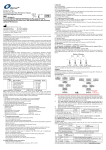
2.- DESCRIPTION CLART EnteroBac detects the presence of the following enteric bacteria causing diarrhea: • • • • • • • • • • Salmonella spp. (all the described species) Shigella spp. (S. dysenteriae, S. Sonnei, S. boydii and S. flexneri) Yersinia enterocolitica Yersinia spp. (Y. pestis, Y. pseudotuberculosis, Y. enterocolítica) Campylobacter spp. (C. lari, C. laridis, C. upsaliensis, C. jejuni, C. coli) Campylobacter jejuni Campylobacter coli Escherichia coli enteropathogenic EPEC: (E. coli enterohemoragic, E. coli enteroinvasive, E. coli enterotoxigenic and E. coli enteropathogenic) Clostridium difficile B Aeromonas spp, producers of aerolisin Detection of the different microorganisms is achieved by PCR amplification of a specific regions coding for enterotoxins and virulence factors for the microorganisms included in the kit, and for constitutive genes of Salmonella spp. and Campylobacter spp. Amplification was performed in two different types of PCR tubes. Mix 1 tubes are white and allow the amplification and subsequent detection of Shigella spp, Yersinia enterocolitica, Yersinia spp., Campylobacter coli, Campylobacter jejuni, Escherichia coli EPEC, Clostridium difficile B and Aeromonas aerolisin toxin positive. Mix 2 tubes are green and contain everything needed for amplification and detection of Salmonella spp. and Campylobacter spp. The platform is based on a low-density microarray fixed at the bottom of an 8-well strip (CLARTStrip® -CS) (Fig. 1), thus rendering a very efficient and easy to use system. This technology allows the simultaneous detection of multiple molecular markers for diagnostic use while providing the controls needed to ensure the reliability of the results. Moreover, this system considerably simplifies the processes of hybridization and visualization when compared with classic microarray systems. Figure 1. CLART-Strip® (CS) platform in the form of an 8-well strip. 5