1
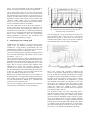
Fig. 4. Examples of the measured load profiles: A washing
machine and a fridge.
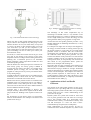
Fig. 3. The mental model Dörner uses for desires [6]
Dörner was able to fully explain human behaviour with
only five desires. For example he says that going to work
satisfies the desire to live (one needs money to buy food
to survive), the desire to feel competent (that you can do
your work shows you that you are competent at your
work) and the desire to feel some amount of control over
your surroundings, but not too much (you control your
environment at work).
In real life, it is rather obvious that one has to go to work
every day to earn money to buy food or to have some
disposable income to indulge oneself. Putting that kind of
planning into a simulation proved to be unfeasible
though. Therefore a more simple desire model was used
in the load profile generator.
Here the desires have been split apart into one desire for
each activity group. An activity group is defined as
activities that can replace each other. For example if the
simulated person is hungry, she can eat bread, cook
spaghetti or order pizza. Every activity will fill the desire
to stop feeling hungry.
To fulfil the desires activities have to be available for the
simulated person to choose from. For this a simulated
household is constructed with various devices.
Based on the devices possible actions are available to the
simulated person. For example having an oven makes it
possible to bake a cake, make pizza or to cook a turkey.
Of course each of these activities has a different duration
and uses different amounts of energy.
Activities have a m:n relationship to devices. For
example watching a DVD movie requires both the DVD
player and the TV. Reading a book requires no devices at
all.
For each device in each activity there is a load profile,
based on measured data. One example is the device load
profile shown in Fig 4.
The advantage of this rather complicated way of
describing a household is that it’s very flexible. In the
load profile generator it’s possible to simulate the energy
use of a single student just as well as the energy use of a
multi generation family living together in a big house.
And because the load profile generator provides a very
flexible framework for modelling the behaviour, it’s easy
to make changes.
For example one might want to analyse what happens to
the energy use when instead of working 8 hours per day
the person switches to a part time job. In a load profile
generator based on stochastic data this would mean
recalculating the probabilities for all the devices. With
the behaviour based load profile generator one just
switches the duration of the job from 8 to 4 hours and the
software calculates all the rest. Because the person is
coming home earlier, he will probably cook at home and
then based on the programmed desires spend the
afternoon for example with watching TV.
Obviously there are huge variations in the behaviour of
different people in different households. It was decided
that instead of trying to model an “average” household,
whatever that might be, it would be more useful to model
various concrete examples. The examples were based on
either personal experience or small surveys. The load
profile generator contains more than 100 devices, more
than 20 different households, is completely customizable
and available for free under [7].
4. Applications of the Load Profile
Generator
The purpose of the load profile generator is split in two
major areas: One is providing load curves for simulating
and testing hybrid systems and the other one is providing
realistic load curves for a better understanding of the
power flow in the grid.
Hybrid systems are systems that contain at least some
sort of power generation unit and some sort of storage
device. One example might be a photovoltaic array
combined with a battery, a combination of battery, fuel
cell and electrolyser or a fuel cell with a microcombined-heat-power-plant (micro-CHP-plant).
These combinations of various devices all have in
common that their usefulness depends very much on the