1
EJSE Special Issue: Wireless Sensor Networks and Practical Applications (2010)
software components and the system setup. Section
IV discusses the implementation details of the system. Section V provides system evaluation results
and lessons learned from our experience. Conclusion
is presented in section VI.
2. APPLICATION REQUIREMENTS
The design of our system is motivated by the requirements of a perimetric monitoring application.
The general objective of such an application is to
monitor the perimeter, in most cases a boundary wall
for any human presence over the wall or within
some distance of it. The base station, where all the
information is sent, needs to have a map of the entire
security perimeter and human detection at any segment of the wall must be reported to the base station
with acceptable latency. Some applications requirements which must be satisfied to make our system
useful in practice are following. First, continuous
monitoring requires the sensor devices to be active
all the time. Therefore, energy conservation schemes
are required so that lifetime of sensor devices can be
extended for uninterrupted active sensing. Second,
the perimeter must be entirely covered without any
unattended spaces in between any two nodes. This
requires effective and acute positioning and orientation of the sensor devices. Third, it is crucial for the
sensor nodes to have a very low possibility of being
detected by the intruder which can then, possibly,
find a way to bypass detection. Small physical size
of sensor nodes along with zero RF communication
is desired in absence of significant events. Fourth,
effective detection of human presence along with
low reporting latency is also required so that active
countermeasures can be deployed against the threat
well in time. Fifth, the sensor nodes need to communicate with each other in a line topology since wall
coverage is done by placing sensor nodes in a semistraight or straight line. Thus, the routing must be
done in such a way to ensure that radio links are
maintained even if any node goes down.
tures an Atmel ATmega128L low powered microcontroller with 128K bytes of program flash memory, 512 Kbytes measurement (serial) flash and 4K
bytes configuration EEPROM. The device also has a
250 kbps, 2.4 GHz, IEEE 802.15.4 standard compliant, MPR2400 radio. The MicaZ motes provide
low power operation (8 mA current draw in active
mode and lesser than 15 μA draw while in sleep) and
a radio range of up to 100 m. It makes it an ideal
platform for large-scale, long-term deployment. The
MicaZ mote also has a 51-pin expansion connector
which supports analog inputs, Digital I/O, I2C, SPI
and UART interfaces. These interfaces make it easy
to connect to a wide variety of external peripherals.
The 51-pin expansion connector is used to interface
the PIR sensor with the MicaZ mote. The MicaZ is
powered by two AA batteries [5].
The cost of one MicaZ mote is approximately US
$130 (incl. shipment cost). The physical parameters
of MicaZ motes help to achieve the stealthiness required by the application. A MicaZ mote is also used
as a gateway to aggregate the sensor network data
onto a PC where base station monitoring application
visually displays the data on a user-friendly GUI.
For the gateway node, a MicaZ mote is attached to a
MIB520 interfacing board via its 51-pin expansion
connector which provides USB connectivity to MicaZ motes for communication and in-system programming. The MIB520CB offers two separate
ports: one dedicated to in-system Mote programming and a second for data communication over
USB. The MIB520CB has an on-board processor
that programs mote processor radio board. USB bus
power eliminates the need for an external power
source [6].
3. SYSTEM COMPONENTS AND SETUP
3.1 Hardware
The hardware platform used for the outdoor test-bed
consists of two sensor node types. Firstly, the industry standard MicaZ motes are used and secondly, in
order to reduce the cost of each sensor node, we
have designed our own custom sensor node using
discrete components (micro-controller, voltage regulating switches, ZigBee transceivers etc.).
1) MicaZ Motes: MicaZ is a crossbow Inc.’s flagship commercial mote designed for applications to
run in low power wireless sensor networks. It fea-
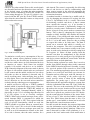
Fig. 1.Block diagram of custom designed sensor node.
2) Custom Designed Sensor Node: A new sensor
network hardware platform is designed in order to
reduce the cost up to US 50$ per node, which is half
the cost of MicaZ platform. For our application
which requires dense sensor node deployments to
increase system reliability and effectiveness, sensory
devices should be as much cost effective as possible
while maintaining efficient detection and operation.
For RF communications, we have used the Telegesis