1
DEFINITIONS
What do the Results Mean?
•
FAT
Fat is the energy storage of the body. Everybody needs fat in their bodies, but it is important not to have too much.
•
Fat Free Mass (FFM)
This value is, literally, what would be left after all fat was removed from the body. Many
people also refer to FFM as Lean Body Mass (LBM).
•
Total Body Water (TBW)
Literally, the total amount of water in the body. Since fat is essentially 0% water, TBW
is entirely contained within FFM.
•
Intra-Cellular Water (ICW)
“Intra-Cellular” literally means, “Within the cell”. This is the portion of the water in the
body that is contained inside the cells.
•
Extra-Cellular Water (ECW)
This is the portion of water in the body that is not contained within the cells. Examples
of where ECW normally occurs include blood plasma, joint fluid, and bladder contents.
•
Target Weight
If you and your patient know how much he/she should weigh, this value can be manually
entered. Otherwise, it is calculated using a set of standardized formulas.
•
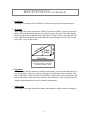
Body Mass Index (BMI)
A person’s BMI is equal to their weight in kilograms divided by their height in meters,
squared. BMI is commonly used as an indicator of whether someone is overweight. It is
important to note, however, that somebody who is “overweight” may not necessarily be
“over-fat”. A 5’10”, 300 pound couch potato and a 5’10”, 300 pound bodybuilder will
have exactly the same BMI.
•
Basal Metabolic Rate (BMR)
Basal Metabolic Rate is the number of calories that a person will use per day, by virtue
of simply being alive (i.e., lying still and breathing).
•
Daily Energy Expenditure (DEE)
People generally do not lay in bed all day, doing nothing but breathing. To estimate how
many calories a person actually burns in a day, the program will adjust the BMR based
on what you entered as the person’s daily activity level.
- 22 -