1
Computer Science 9868
SPAWC: A Scalable Parallel Web Crawler
Jeffrey Shantz <jshantz(5-1)@csd.uwo.ca>
June 02, 2010
When edge (i, j) is inserted into the graph, the only possible changes to the graph’s distance matrix
occur between the pairs of vertices (x, y) for x ∈ AN C(i) and y ∈ DESC(j). That is, only the
distance between i and j themselves can change, along with the distance between any ancestor of i
to j or any of its descendants. Ausiello’s algorithm thus begins by updating the distance from i to
j, and from i to all descendants of j. In doing so, DESC(i) is potentially updated, and AN C(v)
is updated for any vertex v that was added or updated in DESC(i). After updating DESC(i),
a subtree T will have been defined, containing only those vertices v for which d(i, v) decreased.
This tree is then passed recursively to the ancestors of i stored in AN C(i), which then proceed to
update their forward minimal path trees as well [31].
The efficiency of the algorithm comes from the fact that T is potentially pruned as it is passed
recursively up the ancestor tree. If the insertion of edge (i, j) does not change the distance from
i to some vertex v ∈ DESC(j), then it also does not change the distance between any vertex
u ∈ AN C(i) to v. This notion is captured by the fact that v will not appear in T , since T only
contains those vertices to which the current vertex’s distance changed. As such, when T is passed
to the ancestors of i, they will not unnecessarily compute their distance to vertex v since it will not
have changed. This pruning process continues as T is passed up the ancestor tree, assuring that no
unnecessary computations are carried out.
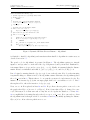
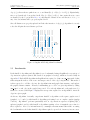
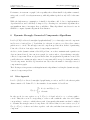
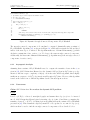
For brevity, the algorithm and its proof are omitted here, but interested readers are directed
to [31] for more information. Additionally, the algorithm was implemented in the GraphBench
framework and its source accompanies the package. As noted, the algorithm is capable of updating
an unweighted graph’s distance matrix (and all minimal path trees) in O(n log n) amortized running
time per edge insertion. This results in a total amortized running time of O(n3 log n) over a sequence
of O(n2 ) edge insertions. Furthermore, as it uses two n × n matrices, its space complexity is O(n2 ).
A detailed analysis is presented in [31].
5.4
APSD - Algorithm 1
The next algorithm presented was developed based on concepts similar to those presented by
Ausiello et al. [31]. Given a graph G = (V, E) with n vertices, we represent each vertex vi ∈ V
by an integer i ∈ {0, 1, . . . , n − 1}. Like the algorithm presented in the previous section, the
Algorithm1-Add-Edge algorithm makes use of the observation that if an edge (i, j) is inserted
into G, then the only distances that can change in the graph’s distance matrix are between i (or
any ancestor of i) and j or any of its predecessors.
As such, the algorithm starts by updating row i in the distance matrix D based on the newly
inserted edge (i, j). Next, for each vertex u that can reach i, the algorithm recomputes D[u, v]
∀v ∈ V . Of course, this algorithm is slower than that presented in the previous section, since it is
only necessary to recompute distances D[x, y] for x ∈ AN C(i) and y ∈ DESC(j). However, the
algorithm does not employ recursion, uses less memory (though its asymptotic space complexity
21