1
The instrumentation tools can be utilized to accomplish many objectives only when
properly gathered data is available. Though the non-real-time usage of the tools is justified, their
use in real time systems provides students with hands-on experience and an environment to make
realistic comparison with data from actual laboratory instruments. Such has been the
development of this paper. National Instruments LabVIEW instrumentation and analysis
software, along with its data acquisition board has been utilized to interface signals from an
actual experimental set up to a PC. Another aspect of the tool well utilized is the capability to
enable modifications that can be made so as to display the data in a desired manner.
In this paper an attempt is made to demonstrate the many features of the student edition
of LabVIEW instrumentation tool that resulted in successful results. The extent of coverage on
the details of both NIDAQ hardware and the LabVIEW software pertain to the goals of this
project. Another objective of this paper is also to provide anyone referencing this material, a
thorough methodology to utilize the tools in an instrumentation and data acquisition project. The
paper concludes by providing details on current utilization and future scope of this work.
PROBLEM DEFINITION
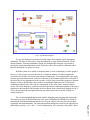
The schematic of the dc motor-generator experimental setup utilized in this project is
depicted by Fig. 1. A 0-125 V dc supply runs the dc shunt motor and the generator is separately
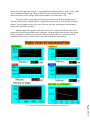
excited. The objective is to transform the four experimental parameters: generator voltage and
current, and motor speed and torque into a form readable by the computer and then display the
results on the monitor in the desired manner in real time. This would enable electrical analysis of
generator and visual observation of one-parameter changes on others. The ratings, which
reflected the range of these parameters, were Voltage - 0 to 125v, Current -0 to 3.5A, and Speed
0-1800 RPM. Thus, to accomplish the aims of the project, components required were: i) The
DAQ board which transformed the acquired signals into a form readable by the computer, ii) the
configuration software NIDAQ used to configure the board and setup communication between
the board and the computer, iii) the programming software LabVIEW used to design and run the
A
DC
G
V
Signal Conditioner SCX
PC with DAQ board and Configuration
software and LabVIEW
Instrumentation software
2
Page 3.387.2
Fig. 1. Schematic of the motor-generator experimental setup.