1
MAINTAINING STEAM TRAPS
Failed steam traps waste energy and adversely affect product
quality. Therefore, a maintenance program for steam traps is a good
investment.
Most plant and facilities professionals with steam systems in their
care have asked questions like the following:
x What are the signs of a malfunctioning steam trap?
x What inspection techniques are available?
x What testing instruments should we use?
x How do we start a steam trap maintenance management
program?
x What kinds of training resources are required?
Steam Trap Basics
Basically, all steam traps have the same function. They allow condensate and
non-condensable gases to escape while holding steam in a device where a
thermal or heat transfer process occurs. A regulator controls the input side of
the process, and the steam, after releasing energy to the process, condenses
and reverts back to its liquid state. The purpose of the steam trap is to retain
steam in the heating element and to release the non-condensable gases and
condensate. The principal design consideration is to balance the condensing
rate and the import rate of the control device on the input side with the
exiting condensate.
Stephen Banyacski, president of Nicholson Steam Traps (Walden, New York),
emphasizes the need to choose the appropriate steam trap. "Properly sized
traps relieve the condensate, react quickly to changes in load, and trap the
steam while allowing air and other non-condensable gases to escape," he
says.
Finding Malfunctioning Traps
As with any mechanical device, a steam trap can malfunction. "If the steam
trap fails closed," says Banyacski, "the device that should be draining will
flood, the heat transfer process will stop, and whatever product is being
produced…will no longer be up to the required quality standards. If the trap
fails open, there will be a waste of energy, steam will not be completely
consumed or condensed in the exchanger, and steam will blow through."
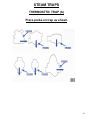
Banyacski notes that a plume of steam escaping from some part of the
condensate-return system signals such a condition. Banyacski ads that it is
46