1
UM1632
DALI information
1
DALI information
1.1
DALI standard overview
DALI is an international standard (IEC 62386) lighting control system that provides a single
interface for electronic control gear (light sources) and devices (lighting controllers).
The DALI standard enables dimmable ballasts, transformers, relay modules, emergency
fittings and controllers from different manufacturers to be mixed and matched into a single
control system. A DALI system provides designers, installers, building owners, facility
managers and end-users with a powerful and flexible digital lighting system, with security of
supply from many sources.
The DALI standard is overseen by the “AG-DALI” activity group, which comprises
engineers, manufacturers and institutions working in the field of digital lamp/ lighting control.
More information about the DALI standard can be found in the following documents:
•
IEC 62386
•
NEMA STANDARD 243-2004
The following sections provide an overview of the DALI standard. They describe the basic
principles of the DALI interface.
Note:
To better understand the STM8L DALI slave library, knowledge of the DALI interface
specification is essential. This document does not provide a description of this specification.
1.1.1
DALI purpose and properties
The DALI protocol was designed to control modern light sources using a computer.
Functions include:
•
Dimming
•
ON/OFF switching
•
Grouping lights to a common control
•
Scene storage and selection
The DALI design properties include:
1.1.2
•
Simple wiring using standard electrical installation cables
•
No special wiring topology (as with electrical power cables)
•
Simple installation with cable polarity independence
•
Automated light source addressing
•
Low cost microcontrollers on the light source side minimize the cost of the light source
•
A simple protocol to control light dimming and switching.
DALI physical layer
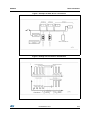
The DALI interface consists of a physical layer from two wires. This is a simple installation
for which the polarity is independent.
DocID024513 Rev 1
3/32