1
safe in his environment and believes he has some measure of control over his working conditions, he
will feel confident to a greater degree than if this situation does not exist. From an Army viewpoint this
creates an environment favorable to the better development of self-discipline.
4.61 Follower Participation (Sharing Decision Making). By recognizing that there is a distinct
relationship between leaders and followers and by acknowledging the need of all individuals in a
group for security and self-confidence, it follows that the members of the group will work better if their
views and opinions are recognized as being important to the successful accomplishment of the
mission.
4.62 Leaders must realize that a great deal of benefit can occur if the decision making process is
shared among their followers whenever the situation allows. The degree to which the leader retains
control of the decision making or shares/delegates control to his followers can be described as the
leadership style.
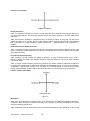
4.63
There are three main styles:
a.
authoritative,
b.
participative, and
c.
free rein.
Authoritative
4.64
4.65
This style implies that the leader retains complete control himself by such means as:
a.
determining all policies,
b.
directing all activities step by step so that his followers may not know what future
activities will be, and
c.
assigning tasks to individuals and allotting work companions.
The authoritative style is suitable in the Army when:
a.
in combat;
b.
there is stress and/or danger;
c.
time is short;
d.
engaged in tactical exercises;
e.
there is a requirement for conditioning men to quick response, eg. drill; and
f.
there are large numbers of men involved.
4.66 If the authoritative style is adopted by a leader when he more properly should have adopted
another approach, the following results may be noticed:
a.
performance goals will be achieved,
b.
recreational goals will not be achieved,
c.
performance will drop off significantly in the absence of the leader,
d.
the followers may demonstrate aggression or apathy, and
e.
the followers will undervalue their work performance.
Participative
4.67
This style implies that the leader will or may:
a.
encourage suggestions from his followers so that they will identify themselves with the
plan;
b.
plan future activities by discussing them with the group;
c.
permit the followers to choose their own work companions and divide work as they see
fit, provided that proper use is made of available skills;
d.
when advice is needed, suggest a number of alternatives from which the followers can
select the one which seems best; and
Trial version – printed June 2013
90