1
4.1
Introduction
As discussed in previous sections, a computer network is a tool enabling
programs and resources residing in separate computer memories to
exchange information. It provides a communications service much the way
an operating system provides a program execution service.
Some important characteristics of computer networks are:
•
A network usually consists of a several cooperating computers running
independently at different processing centers on the network.
•
The user need not be aware that that there are multiple processors.
•
The user (man-to-machine) interface allows a common access to all the
processors on the network.
•
Any needed resource service, or data can be accessed by sending an
appropriate message to the appropriate location.
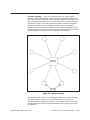
Network
Architecture
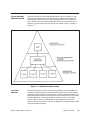
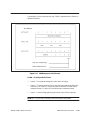
Network architecture is the set of layers and the protocols associated with
each layer. There are uniform communications mechanisms operating
between all devices on a Local Area Network. These mechanisms are
comprised of the services which are performed at each layer of the network
communications system, and of the protocols governing the cooperation of
peer entities at each layer. These mechanisms make up what is called the
Network Architecture.
Purpose of Section
The purpose of this section is to provide background information about
current work toward network standards. This will enable a user to
understand how the architecture and protocols of TIWAY I Local Area
Network fit into the International Standards Organization’s OSI Model.
Before studying this section, the reader should read and understand
Chapters 2 and 3.
Scope of Section
4-2
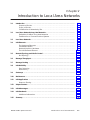
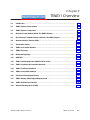
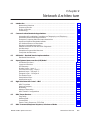
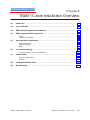
The subjects covered in this section are:
•
Communications Standards Organizations
•
Introduction to architectures
•
Introduction to the OSI Model
•
Layers of the OSI Model
•
HDLC
•
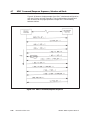
HDLC Command/Response Sequence
Network Architecture
SIMATIC TIWAY I Systems Manual