1
Interface & Operator’s Guide
B.4
UNCLASSIFIED//FOR OFFICIAL USE ONLY
µTL-027-05
10 July 2007
(U) IP Routing Workarounds
Introduction
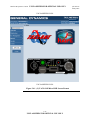
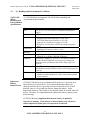
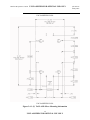
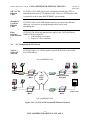
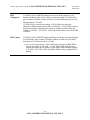
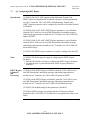
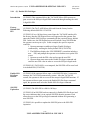
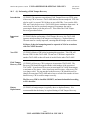
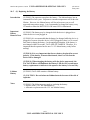
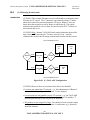
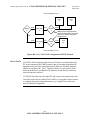
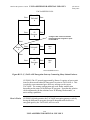
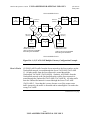
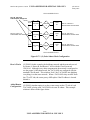
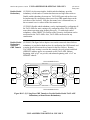
(U//FOUO) This example illustrates several workarounds to configuring static
IP routes on CT routers. The CT network, represented by Router C, knows
about the two directly-connected networks. However, Router C does not
know about the networks served by Router A and Router B. The typical
solution to this problem is to use static IP routes between PT/CT routers for
the networks they serve.
(U//FOUO) Note: Remote TACLANE static routing eliminates the need for
static routes to PT networks on CT routers, and vice versa – and also
eliminates the need for the IP routing workarounds described in this section.
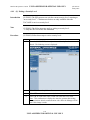
UNCLASSIFIED//FOUO
Host
A1
CT
Router
C
Enet.
PT
TACLANE
A
Host
A2
Enet
Enet.
Router
A
Enet
Enet.
Enet
CT
Enet.
PT
TACLANE
B
Enet.
Router
B
Enet.
Host
B1
UNCLASSIFIED//FOUO
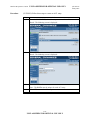
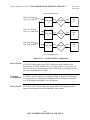
Figure B.4-1 (U) TACLANE Configuration
(U//FOUO) However there are scenarios where this is not desirable:
• User does not control the CT network: e.g., the administrators of Router C
may not allow the configuration of Router C to be changed.
• User networks are not routable over the CT network: e.g., the TACLANE
user is using a private IP network (such as network 10.0.0.0) and the CT
network does not route traffic for private IP networks.
• The number of user networks is large: T he number of user networks makes
configuration of static IP routes on Router C cumbersome (e.g., Router B
fronts the Internet).
B-7
UNCLASSIFIED//FOR OFFICIAL USE ONLY