1
VM ENTRIES
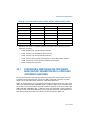
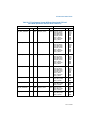
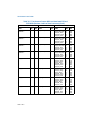
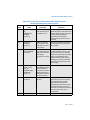
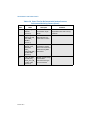
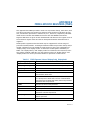
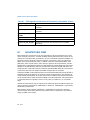
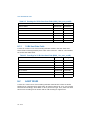
of the Intel® 64 and IA-32 Architectures Software Developer’s Manual, Volume
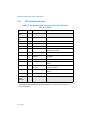
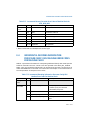
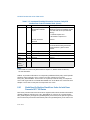
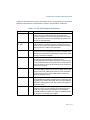
2B for the error numbers.
•
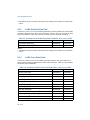
The checks in Section 23.3 and Section 23.4 cause processor state to be loaded
from the host-state area of the VMCS (as would be done on a VM exit).
Information about the failure is stored in the VM-exit information fields. See
Section 23.7 for details.
EFLAGS.TF = 1 causes a VM-entry instruction to generate a single-step debug exception only if failure of one of the checks in Section 23.1 and Section 23.2 causes
control to pass to the following instruction. A VM-entry does not generate a singlestep debug exception in any of the following cases: (1) the instruction generates a
fault; (2) failure of one of the checks in Section 23.3 or in loading MSRs causes
processor state to be loaded from the host-state area of the VMCS; or (3) the instruction passes all checks in Section 23.1, Section 23.2, and Section 23.3 and there is no
failure in loading MSRs.
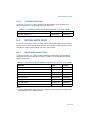
Section 26.15 describes the dual-monitor treatment of system-management interrupts (SMIs) and system-management mode (SMM). Under this treatment, code
running in SMM returns using VM entries instead of the RSM instruction. A VM entry
returns from SMM if it is executed in SMM and the “entry to SMM” VM-entry control
is 0. VM entries that return from SMM differ from ordinary VM entries in ways that
are detailed in Section 26.15.4.
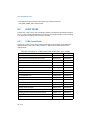
23.1
BASIC VM-ENTRY CHECKS
Before a VM entry commences, the current state of the logical processor is checked
in the following order:
1. If the logical processor is in virtual-8086 mode or compatibility mode, an
invalid-opcode exception is generated.
2. If the current privilege level (CPL) is not zero, a general-protection exception is
generated.
3. If there is no current VMCS, RFLAGS.CF is set to 1 and control passes to the next
instruction.
4. If there is a current VMCS, the following conditions are evaluated in order; any of
these cause VM entry to fail:
a. if there is MOV-SS blocking (see Table 21-3)
b. if the VM entry is invoked by VMLAUNCH and the VMCS launch state is not
clear
c.
if the VM entry is invoked by VMRESUME and the VMCS launch state is not
launched
If any of these checks fail, RFLAGS.ZF is set to 1 and control passes to the next
instruction. An error number indicating the cause of the failure is stored in the
23-2 Vol. 3