1
3 Trainer's Role during the Simulation
During the simulation the trainer should not intervene, except for providing clarifying questions on
the user interface. If participants try to get insights about the dynamics of the process (e.g.
events, feedback, behaviour and attitude of the managers, etc.) the trainer should simply invite
them to reflect on what would happen in a real organisation, given that the logic underlying the
simulation is based on observations and analysis of a variety of such real processes.
Process-wise, the trainer should monitor that groups do not spend more than 30 minutes in
discussing a general strategy and invite such groups to put theory into practice, with the remark
that they are going to operate on a dynamic system which will change over the simulated 6 months.
It is only by trying to "act" on the organisation that they are going to discover the effective
behaviour of the managers and thus be able to adapt their strategy.
After approximately one hour, the trainer should ask (loudly) the different groups how many
adopters they already have. Given that, on average, no group will have adopters (or maximum a few)
this might help some groups in realizing that they are not doing as "badly" as some of them might
think (given that all the other groups are not doing much better).
Approximately 10 minutes before the end of the time frame, the trainer should "force" the groups
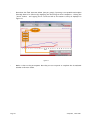
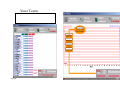
to take one or two further decisions and then fill in the Final Overview Sheet by clicking on the
"Score" button and copying the information provided on that screen. This is best done if groups
have a copy of the Final Overview Sheet on a transparency. They can then put their transparency
on the screen, draw the curves and the numeric values, and then use the transparency in class.
Besides providing explanations, the role of the trainer during the simulation is more the one of an
observer. Try to note some of the experiences the groups go through and any other events
(including group dynamics) which might be interesting to bring up during the debriefing session.
It is advisable to have a short break at the end of the simulation before starting the class
debriefing session.
Page 15
©Alphalabs, 2000-2002