1
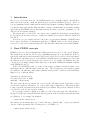
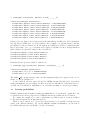
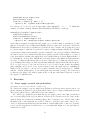
subSeq(SubT,D1,Seq,SeqMore,N,M),
msw(continueSeq, YesNo),
(YesNo=no -> SeqMore=[], DMore = []
; Mplus1 is M+1, seq(SubT,SeqMore,DMore,Mplus1)).
For each type T , we need to add an appropriate clause subSeq(T ,· · · ):- · · · . To finish this
example, we assume identical definition (but individual probabilities) for each type.
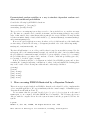
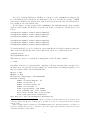
subSeq(Type,[L|SeqMore],SeqRest,N,M):msw(nextLetter(Type),L),
msw(continueSub(Type),YesNo),
(YesNo=no -> SeqMore=SeqRest, N=M
; Nplus1 is N+1, subSeq(Type,SeqMore,SeqRest,Nplus1,M)).
Notice that we assumed an additional class of msw’s to govern the length of each subtype (so this
little model resembles a 2-level Hierarchical HMM). Such a program can be used in two ways in the
PRISM system. In case the probabilities are given in some way or another, the program can be used
to generate samples of annotated sequences by a query ?-sample(sequence(S,A)) where PRISM
executes msw by using a random number generator adjusted to the given probabilities. PRISM can
also run in learner mode, which means that the program is presented with a number of observed
goals, from which it calculates the distribution of probabilities that provides the highest likelihood
for explaining the observed data. PRISM uses some quite advanced algorithms and data structures
in order to do this in an efficient way; these topics are outside the scope of this paper and we refer to
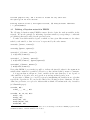
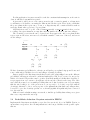
[8, 9]. Training with a single observation (somewhat artificial) being the short annotated sequence
above, we get for t1 prob. 1.0 for A and for t2 prob. 0.5 for each of C and G. After the training
phase, sampling can be used to create similar sequences, where the applied notion of similarity is
implied by the program, i.e., the model for sequence structure that we designed above. PRISM
runs also on 64-bit architectures so it can address quite large amounts of storage. The version used
for this test (1.9, 2006) could, with programs as the one shown, easily handle data sets of around
10 sequences of 100,000 letters.
5
5.1
Exercises
Power supply, revisited with probabilities
(Continues an exercise described in a earlier note)
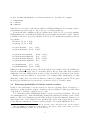
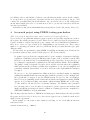
We consider the example of a power supply network that we used in an earlier exercises, where you
should design an an abductive logic program which could be used to diagnose faults in the network.
The text is rephrased here to make this exercise self-contained.
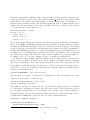
We consider a geographical region which has a power supply control centre that gets informed
as soon as any village in the region is without electricity power. In such cases, the centre checks,
using mobil phones, whether the remaining villages have electricity power. On the basis of this
information, the centre must take the decision of where to send the repair teams. Our job is to
develop a diagnosis system that given the information of which villages have or have not electricity
power, can give suggestions for which wires or power plants that might be down, and thus are
candidates for repair.
12