1
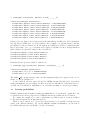
as it indicates a dependence between the two random variables indicated by the two msw calls.
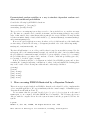
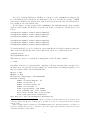
Let us return to the program above, we can execute the following call,
?- throw(X).
which will give an answer, perhaps X=head and perhaps X=tail. The PRISM manual recommends
that you query probabilistic predicate in the following way (but the direct way show above seems
to work perfectly).
?- sample(throw(X)).
Learning probabilities in PRISM
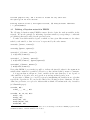
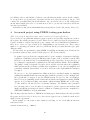
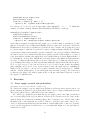
The PRISM system includes advanced machine learning techniques so that it can learn probabilities from a file of sample. Let us consider the program above, but remove the explicit setting of
probabilities; declarations are added which indicates that probabilities can be learned from observations of the throw predicate contained in a file with name fileWithThrows.dat (.dat is PRISM’s
standard extension for files of such observations).
values(coin, [head,tail]).
throw(X):- msw(coin,X).
target(throw,1).
data(fileWithThrows).
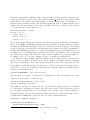
The file fileWithThrows.dat may have the following form.
throw(head).
throw(head).
throw(head).
throw(tail).
throw(tail).
throw(head).
...
throw(head).
throw(tail).
Now the command
?- learn.
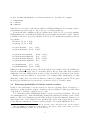
When this command finishes, the system will contain probabilities that correspond to the relative
frequences of heads and tails indicated by the file. However, for more complicated programs as
those we will show below, PRISM needs to apply more sophisticated learning algorithms that just
counting and calculating averages.
3