1
GHC Language Features
7.15.2. Annotating pure code for parallelism
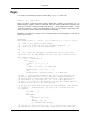
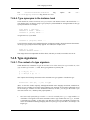
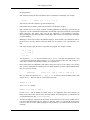
The simplest mechanism for extracting parallelism from pure code is to use the par combinator, which
is closely related to (and often used with) seq. Both of these are available from Control.Parallel
[../libraries/base/Control-Parallel.html]:
infixr 0 `par`
infixr 1 `seq`
par :: a -> b -> b
seq :: a -> b -> b
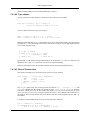
The expression (x `par` y) sparks the evaluation of x (to weak head normal form) and returns y.
Sparks are queued for execution in FIFO order, but are not executed immediately. If the runtime detects
that there is an idle CPU, then it may convert a spark into a real thread, and run the new thread on the
idle CPU. In this way the available parallelism is spread amongst the real CPUs.
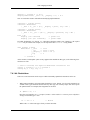
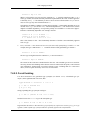
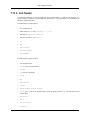
For example, consider the following parallel version of our old nemesis, nfib:
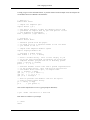
import Control.Parallel
nfib :: Int -> Int
nfib n | n <= 1 = 1
| otherwise = par n1 (seq n2 (n1 + n2 + 1))
where n1 = nfib (n-1)
n2 = nfib (n-2)
For values of n greater than 1, we use par to spark a thread to evaluate nfib (n-1), and then we use
seq to force the parent thread to evaluate nfib (n-2) before going on to add together these two
subexpressions. In this divide-and-conquer approach, we only spark a new thread for one branch of the
computation (leaving the parent to evaluate the other branch). Also, we must use seq to ensure that the
parent will evaluate n2 before n1 in the expression (n1 + n2 + 1). It is not sufficient to reorder the
expression as (n2 + n1 + 1), because the compiler may not generate code to evaluate the addends
from left to right.
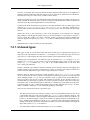
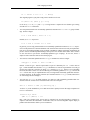
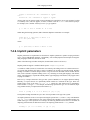
When using par, the general rule of thumb is that the sparked computation should be required at a later
time, but not too soon. Also, the sparked computation should not be too small, otherwise the cost of
forking it in parallel will be too large relative to the amount of parallelism gained. Getting these factors
right is tricky in practice.
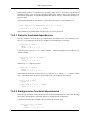
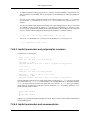
More sophisticated combinators for expressing parallelism are available from the Control.Parallel.Strategies [../libraries/base/Control-Parallel-Strategies.html] module. This
module builds functionality around par, expressing more elaborate patterns of parallel computation,
such as parallel map.
204