1
GHC Language Features
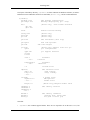
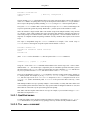
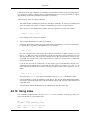
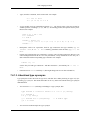
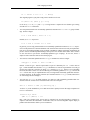
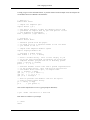
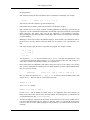
Here, we can see that the function show (which has been expanded out to a case expression over the
Show dictionary) has a %note attached to it, as does the expression eta (which used to be called x).
7.12. Special built-in functions
GHC has a few built-in funcions with special behaviour, described in this section. All are exported by
GHC.Exts.
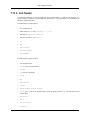
7.12.1. The inline function
The inline function is somewhat experimental.
inline :: a -> a
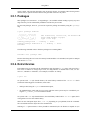
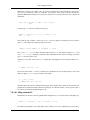
The call (inline f) arranges that f is inlined, regardless of its size. More precisely, the call
(inline f) rewrites to the right-hand side of f's definition. This allows the programmer to control
inlining from a particular call site rather than the definition site of the function (c.f. INLINE pragmas
Section 7.10.3, “INLINE and NOINLINE pragmas”).
This inlining occurs regardless of the argument to the call or the size of f's definition; it is unconditional. The main caveat is that f's definition must be visible to the compiler. That is, f must be let-bound in
the current scope. If no inlining takes place, the inline function expands to the identity function in
Phase zero; so its use imposes no overhead.
If the function is defined in another module, GHC only exposes its inlining in the interface file if the
function is sufficiently small that it might be inlined by the automatic mechanism. There is currently no
way to tell GHC to expose arbitrarily-large functions in the interface file. (This shortcoming is
something that could be fixed, with some kind of pragma.)
7.12.2. The lazy function
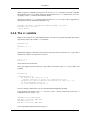
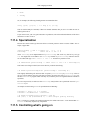
The lazy function restrains strictness analysis a little:
lazy :: a -> a
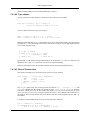
The call (lazy e) means the same as e, but lazy has a magical property so far as strictness analysis
is concerned: it is lazy in its first argument, even though its semantics is strict. After strictness analysis
has run, calls to lazy are inlined to be the identity function.
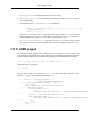
This behaviour is occasionally useful when controlling evaluation order. Notably, lazy is used in the
library definition of Control.Parallel.par:
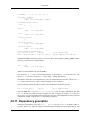
par :: a -> b -> b
par x y = case (par# x) of { _ -> lazy y }
If lazy were not lazy, par would look strict in y which would defeat the whole purpose of par.
7.12.3. The unsafeCoerce# function
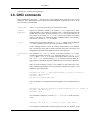
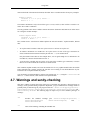
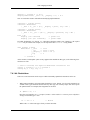
The function unsafeCoerce# allows you to side-step the typechecker entirely. It has type
unsafeCoerce# :: a -> b
199