1
1
2
gcc –– compiles C prgramm. Can slso use cc, but cc is platform-dependent.
Example: gcc –o abc –lsocket –lnsl a1.c a2.c ac.3
g++ –– compiles C++ programs.
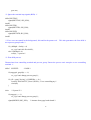
makefile:
Purpose: 1) define the dependency among different files, 2) used to compile programs without recompiling
unchanged files. 3) %make -f filename --- if no filename is specified, makefile is the default name.
Format:
target: components
| command 1
| command 2
Example: myprog: x.o y.o z.o
TAB gcc x.o y.o z.o -o myprog
x.o: x.c x.h
TAB gcc -c x.c # if x.c or x.h is new then recompile x.c
y.o: y.c x.h
TAB gcc –c y.c
z.o: z.c
TAB gcc –c z.c
Variables can be defined and used. This makes changes easy to implement. For example:
CC = gcc
CFLAGA = -O -c
LDFLAGES = -o
x.o: x.c x.h
TAB $(CC) $(CFLAGS) x.c
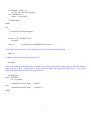
Argument list
main ( int argc, char *argv[ ]) /* char *argv[] ==char **argv
{}
*/
e.g. %echo hello world: argc=3; arv[0]=echo; arv[1]=hello; arv[2]=world.
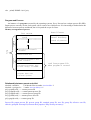
Environment list
main ( int argc, char *argv[ ], char *envp[]) /*environment list is optional, but main(char *envp[]) is wrong.*/
{
int i;
for (i=0; envp[i] != (char *) 0; i++)
printf(“%s\n”,envp[i]); /* print all environmental variable*/
exit(0)
}
Can also use extern char **environ; to access variables. Use *getenv(char *val) to return the value of an
environment variable, e.g.,
if ((ptr=getenv(“HOME”)) = = (char *) 0)
printf(“HOME is defined\n”);
3