1
282
N. Sriskanthan et al. / Microprocessors and Microsystems 26 (2002) 281–289
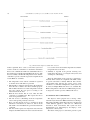
Fig. 1. Bluetooth based home automation system. (a) Host and client modules in a Bluetooth piconet. (b) An individual client module.
recommendations regarding further research in this area are
discussed.
2. Home Automation Protocol
The Home Automation Protocol (HAP) facilitates the
communication among the host and client modules in a
home automation system. The communication covers the
device initialization process and the data transaction
process.
The protocol is constructed above Bluetooth software
stack [7]. It follows the layer model proposed by Bluetooth
Special Interest group (SIG). Considering the requirements
of home automation environment, the HAP has been based
on the core of the Bluetooth protocol architecture that
comprises of three stacks:
† Logical Link Control and Adaptation Protocol (L2CAP)
† Service Discovery Protocol (SDP)
† RFCOMM (serial cable emulation protocol) protocol.
HAP device initialization process uses the enhanced SDP
functionality to query device information and services.
L2CAP provides data services to the HAP with protocol
multiplexing capability, segmentation and reassembly oper-
ations. RFCOMM facilitates wireless communication and
provides transport capabilities for home automation services.
A typical Bluetooth based home automation system
includes a host and several client modules. Considering the
entrance price of the Bluetooth, it will be more cost effective
to have multiple Device Controllers (DC) connected to a
Bluetooth device. Each DC, in turn, monitors multiple
Attached Devices (AD) as shown in Fig. 1.
2.1. Home automation descriptor table
The host needs to store information regarding all the
active devices in the network. Similarly a DC needs to store
information pertaining to the devices directly attached to it.
The information is stored in the form of descriptors. The
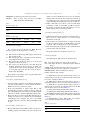
formats of descriptors on the DC and the host are shown in
Tables 1 and 2, respectively.
Descriptor table terms explanation:
AD
the ID of the attached device
TOD
the type of Attached Device (I2C address)
I_SIZE
the instruction size in bytes for given device
D_SIZE
the data size in bytes for given device
D_NAME the device name, a NULL terminated string (32
bytes)
RW
the read and write access: Read Only ($00),
Write Only ($01), Read & Write ($02)