1
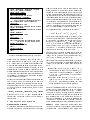
cardIn, cardHalfway, passwdGiven : Boolean
card : Card, passwd : Sequence
Insert card(c : Card)
pre : cardIn = false
post: cardIn = true and card = c
Enter password(p : Sequence)
pre : passwdGiven = false
and p->forAll(p->includes(d)=>digit(d))
post: passwdGiven = true and passwd = p
Take card()
pre : cardHalfway = true
post: cardHalfway = false and cardIn = false
Display main screen()
pre : cardIn = false and cardHalfway = false
post:
Request password()
pre : passwdGiven = false
post:
Eject card()
pre : cardIn = true
post: cardIn = false and cardHalfway = true
and card = null and passwd = null
Request take card()
pre : cardHalfway = true
post:
Canceled message()
pre : cardIn = true
post:
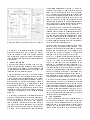
Figure 5: Domain Knowledge for the ATM class.
conict detection. Currently, our algorithm only exploits constraints of the form var = value, but there
may be something to be gained from reasoning about
other constraints using an automated theorem prover.
As well as being used for conict detection, the OCL
constraints can be used to identify identical states in
dierent sequence diagrams which allow these diagrams
to be merged. The constraints also allow an automatic
partitioning of the generated statecharts into hierarchical super-nodes (cf. Section 4).
Figure 5 gives specications for selected messages in our
ATM example. The state variables, in the form of a
state vector, are used to characterize states in the generated statechart. The state vector is a vector of values
of the state variables. In our example, the state vector
has the form:
< cardIn^, cardHalfway^, passwdGiven^, card^, passwd^>
where var^ 2 Dom(var) [ f?g, and ? represents an unknown value. The notion of state vector is crucial to
our algorithm.
4 GENERATING STATECHARTS
Single Sequence Diagrams
We shall rst consider how individual SDs can be converted into statecharts. This process starts by detecting
conicts between the SD and the domain theory (and
hence, other SDs). Note that there are two kinds of constraints on a SD: constraints on the state vector given
by an OCL specication, and constraints on the ordering of messages given by the SD itself. Conicts between
these constraints mean that either the scenario does not
follow the user's intended semantics or the domain theory is incorrect. The decision as to which holds must be
taken by the user and appropriate modications must
be made. This enables both the domain theory and the
SDs to be rened during statechart generation.
Let a sequence diagram be represented as follows:
mr s 0
m2 : : : m?!
m1 s0 ; s ?!
r?1 0
sr?1 ; sr ?!
s0 ?!
r
0 1
(1)
where the mi are messages between objects and si , s0i are
the state vectors immediately before and after message
mi is executed. The source and destination objects of
message mi are denoted by msource
and mdest
i
i , respectively. Si will be used as a notational convenience to
denote either si or s0i . Si [j ] is the j th element of the
the vector Si . vj will denote the name of the variable
associated with position j in the state vector.
The initial state vectors are obtained directly from the
message specications: if mi has a precondition vj = y,
then let si [j ] := y, and if mi has a postcondition vj = y,
let s0i [j ] := y. Otherwise, si [j ] = s0i [j ] := ?.
Since each message is specied independently, the initial
state vectors will contain a lot of unknown values. Most
(but not all) of these can be given a value in one of two
ways.
Unication: two state vectors, Si and Sj (i 6= j ),
are considered the same if they are uniable, i.e.,
there exists a variable assignment such that
(Si ) = (Sj ). This amounts to the detection of
loops within a SD.
The frame axiom: for each j , if si [j ] = ?, i > 0,
then let si [j ] := s0i?1 [j ] and if s0i [j ] = ? then let
s0i [j ] := si [j ]. This assumes, of course, that there
are no hidden side-eects between messages.
These two techniques extend the state vectors by propagating variable values throughout the SD. This allows
us to detect conicts between state vectors | a conict
is detected if the state vector immediately following a
message and the state vector immediately preceding the
next message dier (if they are uniable they will already have been unied). Any reported conicts must
be resolved by the user and the algorithm is started
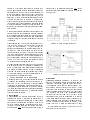
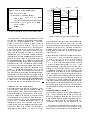
again. Figure 6 shows how these techniques t together.
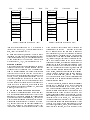
Example. Figure 7 shows SD1 from Figure 3 after
the state vectors have been extended by unication and
the frame axiom. Our procedure detects a conict with