1
7.3 Proof of Concept Testing
1. The detailed protocol to make the Tween20 surfactant is described in Appendix D.
2. About 90 uL of the Tween20 was added to 100 mL of boiling DI water and mixed for about
30 seconds. This created a 0.1% Tween solution.
3. About 2.0 mL of the Tween and water solution was added to 5g of the fluorescent beads.
4. The solution with the beads was spun for 5-10 minutes and the clumped beads from the top
of the conical tube were removed.
5. Then 0.25g or 0.5g beads (Depending on the desired density of the suspension) and Tween
were added to 10 mL mineral oil.
6. The conical tube was inverted to mix the beads into the oil.
7. Approximately 5 mL of the solution was added to the top vertical syringe.
8. Approximately 1 mL of mineral oil from the left horizontal syringe was pushed through the
device to clean out any dust particles.
9. The syringes were primed to remove bubbles.
10. The syringe setup was placed about 12 inches above the device to create hydrostatic
pressure. For this device, the flow rate did not need to be precise, so the height during each
trial could vary. The flow from the top syringe was turned on, allowing the beads to flow
into the device at the inlet hole.
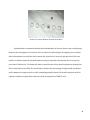
11. Beads flowed through the main channels but could not pass through the small horizontal
channels. This would cause some of the beads to get trapped in the wells.
12. As beads exited the device, they flowed out of the outlet and into a small petri dish as waste.
7.4 Cell Testing
1. Water was flowed through the device to reduce particulates in the device, this created air
bubbles in the small channels underneath the wells.
55






























![1] n T169](http://vs1.manualzilla.com/store/data/005696581_1-b5b272b0c99ea5fca956b563015d9b67-150x150.png)