1
RAF SUPERNOVA USER MANUAL - ENGLISH
TUNING RAF SUPERNOVA SAILS
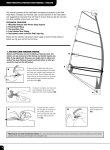
When correctly rigged on the beach, the Neil Pryde RAF Supernova
sails will show little looseness in the upper leech. Modern sails require
firm (although properly twisted) foil forms and positive outhaul tension.
It is a mistake to try to tune today’s sails with extremely loose leeches
from extreme downhaul, and negative outhaul.
First set the mast base to the setting printed at the sail tack. Then
follow the steps below to correctly fine tune your sail. Use a tape
measure to check and record your favorite trim settings.
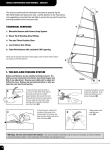
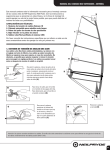
Downhaul: until the tack pulley is within the prescribed setting and
the leech should just begin to appear loose in the area of the top
batten. Do not over downhaul.
Outhaul: set the boom so the sail can be tensioned to the
recommended dimension with less than 2cm space between the clew
and the boom end. Using a tape measure will guarantee accuracy. Fine
tune the outhaul around the recommended dimension, using less when
you are looking for more power and more when you are fully powered.
At these settings, there will always be solid tension on the clew.
TUNING TIP
EXPERIMENT AND CHECK YOUR TUNING: Experiment to
find the settings that work best for you. Big sailors (over 80kg/ 180
lbs) may wish to go for maximum power, using slightly less
downhaul and outhaul than lighter riders. When over-powered
increase outhaul tension. Changes in outhaul and downhaul tension
of a few millmieteres can make a difference. If the sail feels stiff and
“pitchy”, it is probably over-downhauled. If the sail feels unstable or
difficult to sheet in, it is probably under outhauled. A “twitchy” on &
off feel probably means the sail is over-outhauled.
4
SAIL MAINTENANCE
SAIL SAFE, HAVE FUN
Always store your sail rolled and dry in its sail bag. Try to prevent the
sail from being crushed or badly creased. Washing the sail in fresh
water before storage increases its life considerably. If the foot batten
is not parallel with the upper battens (as in wave sails) remove it
before rolling the sail. The leech battens should be left in their
pockets. They need not be de-tensioned.
Do not leave the sail exposed to strong or direct sunlight. Do not use
any solvents or chemicals to clean it. If the sail becomes dirty, clean it
using fresh water and mild soap. Should the sail become holed or
torn, have it repaired by a qualified sailmaker before using it further.
This is especially important if the damage is in K-Film panels.
Sail carefully and thoughtfully around other sailors and beach users.
Before leaving the beach check all your equipment thoroughly for
signs of wear or breakage. Always check the weather forecasts and
take note of local conditions and potential hazards before sailing.
Check for dangerous currents, and consider carefully where you
might land in the event of an emergency.
For further information on this or other NEILPRYDE sailing
equipment contact your AUTHORIZED NEILPRYDE DEALER or
our distributor in your country.