1
SINFONI User Manual — Version 93.2
VLT-MAN-ESO-14700-3517
44
path of the laser and produces a jitter of the beacon position. In addition to the LGS, a natural
guiding star is therefore needed for the tip/tilt control.
The LGS dichroic, inserted in the optical path after the reflection on the IR dichroic, transmits a
narrow band centred on the LGS wavelength (589nm) towards the CWFS and reflects the rest of
the visible light towards the pointing sensor STRAP.
The differential focus between the LGS and an NGS can be written as d = cosz D2 f2 /H, where z
is the zenith angle (0 to 60 deg), D the telescope diameter (8m), f the beam f-number (f/17.1)
and H the altitude of the sodium layer (80 to 100km). The value of d varies between 100 and 250
mm. It is compensated by inserting into the optical path a set of 4 folding mirrors mounted on a
translation stage. A second translation stage enables the length of this so called ”trombone” to
be adjusted to the current conditions. In addition a compensating plate located in the trombone
path corrects the astigmatism introduced by the transmission through the LGS dichroic.
Since the differential focus compensation occurs after the main optics relay, the latter is not
optimized for the LGS beam, which suffers rather strong field aberrations. The induced Strehl loss
remains below 4% in K as long as the LGS is pointed within 5 arcsec of the LOS.
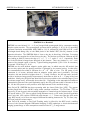
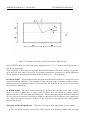
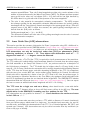
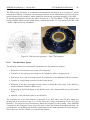
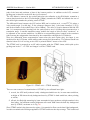
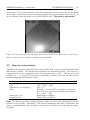
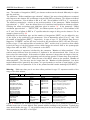
The STRAP unit is mounted on an XY table together with the STRAP lenses, which pick up the
guiding star in the 10 ×20 FOV and images it on the STRAP head.
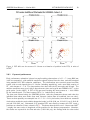
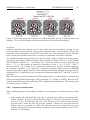
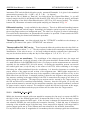
Figure 15: STRAP unit – STRAP assembly
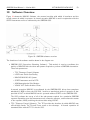
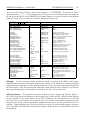
There are two sources of contamination of STRAP by the reflected laser light:
1. on-axis, the LGS itself produces locally a background which can be, in worst case conditions,
as bright as 700 times the sky background seen by STRAP in dark conditions, when pointing
to zenith;
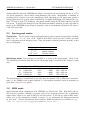
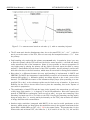
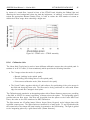
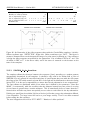
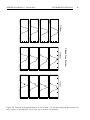
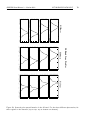
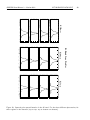
2. off-axis, the Rayleigh scattering by lower atmospheric layers produces a bright annulus in the
focal plane. Its maximum surface brightness can reach 1000 times the dark sky background
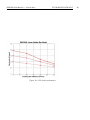
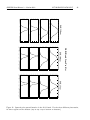
seen by STRAP, as shown on in Fig. 16.
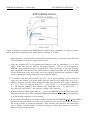
Since STRAP works in the photon noise regime, it is essential to filter out the laser light background,
in order to maximize the limiting magnitude of STRAP and hence the sky coverage. This is achieved