1
Breast Pumps
generally the pumps of choice for women
who only need to pump occasionally.
Electric pumps use modern technology
to do the work for you. They are generally
fully automated, can mimic baby’s sucking
cycles, and are much more efficient.
Most models allow for both breasts to be
pumped at once, which significantly cuts
down pumping times. Electric pumps are
the pumps of choice for women needing to
pump frequently (most working moms).
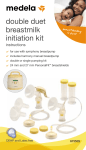
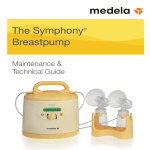
Common parts include the pump
itself, breastshields (the funnel-like piece
that fits over the breast), a connector
that attaches the breastshields to the
bottle (named differently depending on
the company, such as flanges and adapters), valves that attach to the bottom
of the connector allowing milk to pass
through into the bottle, and tubing to
attach the pump motor to the connector.
Most pumps will include at least a couple
of bottles with nipples and bottle collars,
samples of nipple cream, breast pads,
and milk storage bags. Other gear may
include coolers/ice packs, extra bottles,
alternative sized breast shields, and
hands-free pumping bras.
Most pumps have multiple cycles
and suctioning strengths. When breast
feeding, babies stimulate milk flow with
quick shallow sucks. After milk has letdown, feeding occurs with slower, stronger sucks. Some pumps emulate the early
“let down” phase to help stimulate milk
release. Additionally, adjustable cycle
and suction allows mom to choose the
strength to maximize milk collection while
still maintaining comfort.
Another important distinguishing feature is a closed versus open system. A
closed system has a physical barrier that
prevents milk or moisture from entering the tubing. This is not only important
because moisture can destroy a pump,
but bacteria and mildew can grow in the
tubing and contaminate your milk. When
using an open system pump, pay careful
attention to ensure that moisture never
gets into the pump. Additionally, manufacturers recommend that you run the
pump with just the tubing attached to
dry tubes to prevent mildew.
Pumps will attach to standard or
non-standard wider-neck bottles. Each
brand offers its own nipple and bottle
system for convenience. If you choose
a different bottle system, make sure the
size matches the pump. This allows you
to pump directly into the bottles without
having to transfer. Most pumps will not
pump directly into freezer bags.
Electric
pumps are
the pump
of choice
for working
moms.
PregnancyMagazine.com
79