1
with your thumbnail.
Because the mixture is only partially cured, a new application of epoxy will still
chemically link with it, so the surface may still be bonded to or recoated without
special preparation. However, this ability diminishes as the mixture approaches
final cure.
3. Solid-Final cure The epoxy mixture has cured to a solid state and can be dry
sanded and shaped. You should not be able to dent it with your thumbnail. At
this point the epoxy has reached about 90% of its ultimate strength, so clamps
can be removed. It will continue to cure over the next several days at room
temperature.
A new application of epoxy will no longer chemically link to it, so the surface of
the epoxy must be properly prepared and sanded before recoating to achieve a
good mechanical, secondary bond. See Surface Preparation
Understanding cure time
Open time and cure time govern much of the activity of building and repairing
with epoxy. Open time dictates the time available for mixing, application,
smoothing, shaping, assembly and clamping. Cure time dictates how long you
must wait before removing clamps, or before you can sand or go on to the next
step in the project. Two factors determine an epoxy mixture's open time and
overall cure time-hardener cure speed and epoxy temperature.
Hardener speed
Each hardener has an ideal temperature cure range. At any given temperature,
each resin/hardener combination will go through the same cure stages, but at
different rates. Select the hardener that gives you adequate working time for the
job you are doing at the temperature and conditions you are working under. The
product guide and container labels describe hardener pot lives and cure times.
Pot life is a term used to compare the cure speeds of different hardeners. It is
the amount of time a specific mass of mixed resin and hardener remains a liquid
at a specific temperature. (A 100g-mass mixture in a standard container, at 72°
F). Because pot life is a measure of the cure speed of a specific contained mass
(volume) of epoxy rather than a thin film, a hardener's pot life is much shorter
than its open time.
Epoxy temperature
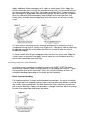
The warmer the temperature of curing epoxy, the faster it cures (Figure 1). The
temperature of curing epoxy is determined by the ambient temperature plus the
exothermic heat generated by its cure.
Ambient temperature is the temperature of the air or material in contact with the
epoxy. Air temperature is most often the ambient temperature unless the epoxy
is applied to a surface with a different temperature. Generally, epoxy cures
faster when the air temperature is warmer.
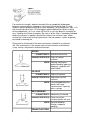
Exothermic heat is produced by the chemical reaction that cures epoxy. The
amount of heat produced depends on the thickness or exposed surface area of
mixed epoxy. In a thicker mass, more heat is retained, causing a faster reaction