1
Introduction:
Interleukin 17 (IL-17) is a pro-inflammatory cytokine produced by a subset of T helper cells that develop distinctly from
the Th1 and Th2 cell differentiation pathways. It can be found as a homodimer or a heterodimer with IL-17F. Members
of the IL-17 family demonstrate a structural motif termed a cysteine-knot that also characterizes a large superfamily of
growth factors. Mouse IL-17A is synthesized as a 158 amino acid precursor that contains a 25 amino acid signal
sequence and a 133 amino acid mature region. The mature chain contains one potential site of N-linked glycosylation.
Mouse IL-17A is produced by an activated subset of CD4+ T cells termed Th17 (Wright JF et al, 2007). IL-23 drives Th17
lymphocytes to produce these cytokines (Cheung PF et al, 2008). Mouse IL-17A is a biologically active protein that
induces chemokine production and indirectly induces the recruitment of neutrophils. This protein also induces
production of the neutrophil chemo attractants IL-6, IL-8, PTGS2/COX-2, CXCL1, and CXCL6 thereby bridging adaptive
and innate immunity (Kawaguchi M et al., 2004). Mouse IL-17A is intimately involved in mucosal immunity against
bacterial infections (Takatori H et al., 2008) and has a putative role in some autoimmune disorders including rheumatoid
arthritis, psoriasis, and multiple sclerosis. Mouse IL-17A, also known as CTLA-8, cooperates with TLR ligands, IL-1 beta,
and TNF alpha to enhance inflammatory reactions and stimulate production of beta-defensins and other antimicrobial
peptides. Mouse IL-17A effects appear to be exerted primarily through binding to its receptor, IL-17RA.
Siloam Biosciences’ Mouse (Ms) IL-17A OptiMax™ ELISA Kit offers a rapid and sensitive chemifluorescent-based ELISA
procedure for Ms IL-17A that requires exceedingly small sample volumes. The speed, sensitivity, and small sample
requirements are enabled by the unique microfluidic design of the Optimiser™ plate. The standard immunoassay
reactions such as analyte capture and detection occur within a ~ 5 µL microfluidic reaction chamber. The unique
microchannel geometry and small reaction volume favor rapid reaction kinetics. The Ms IL-17A procedure utilizes a 5 µL
sample and each reaction step is completed in 10 - 20 minutes. With wash time, substrate incubation time, and read
time accounted for, a typical assay can be completed within approximately 2 hours.
This OptiMax™ ELISA kit has been calibrated against the R&D Systems Quantikine® Mouse IL-17A ELISA kit. Data
generated using the OptiMax™ Mouse IL-17A kit should closely correlate with that generated using the R&D Systems
Quantikine® Mouse IL-17A ELISA kit.
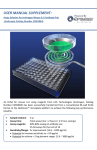
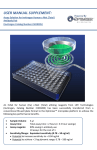
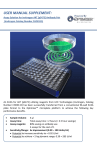
Figure 1. Optimiser™ microplate
The Optimiser™ microplate is a revolutionary new microplate
format. With an ANSI/SBS compliant 96-well layout, the
Optimiser™ integrates the Power of Microfluidics to allow for
low volume, rapid, and sensitive immunoassay protocols. Figure
1 shows the Optimiser™ microplate schematic with magnified
view of one “cell” of the Optimiser™. Each cell of the
Optimiser™ has a loading well (only used to add reagents) and a
microfluidic reaction chamber. Reagents/samples are added to
the well and transported via capillary action to an absorbent
pad (not shown). The unique design of the Optimiser™ allows
the well to be drained but each liquid is trapped in the
microchannel by capillary forces. As the next liquid volume is
added, the capillary barrier is broken and the liquid within the
microchannel is drawn out by the absorbent pad and replaced
by the new reagent. All assay reactions occur within the
microfluidic reaction chamber.
Page 3 of 21