1
developing team and distribute the burden of developing
the simulators on a larger number of programmers. Each
University might develop one instrument simulator, put it
on its own WWW server, and make it available, through a
proper link, to all other Universities in the team.
This paper shows how the above ideas can be practically
applied to realize a virtual laboratory, based on the wellknown, widely-used environment LabView by National
Instruments [3], and distributed through Internet by means of
the WWW services. Virtual instruments are realized in the
standard way within the LabView environment, while
distribution is assured both by a suitable WWW server [ 5 ]
and software environment. An interface architecture is
proposed between LabView and WWW environments, as
well as an access method to the WWW server, especially
developed in order to guarantee a high level protection of the
resident software and minimize the server access time.
protection of the distribution server from possible external
attacks,
identification of a low-cost hardware and software
architecture for wide and cheap use of the distribution
environment and simulators.
111. THE SYSTEM ARCHITECTURE
To achieve the goals mentioned in the previous section, a
client-server distributed environment [6] was designed and
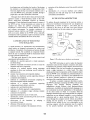
implemented, as shown in Figure 1. The clients may be
connected to the server on the same Local Area Network
within the laboratory or the same campus as well as remotely.
University
Laboratory
-
Data Base
Server
Client
11. SPECIFICATION OF THE SYSTEM
FUNCTIONALITES
A virtual laboratory for measurement and instrumentation
should realize an integrated environment for creation and
distribution of simulators of instruments and systems through
a computer network. The availability of component libraries
allows the user to dynamically build his measurement bench
by using a personal computer only.
The main goals pursued in the present research and
experimental implementation were:
1
definition of a modular approach to virtual instruments
and bench design,
definition of standard environment and tools to create the
instrument and bench components,
e
definition of a standard interface among component
simulators to allow easy interfacing, even if realized by
different persons,
creation of an instrument and component database,
definition of a distribution system supporting sharing of
components and simulators,
definition of a distribution environment complying the
most-used computer network standards,
definition of a software environment supporting
workgroup and remote didactic activities,
realization of a user-friendly interface,
definition of a flexible approach to experimentation,
realization of a simulation engine allowing dynamic
connection of components,
supporting simultaneous access of many users,
identification, control and monitoring of the users and all
accesses to the system,
effectiveness of the simulation by adopting a
.
.
.
..
.
..
.
.
Remote
Laboratory
Computer
Network
Client
Client
connections
Users
........................
Figure 1: The client-server hardware environment
The WWW technology is used to realize the hypertext
distribution system for the simulator components and engine.
Components are created by using LabView and stored in the
server database. Then, the user assembles the components to
create a single instrument or a whole bench. The client
downloads the desired components and the simulation engine
from the WWW server. Simulation is performed directly on
the client site. Security is provided by user authentication on
the server. Software protection is achieved by continuous
checking of the connection between clients and server.
To achieve a standard component distribution system,
the WWW technologies (including the HTML, CGI and Java
languages) were adopted, allowing portability and
independence through different client hardware/software
architectures. Availability of standard portable languages is in
fact instrumental to provide independence of the application
on the client system on which it is executed. Since the
languages mentioned above are interpreted and not compiled,
instructions are not definitely bounded to a given hardware
architecture and to a given operating system. They can be
moved through the computer network without any problem,
needing only the presence of a software interpreter (the
decentralized strategy,
internet browser suitable for the www technologies) on the
efficiency of the network connection,
protection of the copyright of the simulation software,
receiving computer: only this interpreter must be compiled
for the specific hardware and operating system. As a
103