1
Agarose:
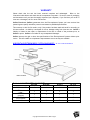
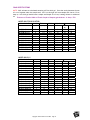
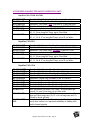
Required volume of gel: gel width x gel length x gel thickness
Gel size (cm)
7 x 8 cm
7 x 8 cm
7 x 8 cm
7 x 10 cm
7 x 10 cm
7 x 10 cm
9 x 11 cm
9 x 11 cm
9 x 11 cm
12 x 14 cm
12 x 14 cm
12 x 14 cm
x
Gel thickness (cm)
=
0.25 cm
0.50 cm
0.75 cm
0.25 cm
0.50 cm
0.75 cm
0.25 cm
0.50 cm
0.75 cm
0.25 cm
0.50 cm
0.75 cm
Gel Volume (ml)
14.0 ml
28.0 ml
42.0 ml
17.5 ml
35.0 ml
52.5 ml
24.8 ml
49.5 ml
74.2 ml
42.0 ml
84.0 ml
126.0 ml
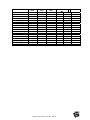
Agarose percentage and separation of DNA-fragments
Percentage (w/v)
0.3
0.5
0.7
1.0
1.2
1.5
2.0
3.0
Agarose (g)
0.15
0.25
0.35
0.50
0.60
0.75
1.00
1.50
Buffer (ml)
50
50
50
50
50
50
50
50
Separation Range (kb)
5-60
1-30
0.8-12
0.5-10
0.3-7
0.2-4
0.1-3
<0.1
Agarose Gel Loading Buffer
Samples are prepared and combined with gel loading buffer before being loaded into the prepared
gel. Sample buffer usually contains similar components to the running buffer, dyes for visibility,
and glycerol to provide some weight to the samples. This increased sample density and color
allows easy visualization of the samples and ensures samples load evenly into the wells and do not
float out during loading. Dyes also migrate toward the anode end of the electrophoresis chamber
at predictable rates allowing the gel run to be monitored.
The most commonly used loading buffer is glycerol, bromophenol blue, and xylene cyanol.
6x loading buffer for agarose gels:
0.25% bromophenol blue
0.25% xylene cyanol FF
30% glycerole in water
Copyright Galileo Bioscience™ 2004 – Page 11







![KeyView [4823353_1.wpd]](http://vs1.manualzilla.com/store/data/005667242_1-589c8deb81b55e7c0d34a0d078158765-150x150.png)