1
ICINCO 2008 - International Conference on Informatics in Control, Automation and Robotics
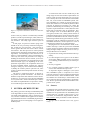
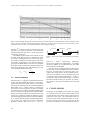
Figure 1: Cooperative autonomous vehicles in a future battlefield.
scratch is that, by contrast to commercially available
products (Cloud Cap Technologies, 2004; Micro Pilot, 2004), it provides full access to the internal control structures. We totally agree with this point of
view.
In this paper, we present a solution lying in the
middle of the two previously mentioned categories.
Our system uses two processors. One processor is
used to gather data from the sensors and to control
the actuators. The other processor is used to perform
the data fusion calculations (and possibly the control
algorithms). The advantages of this structure are as
follows: i) task scheduling is easily programmed, because only one of the two processors is in charge of
handling the numerous devices and I/O; ii) the computations are performed as one single thread on a dedicated board (PC type); iii) depending on the computational requirements, the computation board can
be easily upgraded without requiring any software
changes or rising any concern about task scheduling;
iv) finally, the overall system is quite low-cost, since
it relies on off-the-shelf components and can be easily
maintained.
The paper is organized as follows. In Section 2,
we present our system architecture. We detail our
hardware components and comment on their choices.
In Section 3, we present as a test-case the embedding
of our system into a small-scaled helicopter. Numerous details of implementation are provided. Finally,
we conclude and give directions of future work.
A second issue that was also raised early in the
design stage was that the real-time requirements of a
control system for such small UAVs are very strong.
This is mostly due to the short time horizons instabilities. Yet, in the context of embedded systems, realtime scheduling of a number of sensing and computation tasks is known to be a difficult problem. More
precisely, as exposed in (Caccamo et al., 2005), the
problem of determining the feasibility of a periodic
sequence of prioritized tasks is often (NP)-hard. Sufficient, but not necessary tests are pessimistic. Popular strategies such as the Rate-Monotonic policy
(see again (Caccamo et al., 2005)), which consists of
putting the highest priority on the shortest task can be
proven to be unfeasible is the CPU load is too large1.
While being troublesome on ground vehicles, such infeasibilities (and the induced inconsistencies in the
embedded calculations) would represent a cause of
potential major failure for our aerial platforms.
Keeping these two considerations in mind, we decided to develop a robust two-processors embedded
system, running two distinct softwares and communicating through a simple two-ways protocol. The system specifications are as follows.
1. It performs the sensing and calculation tasks separately.
2. It is fast enough to run a typical 15 to 30 dimensional states EKF algorithm with a low latency
(to eventually produce satisfactory closed-loop results).
3. Itis easy to upgrade.
4. It is versatile enough to handle various type of
sensors and communication protocols.
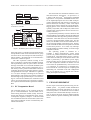
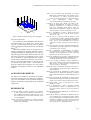
As exposed in Figure 2 and Figure 3, this (modular) embedded system is composed of a microcontroller, which is in charge of gathering information
from all the sensors, and a calculation board. These
two elements are connected by a serial interface. The
micro-controller also has a downlink to a ground station. We now present the details of the hardware components of our system.
2.1 Sensors
2
SYSTEM ARCHITECTURE
Our primary goal was to develop an embedded system
to test algorithms of various complexity on-board various small-scaled platforms. Early in the design process, one first constraint which appeared to us was the
payload limitations of the considered flying machines.
This lead us to focus on designing a low weight embedded system.
158
Considering both ground and aerial vehicles control
applications, we listed a series of useful sensors that
needed to be incorporated into our embedded system.
Among these are: an IMU, a GPS receiver, a pressure sensor, an anemometer, magnetometers, and various switches. Other possibilities include odometers,
1 the
mately.
upper limit on admissible load is 69%, approxi-