1
ICINCO 2008 - International Conference on Informatics in Control, Automation and Robotics
Vehicle
actuators
Sensors
Computation
Board
Power PC
Ground
station
Remote
Control
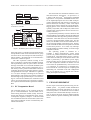
Figure 2: Sensors and computation board connections to the
central micro-controller.
Computation Board
+12V
+3V
IMU
TPU
QSCI1
GPS
TPU
main.c
BAROMETER
QSPI
PITOT
QADC
COMPASS
SCI2
VEHICLE
MIOS
MPWM
TPU
MDASM
DATALINK
Ground
Station
Remote
Control
T/L interrupt
actuators
SWITCH
Receiver
+5V
Figure 3: Embedded system internal connections.
from each sensors is transferred using a dedicated interrupt handler routine. Each external source or group
of sources has its own interrupt level which avoids potential conflicts. Each data link is associated with a
checksum to validate reception.
The data acquisition software running on the
micro-controller is event-driven by the IMU messages
which periodically sends 31 bytes of data. Once the
message of the IMU is received and validated by the
micro-controller, others sensors information are either directly read or picked in data buffers which are
constantly fed with serial messages from the sensors
through hardware interrupts. Information is gathered
in a 116 bytes message containing all the onboard
measurements. This message is sent to the calculation
board through a high-speed serial port. Once the message is received and validated, the calculation board
carries out one navigation loop consisting of a prediction equation and an estimation equation of a Kalman
filter.
2.3 PC Computation Board
The computing board is a PC running the Knoppix 3.8.1 Linux distribution. The PC board was selected among numerous models (mostly mini-ITX,
and PC104) based on computational power, energy
consumption, toughness, and price. A fan-less board
was considered as the most relevant choice, due to the
often observed failures of fans in mechanically disturbed environments.
160
The chosen fan-less calculation board has a standard mini-ITX PC architecture. Its processor is a
1.2Ghz C7-M from VIATM designed for embedded
applications. It can perform 1500 MIPS and has classic PC Input/Output ports such as a UART serial port
(used as main data link with the micro-controller), an
ethernet board (not used here), a VGA screen output
(which can be used to monitor the system during debugging phases of the software and hardware development), a keyboard, and 4 USB ports (which can be
considered for plugging future devices such has controllable cameras).
Experimental preliminary tests have shown us that
multi-threading (one thread for message decoding and
one thread for the main algorithm) presents two major
drawbacks: some data can be lost, and the calculation
cycle may end unexpectedly (slightly) late. For this
reason, we decided to write our own UART driver using an interrupt handler in the kernel space. Further,
we de-activated all hardware interruptions associated
to unnecessary devices. As a result, only interrupts
from the UART are enabled. Finally, we used a single
computation thread.
The operating system is installed on a
bootable 1 Gbyte Disk-On-Chip system which
prevents all possible mechanical failure associated
to hard-drives. This flash memory device is directly
connected to the IDE port of the mother-board. The
board is powered by a pico-PSUTM power supply
which provides various voltages ranging from 5V to
18V. The computation software are written in C and
can be either be updated directly on the board via a
ssh connection, or transferred, in a compiled form,
from a remote PC. Custom scripts for compiling and
distributing our executable code and configuration
files are an efficient way to upgrade the software
during development and testing.
Weight
800
3
Cost
350
Size
170,180,40
f
1.5e6
Comm.
RS232
FIELD EXPERIMENT
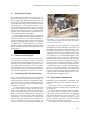
We now report some field experiment using our embedded system. To perform model identification
tasks and design a real-time state observer in view of
closed-loop control, we decided to load our embedded system into a small-scaled helicopter. In this section, we expose this work, and give numerous details
about solutions to specific interfacing and vibrational
issues.