1
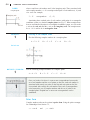
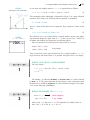
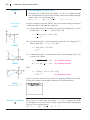
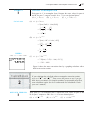
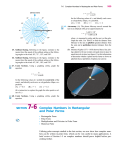
7-6 Complex Numbers in Rectangular and Polar Forms 555 we can write the complex number z ⫽ x ⫹ iy in polar form as follows: FIGURE 2 Rectangular–polar relationship. z ⫽ x ⫹ iy ⫽ r cos ⫹ ir sin ⫽ r(cos ⫹ i sin ) (1) This rectangular–polar relationship is illustrated in Figure 2. In a more advanced treatment of the subject, the following famous equation is established: e i ⴝ cos ⴙ i sin (2) where ei obeys all the basic laws of exponents. Thus, equation (1) takes on the form z ⴝ x ⴙ yi ⴝ r(cos ⴙ i sin ) ⴝ rei FIGURE 3 (1 ⫹ i) ⫽ 1.41e 0.79i . (3) We will freely use rei as a polar form for a complex number. In fact, some graphing calculators display the polar form of x ⫹ iy this way (see Fig. 3 where is in radians and numbers are displayed to two decimal places). Since cos and sin are both periodic with period 2, we have cos( ⫹ 2k) ⫽ cos sin( ⫹ 2k) ⫽ sin k any integer Thus, we can write a more general polar form for a complex number z ⫽ x ⫹ iy, as given below, and observe that rei is periodic with period 2k, k any integer. GENERAL POLAR FORM OF A COMPLEX NUMBER For k any integer 1 z ⫽ x ⫹ iy ⫽ r[cos ( ⫹ 2k) ⫹ i sin ( ⫹ 2k)] z ⫽ rei(⫹2k) The number r is called the modulus, or absolute value, of z and is denoted by mod z or z . The polar angle that the line joining z to the origin makes with the polar axis is called the argument of z and is denoted by arg z. From Figure 2 we see the following relationships: ⱍⱍ MODULUS AND ARGUMENT FOR z ⴝ x ⴙ iy 2 mod z ⫽ r ⫽ 兹x2 ⫹ y2 arg z ⫽ ⫹ 2k Never negative k any integer where sin ⫽ y/r and cos ⫽ x/r. The argument is usually chosen so that ⫺180° ⬍ ⱕ 180° or ⫺ ⬍ ⱕ .