1
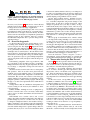
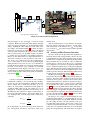
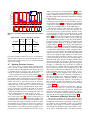
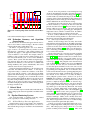
Figure 2. A diagram illustrates our problem statement.
Square symbols are temperature sensors; the oval is an
acoustic sensor. Si denote different pipe sections.
laboratory tests (Section 4.9). The success of the both field
and lab tests shows the generality of our approach on cold-oil
blockage and even a broader range of applications.
Earlier detection of partial blockages (50% or less) would
be helpful and is future work. However, our current temperature method is not enough to detect the subtlety. Possible
future research could study how to implement sophisticated
signal processing on sensor platform, and how to leverage
the differential temperature due to pressure change before
and after blockage.
2.2
Overview of approach
To detect blockages we use two sensing methods: acoustic sensing at the wellhead and temperature sensing at locations along the flow line (Figure 2). Typical flow lines
are much hotter than ambient temperature (100 °C vs. 0–
30 °C), particularly in fields that use secondary production
techniques such as steam injection. We can therefore infer
flow blockage by observing pipe skin temperature: the pipe
downstream of a blockage will converge to ambient temperature. In operation we expect to place multiple temperature
sensors along the flow line, near places where blockages are
expected.
Unfortunately, pumpjacks often stop production (“shut
in”) periodically to allow downhole pressure to accumulate.
Pumpjack shut-in causes drop in pipe temperature the same
as a blockage, so temperature sensing alone will result in
false alarms.
We therefore add a second acoustic sensor to detect pumpjack operation. And one acoustic sensor placed near the
wellhead can provide pumpjack status for all temperature
sensors on the production line. temperatures on the same line
downstream. The acoustic sensor listens to flow in the pipe
and the clanging of the pumpjack rods and tubing to detect
pumpjack operation. (These sounds propagate well through
the pipe, so acoustic sensor placement can be within 20 m of
the wellhead.)
Our hypothesis is that our combination of temperature and
acoustic sensing is both necessary and sufficient to detect
cold-oil blockage.
Sources of noise: Although we focus on pumpjack operation as our main source of error, we must consider many
sources of noise, from the environment, field, and measurement system.
Environmental noise contains diurnal and seasonal
changes in weather and ambient temperature. Pipe skin temperature changes by a few °C over the course of a day due
to changes in sunlight and wind or other weather. Our algorithm is insensitive to this change because the temperature
difference between normal flow and ambient is much larger.
Seasonal weather changes have a greater change, with temperatures that vary by 38 °C or more from the min in winter
to the max in summer. However, this long-term change does
not affect our algorithm because the detection threshold is
hourly auto-retrained against recent pipe skin temperature,
quickly adapting our algorithm in as short as hours.
Second, field conditions change: including downhole
conditions, equipment maintenance and main-line back pressure. Downhole temperature and pressure changes as the
field produces oil and due to changes in injection. These
changes are generally slow (over days or weeks); our algorithm retrains hourly and so adapts to these. Valve close-up
caused by maintenance indeed behaves similar to a real, sudden full blockage. We depend on field engineers to identify
maintenance a possible source of false blockage detections.
Finally, there will be some temperature propagation from the
main line back to a blockage. We expect this effect to be
minimal.
The last group is measurement noise, which is related
to our deployment setting, including sensor installation and
random glitch. If a sensor has a loose contact with the pipe,
the readings are always a weighted average between ambient and pipe skin temperature. Poor connection will reduce
our algorithm’s sensitivity, but our tuning accounts for variations. We confirm in tests that our algorithm adapts to loose
connections that cut the mid-point between ambient and normal pipe operation temperature in half, still finding the correct reference value and triggers on sub-20 °C drop.
From the discussion of three categories of noise—
environmental, system and measurement, we conclude that
our algorithm with parameter auto-tuning is robust enough.
2.3
Temperature Sensing for Flow Presence
Section 2.2 shows flow presence detection is the first part
of our multi-modal cold-oil blockage detection. In this section, we talk about how to detect flow presence by temperature and how to automatically tune parameters.
According to our problem statement and hypothesis
above, we need to measure pipe skin temperature to detect
the presence of flow, or in another words, suggested blockage. Since the temperature usually drops gradually (about
20 °C in an hour), we need an algorithm to process streaming temperature trace and identify its trend of approximating
ambient.
For the above reason, our algorithm employs one-sided
CUSUM (or cumulative sum control chart [31]), originally
a statistical technology developed for process quality control. The algorithm starts at low-pass filtering raw temperature observation (by EWMA) to filter transient noise. Next,
it compares every observation to a reference value to calculate the deviation from it. Meanwhile, it maintains a running
statistics, the cumulative sum of all the deviation in history
as basic CUSUM does. In this paper, we call this cumulative
sum of deviation certainty of drop (Cd ). When observation is
lower than k, Cd becomes larger and larger before it exceeds
a threshold, which suggests a blockage because the temperature is too low for too long. We use one-sided CUSUM,
resetting Cd when it is less than zero to respond quickly to
temperature drops.
We must set two algorithm parameters: the threshold for
certainty of drop, and the reference value (k). We set the
threshold to 15 times normally observed temperature, in this