1
Data Link Control In Data Communication
Line discipline can be done in two ways enquiry/acknowledgment. (ENQ/ACK) and poll/select. The first
method is used in peer-to-peer communication: the second method is used in primary-secondary
communication.
ENQ/ACK
Enquiry/acknowledgment (ENQ/ACK) is used in systems where there is no question of the wrong
receiver getting the transmission, that is, when there is a dedicated link between two devices so that the only
device capable of receiving the transmission is the intended one.
In both half-duplex and full-duplex transmission, the initiating device establishes the session. In halfduplex, the initiator then sends its data while the responder waits. The responder may take over the link when
the initiator is finished or has requested a response. In full-duplex, both devices can transmit simultaneously
once the session has been established.
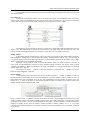
WORKING: The initiator first transmits a frame called an enquiry (ENQ) asking if the receiver is available to
receive data. The receiver must answer either with an acknowledgement (ACK) frame if it is ready to receive or
with a negative acknowledgement (NAK) frame if it is not. By requiring a response even if the answer is
negative, the initiator knows that its enquiry was in face received even if the receivers currently unable to accept
a transmission. If neither an ACK nor a NAK is received within a specified time limit, the initiator assumes that
the ENQ frame was lost in transit, disconnects, and sends a replacement. An initiating system ordinarily makes
three such attempts to establish a link before giving up.
If the response to the ENQ is negative for the three attempts, the initiator disconnects and begins the process
again at another time. If the response is positive, the initiator is free to send its data. Once all of its data have
been transmitted, the sending system finishes with an end of transmission (EOT) frame.
Poll/Select
The poll/select method of line discipline works with topologies where one device in designated as a
primary station and the other devices are secondary stations
WORKING:
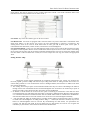
Whenever a multipoint link consists of a primary device and must be secondary devices using a single
transmission line, all exchanges must be such through the primary device even when the ultimate destination is a
secondary device. The primary device controls the link; the secondary devices follow its instructions. It is up to
the primary to determine which devices allowed to use the channel at a given time. The primary, therefore
always the initiator of a session. If the primary wants to receive data, it asks the secondary’s if they have
anything to send; this function is called polling. If the primary device to send data, it tells the target secondary to
get ready to receive.
Addresses
For point-to-point configuration, there is no need for addressing; any transmission put onto the link by
one device can be intended only for the other. For the primary device in a multipoint topology to be able to
identify and communicate with a specific secondary device, however, the must be an addressing convention. For
this reason, every device on a link has address that can be used for identification.
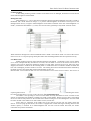
Poll/select protocol identify each frame as being either to or from a specific device on the link. Each
secondary device has an address that differentiates it from the others. In any transmission, that address will
appear in a specified portion of each frame called an address field or header depending on the protocol. If the
www.iosrjournals.org
40 | Page