1
Data Link Control In Data Communication
transmission comes form the primary device, the address indicates the recipient of the data. If the transmission
comes from a secondary device, the address indicates the originator of the data.
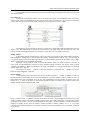
Select:
The select mode is used whenever the primary device has something to send. Remember that the
primary controls the link. If the primary is not either sending or receiving data, it knows the link is available. If
it has something to send, it sends it. What it does not know, however, is whether the target device is prepared to
receive (usually, prepared to receive means on). So the primary must alert the secondary to the upcoming
transmission and wait for an acknowledgment of the secondary’s ready status. Before sending data, the primary
creates and transmits select.
If the secondary is awake and running, it returns an ACK frame to the primary. The primary then sends
one or more data frames, each addressed to the intended secondary.
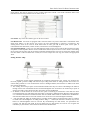
Poll : The polling function is used by the primary device to solicit transmissions from the secondary devices.
the secondary’s are not allowed to transmit data unless asked. By keeping all control with the primary, the
multipoint system guarantees that only one transmission can occur at a time thereby ensuring against signal
collisions without requiring elaborate precedence protocols. When the primary is ready to receive data, it must
ask (poll) each device in turn if it has anything to send. When the first secondary is approached, it responds
either with a NAK frame if it has nothing to send or with data (in the form of a data frame) it does.
If the response is negative (a NAK frame), the primary then polls the next secondary in the same way
until it finds one with data to send. When the response is positive a data frame, the primary reads the frame and
returns an acknowledgment (ACK frame) verifying its. receipt. The secondary may send several data frames one
after the other, or it may be required to wait for an ACK before sending each one, depending on the protocol
being used.
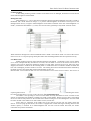
There are two possibilities for terminating the exchange: either the secondary sends all its data,
finishing with an end of transmission (EOT) frame, or the primary says, “Time’s up.” Which of these occurs
depends on the protocol and the length of the message. Once a secondary has finished transmitting, the primary
can poll the remaining devices.
IV.
Flow Control
The second aspect of data link control is flow control. In most protocols, flow control is a set of
procedures that tells the sender how much data it can transmit before it must wait for an acknowledgment from
the receiver. The flow of data must not be allowed to overwhelm the receiver. Any receiving devices has a
limited speed at which it can process incoming data and a limited amount of memory in which to store incoming
data. The receiving device must be able to inform the sending device before those limits are reached and to
request that the transmitting device send fewer frames or stop temporarily. Incoming data must be checked and
processes before they can be used.
www.iosrjournals.org
41 | Page