1
3.1 Two Means
3.1.1. Introduction
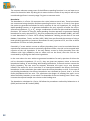
nTerim 2.0 is designed for the calculation of Power and Sample Size for both Fixed Period
and Group Sequential design. In relation to Group Sequential designs, calculations are
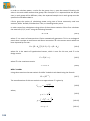
performed using the Lan-DeMets alpha spending function approach (DeMets & Lan, 1984;
DeMets & Lan, 1994) for estimating boundary values. Using this approach, boundary values
can be estimated for O'Brien-Fleming (O’Brien & Fleming, 1979), Pocock (Pocock, 1977),
Hwang-Shih-DeCani (Hwang, Shih & DeCani, 1990) and the Power family of spending
functions. Calculations follow the approach of Reboussin et al (1992) and Jennison &
Turnbull (2000). Calculations can be performed for studies that involve comparisons of
means, comparisons of proportions and survival studies as well as early stopping for Futility.
Group Sequential Designs
Group Sequential designs differ from Fixed Period designs in that the data from the trial is
analyzed at one or more stages prior to the conclusion of the trial. As a result the alpha and
beta values applied at each analysis or `look', an adjusted is needed to preserve the overall
type-1 and type-2 errors. The alpha and beta values used at each look are calculated based
upon the test hypothesis, the spending function chosen, the number of looks to be taken
during the course of the study as well as the overall type-1 and type-2 error rates. For a full
introduction to group sequential methods see Jennison & Turnbull (2000) and Chow et al
(2008).
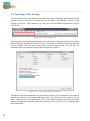
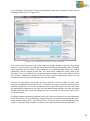
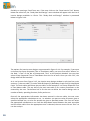
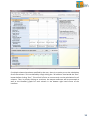
Spending Function
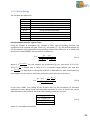
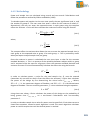
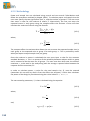
There are four alpha and beta spending functions available to the user in nTerim 2.0 as well
as an option to manually input boundary values. As standard all alpha spending functions
have the properties that ( )
and ( )
. Similarly, all beta spending functions have
the properties that ( )
and ( )
. Functionally the alpha and beta spending
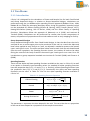
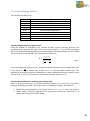
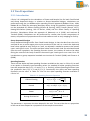
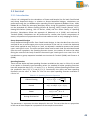
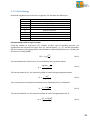
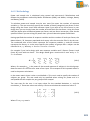
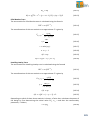
functions are the same. In Table 3.1.1 we list the alpha spending functions available in
nTerim 2.0.
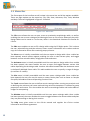
Table 3.1.1. Spending Function Equations
O’Brien-Fleming
( )
Pocock
( )
(
(
√
(
))
) )
( )
Power
Hwang-Shih-DeCani
(
( )
[
(
(
)
]
)
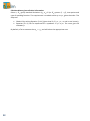
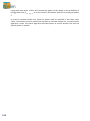
The parameter represents the time elapsed in the trial. This can either be as a proportion
of the overall time elapsed or a proportion of the sample size enrolled.
19