1
DTC-720 Xpect® – 24/7 Transport Stream Monitoring
USER MANUAL
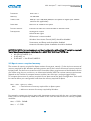
IMPORTANT NOTES:
The runtime memory required by Xpect (MRUNTIME) must not exceed 75% of the total amount of memory
available. Xpect applies this restriction to ensure the system does not become unusable due to
resource starvation.
The memory usage estimate for HD AVC Mosaic service is less accurate compare to a SD service,
so make sure to have sufficient free Memory available.
2.3 Xpect server: required hard disk space
Like the memory usage, the required hard disk space depends on a number of variables such as the
number of transport streams, pre- and post-trigger buffer sizes and the maximum number of entries
to be stored in the log database.
The required disk space can be computed using the formulae below (all values in MB):
HDCAP = (BPRE + BPOST) x (212 ÷ 188) x NFILES, where:
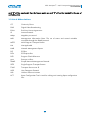
HDCAP
= Amount of disk space required for transport stream captures
BPRE
= Size of pre-trigger buffer
BPOST
= Size of post-trigger buffer
NFILES
= Number of transport streams capture files to store
HDLOG = NLOG × SLOG, where
HDLOG
= Amount of disk space, per TS, required for the log database
NLOG
= Maximum number of log entries to store
SLOG
= Size of log entries in database (typically = 1kB)
HDSTAT = (NSHORT + NMEDIUM + NLONG) × (NSVC + NBS + NTBL) × Sstat, where
HDSTAT
= Amount of disk space, per TS, required for the statistics database
NSHORT
= Maximum number of short-term statistics entries to store
NMEDIUM
= Maximum number of medium-term statistics entries to store
NLONG
= Maximum number of long-term statistics entries to store
NSVC
= Number of services in transport stream
NBS
= Number of basic streams in transport stream
NTBL
= Number of tables in transport stream
SLOG
= Average size of log entries in database (typically = 1kB)
HDREQ = NTS × (HDCAP + HDLOG + HDSTAT), where
HDREQ
= Total amount of required disk space
9