1
Marathon-ReadyTM cDNA User Manual
VI. Rapid Amplification of cDNA Ends (RACE) continued
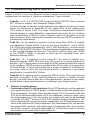
6.[Optional] If the primary PCR reaction fails to give the distinct band(s)
of interest or produces a smear, you may wish to perform a Southern
blot using:
a. a cDNA probe
b. a nested primer as a probe
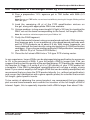
Or, you may wish to perform a secondary, or “nested,” PCR reaction
using the AP2 primer supplied with Marathon-Ready cDNA and a NGSP.
(See the discussion in Section V. Primer Design.)
a. Dilute 5 µl of the primary PCR product into 245 µl of
Tricine-EDTA buffer.
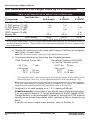
b. Repeat steps 1–5 above, using:
• 5 µl of the diluted primary PCR product in place of the
Marathon-Ready cDNA.
• 1 µl of the AP2 primer and 1 µl of your nested antisense
GSP.
• Fewer cycles (15–20 instead of 25–30).
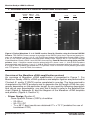
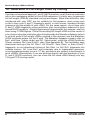
At Clontech, we have successfully used Marathon-Ready cDNAs to amplify the
5'- and 3'-RACE fragments of several different genes from poly A+ RNA. Typically,
only one major band is generated, although in some cases minor bands are also
visible. Although a nested AP2 Primer is provided, nested primers generally are
not needed for successful Marathon amplification, particularly if you use primers
with Tm’s > 70°C and the preferred cycling programs for touchdown PCR. If you
do not know the complete structure of your gene, you may be able to predict the
size of the correctly amplified product via Northern blot analysis. Certain genes
will give multiple bands due to the presence of a multigene family or multiple
RNAs. If there are multiple products, you may need to determine which are real
(e.g., the products of alternative transcription start sites, alternative splicing sites,
or related genes) and which are artifacts (e.g., the result of pausing by RT, high
GC content, nonspecific priming during RACE PCR, etc.).
Protocol No. PT1156-1
www.clontech.com
Clontech Laboratories, Inc.
Version No. PR1573621